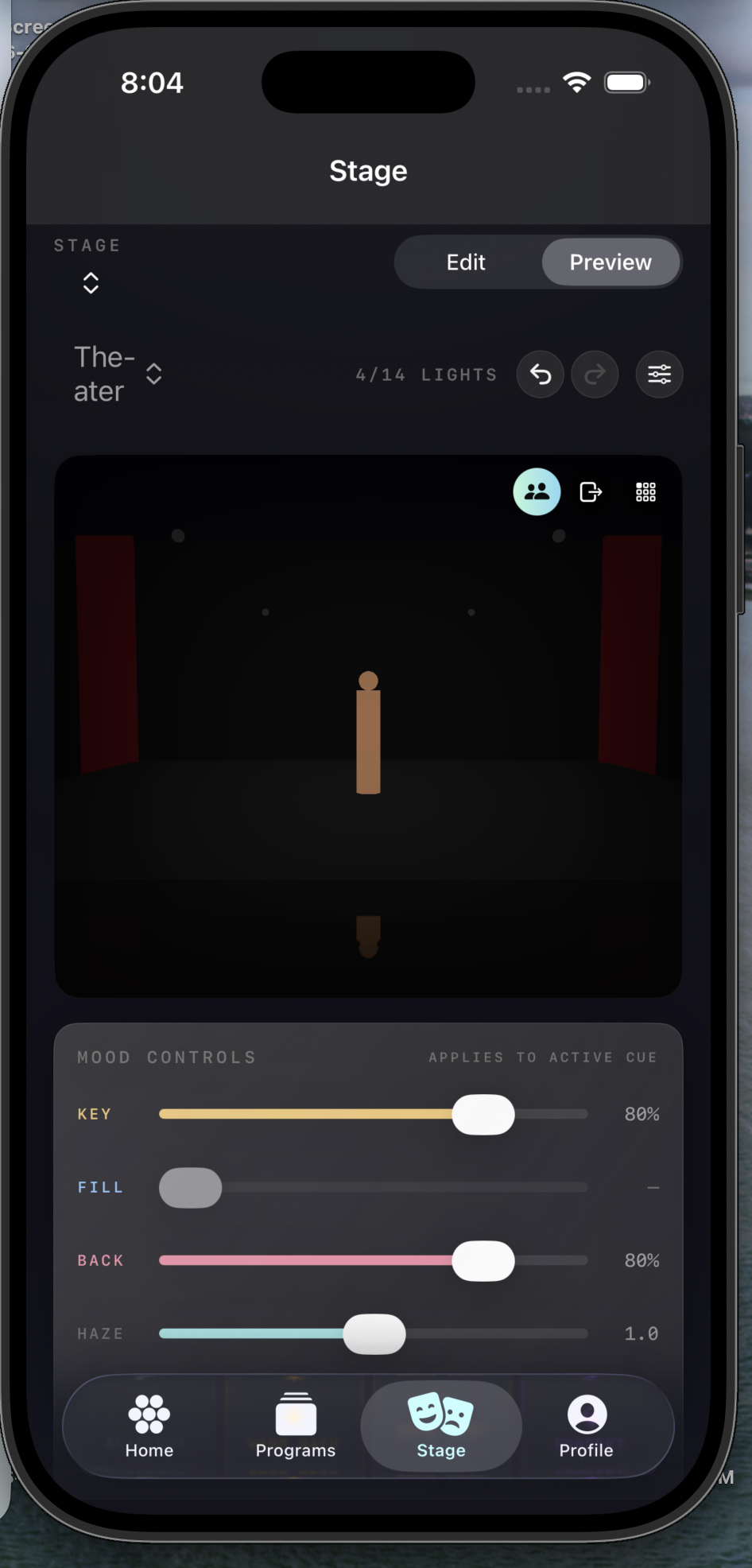
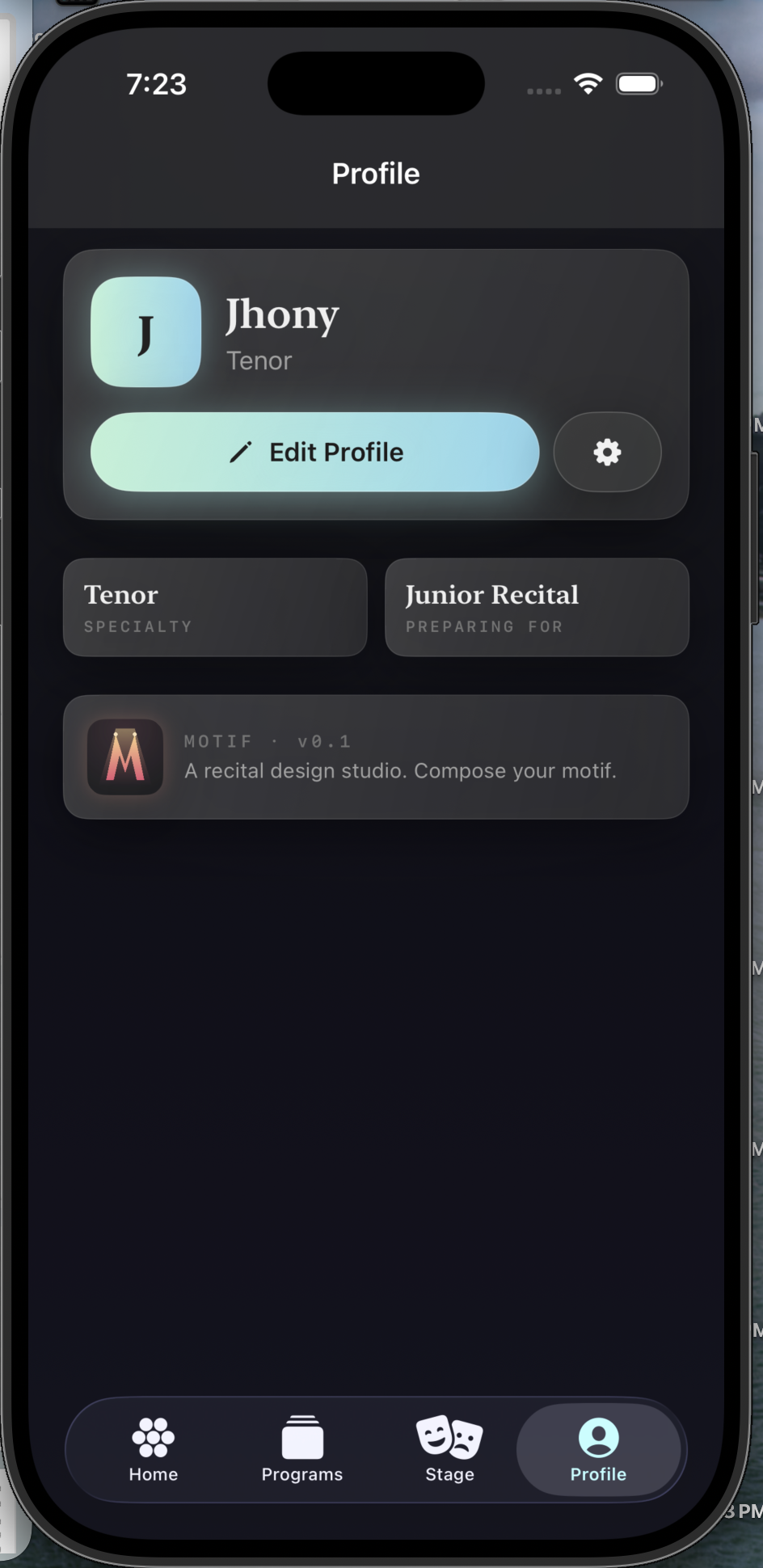
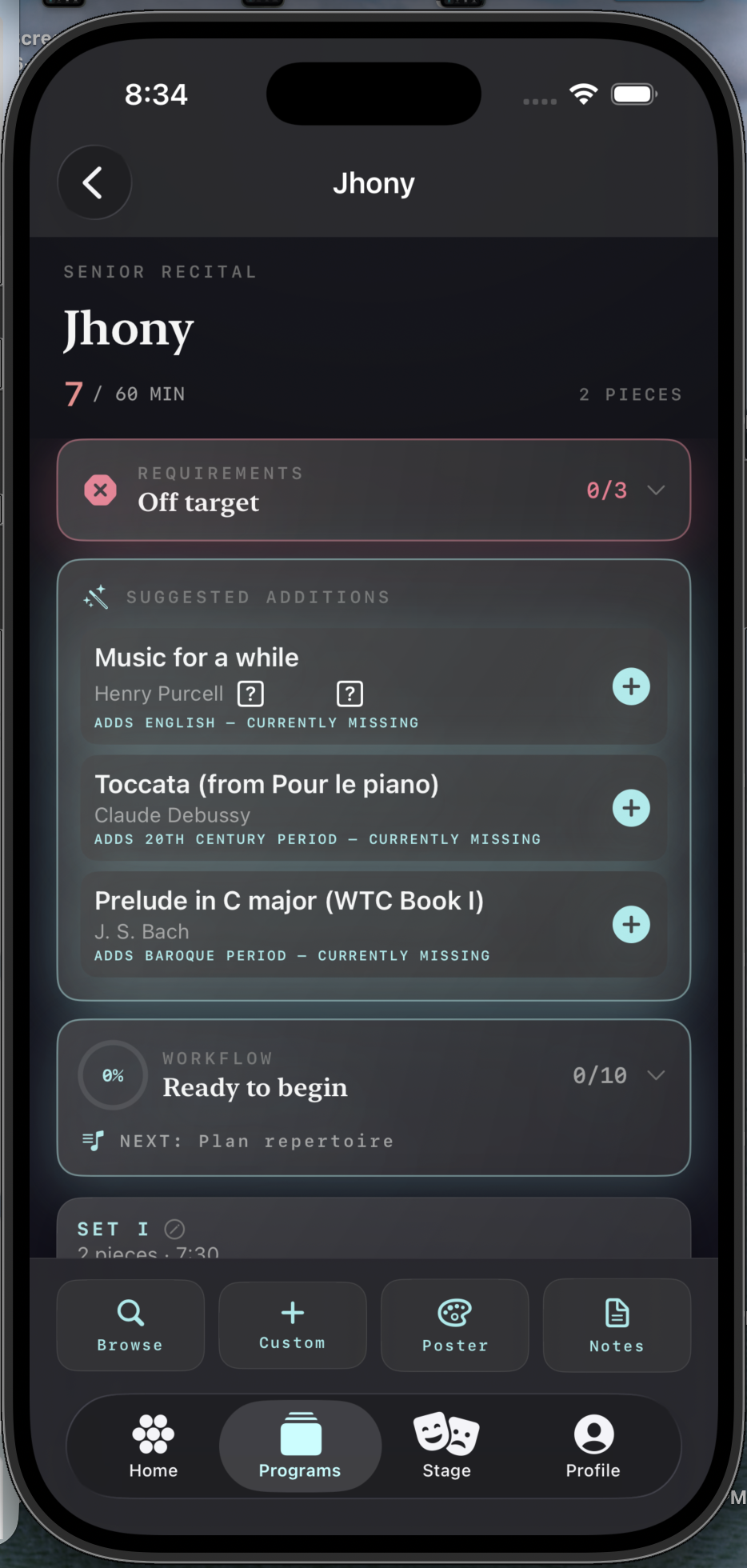
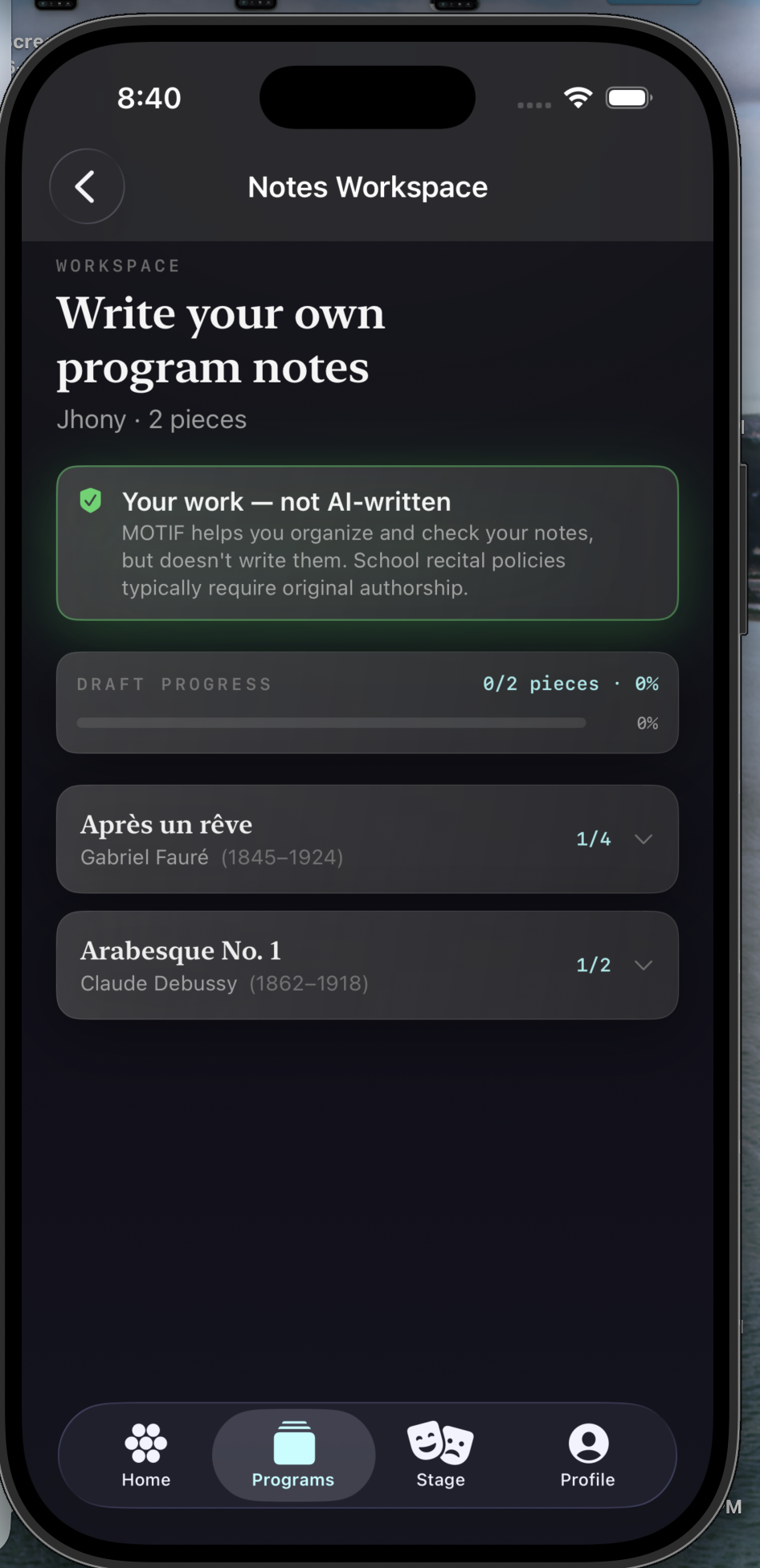
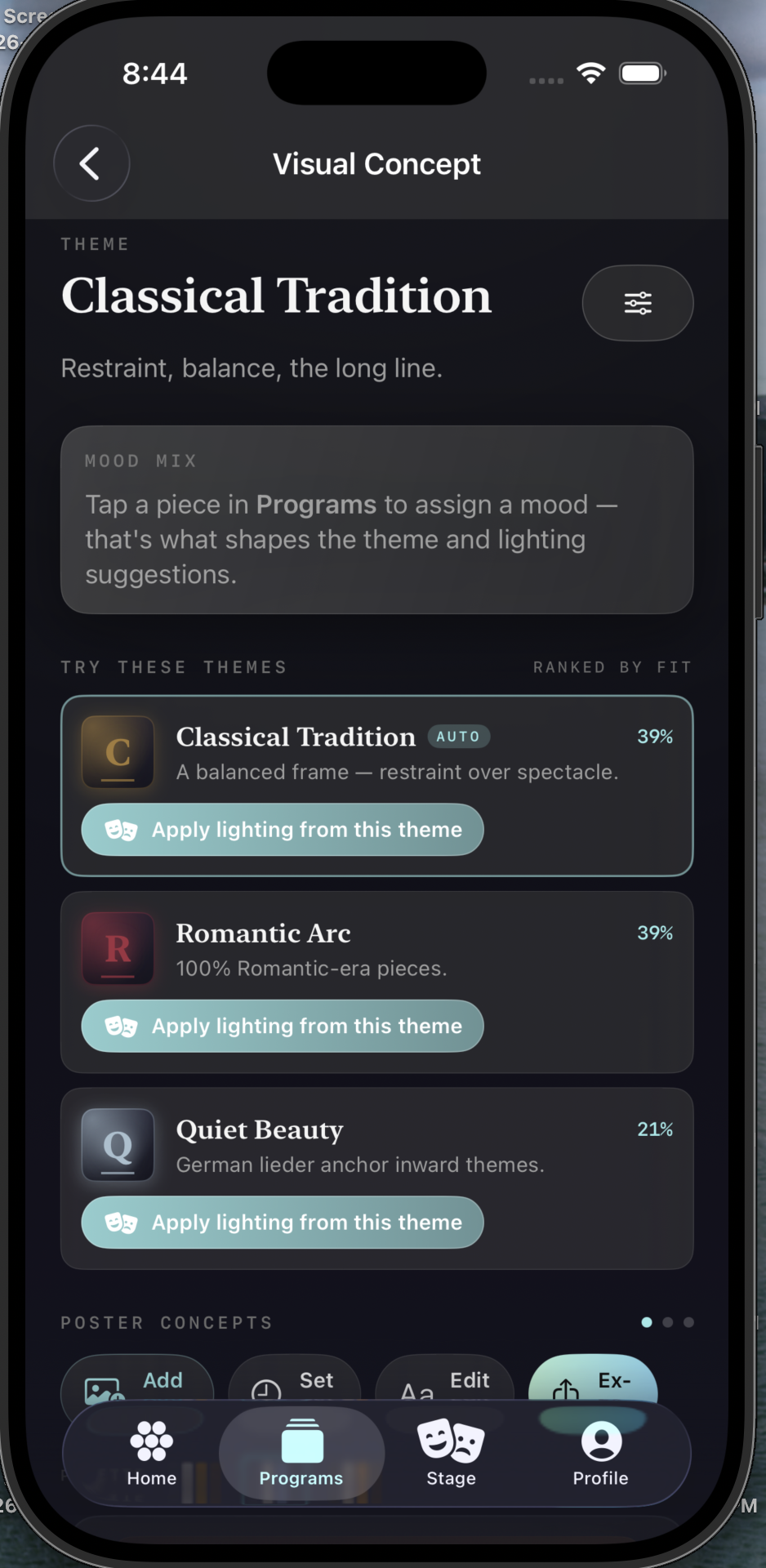
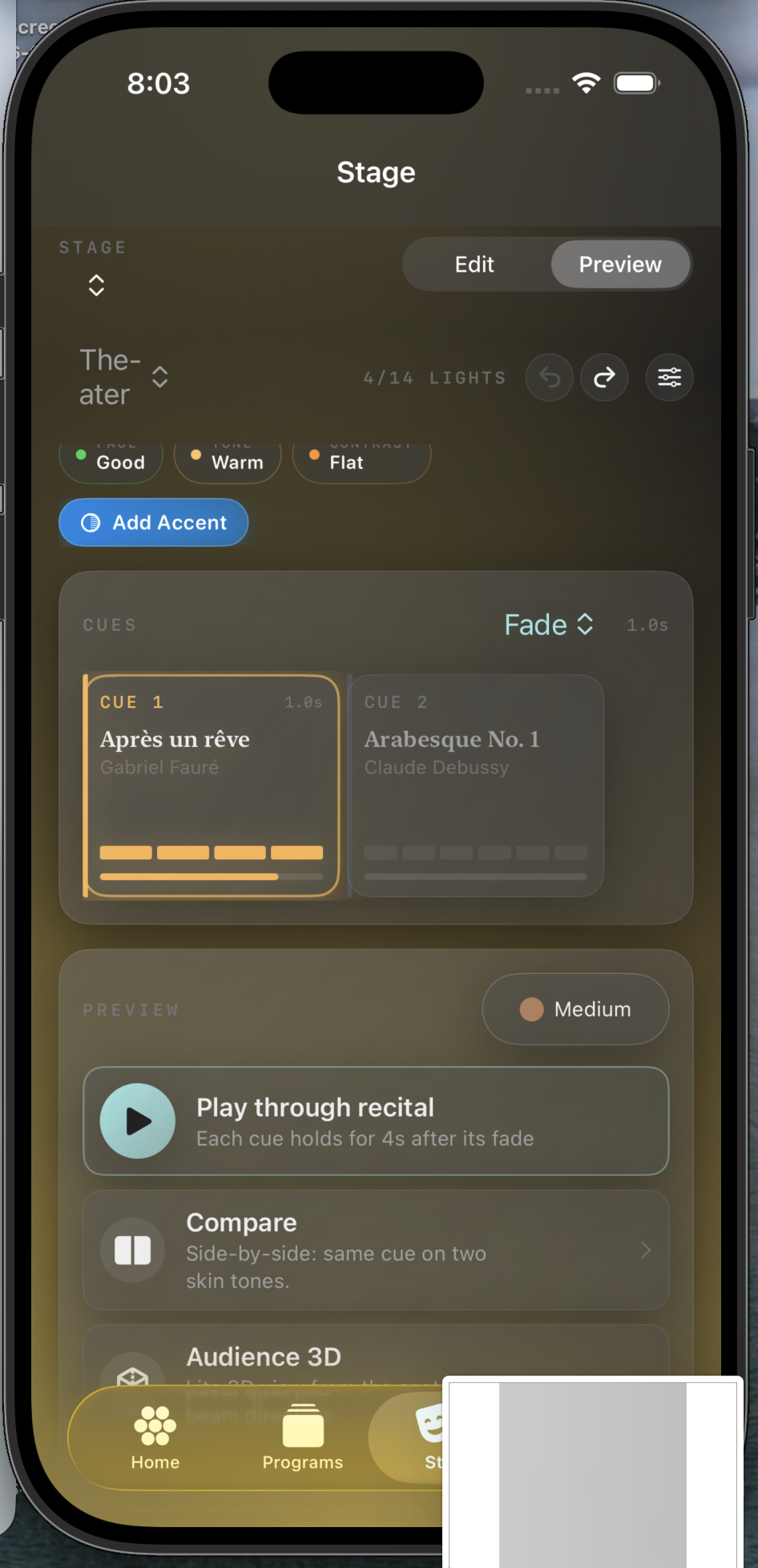
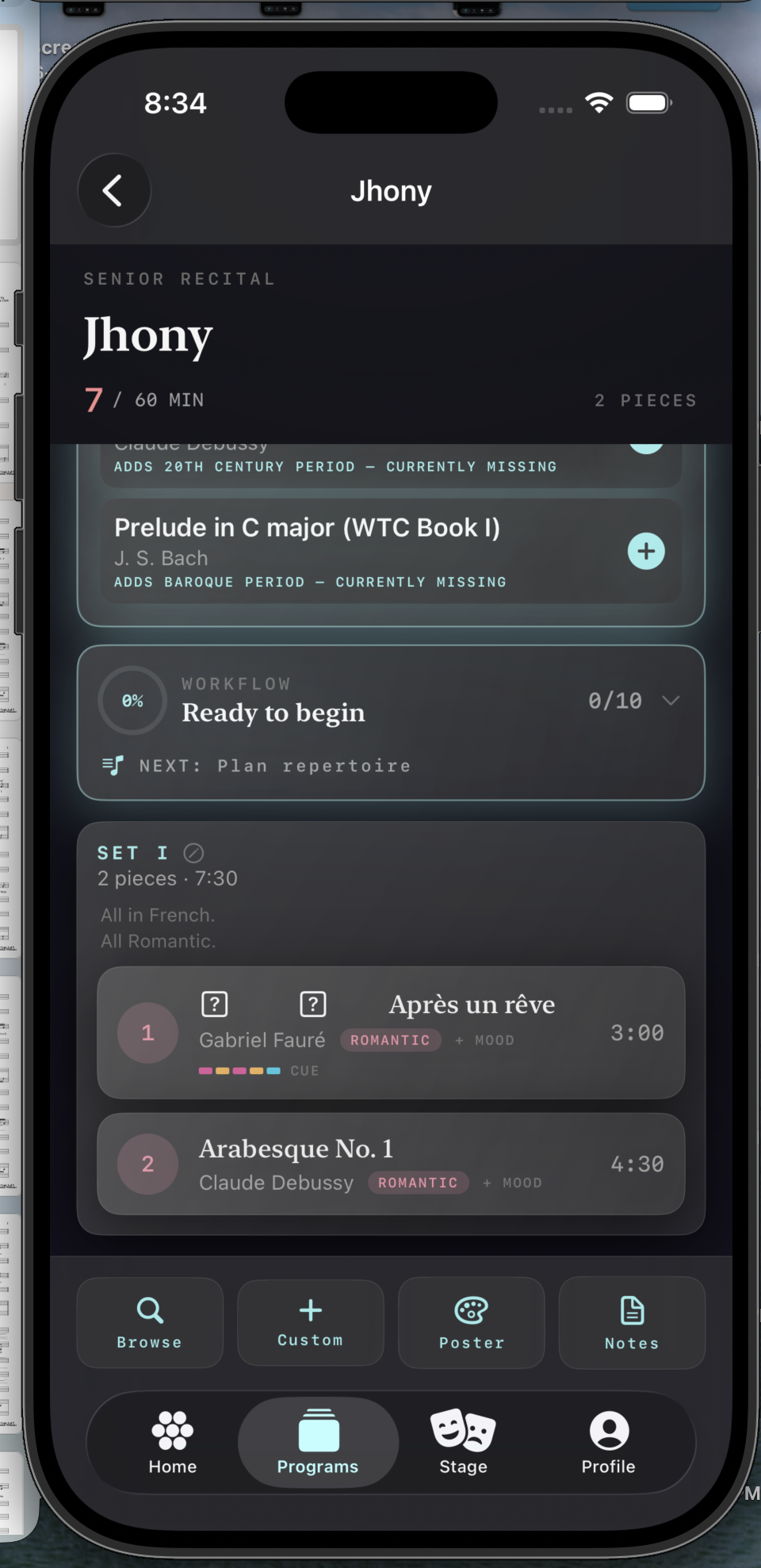
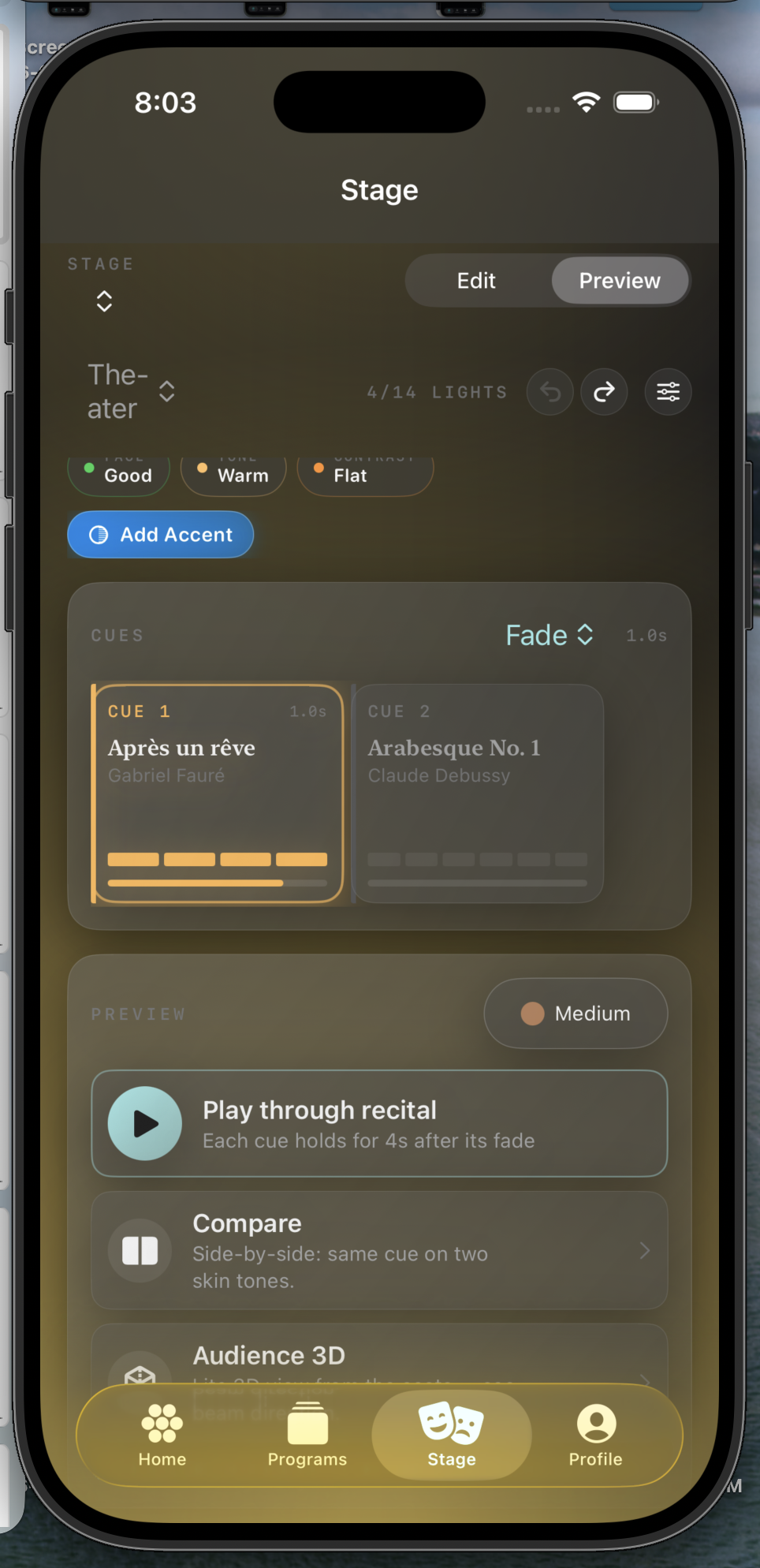
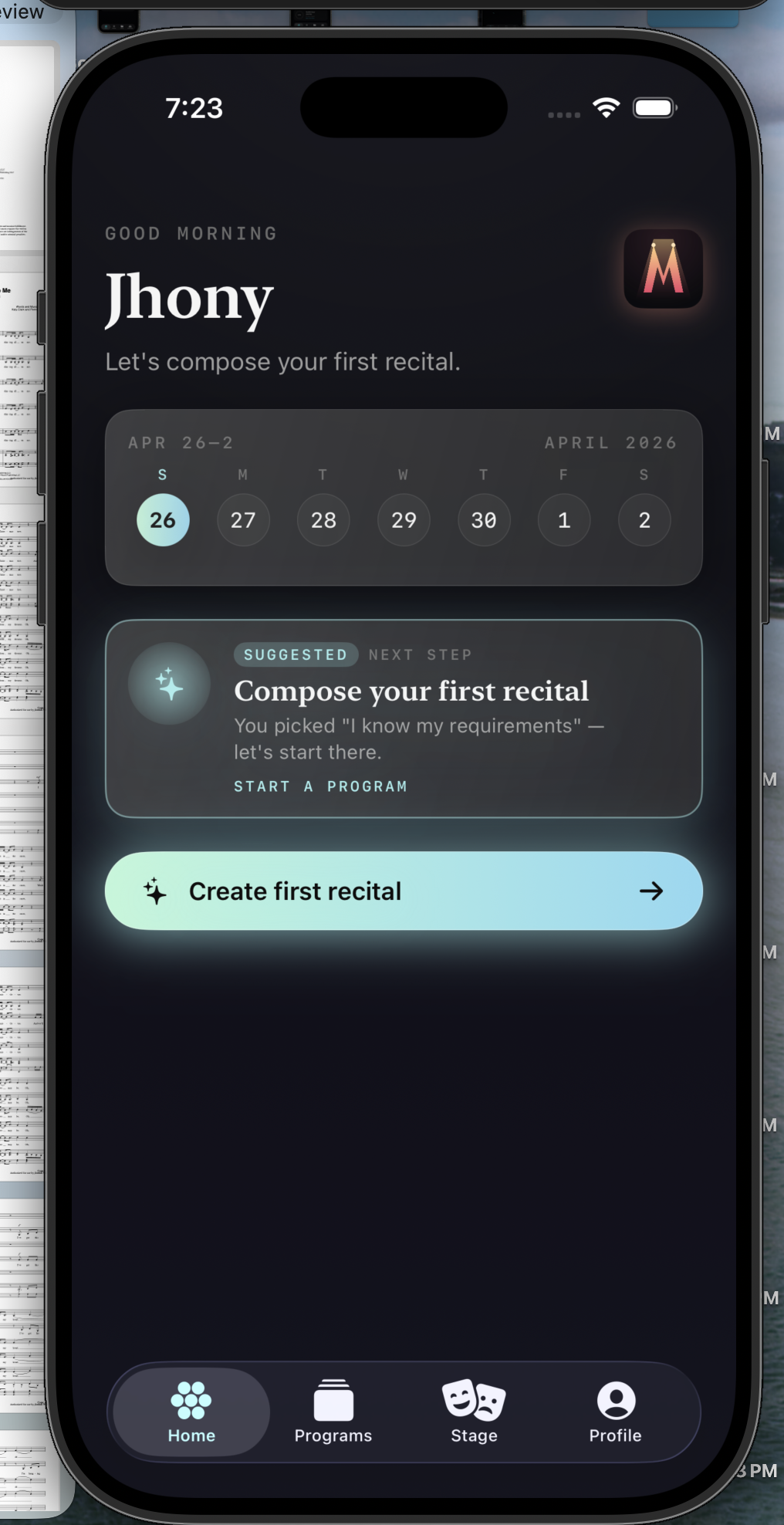
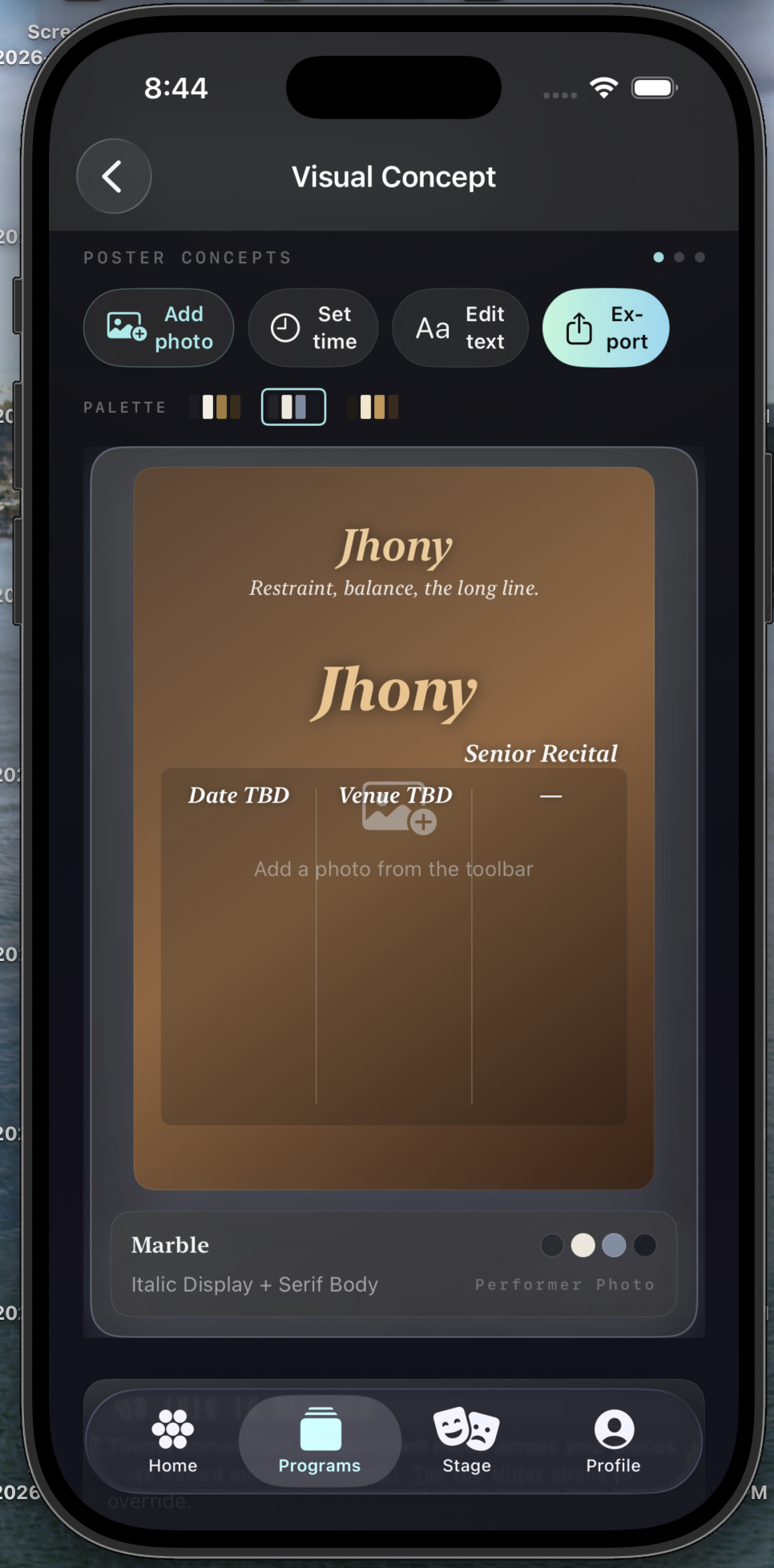
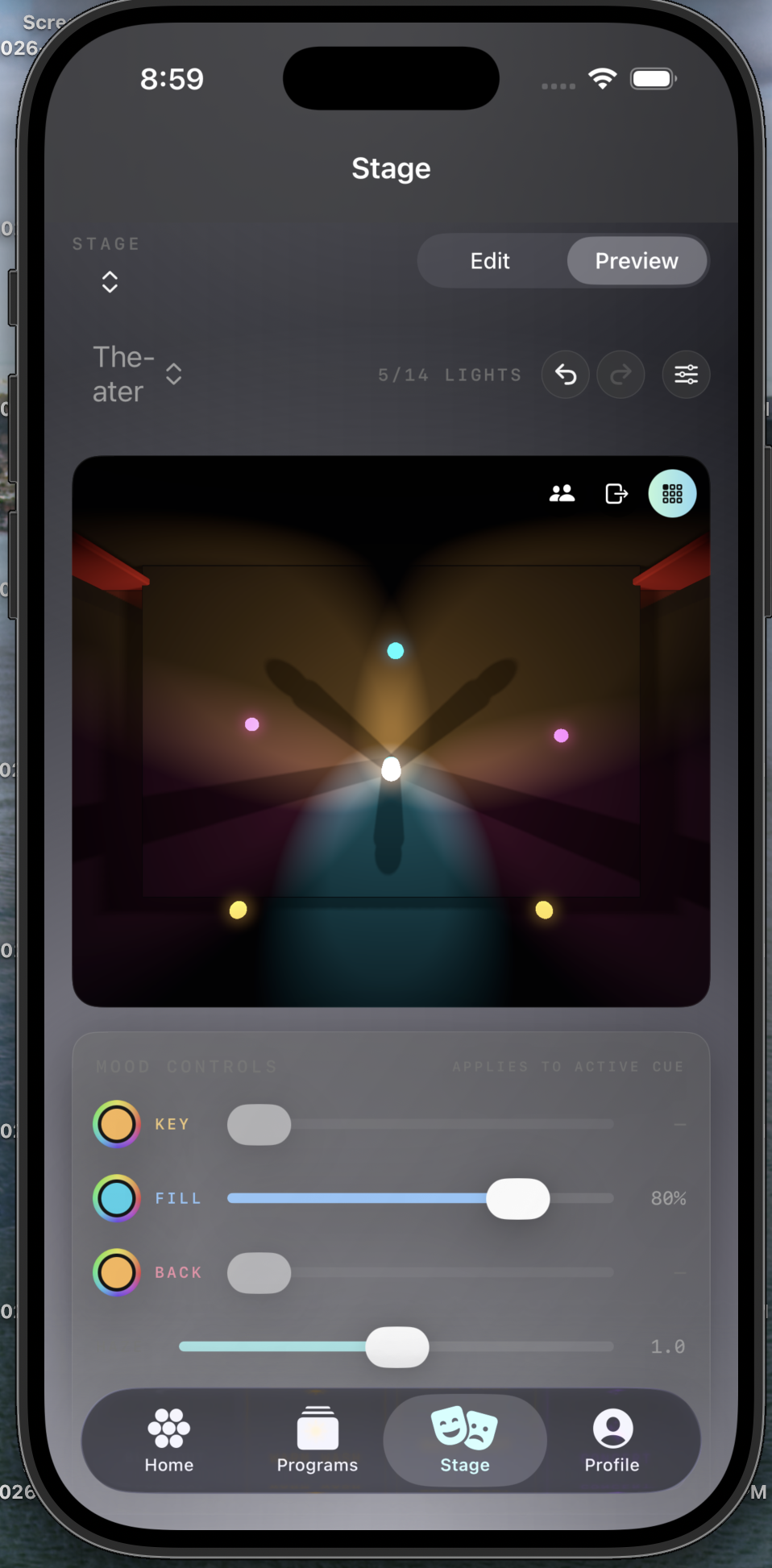
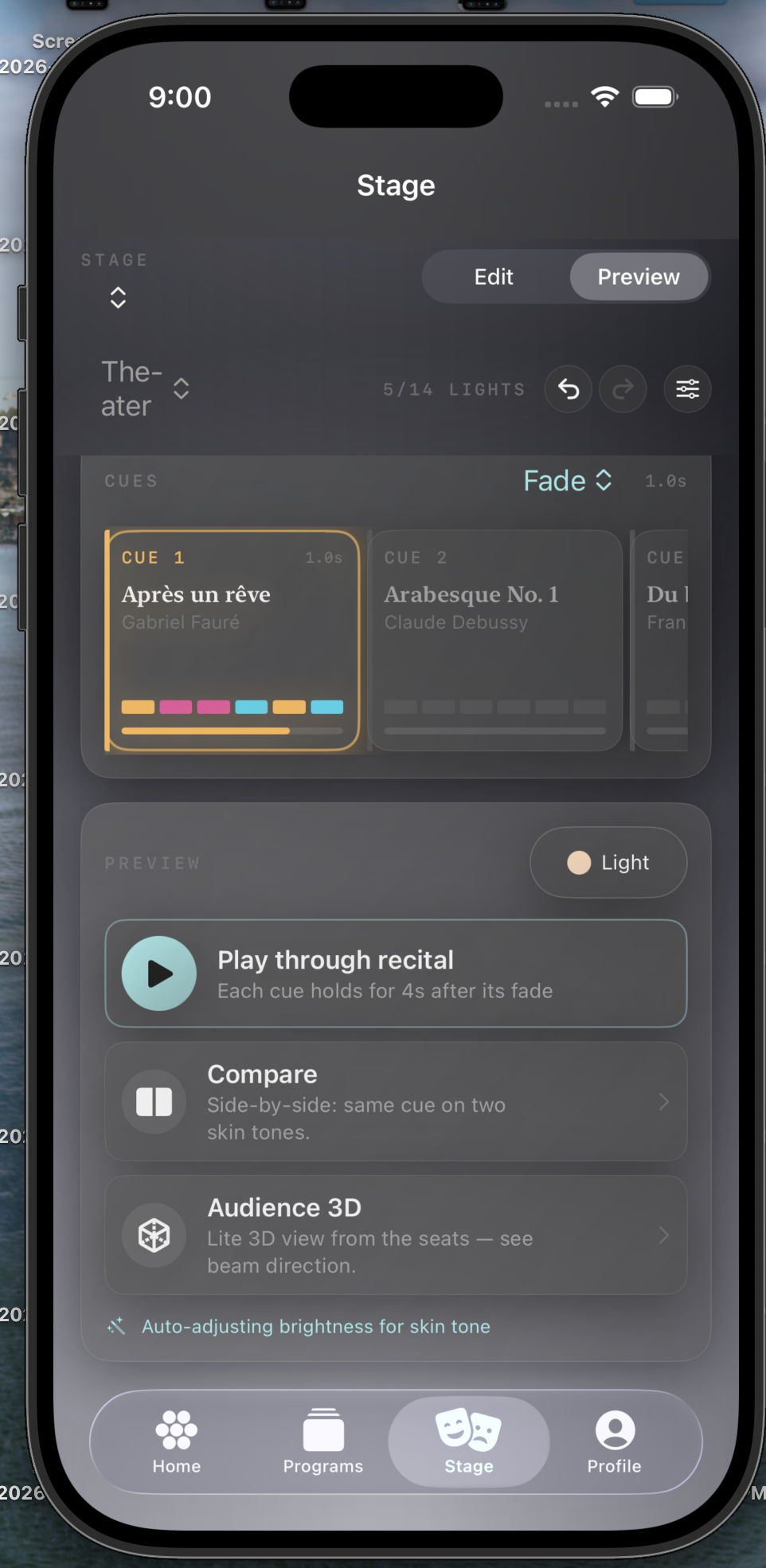
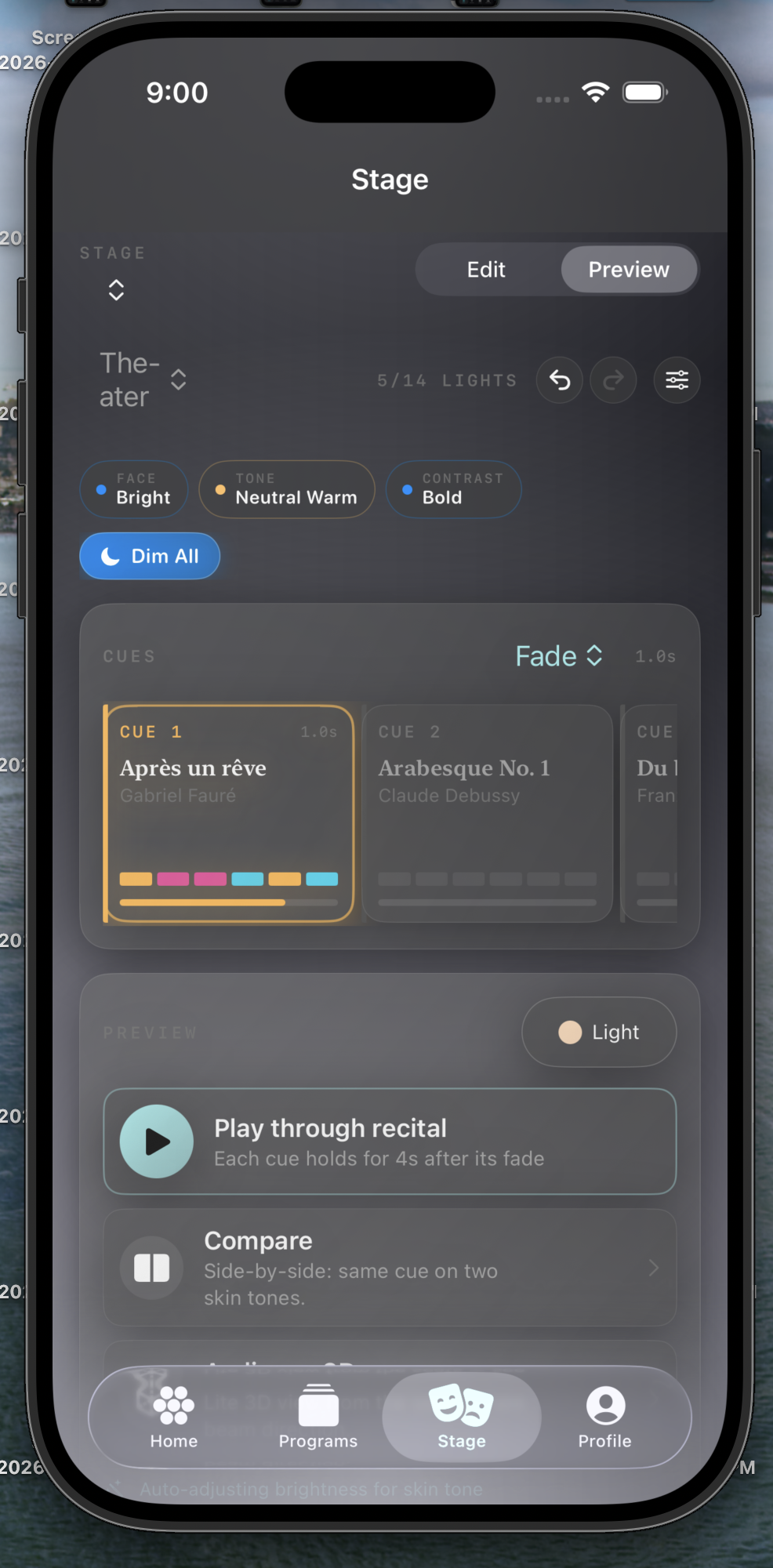
InspirationEvery music student we know faces the same week-of-recital chaos. Program notes get written at 2am the night before. Posters are built in PowerPoint with whatever fonts ship with Microsoft Office. Lighting is either ignored or arranged in a panicked 30-minute conversation at dress rehearsal. The hours leading up to a performance — a performance that took years to prepare — are spent fighting software instead of practicing.We started Motif because we were tired of watching musicians lose their final week to that. Recitals are required for every music degree on Earth. There are millions of students performing them every year. And not one app is built specifically for the workflow.We also wanted to push back on something we kept seeing in creative tech: tools that ask the artist to step aside while AI does the work. We believed the opposite — that students don't need a tool that writes their program notes or designs their posters for them. They need a tool that removes the friction so they can do those things themselves, faster and better.What it doesMotif is a local-first iOS app that unifies recital planning into four connected workspaces:Programs is where students build their repertoire — adding pieces, tracking duration against their target, and getting suggestions when their program is missing required historical periods or languages. The system tells them what's still needed and recommends pieces that fill those gaps.Notes is a guided writing workspace for program notes. Each piece gets four sections — composer context, the piece itself, why the student chose it, what to listen for — with curated research panels of facts the student can reference. The system never writes the notes; it gives the student the raw material to write them.Concept is a poster builder. The app analyzes the student's program, suggests visual themes that fit the mood, and renders a print-ready poster the student can customize and export to PDF, Instagram, or web.Stage is a real-time 3D lighting designer. Students see their performance from the audience's perspective, design lighting cues for each piece, and play through the entire recital as it will run on performance night. It includes skin-tone-aware lighting that auto-adjusts so darker-skinned performers are correctly lit — a feature we haven't seen in any other consumer creative tool.The four workspaces share one data model. Tag a piece's mood once and the theme suggestion, poster palette, and lighting cue all update automatically.How we built itMotif is a native iOS app built in Swift and SwiftUI, with SwiftData for local persistence. We deliberately chose a fully on-device architecture: no servers, no accounts, no telemetry, no third-party services, no LLM calls. The student's recital lives entirely on their phone.The 3D stage view is rendered with a custom layer built on Apple's native graphics frameworks, with physically-based materials, soft-shadow lighting, and volumetric haze for visible light beams. The audience-perspective camera is positioned at row K of an orchestra section by default, with multiple seat presets the student can switch between.The suggestion engines — for theme fit, repertoire gap analysis, requirement validation, and lighting mood mapping — are deterministic rules-based code, not machine learning models. Every recommendation is traceable to readable source code. We made this choice for three reasons: school academic integrity policy prohibits LLMs in coursework, deterministic systems are auditable and trustworthy, and most importantly, students need to remain the authors of their own work.The architectural backbone is a unified data model. Every workspace reads from and writes to one shared recital state, so a change in any workspace propagates to the others without manual sync.Challenges we ran intoSwiftData migrations were a constant landmine. Every new field on a model risked breaking existing user data. We had to learn the optional-plus-computed-property pattern the hard way after hitting two crashes from non-optional schema changes mid-development.Making the 3D stage view actually look like a stage was harder than we expected. Spotlights without visible beams just look like flat lighting. We had to layer volumetric fog, glowing fixture markers, light pools on the floor, and a careful camera angle before the scene felt like a real stage rather than a dark void.The skin-tone-aware lighting feature required calibrating exposure compensation curves across the tonal range. Naive brightness boosts looked artificial; getting it to feel right while remaining accurate took several rounds of iteration.Designing controls for users with no lighting background without dumbing the system down for advanced users. We solved this with progressive disclosure — plain-language sliders by default, with a long-press gesture revealing per-fixture controls, color pickers, and DMX channel mapping for power users.Build environment friction — Xcode indexing, derived data paths, simulator state — ate hours we wanted to spend on features. We learned to script our build process aggressively.Accomplishments that we're proud ofThe unified data spine. Tagging a piece's mood in one workspace updates the theme score, poster palette, and lighting cue in three other workspaces automatically. This is the architectural decision that makes the whole product feel coherent rather than like four apps stapled together.Skin-tone-aware lighting design. As far as we can find, no other consumer creative tool does this. Most lighting design software assumes one skin tone — usually a light one — and performers of color discover the lighting fails them only at dress rehearsal. Motif lets students design for their actual performer from the first cue.No LLM, no compromise. We built a creative tool that genuinely helps without using a single language model. The suggestion engines, theme derivation, requirement analyzer, and cue mood mapper are all readable, deterministic code. Students stay the authors of their work by architectural design.Local-first privacy. Everything stays on the student's device. No login, no cloud, no telemetry, no third-party services. Academic and creative work that represents years of effort never leaves the phone unless the student explicitly exports it.The Stage view actually feels like a stage. Visible light beams, performer figures, audience perspective, real-time response. It's the most polished tab in the app and the moment users tend to say "oh, this is real." The goal: put this in the hands of every music student who currently makes their recital poster in Word the night before. Open-source what we can. Keep the core local-first. Keep the artist as the author.
MOTIF
Motif is local-first creative software for music students — recital planning, notes, poster design, and 3D stage lighting in one app. Skin-tone-aware lighting included.

Updates

Leave feedback in the comments!
Log in or sign up for Devpost to join the conversation.