-
-
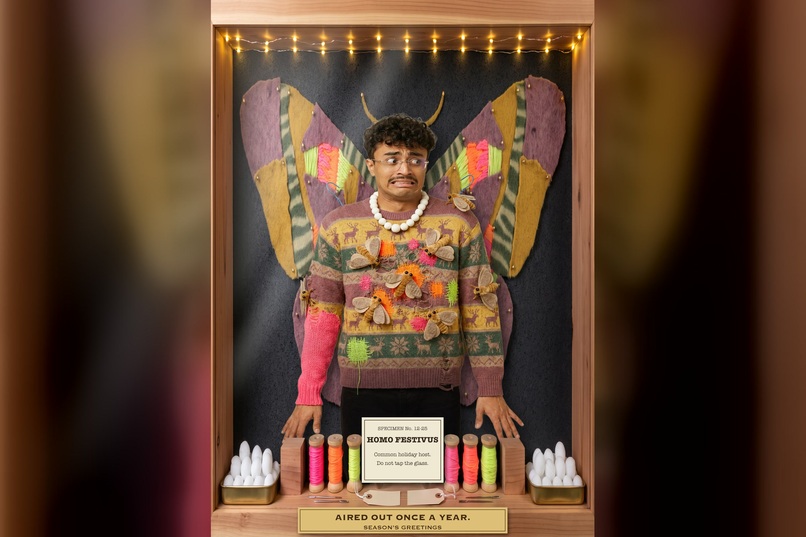
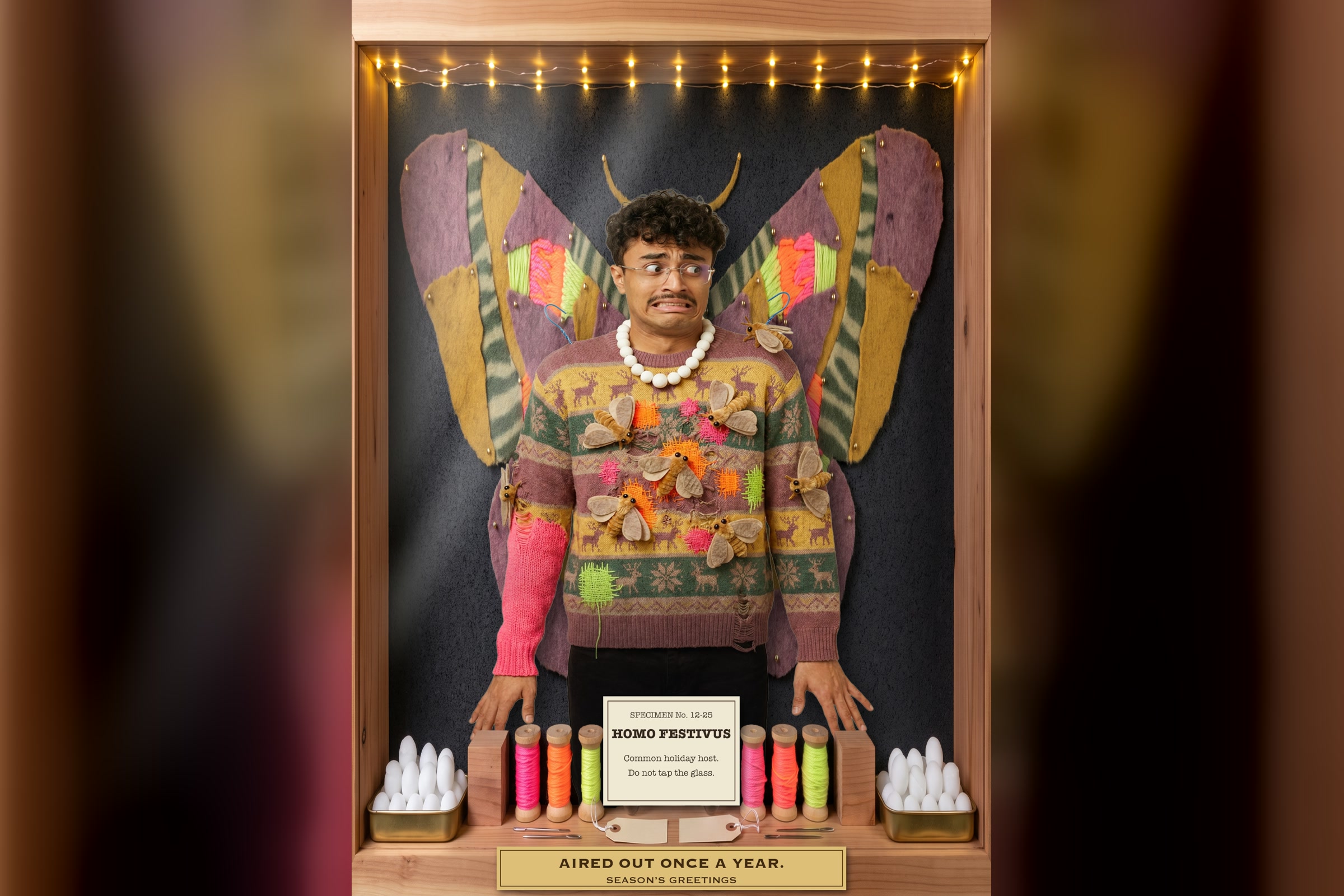
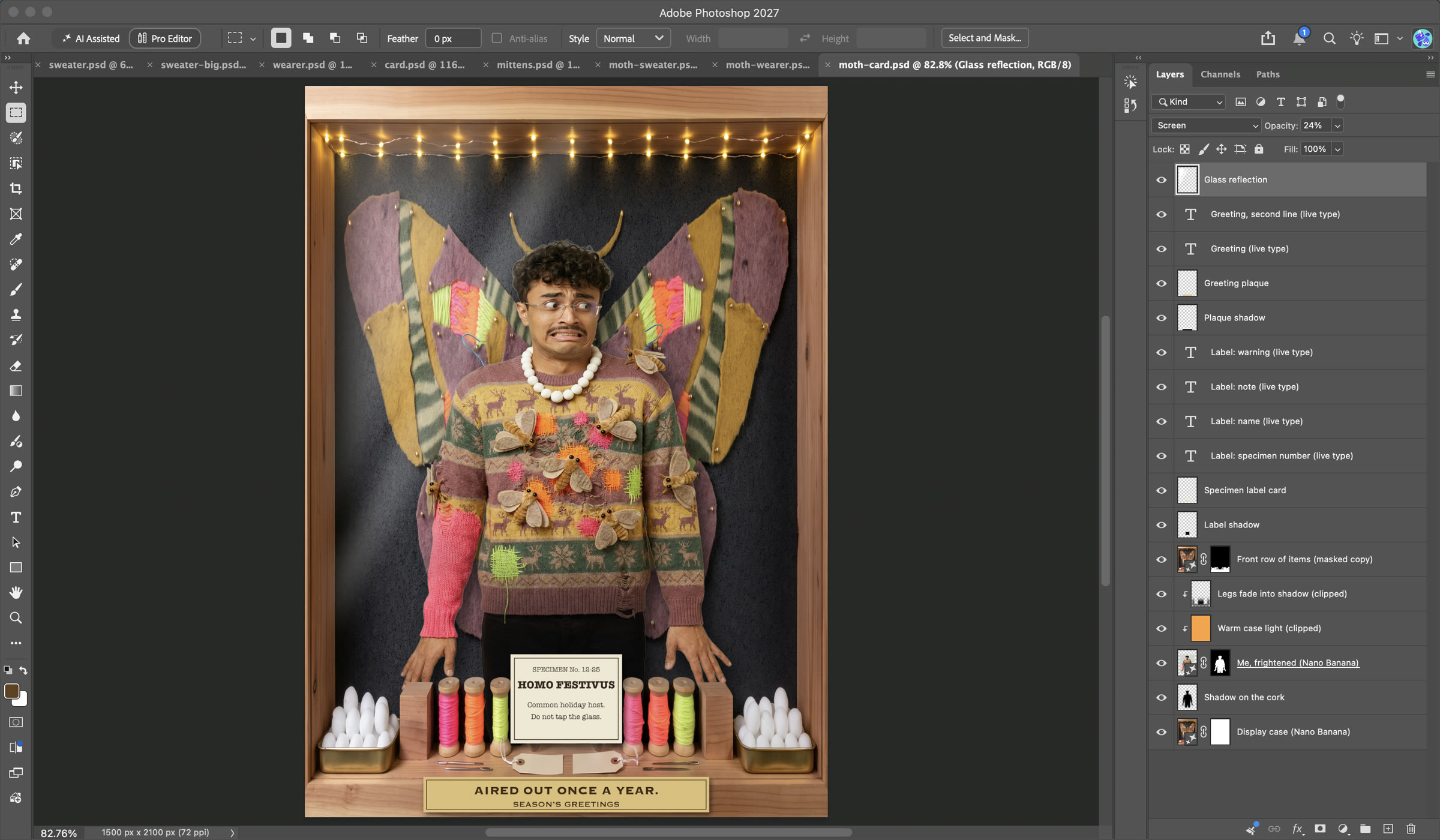
The finished card. I'm the specimen, and the moth's wings are made from the sweater's own wool.
-
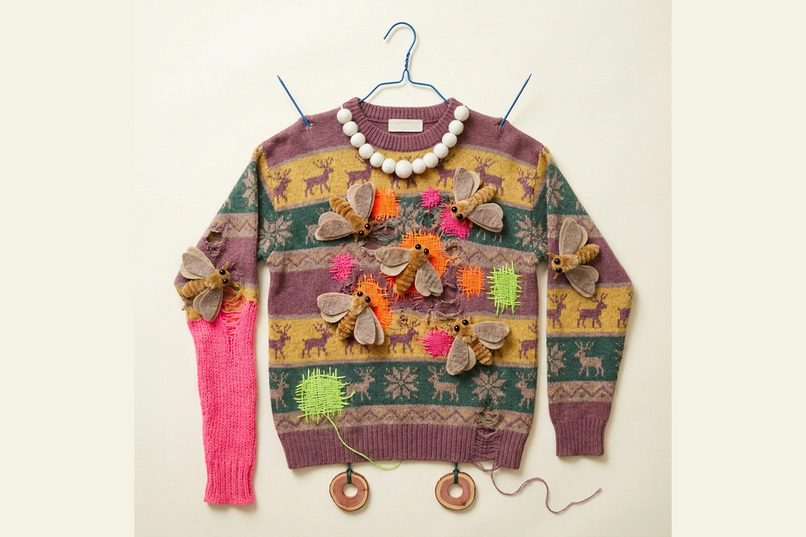
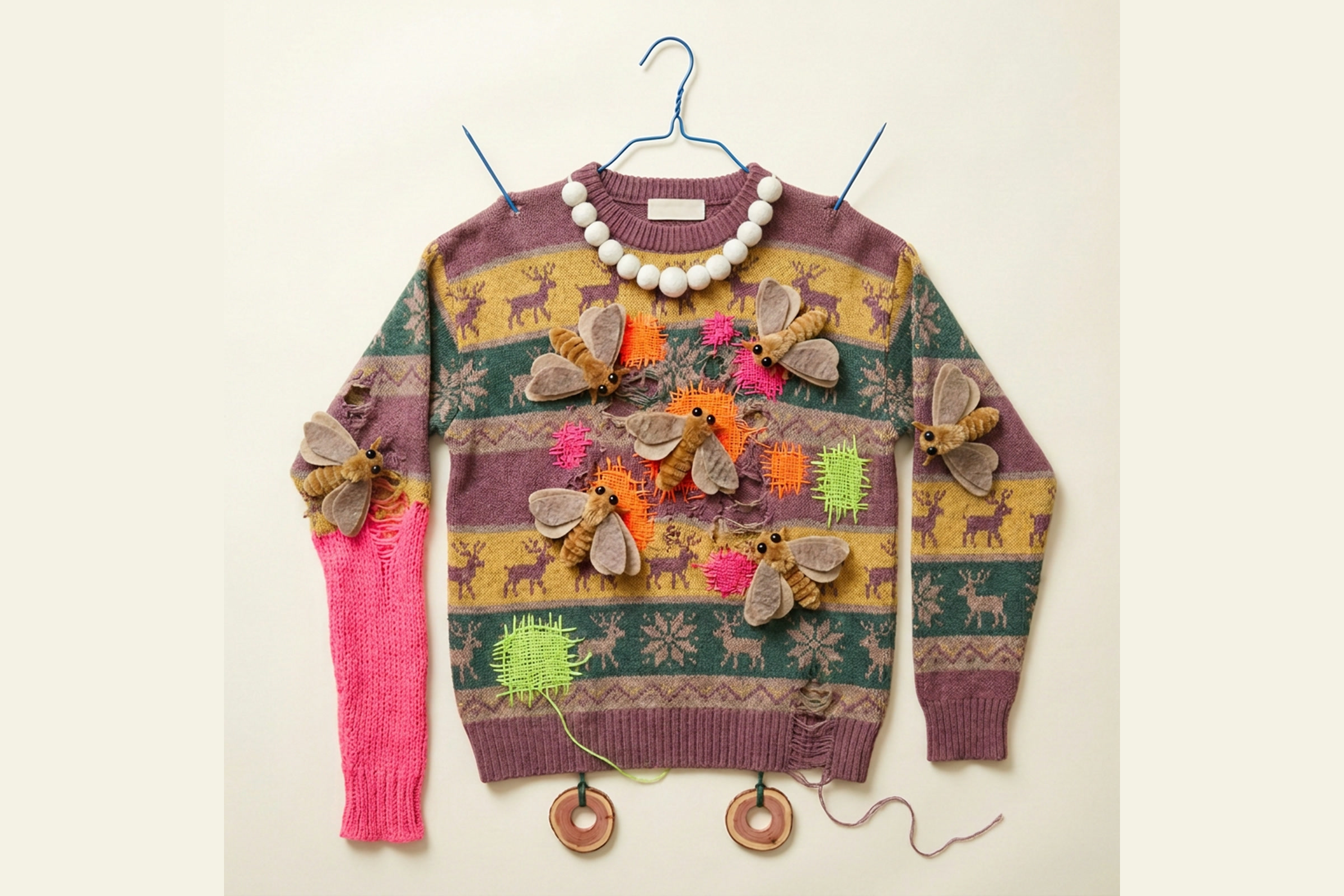
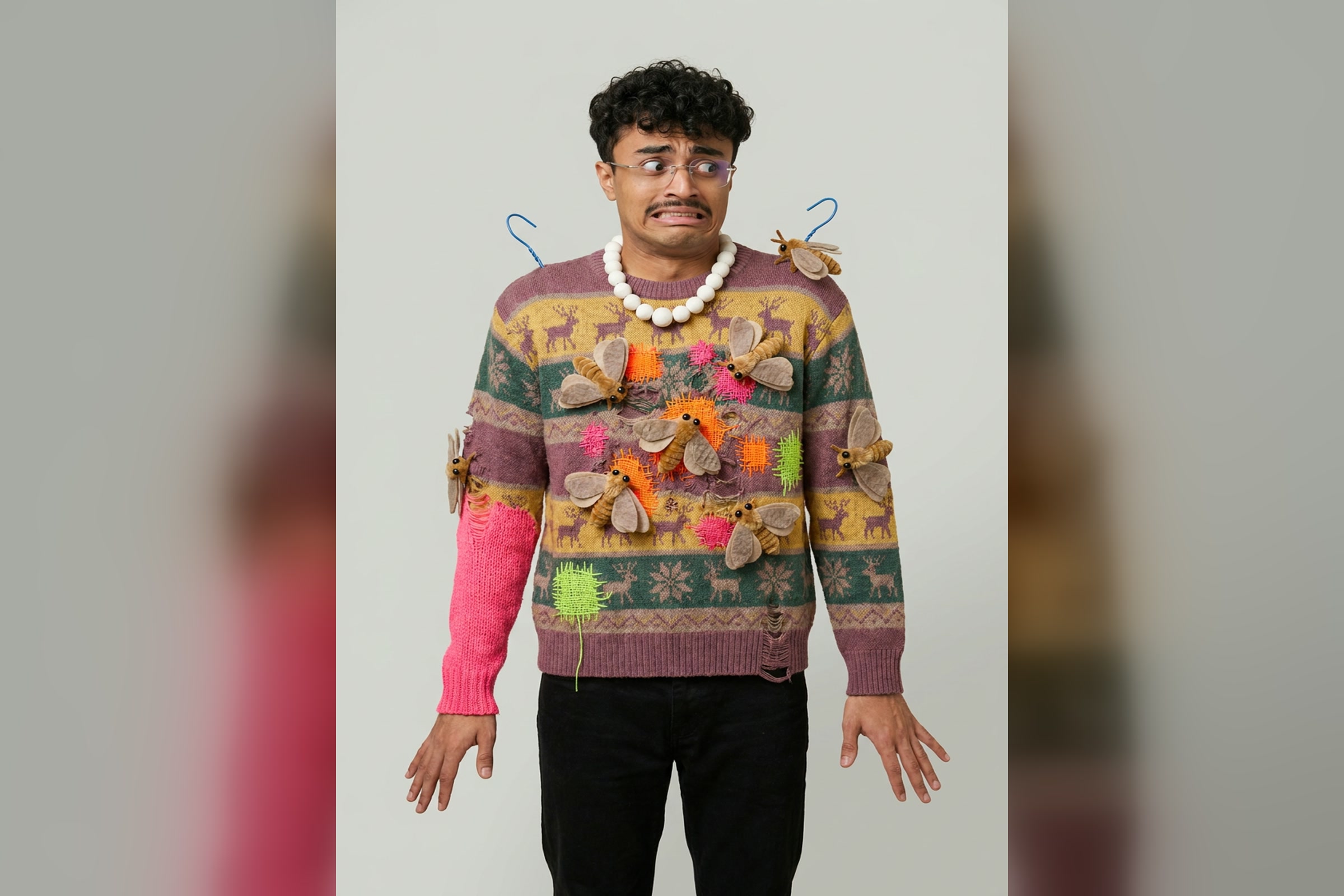
The sweater after its second pass: wrong-wool pink sleeve, neon mending, hanger wire through the shoulders, seven plush moths.
-
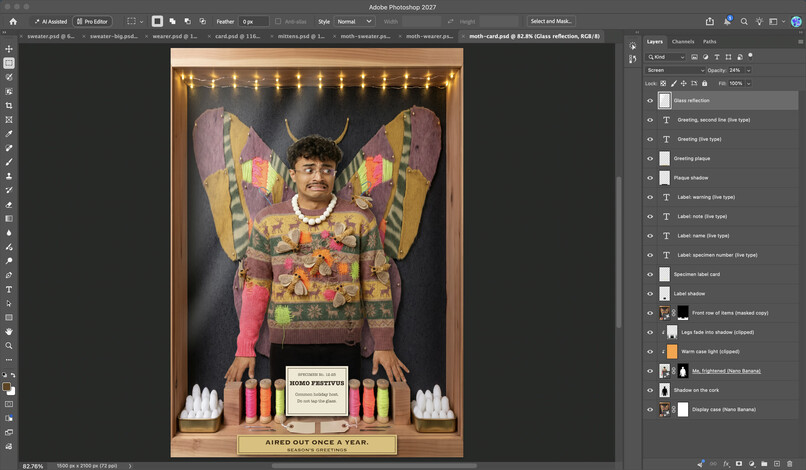
The Photoshop file: seventeen layers. Two are Nano Banana results, the rest are masks, shadows, light, live type and glass.
-
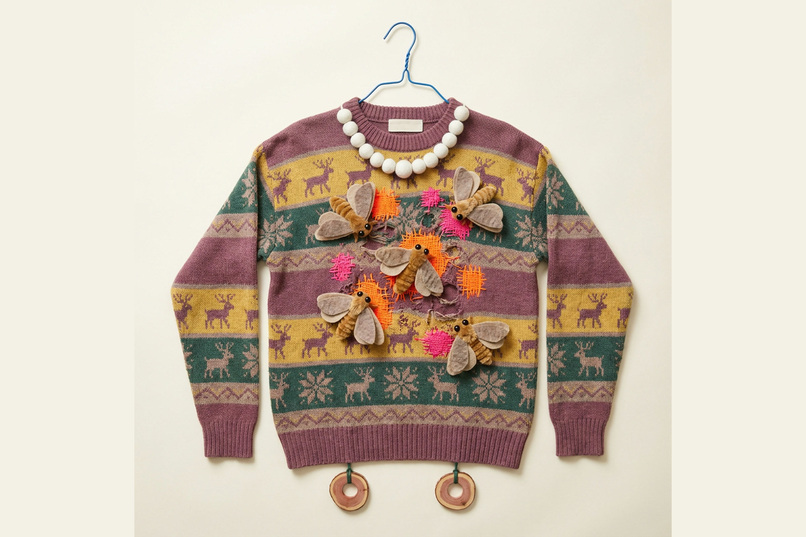
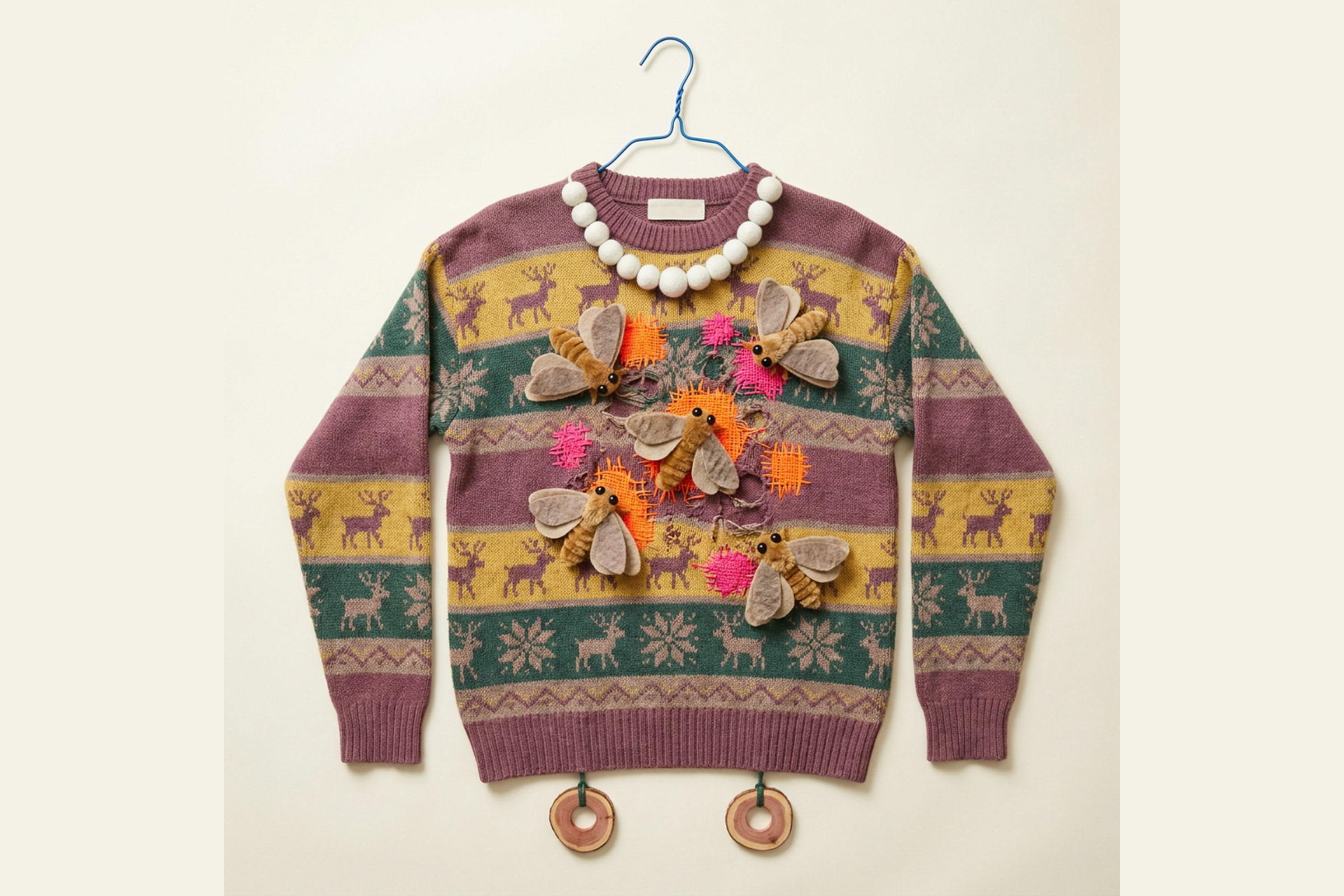
The first sweater. The moths came out as toys, which I wanted, but the damage was far too tidy.
-
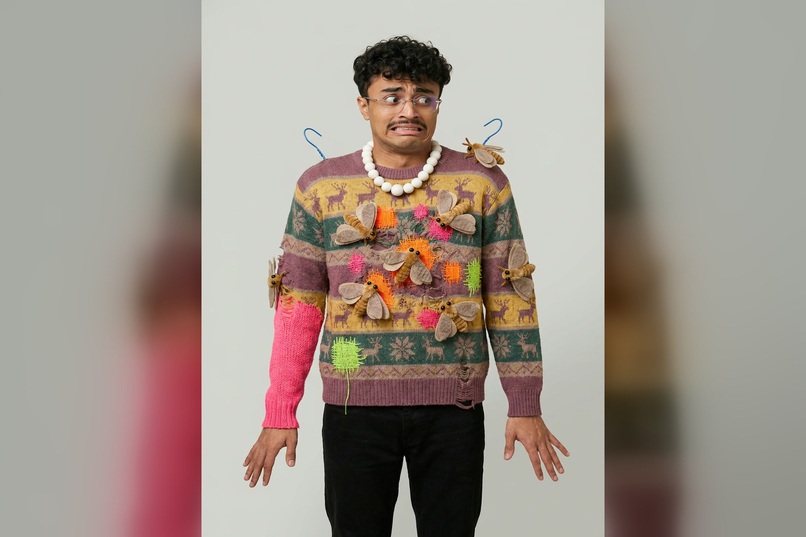
Me in the sweater, as generated. I asked for the glance at the moth. The hanger hooks on my shoulders were its own idea.
-
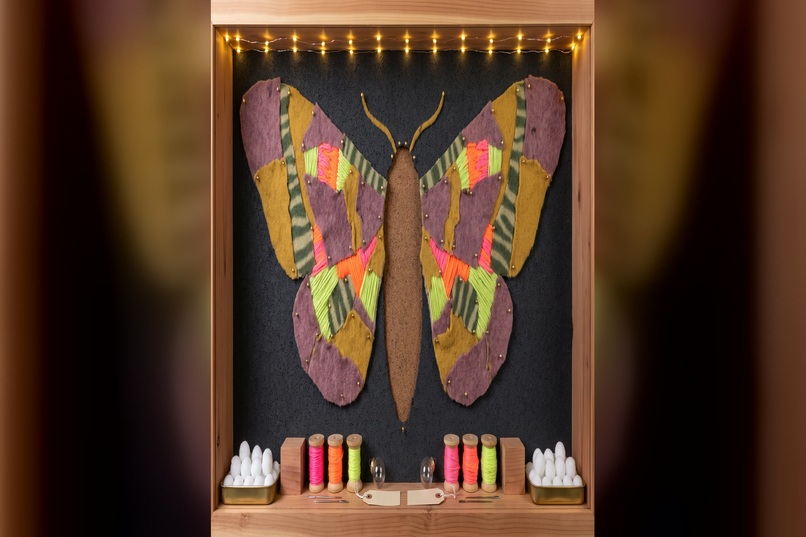
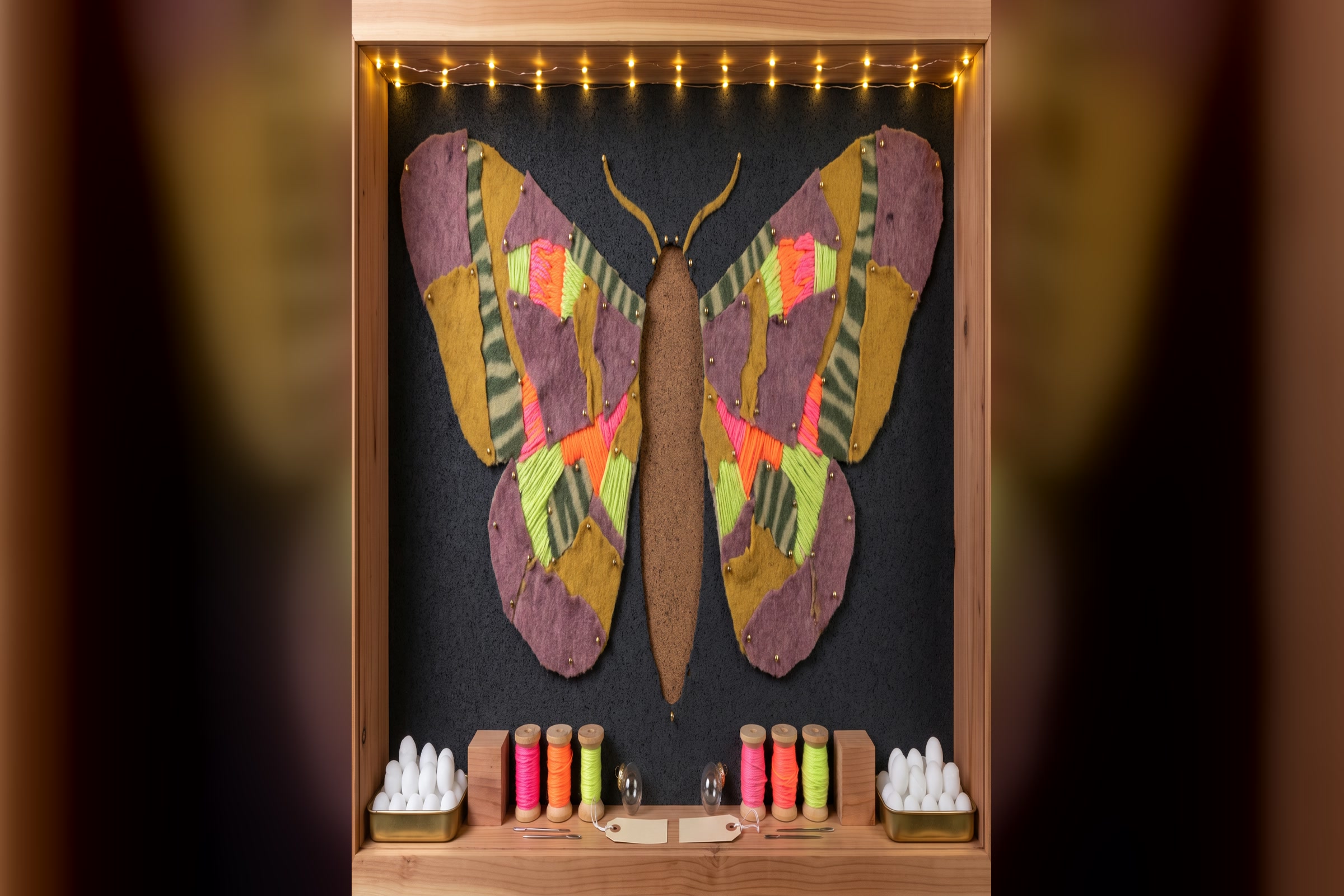
The display case before I went in. I asked for an empty middle and got a moth body, which I now stand in front of.
Where it started
A holiday sweater gets worn one day a year. I wanted to know what happens to it on the other 364. The answer is a dark closet, a wire hanger, and moths.
The sweater
Everything you would throw a sweater away for is the decoration here. The reindeer stripes are chewed through. The holes are mended in neon orange, pink and lime by someone who was clearly panicking. One sleeve is gone and has been replaced in the wrong wool. The hem is coming undone, the hanger is still inside it with the wire poking through both shoulders, and there's a string of mothballs round the neck. The moths never left. Seven plush ones are still sitting on it.
The card
On the card the moths get their own back. I'm the specimen. I'm standing in a museum display case with fairy lights along the top, in front of one giant moth pinned to the cork, and its wings are made of the same sweater's wool. I've just spotted a moth on my shoulder. The label says "Homo festivus. Common holiday host. Do not tap the glass." The brass plaque says "Aired out once a year. Season's Greetings."
How it was made
All of it was generated in Photoshop with Nano Banana as the model. There are four generations: the sweater twice, me wearing it, and the display case. Three of the four used an earlier result as a reference image, which is why the same sweater turns up on the table, on me, and in the moth's wings.
The card file has seventeen layers. Two are generations (me and the case). The rest are a mask to cut me out, a shadow behind me, two clipped layers for lighting, a masked copy of the front row of bobbins so I stand behind it, a label and a plaque with their shadows, six lines of live type, and a layer of streaks for the glass.
What went wrong
The first sweater was too nice. I had been worried the model would draw real insects, and it didn't. The moths came out as stuffed toys. But the holes were small and the patches were neat, and it looked like a pleasant vintage jumper. Fixing that meant changing five or six things at once, which is too much for a local repaint. So I added a blank layer and generated again with the first sweater attached as a reference. It kept the stripes, the necklace and the moths and ruined everything else.
The case didn't follow one instruction. I asked for the middle of the moth to be left as empty cork, and it gave the moth a plain brown body anyway. That turned out fine, because I stand in front of it.
Once I was in the case, two things looked wrong when I zoomed in. My hands were too dark, and my thighs stopped dead in a straight line at the top of the thread reels. I lightened the hands. For the legs, the mask on the front row now follows the outline of each reel and block, so my legs and fingers pass behind them.
What I'd tell someone else
When a lot needs to change, don't repaint. Generate again and attach the last result as a reference.
One reference image can do more than one job. The sweater dressed me and also supplied the wool for the wings.
The prompts in full
Sweater, first pass (Generate Image):
A studio product photograph, from directly above on seamless warm-white paper, of one gloriously ugly vintage knitted holiday sweater laid flat, just rescued from the attic. Faded stripes of dusty plum, mustard and spruce green carry small reindeer and snowflakes. Both shoulders poke up into sharp points from a blue wire coat hanger still inside the collar. The chest is chewed into a big cluster of ragged moth holes, badly mended with huge clashing neon orange and hot pink darning patches. Five fat plush toy moths made of felt and fuzzy chenille yarn, with black bead eyes, sit on the holes. A necklace of white felt mothballs rings the collar, and two wooden cedar rings dangle from loose threads at the hem. Soft daylight, every fibre sharp.
Sweater, second pass (Prompt to Edit on a blank layer, first sweater as the reference image):
Fill this blank canvas with a new studio product photo from directly above on warm-white paper, showing the sweater from the reference image after the moths have really feasted. Keep its faded plum, mustard and green reindeer stripes, the white mothball necklace, the blue wire hanger and the two cedar rings. Now both shoulders poke up into sharp hanger points. The left sleeve is eaten away below the elbow and replaced by a badly knitted neon pink sleeve that is too long. Ragged holes spread over the chest, both sleeves and the hem, mended with huge clumsy neon orange, hot pink and lime darning patches. Nine fat plush toy moths with feathery antennae, fuzzy bodies and bead eyes sit all over it. The hem unravels into a long trailing thread.
Me in the sweater (Prompt to Edit on a blank layer, my face and the finished sweater as reference images):
Fill this blank canvas with a tall studio photo, using the first reference image for the person's face and the second for the sweater. It shows this same person from the knees up, standing stiff like a pinned museum specimen, arms slightly away from the body, palms facing forward. The face looks frightened: eyes wide, eyebrows raised, mouth pulled into a small worried grimace, glancing sideways at a moth on the shoulder. Keep the curly dark hair, moustache and rimless glasses exactly as in it. The person wears the sweater from the second reference with every detail: reindeer stripes, neon patches, plush moths, one neon pink sleeve, mothball necklace, blue hanger wires poking up at the shoulders. Plain pale grey backdrop, soft even light.
The display case (Prompt to Edit on a blank layer, the finished sweater as the reference image):
Fill this blank canvas with a straight-on studio photo of the inside of a tall museum insect display case. A raw cedar wood frame runs round the edges, with tiny warm fairy lights along the top. The back is dark charcoal cork. Pinned to it with brass pins is one enormous symmetrical moth, wings spread to fill the case, made of scraps of knitted wool cut from the sweater in the reference image: faded plum, mustard and green reindeer stripes with neon orange, pink and lime patches. The centre, where the moth's body would be, is left as empty cork. Along the bottom ledge sits a neat row of tiny things to count: white mothballs in brass trays, cedar blocks, bobbins of neon yarn, darning needles, small baubles, blank tags. Soft top light.
Built With
- adobephotoshop
- gemini
- nanobanana

