Inspiration
Mossu started with a problem I was experiencing myself:
I could close my laptop, but I couldn't stop working in my head.
Even after finishing work, I would keep replaying decisions, thinking about unfinished tasks, worrying about tomorrow, or wondering whether something I built would succeed.
I noticed that the hardest boundary between work and personal life wasn't physical. I could leave my desk, turn off notifications, and stop working — while my mind was still at work.
So I started building Mossu around a simple question:
Can a three-minute ritual help someone mentally leave work and return to their own life?
Mossu uses short meditation sessions as that transition ritual.
But the goal is not to become "good at meditation." The goal is to make it a little easier to choose what happens after work.
What Mossu does
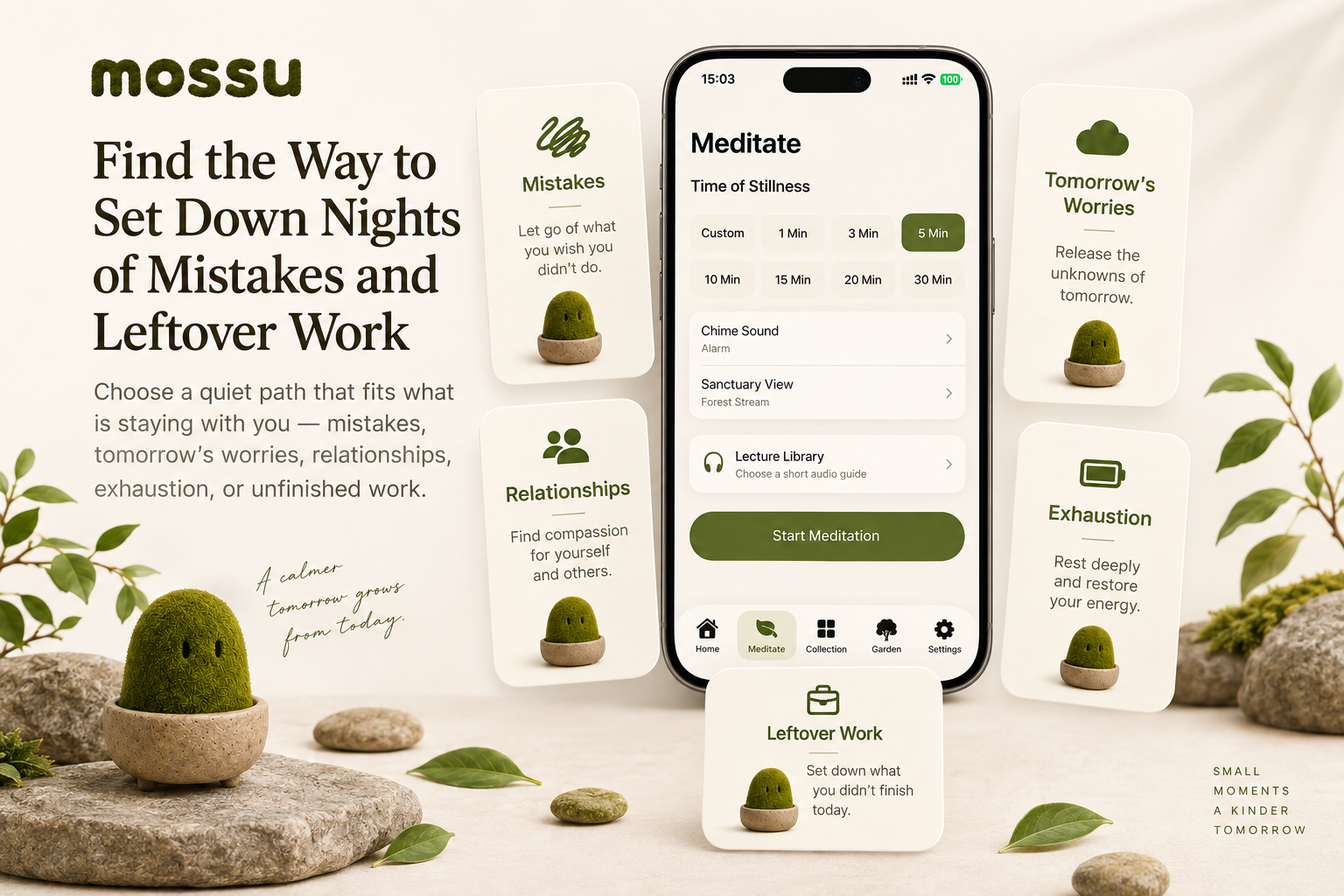
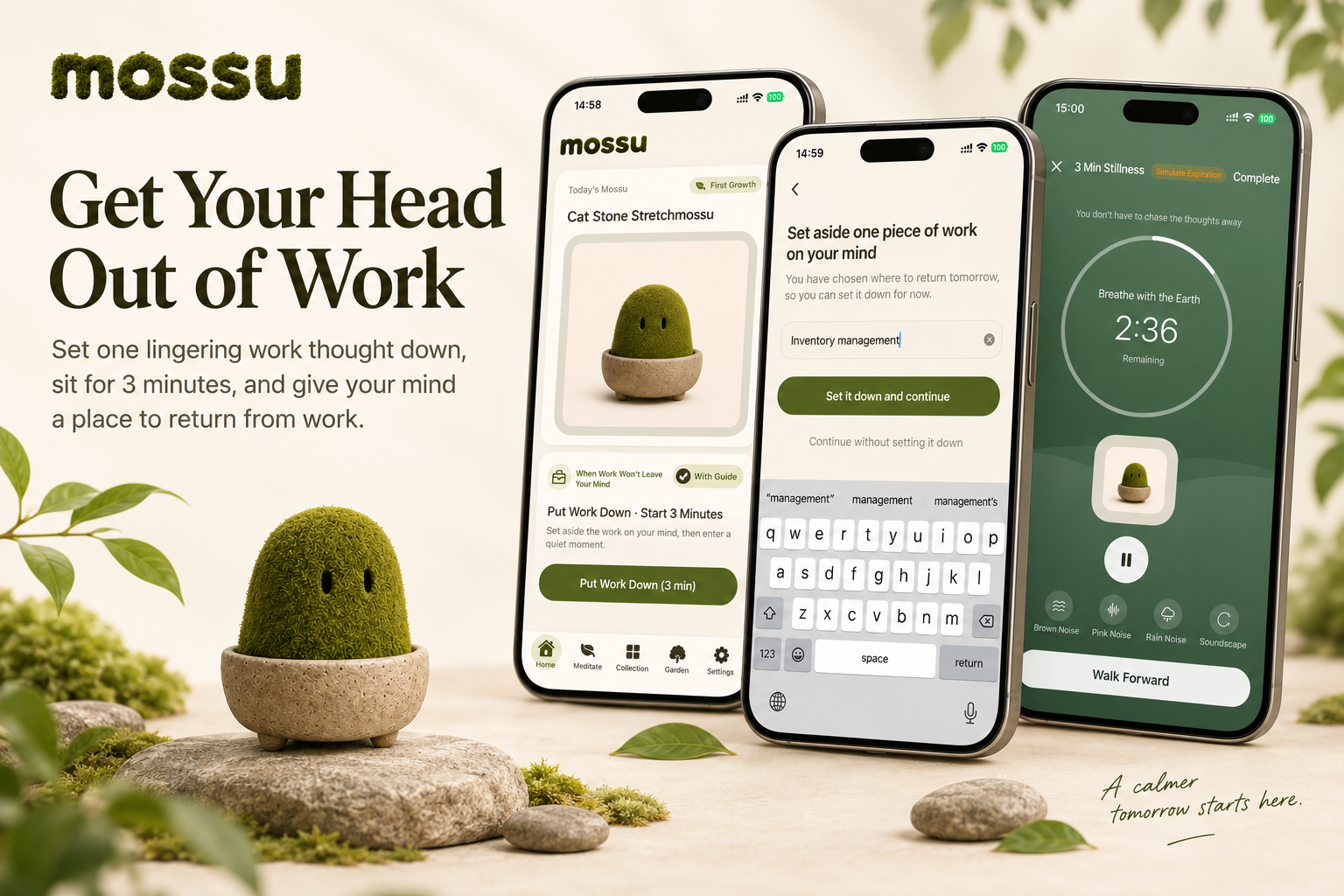
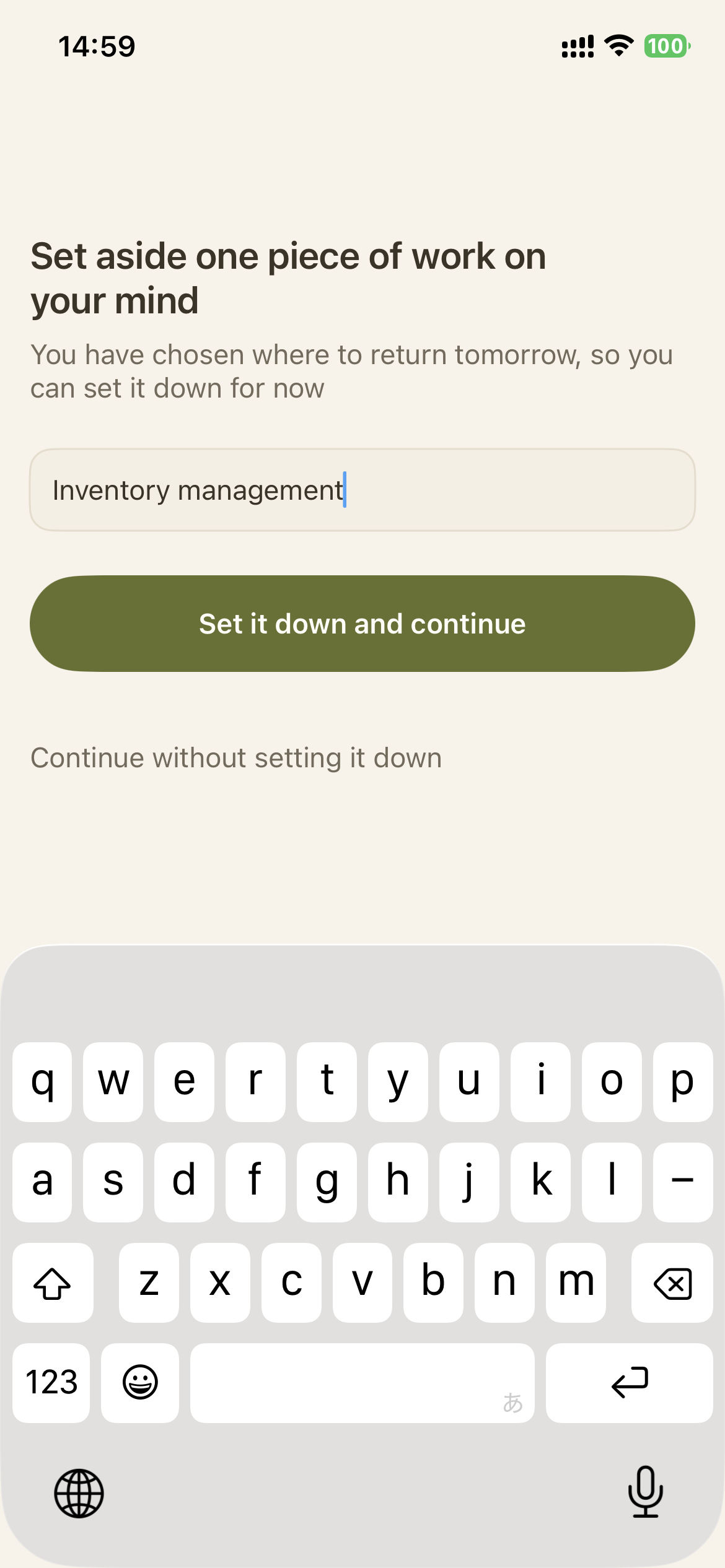
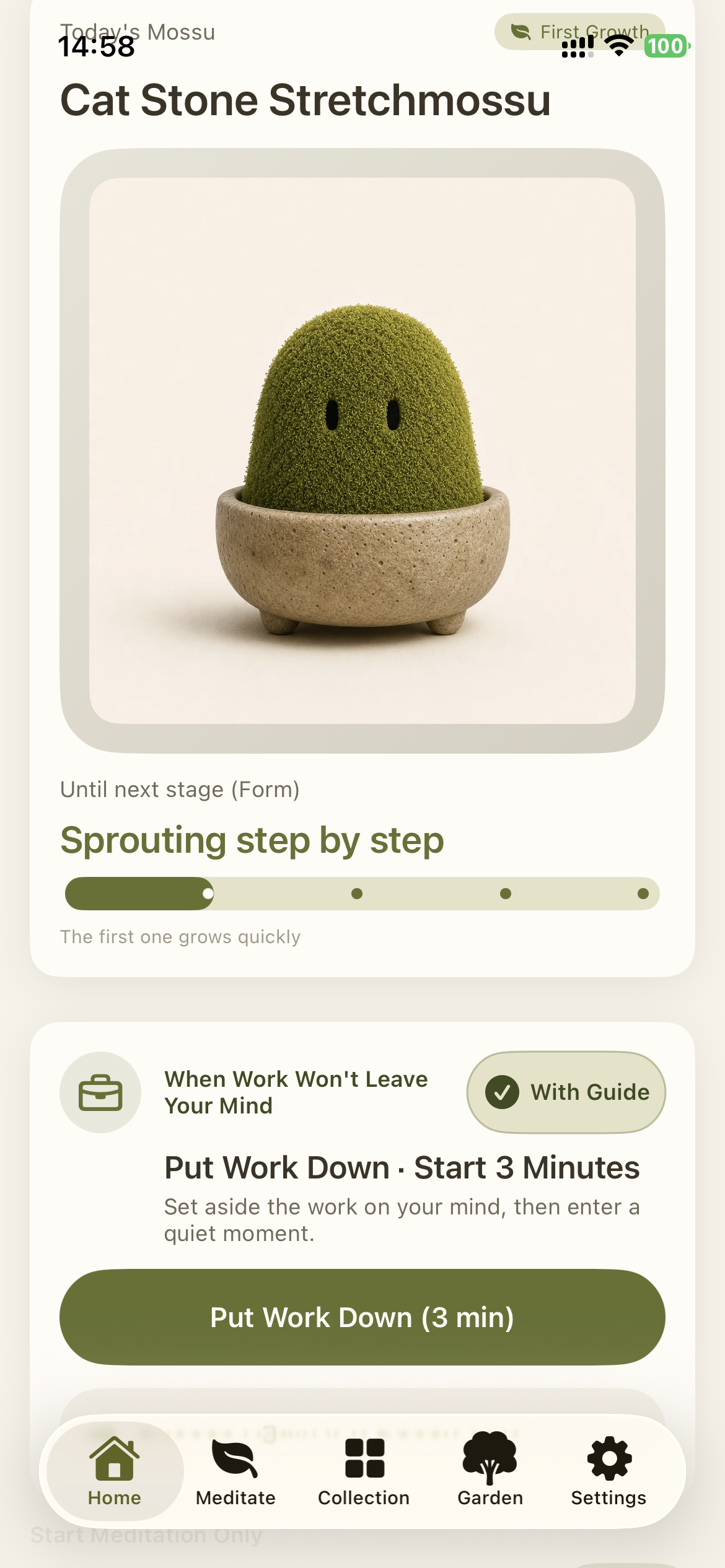
Before a session, users can acknowledge one thing that is still occupying their mind — an unfinished task, a mistake, tomorrow's meeting, or anything else.
Instead of solving it immediately, Mossu helps them temporarily put it down.
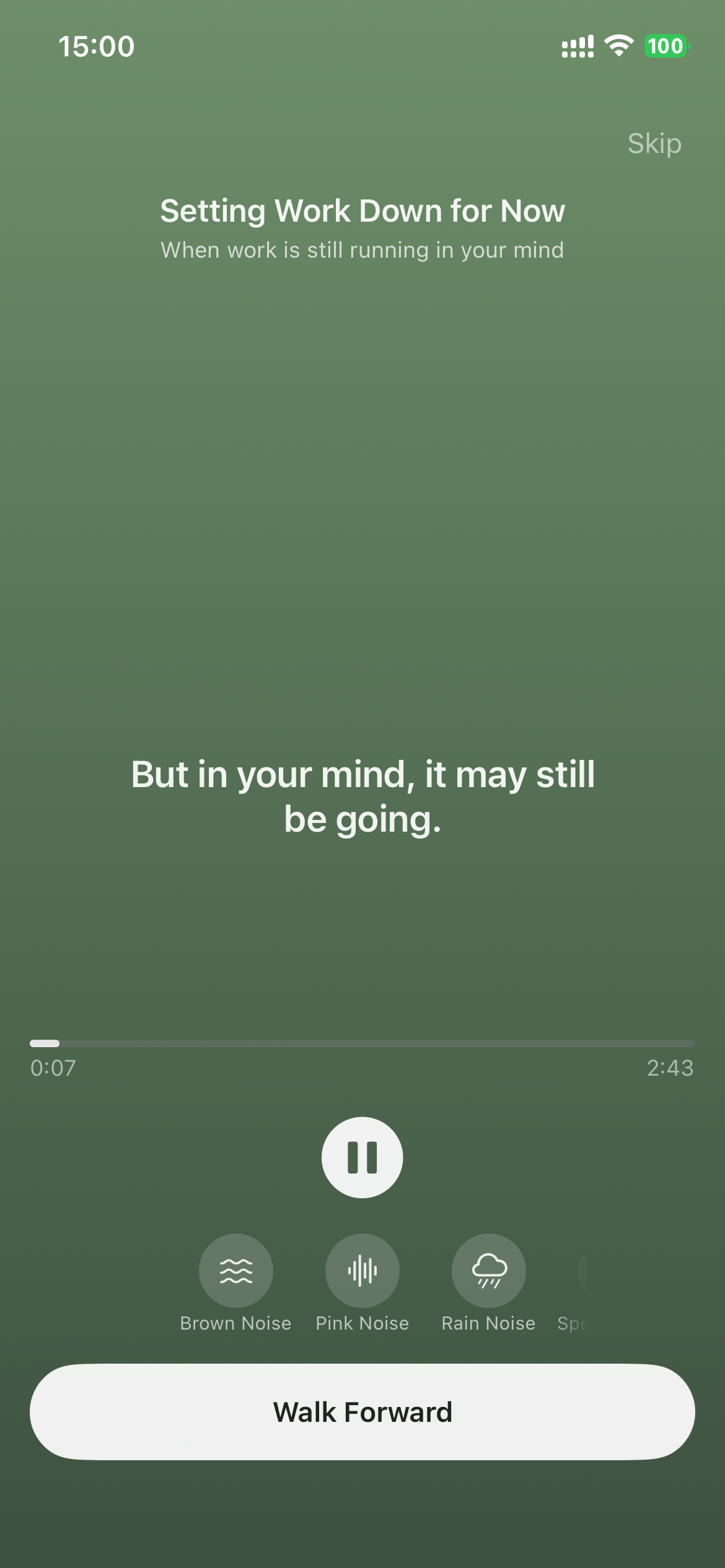
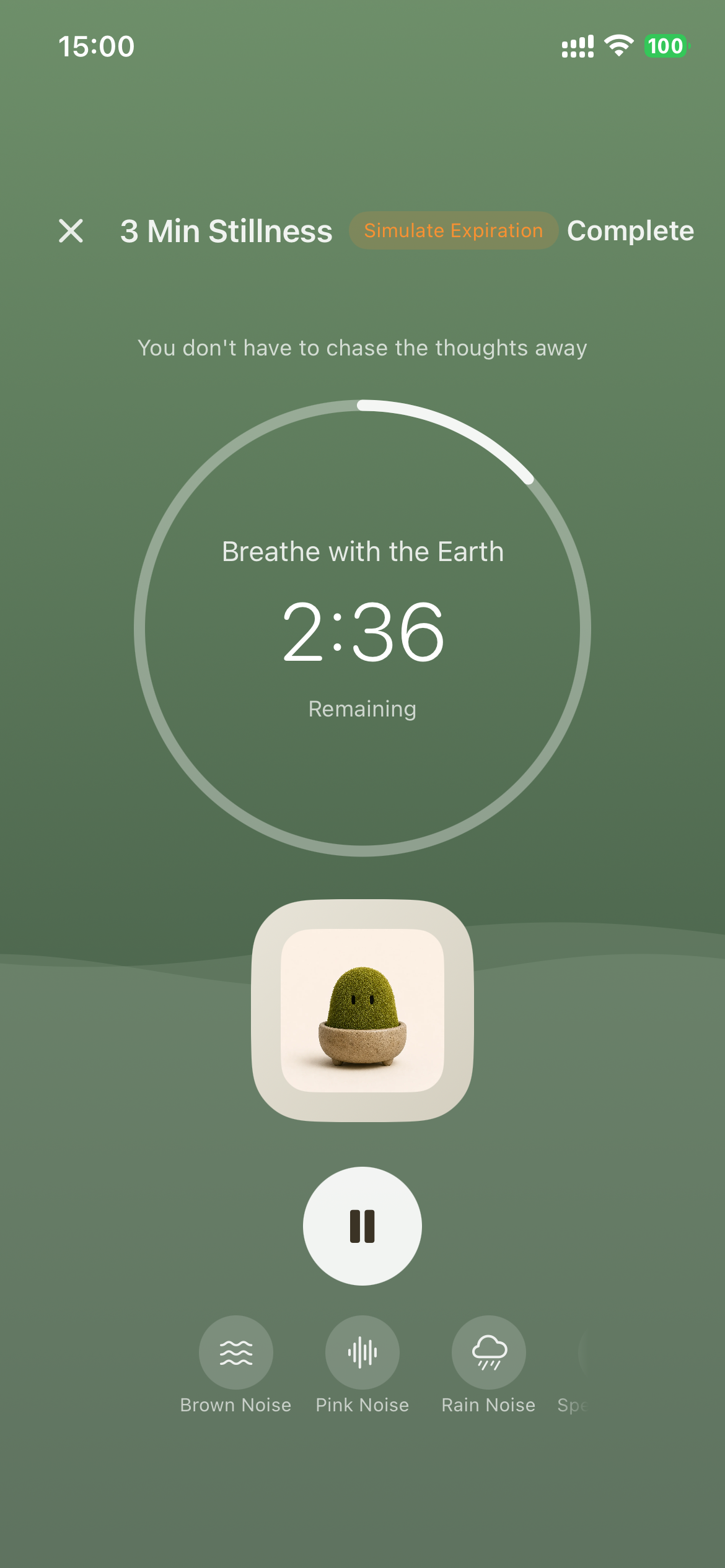
They then spend a short session returning their attention to their breath, body, or surrounding sounds.
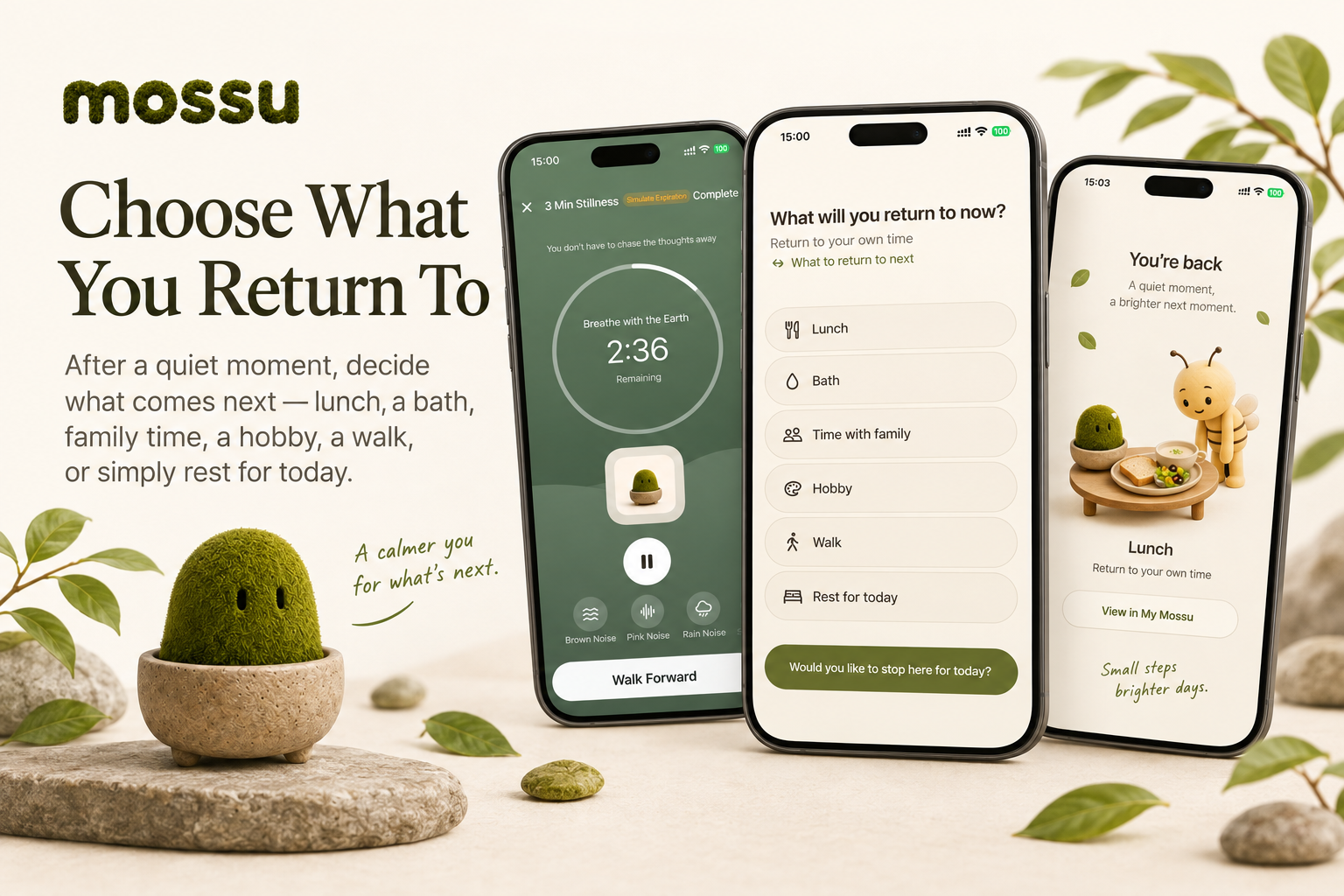
At the end, Mossu asks a question that became one of the most important parts of the product:
What do you want to return to now?
Dinner. A shower. Family. Reading. A walk. A hobby. Sleep. Or simply doing nothing.
The point isn't just to stop thinking about work. It is to intentionally choose what comes next.
Growing something by returning to your life
I didn't want Mossu to turn meditation into another productivity dashboard.
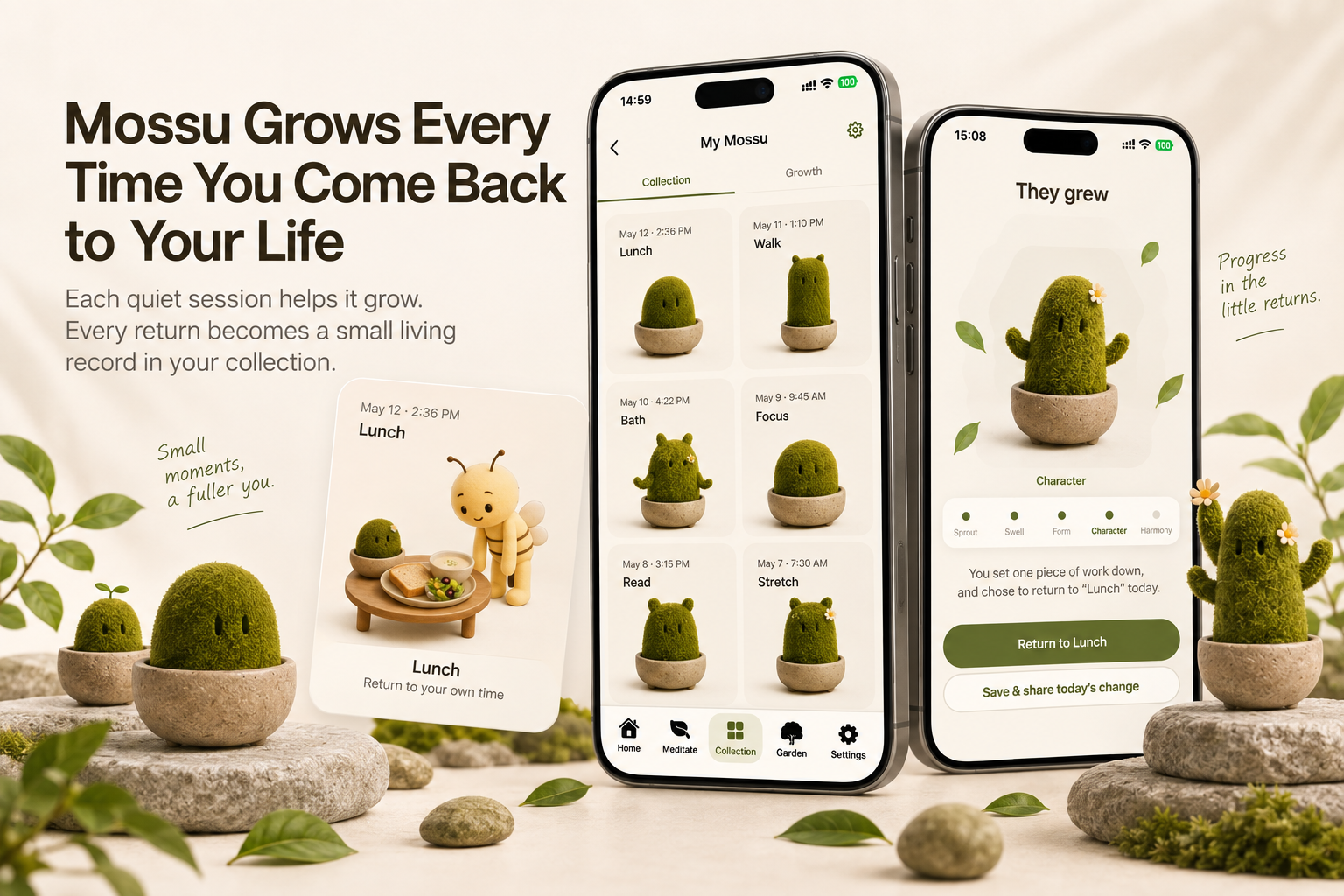
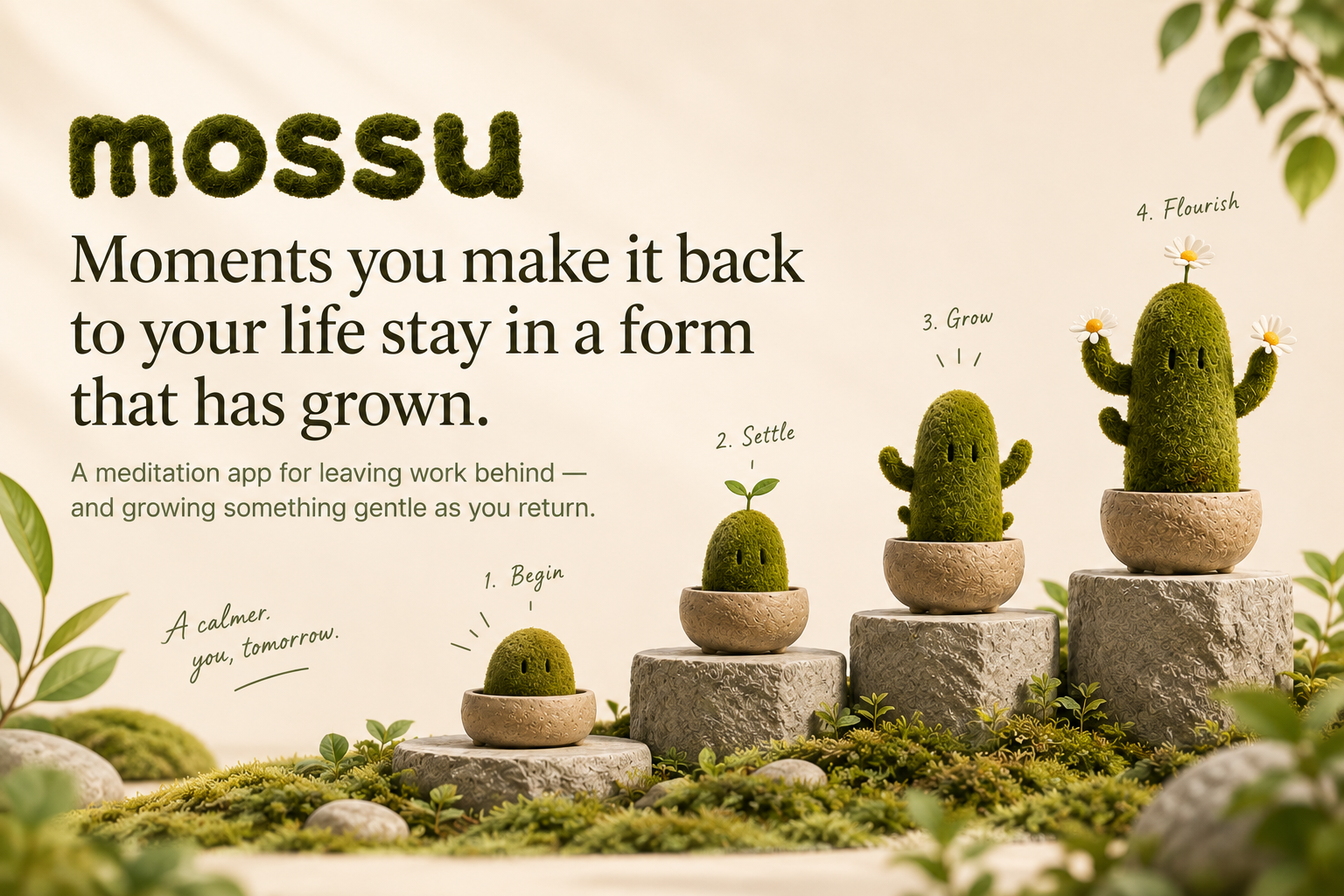
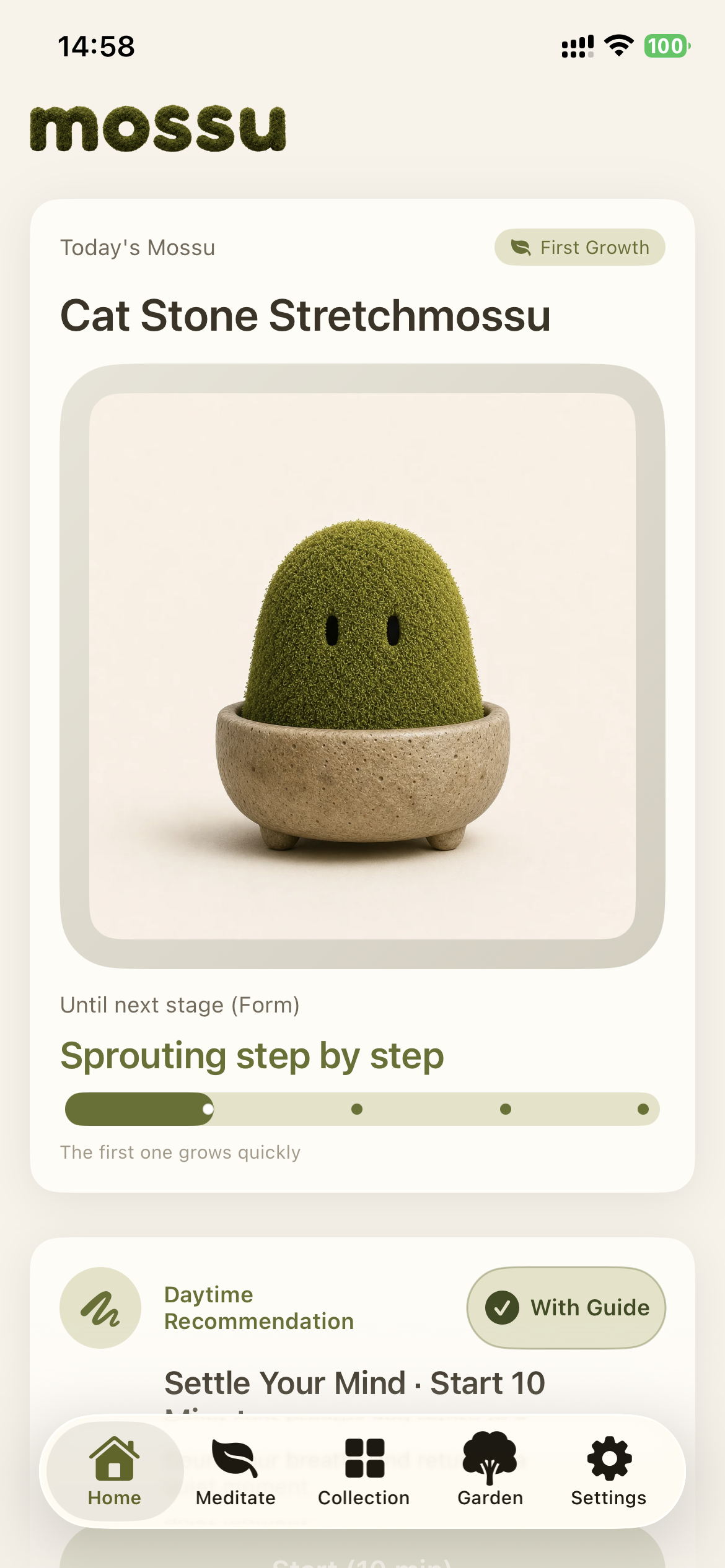
Instead of focusing only on streaks, scores, and total minutes, each completed session helps a small moss creature grow.
There are more than 80 moss creatures to discover and grow.
The creature becomes a visual record of all the small moments when the user tried to return to their own time.
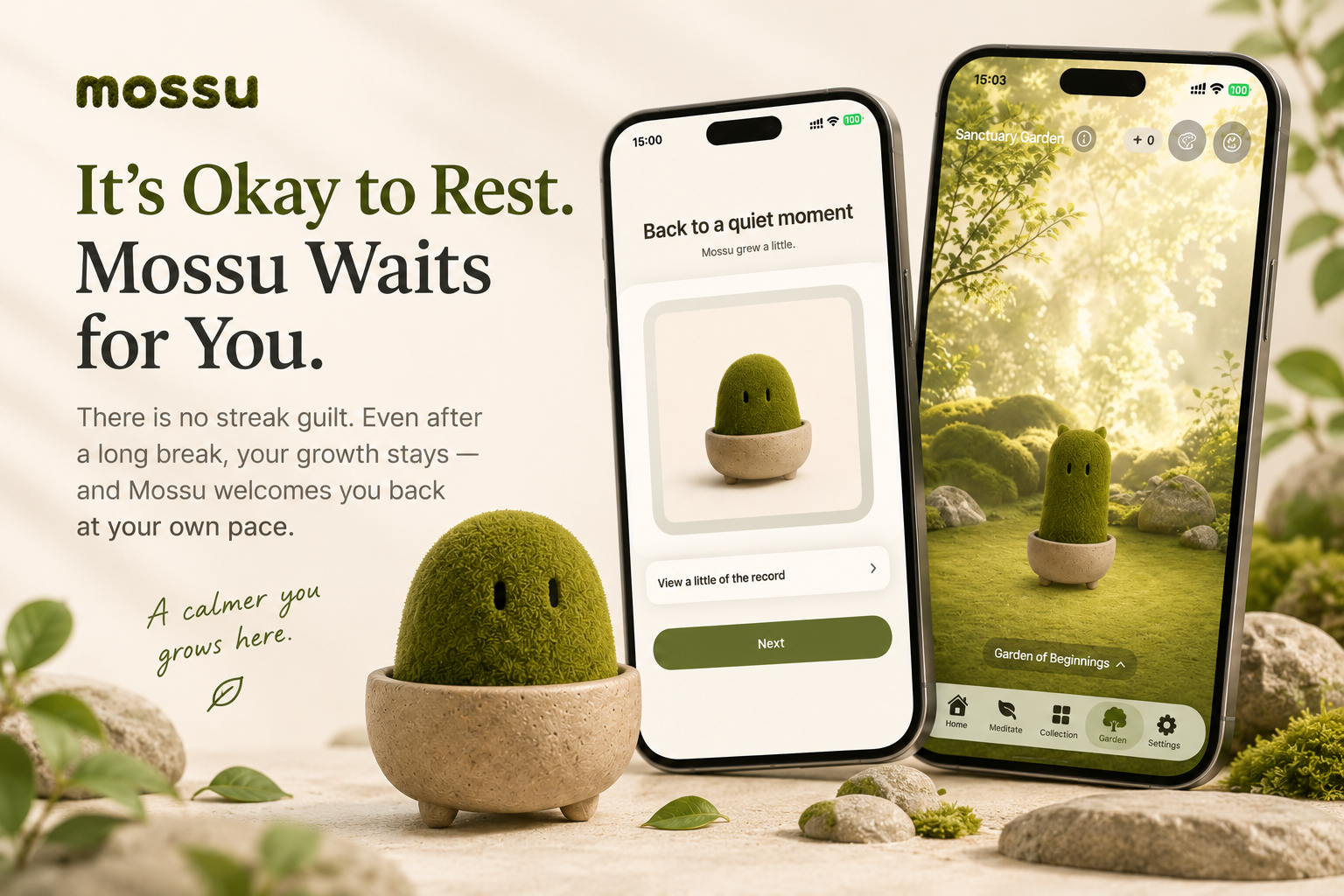
And importantly, nothing dies if you miss a day.
There is no punishment for breaking a streak and no growth is taken away.
I felt that an app designed for people who are already mentally exhausted by work should not become another system telling them that they failed.
How I built it
Mossu is a native iOS application built with Swift and SwiftUI, with a local-first architecture for the core experience.
The app combines several systems that normally live separately:
- short meditation and guided transition sessions
- ambient audio
- character progression and collection
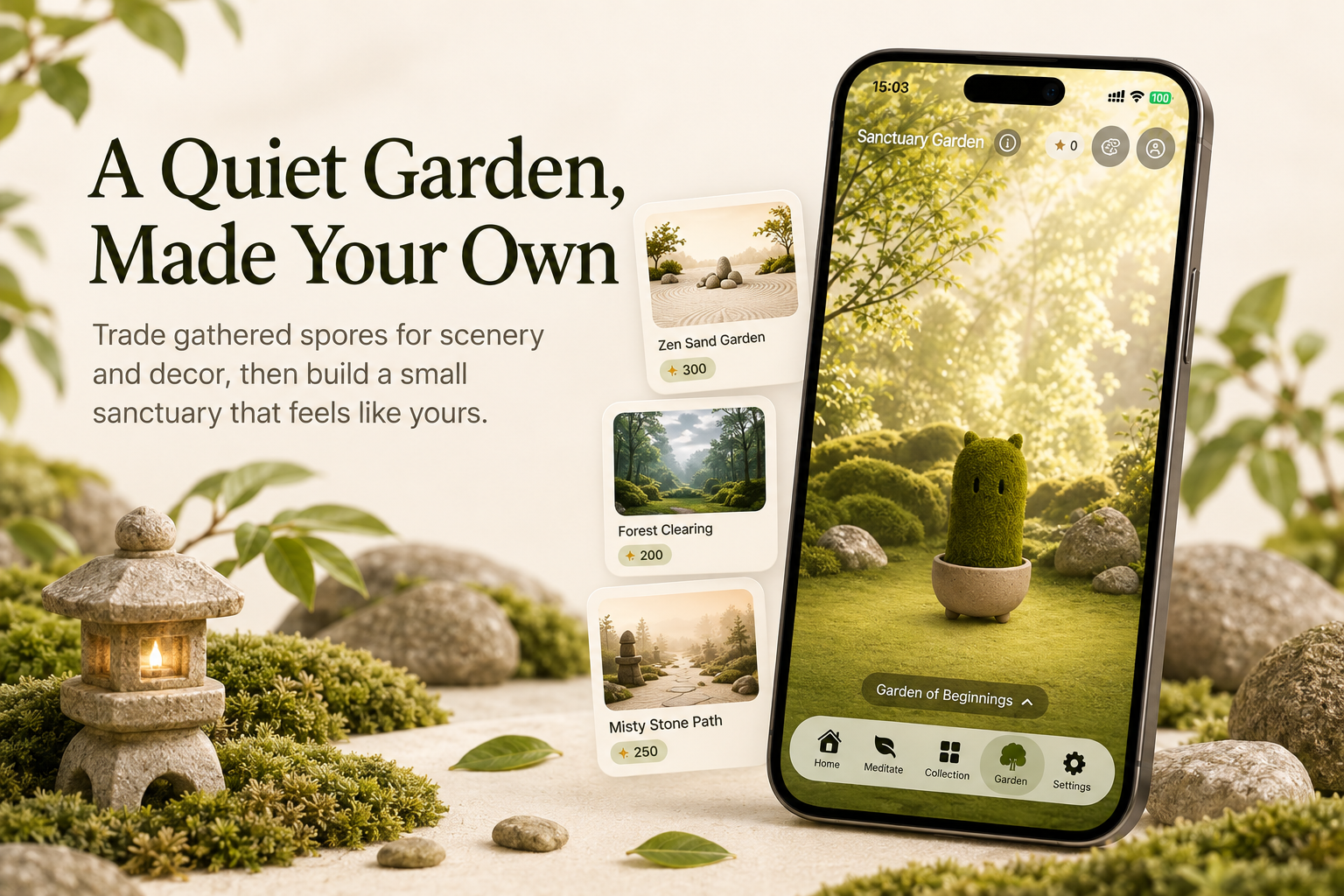
- a customizable garden
- session history
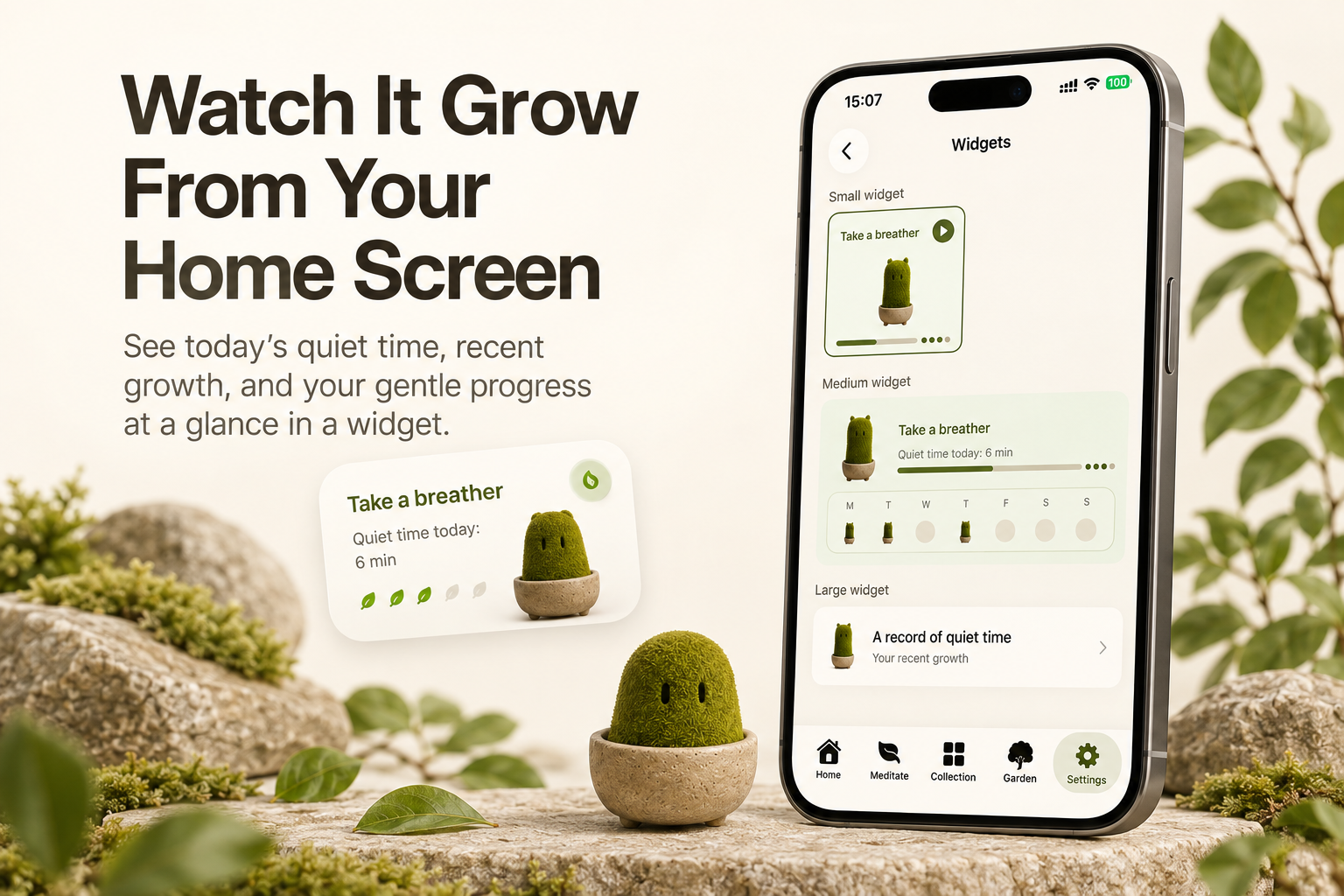
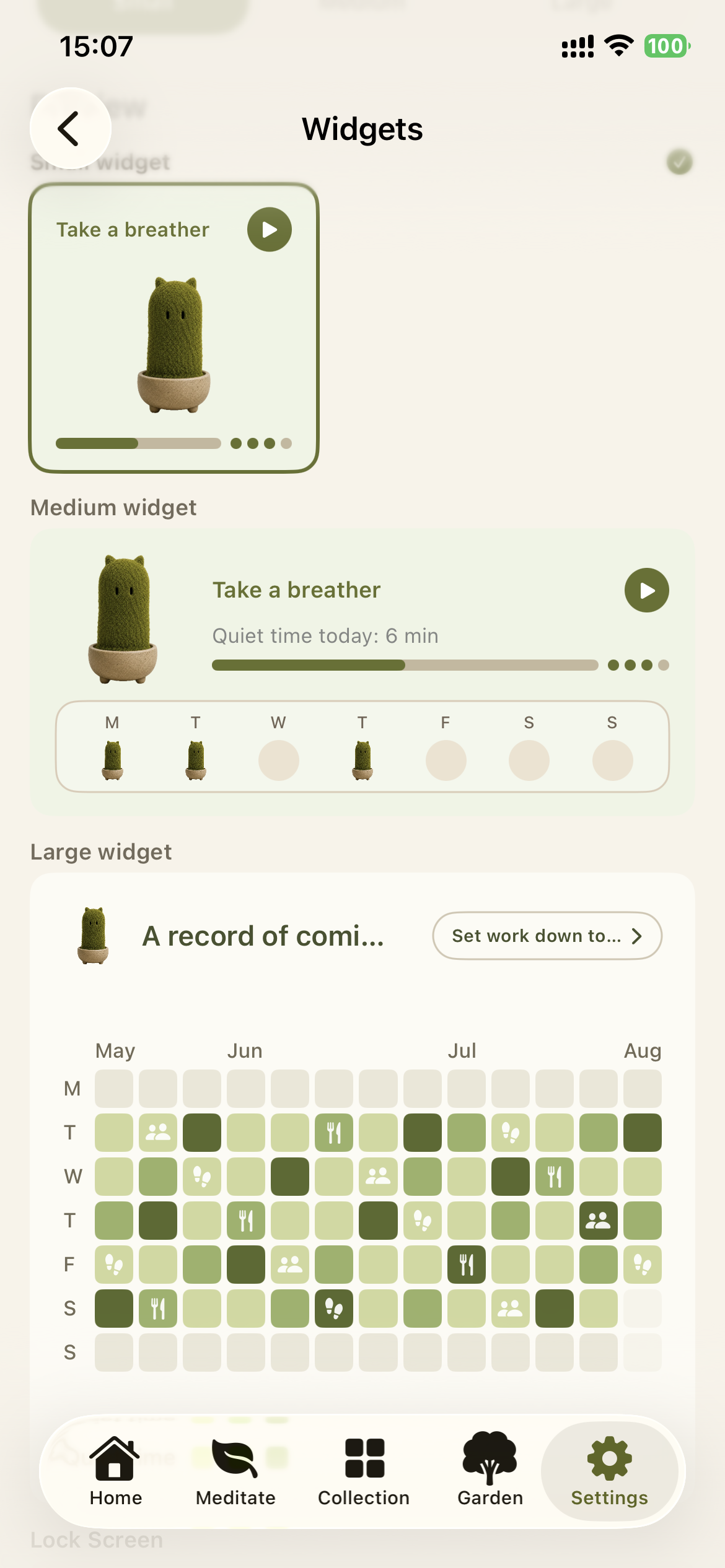
- home screen and lock screen widgets
- notifications
- subscriptions and lifetime purchases powered with RevenueCat
The core product was designed to remain useful without a subscription. Premium features expand the experience with additional situation-specific sessions, widgets, garden customization, and other personalization.
I also wanted the moss creatures to exist outside the three minutes spent inside the app, so WidgetKit became an important part of the experience. A creature growing on the home screen can act as a small reminder that life exists outside work.
The biggest challenge: rebuilding a product that was already 60% finished
The hardest technical problem wasn't actually the hardest problem.
The hardest problem was realizing that I was building the wrong product.
Around 60% of the way through development, Mossu was essentially a meditation app with character growth.
It worked, but I couldn't clearly answer:
Who exactly is this for, and why would they need it?
"Meditation with cute characters" was a feature combination, not a strong reason for the product to exist.
That forced me to reconsider much of the UX.
I stopped designing around people who wanted to meditate and started designing around people who wanted to stop carrying work into the rest of their day.
Meditation became the mechanism rather than the destination.
That change affected the onboarding, session structure, copy, progression system, monetization, and even what Mossu considers a successful session.
There were other challenges too: I redesigned the monetization model several times, worked through App Store review issues, and continued fixing problems after release.
But the product pivot was the most important part of the project.
What I learned
The biggest lesson was that building features quickly is very different from discovering what a product is actually for.
I initially started with:
"Meditation + character growth sounds interesting."
I eventually arrived at:
"People who cannot mentally leave work need a small boundary between work and personal life."
That distinction changed almost every product decision.
I also learned that gamification does not always need pressure.
Many apps use streaks, loss aversion, rankings, or rewards to maximize engagement. For Mossu, that felt incompatible with the problem I was trying to solve.
So I tried to design progression that creates attachment without creating guilt.
The moss keeps growing when you return. It simply waits when you don't.
Where Mossu is now
Mossu is now live on the App Store in Japanese and English.
I'm continuing to iterate after launch — improving the meditation experience, fixing issues, experimenting with how people discover the app, and learning which parts of the concept resonate outside my own experience.
I don't expect an app to eliminate rumination or perfectly separate work from life.
The goal is smaller and, I think, more realistic:
Help people create a tiny boundary between work and the rest of their life — and gradually grow something that represents the time they reclaimed.
I don't expect an app to eliminate rumination or perfectly separate work from life.
The goal is smaller and, I think, more realistic:
Help people create a tiny boundary between work and the rest of their life — and gradually grow something that represents the time they reclaimed.


Log in or sign up for Devpost to join the conversation.