-
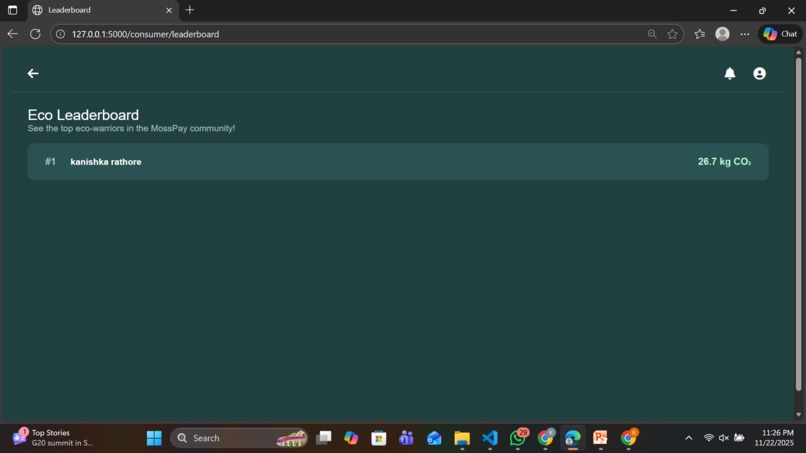
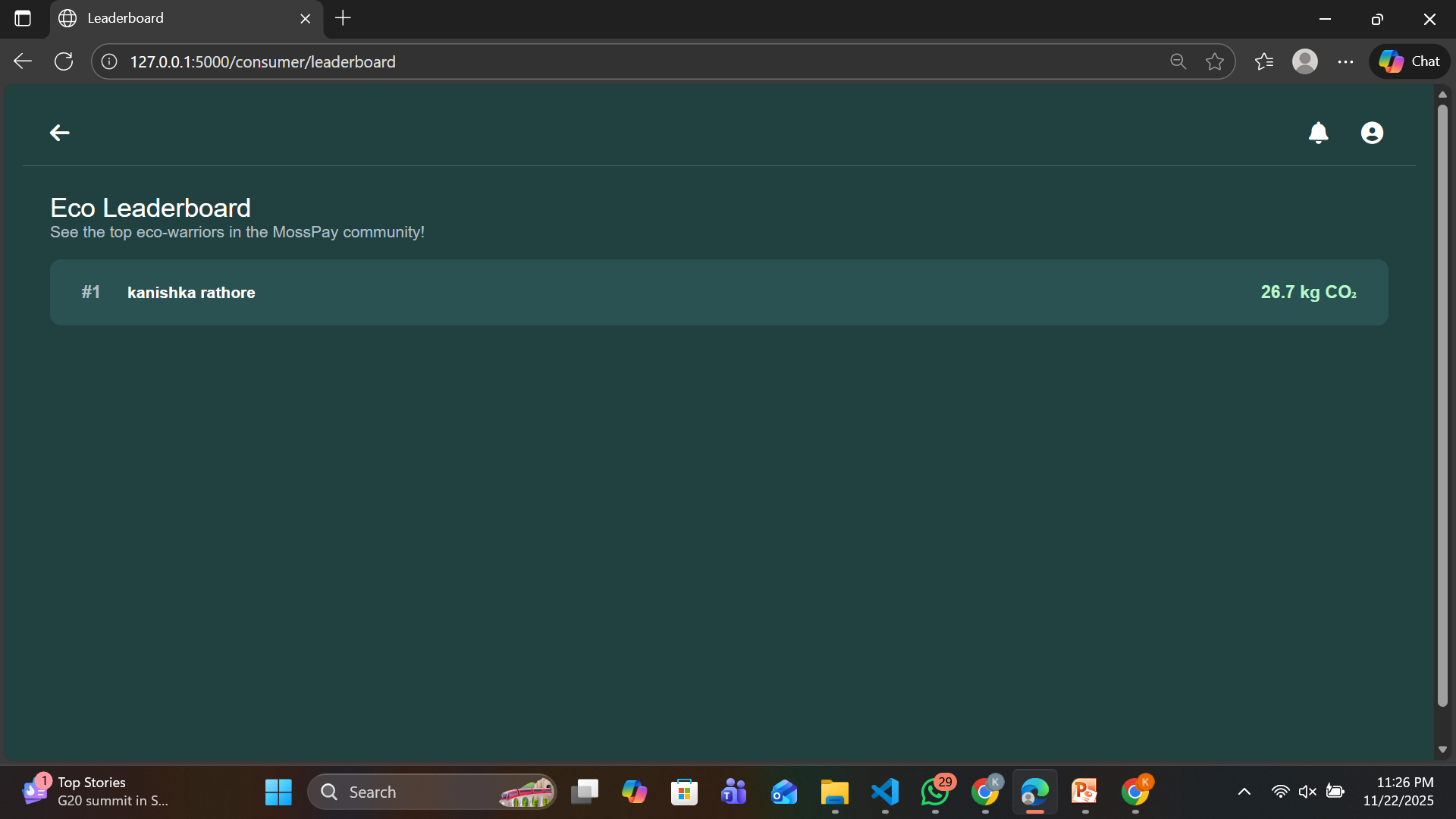
Leaderboard (consumer)
-
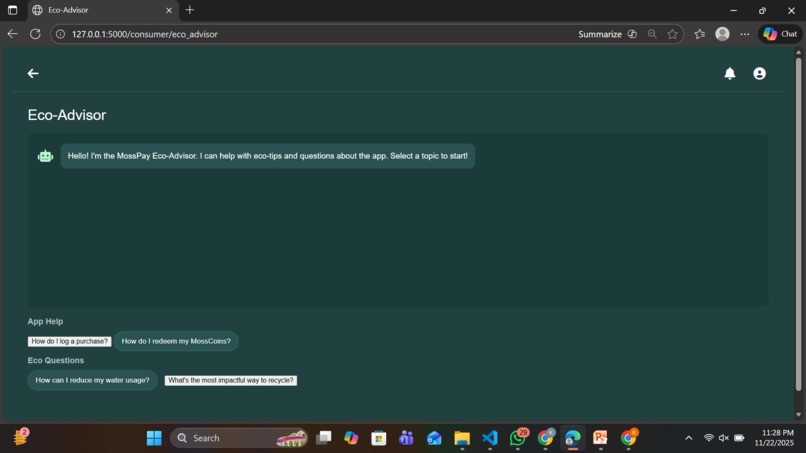
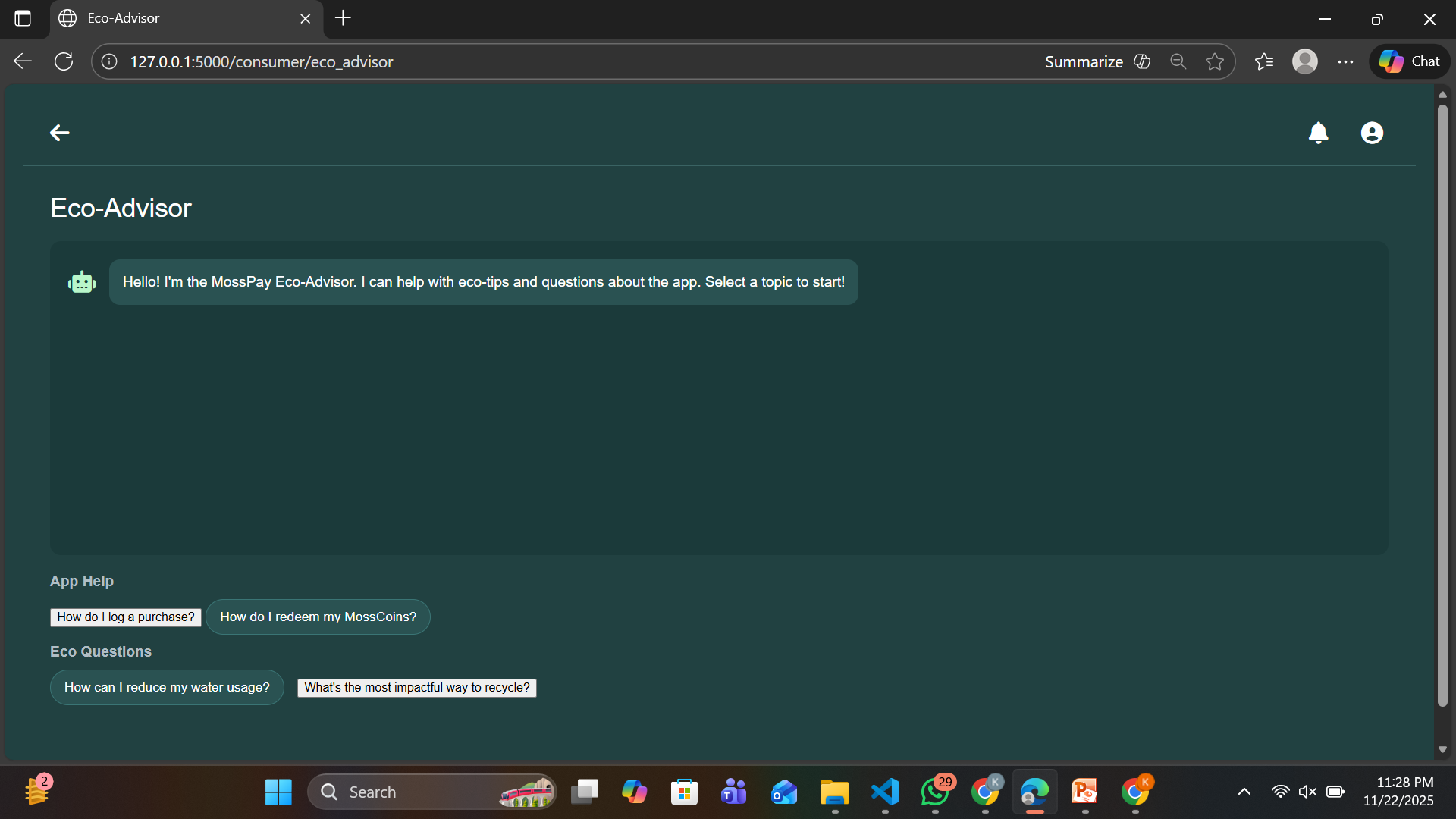
eco advisor (consumer)
-
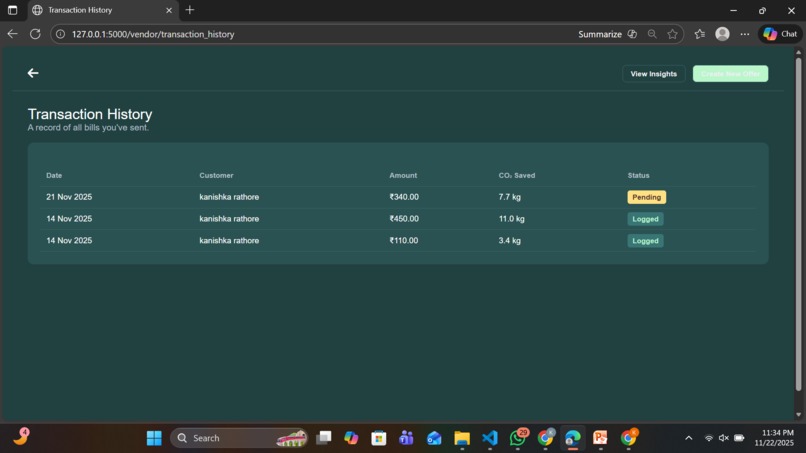
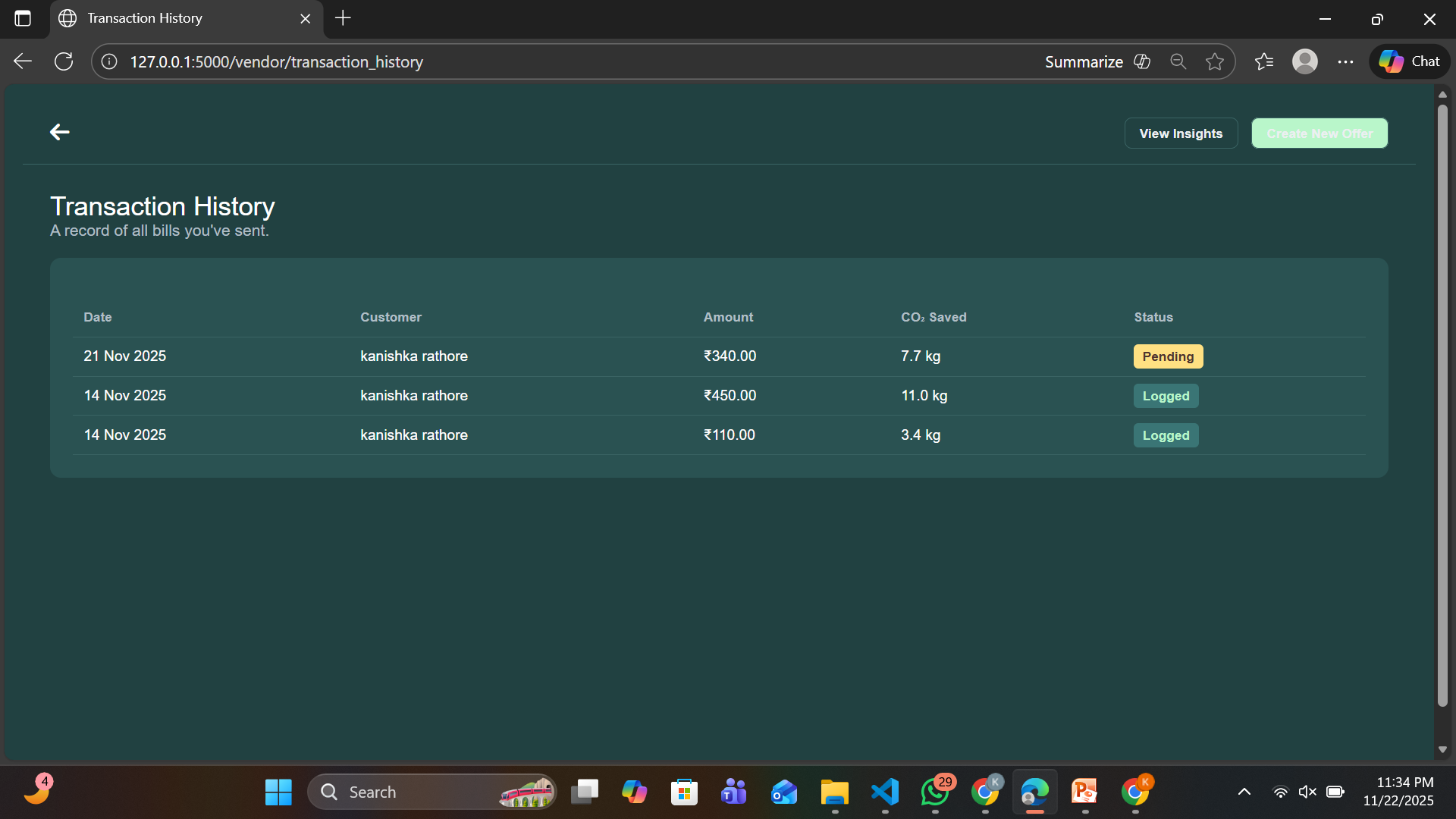
transaction history (vendor)
-
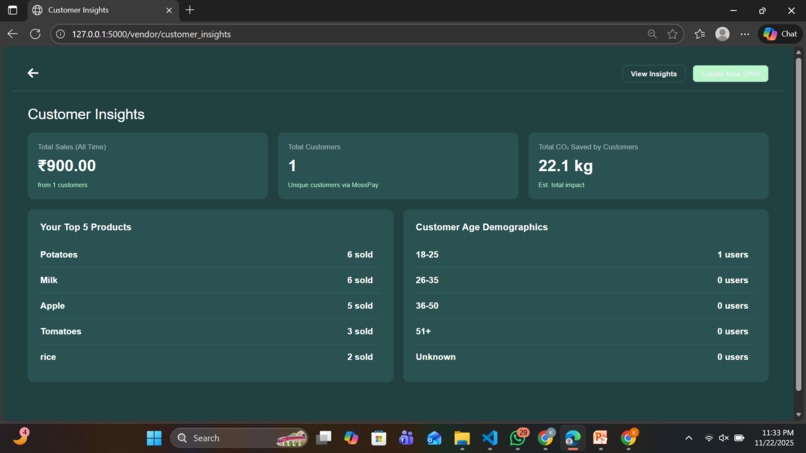
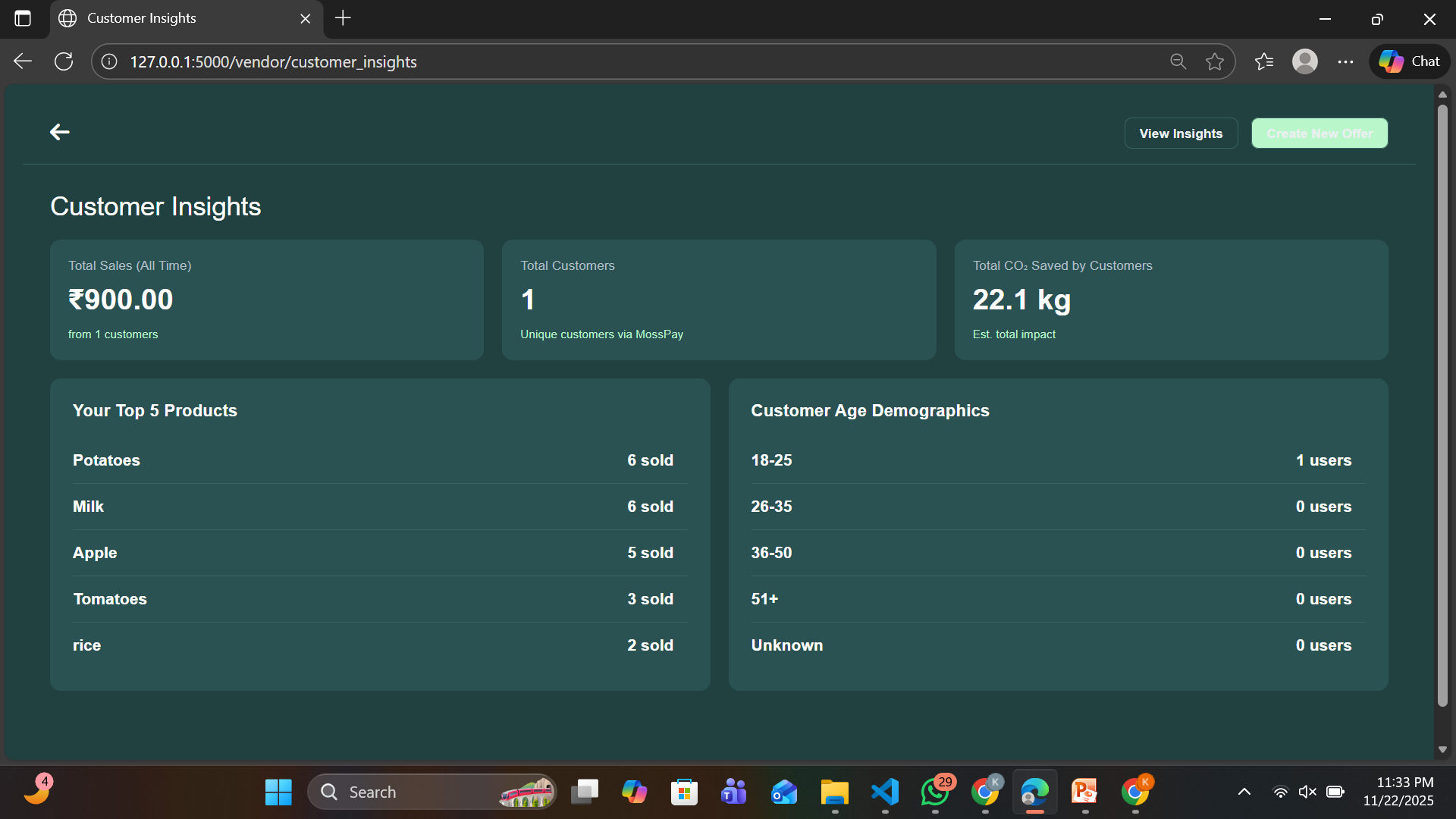
Customer insights (vendor)
-
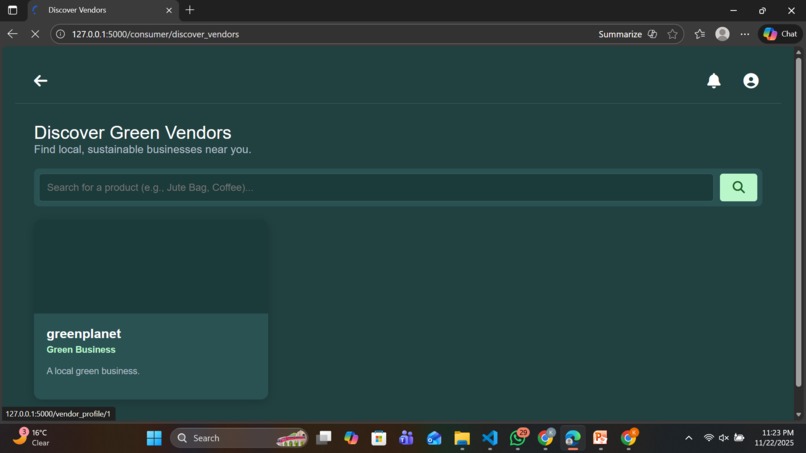
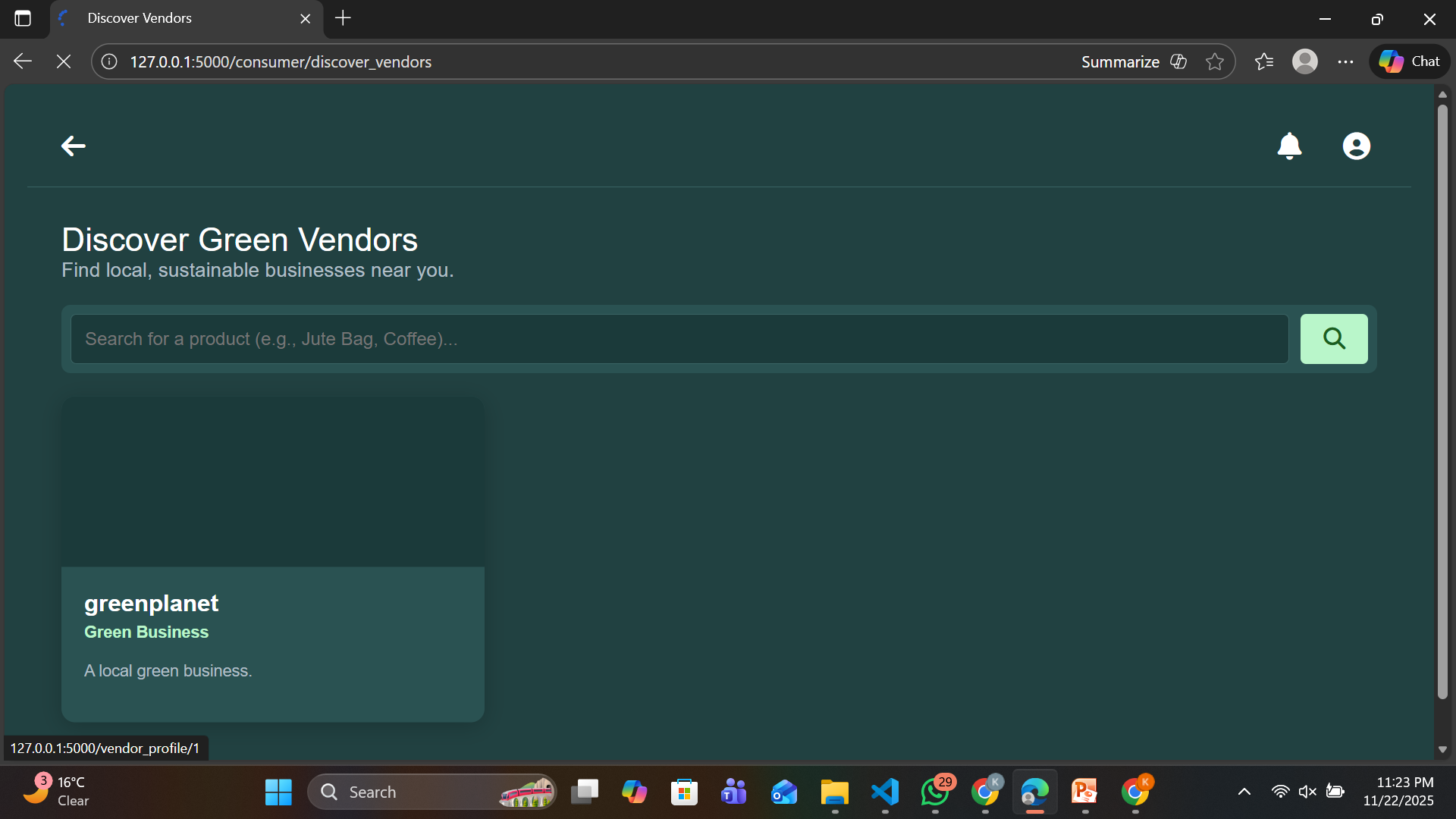
Discover Vendors (Consumer)
-
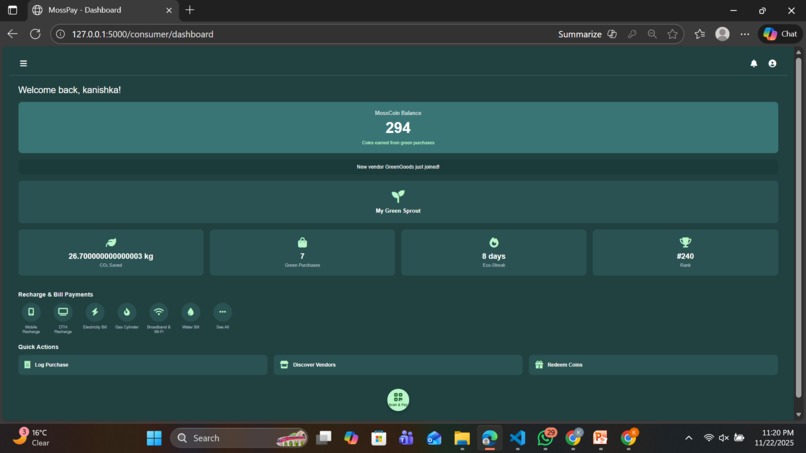
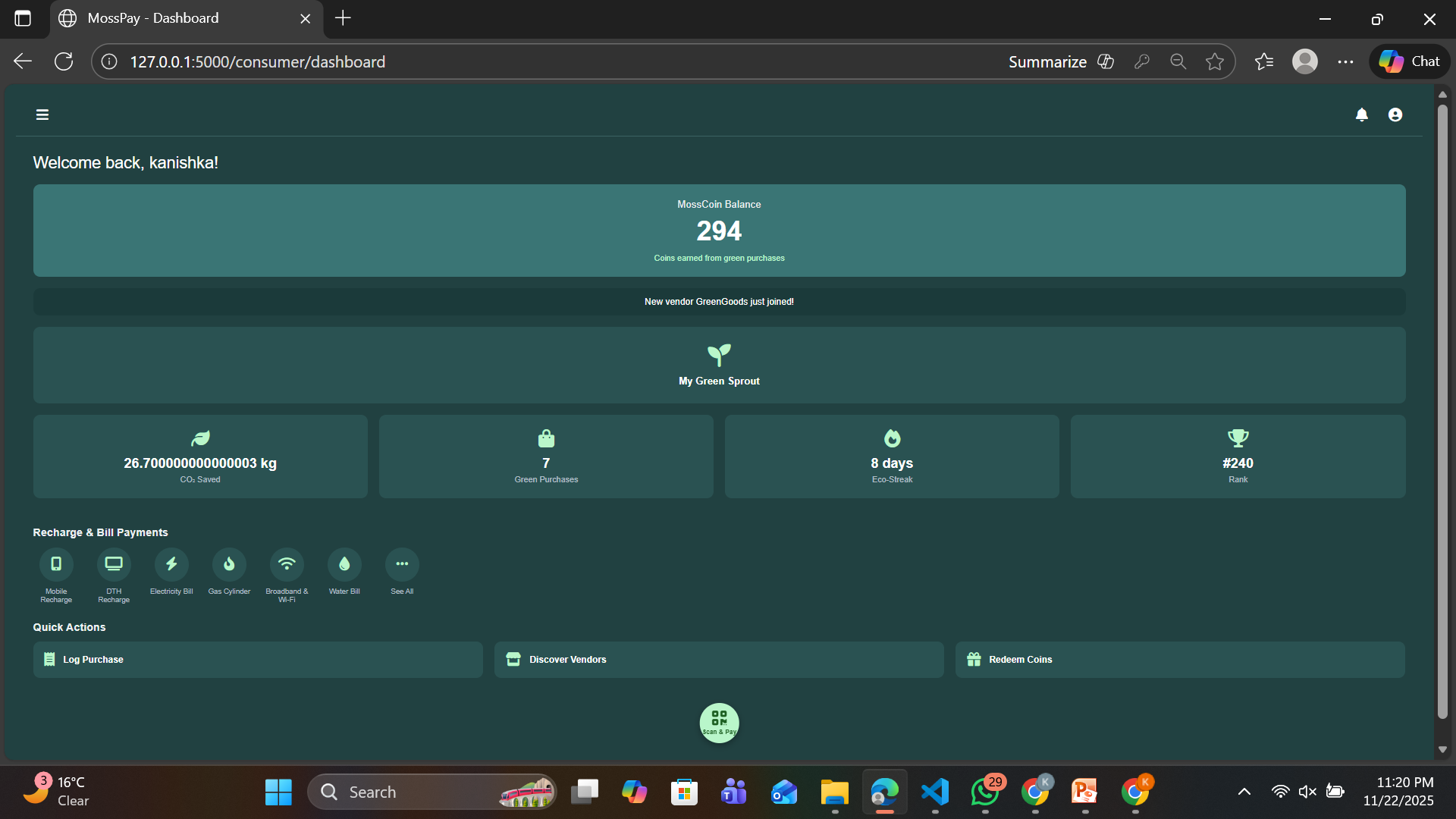
Consumer Dashboard
-
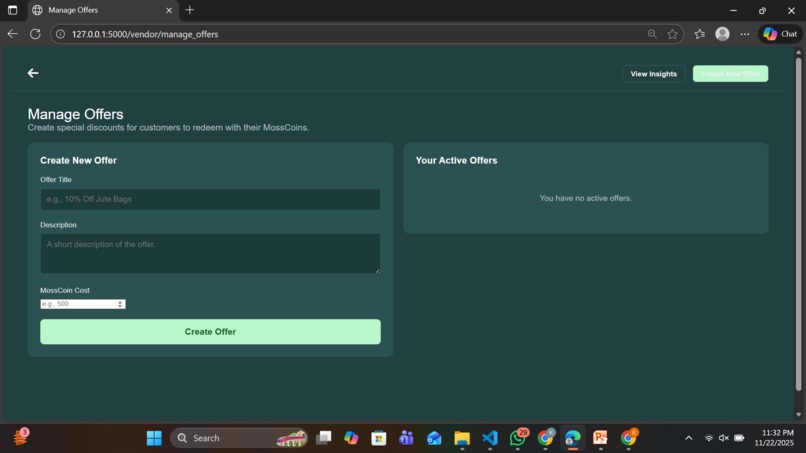
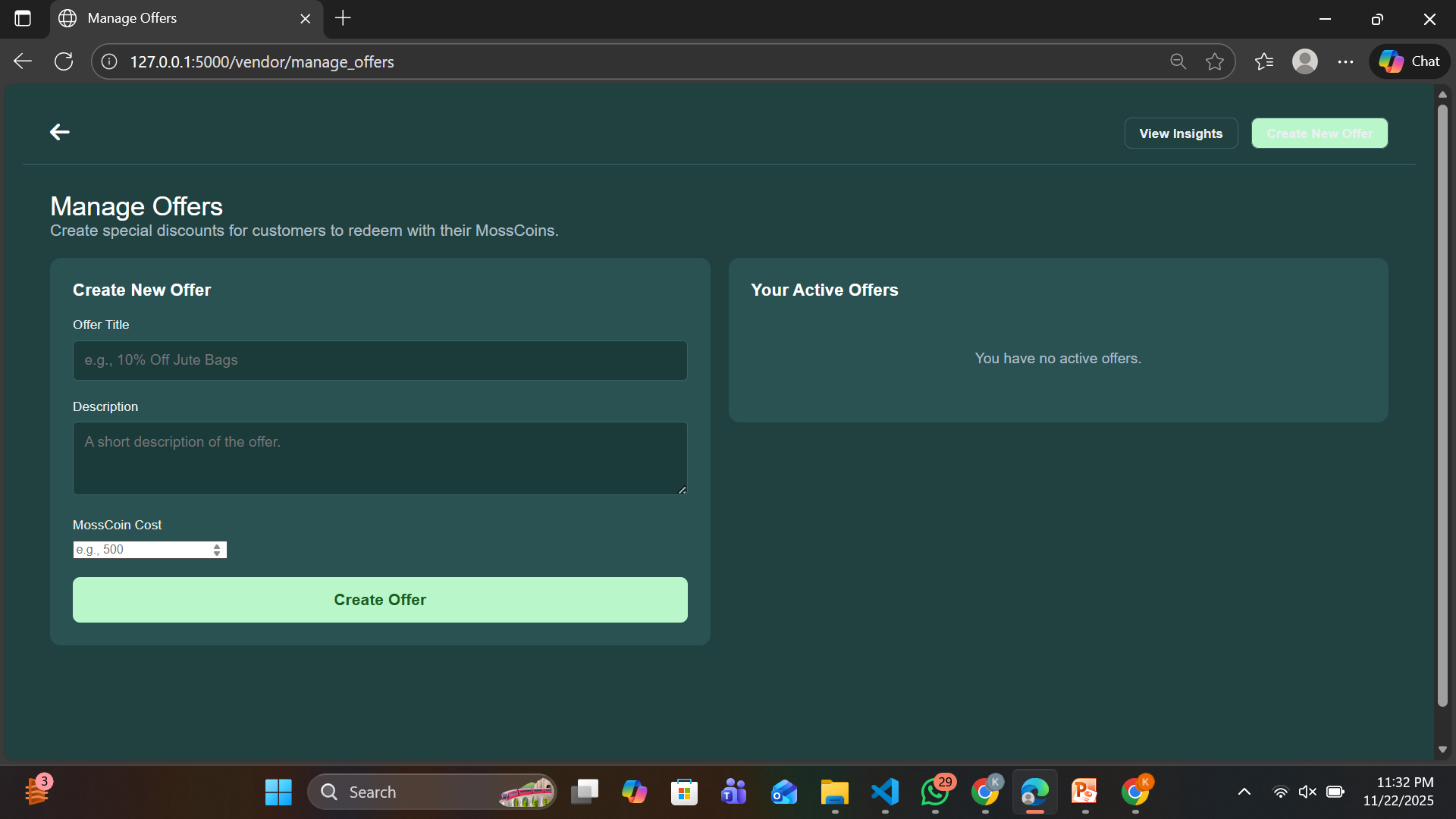
manage offers (vendors)
-
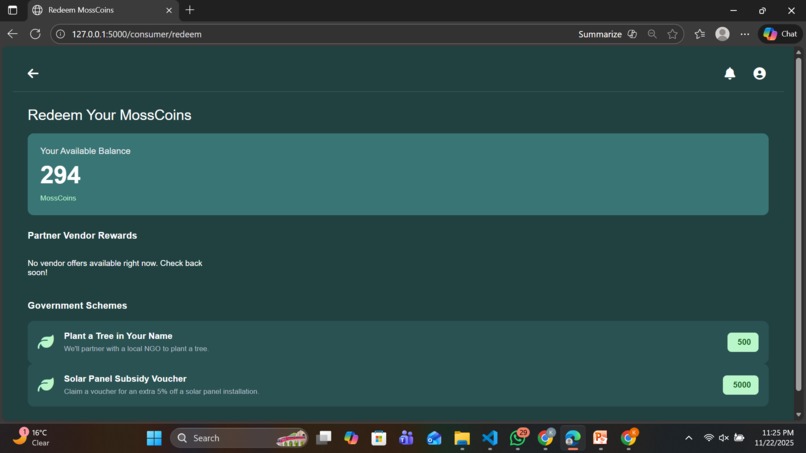
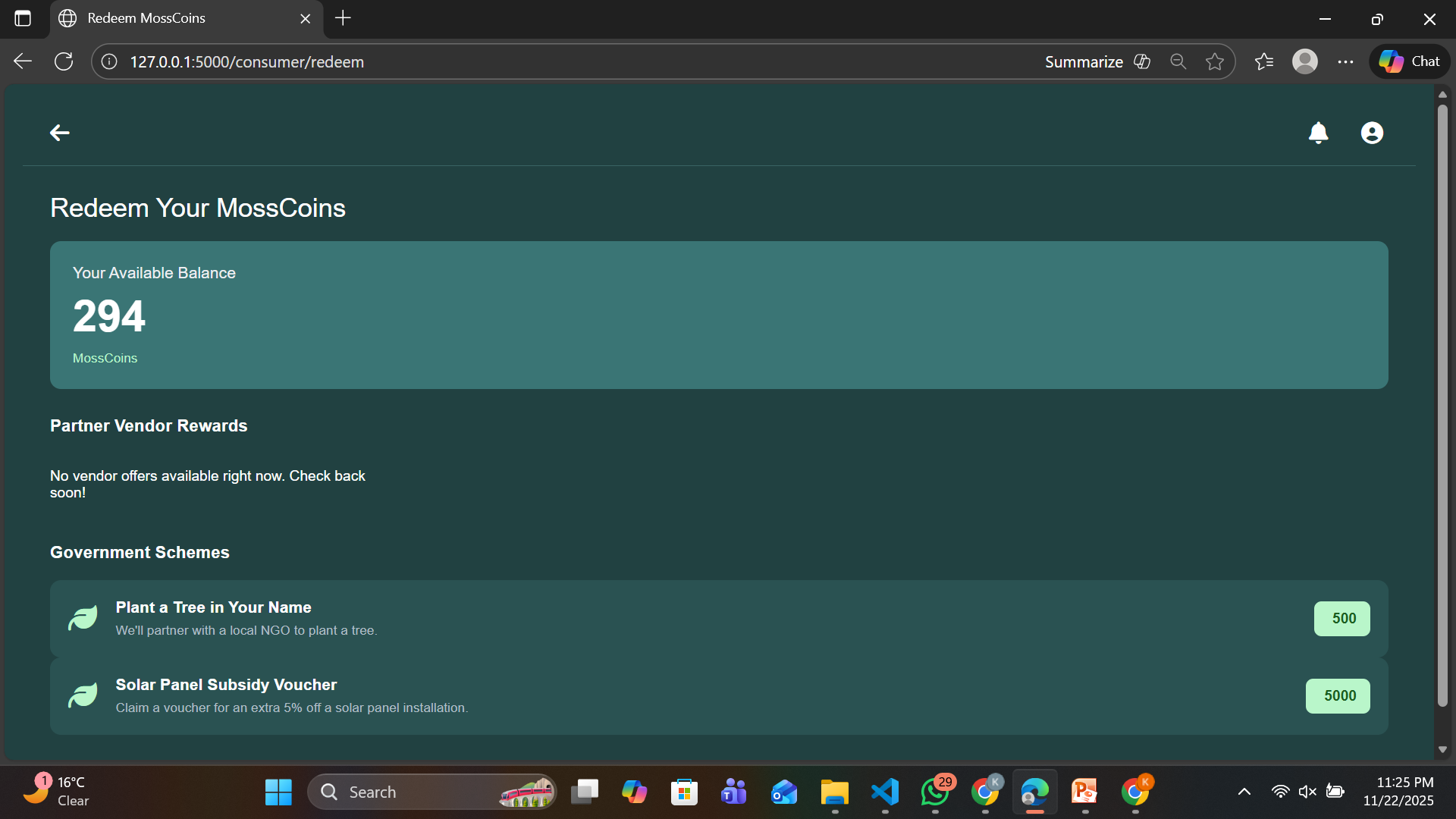
Redeem (Consumer)
-
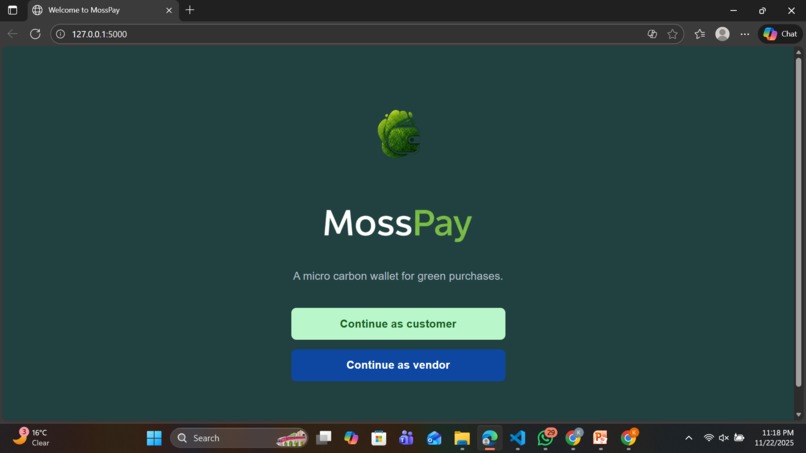
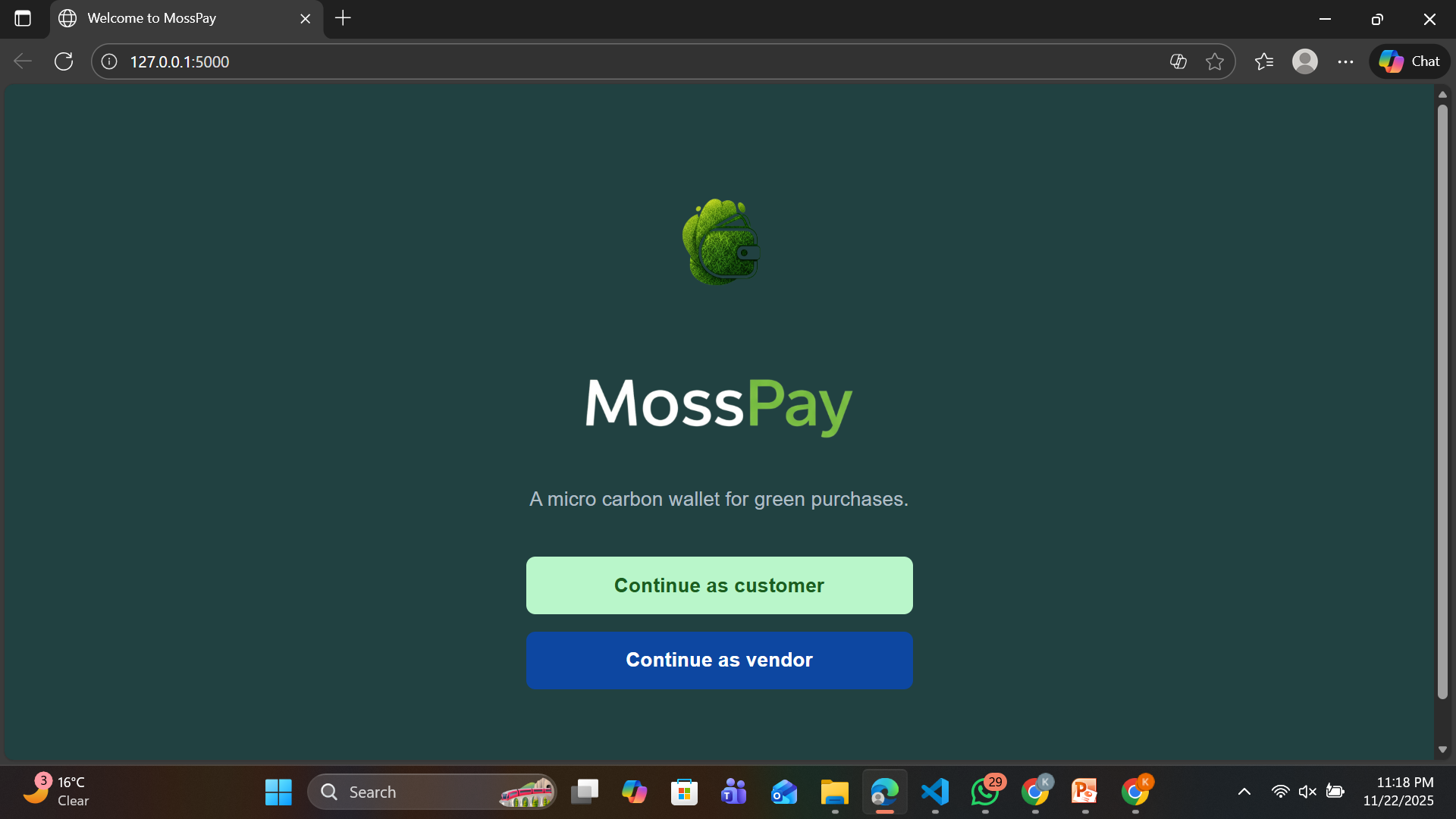
home page
-
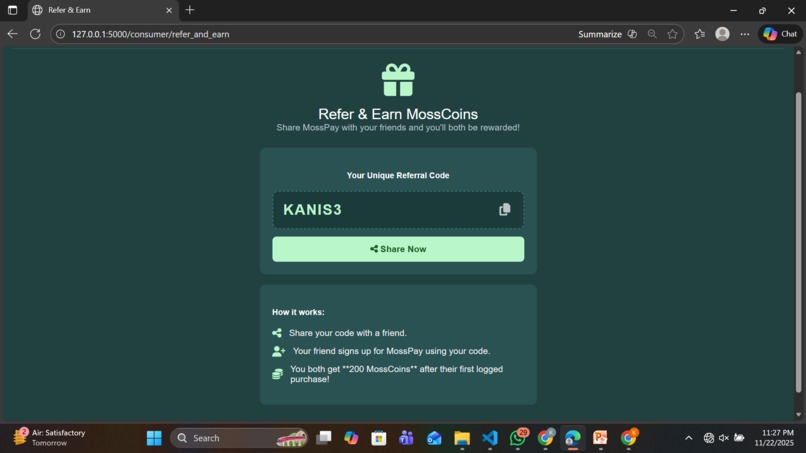
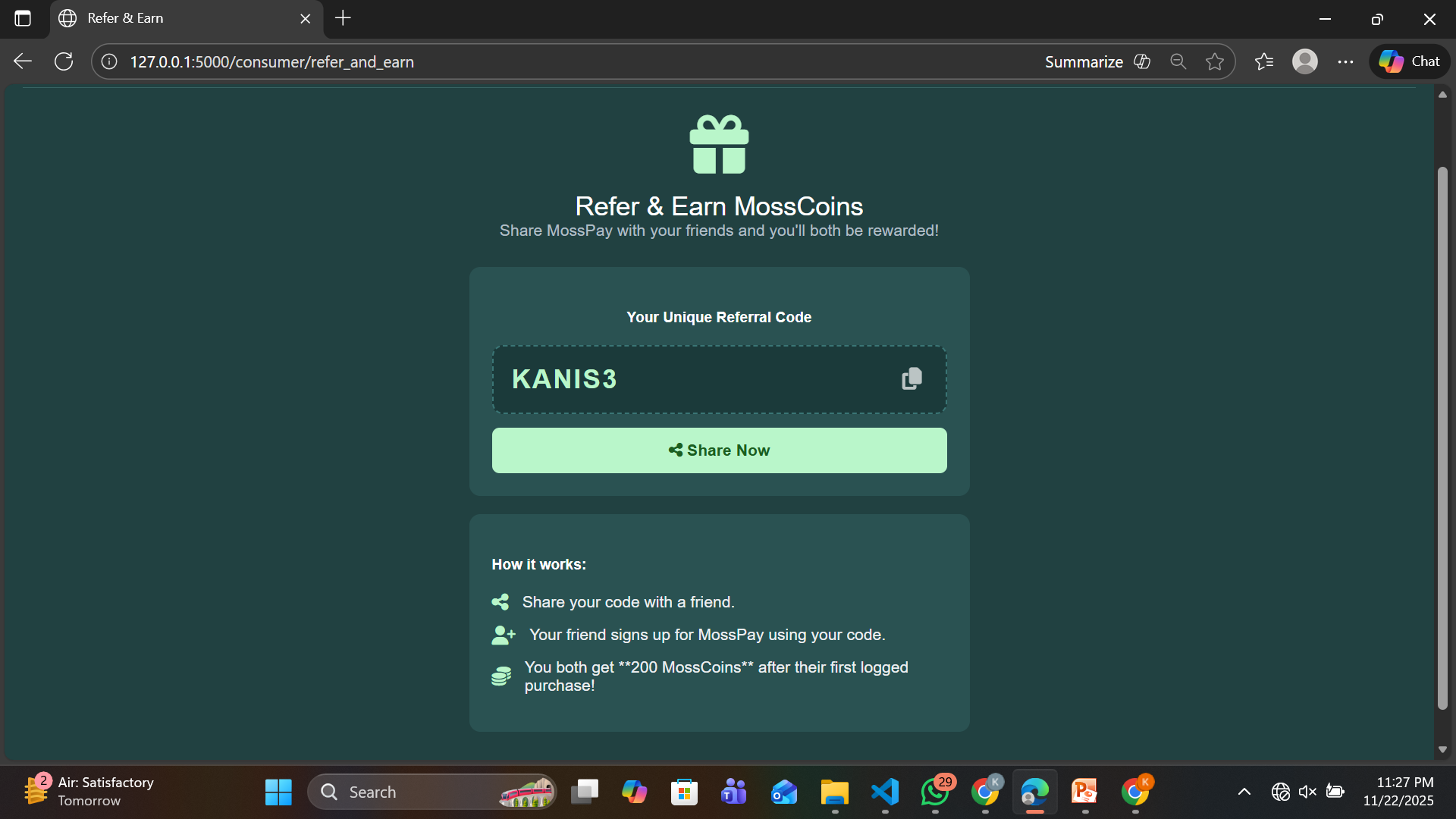
Refer and earn (consumer)
-
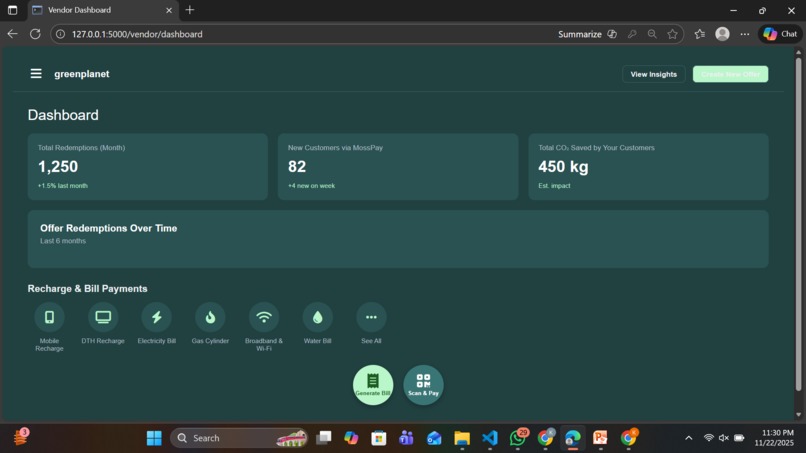
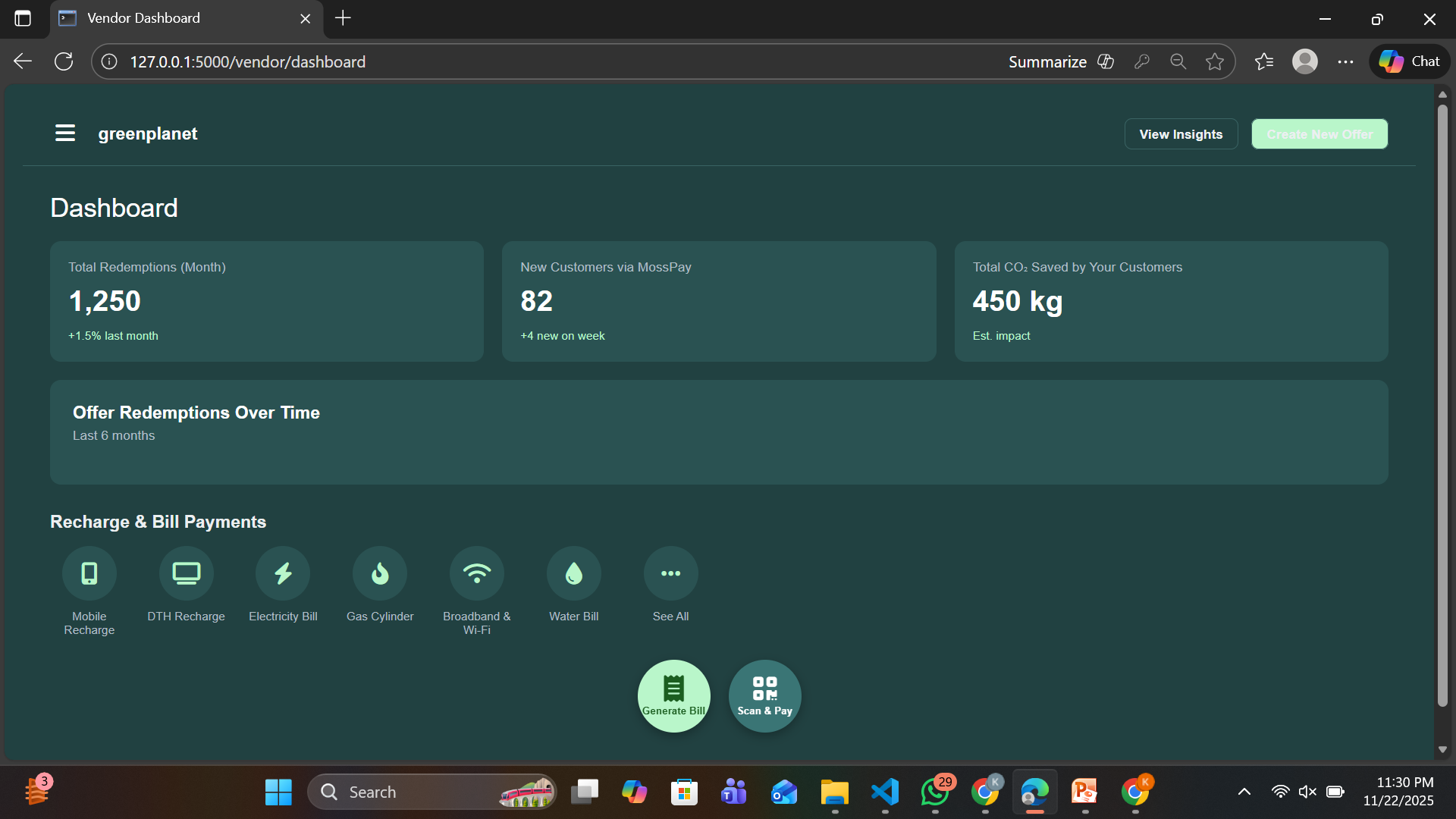
vendor dashboard (vendor)
-
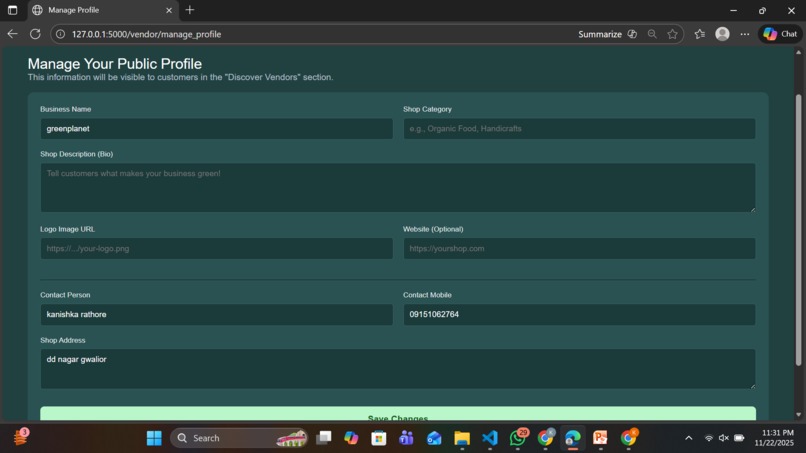
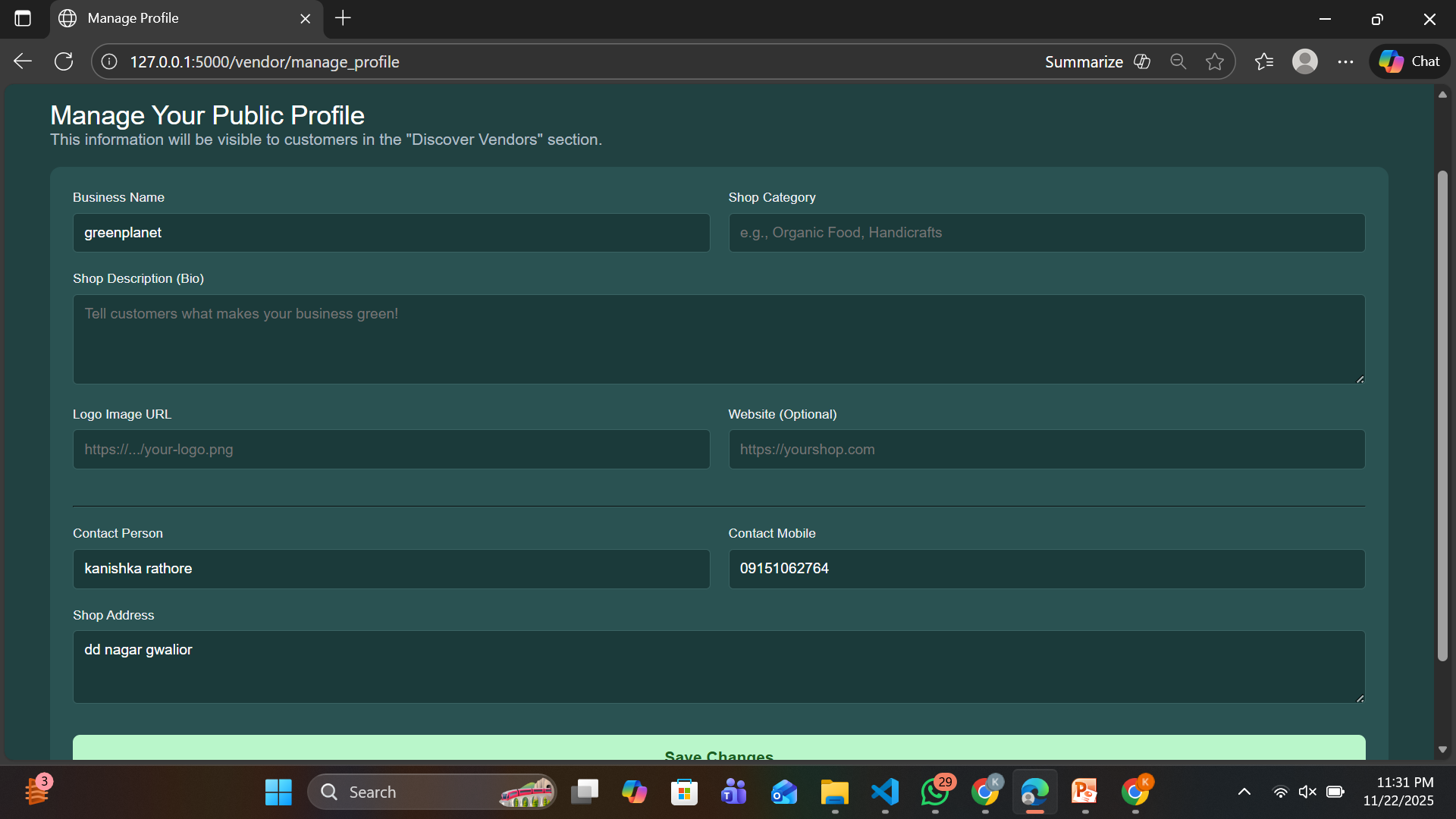
Manage profile (Vendor)
-
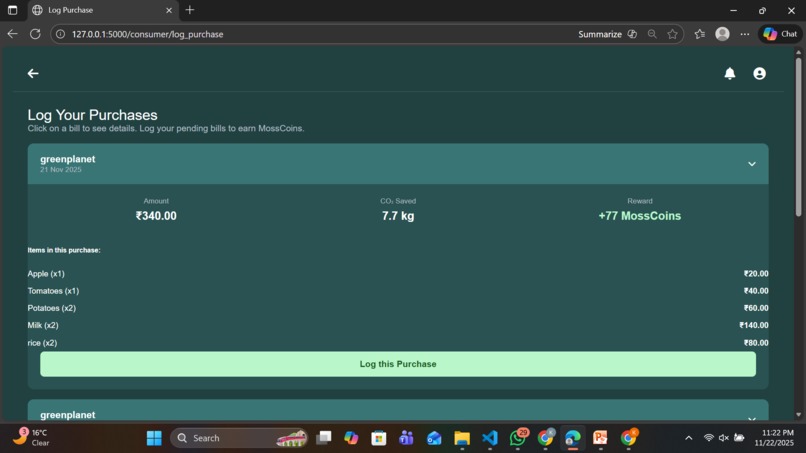
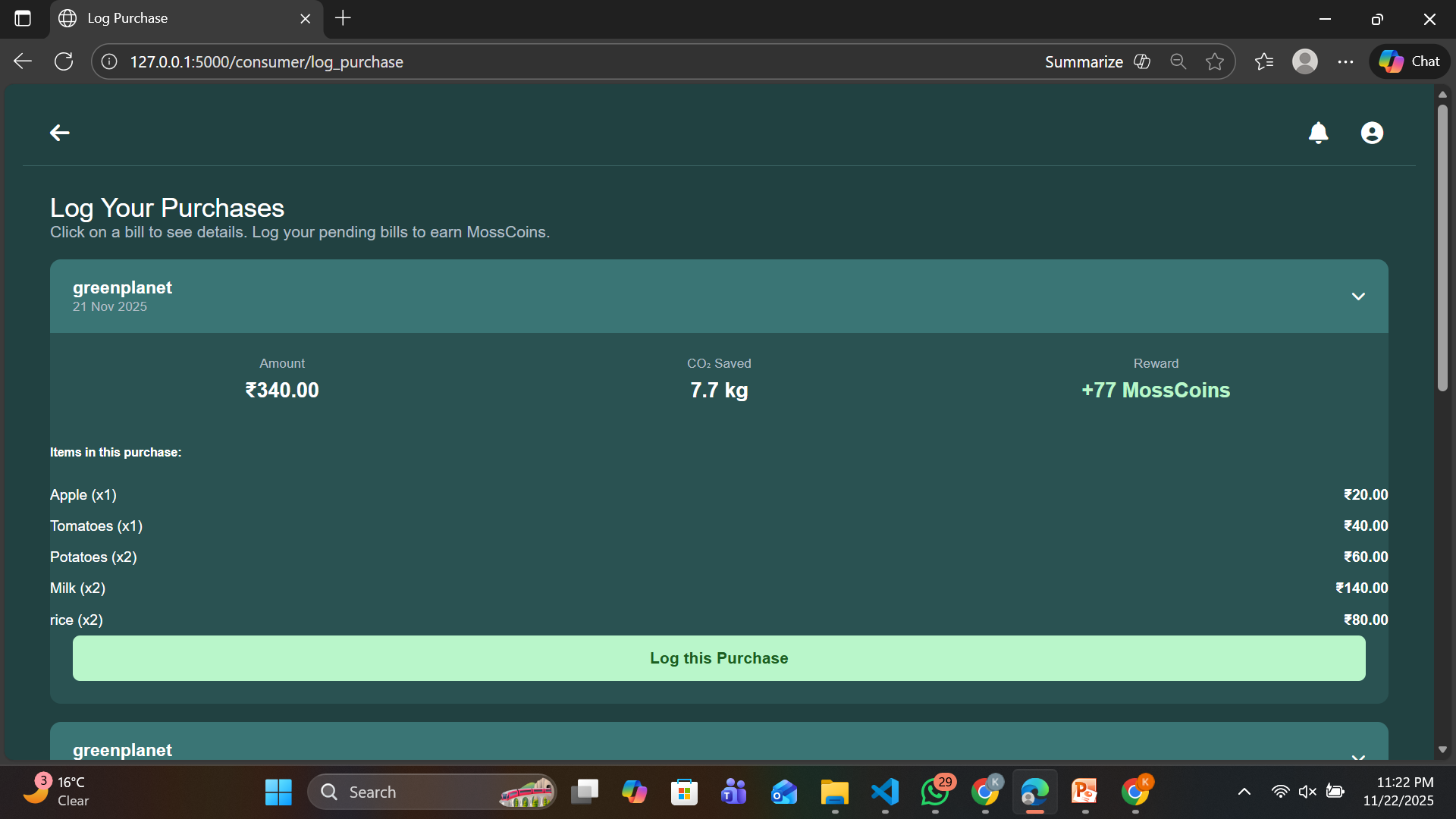
Log purchase (Consumer)
-
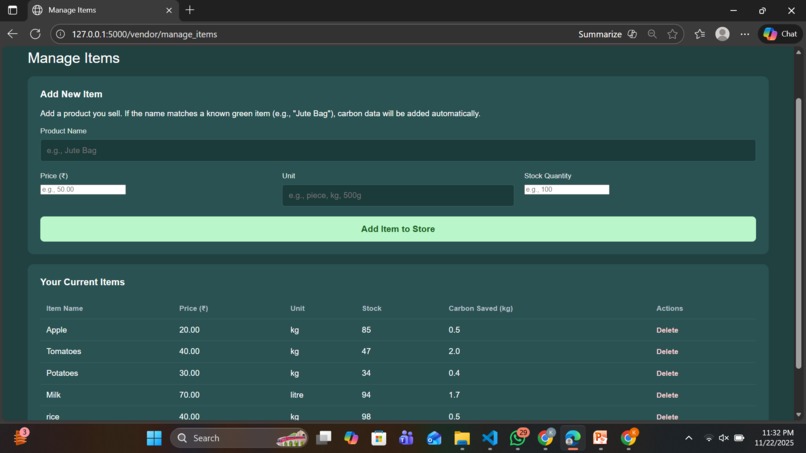
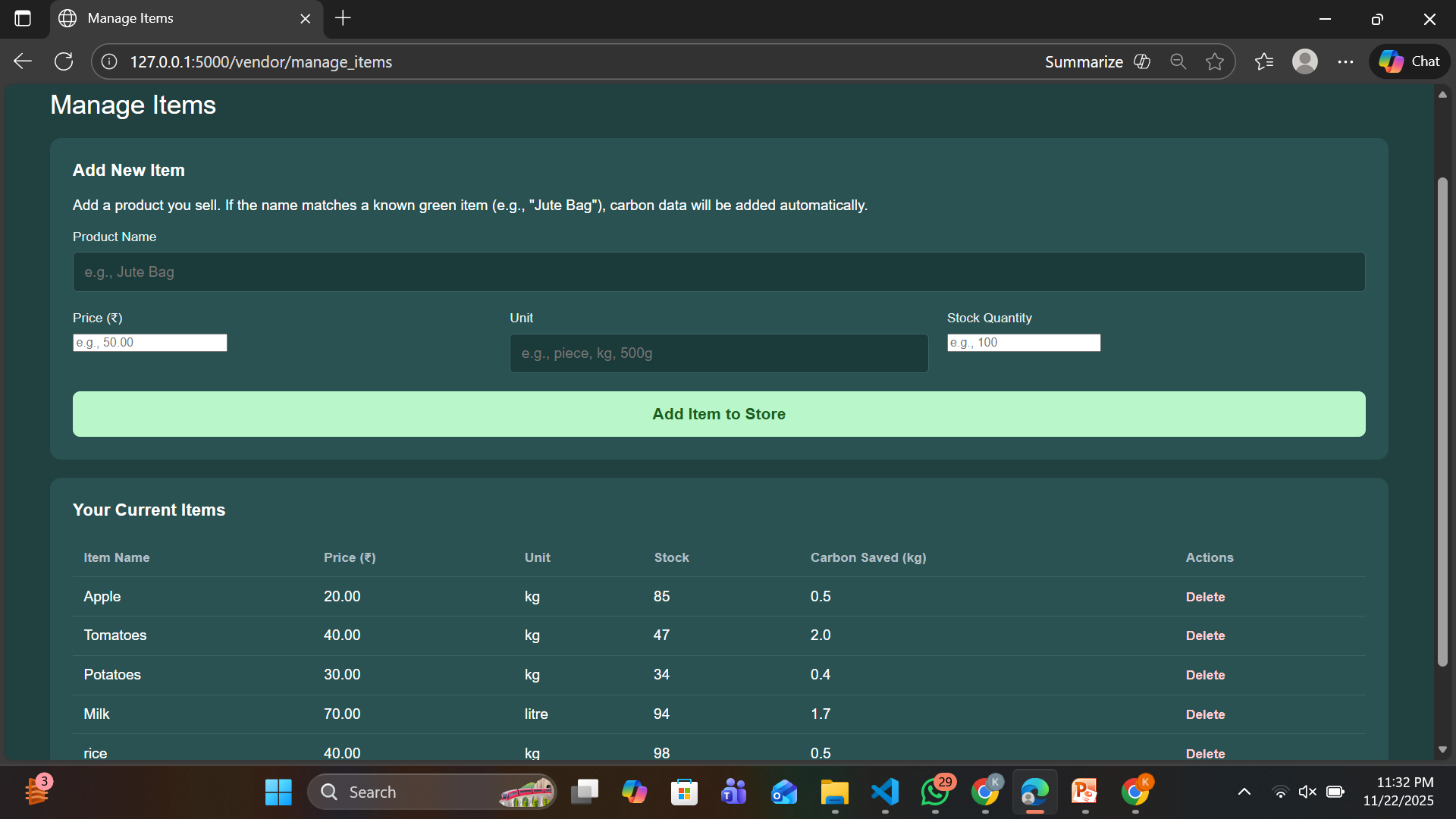
Manage Items (vendor)
-
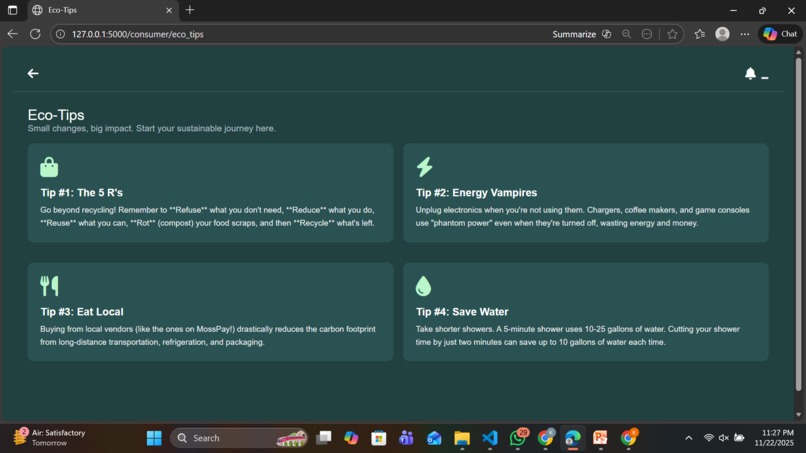
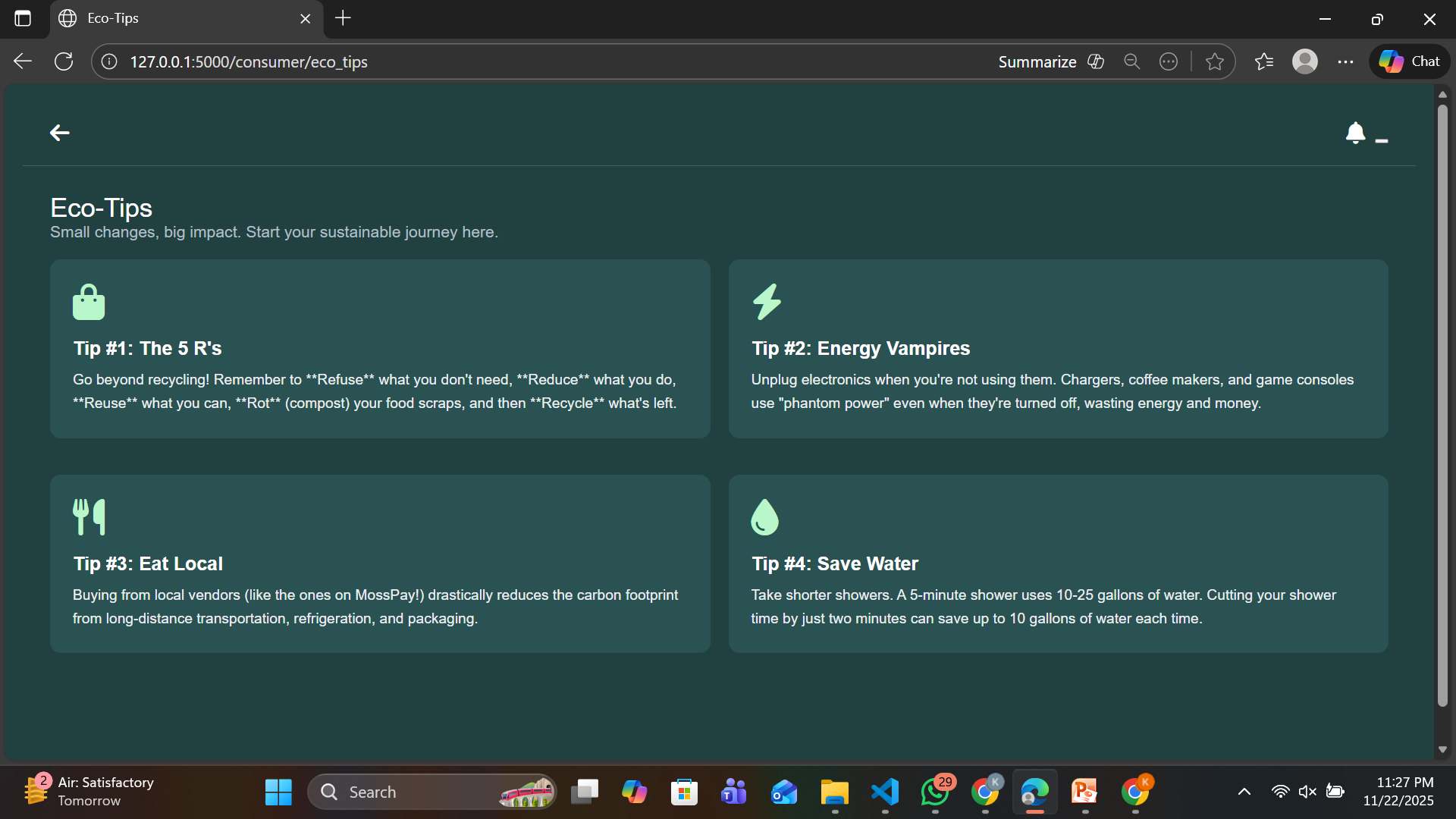
eco tips (consumer)
-
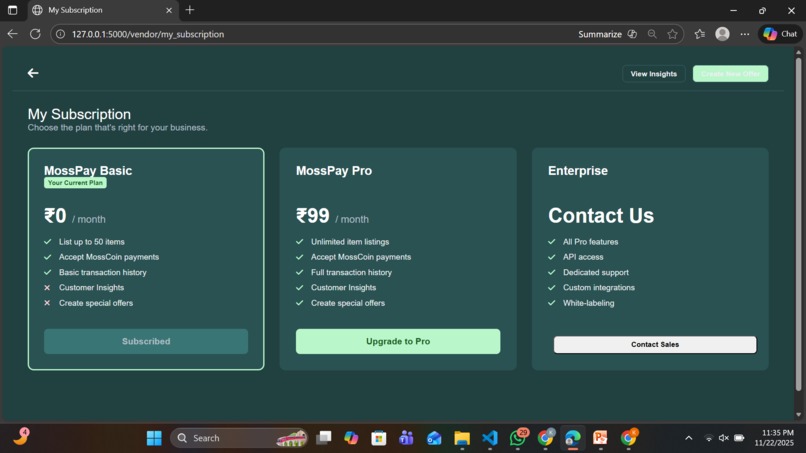
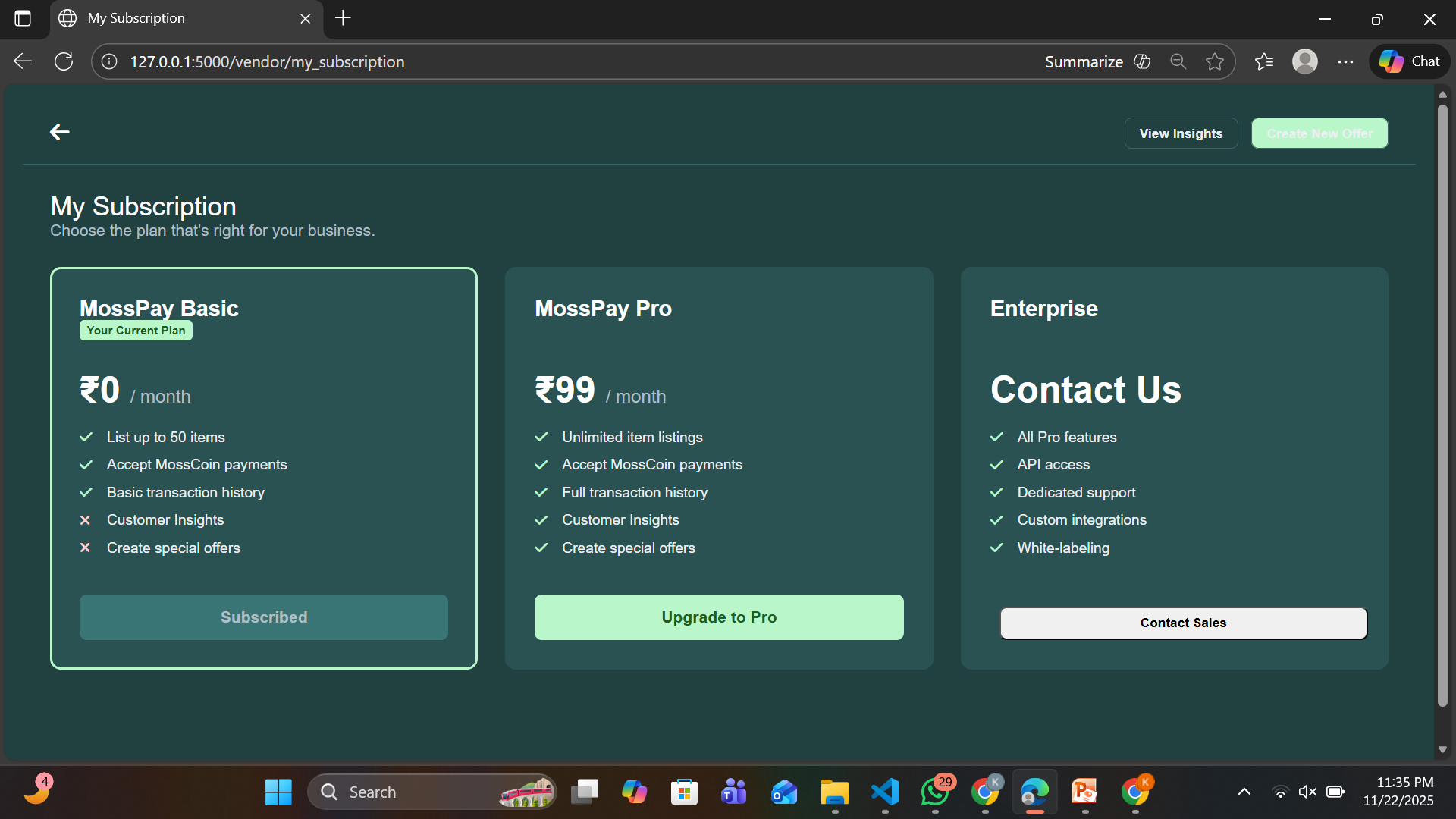
Subscription (vendors)
Inspiration
The spark for MossPay came from a glaring disconnect in India's economy. While the country marches toward Net Zero 2070, its massive unorganized sector—comprising 63 million MSMEs—remains "invisible." We realized that while large corporations have tools like SAP to track sustainability, the local kirana store, the vegetable vendor, and the artisan have nothing.
We asked ourselves: Why is sustainability a "cost" for the small guy, but a "marketing tool" for the big guy?
We wanted to democratize green finance. We wanted to build a system where a street vendor’s low-carbon footprint becomes their biggest asset, and where "Carbon" becomes a currency that rewards responsible consumption.
What it does
MossPay is the Operating System for the Green Economy. It is a dual-interface platform that bridges the gap between sustainable payments and carbon tracking:
For Vendors (The Zero-Hardware POS): A mobile-first billing & inventory tool that runs on basic Android phones. It allows vendors to generate digital bills, manage stock, check customer insights, track payments, discover B2B and most importantly, automatically calculate the carbon footprint of their sales without expensive hardware.
For Consumers (The Micro-Carbon Wallet): A gamified payment app where every sustainable purchase earns "Green Credits." It empowers users to discover hidden green businesses via GPS and track their personal carbon reduction. Encourage consumers through city wise leaderboard.
The Carbon Engine: A backend system that tracks products from "Farm to Fork" using a parent-child batch logic, generating the first-ever real-time Scope 3 emission dataset for the unorganized sector.
How we built it
Phase 1: Prototype (The MVP) Used to demonstrate the core logic and feasibility during the hackathon.
Frontend: HTML5, CSS3, JavaScript
Purpose: Lightweight, responsive web interface accessible on any device with a browser.
Backend: Python (Flask)
Purpose: A micro-framework to handle API requests and route traffic between the frontend and the logic engine.
Carbon Engine: Python
Purpose: Custom algorithms to calculate carbon footprints based on supply chain inputs.
Database: SQLite
Purpose: A serverless, self-contained SQL database for fast, zero-configuration data storage during testing.
Phase 2: On-Ground Implementation (Production) The robust, scalable stack designed for real-world deployment to 63 million MSMEs.
Frontend (App): Flutter (Dart)
Purpose: To build a single, high-performance native app codebase that runs seamlessly on both Android (for vendors) and iOS (for high-end consumers).
Backend & Auth: Google Firebase
Purpose: Handles secure user authentication (OTP login), real-time database syncing (Firestore), and cloud functions for serverless scalability.
Payments: Razorpay / UPI Integration
Purpose: Enables secure, real-time financial transactions, allowing vendors to accept payments and settle "Green Credits."
Carbon Data: Climatiq API
Purpose: Provides enterprise-grade, scientifically vetted emission factors for accurate, automated carbon calculations across different regions and categories.
Why the Shift? (The "Scale" Logic) "While our Web Prototype proved the logic works, our Production Stack is built for the reality of the unorganized sector. We are moving to Flutter for native mobile performance on low-end devices, Firebase for offline-first capabilities, and Climatiq for audit-ready carbon data."
Challenges we ran into
The "Parent-Child" Logic: Designing the database schema to track a bulk shipment (Parent Batch) splitting into smaller units (Child Batches) while inheriting the correct carbon cost was complex. We had to rewrite our recursion logic multiple times to ensure accuracy.
Offline Synchronization: Handling data conflicts when a vendor makes offline transactions that need to sync with the cloud later was tricky, especially ensuring that inventory counts didn't go negative.
Simplifying the UI: Our target user (a local vendor) might not be tech-savvy. We had to iterate on the design to remove text-heavy menus and replace them with intuitive icons and one-tap actions.
Accomplishments that we're proud of
Zero-Hardware POS: Successfully building a fully functional Point-of-Sale system that runs entirely on a smartphone, removing the need for ₹15,000+ hardware.
The Carbon Receipt: We successfully generated a dynamic digital receipt that shows the exact carbon footprint of a purchase—a feature usually found only in enterprise software.
Gap-Bridging: Effectively connecting the "Invisible" unorganized sector to the formal "Green Economy" through a working prototype.
What we learned
The Data Gap is Huge: We learned that the government has almost zero real-time data on the informal sector's supply chain emissions. MossPay fills this critical void.
Gamification Works: We realized that financial incentives (Green Credits) are a far more powerful motivator for behavioral change than just "awareness" or "guilt."
Local Nuances: Building for India means building for low bandwidth and diverse literacy levels. "Offline Mode" isn't a feature; it's a necessity.
What's next for MossPay
B2B Integration: Launching the "Wholesale Module" to track the supply chain further back to the farmers and manufacturers.
Carbon Credit Trading: We plan to convert the accumulated "Green Credits" into tradable assets on voluntary carbon markets, putting real cash back into the hands of sustainable users.
ONDC Integration: Scaling MossPay to become the standard "Green Layer" on India's Open Network for Digital Commerce (ONDC).
AI-Driven Forecasting: Using the transaction data to help vendors predict demand and reduce perishable food waste.


Log in or sign up for Devpost to join the conversation.