-
-
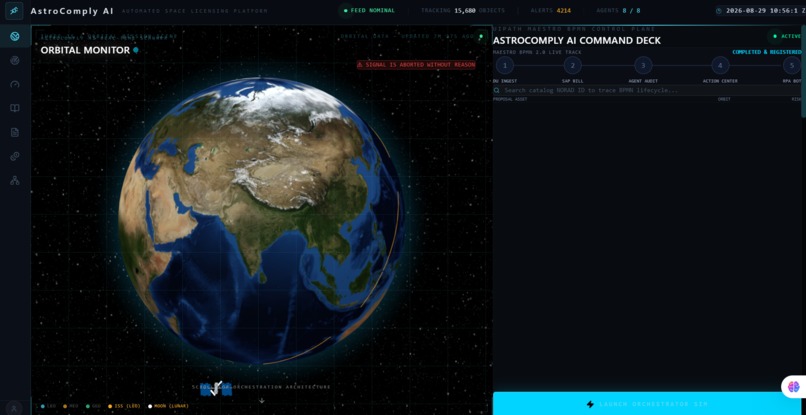
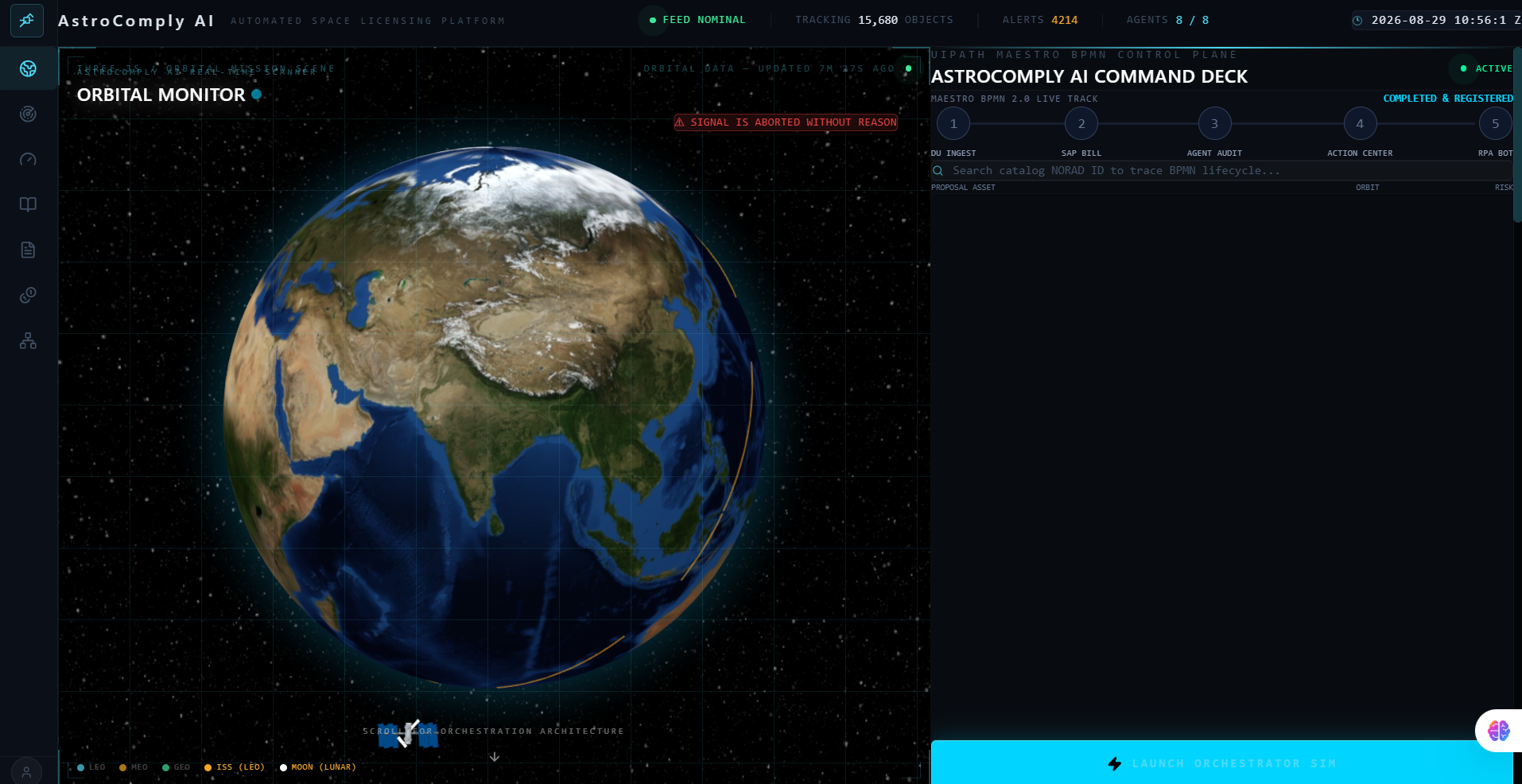
ORBITAL MONITOR
-
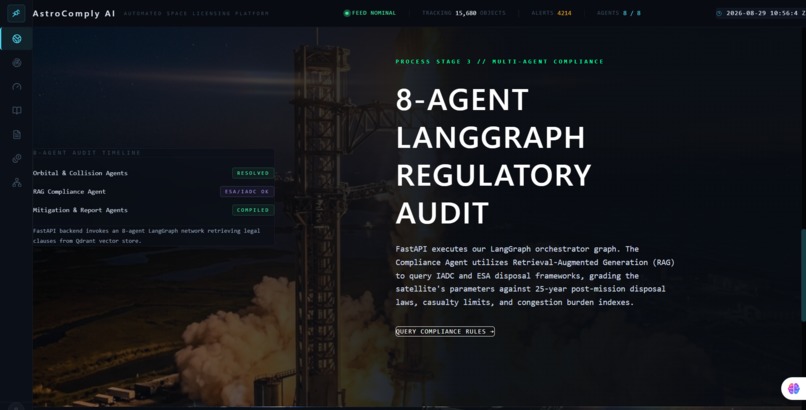
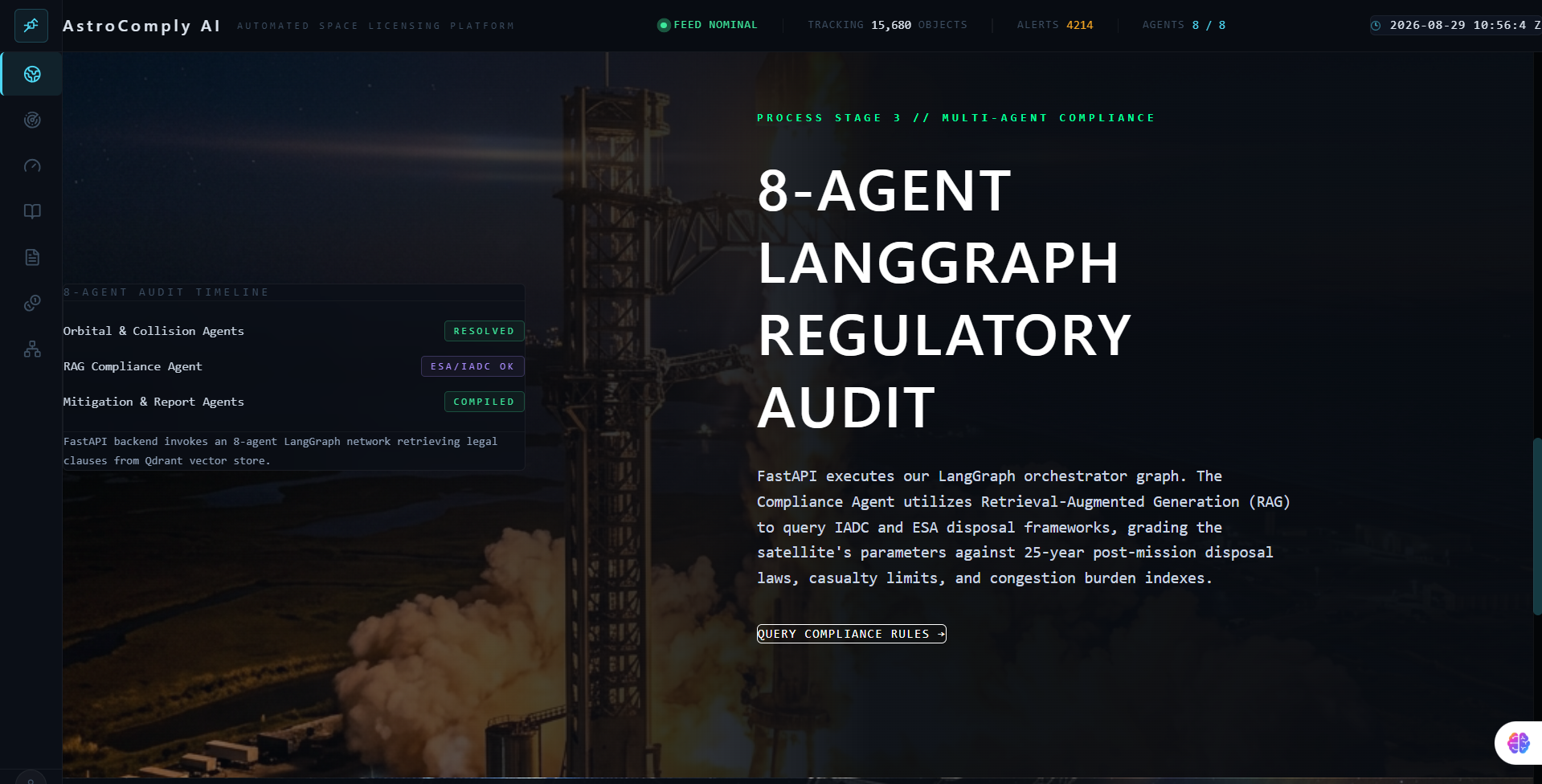
8-AGENT LANGGRAPH REGULATORY AUDIT
-
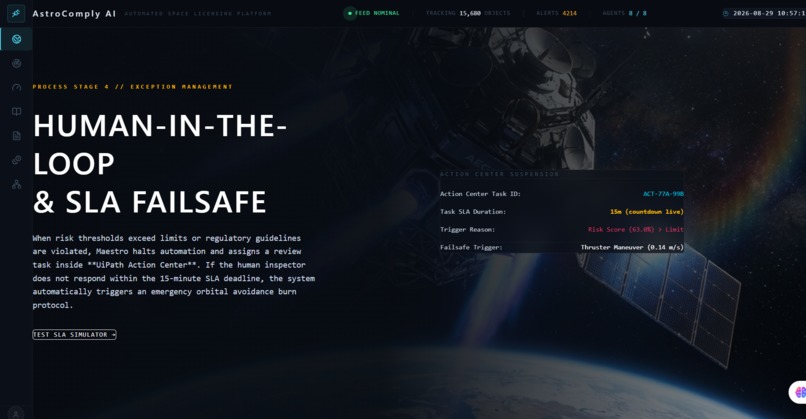
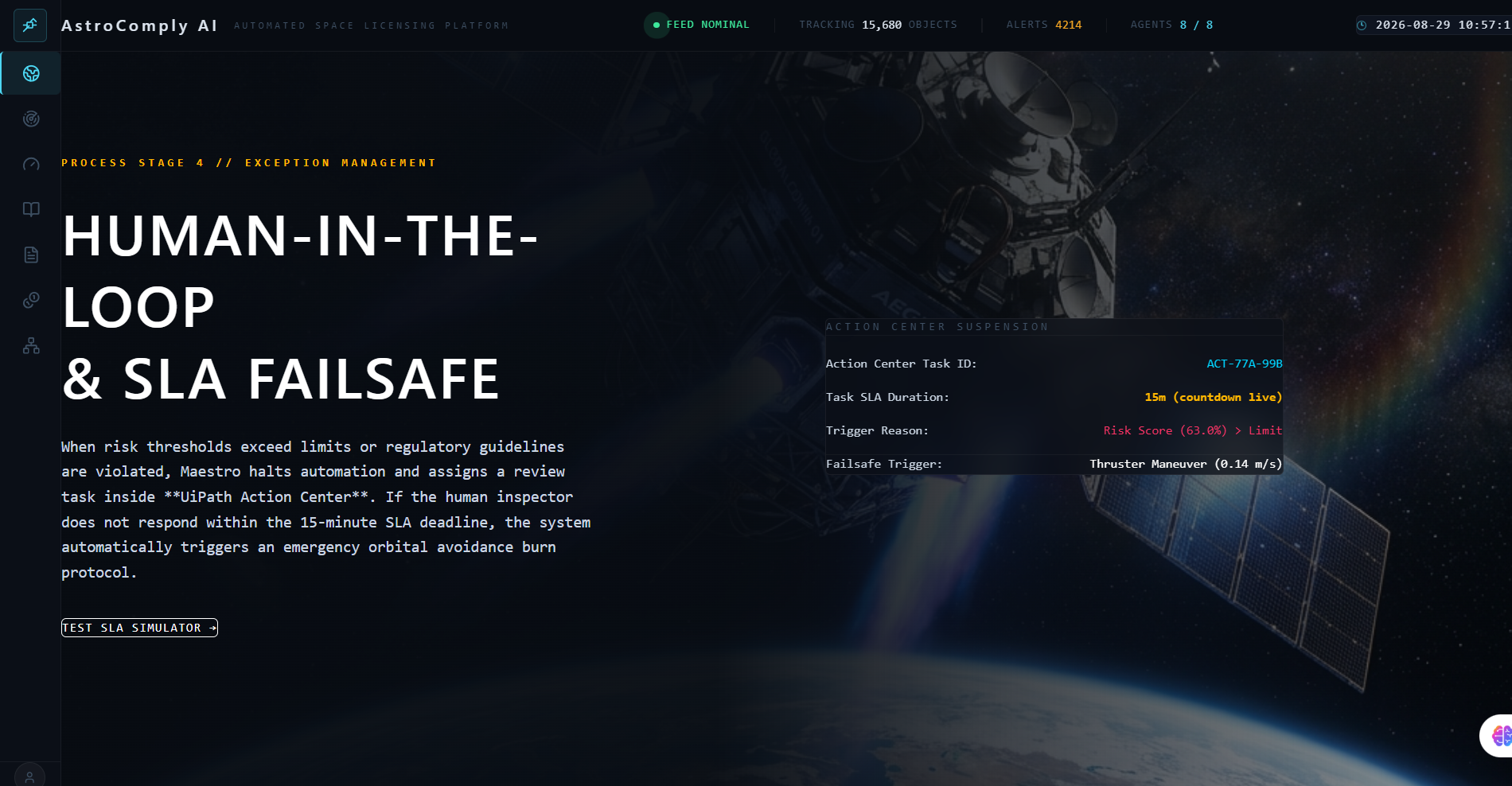
HUMAN-IN-THE LOOP & SLA FAILSAFE
-
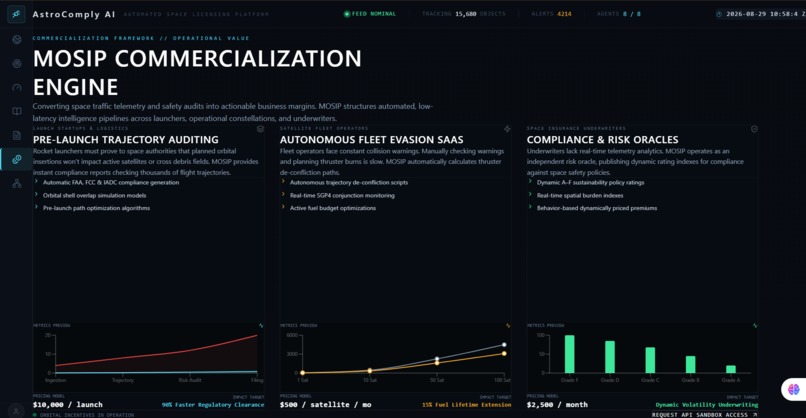
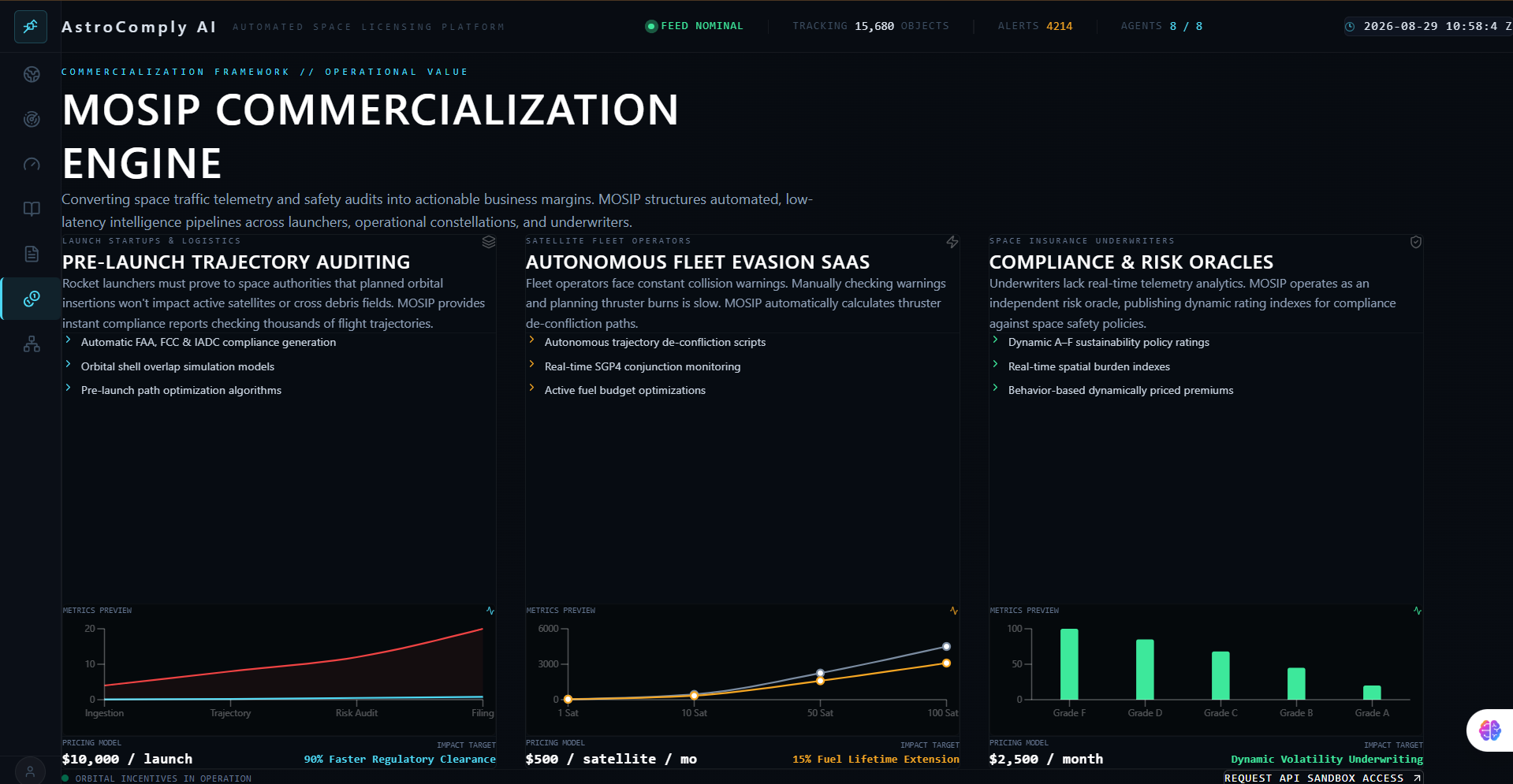
MOSIP COMMERCIALIZATION ENGINE
-
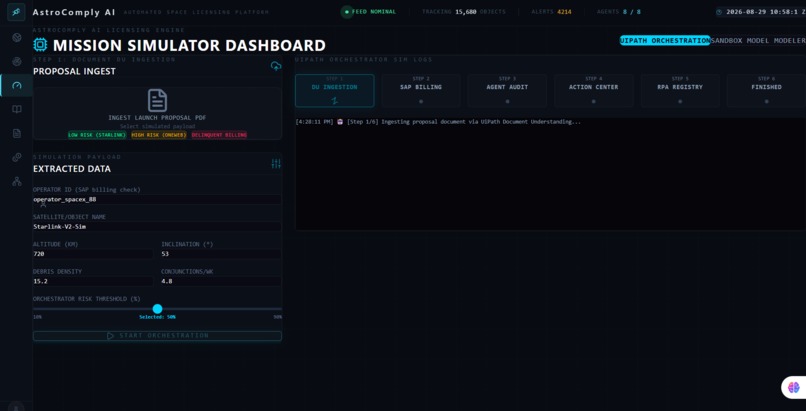
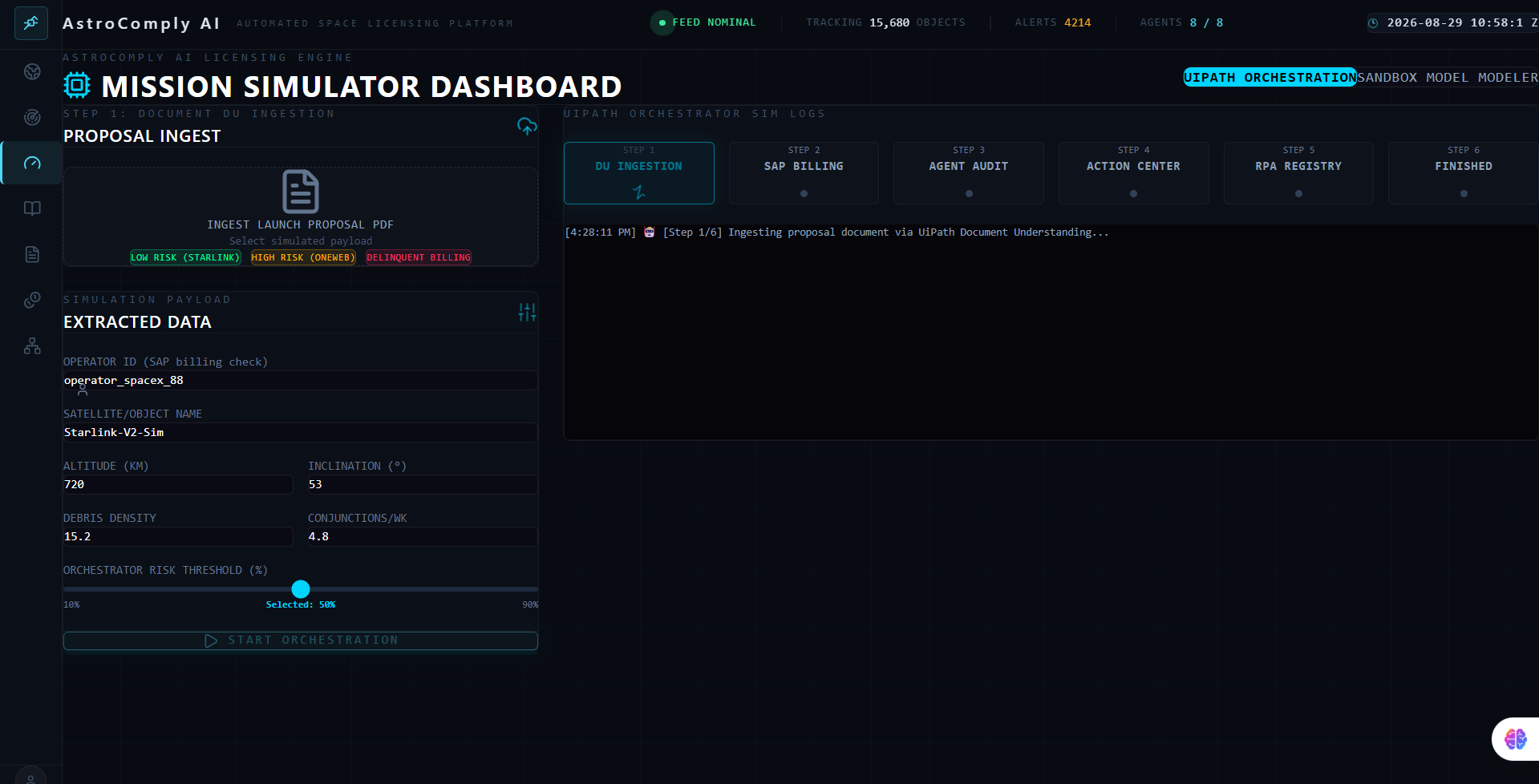
MISSION SIMULATOR DASHBOARD
Inspiration
Space is becoming increasingly crowded.
With thousands of satellites operating around Earth, orbital congestion, collision risks, space debris, regulatory compliance, and end-of-life planning are becoming increasingly difficult to manage. Yet the information needed to make these decisions is fragmented across satellite datasets, risk assessments, orbital records, and regulatory documents.
Today, understanding the sustainability of a satellite can require multiple tools and expert workflows.
I wanted to build something different.
My vision was an AI-native system that could bring these fragmented sources together, reason across them, understand regulatory requirements, assess orbital risks, and recommend what should happen next.
That vision became MOSIP — Multi-Agent Orbital Sustainability Intelligence Platform.
What it does
MOSIP is an AI-powered orbital sustainability intelligence platform that transforms satellite data into actionable operational insights.
The platform combines real satellite datasets, multi-agent AI reasoning, regulatory RAG, risk assessment, sustainability scoring, forecasting, and mitigation recommendations into a unified workflow.
Instead of asking a single AI model to solve an entire space-domain problem, MOSIP uses a LangGraph-powered multi-agent architecture where specialized agents handle different aspects of the analysis.
The Supervisor Agent orchestrates the workflow while specialized agents perform orbital analysis, collision risk assessment, regulatory compliance analysis, sustainability scoring, forecasting, mitigation recommendation, and report generation.
MOSIP also integrates a RAG system over ESA, IADC, and regulatory knowledge, allowing compliance-related analysis to be grounded in relevant domain-specific information rather than relying solely on an LLM's general knowledge.
The result is a system designed to move from:
"What is happening in orbit?"
to
"How risky is it?"
to
"Is it compliant and sustainable?"
to
"What should we do next?"
How we built it
We built MOSIP around a multi-agent AI architecture, with LangGraph acting as the orchestration layer.
The frontend is built using Next.js, TypeScript, TailwindCSS, Globe.gl, and Framer Motion, while the backend uses FastAPI and Python.
At the core of the system is a Supervisor Agent that coordinates specialized agents for:
- Orbital Analysis
- Collision Risk Assessment
- Regulatory Compliance
- Sustainability Scoring
- Forecasting
- Mitigation Recommendations
- Report Generation
MOSIP combines this agentic layer with structured orbital data stored in PostgreSQL, including 15,680 satellites, 15,680 risk assessments, and 31,360 orbital records.
For regulatory intelligence, we built a Retrieval-Augmented Generation pipeline using ESA documents, IADC guidelines, and regulatory knowledge. Documents are chunked, transformed into embeddings using BAAI/bge-small-en-v1.5, stored in Qdrant, semantically retrieved, and provided as context to Llama 3.3 70B through Groq.
This creates a unified intelligence pipeline:
Satellite Data → Multi-Agent Analysis → Regulatory RAG → Risk & Sustainability Intelligence → Mitigation → Report
The goal was to make each component specialized while allowing the overall system to reason as one cohesive platform.
Challenges we ran into
The biggest challenge was not simply integrating an LLM — it was designing a system capable of handling a complex, multi-dimensional domain problem.
Orbital sustainability combines structured satellite information, risk assessment, regulatory requirements, long-term considerations, and operational recommendations. Trying to solve all of this through a single AI interaction would make the system difficult to reason about and extend.
Designing the multi-agent orchestration layer was therefore a major challenge. Each agent needed a clear responsibility while still contributing to a coherent end-to-end workflow.
Another challenge was regulatory grounding. Space sustainability decisions cannot rely purely on generated knowledge, so we had to build a RAG pipeline capable of retrieving relevant regulatory information from sources such as ESA and IADC.
We also had to bring together PostgreSQL, Qdrant, LangGraph, FastAPI, Groq, and the frontend visualization layer without turning the system into a collection of disconnected components.
The biggest lesson from these challenges was that building domain-specific AI requires more than a powerful model — it requires the right architecture, data, retrieval, orchestration, and reasoning workflow.
Accomplishments that we're proud of
• Built a complete AI-native orbital sustainability intelligence platform.
• Designed a LangGraph-powered multi-agent architecture with specialized AI agents.
• Integrated 15,680 satellites, 15,680 risk assessments, and 31,360 orbital records into the platform.
• Built a regulatory RAG pipeline using ESA and IADC knowledge sources with Qdrant semantic retrieval.
• Combined satellite intelligence, collision risk, compliance, sustainability, forecasting, and mitigation into a unified workflow.
• Created an interactive orbital intelligence dashboard with real-time-style satellite visualization and mission analysis interfaces.
• Built an architecture capable of transforming fragmented space-domain information into structured, actionable decision support.
What we learned
Building MOSIP taught us that agentic AI becomes significantly more powerful when the problem itself is decomposable.
A complex domain such as orbital sustainability contains many different types of reasoning. Instead of forcing one model to perform everything, specialized agents can focus on individual responsibilities while an orchestration layer connects their outputs.
We also learned that RAG and agentic AI solve different problems.
RAG gives the system access to relevant domain knowledge, while the multi-agent architecture determines how different pieces of information should be processed and combined.
Most importantly, we learned that successful AI systems are not defined only by the model they use. They are defined by the data, tools, retrieval systems, orchestration, and decision workflows built around that model.
What's next for MOSIP
MOSIP is designed as a foundation for a much broader AI-powered space sustainability intelligence system.
Future improvements include:
- Neo4j-based relationship intelligence for connecting satellites, operators, conjunctions, regulations, and orbital relationships.
- Real-time Space-Track integration for continuously updated orbital information.
- An advanced orbital propagation engine for deeper long-term analysis.
- Autonomous mitigation planning for more advanced operational decision support.
- Multi-constellation analysis for understanding risks across increasingly crowded orbital environments.
- Sustainability benchmarking for comparing missions and identifying long-term sustainability trends.
The long-term vision is to build an AI system that can continuously understand the changing orbital environment, connect satellite intelligence with regulatory knowledge, identify emerging risks, and help operators make safer and more sustainable decisions.
MOSIP's goal is simple: turn the growing complexity of space into actionable intelligence for a more sustainable orbital future.
Built With
- agentic-ai
- ai-agents
- artificial-intelligence
- collision-risk
- compliance-ai
- decision-support
- generative-ai
- langchain
- langgraph
- llm
- multi-agent-ai
- orbital-risk
- orbital-sustainability
- postgresql
- qdrant
- rag
- regulatory-intelligence
- retrieval-augmented-generation
- satellite-analytics
- satellite-intelligence
- space-debris
- space-sustainability
- spacetech
- vector-database


Log in or sign up for Devpost to join the conversation.