-
Slide 1
-
Slide 2
-
Slide 3
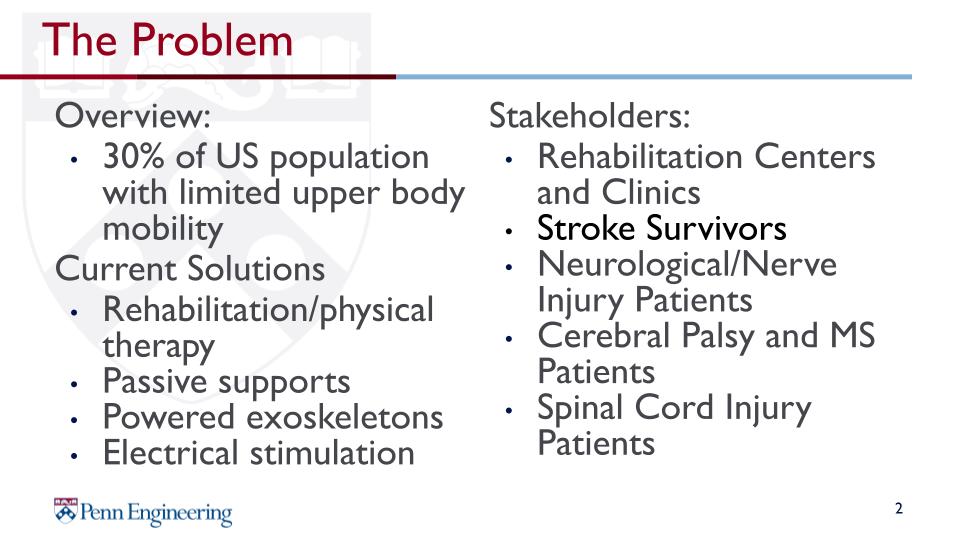
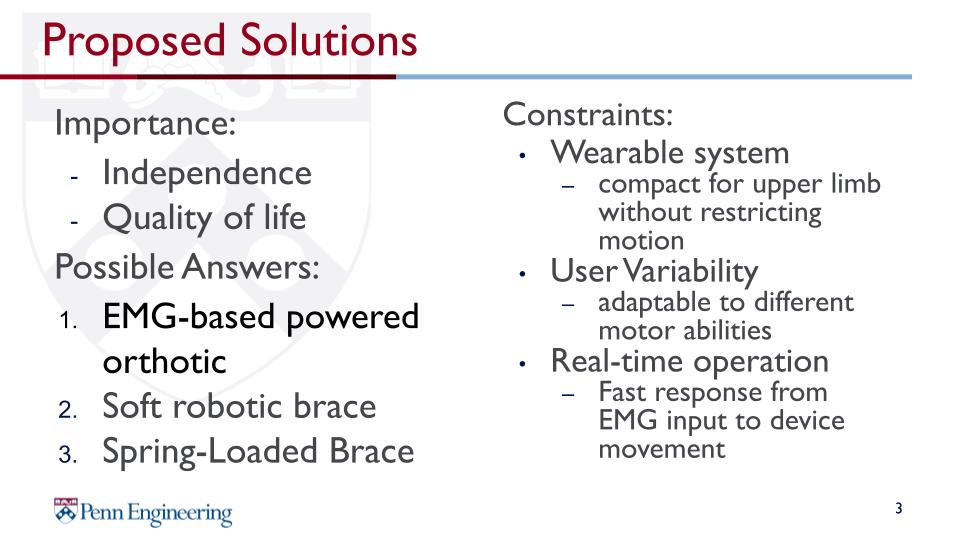
Myoelectrically-commanded, upper-limb powered orthoses exist in the rehabilitation marketplace (Myomo, HKK, Vincent neo1, etc.) but they are rudimentary and have only used conventional (amplitude-based) myoelectric control. We believe that an upper-limb powered orthosis, optimized with pattern recognition (eg. Coapt) would be a significant advancement with the potential to address a large market need.
Coat anticipates that the characteristics of impaired limb EMG from an individual benefiting from a powered orthotic brace (eg, stroke survivor, BPI) will have some differences from the EMG of prosthesis users. This, therefore, demands signal processing investigation toward the optimization of current pattern recognition approaches aimed at the power orthoses benefactors.
For a project, we propose a project for your group that balances signal processing and pattern recognition algorithm work using Coapt EMG hardware with the mechatronic effort of creating an actuated proof-of concept orthoses.
Incorporate a 16-channel Coapt electrode array into two cuffs, in order to capture 8 EMG channels above the elbow and 8 EMG channels below the elbow. Use the EMG system to acquire a dataset representative of the subject population Explore EMG signal processing techniques to reliably detect user movement intent, focusing on feature extraction and pattern recognition robust to impaired physiology. Investigate assist-as-needed control strategies that encourage active participation while providing mechanisms that tune assistance level to individual user capability. Assemble an orthosis prototype that actuates hand open/close, wrist pronation/supination, and elbow flexion/extension Incorporate Coapt hardware, new signal processing concepts, and the orthosis prototype to perform a feasibility/ proof-of-concept of the system
Built With
- emg
- orthotic

Log in or sign up for Devpost to join the conversation.