-
-
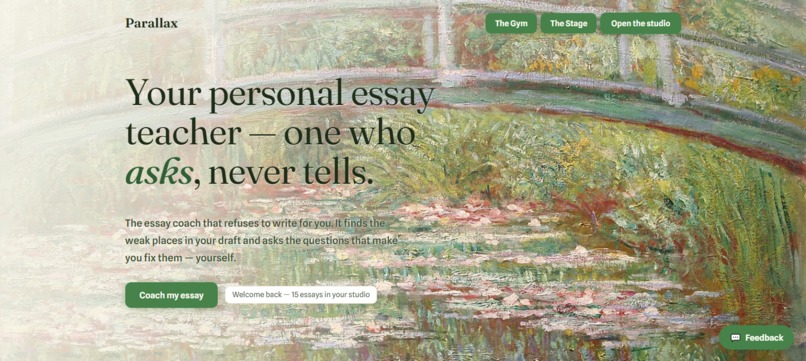
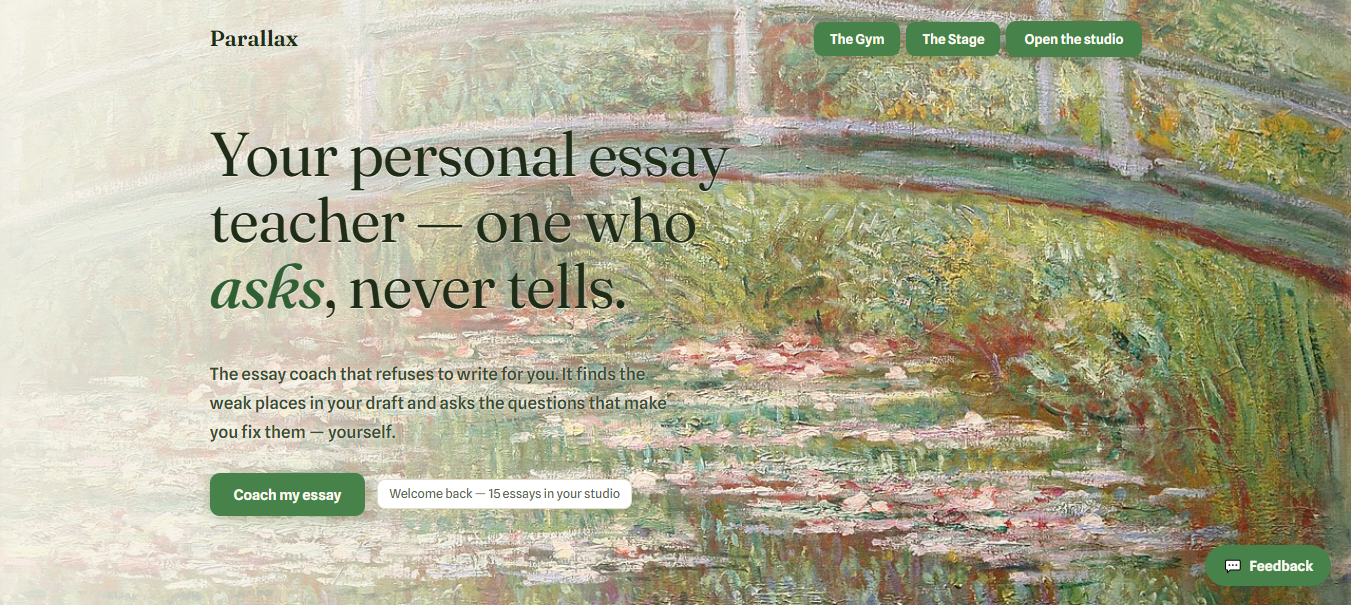
Home Page
-
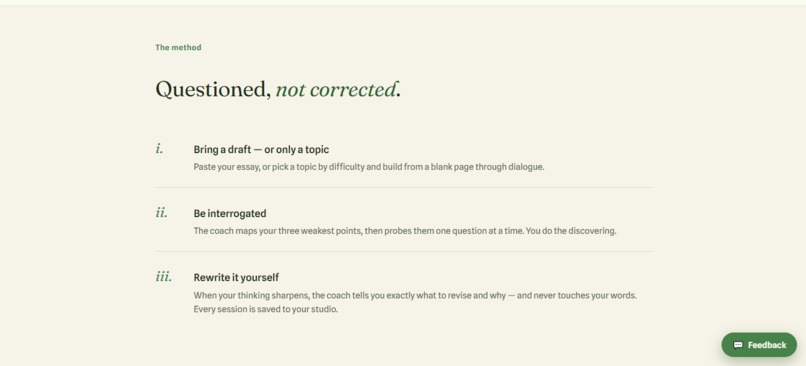
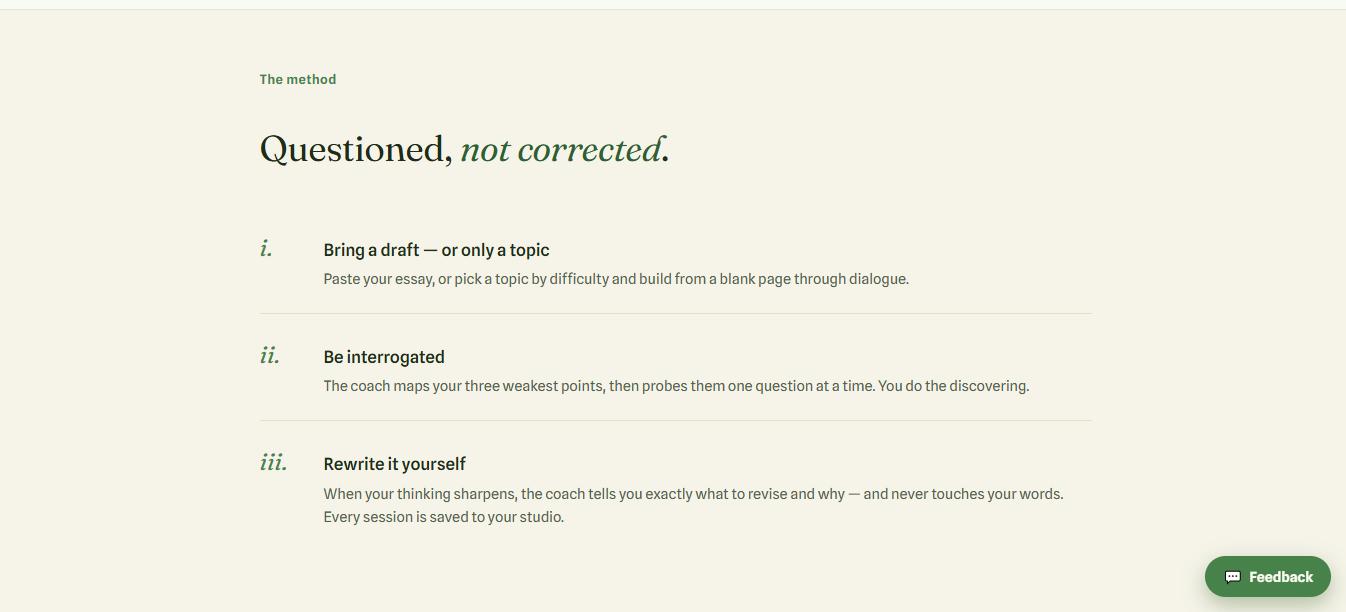
The Method
-
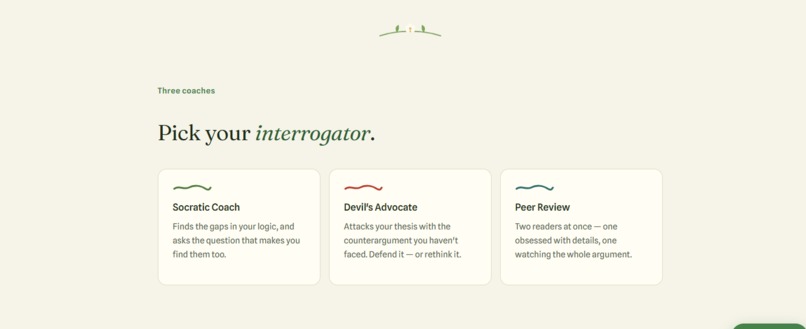
The Best Interrogators
-
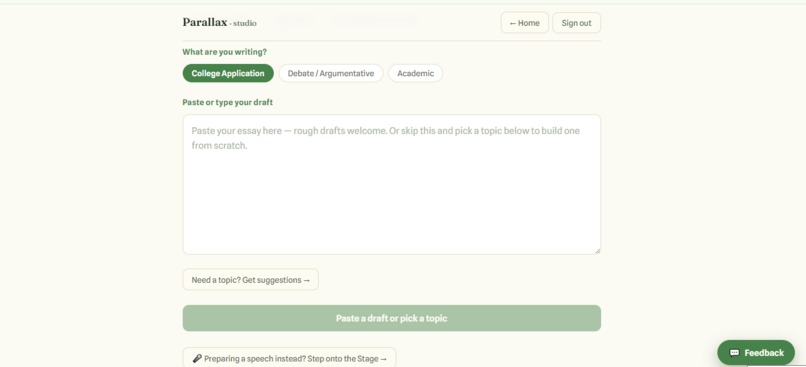
Essay Studio
-
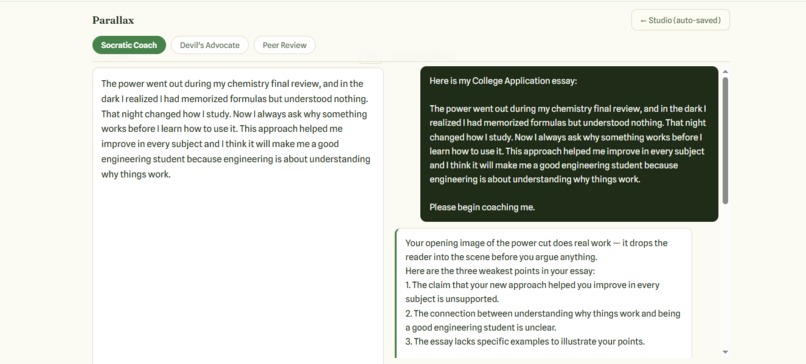
Coaching Session
-
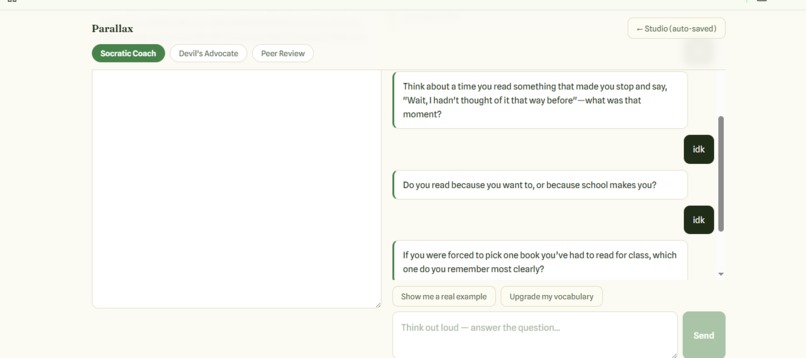
Different approach
-
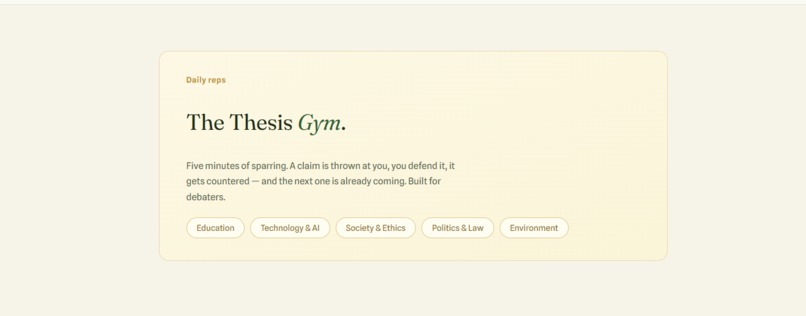
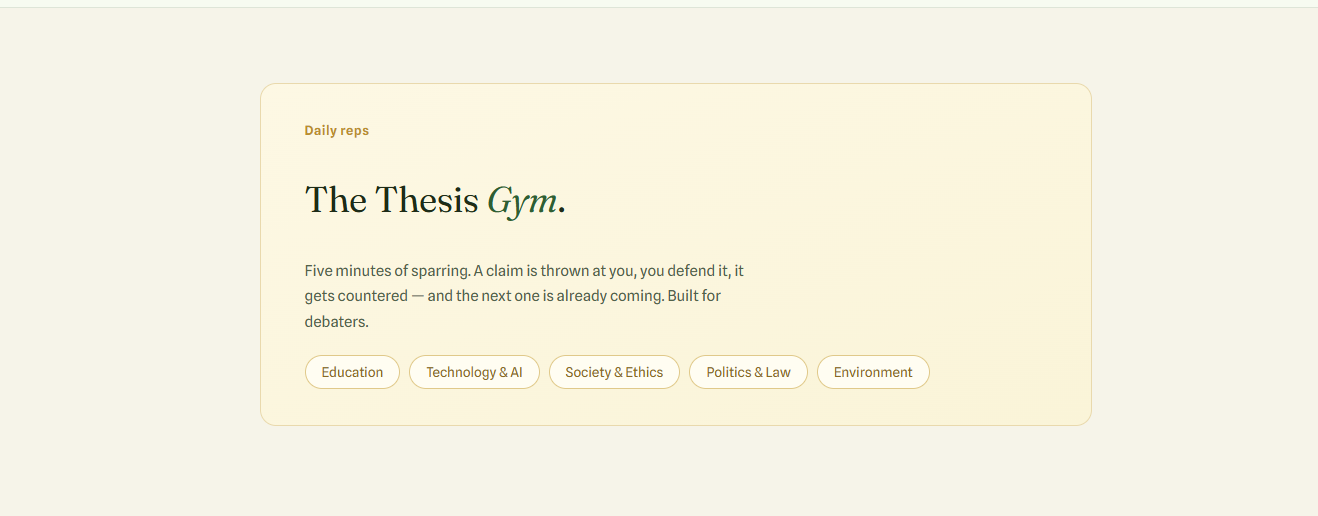
Thesis Gym
-
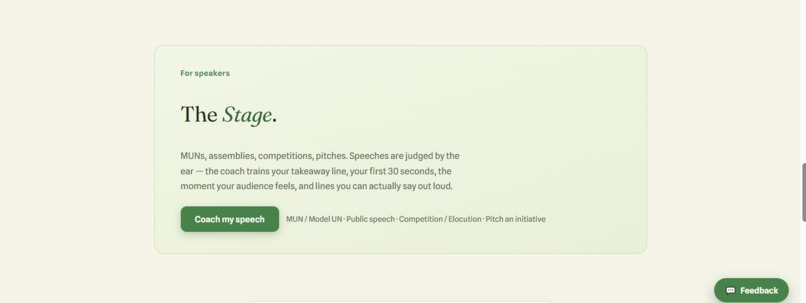
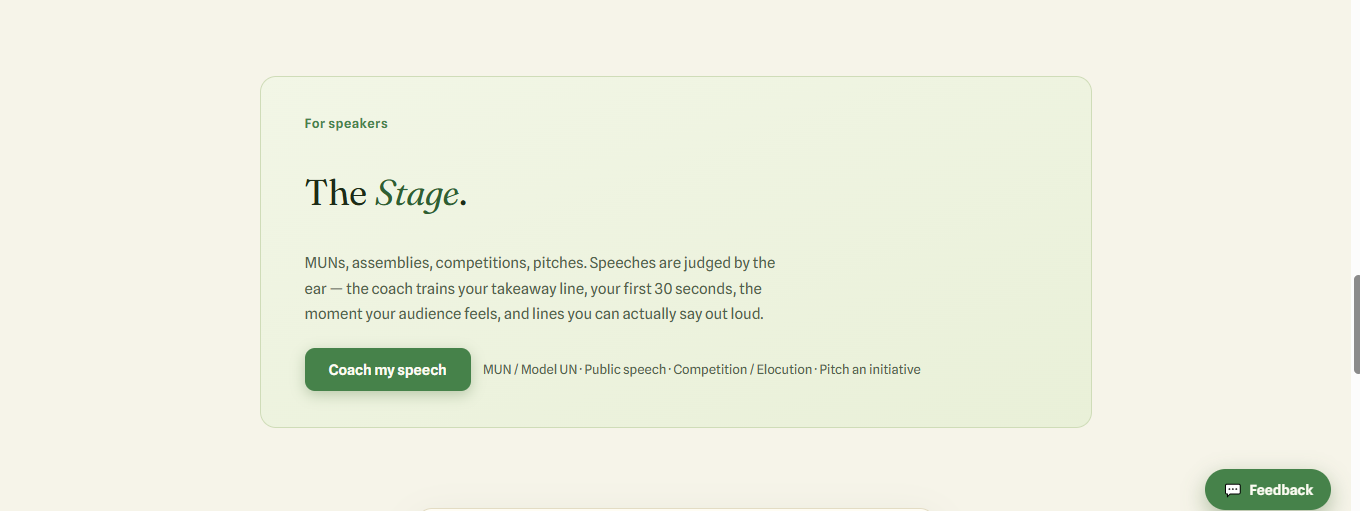
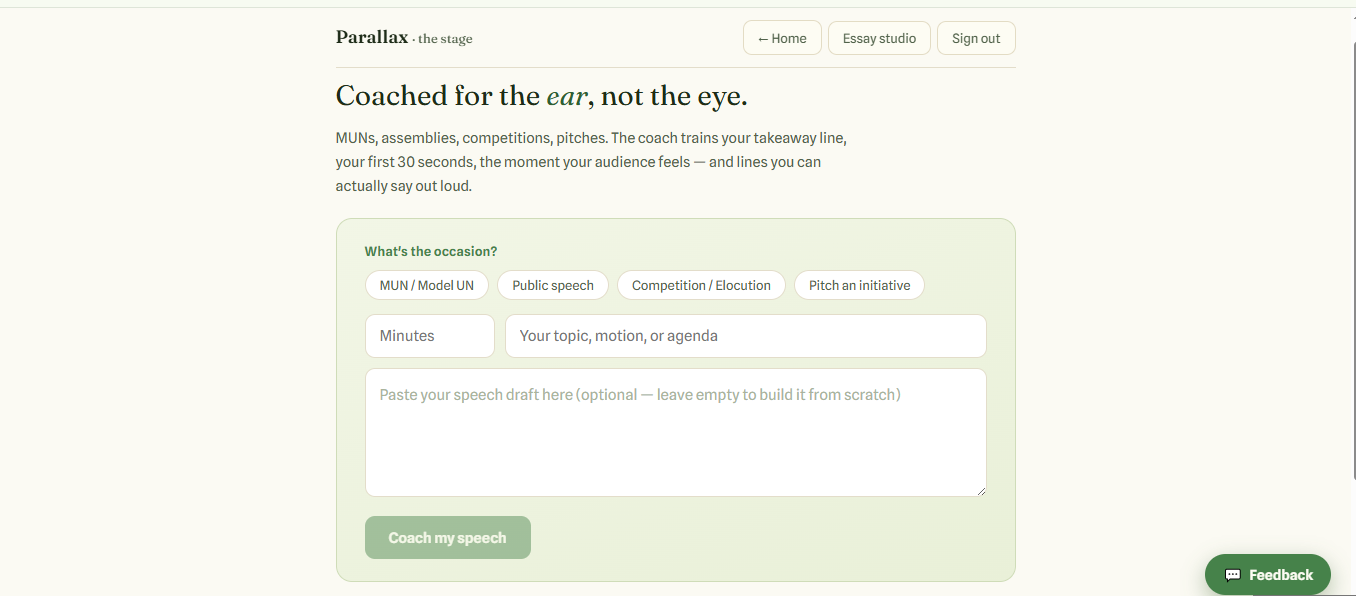
The Stage
-
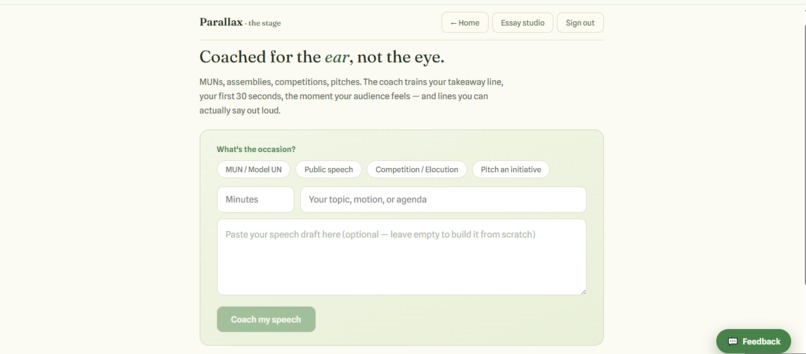
The Stage Features
-
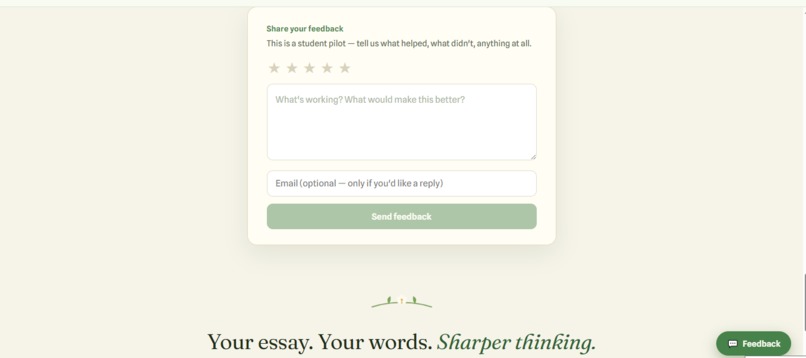
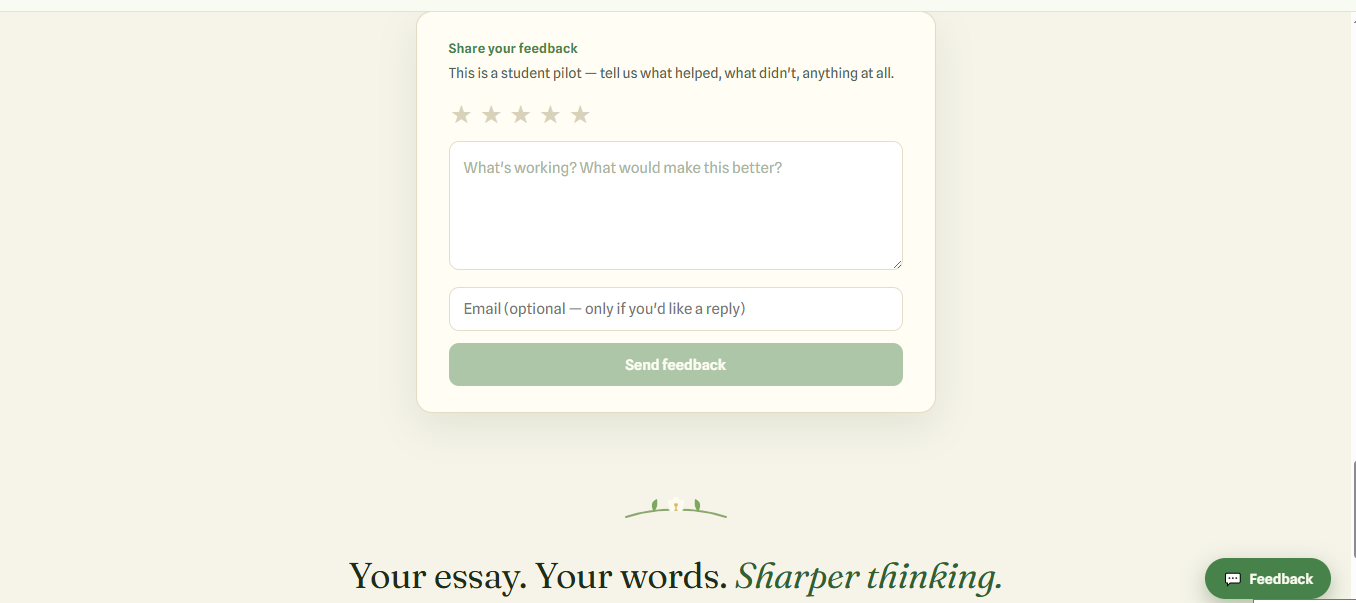
Feedback Form
Inspiration
I built Parallax because I lived the problem. All through school, I struggled to write essays. Not because I couldn't put words on a page, but because I never knew what to think next. I'd stare at the screen wondering what am I actually supposed to say here? And no one ever taught me that part. We were taught to write generic essays. Read a few "good" sample essays, absorb the shape of them, and quietly copy the ideas. That was it. That was the whole method. What I never got was real guidance. The kind that doesn't hand you a template, but sits with you and helps you figure out what you actually think ,and then how to say it in the sharpest, truest way possible. The kind of guidance that turns an okay essay into your best one. And here's the part that bothered me most: that guidance exists, but it's locked behind a price tag. Expensive tutors. Private coaches. Personalized essay and speech mentors. Most people can't afford any of that. So the students who could most use real coaching are exactly the ones who never get it. At some point it clicked for me: I never needed a writing coach. I always needed a thinking coach. The words were never really the problem. The thinking was. And in a generation where AI can write almost anything for you, thinking is the one skill that actually still matters - maybe the only one that will. Here's what struck me when I saw where I was submitting this: the name of this hackathon is the entire idea of my app. Mastery Mentors. That's not a theme I had to reach for , it's the thesis Parallax was already built on. A mentor doesn't do your work for you. A mentor builds your mastery, so that next time, and every time after, you don't need them. That's the whole difference between a tool that writes your essay and a coach that makes you a writer.
What it does
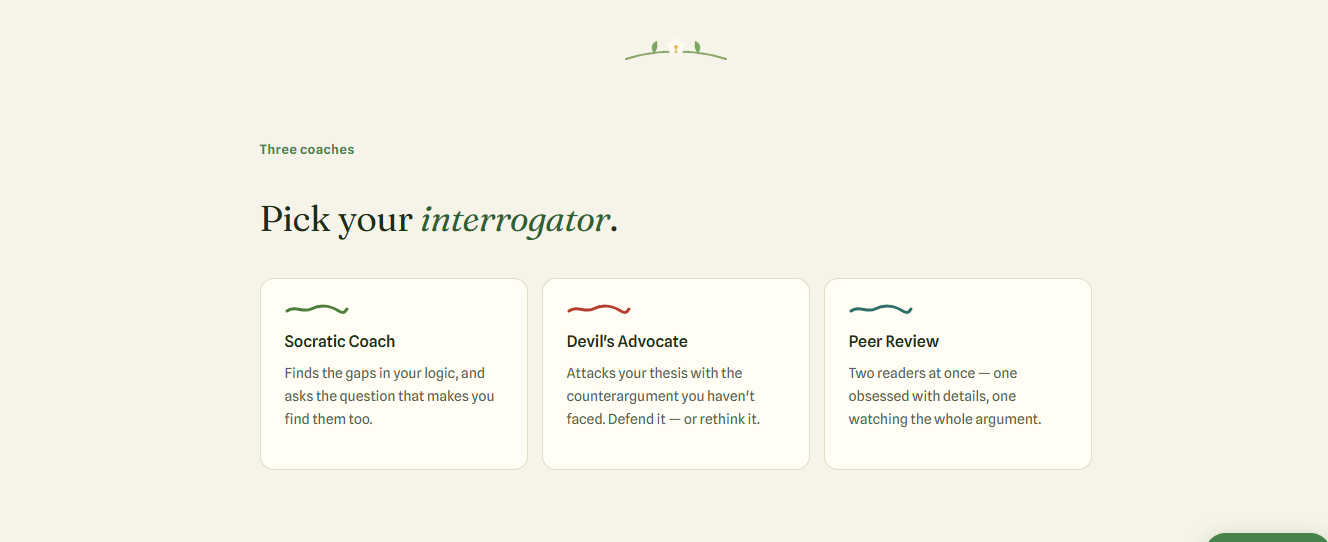
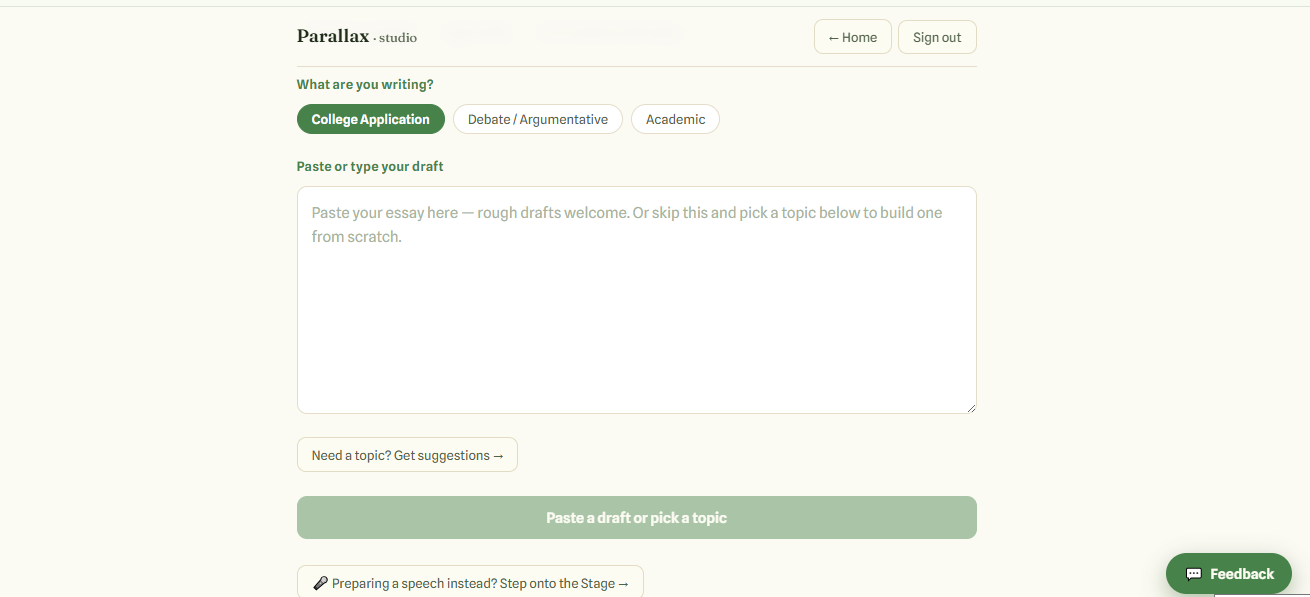
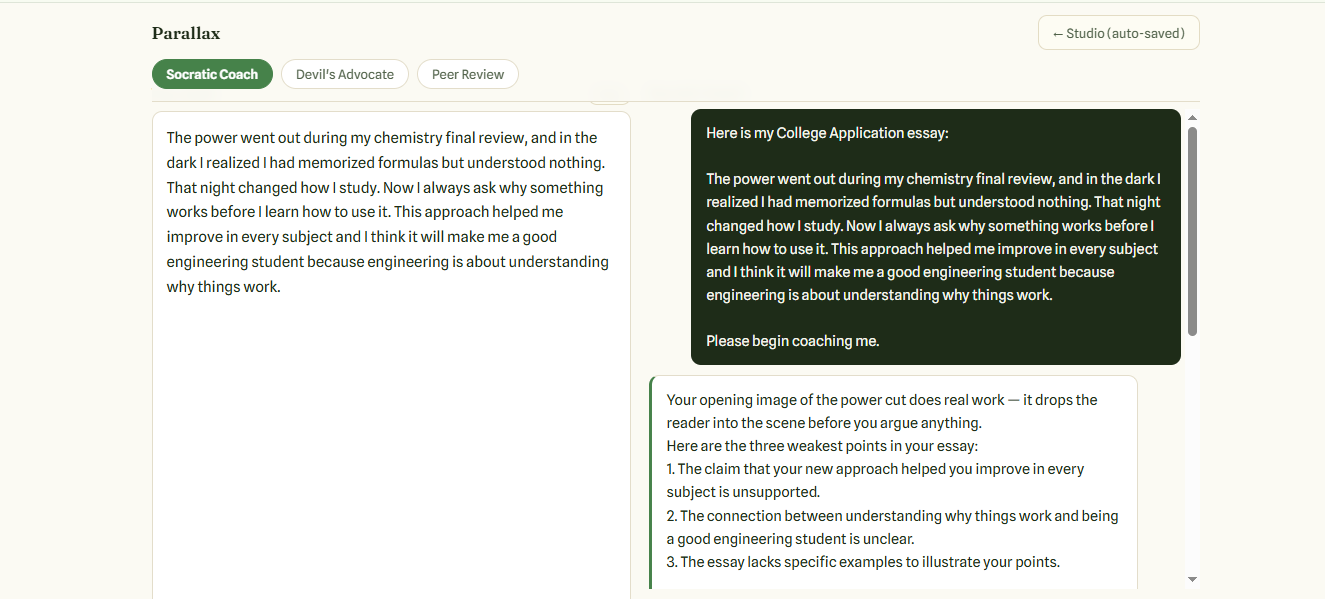
Coach Parallax is an AI-powered thinking coach designed to help students develop their own ideas rather than generate answers for them. Users can work on essays, speeches, debates, and other forms of persuasive writing with the support of different coaching modes, including a Socratic Coach that asks guiding questions, a Devil’s Advocate that challenges arguments with counterpoints, and a Peer Review mode that provides both detailed and big-picture feedback. The platform also includes a Thesis Gym for daily critical-thinking drills, topic suggestions at different difficulty levels, grammar and vocabulary support, and example essays on unrelated topics to inspire structure without influencing a student’s original work. By focusing on questioning, reflection, and revision, Coach Parallax aims to help students become stronger writers and more independent thinkers.
How I built it
I first built a small prototype using python but i wanted to take this a step further. So I built Parallax in Claude Code. I started from a design and a base file, then reworked the front end heavily it was my first time ever building a UI, and I wanted it to feel clean but genuinely student-friendly, not generic ai app. That balance took a lot of iteration, but getting there was one of the best parts of the process. The back end was the harder piece for me to set up, and pushing through it was a real challenge , but I got it working, running on Supabase. I prompted my way through each step, refining as I went. The heart of Parallax, though, isn't the stack — it's the coaching principles I built it around: 1)The coach never gives you the answer. That was the one rule everything else bent to. The moment it writes your thinking for you, it's failed. 2)It asks instead of answers. Its whole job is to ask the questions that pull the thinking out of you — pushing you to reach your own answers, and pushing you past where you'd normally stop. 3)Keep the work authentic. The essay, the speech, the content — it all has to stay genuinely yours. Parallax guides the thinking; it never replaces your voice. 4)If you need a model, it shows you one on a different topic. When you're truly stuck and want an example, it won't hand you an answer to your own prompt it demonstrates the idea somewhere else, so you still have to make the leap yourself. Those principles are the app. The UI and the backend just exist to deliver them.
Challenges we ran into
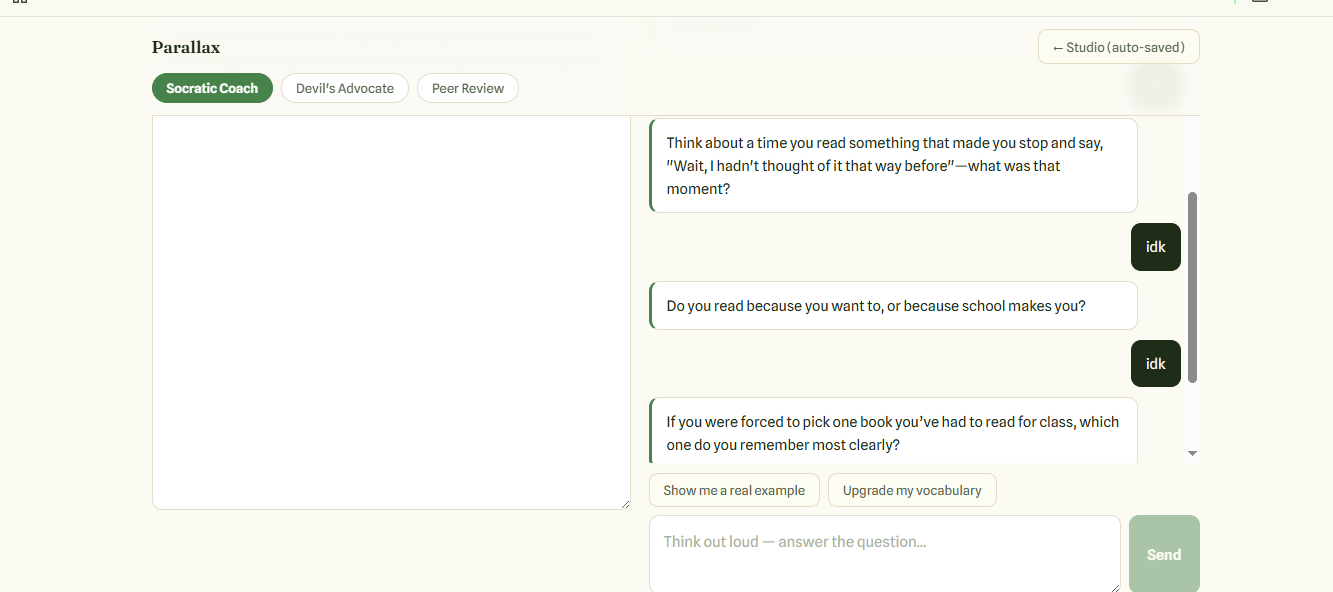
1)Socratic questioning assumes the student has something to draw out, and the weakest students, the ones who most need help, are the ones most likely to answer "idk" and leave. My live transcript proved the coach downshifts but doesn't yet reach a floor a checked-out student can't dodge. So i fixed that error by making changes in the prompt 2)A thinking-skills app has no built-in deadline the way "essay due Friday" does. Retention is the open question, not usefulness. 3)The people around me think spending hours thinking essays are a waste of time instead of just using Ai, so the challenge isn't building the tool, it's changing what people value, which I can't do with arguments, only with wins. 4)coaching quality lives entirely in the prompt, and a primary/fallback chain risks two different "coaches" with different voices, never writing a word, while still helping a genuinely stuck student, is a knife-edge
Accomplishments that we're proud of
The accomplishment is not simply that I built a web app; it is that I transformed frustration into action. Instead of waiting for someone else to solve a problem I cared about, I took the initiative to create a solution myself. That experience taught me that innovation begins when you stop asking who will fix a problem and start asking how you can contribute to solving it.
What we learned
I learned that the hardest part of innovation is not generating ideas but understanding people’s actual needs. Talking to users changed several assumptions I had about how students approach essay writing and helped me design a more practical solution.
What's next for Coach Parallax
The next step for Coach Parallax is to introduce a feature that provides a one-page record of a student’s thinking process, helping demonstrate that an essay was developed through their own ideas and reasoning. I also plan to gather more user feedback to refine the coaching experience and improve the quality of the questions it asks. In the long term, my goal is for Coach Parallax to help students become independent thinkers who can confidently develop and express their own ideas.
how to use my app
1)Sign up with your email and name 2)explore the different features 3)pick a topic or work on an existing draft 4)write your first essay or speech by yourself! 5) tired? go to the thesis gym 6)Mandatory! leave a feedback of how you felt


Log in or sign up for Devpost to join the conversation.