-
-
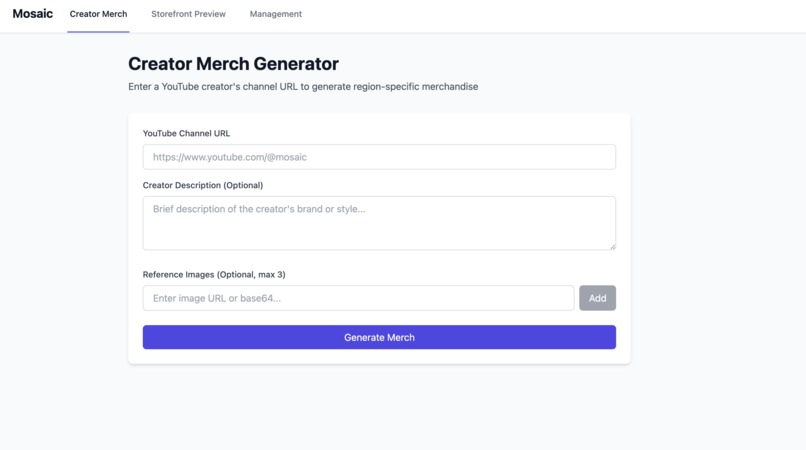
Generate straight from YouTube profile!
-
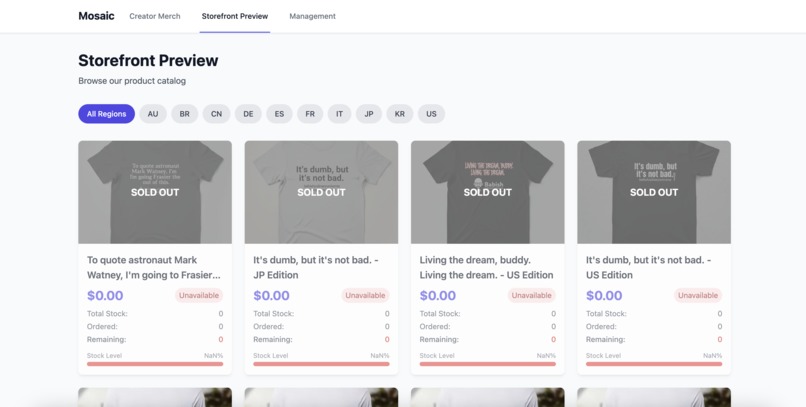
Custom T-Shirts!
-
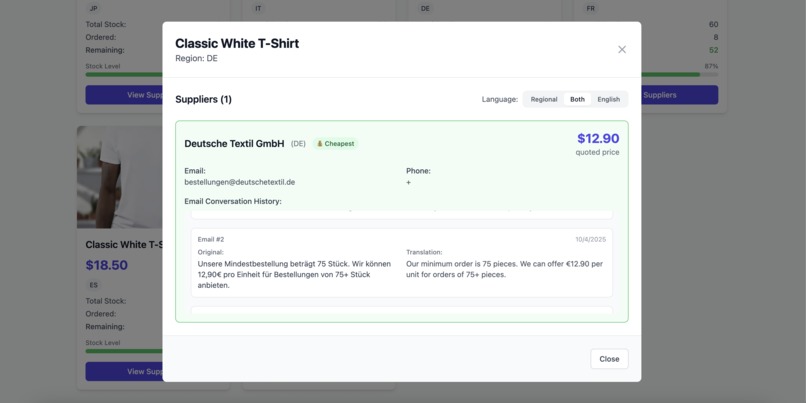
Supplier Negotiations :)
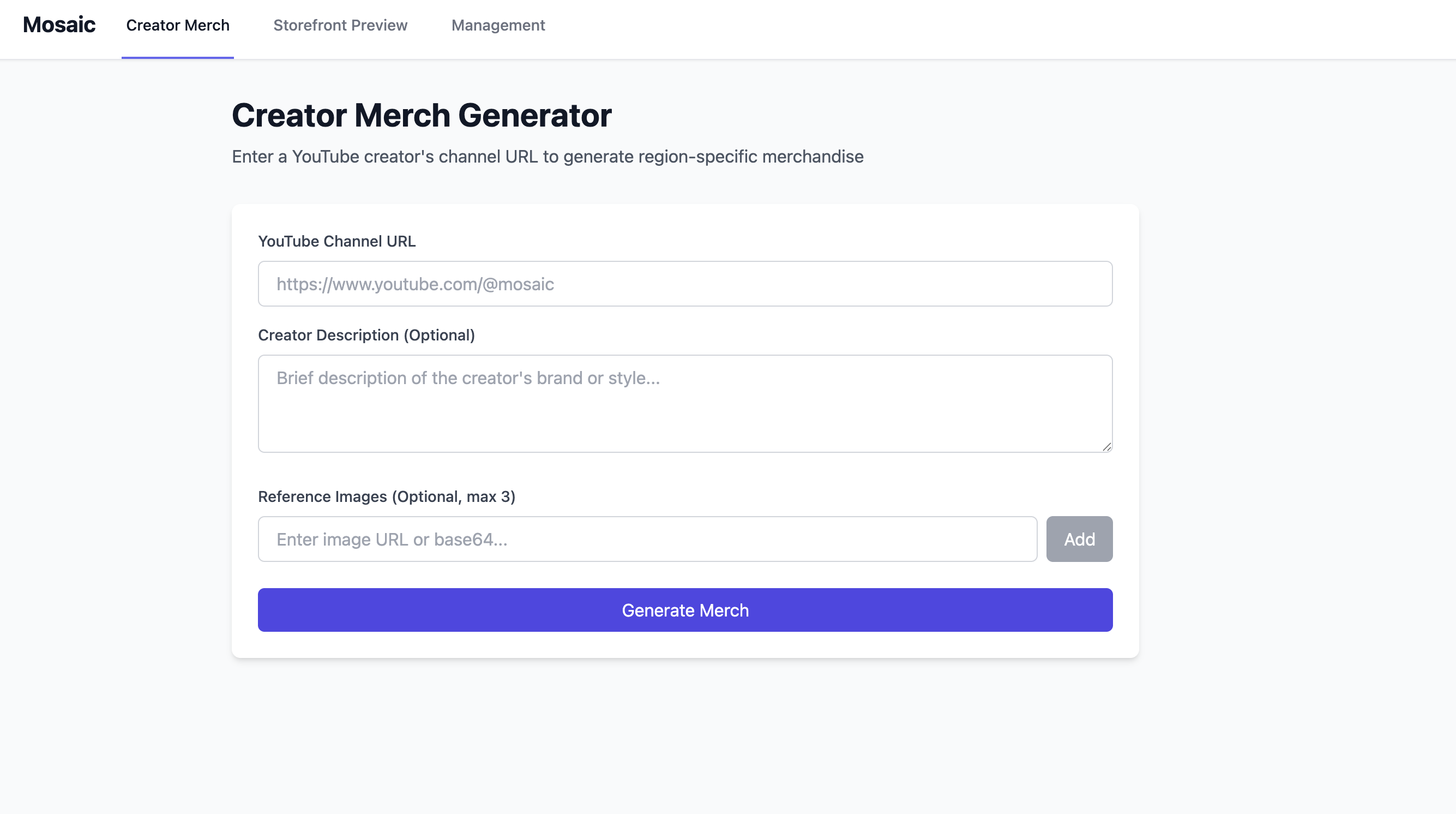
Mosaic
Inspiration
On TikTok and other social platforms, smaller creators often have large, engaged followings—but lack the resources of big influencers with teams and merch managers. We wanted to empower those creators to monetize their communities regionally, without needing to build logistics networks or spend hours cold-emailing suppliers.
The idea: automate the messy back-office work (research, outreach, storefront setup) so creators can focus on what they do best—content and community.
What it does
Mosaic is an end-to-end merch storefront generator for creators.
It takes a creator’s follower data, identifies high-potential regions, discovers local style trends, generates design assets, finds suppliers, negotiates quotes, and spins up localized storefronts—all automatically or semi-automatically.
Key features:
- Follower Demographics Analysis → Top regions visualized on maps and bar charts.
- Trend/Style Discovery → Region-specific style keywords using Linkup Search API.
- Design Generation → Localized mockups and merch-ready assets via Freepik API.
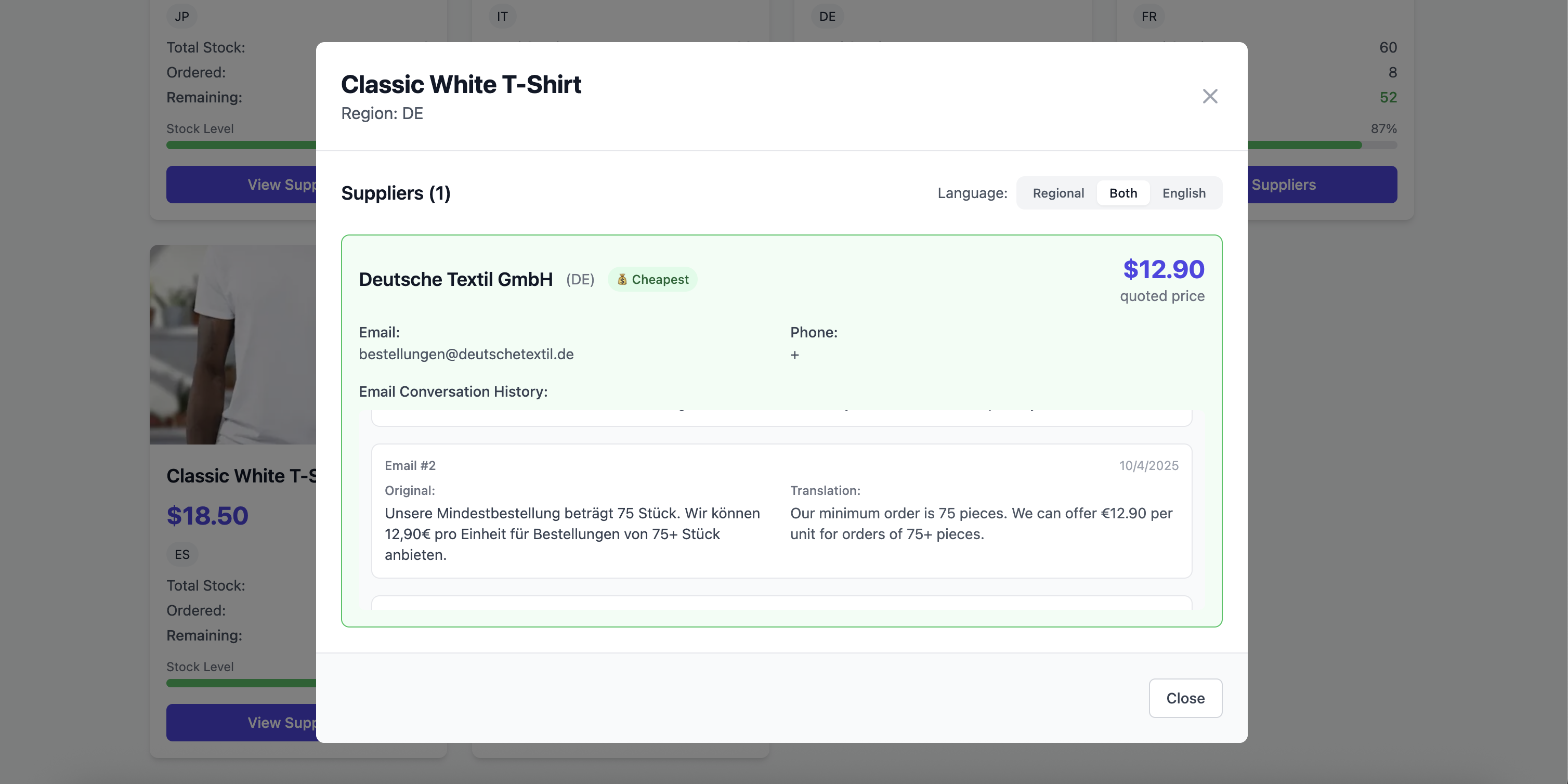
- Supplier Outreach & Negotiation → Automated supplier discovery, negotiation, and follow-ups coordinated using LangGraph / LangChain AI agent orchestration.
- Localization → Outreach messages and storefront copy translated seamlessly using DeepL API.
- Quote Aggregation → Normalized supplier responses, cost breakdowns, risk scores.
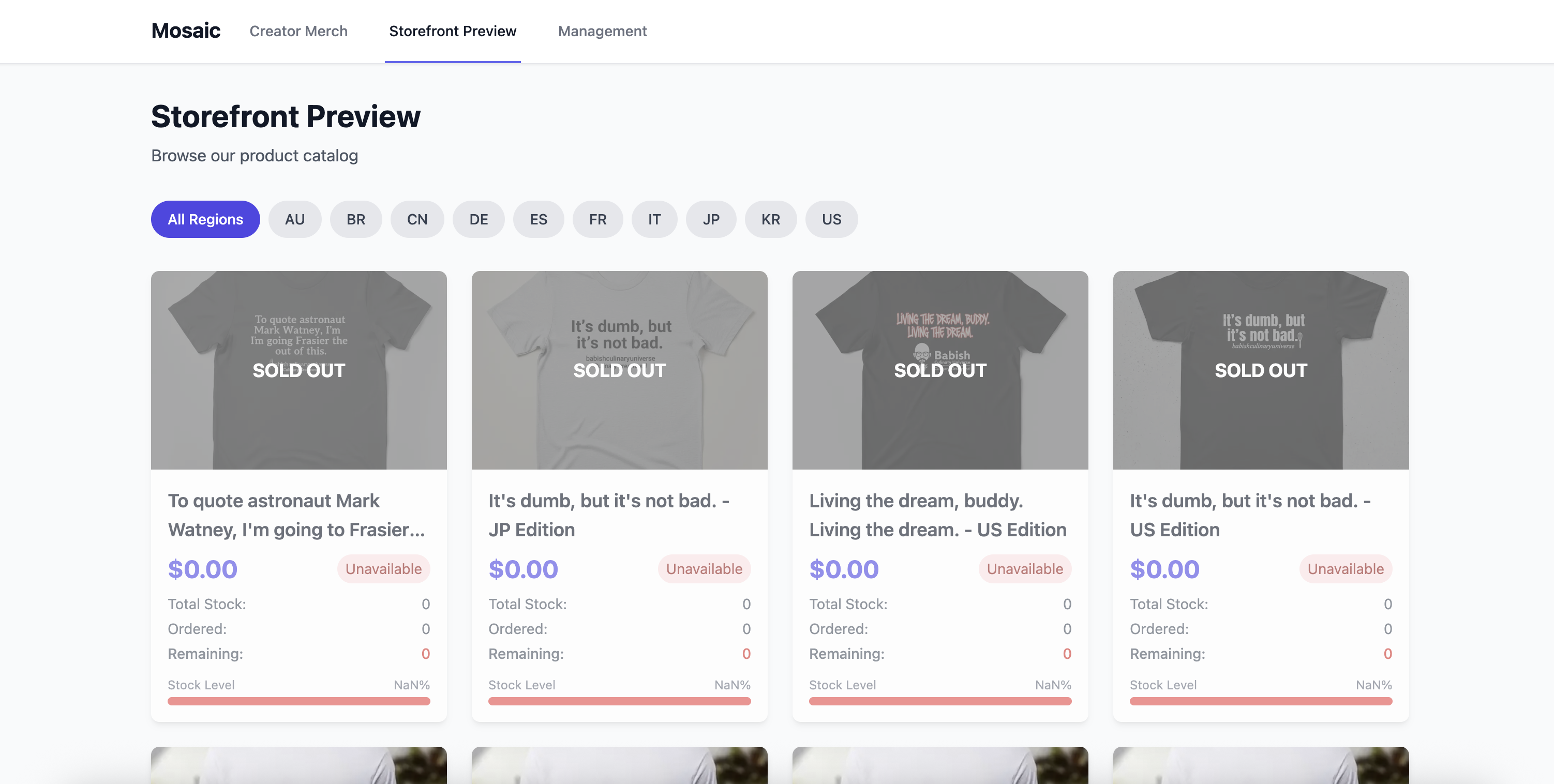
- Storefront Creation → Micro-sites per region with localized currency, language, and product sets.
- Maintenance & Workflow → Ongoing supplier tracking, inventory sync, and alerts.
How we built it
APIs & Data Sources:
- Linkup Search API → Regional design trend discovery + supplier lookup.
- Freepik API → AI-generated design assets + mockups for localized merch.
- DeepL API → Automated, high-quality translations for outreach and storefront localization.
- LangGraph / LangChain → Orchestration of autonomous supplier-negotiation agents, enabling multi-threaded outreach and negotiation with built-in retry logic.
Pipeline:
- Ingest follower demographics (CSV or connected social API).
- Run trend/style discovery per region (Linkup).
- Generate localized mockups (Freepik).
- Automate supplier discovery and outreach (Linkup + DeepL + LangGraph / LangChain).
- Parse and aggregate quotes into a recommendation dashboard.
- Deploy storefront templates with localized pricing & availability.
Tech Stack:
- Backend: Python (FastAPI) orchestrating API calls & workflow.
- Frontend: React (for dashboards & storefront previews).
- Infra: Microservices; LangGraph / LangChain for multi-agent orchestration.
Challenges we ran into
- Supplier data reliability: Many regional manufacturers don’t have structured APIs, requiring a mix of search, scraping, and heuristics.
- Language barriers: Outreach in non-English regions required robust translation/localization—DeepL made this possible.
- Agent coordination: Negotiating with multiple suppliers in parallel demanded orchestration—Truefoundry provided the agent framework we needed.
- Design fidelity: Balancing fast auto-generated mockups with creator-specific branding.
Accomplishments that we're proud of
- Built a multi-API pipeline connecting analytics → design → sourcing → storefront.
- Automated supplier outreach in multiple languages, reducing creator overhead.
- Used LangGraph / LangChain orchestration to negotiate with suppliers at scale.
- Created a demo storefront generator showing localized product previews per region.
- Lowered the idea-to-storefront cycle from weeks to minutes.
What we learned
- Smaller creators don’t just need tools, they need automation plus orchestration—stitching APIs together is the real unlock.
- Regionalization is a multiplier: followers engage more with localized products, suppliers respond better in their own languages, and storefront conversion increases with local currency.
- Sponsor tools like Linkup, Freepik, DeepL, and LangGraph / LangChain were complementary and powerful together—the project worked because each filled a different gap in the pipeline.
What’s next for Mosaic
- Shopify/Etsy integrations to let creators go live directly from Mosaic.
- Supplier reliability scoring (past responsiveness, delays, ratings).
- Seasonal trend refresh (continuous discovery via Linkup).
- Creator collab features for co-branded drops.
- Expanding beyond apparel → posters, digital goods, accessories.




Log in or sign up for Devpost to join the conversation.