-
-

Morphos Tech Stack
-
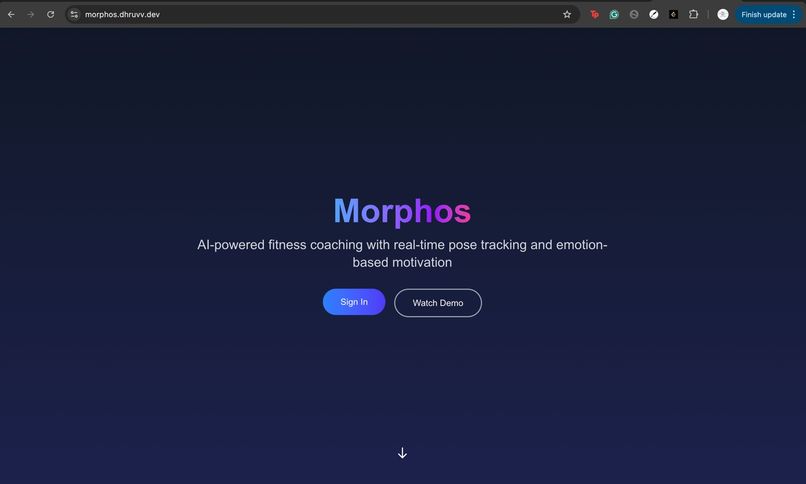
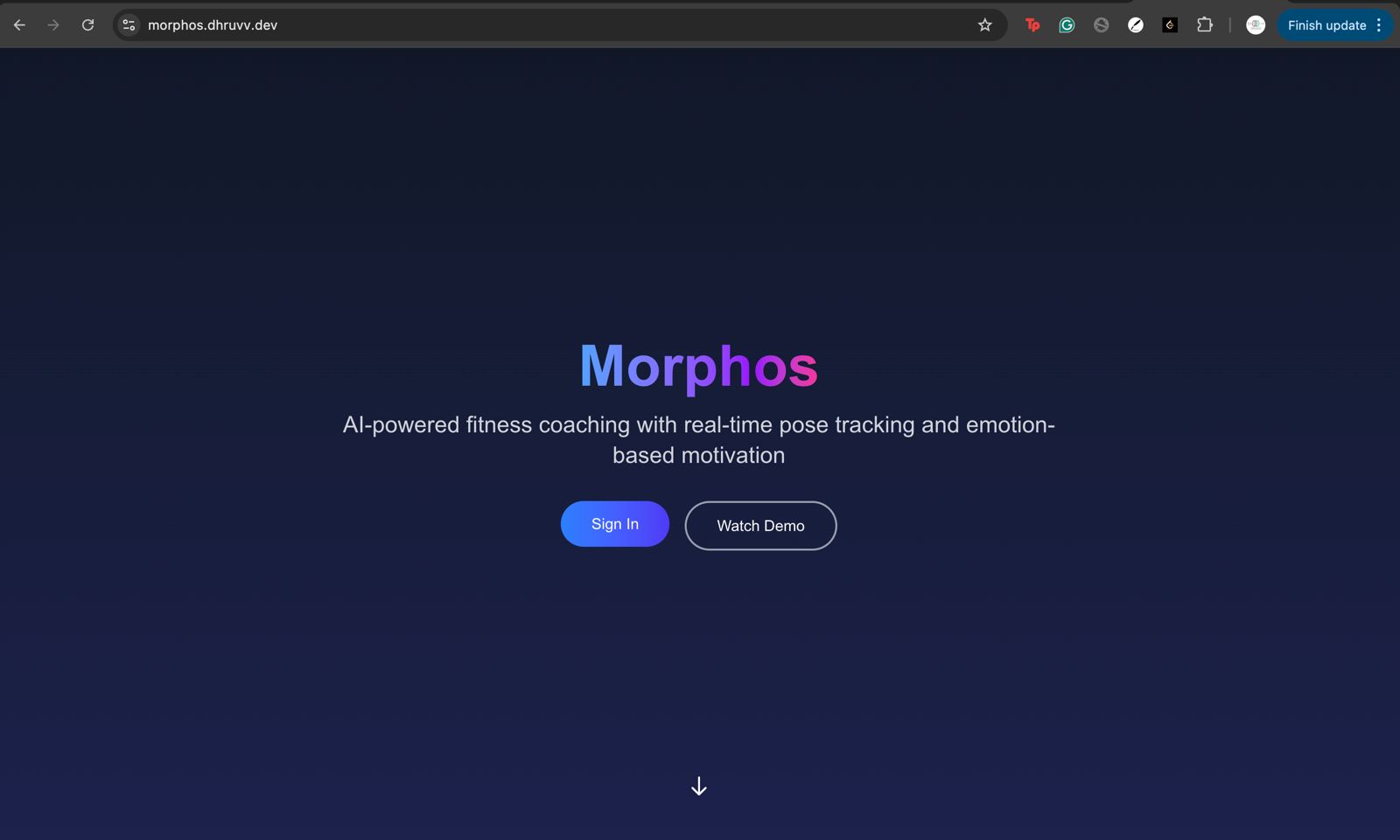
Landing Page
-
-
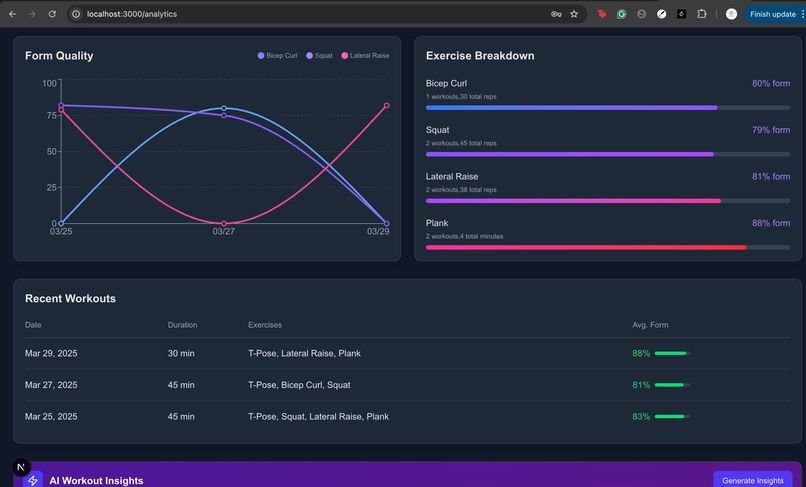
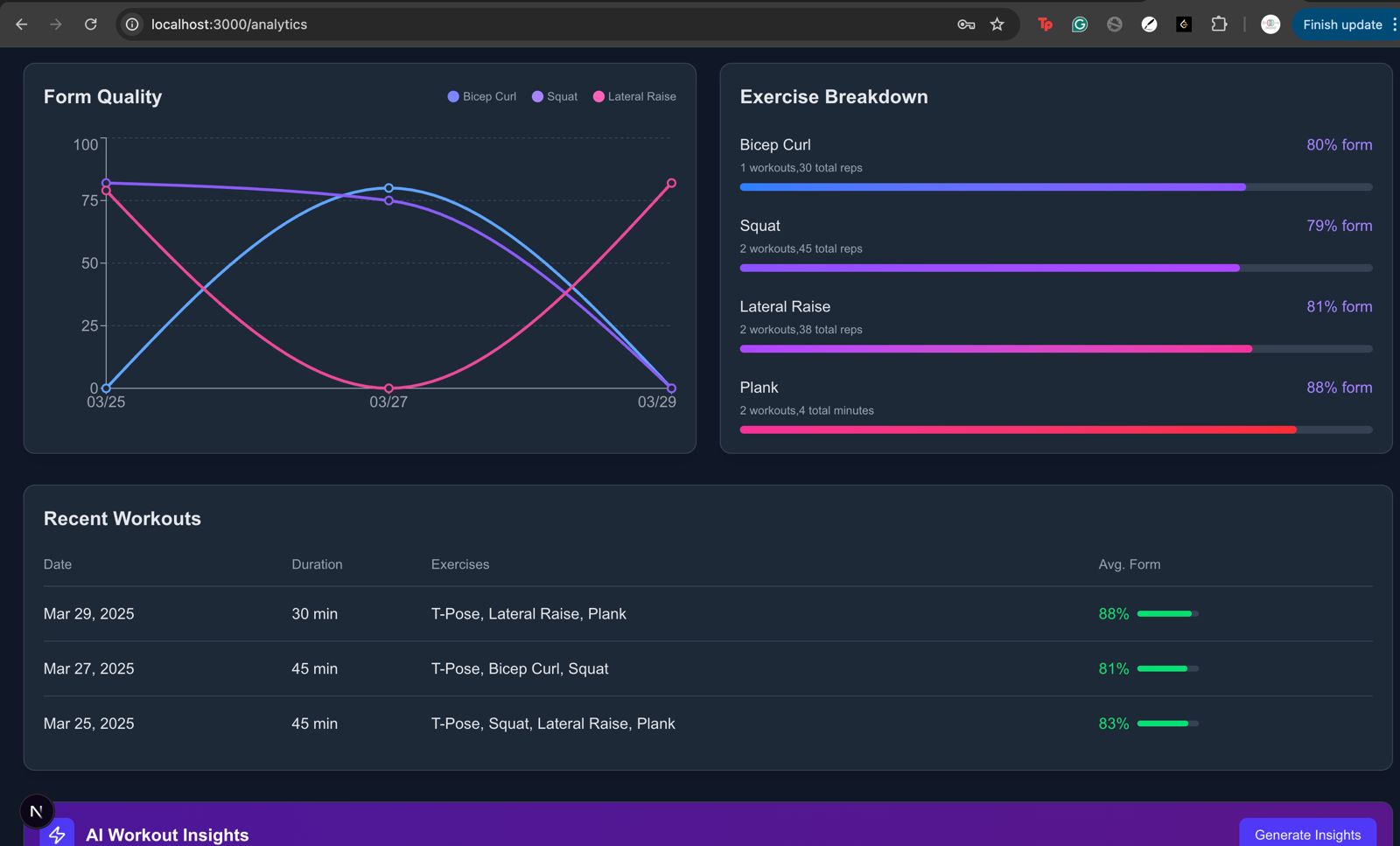
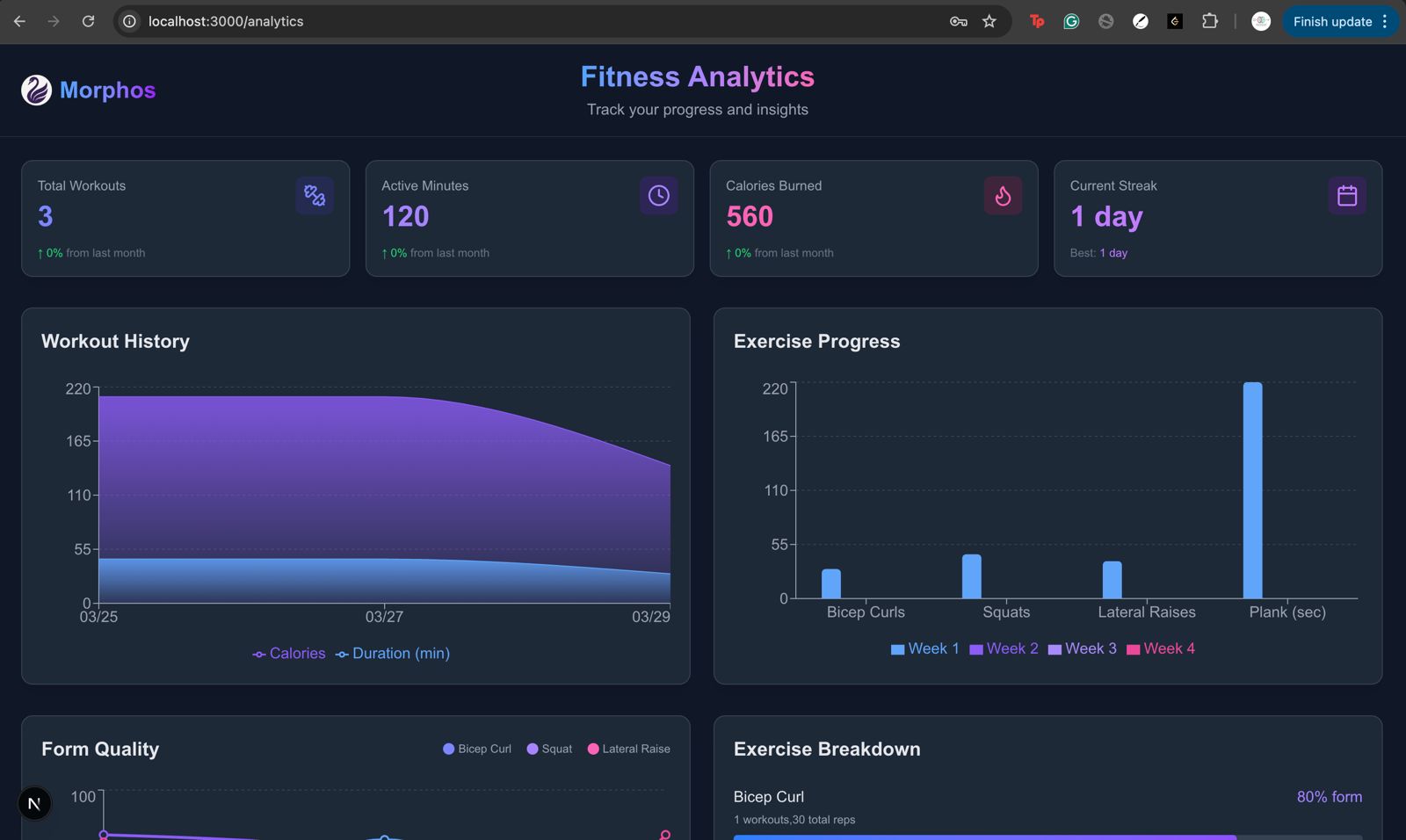
Fitness analytics page
-
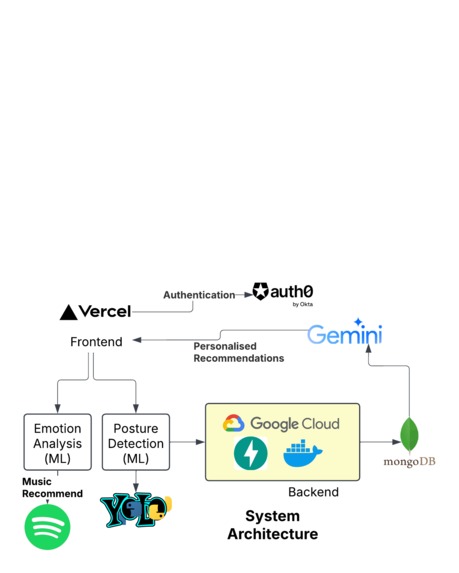
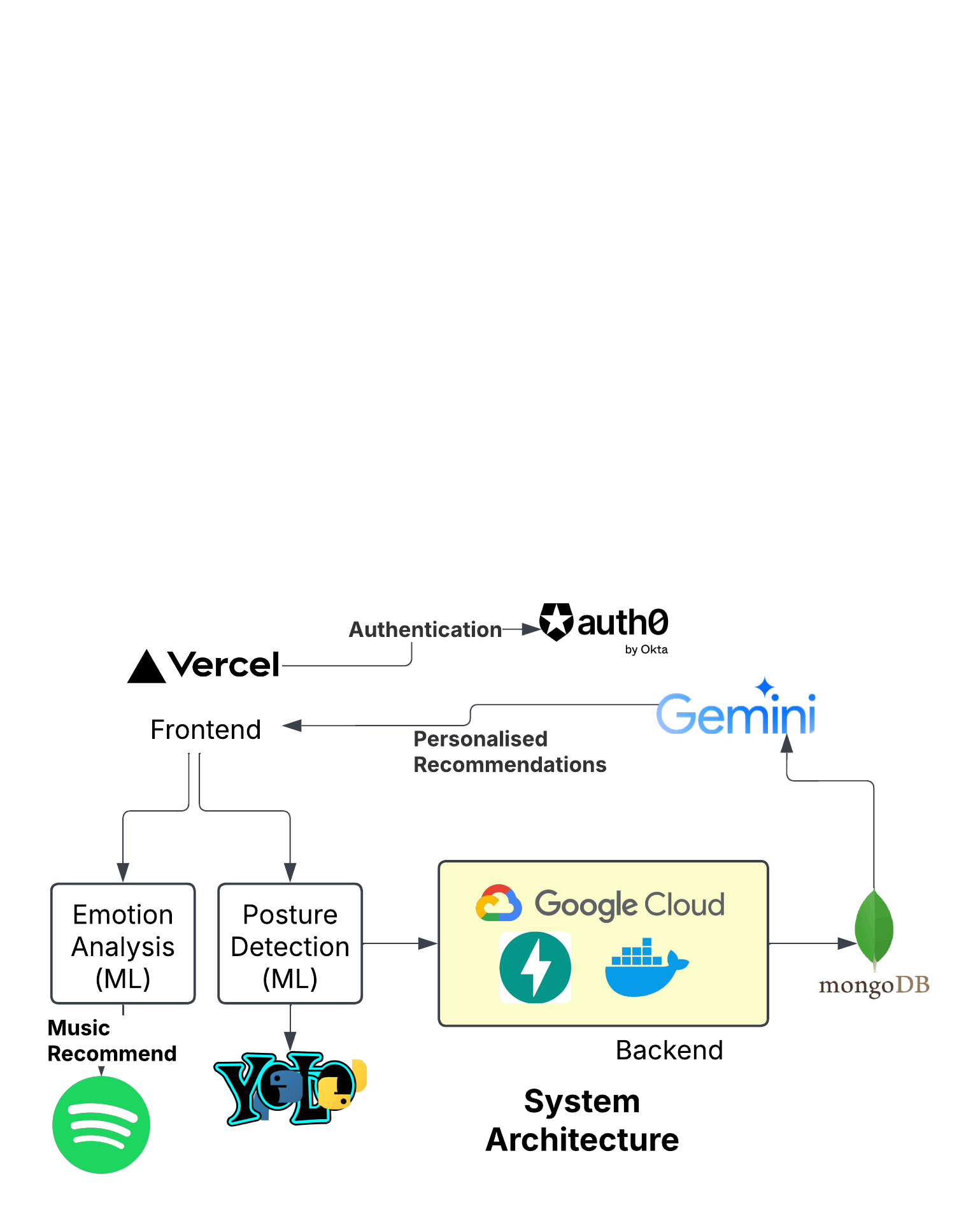
Morphos System Architecture
-
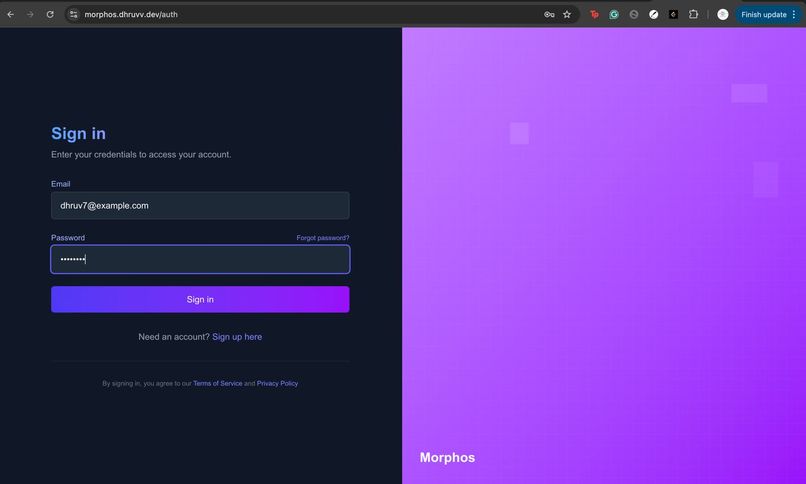
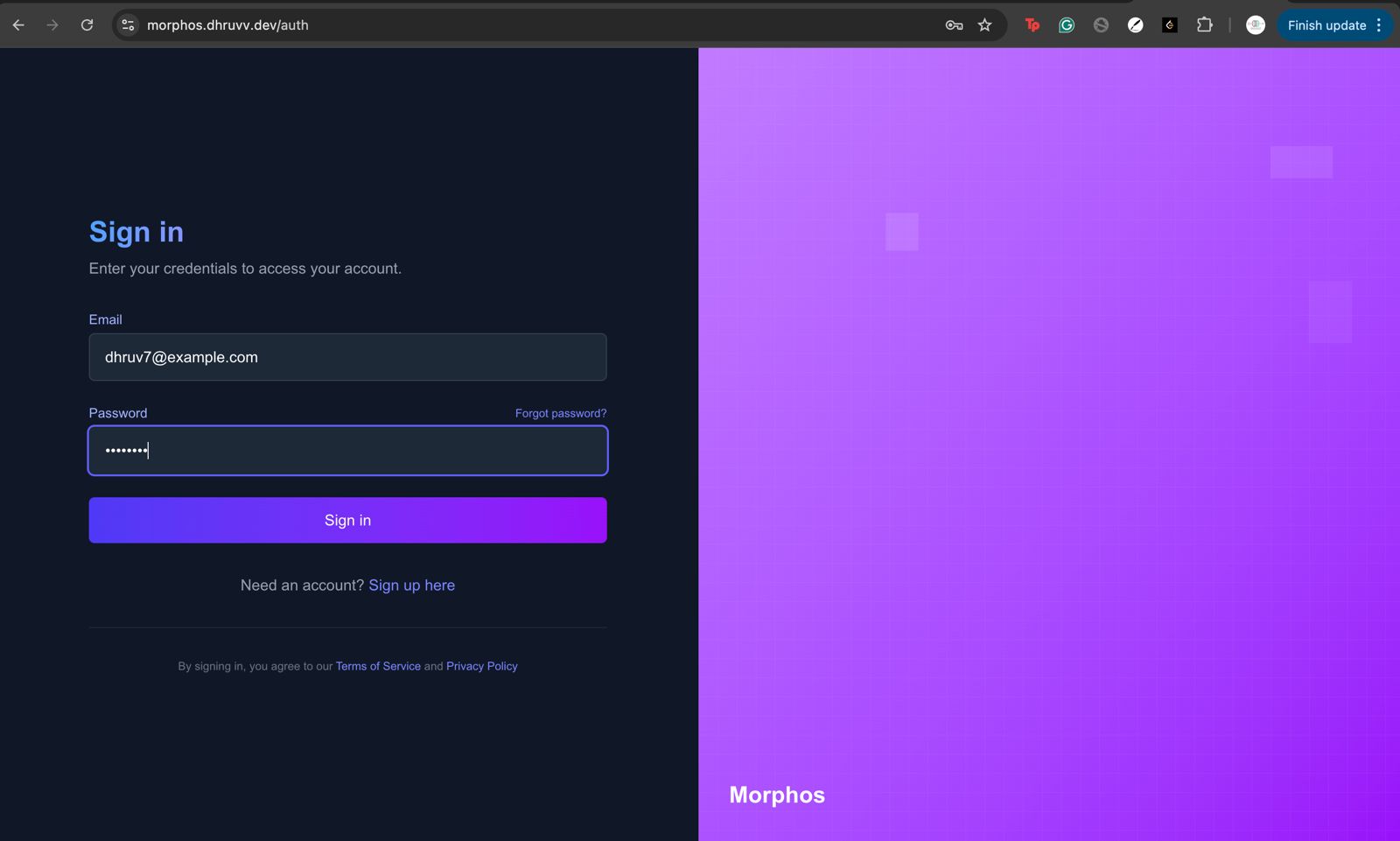
Sign in page
-
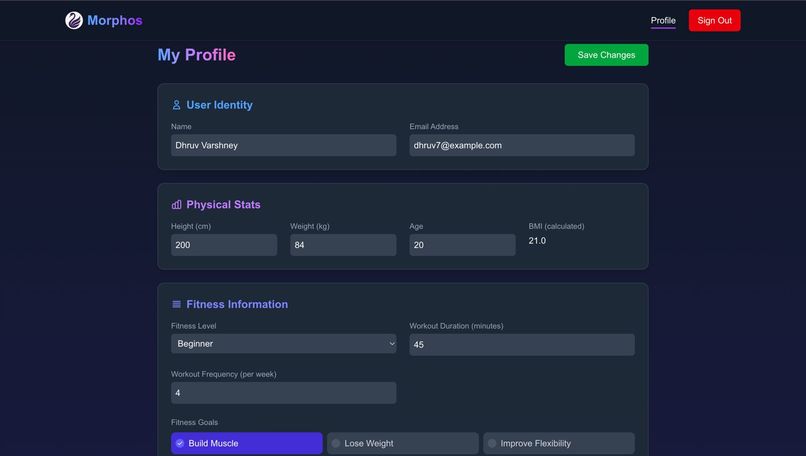
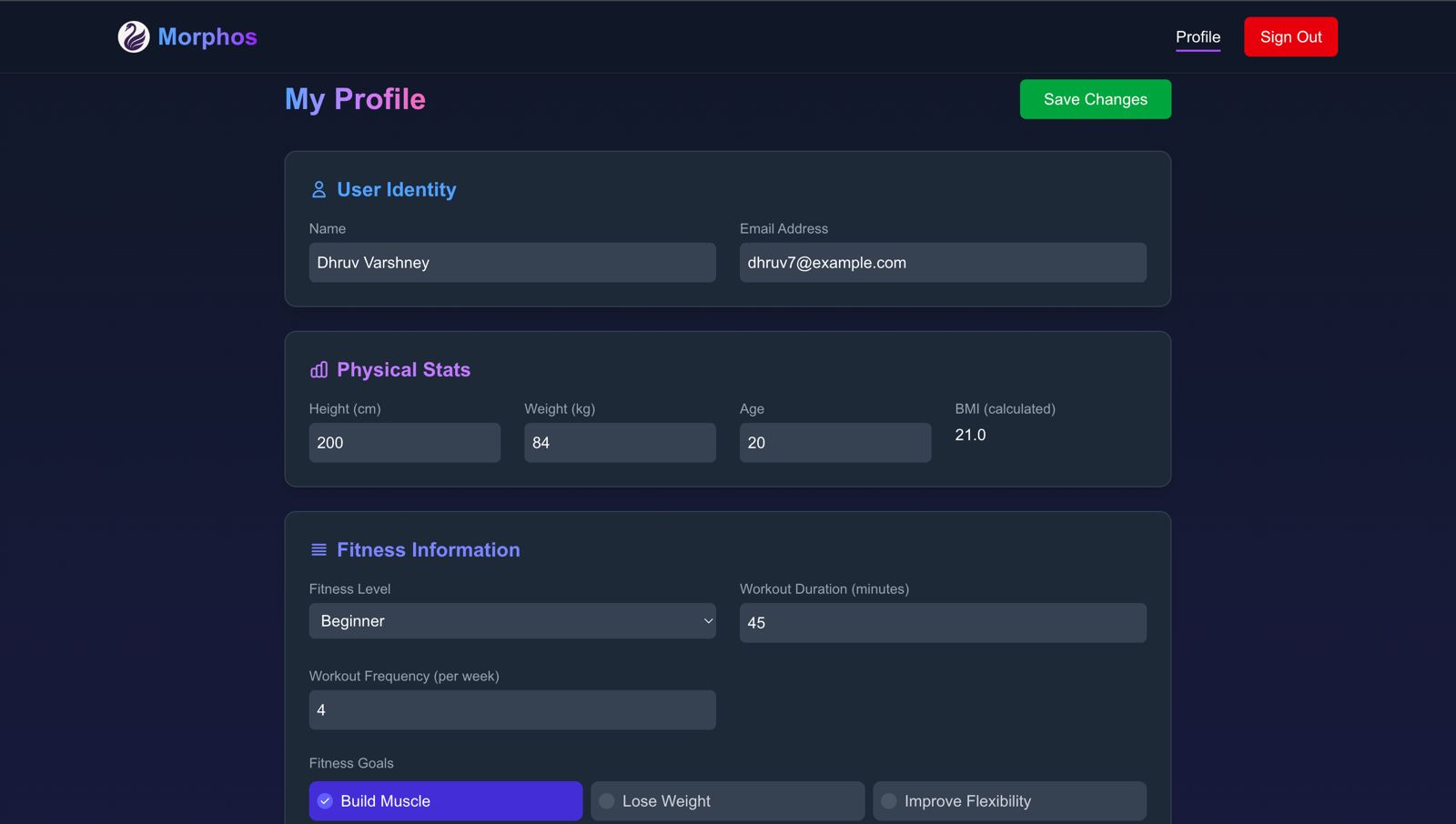
Profile page
-
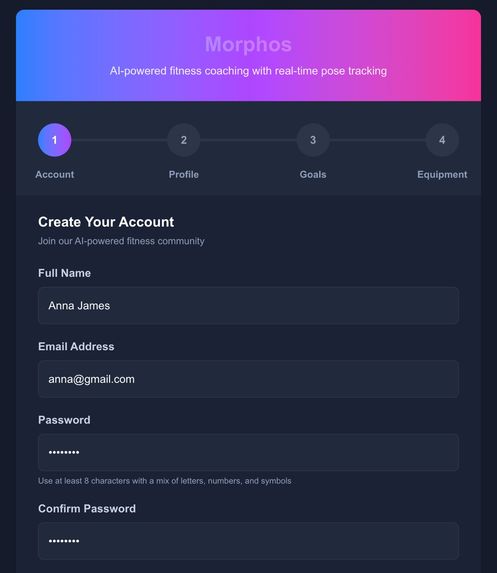
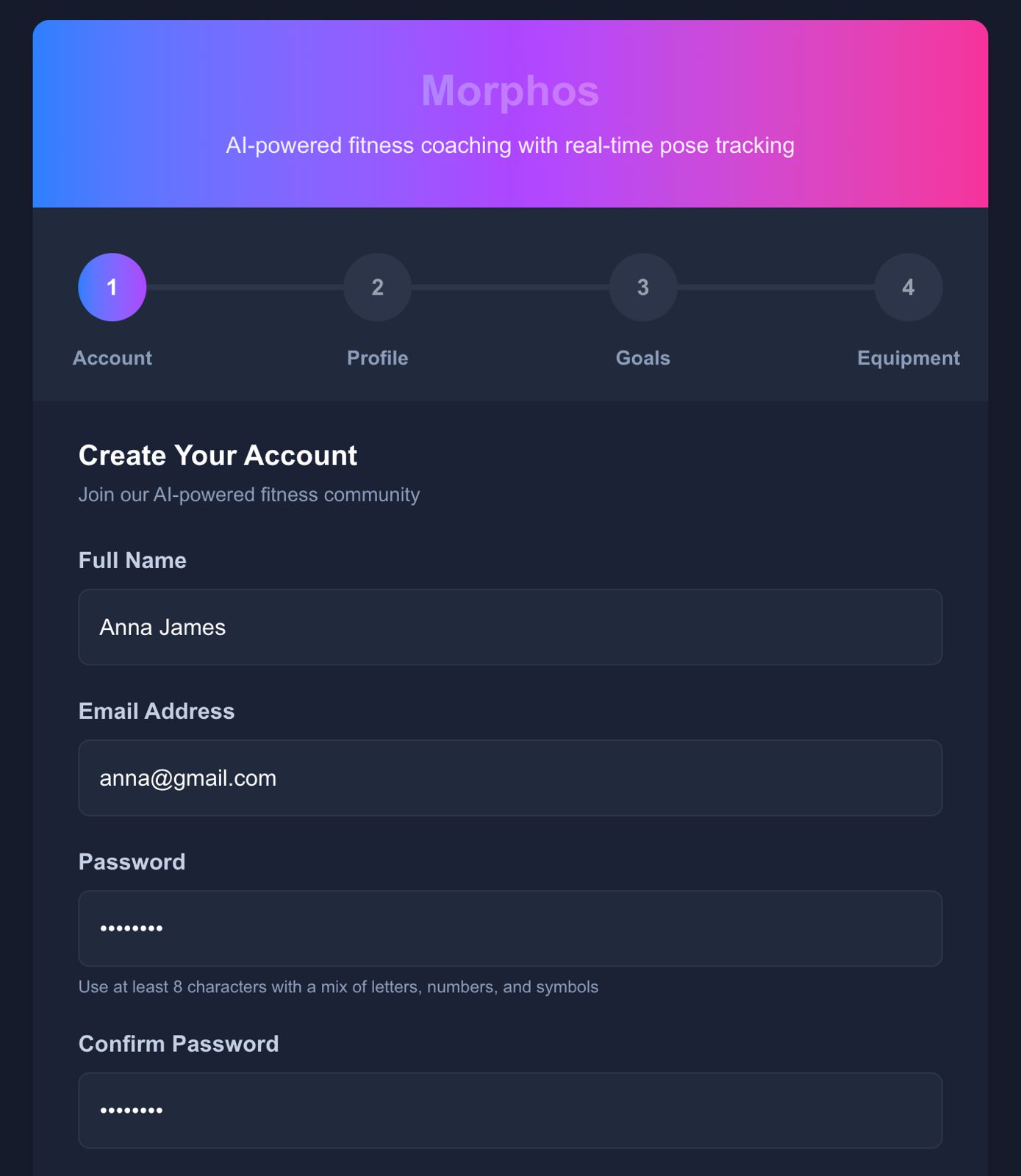
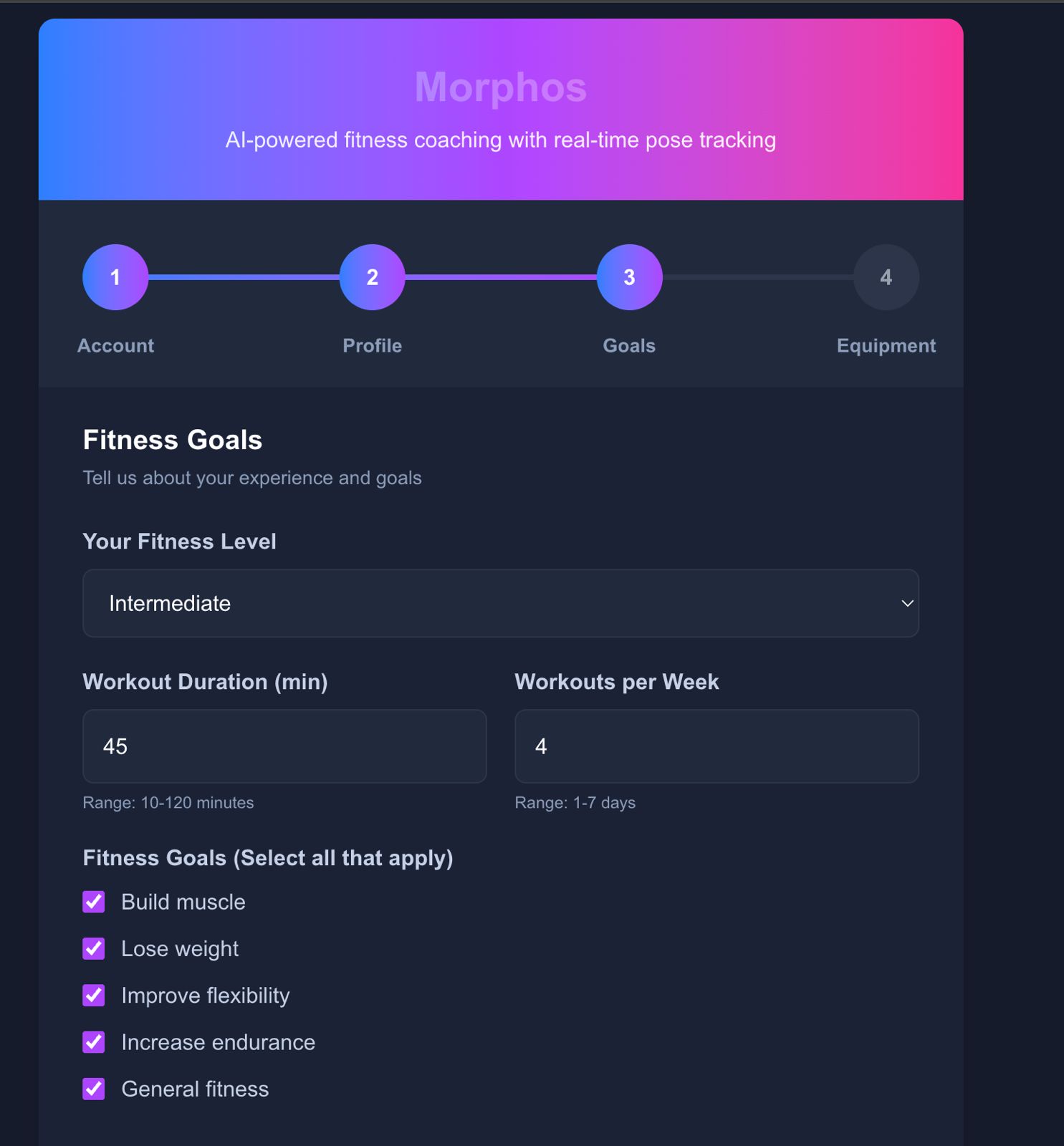
Signup/Onboarding Process
-
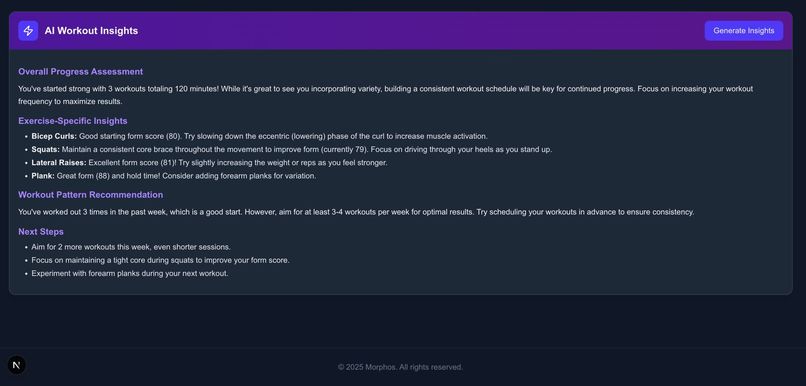
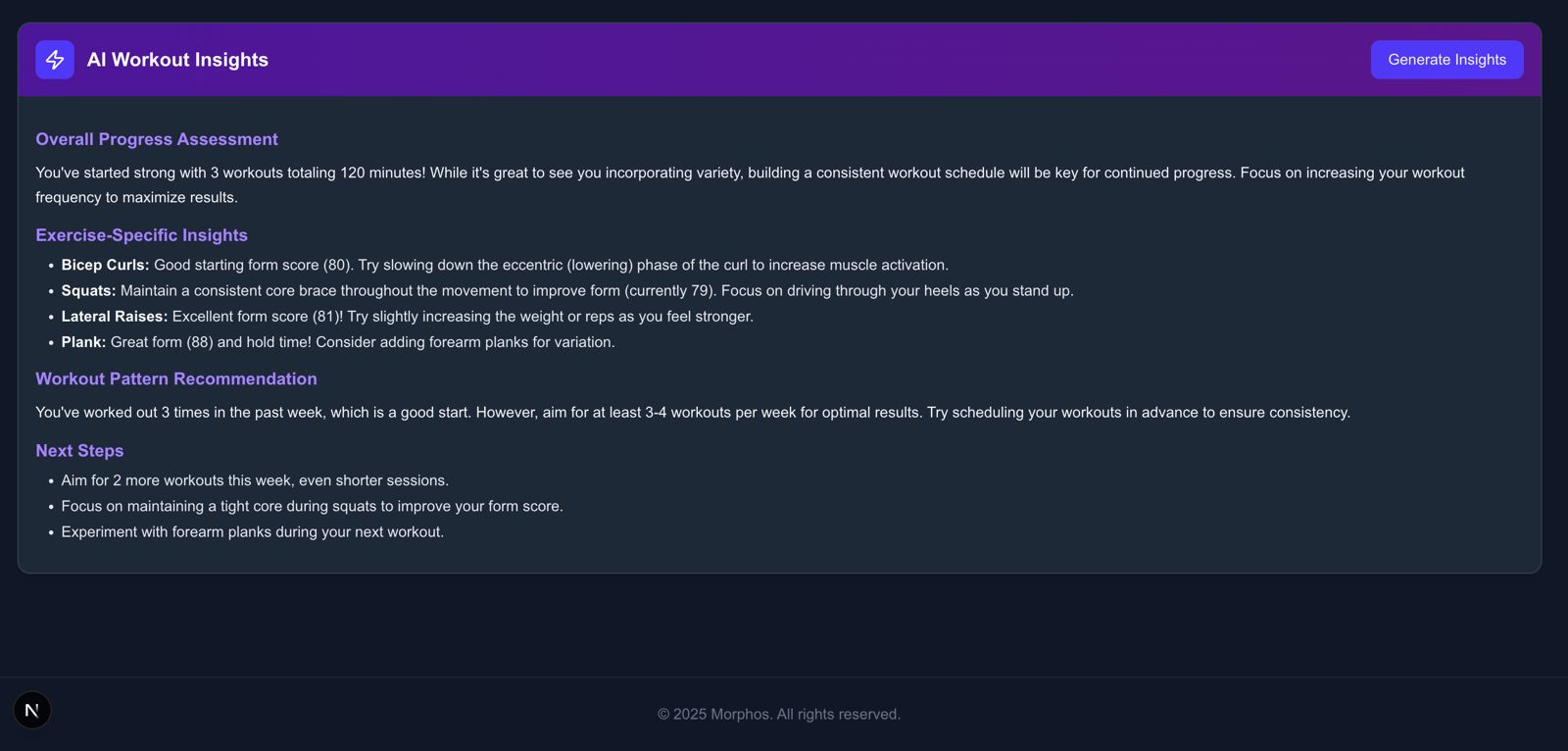
AI insights for user
-
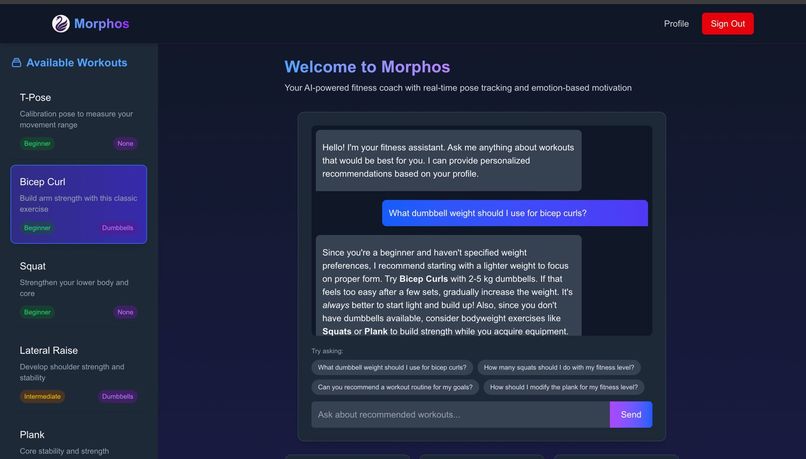
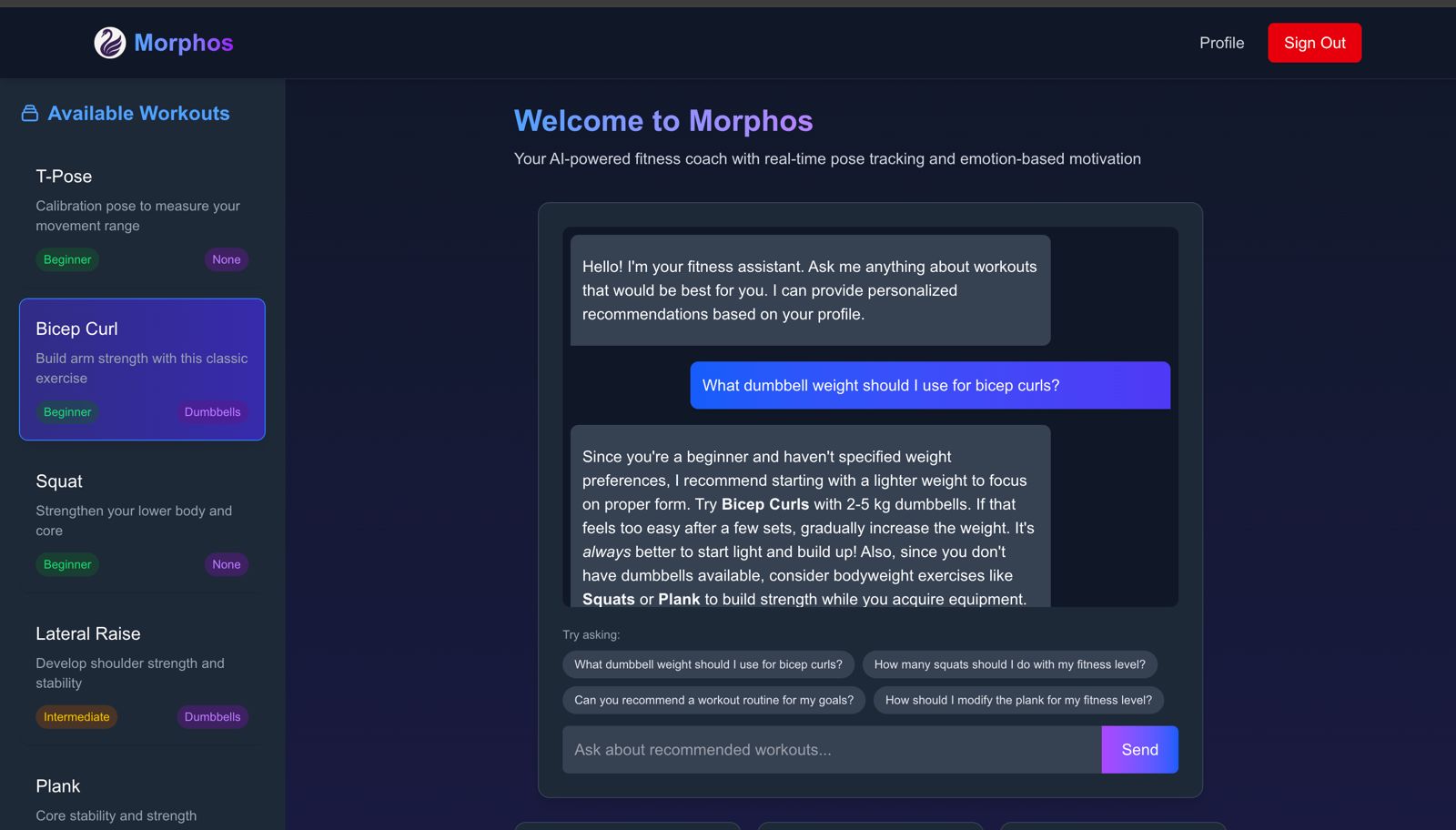
Main home page
-
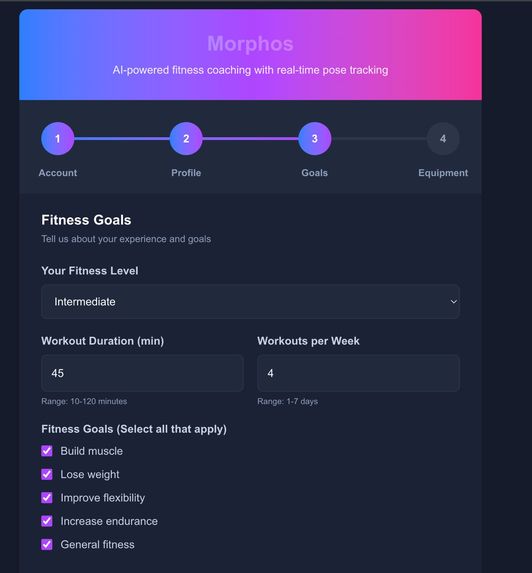
Signup/Onboarding Process
-
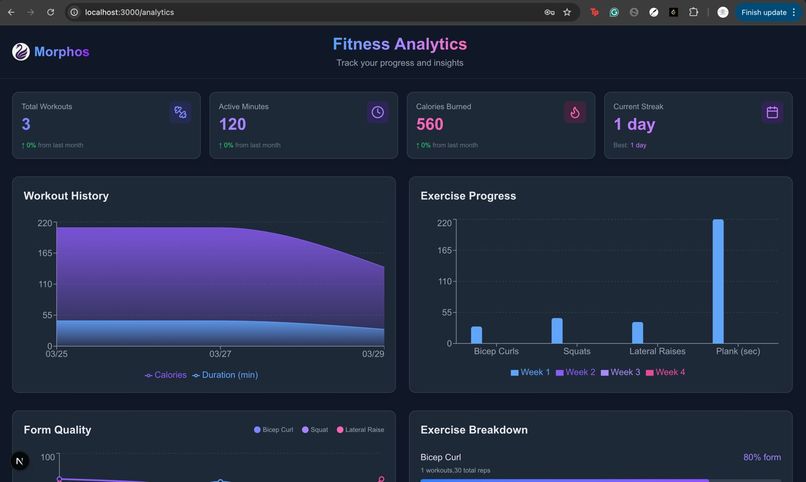
Fitness analytics page
-

Inspiration
We created Morphos after noticing two problems with fitness apps: many people struggle with proper exercise form, and music greatly affects workout motivation but isn't personalized in most apps. We wanted to build an app that helps users perform exercises correctly while providing music that matches their mood during workouts.
What it does
Morphos is a fitness web app that:
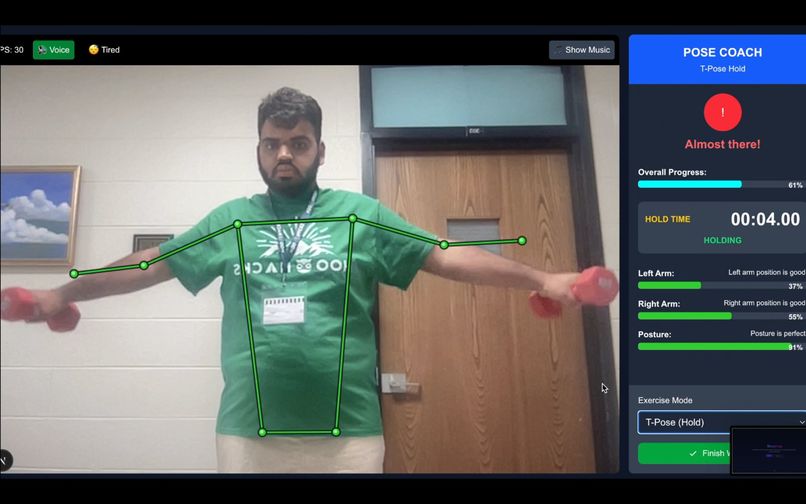
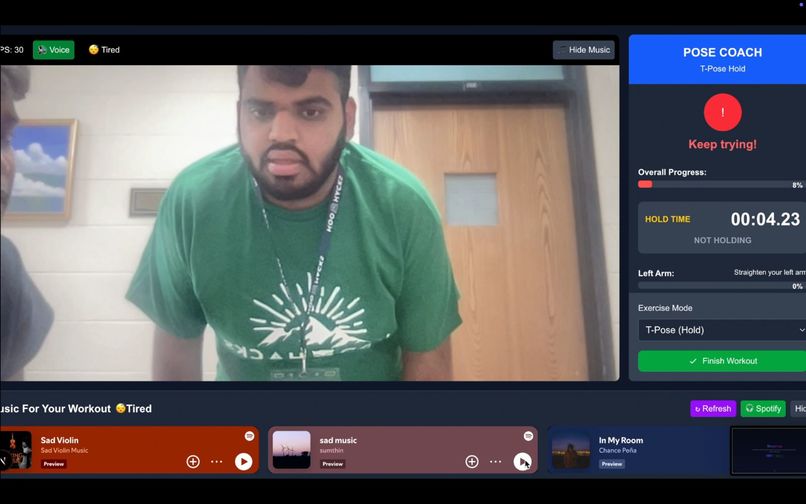
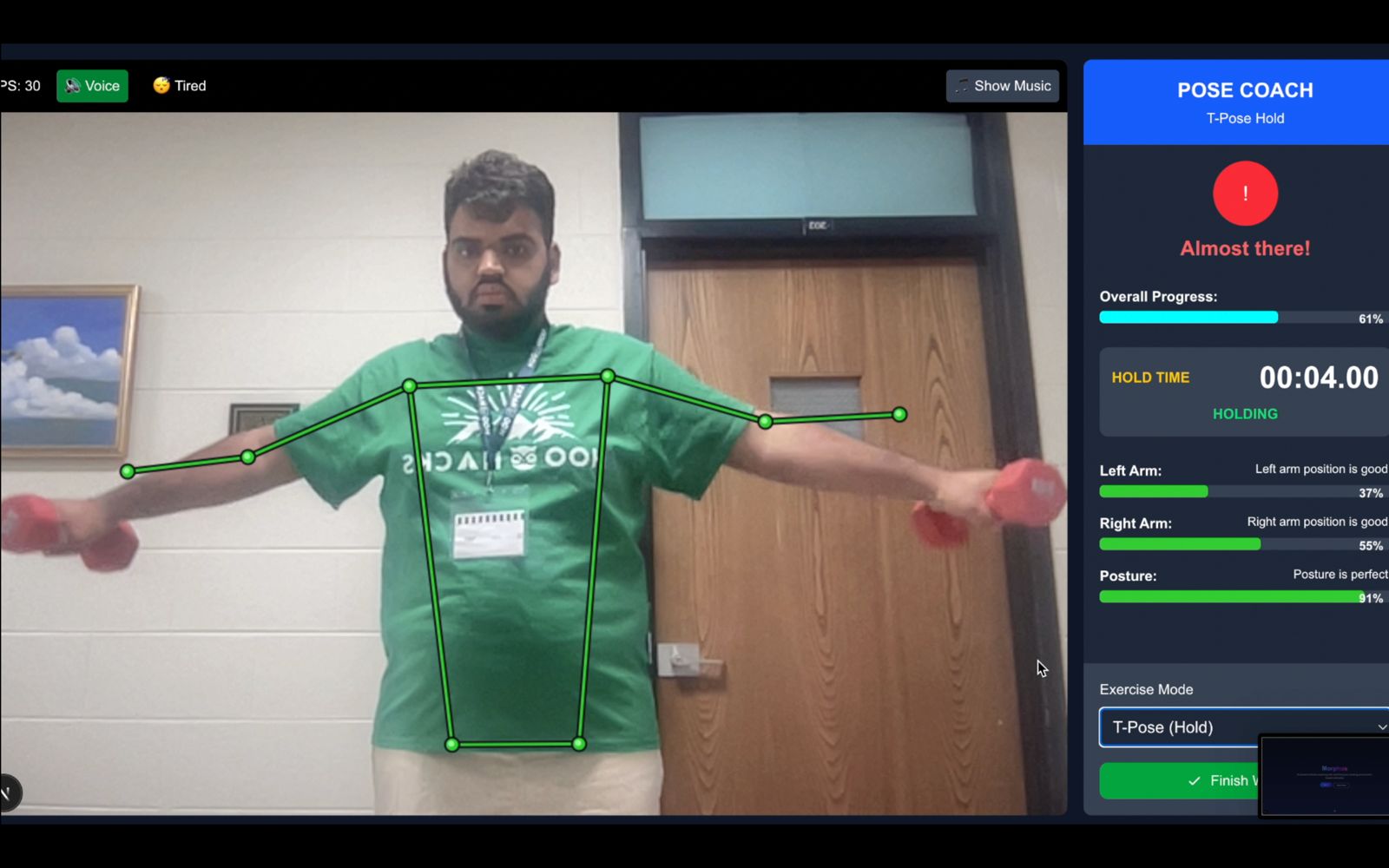
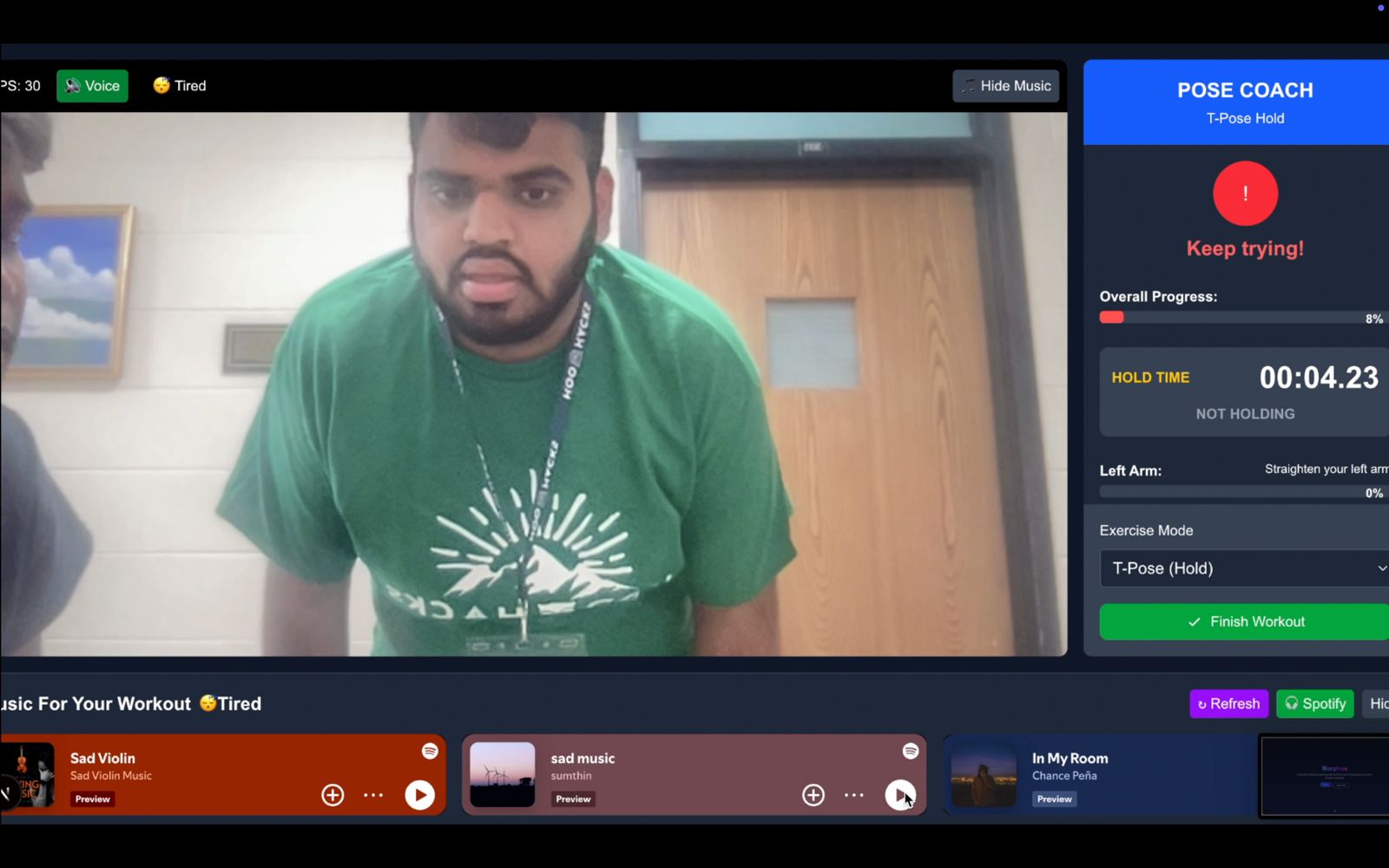
- Tracks your movements with computer vision to give real-time feedback on exercise form
- Detects your emotions through facial expressions and suggests music that matches your mood
- Offers customizable workout routines for different fitness goals
- Includes a chatbot that recommends exercises based on your goals
- Tracks your progress over time
Has user accounts to save your preferences and history
** How we built it**
We used these technologies to build Morphos:
Next.js and React for the website interface, styled with Tailwind CSS
TensorFlow.js and MediaPipe for tracking body movements in real-time
Computer vision to analyze facial expressions for emotion detection
Node.js and Python for the backend processing
Redux for managing the app's state
Spotify API to suggest music based on detected emotions
Challenges we ran into
Building Morphos wasn't easy. Some challenges we faced:
Getting real-time body tracking and emotion detection to work smoothly at the same time Creating accurate algorithms to identify correct vs. incorrect exercise form Figuring out how to match emotions to appropriate music selections Connecting all the different systems into one cohesive app
Accomplishments that we're proud of
Despite the challenges, we're proud that we:
- Built a system that gives accurate exercise form feedback without special equipment
- Created innovative emotion detection that enhances workouts through personalized music
- Designed a user-friendly interface that makes advanced technology accessible
- Developed an app that works well even on average devices
- Created a system that functions in various lighting conditions
Built a foundation that can easily add more features in the future
What we learned
Through this project, we learned:
How to implement computer vision in web applications
The importance of balancing technical capabilities with user experience
How to combine fitness expertise with technology and music psychology
Ways to optimize performance for resource-intensive browser applications
The value of testing with real users early and often
** What's next for Morphos**
In the future, we plan to:
Add more types of exercises and workouts
Introduce social features for sharing and competing with friends
Develop better progress visualization and analytics
Create AI-generated workout plans based on individual goals
Connect with fitness wearables for additional data
Add virtual workout partners for motivation
Develop an offline mode for workouts without internet


Log in or sign up for Devpost to join the conversation.