-
-
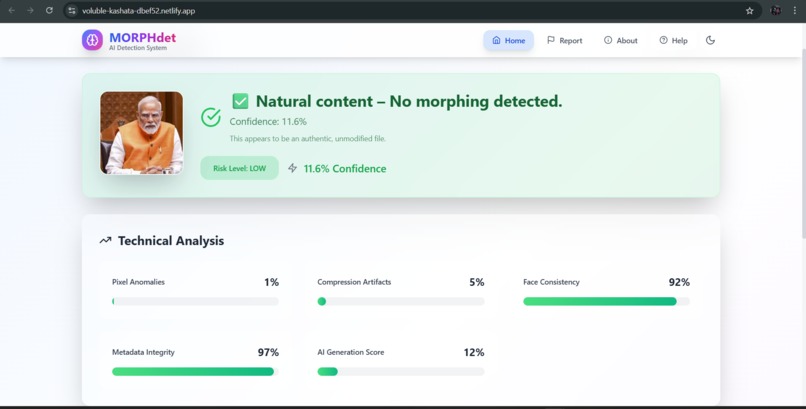
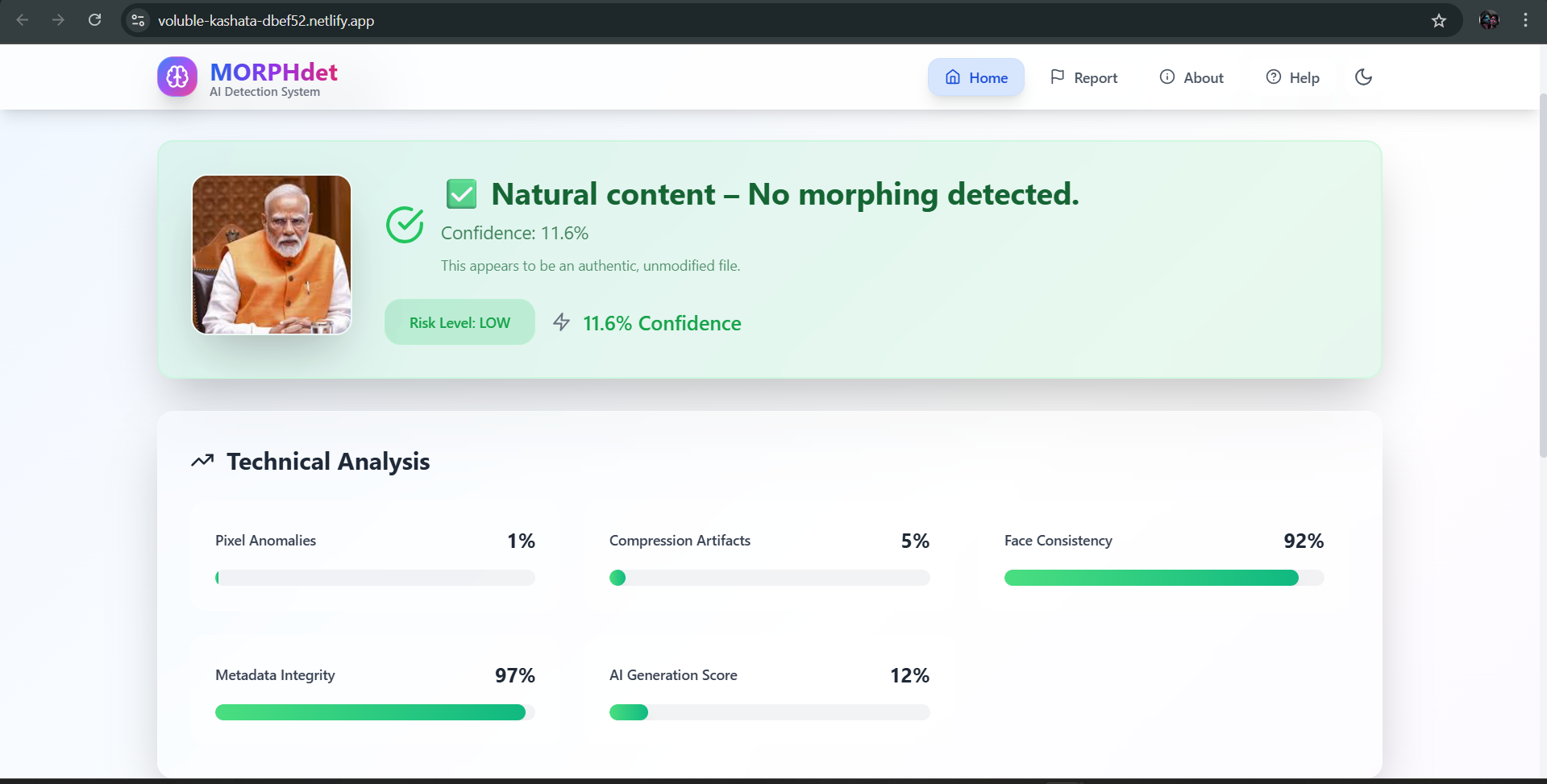
Clean image
-
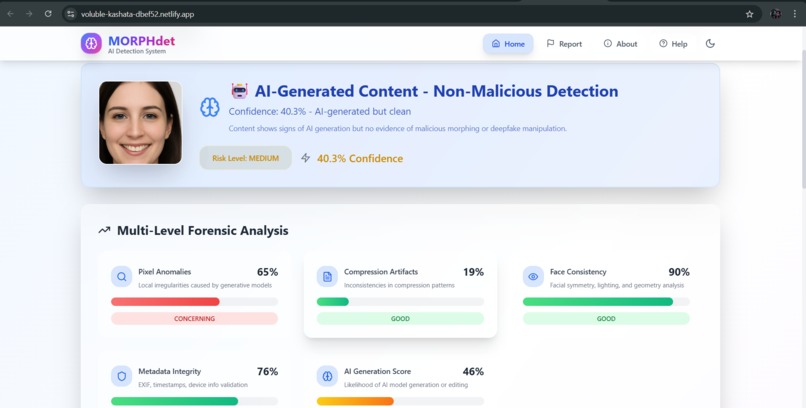
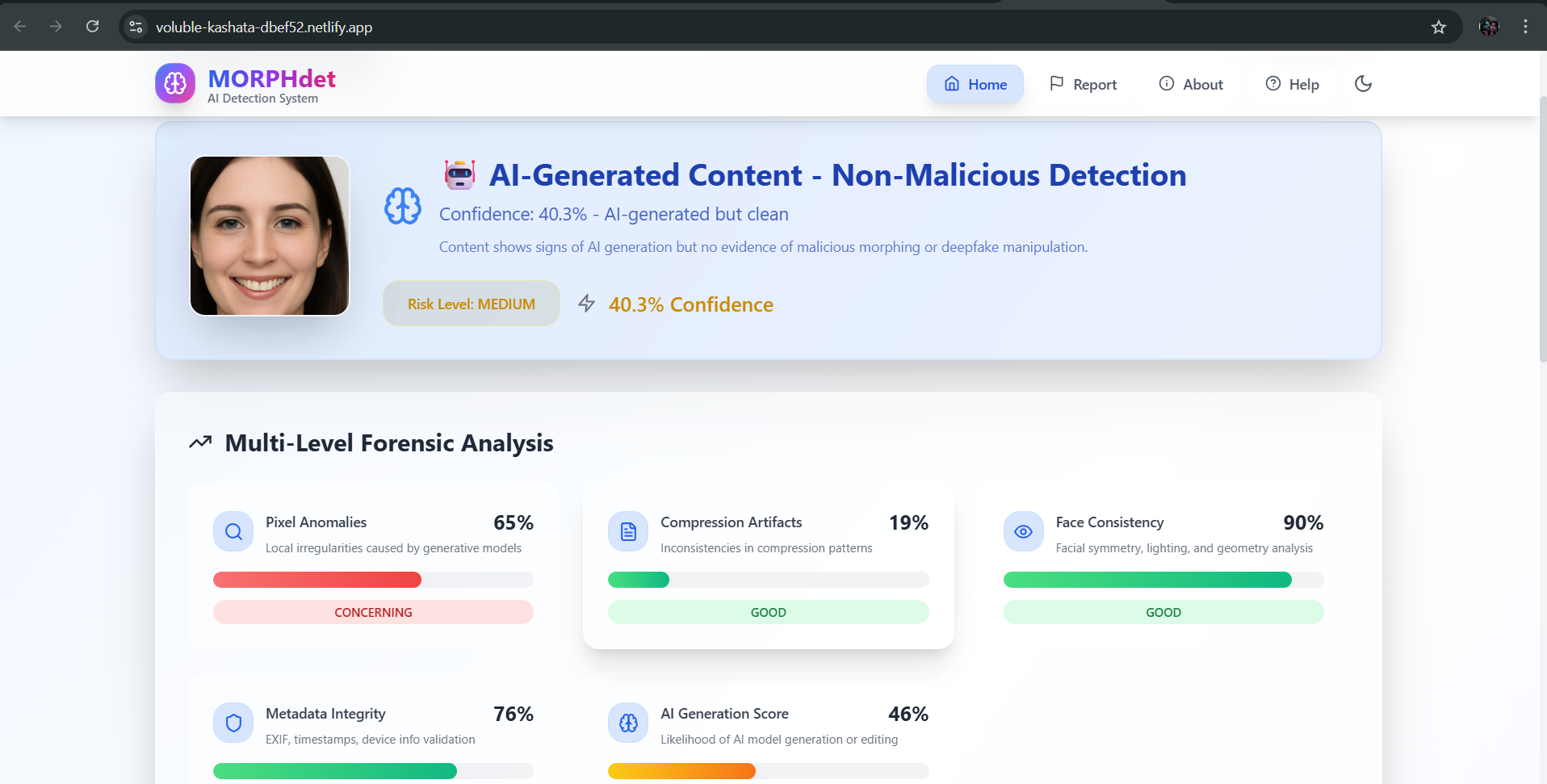
AI Generated image
-
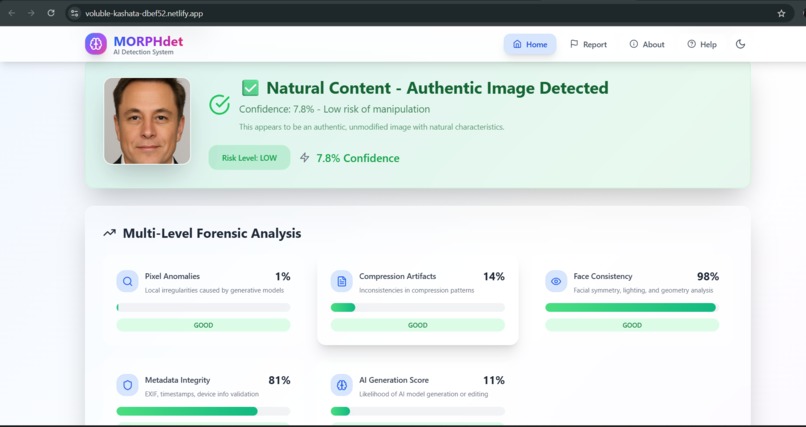
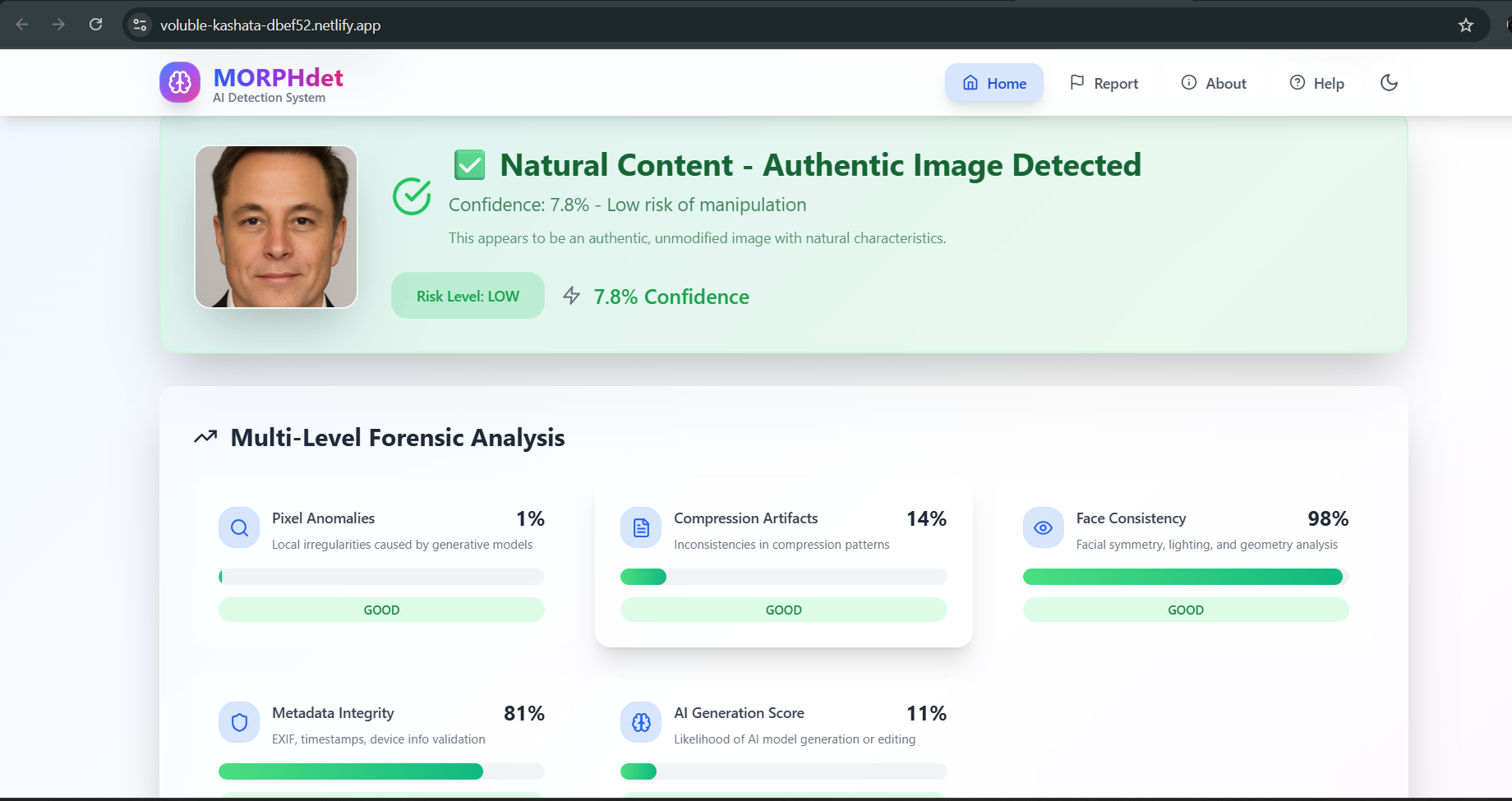
Clean image
-
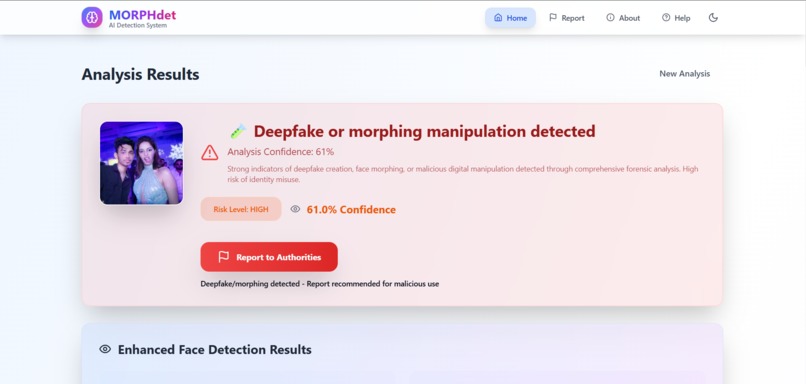
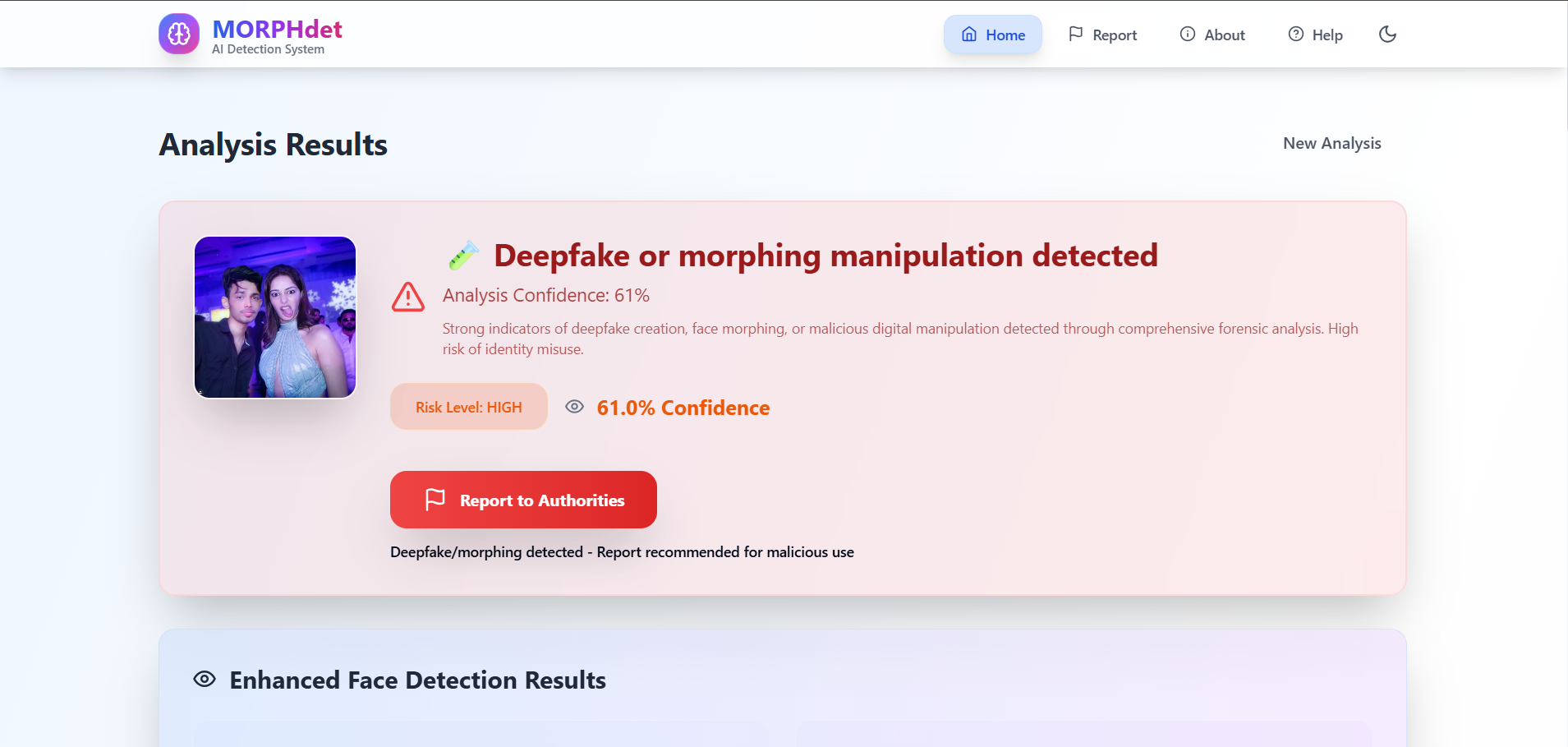
Deepfake/Morphed image
Inspiration
I was inspired by the growing misuse of AI tools to create morphed images and deepfakes that are being used for blackmail, impersonation, and other forms of cyber abuse. I noticed there wasn’t a simple tool that everyday users could use to scan suspicious media and take action. That’s what motivated me to build MORPHdet — a tool that helps people detect and report manipulated images and videos, right from their browser.
What it does
MORPHdet allows users to upload an image or video (up to 15MB) and analyze it for manipulation. It checks whether the content is:
✅ Natural and untouched
🤖 AI-generated
🧪 Morphed or deepfaked
⚠️ Lacking a human/face
The system gives a confidence score, technical breakdown (AI generation score, metadata check, pixel irregularities, face structure), and a risk level. If manipulation is detected, users can submit a report using built-in links to cybercrime portals worldwide.
How we built it
I built MORPHdet using Bolt, which allowed me to create the interface and detection flow without coding from scratch. I deployed the app using Netlify. The detection logic is designed using structured prompts that simulate multiple forensic layers — including AI signature detection, metadata analysis, and facial structure analysis. I kept the design lightweight, fast, and accessible.
Challenges we ran into
One of the biggest challenges was detecting high-quality AI-generated content without external APIs or machine learning models. I had to simulate everything using prompt logic inside Bolt. Another challenge was staying within Bolt’s token limits while still building a useful and intuitive app. Since I was working solo, I also had to balance design, logic, and testing on my own.
Accomplishments that we're proud of
I’m proud that I was able to build a complete, functional, and meaningful tool — solo — in a short time. MORPHdet tackles a real problem, and I managed to integrate features like deepfake detection and global cyber reporting, all without needing a complex backend. Creating something that could actually help people protect themselves online is a huge personal win.
What we learned
This project taught me how to use Bolt effectively to build full-stack-like projects without a traditional backend. I also learned how to think like a user — designing for simplicity, privacy, and impact. Finally, I learned how to simulate logic-heavy tasks like detection using prompts and frontend design patterns.
What's next for MORPHdet – Detect AI Morphing & Deepfakes
In the current version of MORPHdet, I had to work within very tight token and platform limitations, so I wasn’t able to implement advanced detection logic like deep learning-based forensic models or external AI fingerprinting APIs. However, I plan to improve the detection system significantly in the next phase. I want to introduce higher-accuracy techniques such as GAN artifact analysis, neural noise inconsistency checks, and even real-time face-trace comparison using known datasets. This will help increase detection persistence and reduce false positives or negatives. I also plan to open-source the logic components, so that others can contribute or integrate their own forensic models. My goal is to make MORPHdet not just a functional MVP, but a powerful, community-driven digital forensics tool.
Built With
- bolt
- css
- html
- javascript
- netlify
- prompt


Log in or sign up for Devpost to join the conversation.