-
-
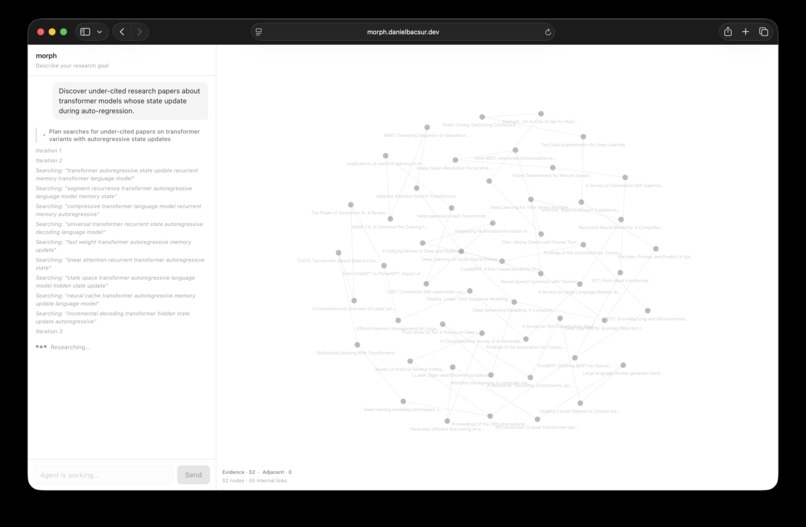
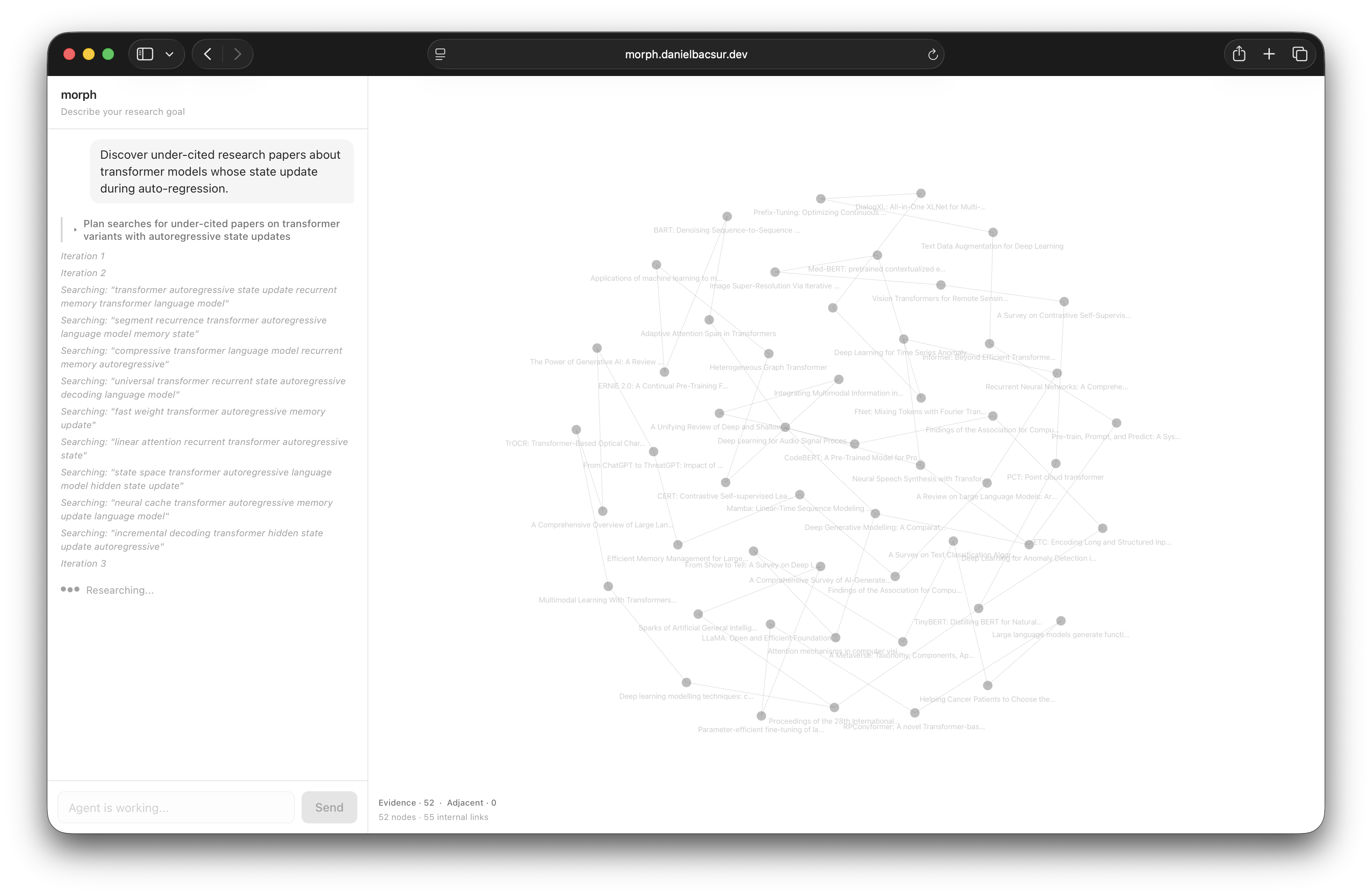
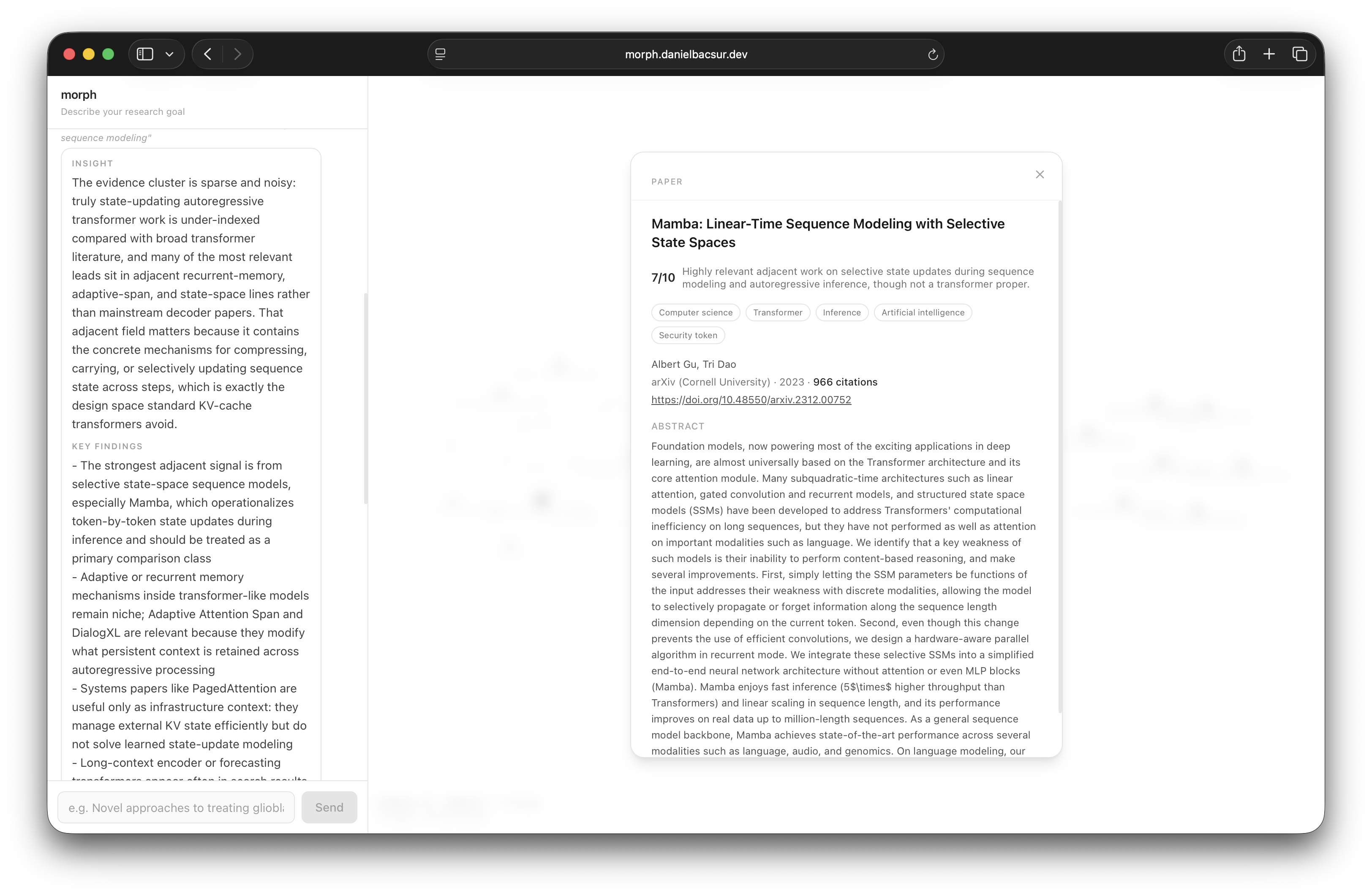
doing graph traversal over research papers
-
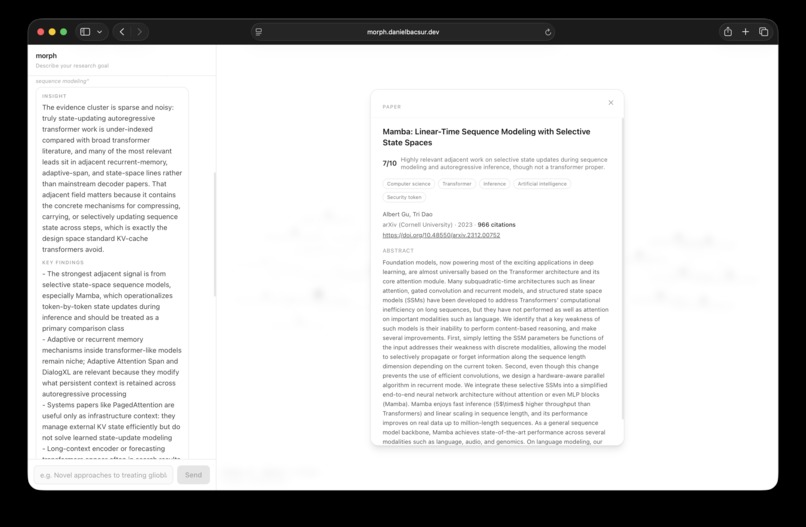
preview of the paper's analysis and abstract
-
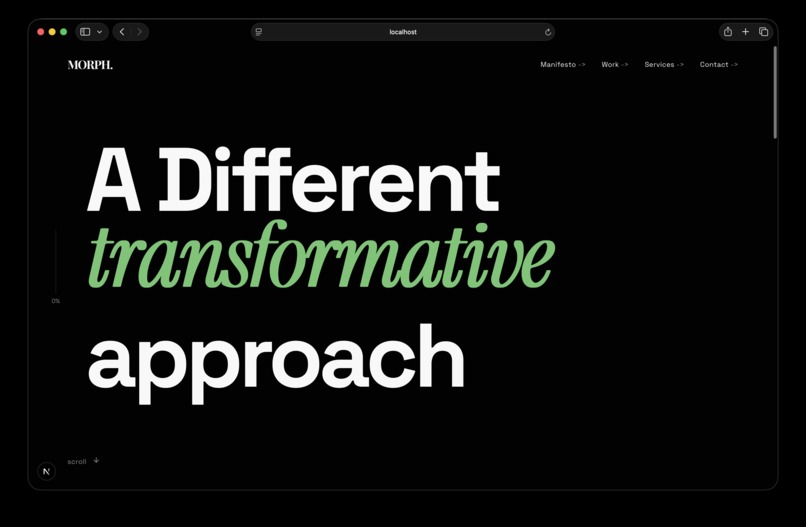
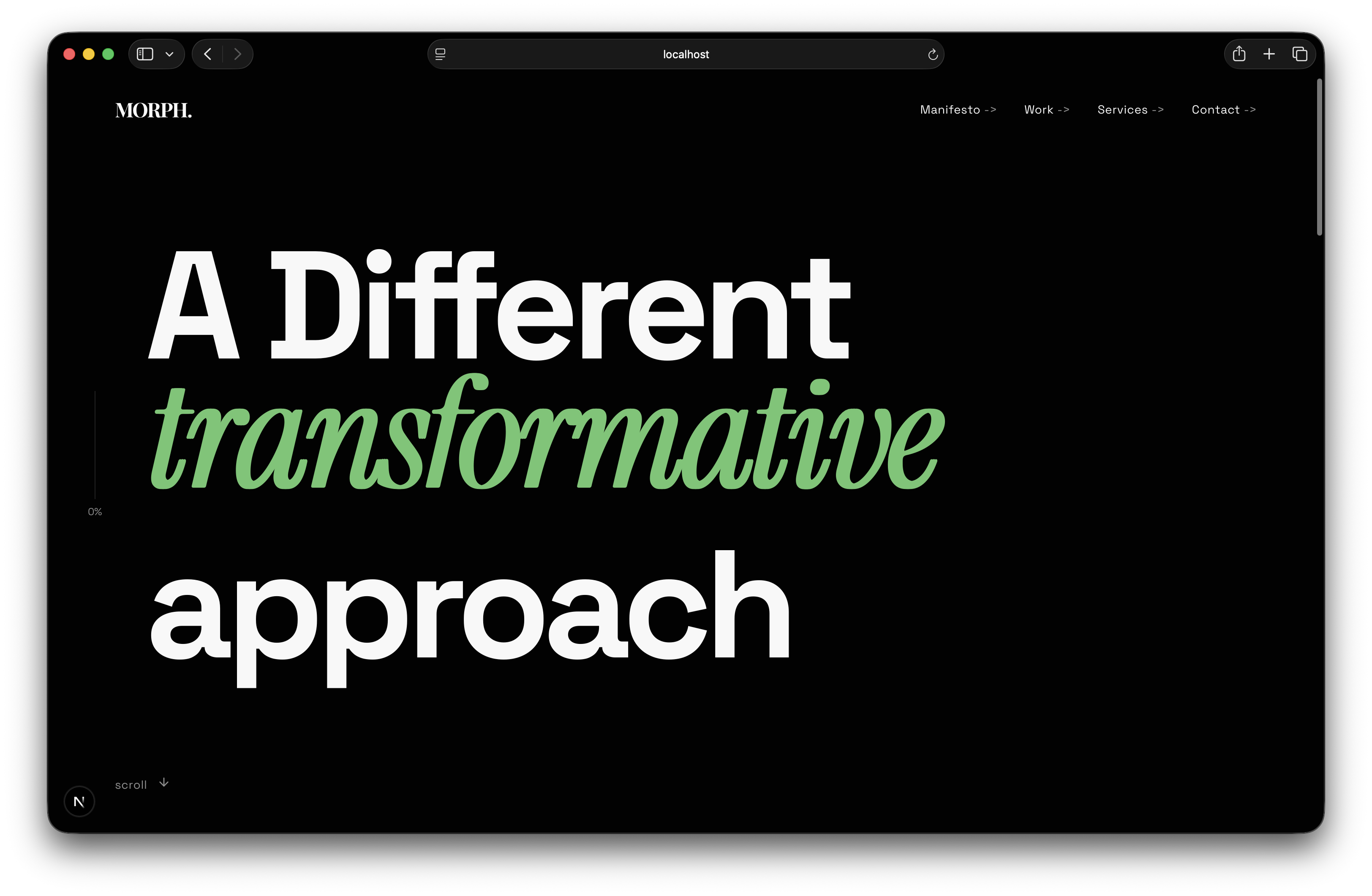
our landing page for morph
Inspiration
Over 50% of research papers never get cited. Not because they're wrong — but because no one ever connected them to the right problem. Breakthroughs don't come from thin air. They come from combining existing ideas: take concept A, combine it with concept B, and you arrive at something new — concept C. Humans can only hold a few ideas at a time. AI can explore thousands of combinations simultaneously.
What it does
/morph is an AI-powered discovery engine that systematically combines ideas across research domains to surface non-obvious connections. Instead of searching for what's already known, /morph asks: what can be discovered by combining what's known?
Give it a research problem, and it maps concepts across fields — biology, materials science, chemistry, engineering — finding structured, explainable links that a human researcher would never realistically stumble on. Not guesses. Not summaries. New combinations worth exploring.
How we built it
- Frontend: Next.js, React, and TypeScript, hosted on Vercel
- AI layer: OpenAI and Claude working under the hood to parse, embed, and reason across research concepts
- Backend: A self-hosted instance of OpenClaw running on a VPS deployed via Fly.io, handling the combinatorial logic and knowledge mapping; see https://fly.io/docs/blueprints/deploy-openclaw
Challenges we ran into
The biggest challenge is signal vs. noise. If you have 1,000 concepts, the number of possible combinations explodes into the billions — and 99.999% of them are meaningless. Building a system that ranks meaningful combinations over noise was the core technical hurdle.
Accomplishments that we're proud of
We built a working system that can take a research problem and surface genuinely surprising cross-domain connections. The first time it linked a concept from materials science to a biological mechanism we hadn't considered — and the link actually made sense — that was the moment it clicked.
What we learned
Idea generation is the easy part. The hard part is making combinations meaningful and actionable. We also learned that the real bottleneck in research isn't access to information — it's the inability to see across fields. Researchers are deep in their domains but rarely have time to explore adjacent ones.
What's next for /morph
- Deeper domain-specific models starting with biotech and drug discovery
- Letting users validate and rate combinations to improve ranking over time
- Building a shareable "discovery graph" so teams can collaborate on combinatorial exploration
- Partnering with research institutions to test /morph on real unsolved problems
Built With
- claude
- elevenlabs
- graphs
- lovable
- openai
- openclaw
- react
- typescript
- v0

Log in or sign up for Devpost to join the conversation.