-
-
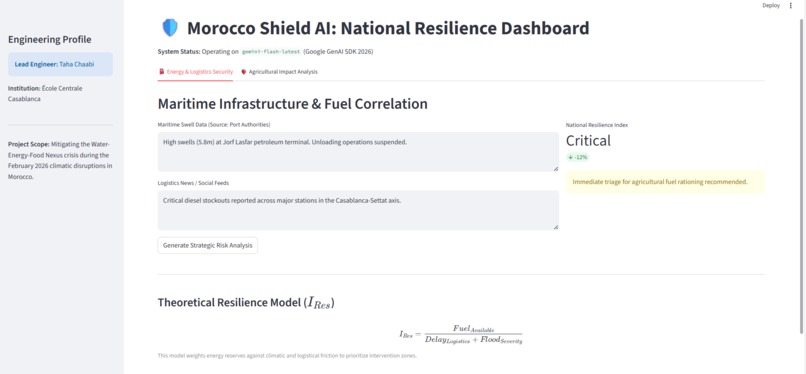
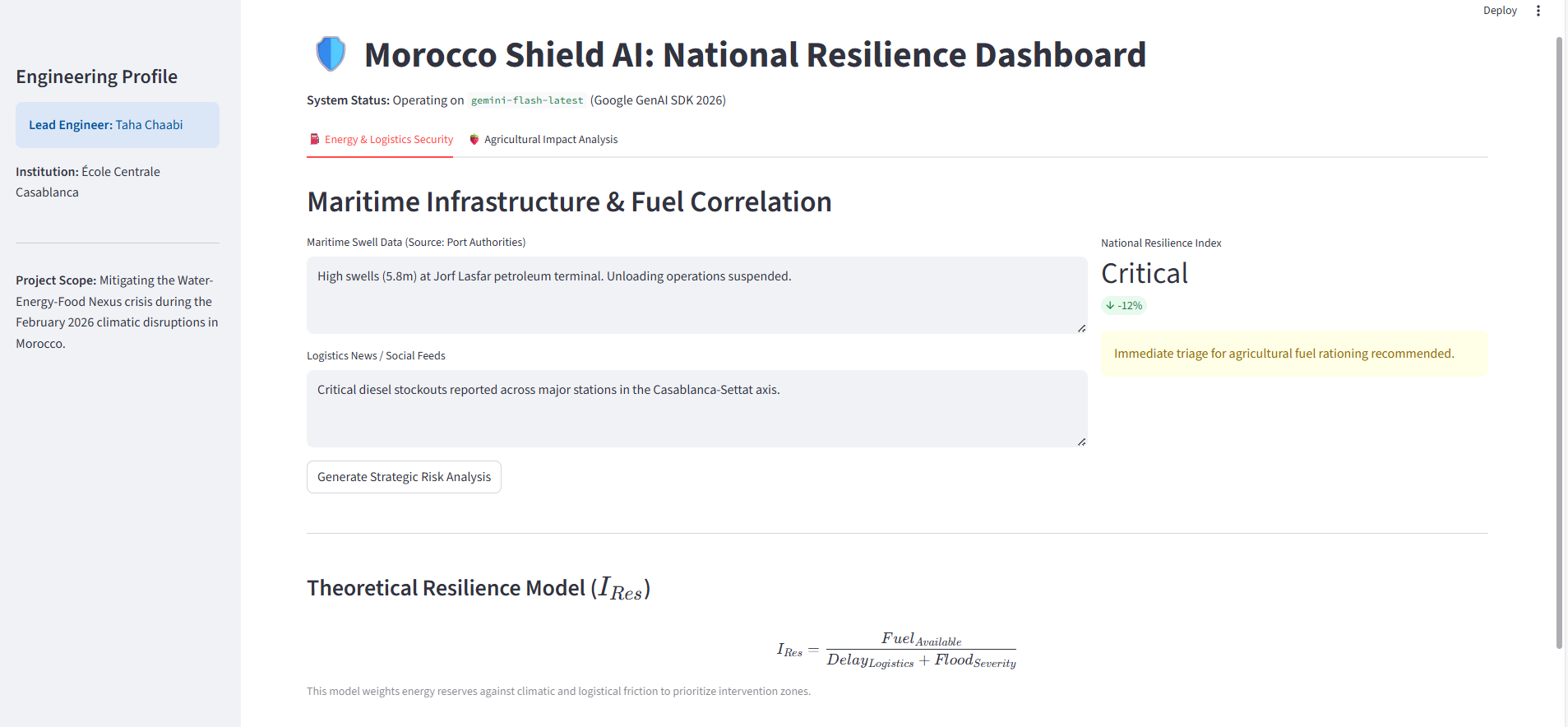
Maritime Infrastructure & Fuel Correlation
-
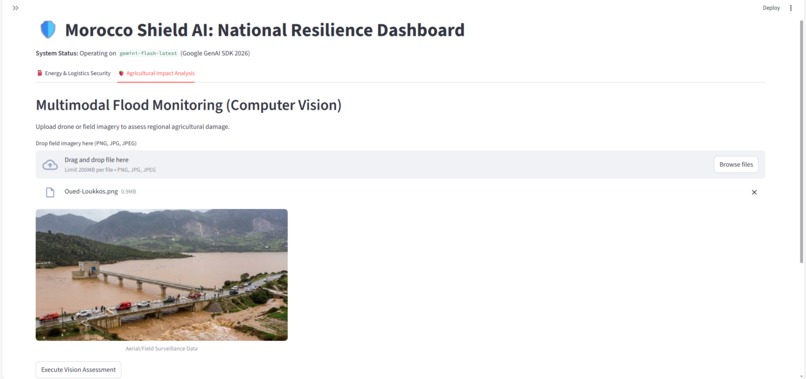
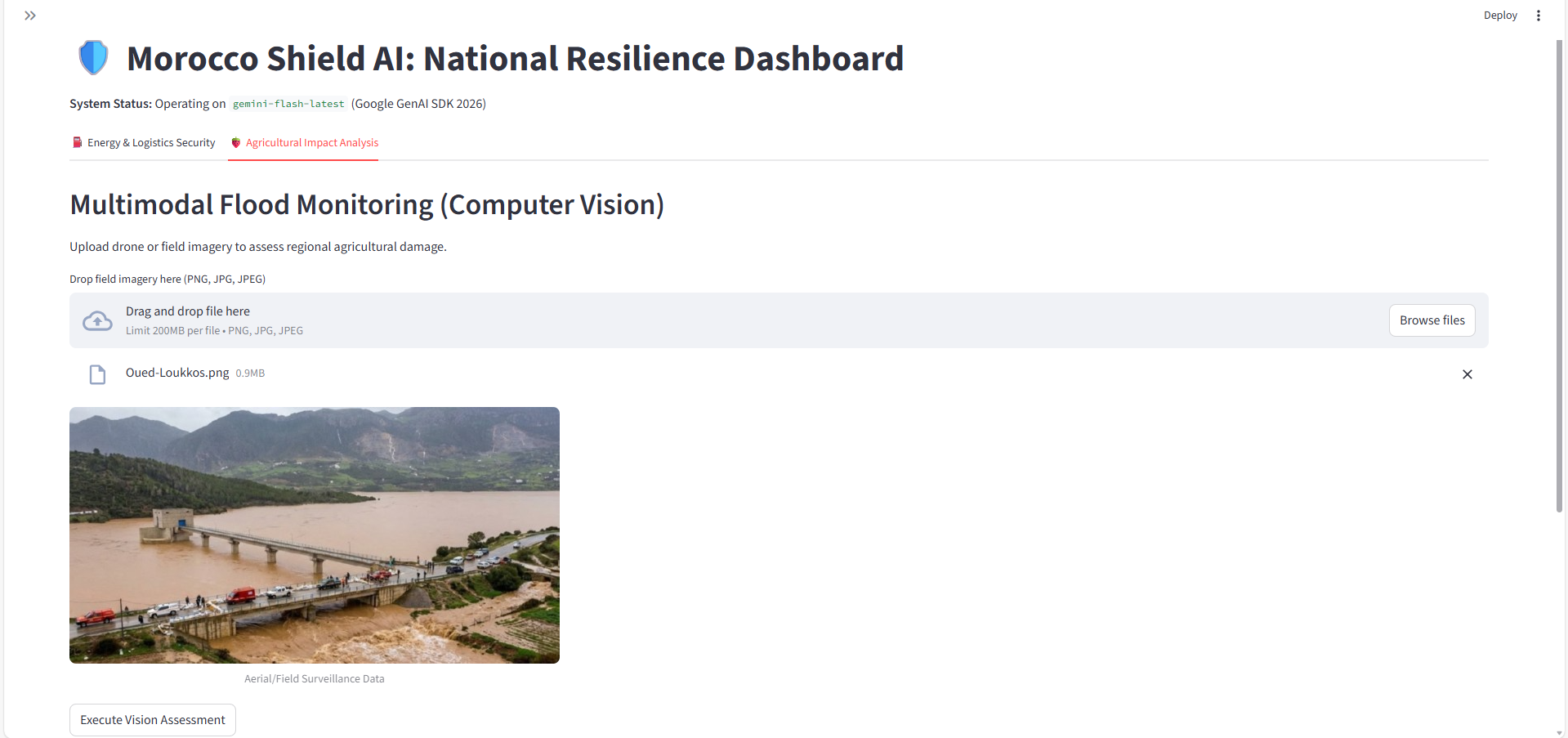
Multimodal Flood Monitoring (Computer Vision)
Inspiration
The inspiration for Morocco Shield AI was not found in a laboratory, but in the reality of a Friday evening in February 2026. I was at school, waiting for my father to pick me up, but he was stranded for days in a desperate search for diesel; the 5.8m swells at Jorf Lasfar had paralyzed our national fuel supply.
While my father struggled to reach me, other members of my family were facing a different catastrophe in the Loukkos and Gharb regions, where they watched their livelihoods submerge under floodwaters. I realized then that these two crises were linked: farmers couldn't save their crops because they lacked the fuel to run drainage pumps. My previous work in agricultural data analysis gave me the reflex to act—I knew I had to build a system that addressed this Water-Energy-Food Nexus.
What it does
Morocco Shield AI is a National Resilience Dashboard designed to protect the Moroccan economy during systemic disruptions.
- Maritime & Fuel Correlation: It analyzes maritime swell data and social feeds to predict diesel stockouts and recommend immediate fuel triage.
- Multimodal Flood Monitoring: Using Computer Vision, I analyze drone imagery of regions like Oued Loukkos to assess regional agricultural damage.
- Yield Prediction: The system estimates regional yield reductions for key exports—such as soft fruits (berries) and citrus—to help the government mitigate bankruptcies for affected farms.
How I built it
The project was built using a modern AI stack designed for complex system analysis:
- Core Intelligence: Operating on gemini-flash-latest via the Google GenAI SDK 2026.
- Frontend: A custom dashboard I developed to provide a "National Resilience Index" at a glance.
- Computer Vision: Multimodal vision assessments I used to identify specific crop categories and their vulnerability to water-logging.
Challenges I ran into
The path to a functional model was fraught with technical hurdles:
- API Constraints: Managing the 429 Resource Exhausted errors while trying to maintain real-time analysis was a constant struggle.
- Model Selection: Finding a model that was both fast enough for an emergency dashboard and accurate enough to distinguish between different types of crop rot (like root collar rot in citrus) was a significant engineering challenge.
- SDK Transitions: Adapting to the strict requirements of the 2026 SDK while integrating multimodal inputs required meticulous code restructuring.
Accomplishments that I'm proud of
- The Theoretical Resilience Model \( I_{Res} \): I successfully formulated a model that weights energy reserves against climatic and logistical friction to prioritize intervention zones.
$$I_{Res} = \frac{Fuel_{Available}}{Delay_{Logistics} + Flood_{Severity}}$$
- Cross-Domain Integration: Merging maritime logistics with agricultural vision to create a unified strategic analysis.
- Compassionate Engineering: Creating a tool that directly addresses the suffering of family members and fellow citizens through the lens of data science.
What I learned
I learned that in times of catastrophe, an engineer’s greatest asset is not just their technical skill, but their empathy. This project taught me how to pivot when technology fails (like hitting API limits) and how to communicate complex data simply so that decision-makers can save lives and livelihoods.
What's next for Morocco Shield AI
I plan to integrate real-time IoT sensors in the Loukkos basin and expand the model to include "Social Resilience" metrics, ensuring that the next time a father tries to pick his son up from school, the system has already secured the path home.


Log in or sign up for Devpost to join the conversation.