Inspiration
As a busy professional juggling back-to-back meetings and early-morning scroll habits, I noticed how ungrounded my days felt—anxiety creeping in, focus scattered. I wanted to replace mindless phone time with something intentional: a quick, accessible routine to center emotions before the day began. Watching colleagues struggle with decision fatigue and midday burnout solidified the idea—mental wellness shouldn’t be a luxury, but a 3-minute daily practice.
What it does
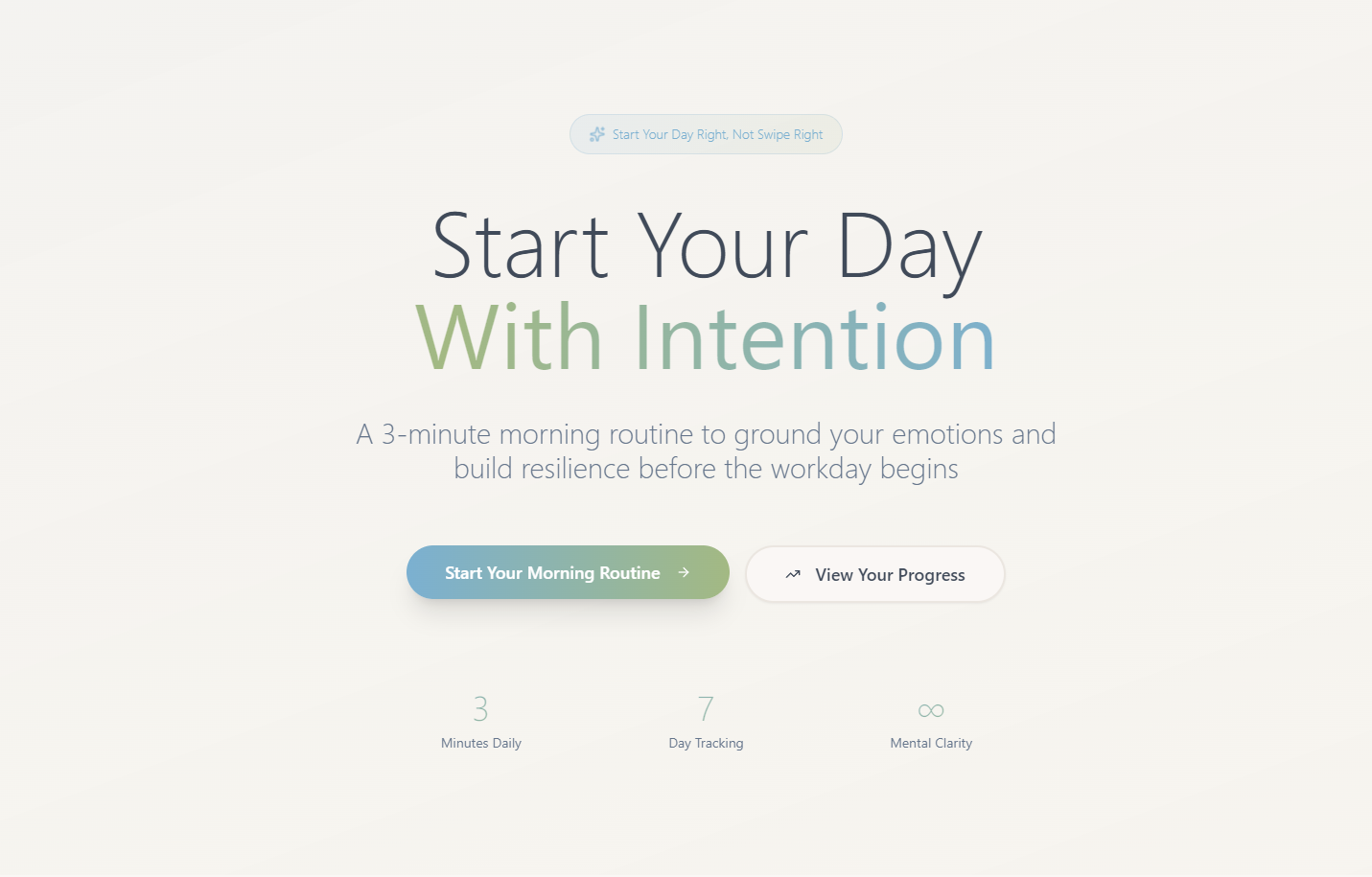
MorningMentalSetup guides users through a 3-step morning routine (emotion setting, intention setting, gratitude check), delivers AI-powered "mental weather reports" tailored to mood, offers 60-second breathwork exercises for midday dips, and lets users reflect on small wins each evening. A 7-day dashboard tracks progress without pressure, focusing on consistency over perfection.
How we built it
I started with Figma to map user flows and design visual elements—gradients, animated cards, and mood-based color schemes to keep the experience warm and engaging. Using React for the frontend, I integrated smooth animations with Animation.css, built the 7-day dashboard with Chart.js, and used Firebase + LocalStorage to auto-save user data. The AI API was woven in to generate personalized mental weather reports, tied to the mood users select each morning.
Challenges we ran into
The biggest hurdle was balancing animation polish with performance—too many dynamic elements risked slowing the app, especially on mobile. I had to refine easing functions and stagger animations to keep interactions smooth without lag. Another challenge was designing the mental weather logic: ensuring AI-generated prompts felt supportive (not generic) across different mood states (anxious, peaceful, rushed).
Accomplishments that we're proud of
Creating an experience that’s both visually engaging and functionally simple—users complete the full morning routine in under 3 minutes, with zero friction. The 7-day dashboard became a favorite: testers loved seeing their mood patterns without feeling judged, and the breathwork animation (synced to 4-4-6 inhale-hold-exhale timing) felt genuinely calming in user feedback.
What we learned
I learned that emotional design is about small, intentional choices—color-coded mood cards, subtle hover effects, and progress animations make users feel seen and motivated. I also realized the value of "non-intrusive" data persistence: auto-saving entries meant users never had to worry about losing their progress, which boosted completion rates.
What's next for this project
First, I want to add gentle, optional reminders (no push notifications—just in-app prompts) for evening reflection. Next, expand breathwork variations (quick energizing vs. calming exercises) and refine the AI mental weather to include seasonal or weekly pattern insights. Long-term, I’d like to add a lightweight community feature—sharing small wins anonymously, to foster connection without pressure.

Log in or sign up for Devpost to join the conversation.