-
-
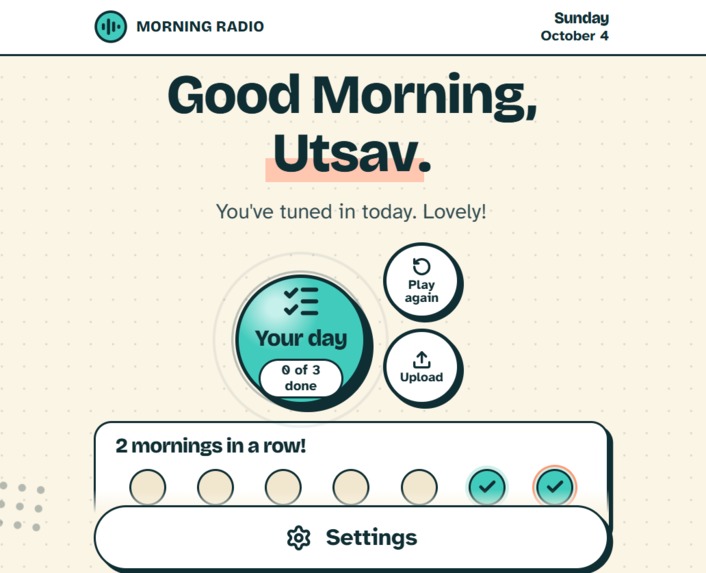
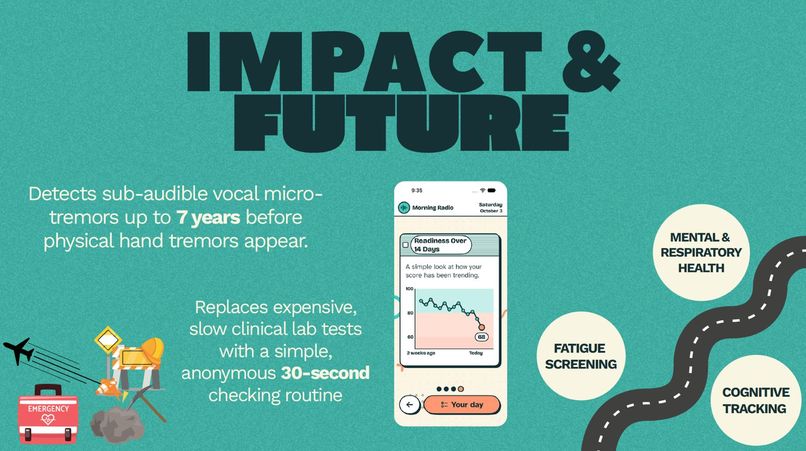
Start up screen
-

-
-
-
-
-



Inspiration
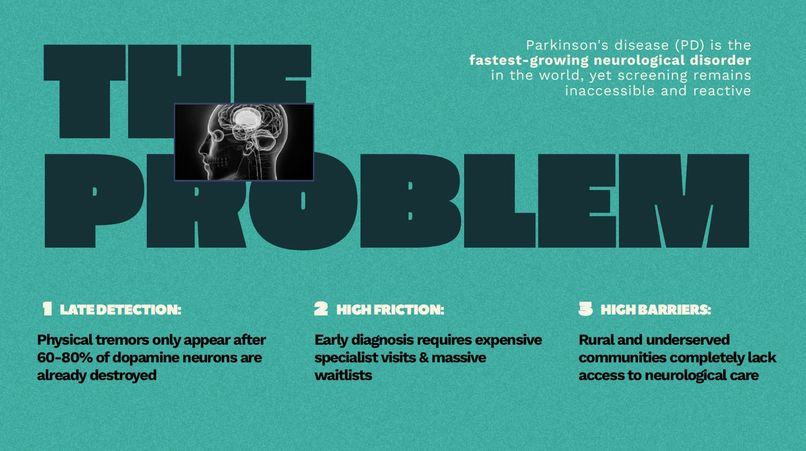
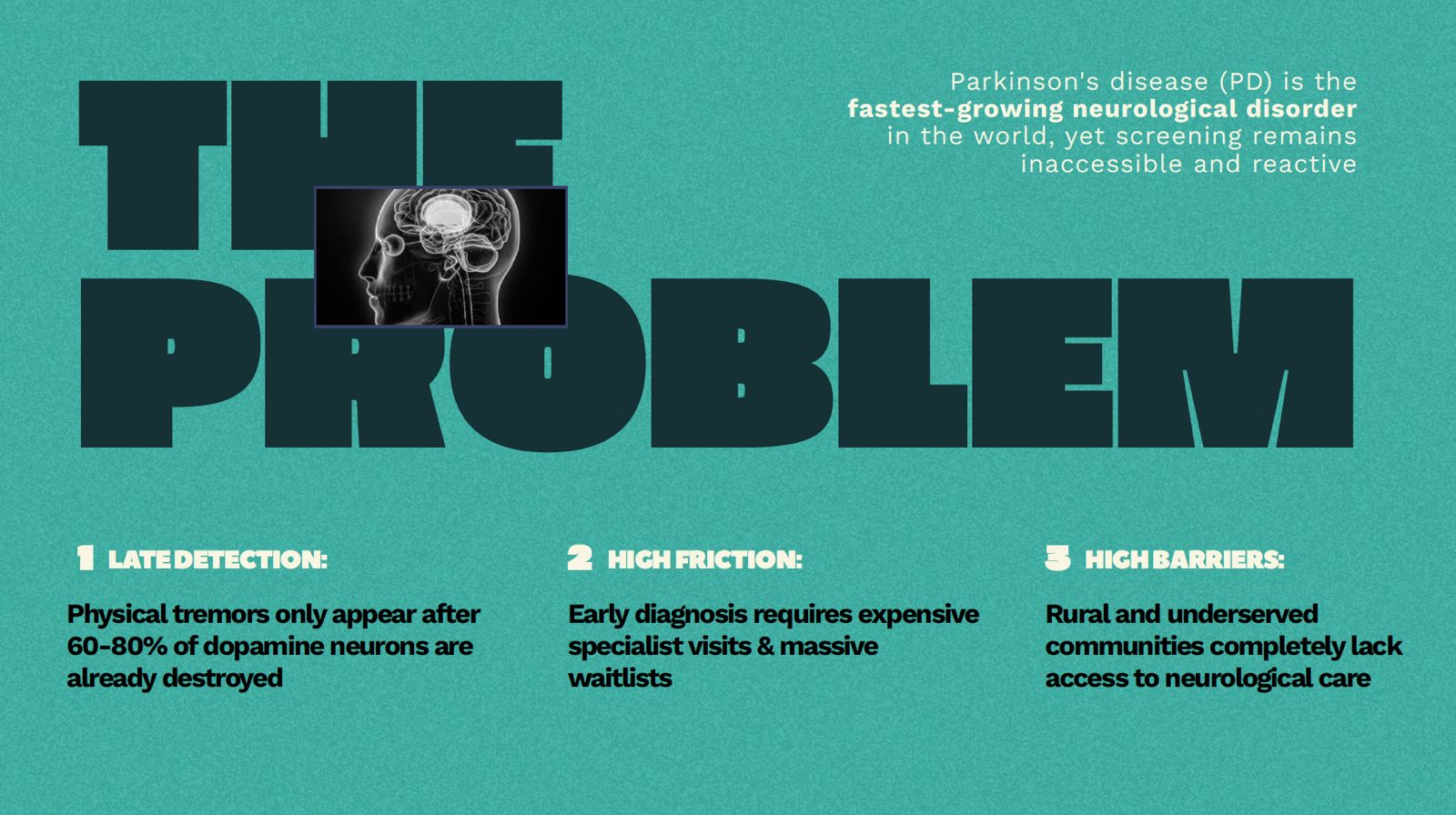
Our inspiration came from a personal connection to Parkinson’s disease, my grandad. We wanted to explore how AI could make early detection more accessible, using something as simple and non-invasive as a person’s voice.
What it does
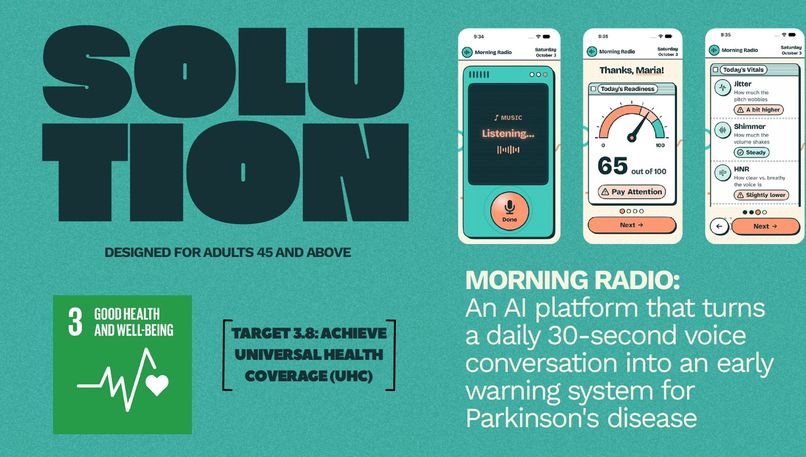
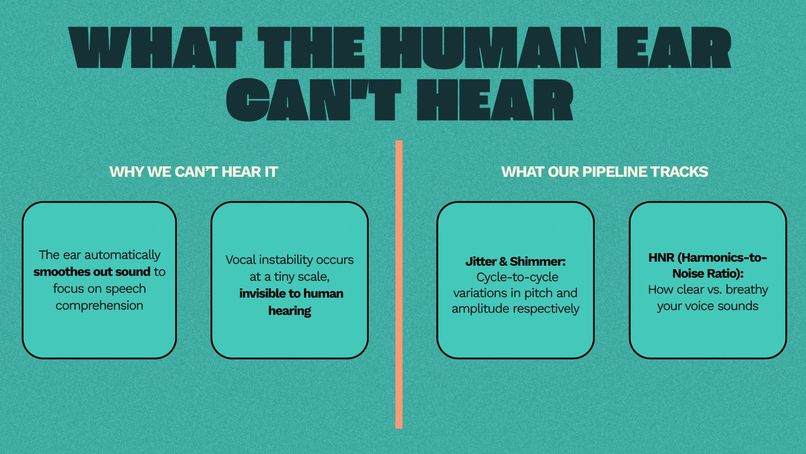
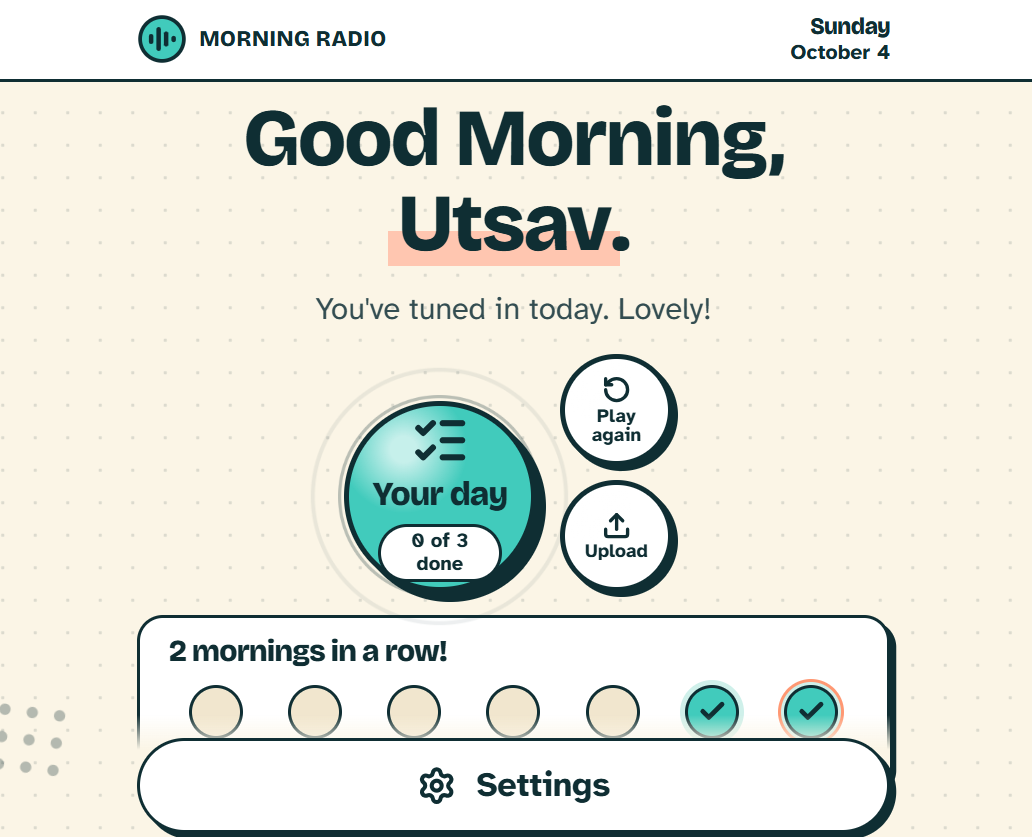
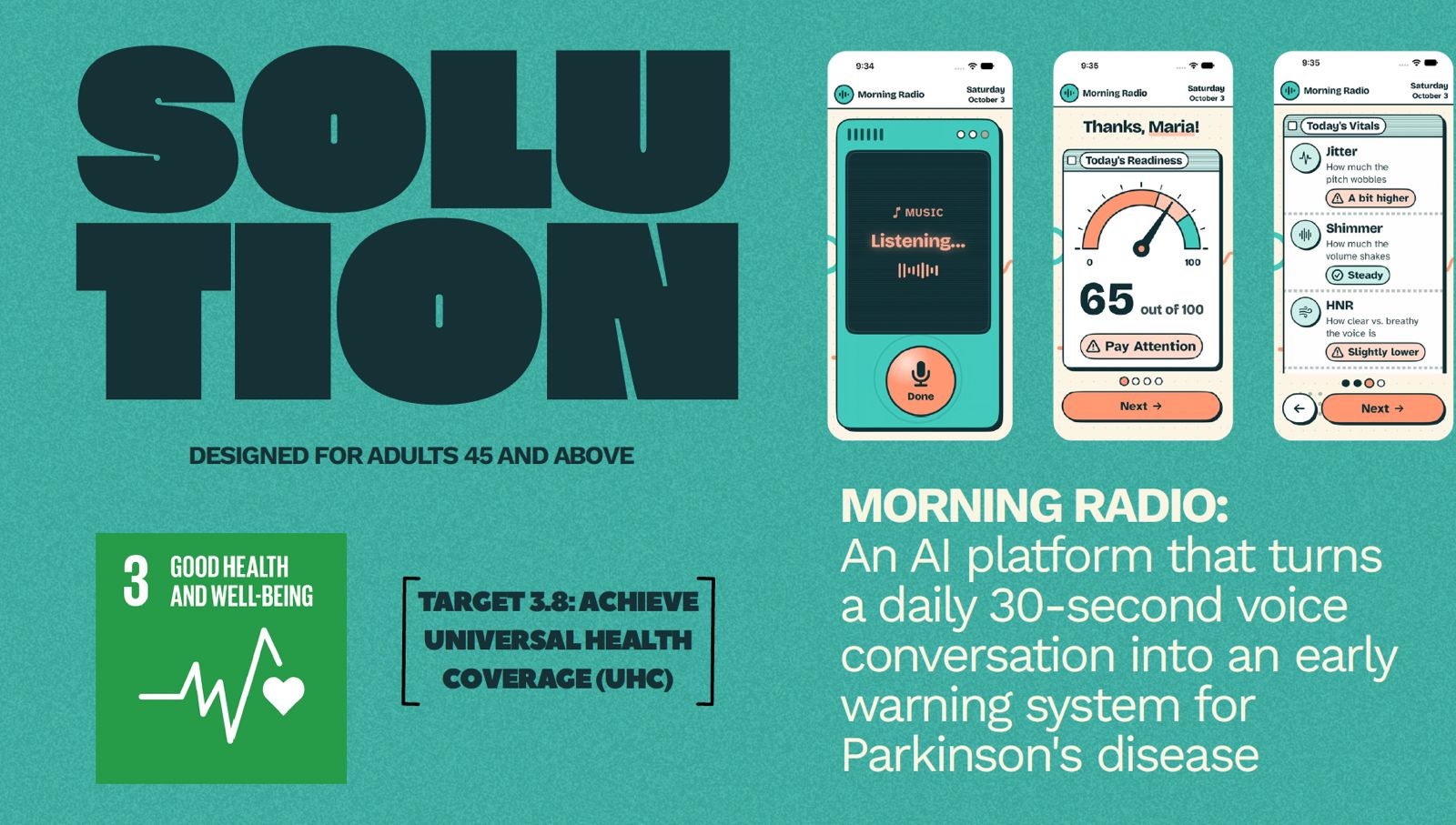
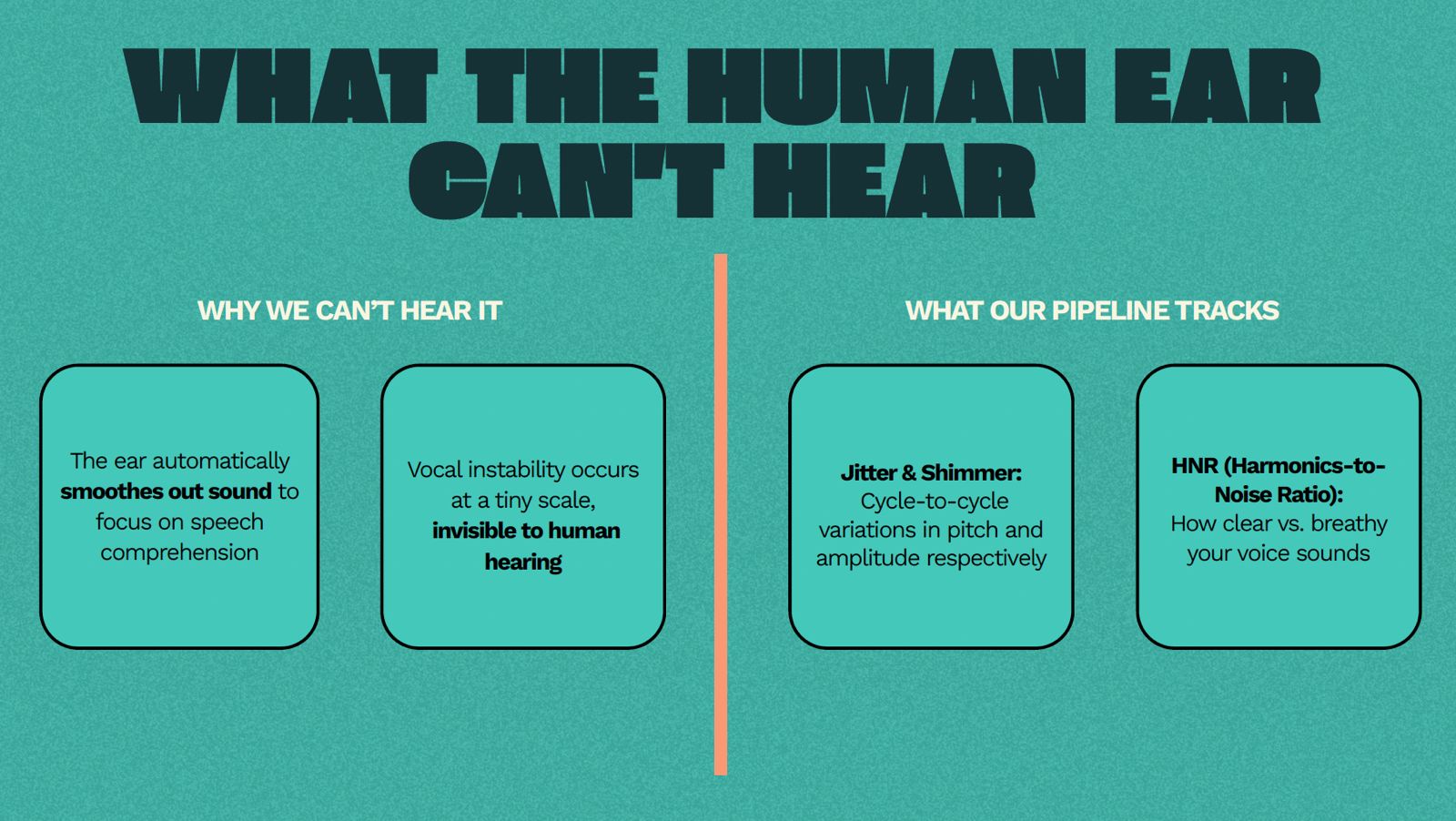
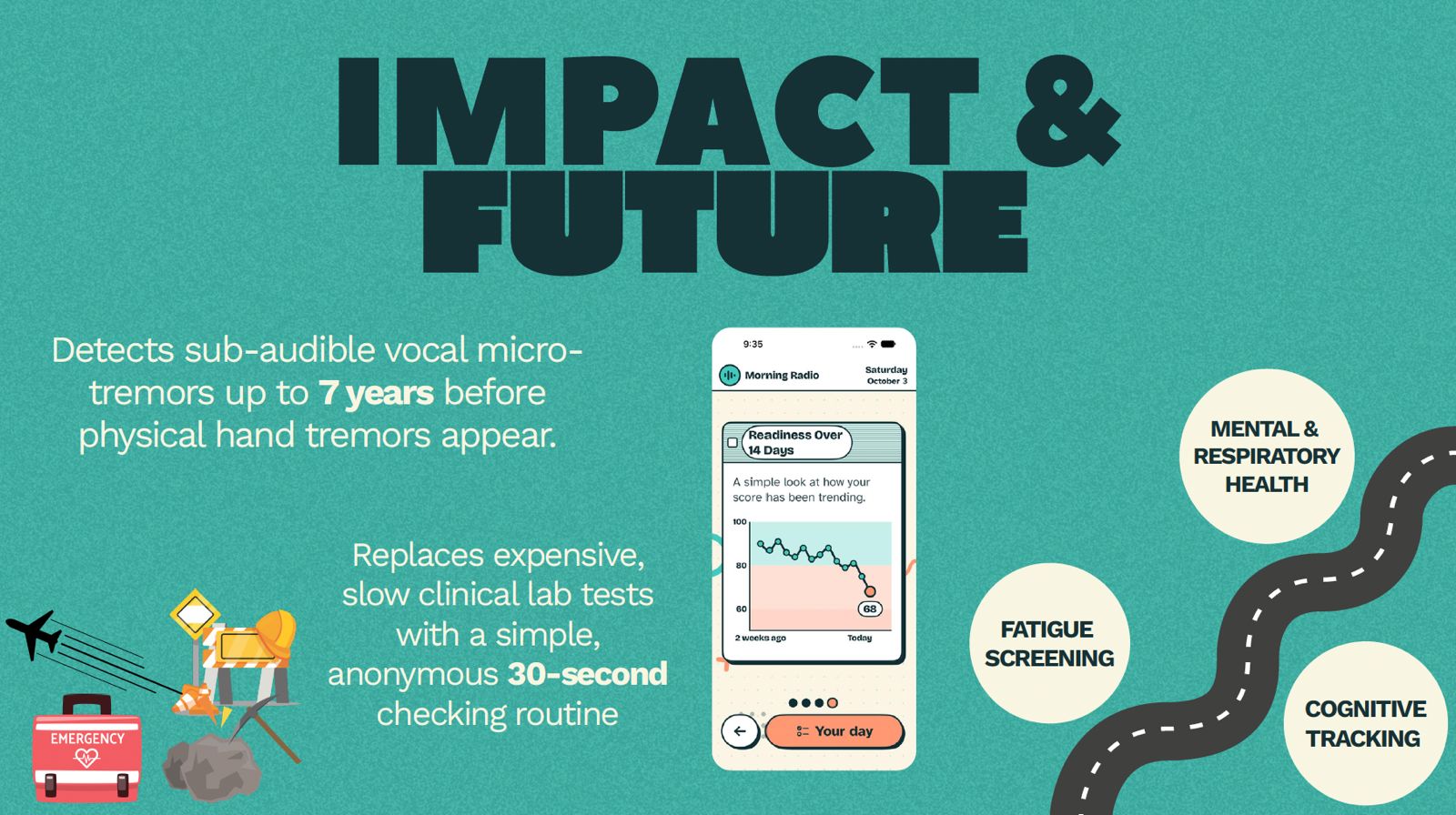
Voice AI system designed to detect potential early indicators of Parkinson’s disease through speech. By analyzing vocal characteristics that may be difficult to identify by ear, our model predicts whether a voice exhibits patterns associated with Parkinson’s.
How we built it
We built a neural network trained on Parkinson’s voice data to learn subtle differences between healthy and Parkinsonian speech. We developed the pipeline to process voice recordings, extract meaningful acoustic information, and use those features to generate a prediction.
Challenges we ran into
One of our biggest challenges was finding high-quality, diverse voice datasets. Some datasets were too small to train a reliable model, while others were extremely large and difficult to process efficiently. We had to balance dataset size, quality, diversity, and computational resources while making sure our model wasn't simply memorizing the training data.
Accomplishments that we're proud of
We're especially proud that we were able to build a model that generalizes beyond the data it was trained on. Rather than simply fitting the training examples, we focused on creating a system capable of identifying meaningful patterns in previously unseen voices.
What we learned
We gained a much deeper understanding of Parkinson’s disease and how it can affect speech and vocal characteristics. We also learned how to work with real-world biomedical datasets, train neural networks with PyTorch, and handle the challenges that come with building machine-learning models for healthcare applications.
What's next for MorningRadio
To execute this in an actual healthcare environment.

Log in or sign up for Devpost to join the conversation.