-
-
Mediator
-
Volunteer
-
Receiving Aid
About the Project
Inspired by Rice University’s mutual aid program, we decided to create an app for students to easily seek aid and help one another out in hopes to improve health and wellness. Because many students already have access to phones, designing an app would tremendously make mutual aid accessible yet anonymous.
What we learned
Our team was made up of people with various experience levels. We had to learn to quickly get to know each other and collaborate under a strict time constraint. This was our first designathon (for two of us) so there was a steep learning curve about the style and process of the event. We learned a lot about the design thinking process and how to incorporate it into our project!
How we built our project
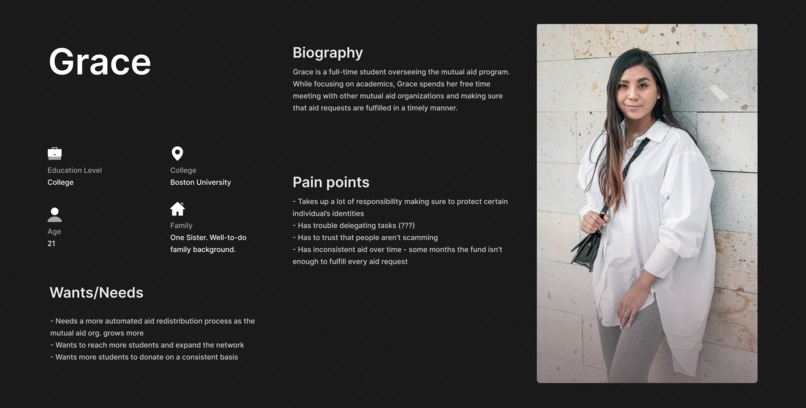
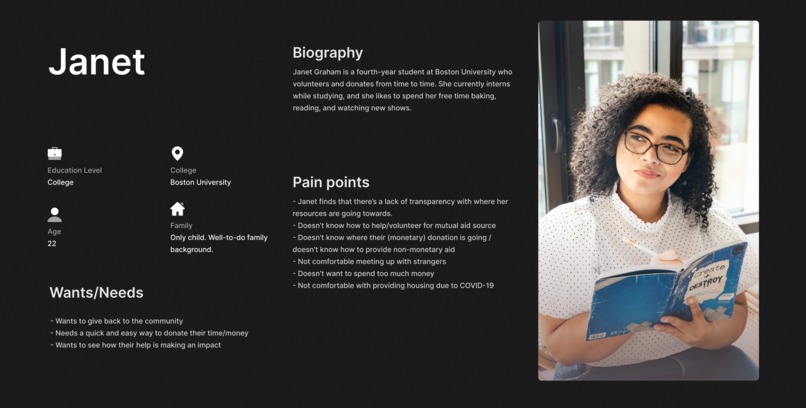
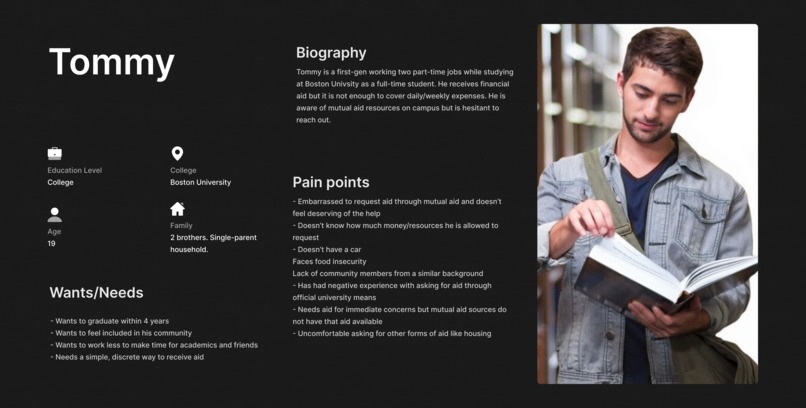
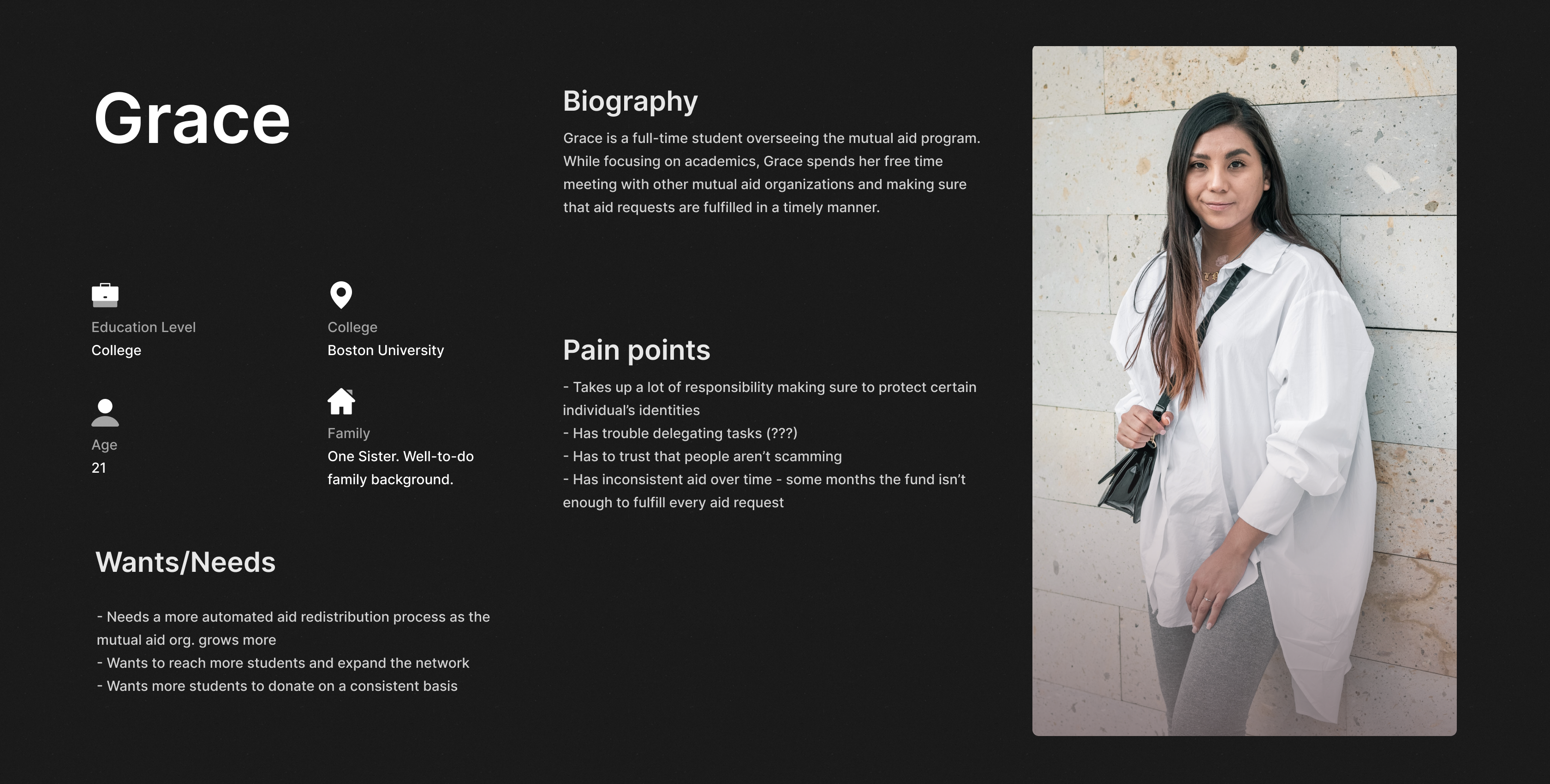
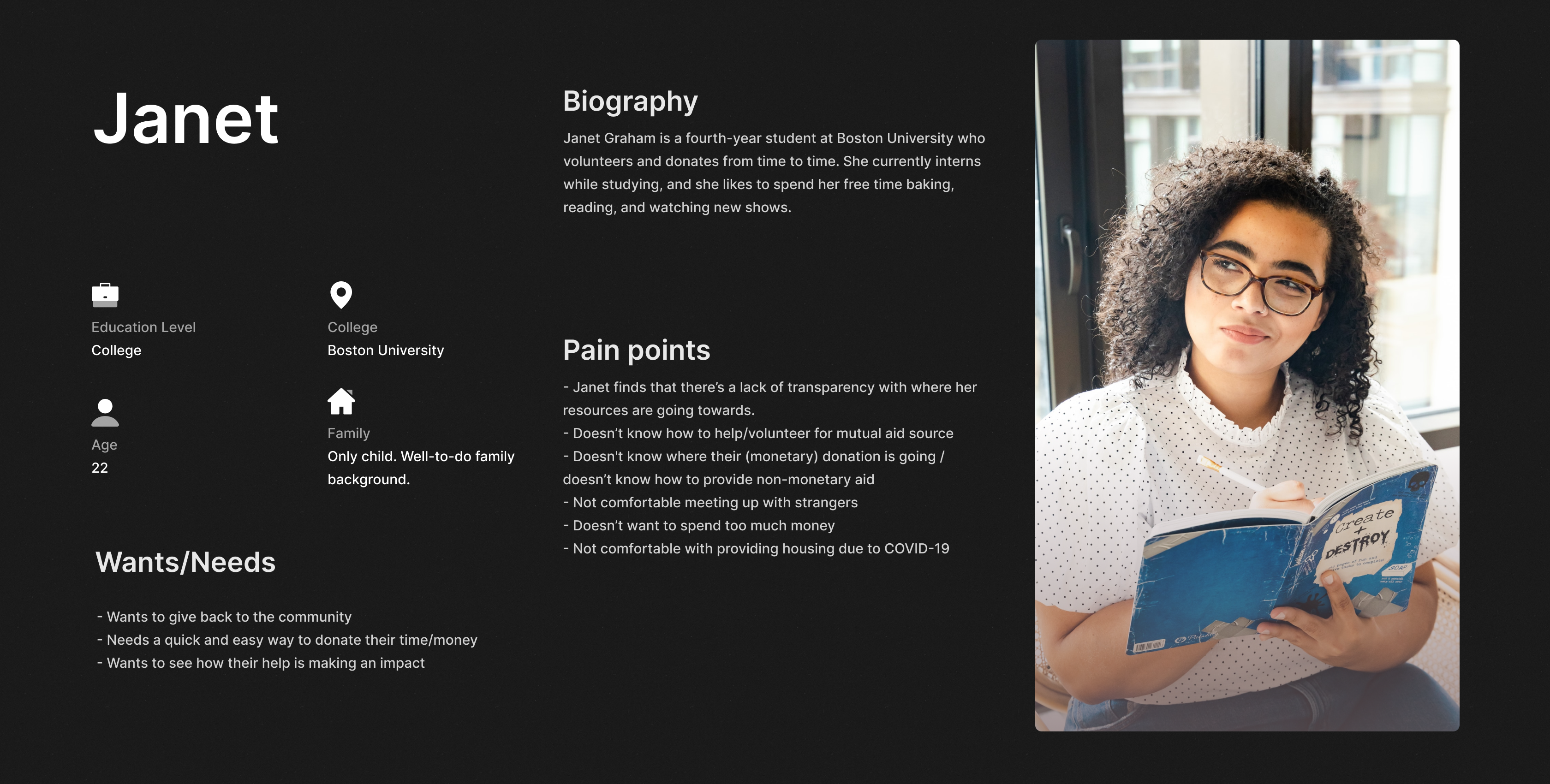
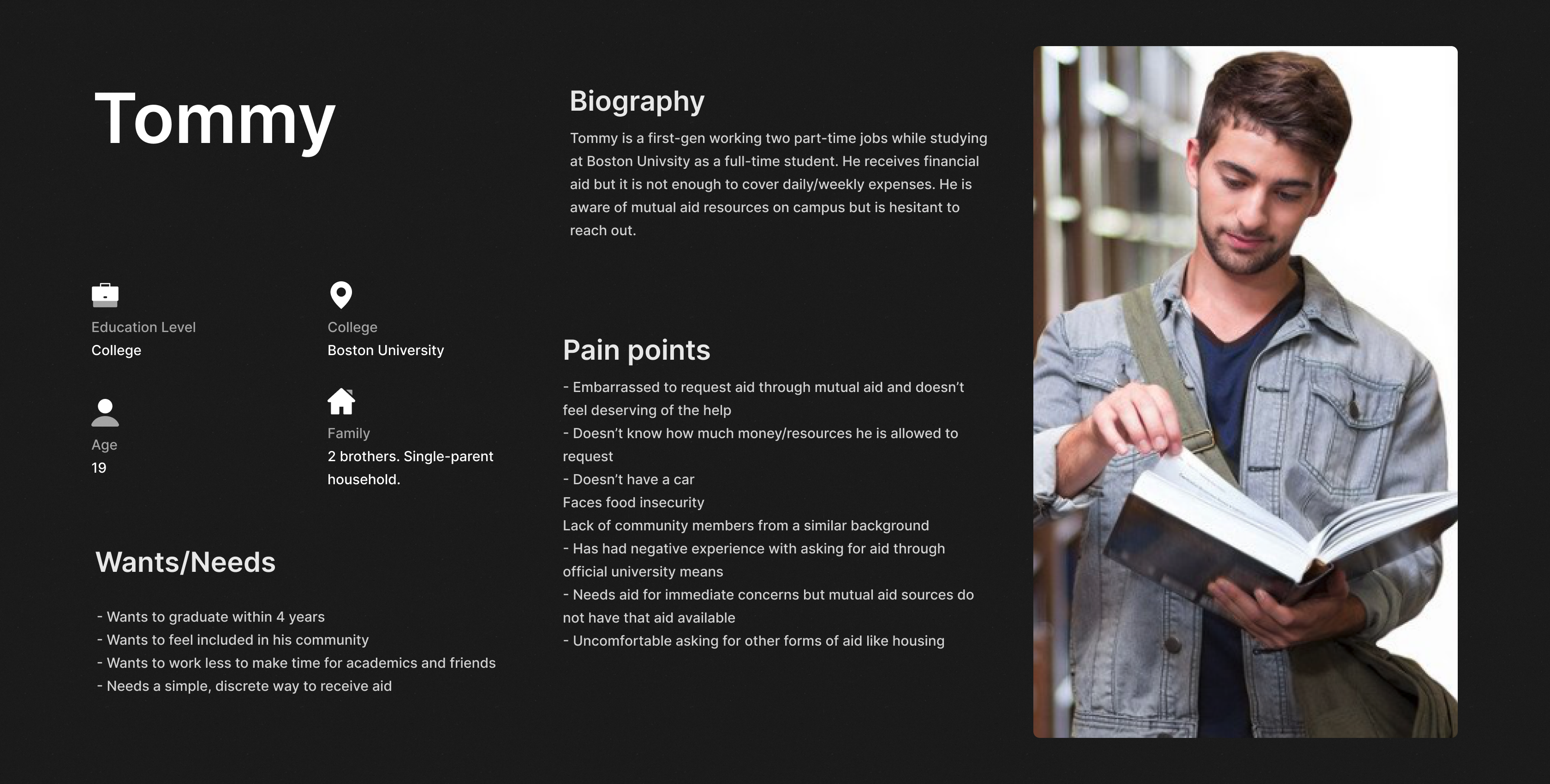
We started our project by brainstorming potential ideas for the designathon. Once we settled on college mutual aid networks, we found secondary research to highlight any existing problem spaces. Additionally, we created user personas to better understand our target users. With a narrowed down problem statement and clear understanding of our users, we designed wireframes and low-fidelity prototypes that eventually informed our final designs.
Challenges we faced
Some of the challenges we faced include being in different time zones and working around that, learning how a designathon works (since it is many of our first designations), and converging ideas after diverging. During our ideation phase, we did develop many great ideas for the app; however, we did have trouble in narrowing our choices down for our personas. Also, with such a time crunch, we did find it challenging to conduct any user research.
Sources:
Zein et al. : https://www.ncbi.nlm.nih.gov/pmc/articles/PMC6163327/
Built With
- figma

Log in or sign up for Devpost to join the conversation.