-
-
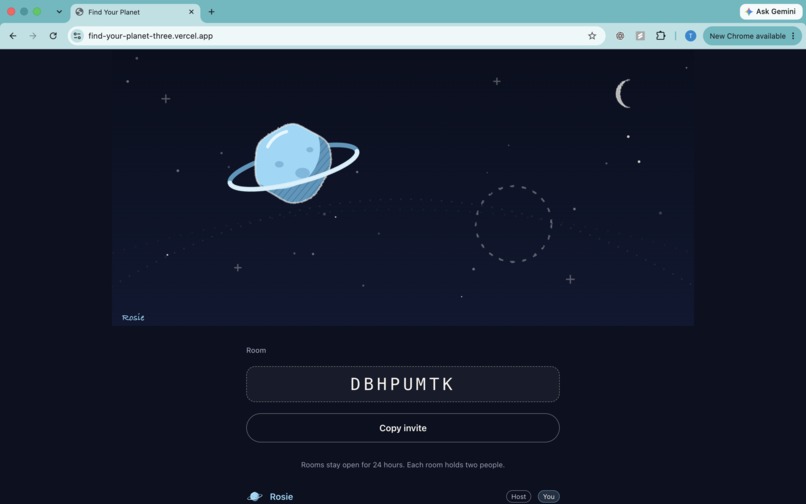
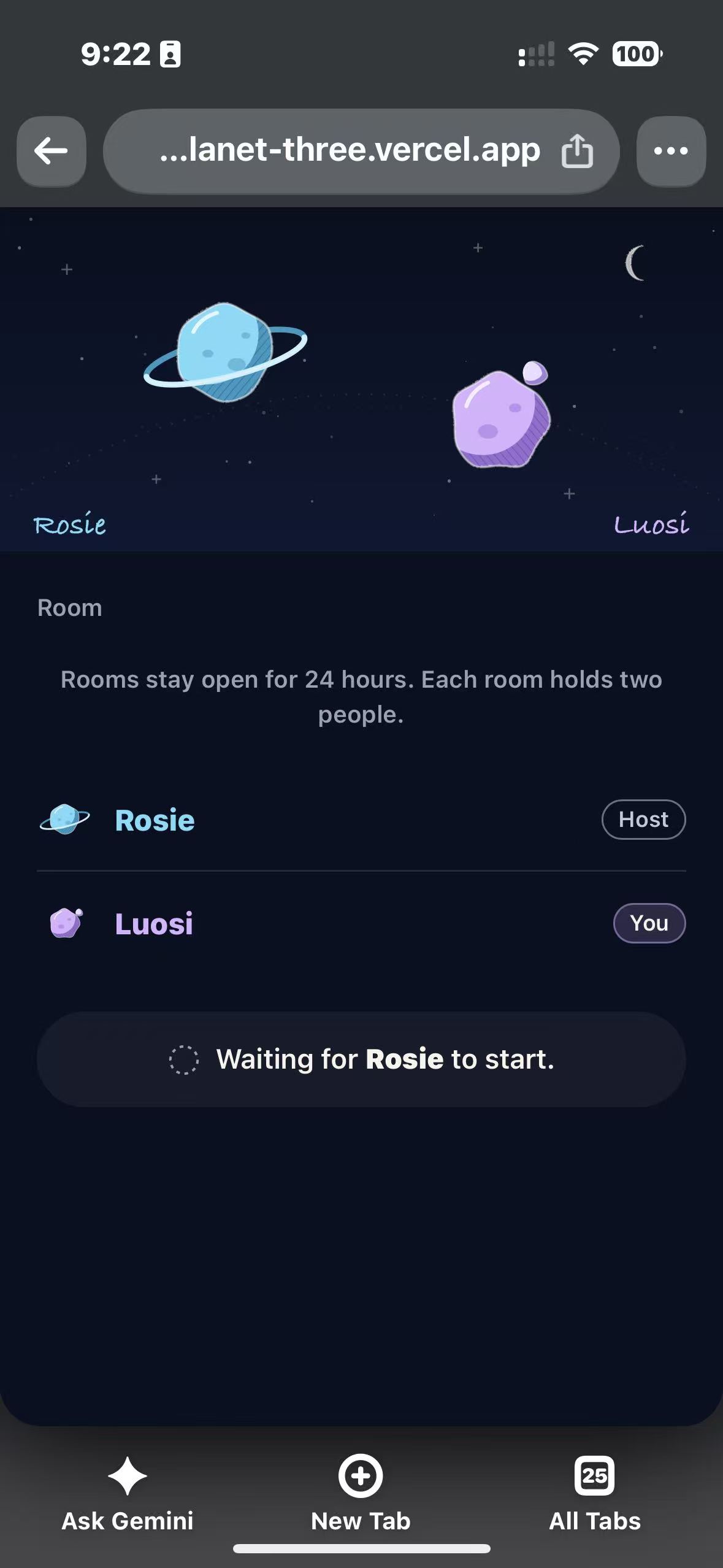
Join a room to play
-
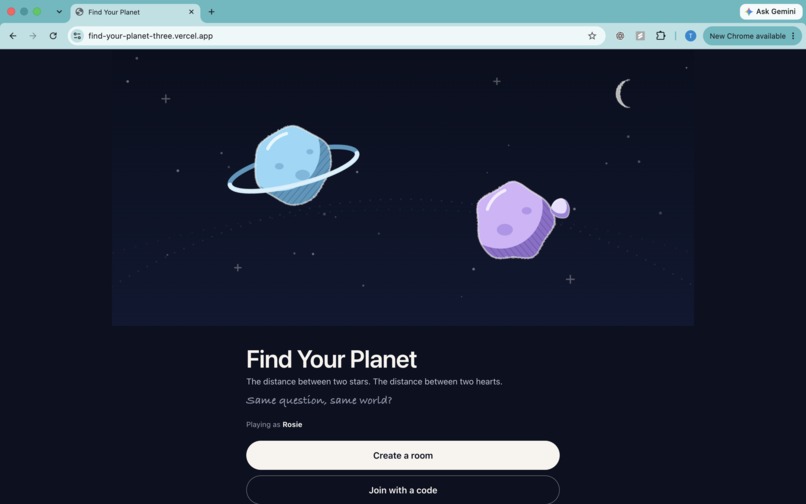
Main menu
-
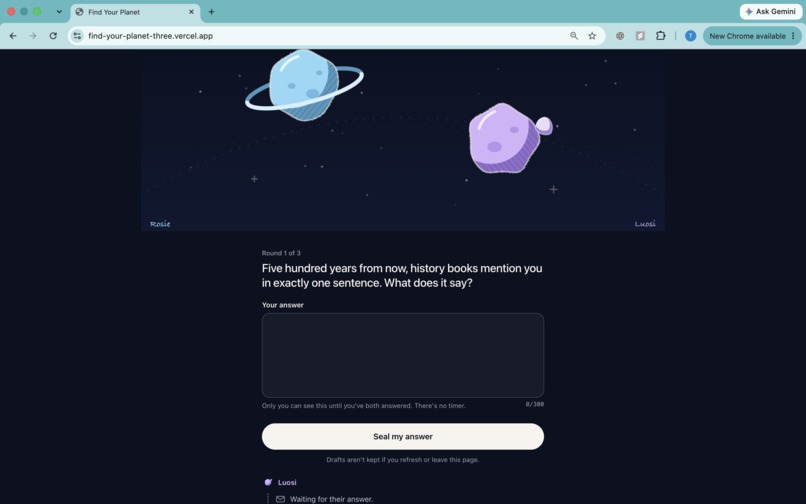
Answer questions with your friend
-
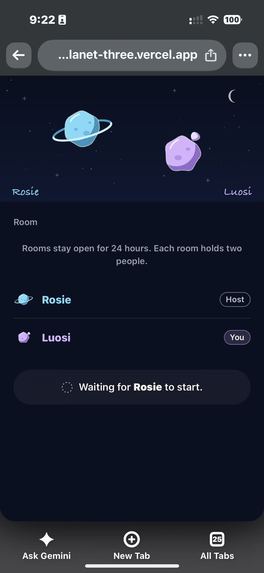
Join a Friend's room
-
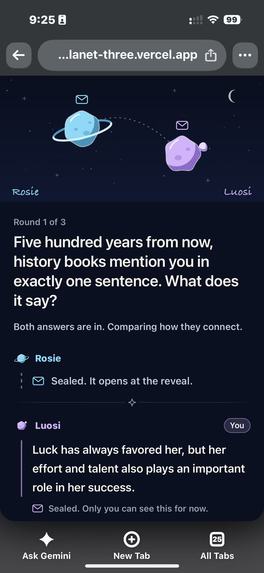
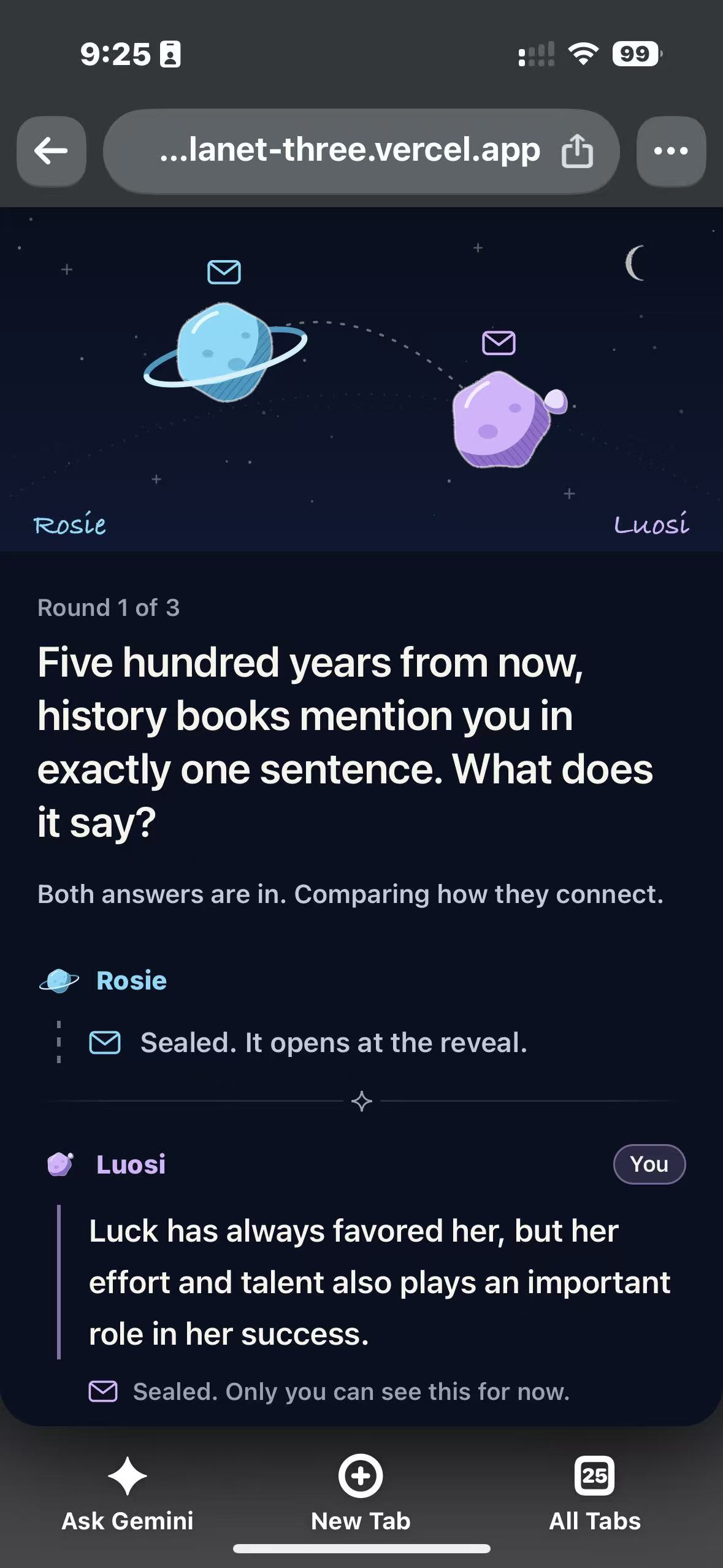
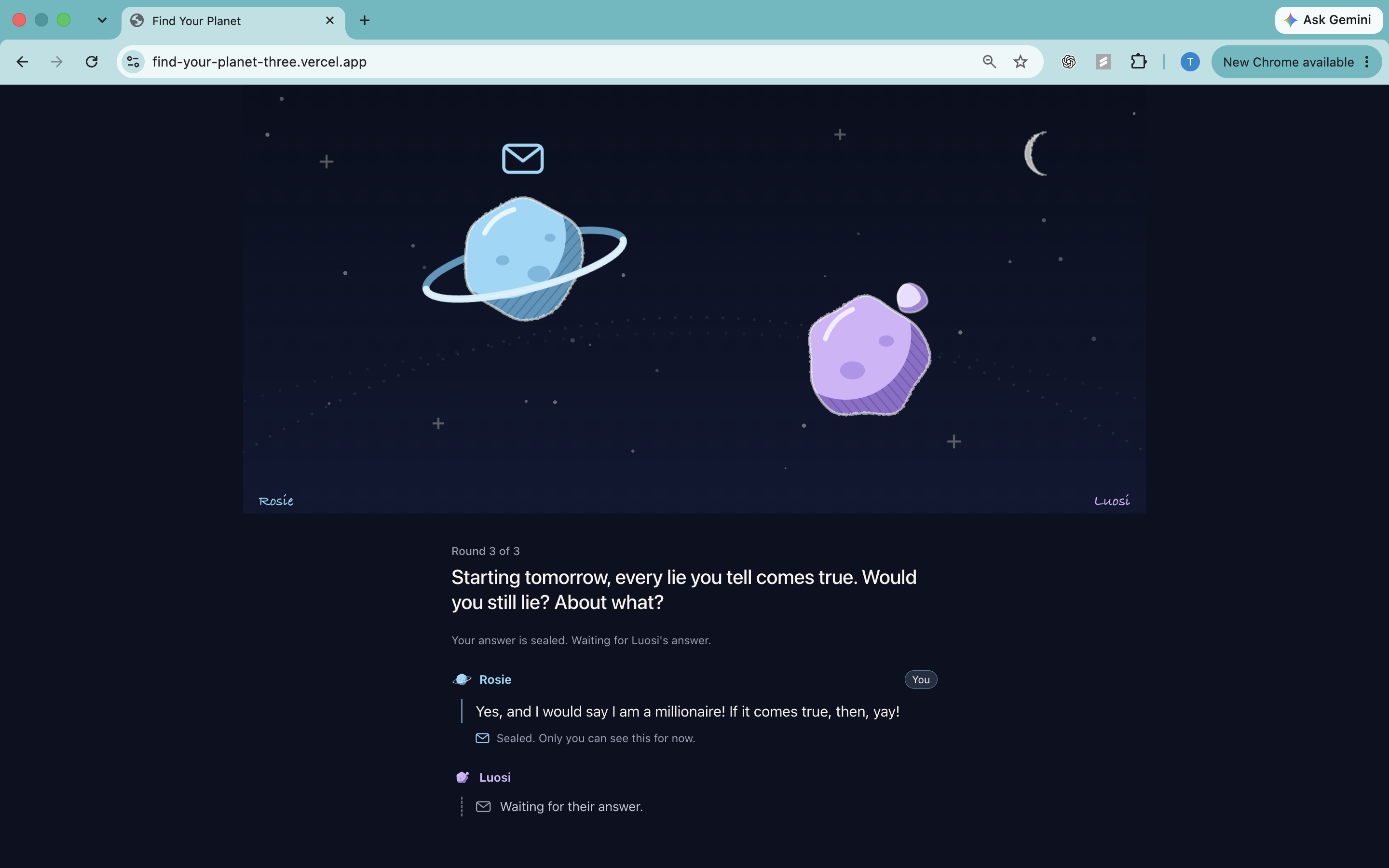
Seal your answers
-
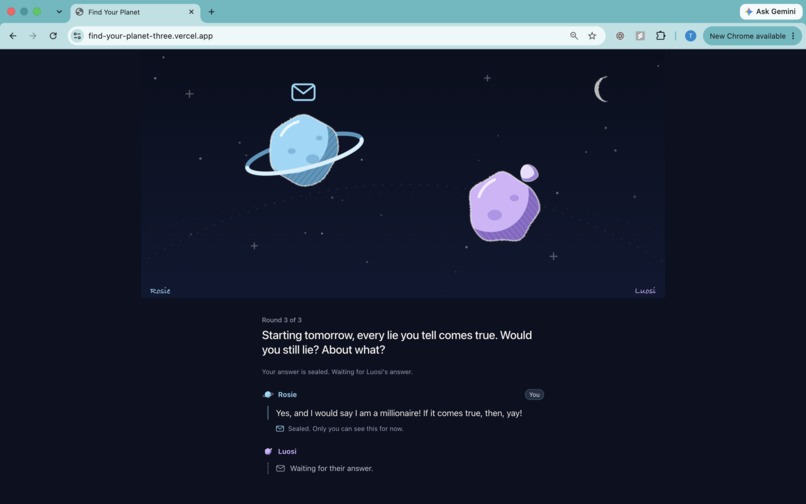
Wait for your friend's answer
-
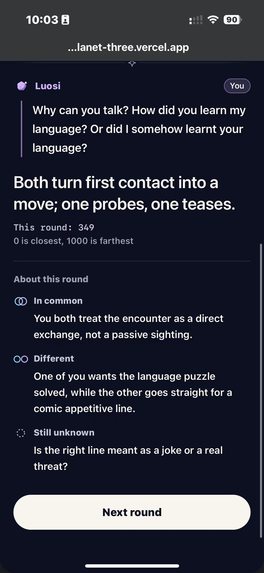
Calculate and Show your distance
-
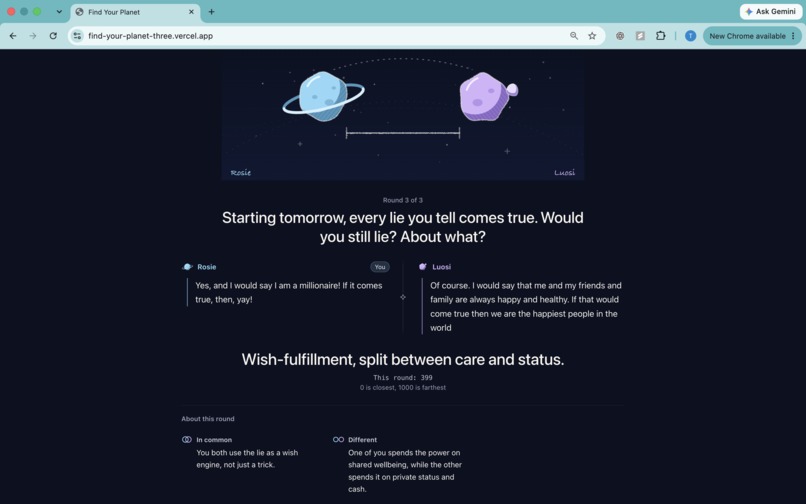
Read your friend's mind
-
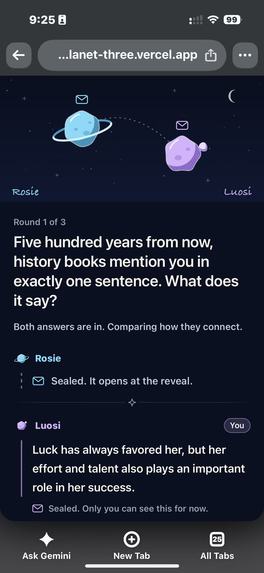
Compare your answers
-
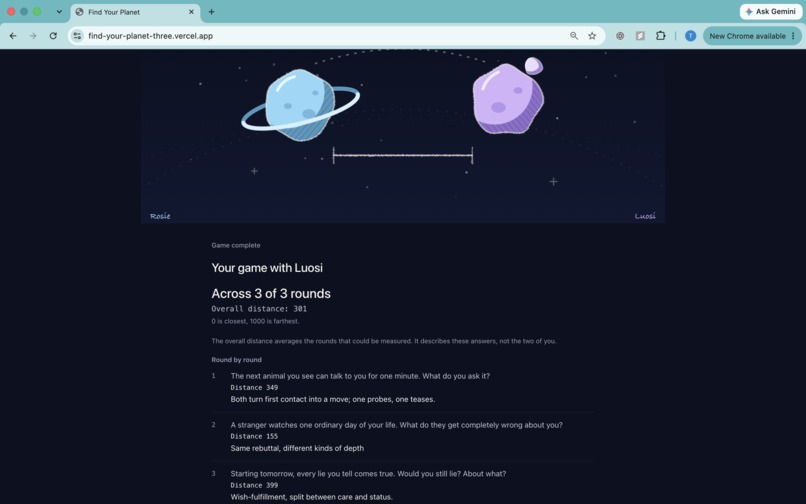
Summarize of your game
-
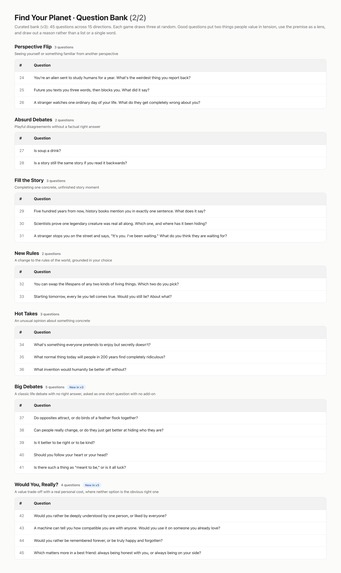
Question Bank Sec2
-
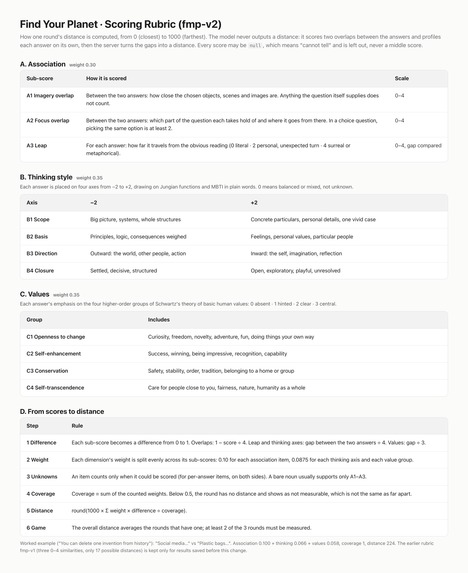
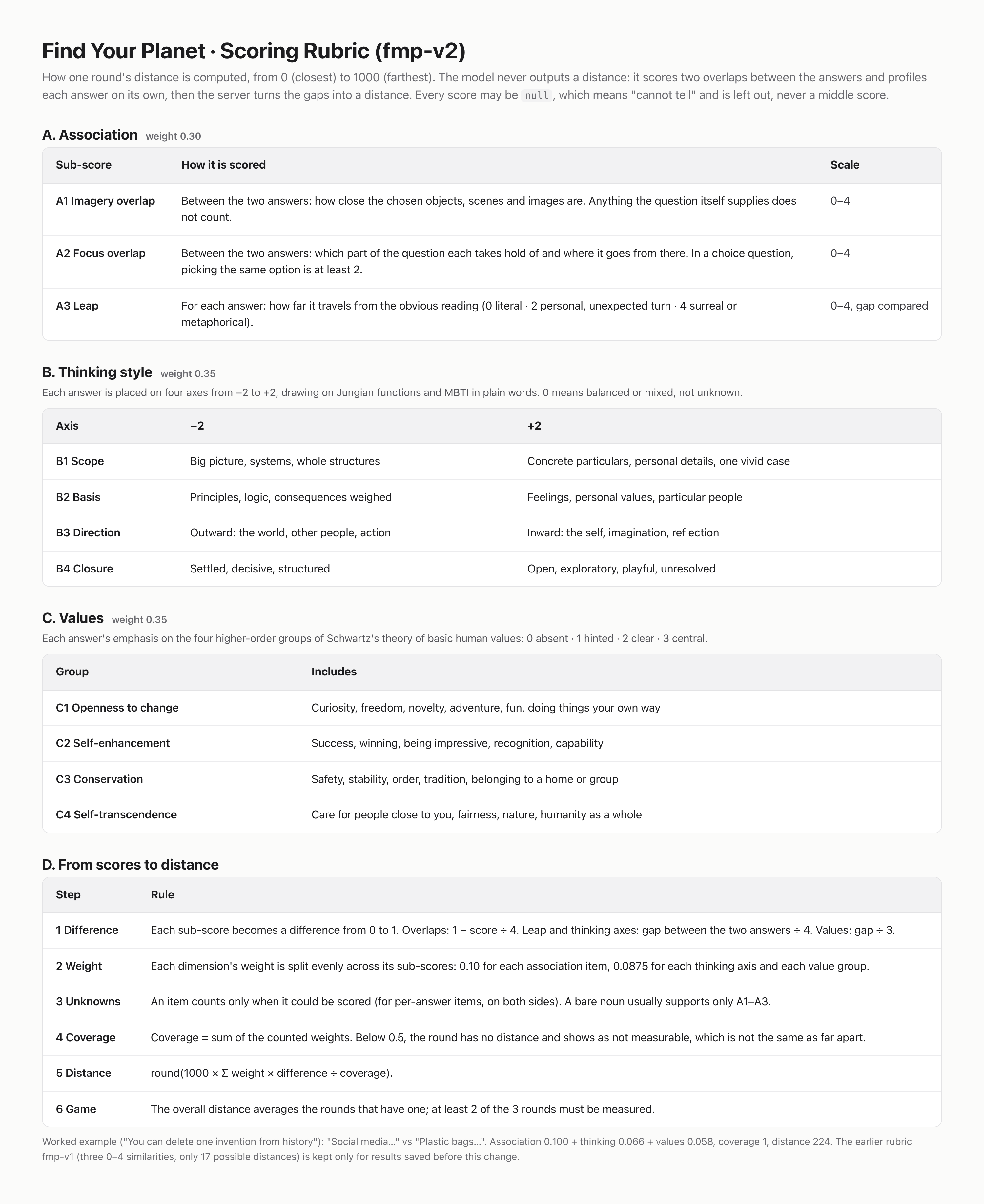
Distance Scoring Rubric
-
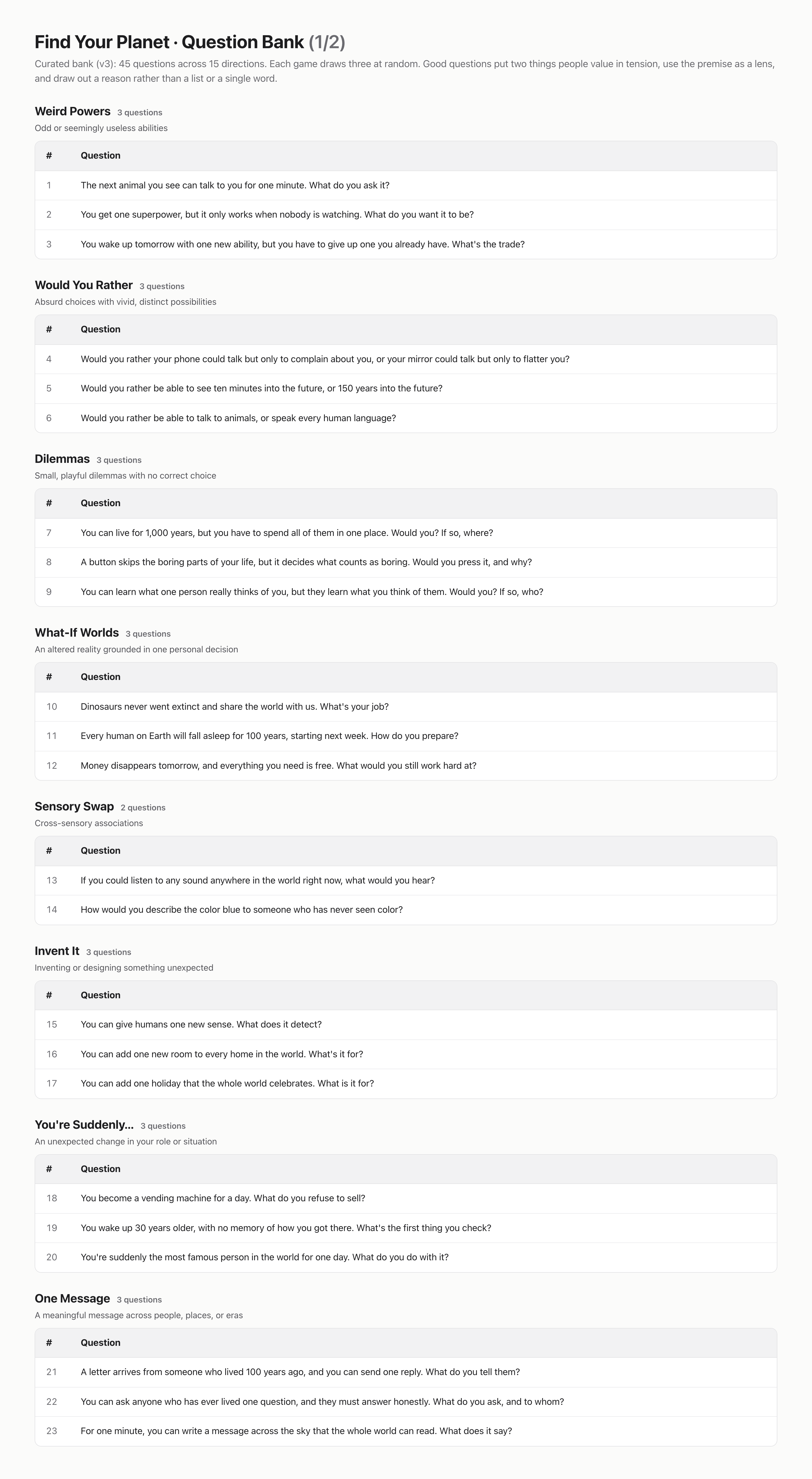
Question Bank Sec1
Inspiration
The theme “Fly Me to the Moon” inspired us to step outside everyday reality and enter someone else’s imagination.
We wanted to capture two moments:
“I imagined that too.”
“So that is how you see the world.”
That became Find Your Planet, a two-player game that turns the distance between two answers into the distance between two planets.
What It Does
Find Your Planet is a real-time two-player game where partners answer the same creative questions independently and discover the distance between their perspectives. AI transforms their answers into playful, meaningful summaries, helping them understand each other in a new way.
How to Play
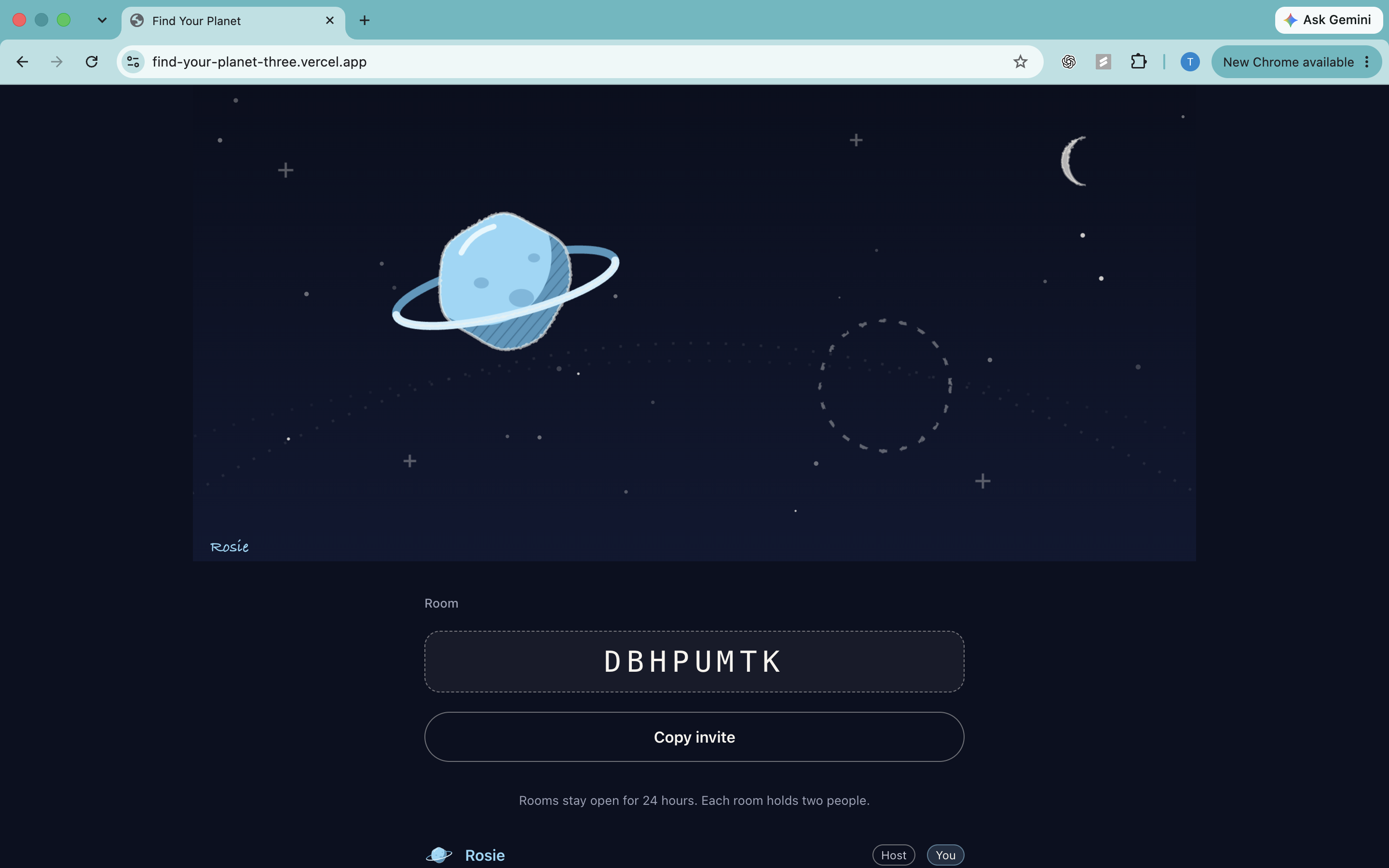
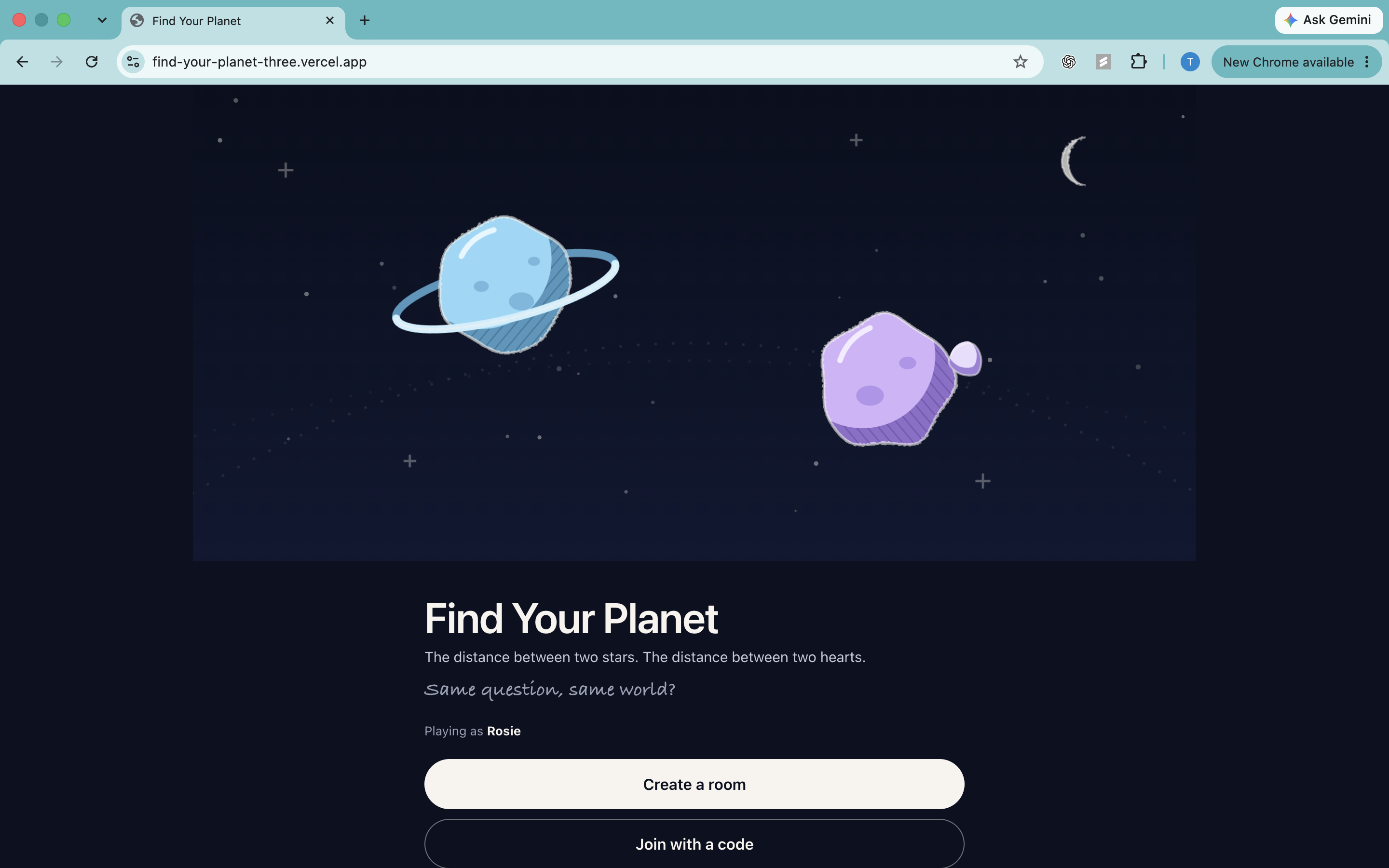
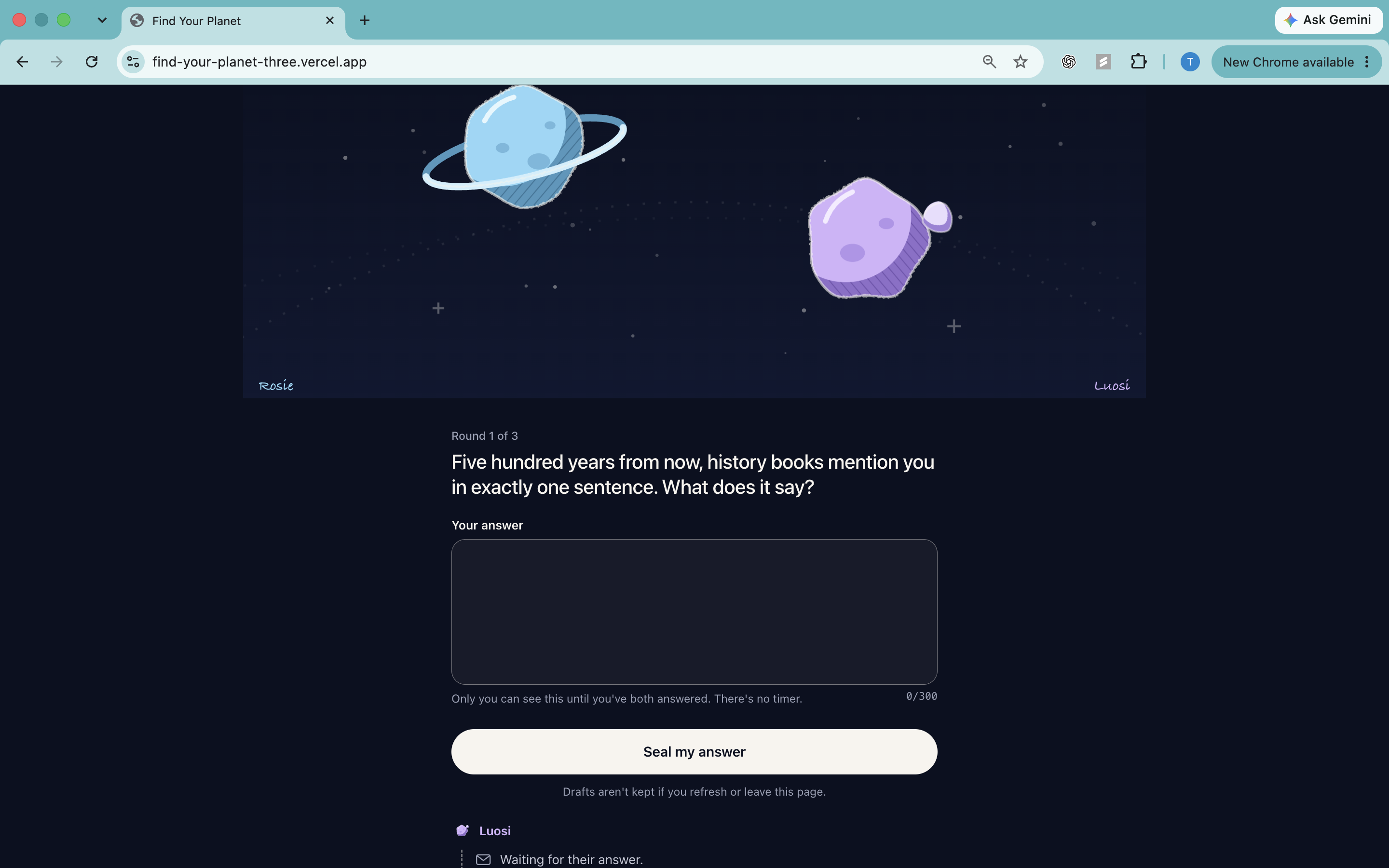
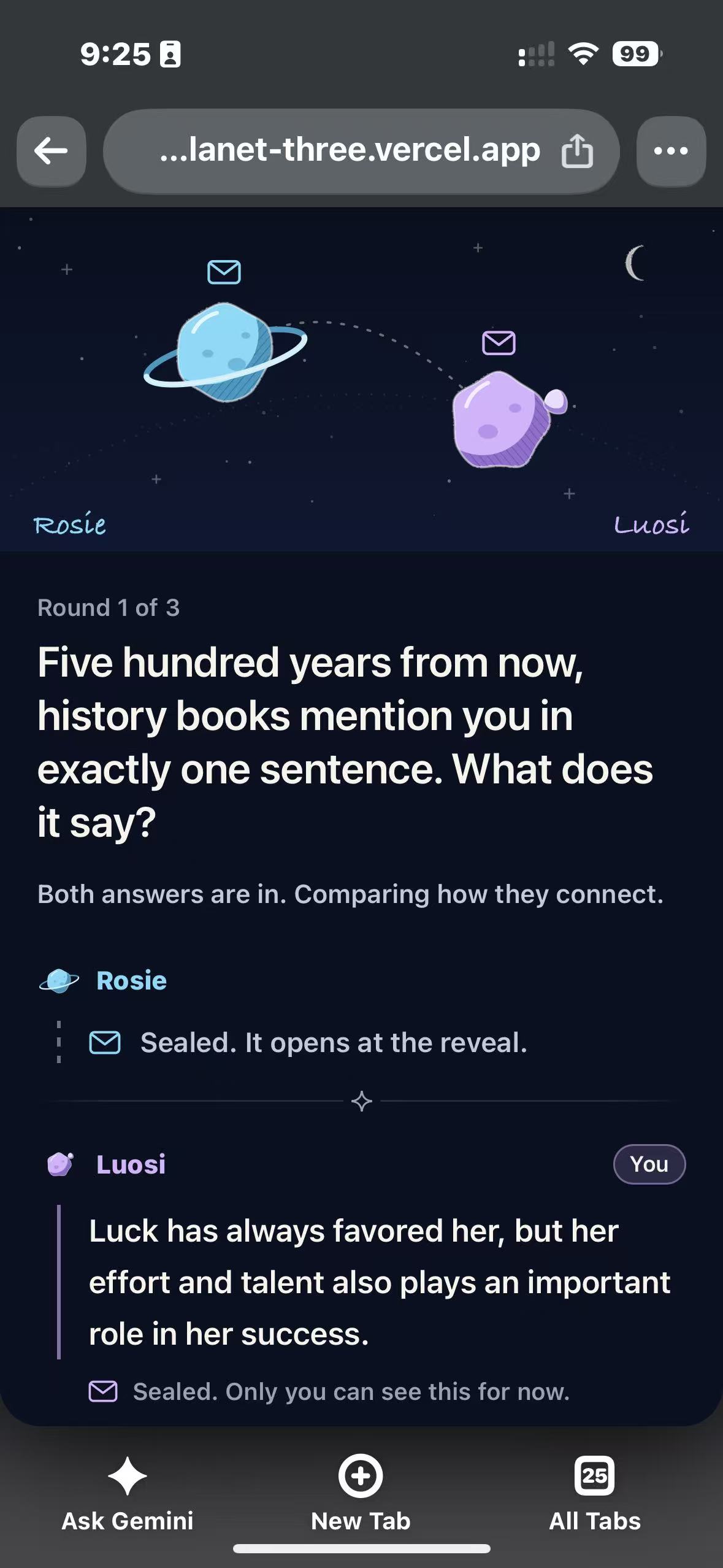
Two players join a room and answer the same imaginative question privately.
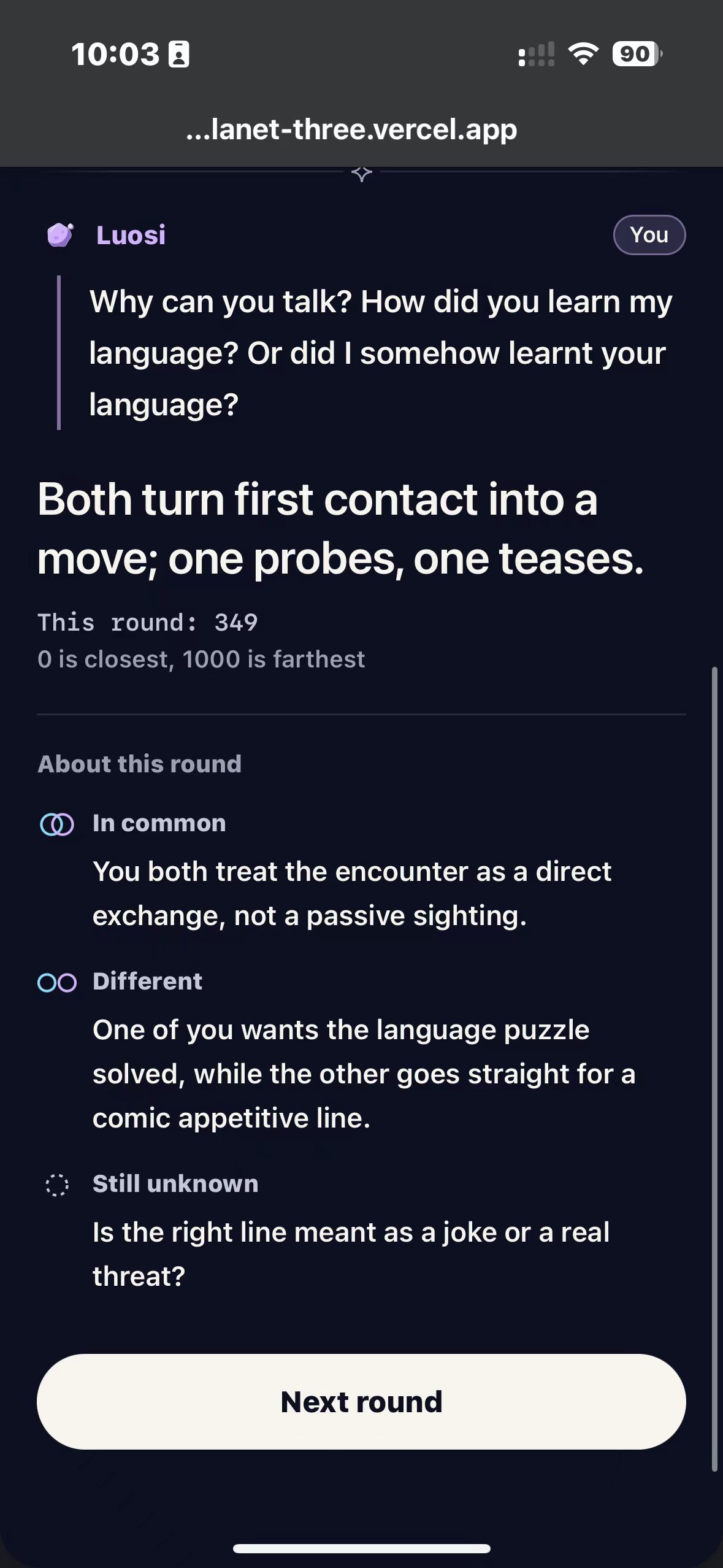
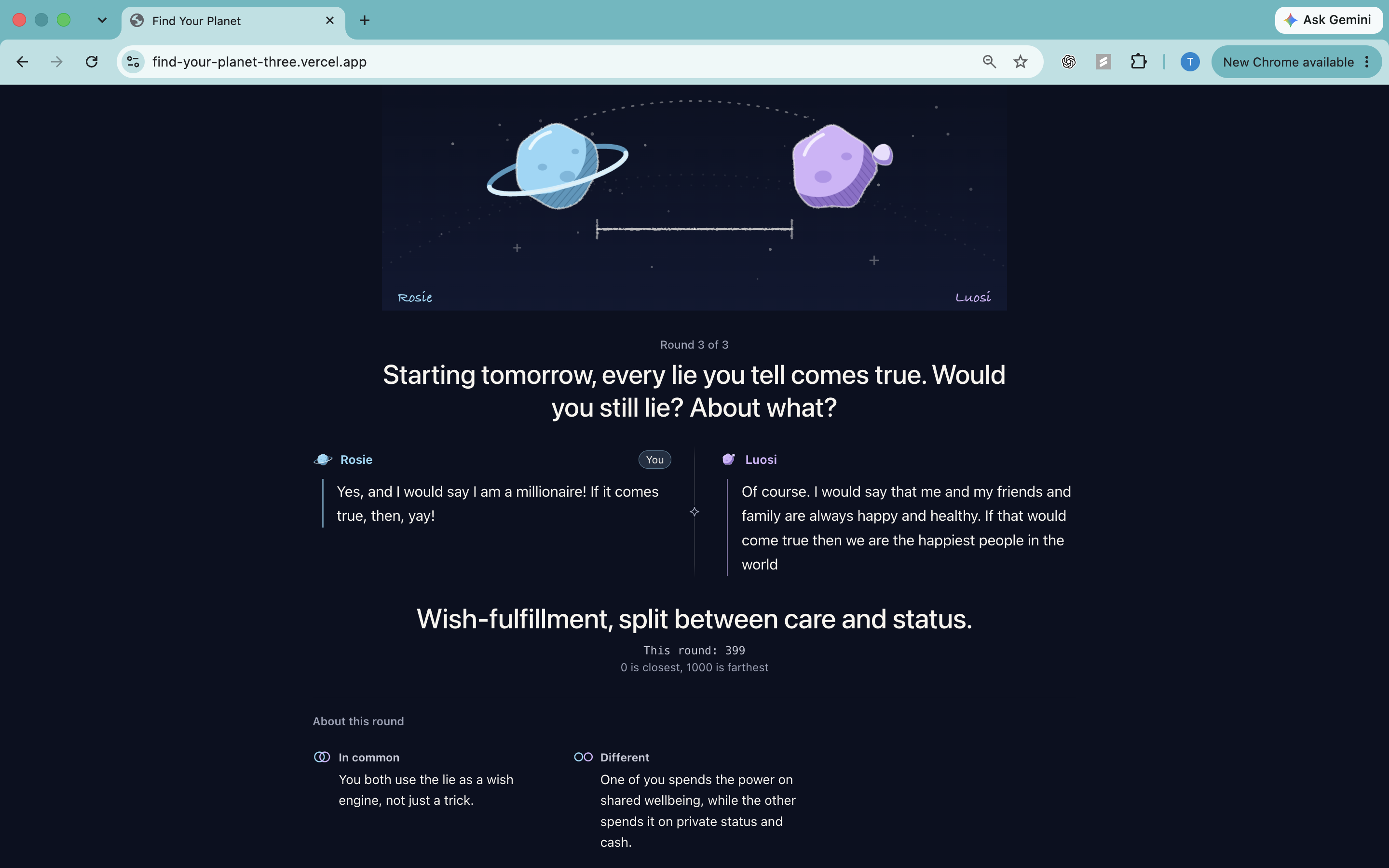
After both submit, their answers are revealed together. We used OpenAI's API to identify their common ground, differences, and anything that cannot be judged from the available evidence. The planets then move to represent their distance for that round.
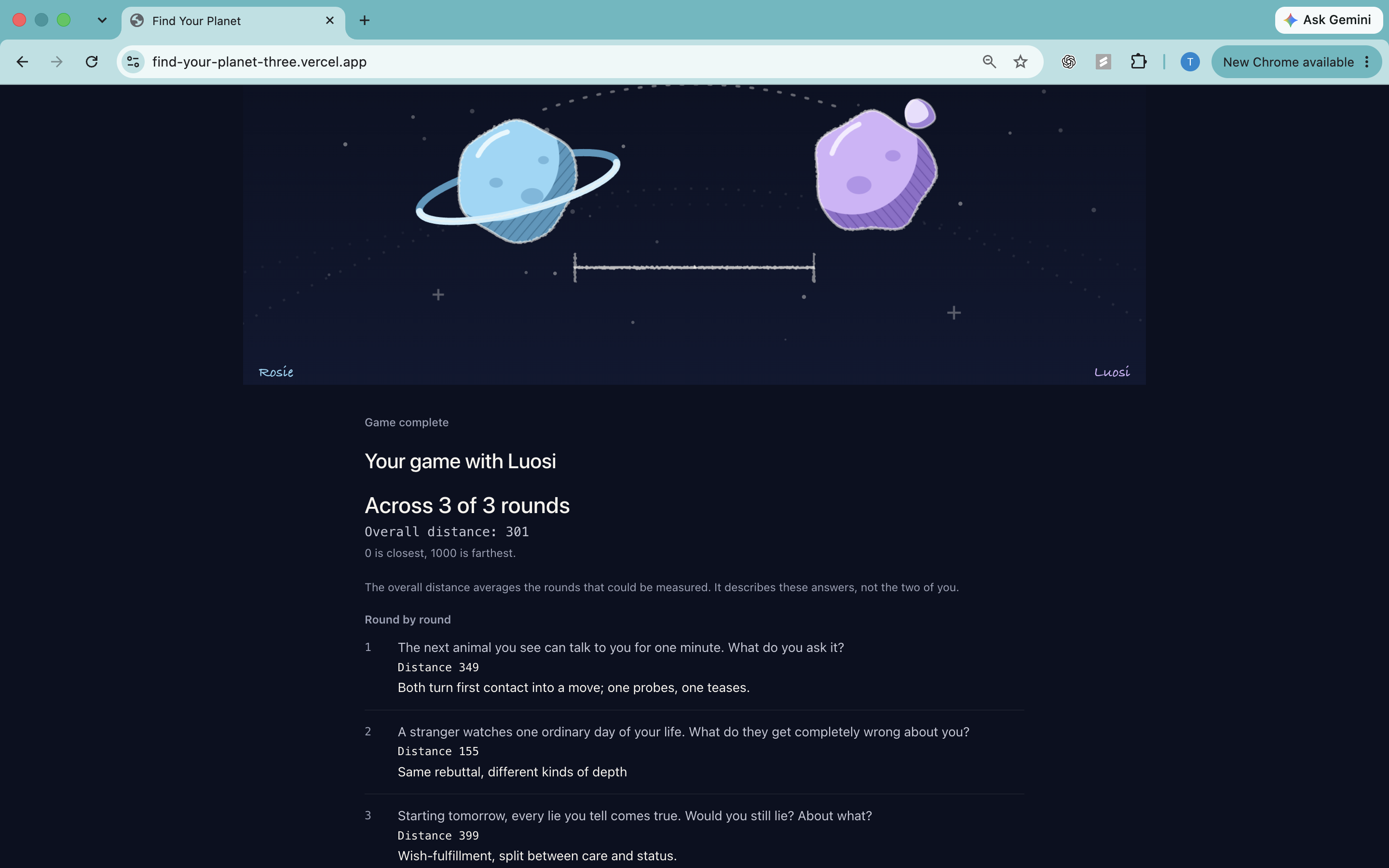
After three rounds, players receive an overall result and a recap of their most interesting connections. Their similarity is represented by the distance between two planets.
How We Built It
We built the interface with React, TypeScript, and Vite, using SVG and CSS animations for the planets and space scene.
Supabase handles player identity, rooms, private submissions, and round progression. Database rules keep answers hidden until both players submit.
Our AI evaluation uses structured output. The model examines each answer independently, finds supported similarities and differences, and quotes evidence from the original answers. The application calculates a symmetric distance from these signals instead of asking the model to invent a score directly.
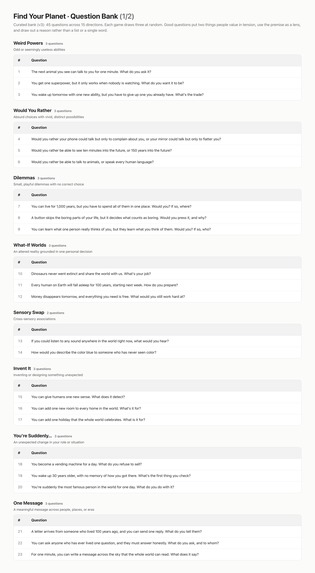
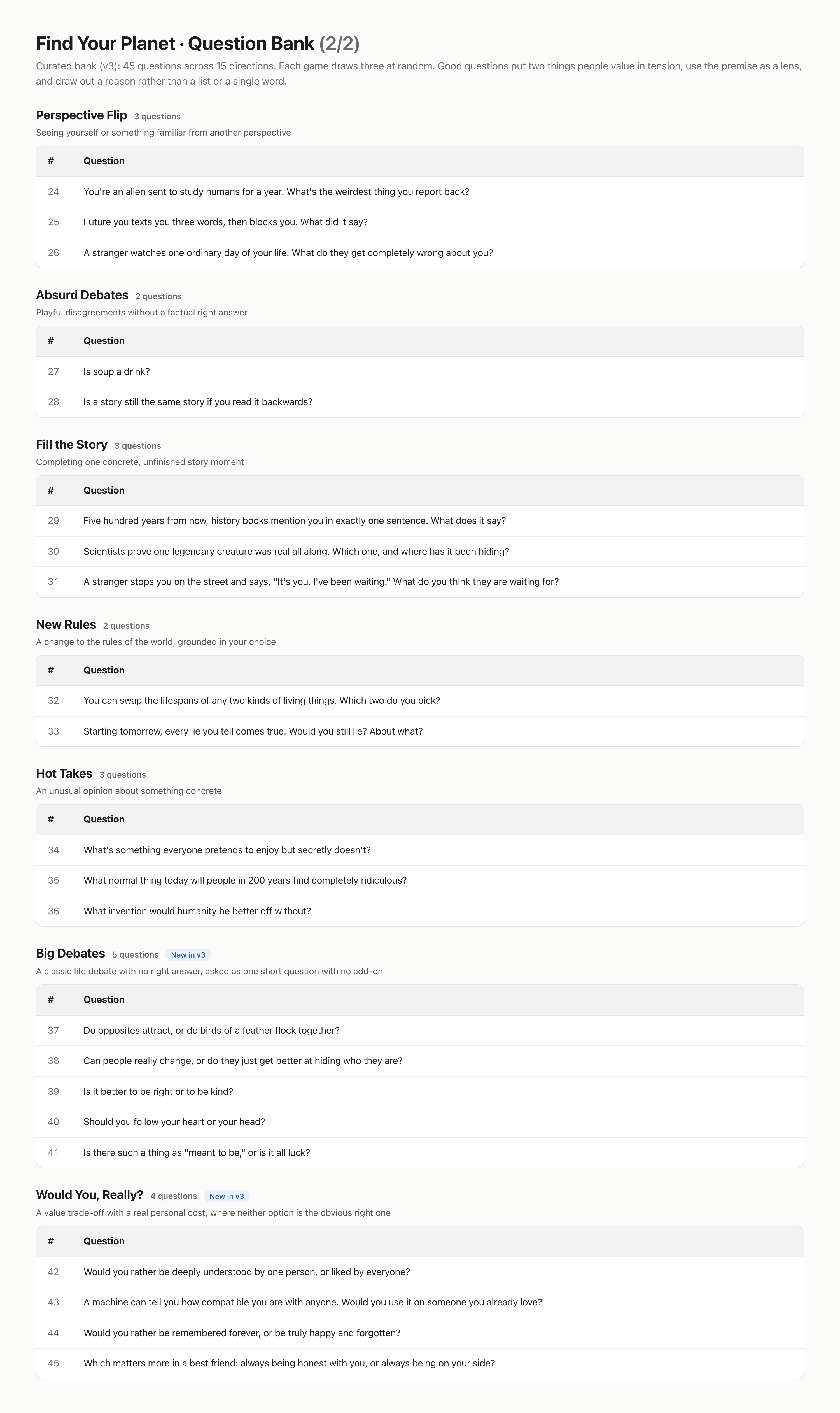
We also created 45 human-curated questions that encourage imagination and reveal how players approach choices.
Challenges We Faced
Finding the Right Direction
We had many creative ideas during brainstorming, but it took time to pivot toward a concept that truly fit the “Fly Me to the Moon” theme.
Refining the AI Experience
We spent significant time tuning the game’s AI prompts to generate more engaging summaries, pass our evaluation tests, and resolve unexpected errors.
Designing a Real-Time System
Building the app as a real-time system introduced us to a new architecture, making the design process both challenging and exciting.
What We Learned
We learned that similarity is more than matching words. Different examples can express the same instinct, while identical choices can come from very different motivations.
We also learned that an honest “not enough evidence” can be more meaningful than a confident but unsupported judgment.
Most importantly, the explanation matters more than the number. The distance creates curiosity; the interpretation gives players something to talk about.
What’s Next
We want to improve the AI’s ability to find subtle common ground, add dynamically generated questions, and build a personal star map where players can save meaningful encounters.
Our goal remains the same: to help two people briefly enter each other’s worlds.
Built With
- supabase
- typescript
- vercel
- vite

Log in or sign up for Devpost to join the conversation.