-
-
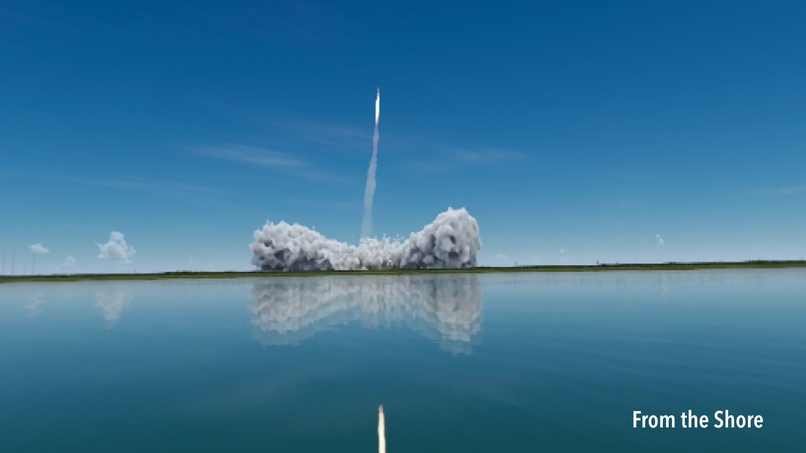
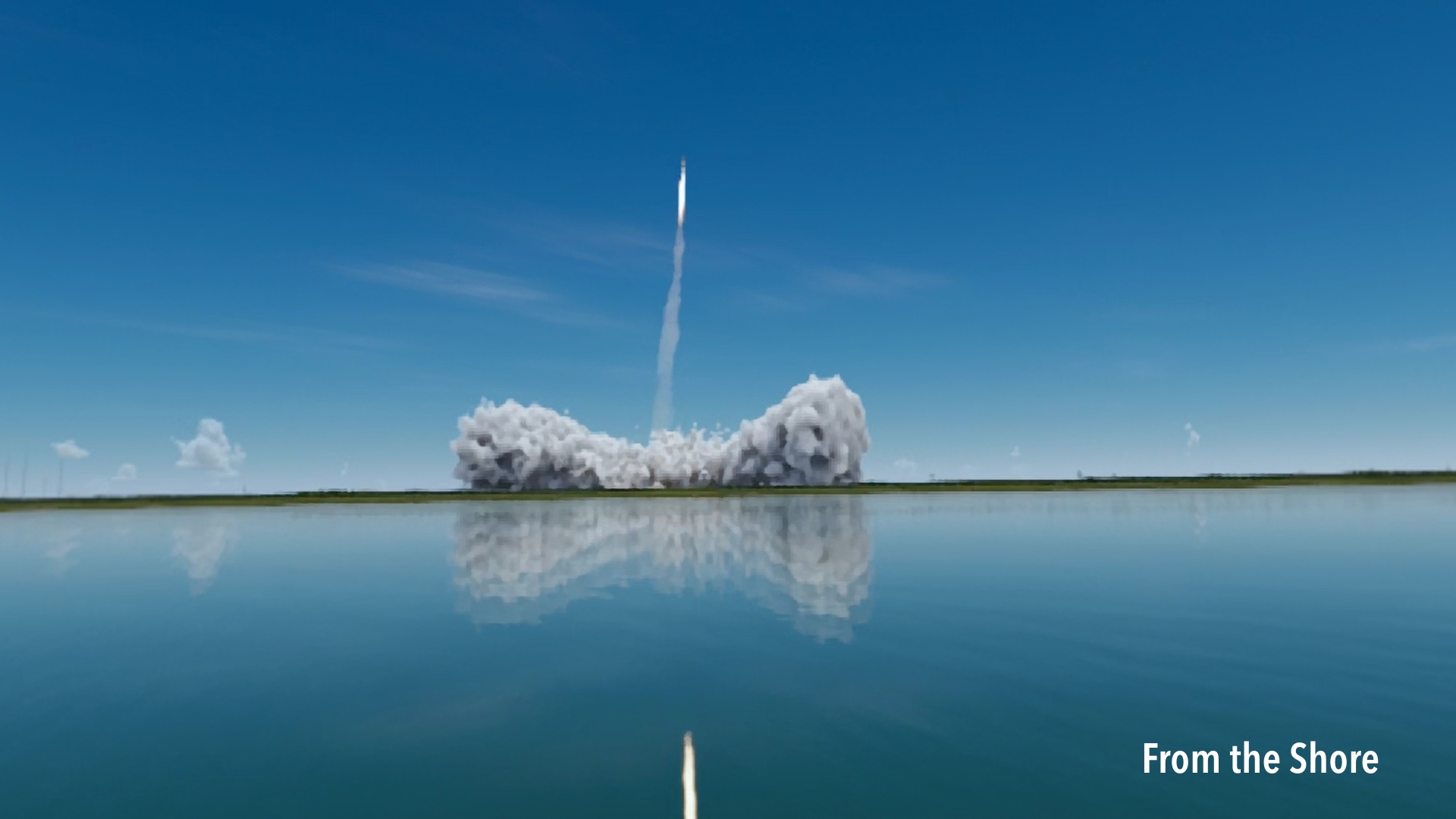
Liftoff, seen from the shore
-
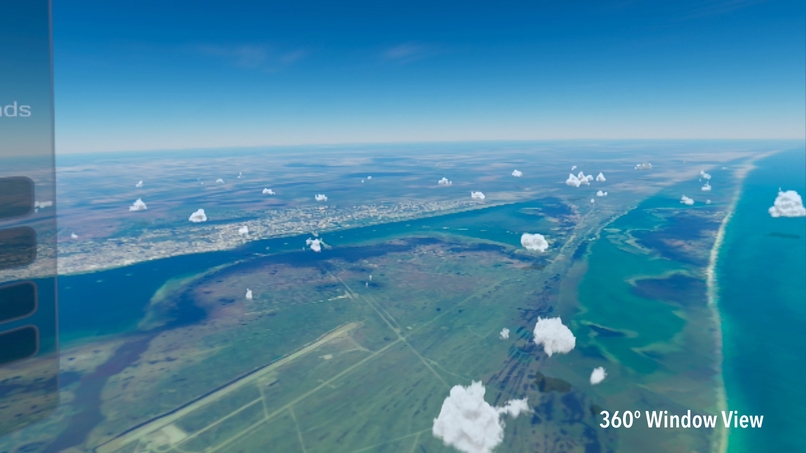
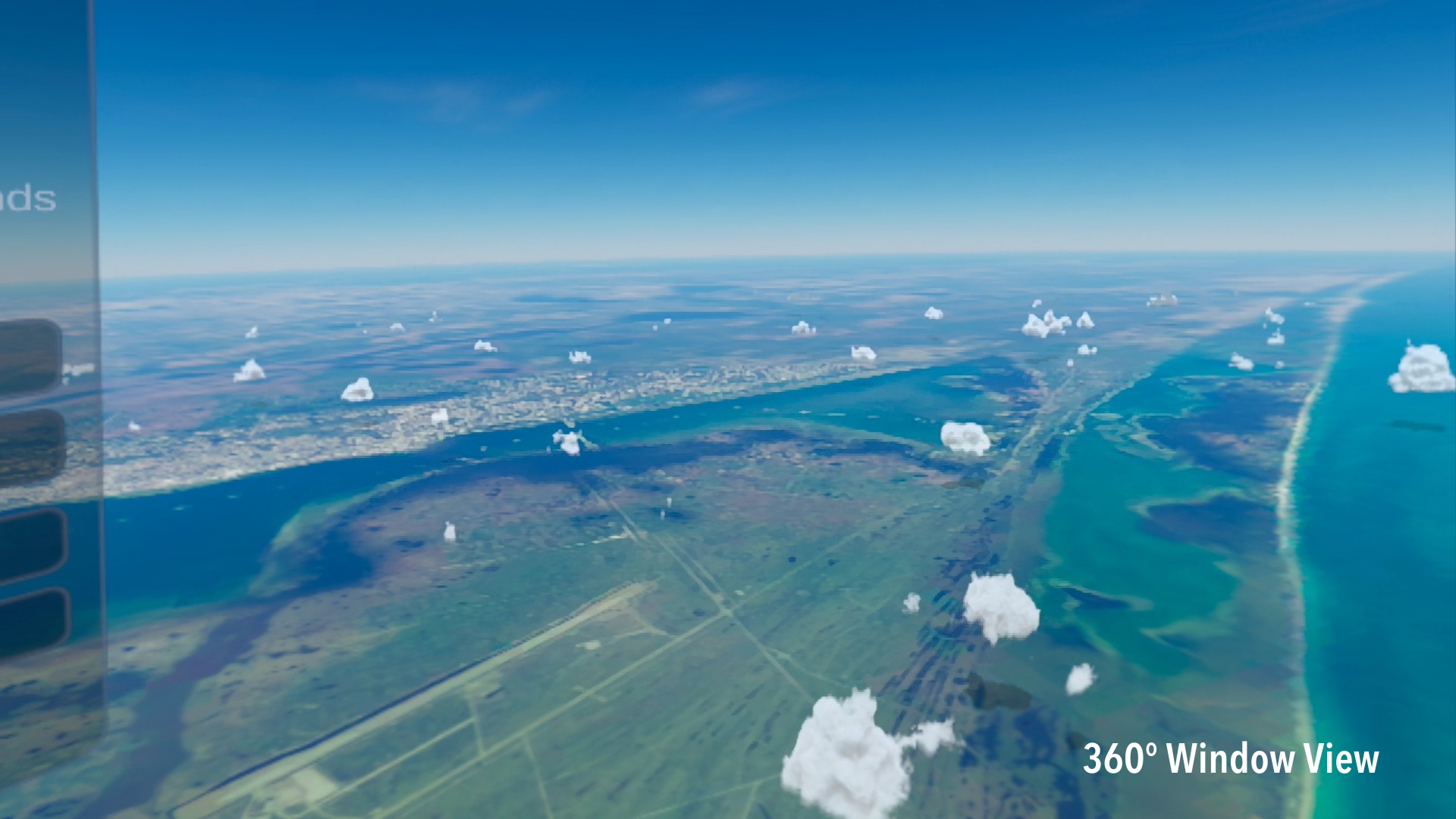
Just after liftoff, from the 360° window
-
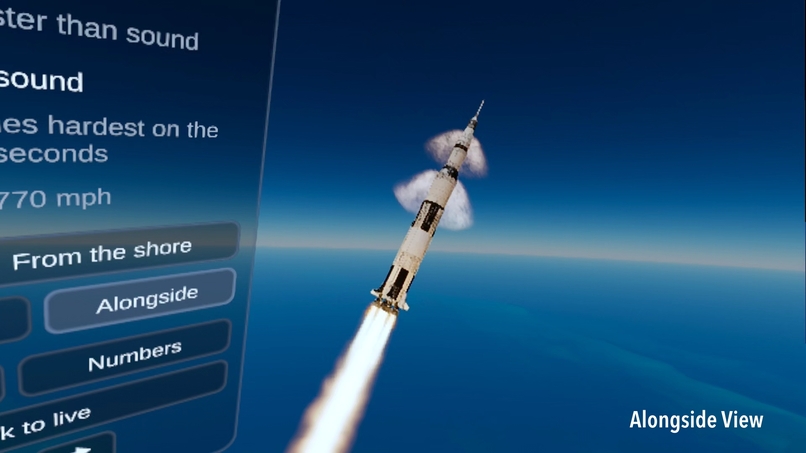
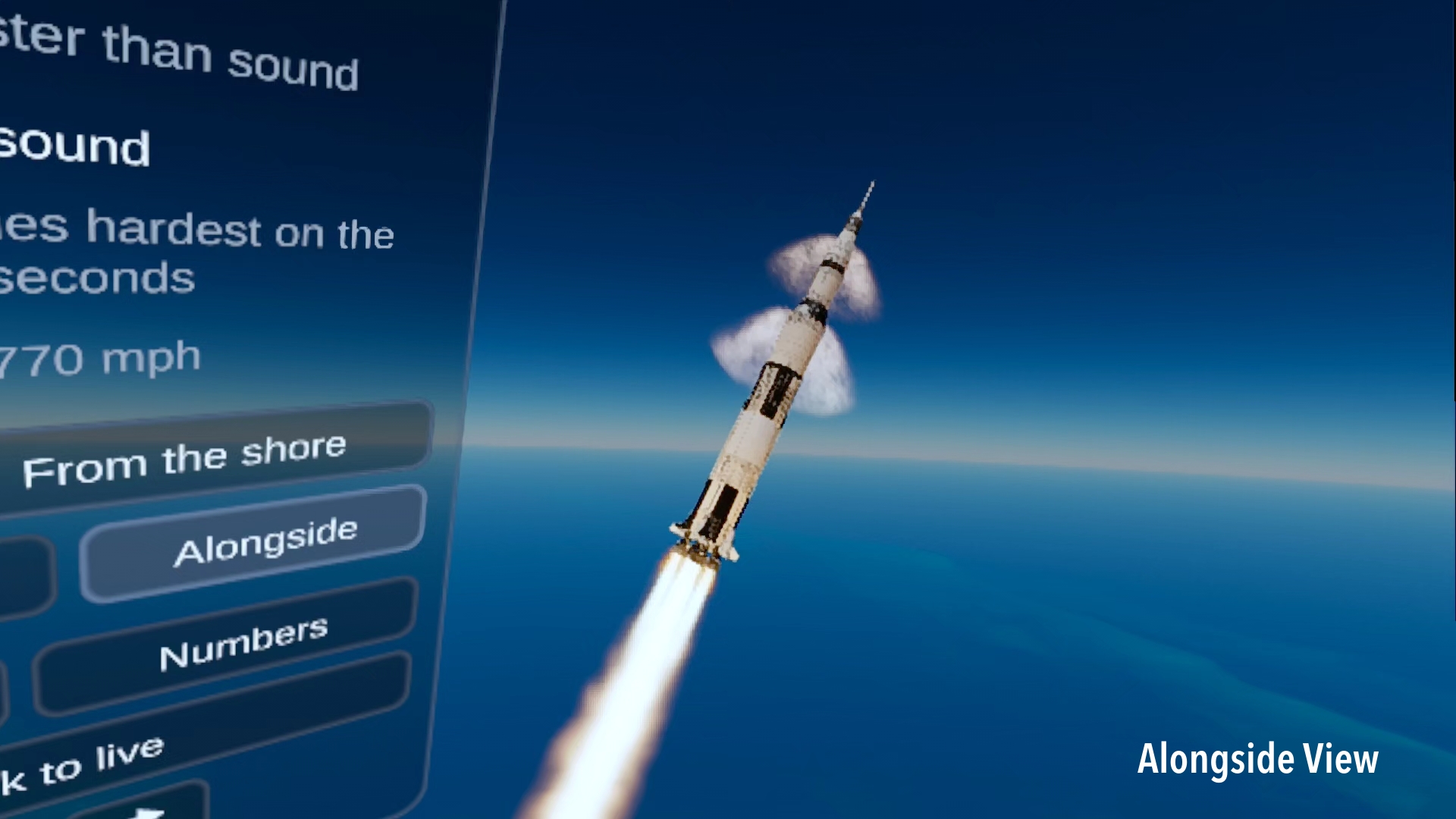
The rocket climbing, from the camera alongside
-
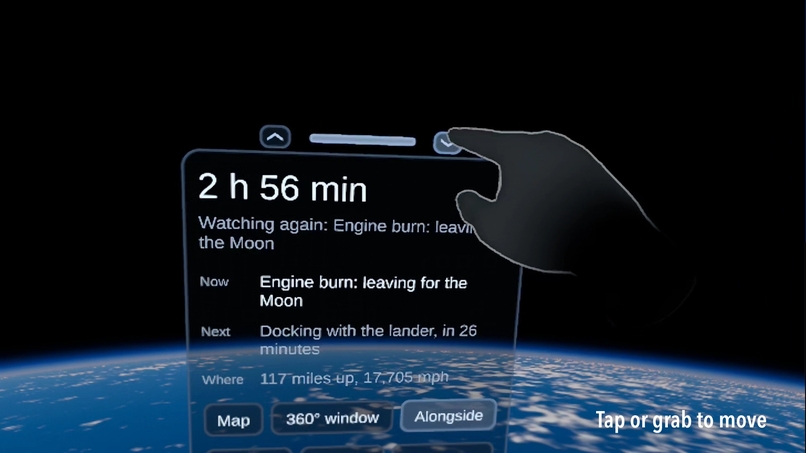
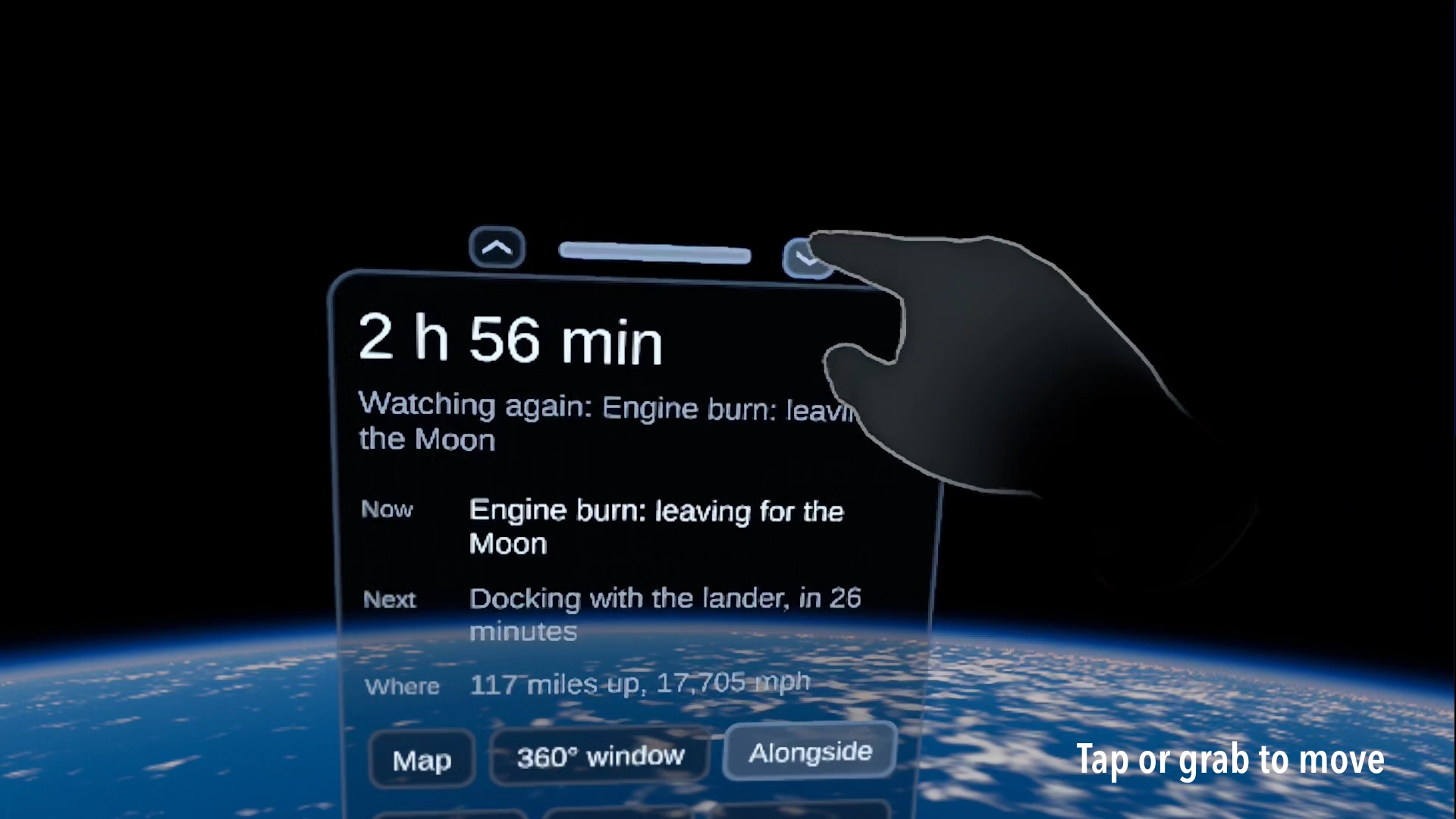
Tap or grab to move the card
-
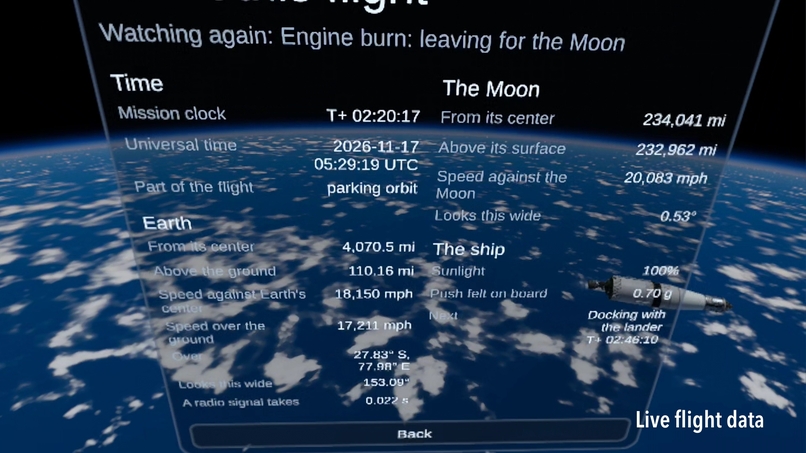
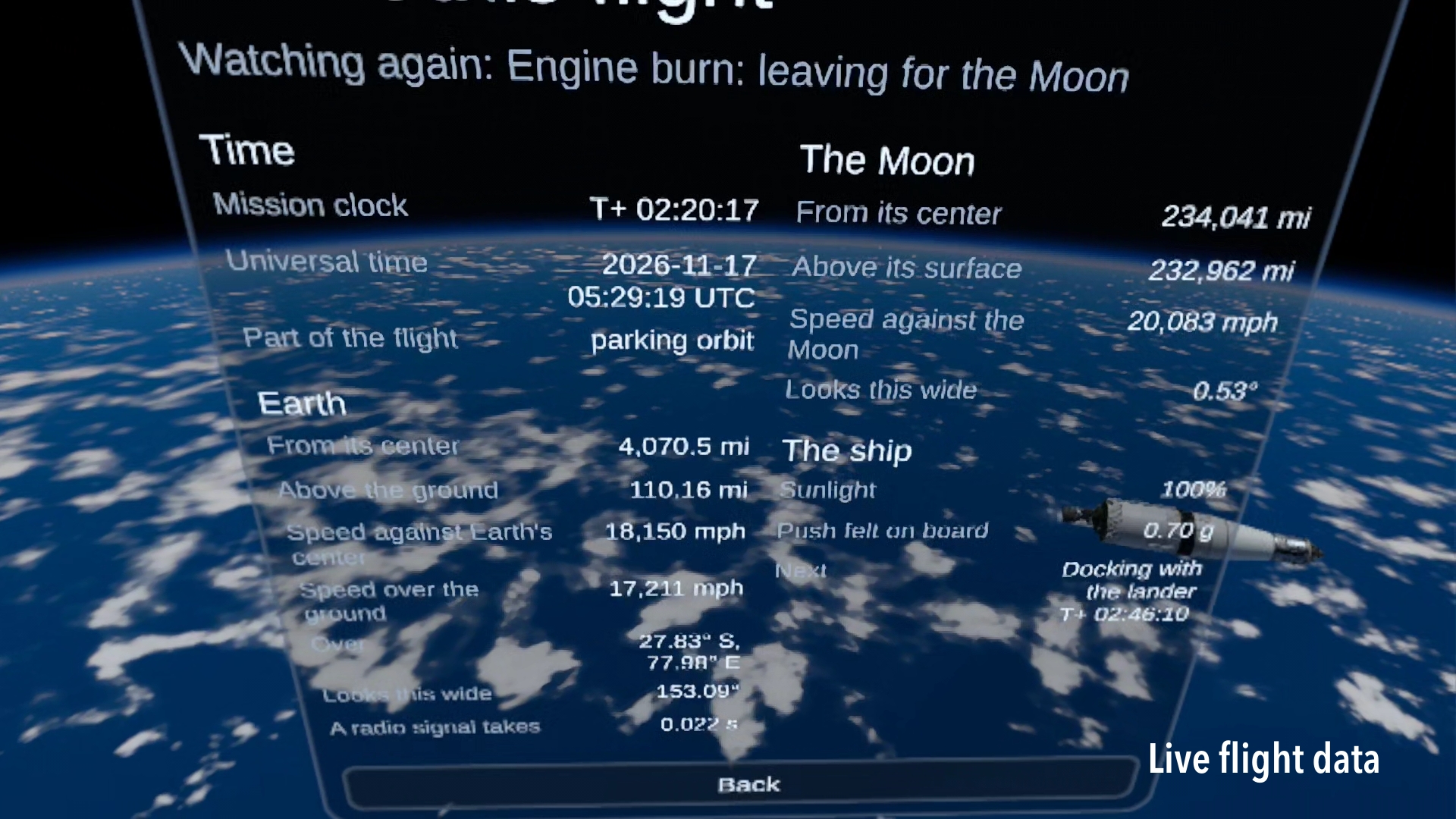
Flight data in real time
-
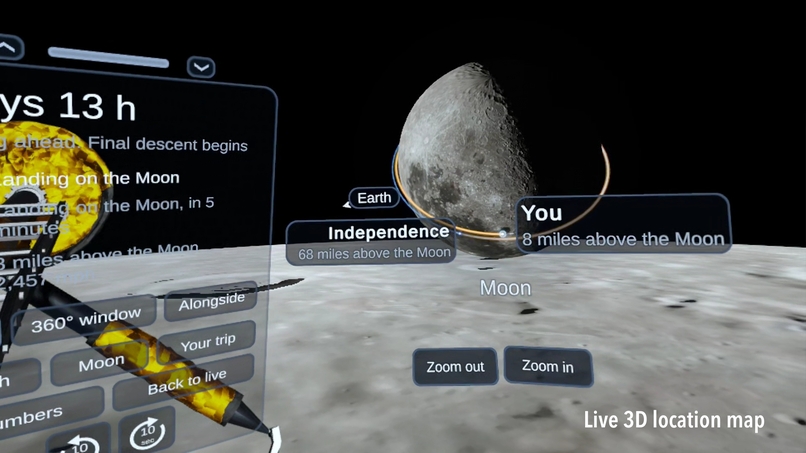
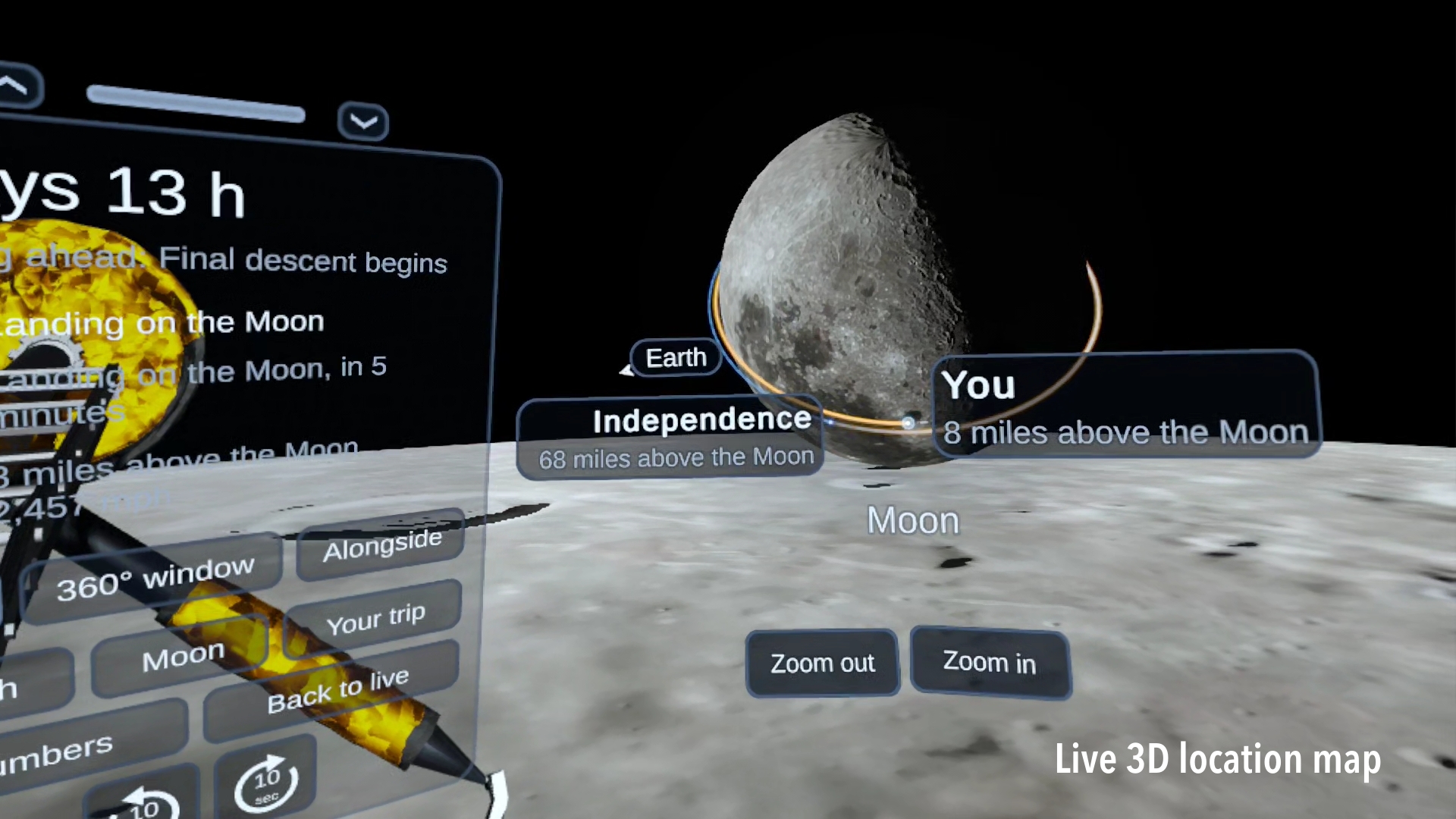
A live 3D map of where you are
-
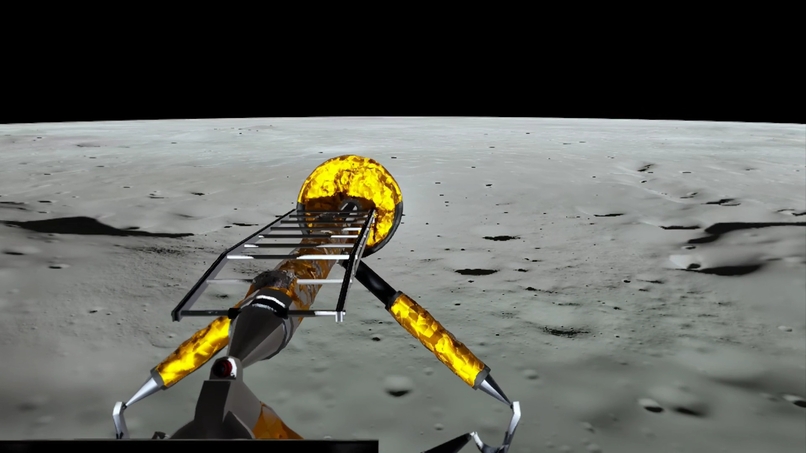
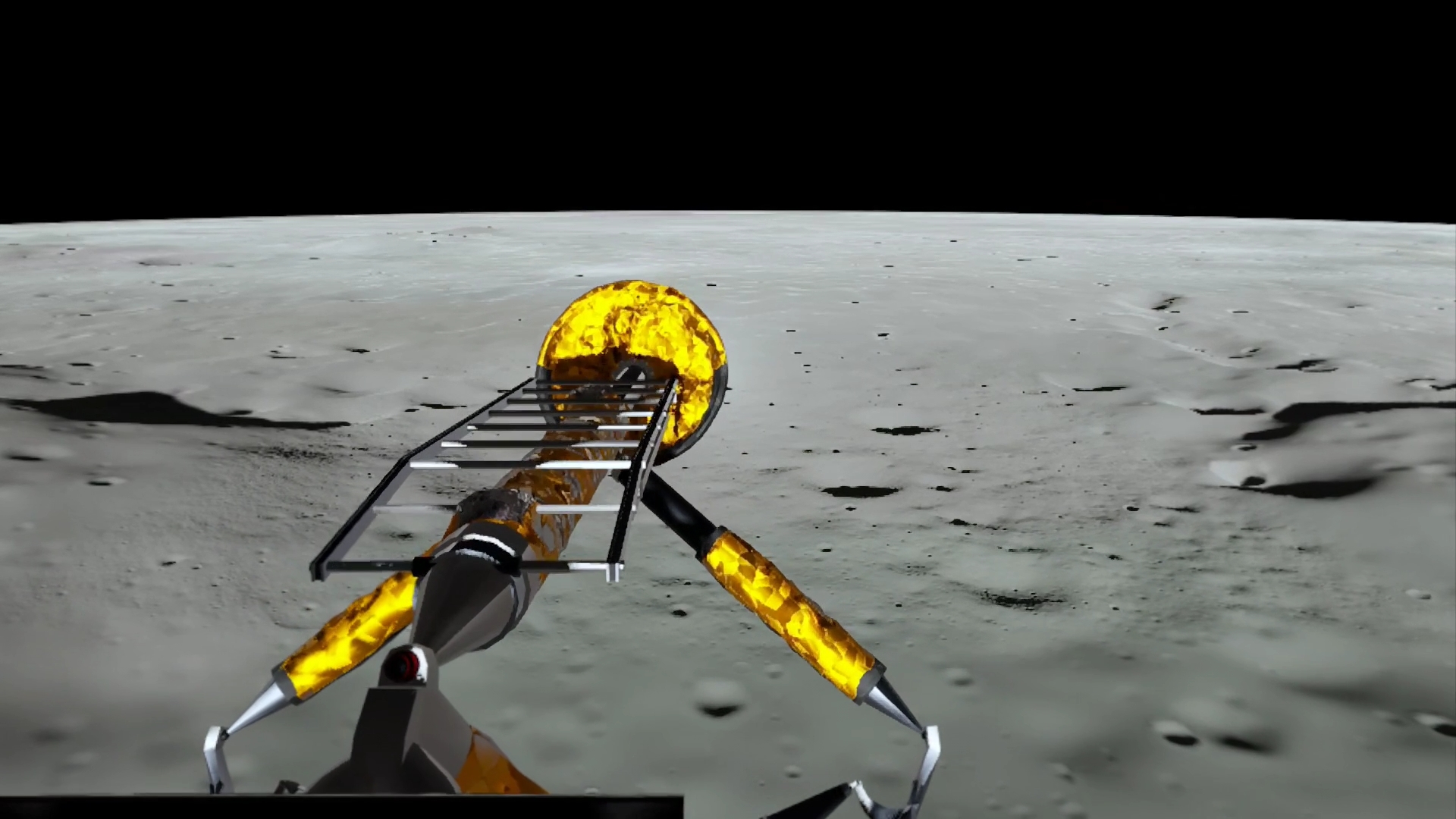
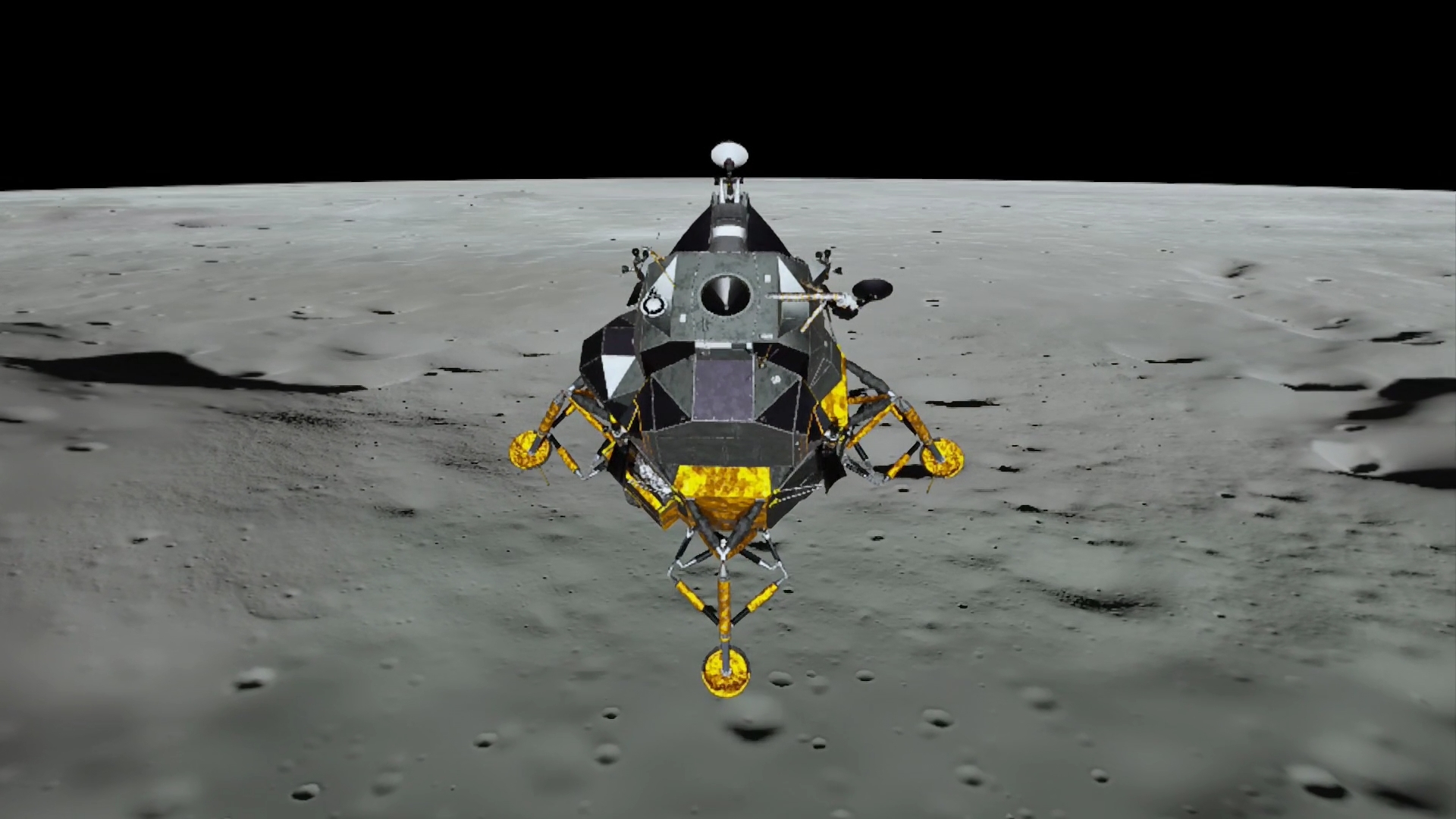
Landing on the Moon
-
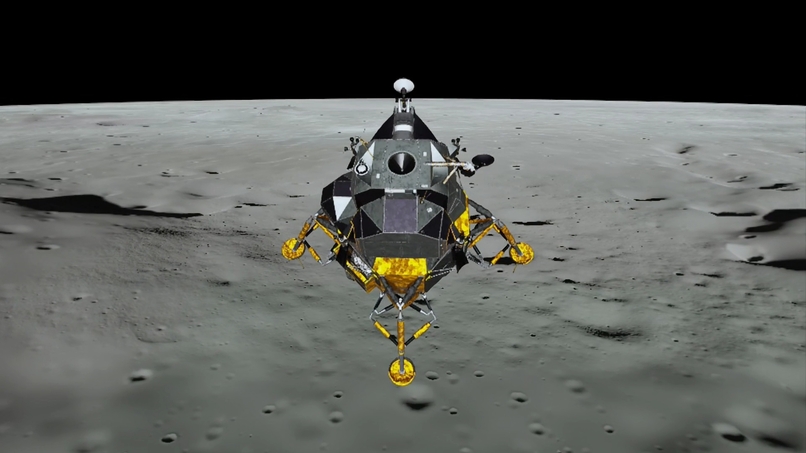
Landing on the Moon
-
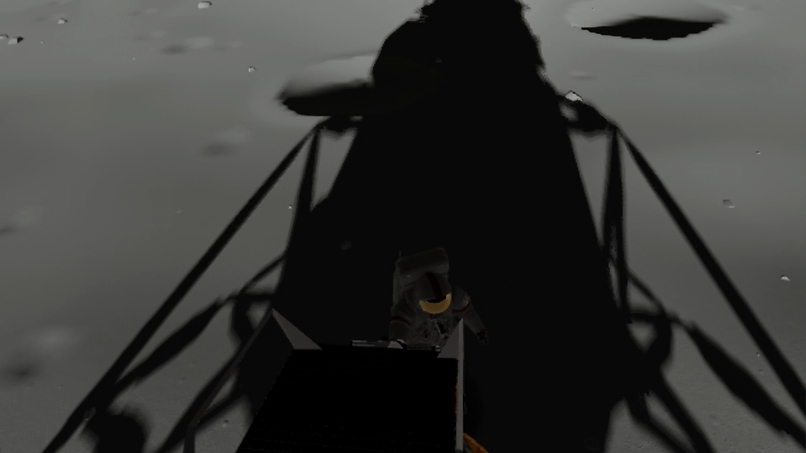
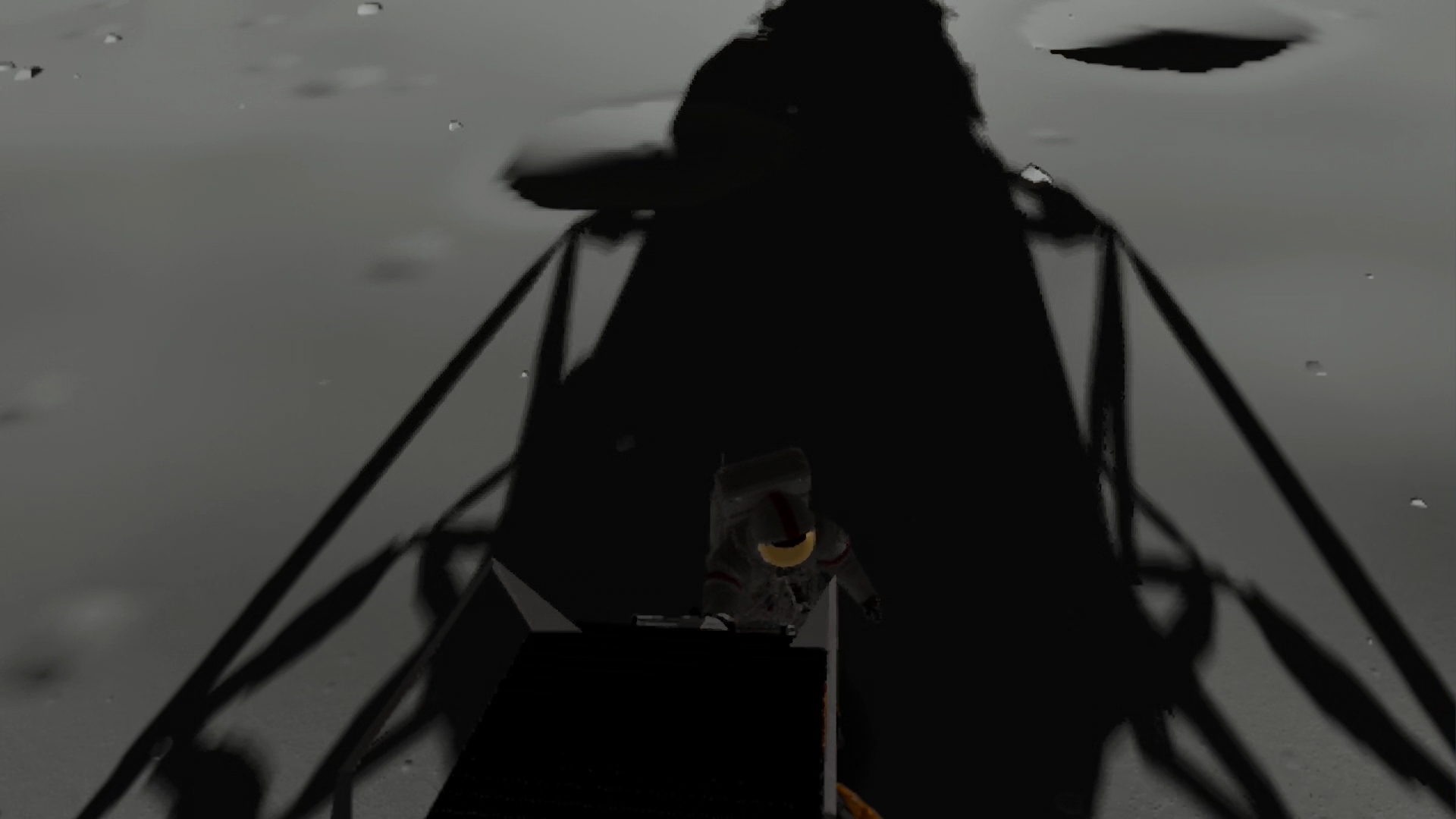
Touchdown
-
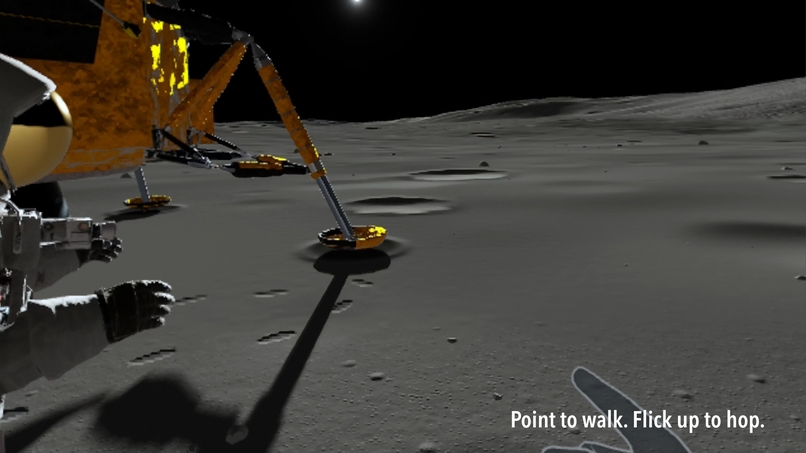
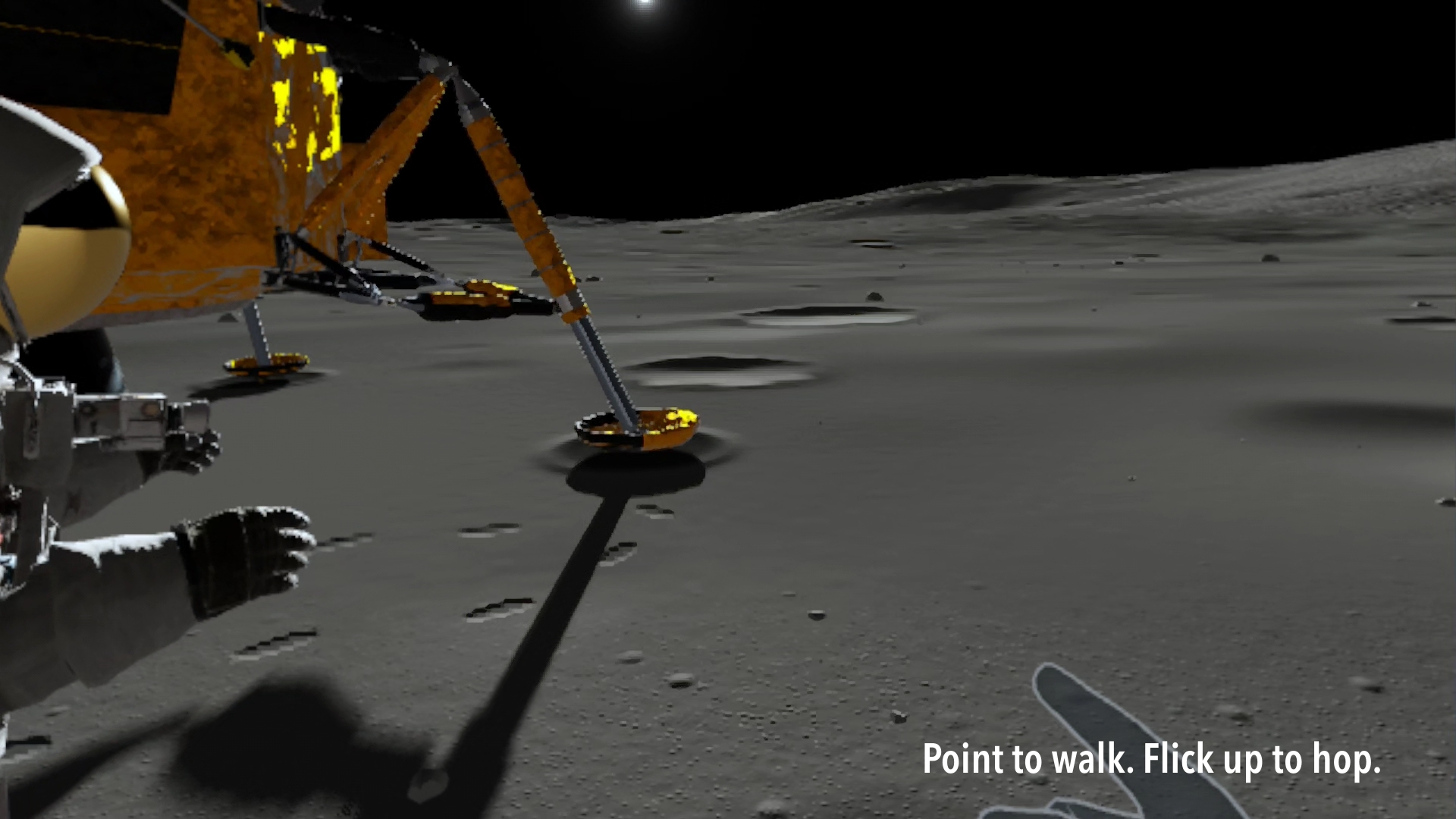
Point to walk, flick up to hop
-
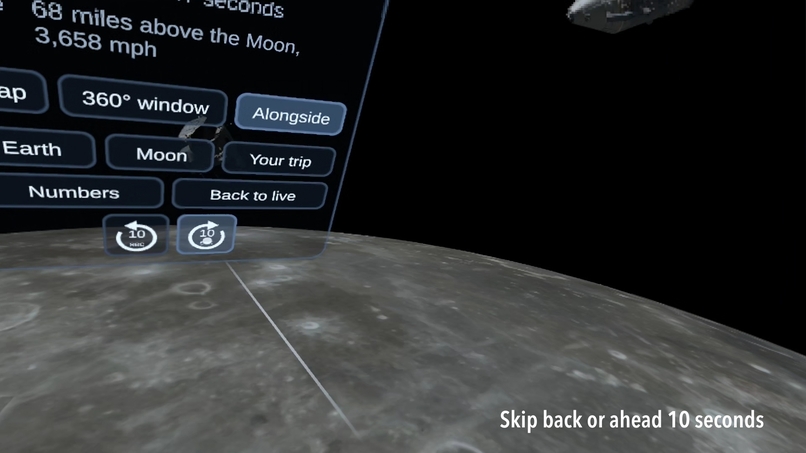
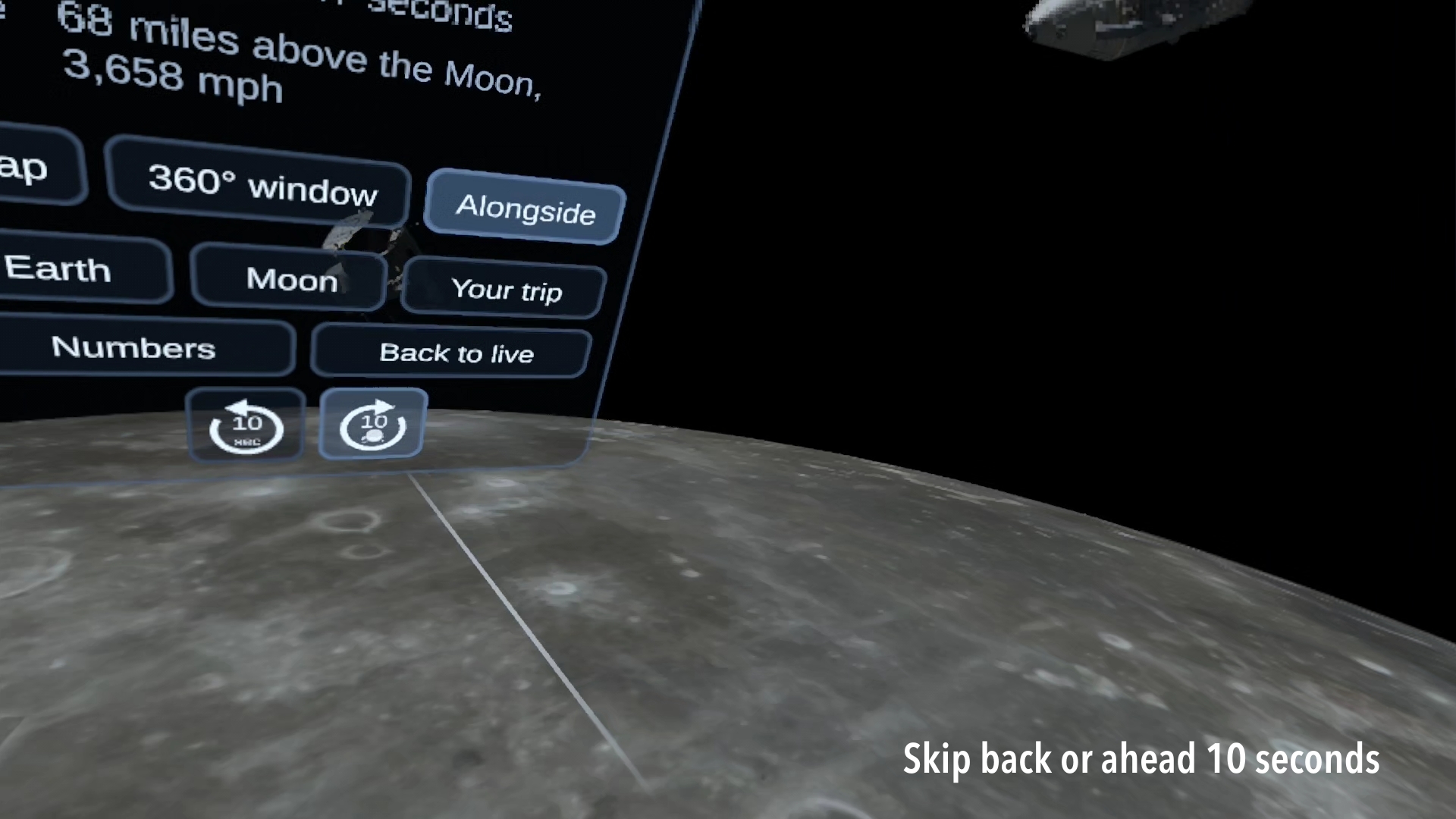
Skip back or ahead 10 seconds
-
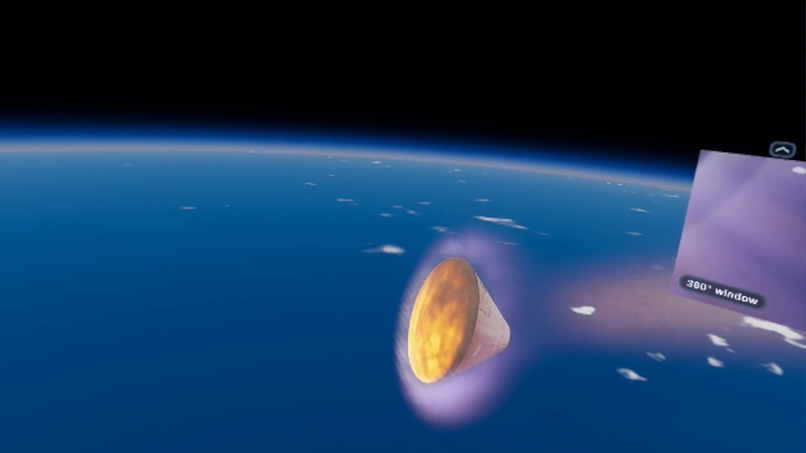
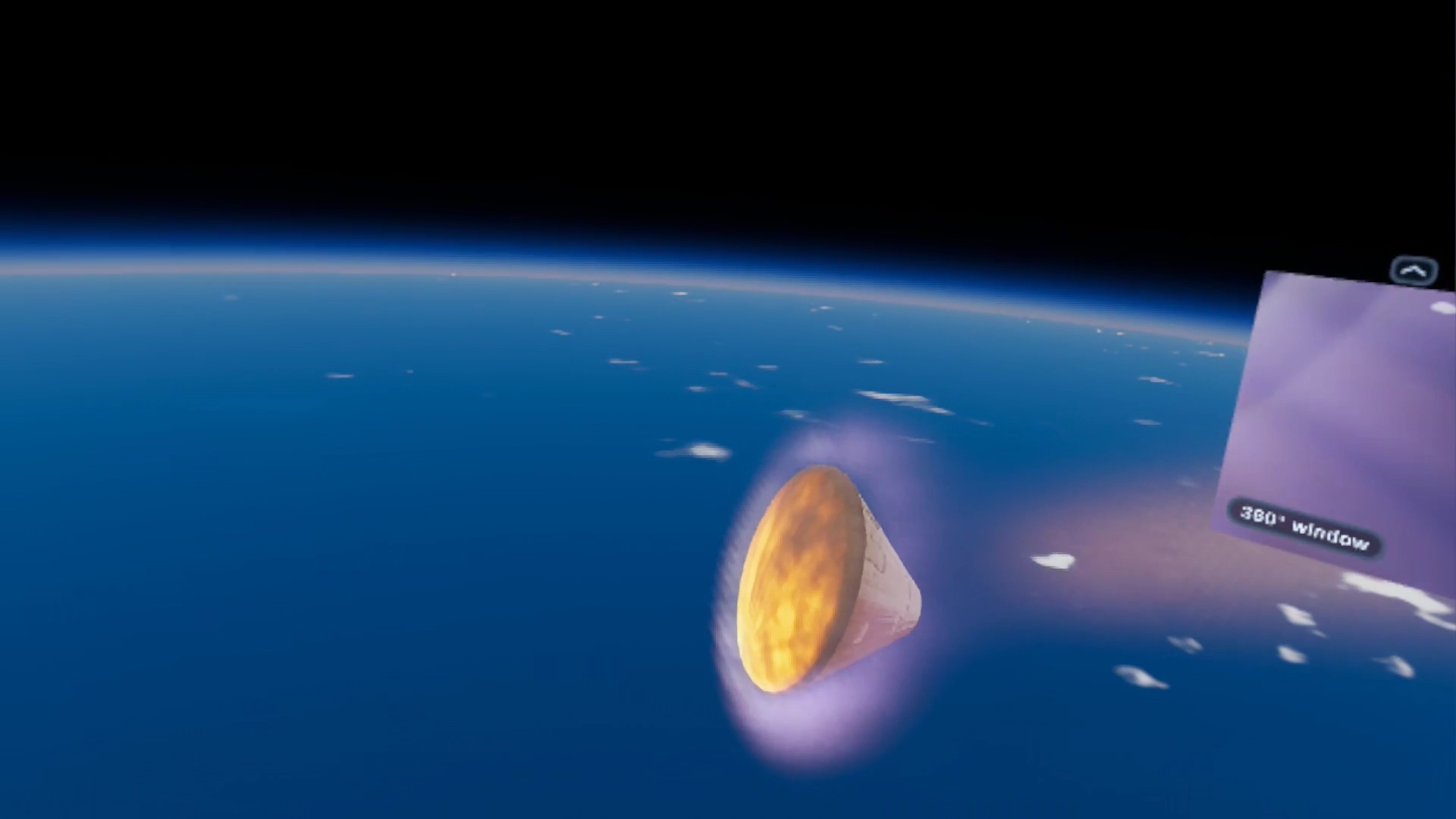
Earth re-entry
-
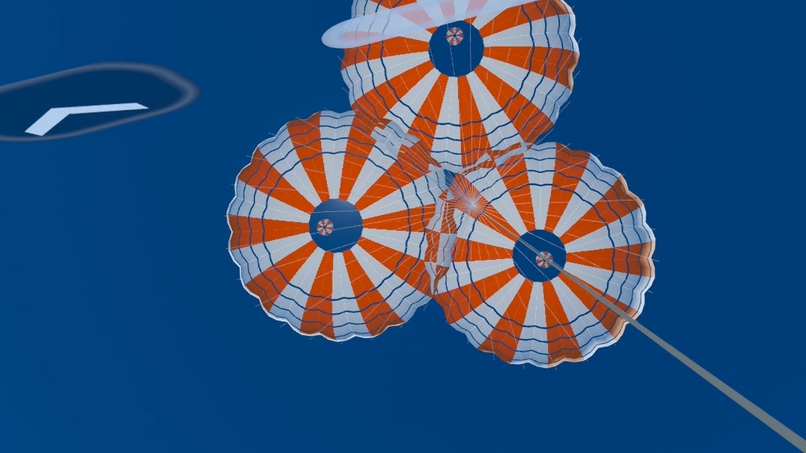
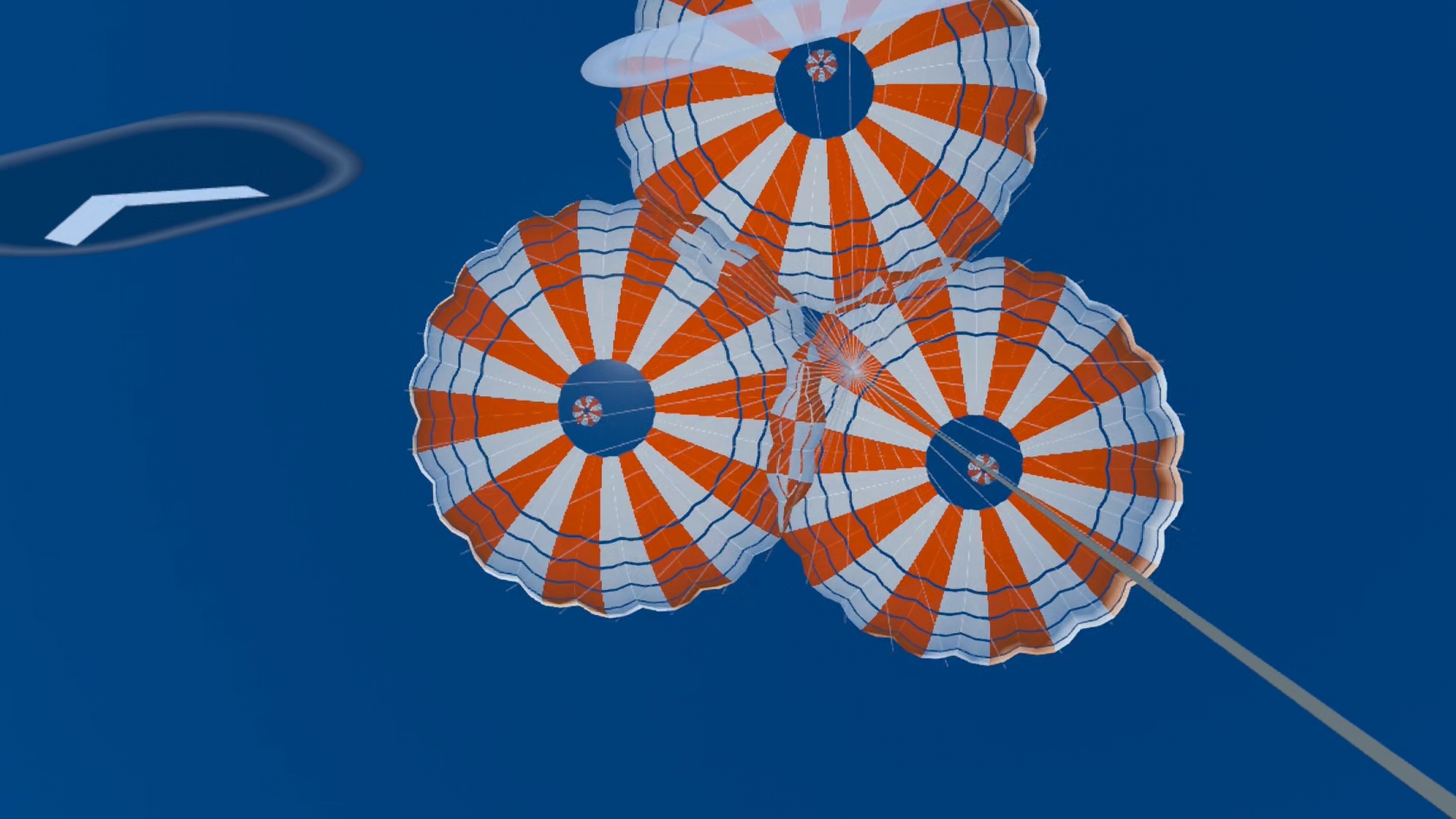
Parachutes open over the Pacific
-
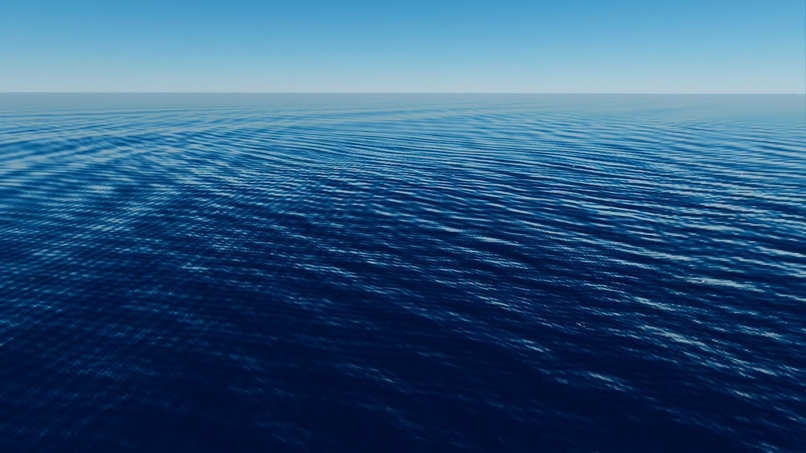
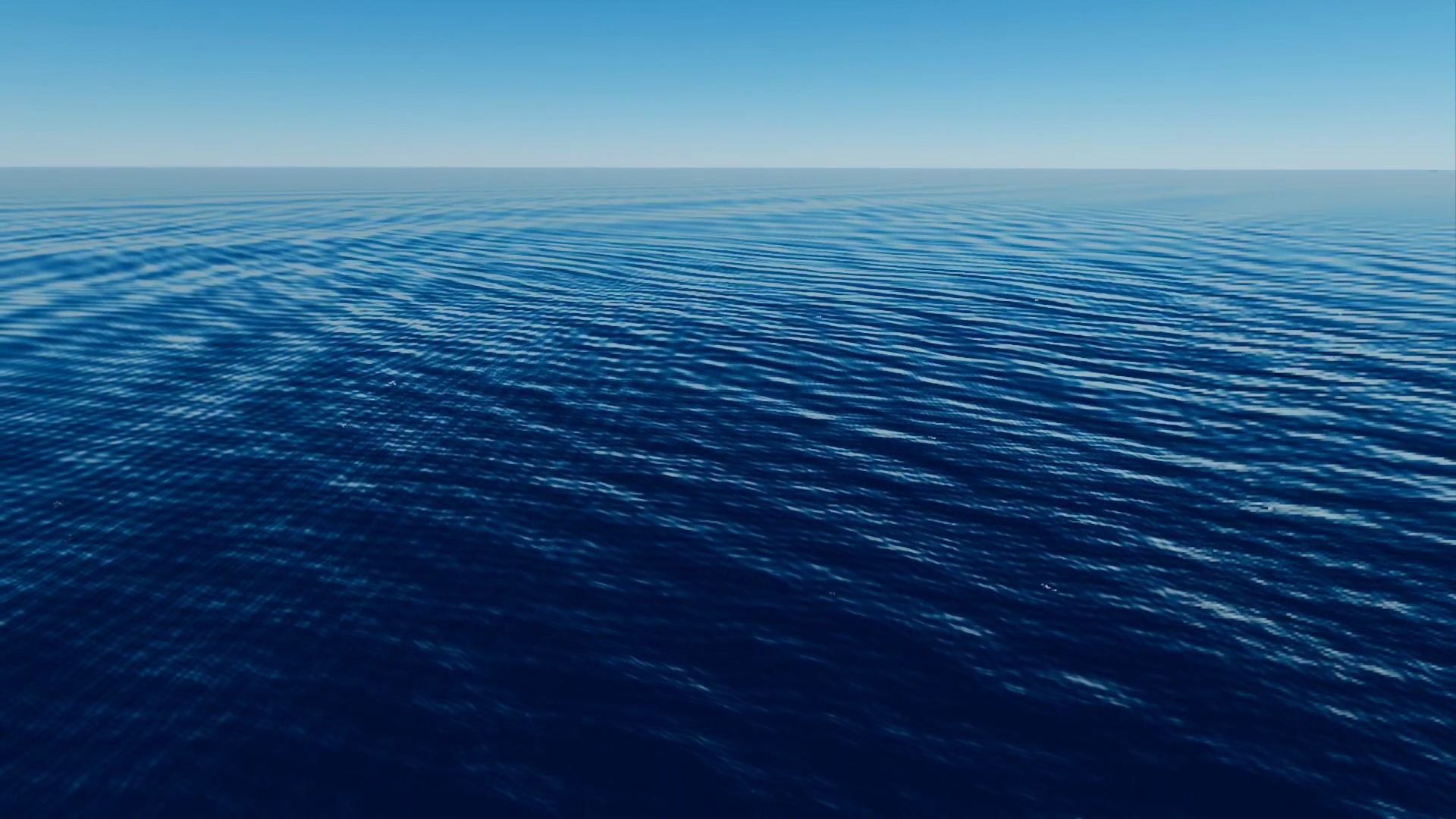
Moments before splashdown
Inspiration
Space has fascinated me for as long as I can remember. I've always wondered what it would actually feel like to travel to the Moon, not just the launch or landing, but the whole journey. So, for this hackathon, I decided to try building it. VR felt like the right way to experience that kind of distance and scale.
What it does
Moon Journey takes you from liftoff to splashdown over about eight days, in real time. The mission keeps going even when you take off your headset.
You're the Mission Specialist in a crew of three. I wanted people to be able to look around freely, so I added a 360-degree window view, plus a smaller side window for other views such as From the Shore and Alongside.
Around day four, you descend to the Moon with the commander, then step outside and walk on the surface. You don't need controllers. Point a finger to walk and turn, then flick your wrist to hop. "Your trip" lets you replay anything you missed.
And if you're a space or science geek, detailed flight data is at your fingertips in real time.
FOR THE HACKATHON JUDGES: The "Your trip" section lets you jump to any major moment, past or future, so you can evaluate the app quickly. When the app launches on the Meta Horizon Store, the public version will follow the real clock, with the ability to replay past moments only.
How we built it
I built Moon Journey in Unity 6 using Meta's XR Core and Interaction SDKs, with custom shaders for the sky, ocean and Moon's surface. A mission generator written in Python uses JPL position data to calculate each flight. The Earth imagery comes from NASA, and the Moon's terrain uses NASA and JAXA data. Over 2,000 lines of radio dialogue are voiced with ElevenLabs. I purchased the 3D models of the Saturn V, the command and lunar modules, the launch tower and the spacesuit.
I tried to keep the trip as scientifically accurate as I could. In the Alongside view, the spacecraft becomes silent once it crosses the Kármán line.
Challenges we ran into
Performance was the hardest part. The atmosphere, clouds, launch smoke and ocean are drawn pixel by pixel, not made from simple 3D shapes. I changed the launch so that the smoke, the ground around the pad and Earth below are calculated once and reused. Lighting also took a lot of trial and error. The bright Sun, the Moon's sunlit surface and faint stars can all be in the same view. Expose for one and the others wash out or disappear, so the exposure has to adapt the way your eyes would.
Accomplishments that we're proud of
I'm happy that the whole journey is there, from launch pad to splashdown, and that it can be experienced using just your hands. You can start at any hour, and the launch matches the local time at Cape Canaveral.
All 34 major moments of the journey turned out the way I'd hoped. One of my favorite moments is the landing. I've watched it countless times while testing, and that last mile above the Moon feels calm yet exciting every single time!
What we learned
A 360-degree window view still needs a floor. What made it work was a single dark disc under your seat. Without it, you feel like you're floating beside the rocket.
A few seconds of black is a long time in a headset, so an "Acquiring signal" screen covers the brief moment a new scene takes to load.
And a real-time journey only works if you can catch up on what you missed. Being able to replay those moments is what makes a journey lasting about eight days something worth coming back to.
What's next for Moon Journey
More polish first. Better anti-aliasing and more headroom in the frame budget for heavier scenes. Then the Meta Horizon Store. After that, I'd like to add the lunar rover so people can drive across the Moon as well as walk on it.
I hope people have as much fun experiencing it as I've had building and testing it!

