
Inspiration
Online shopping platforms are designed to maximize user engagement and encourage spending through personalized recommendations, one click purchasing, targeted advertisements, and seamless checkout experiences. While many budgeting applications exist, most function only as passive tracking systems that record expenses after purchases have already been made. This reactive approach does not effectively help users control impulsive spending behaviors or make better financial decisions in real time. Many individuals, especially students and young adults with limited or fixed incomes, struggle to stay within discretionary spending limits across categories such as entertainment, shopping, and leisure. Existing financial tools rarely integrate directly into the user’s browsing experience, which means there is little intervention at the exact moment purchasing decisions occur.
Another major limitation of traditional budgeting platforms is the lack of behavioral enforcement features. Most systems rely heavily on manual expense entry, delayed financial summaries, or notification based reminders that users can easily ignore. They typically do not provide active restrictions when spending limits are exceeded, nor do they offer automated methods for detecting purchases during online shopping sessions. As a result, users often continue spending beyond their intended budgets before realizing the long term financial impact.
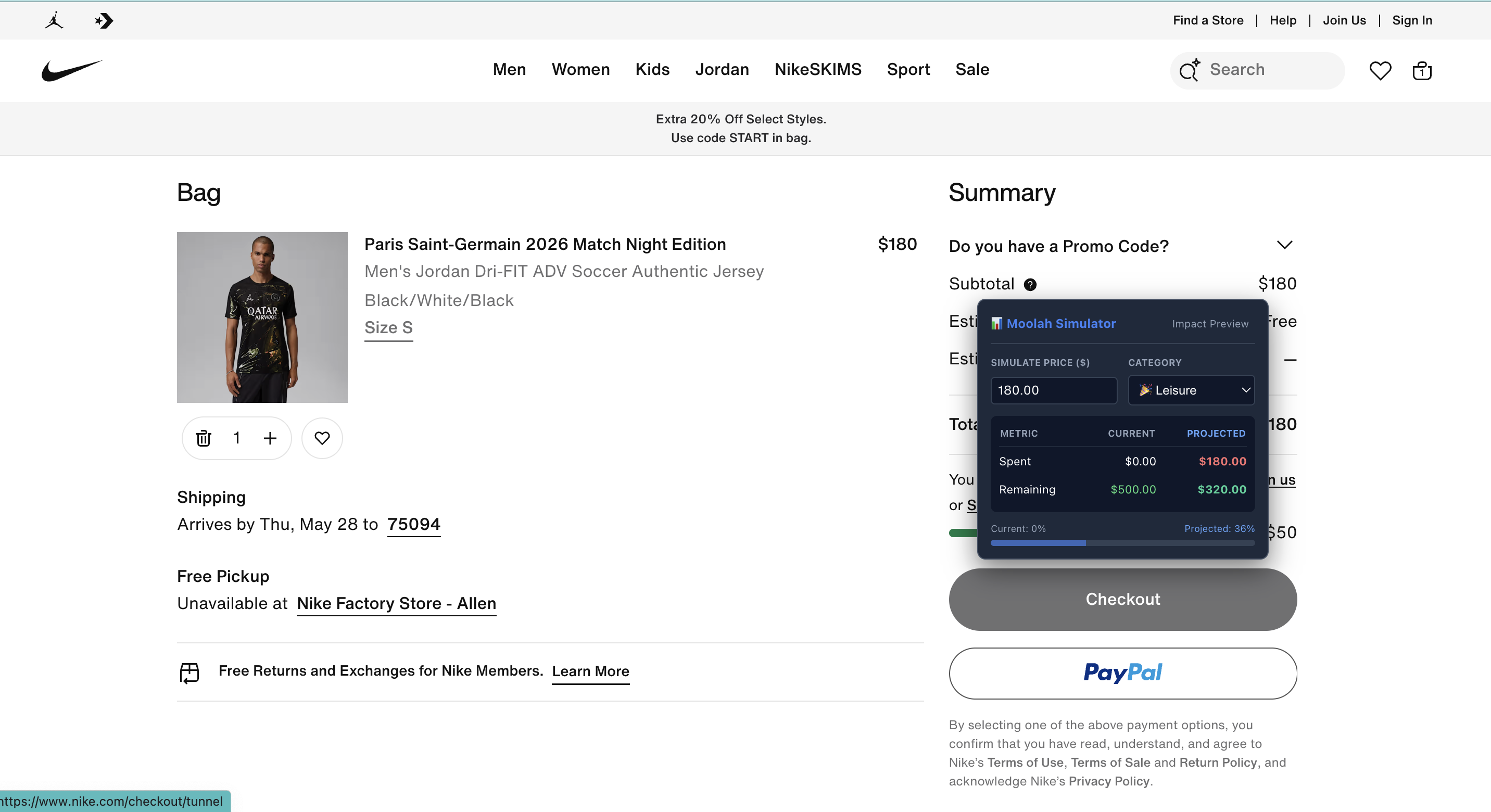
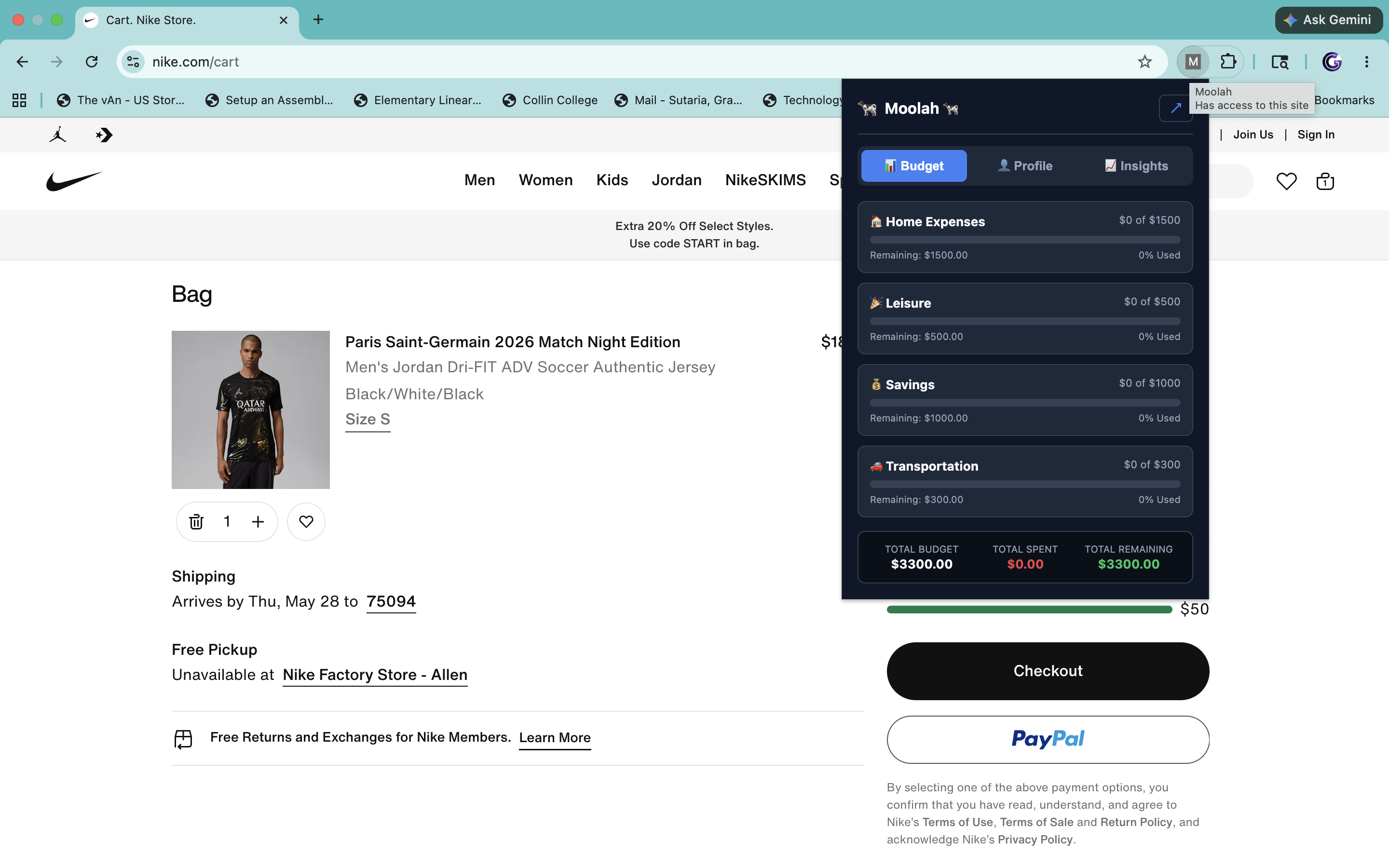
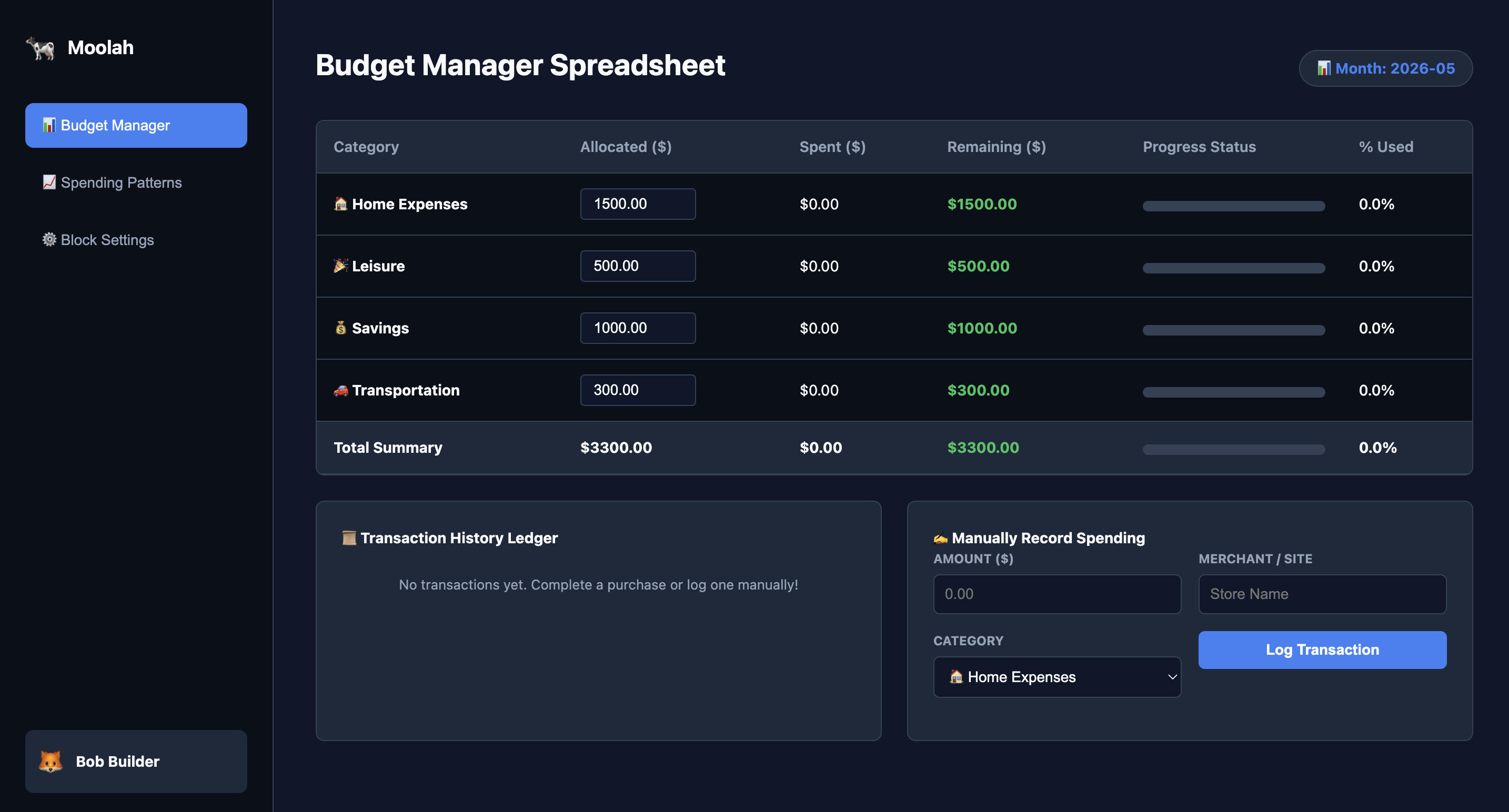
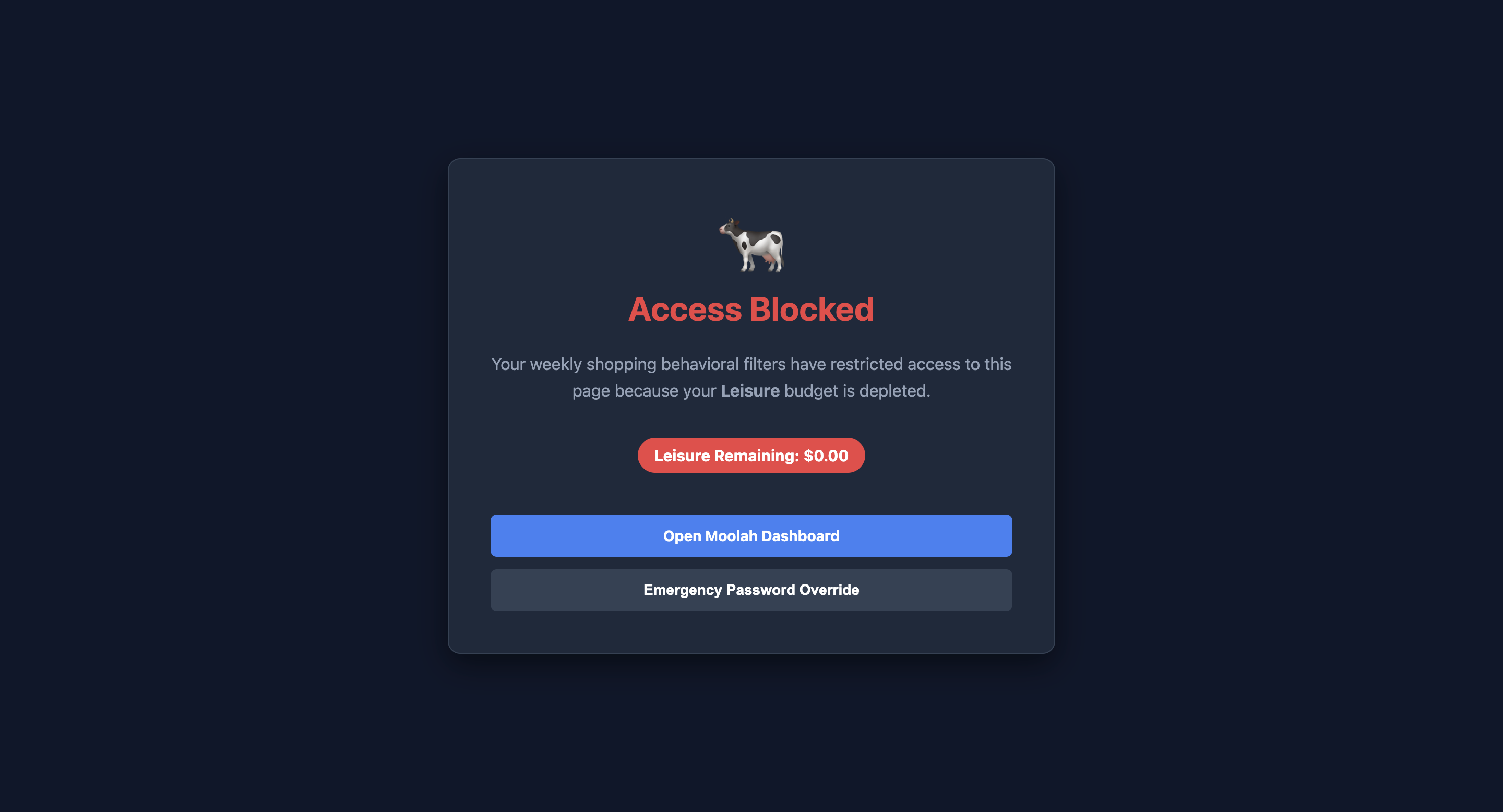
Moolah was developed to address these issues by integrating personal finance management directly into the browser environment through a Chrome Extension built with the Manifest V3 API. The extension functions as both a budgeting assistant and a behavioral intervention system that actively monitors spending activity while users browse the web. BudgetGuard allows users to define monthly budget allocations across categories such as home expenses, leisure, savings, and transportation. When discretionary spending limits are exceeded, the extension can temporarily block access to configured shopping websites and disable common purchasing elements such as “Add to Cart,” “Buy Now,” and “Checkout” buttons.
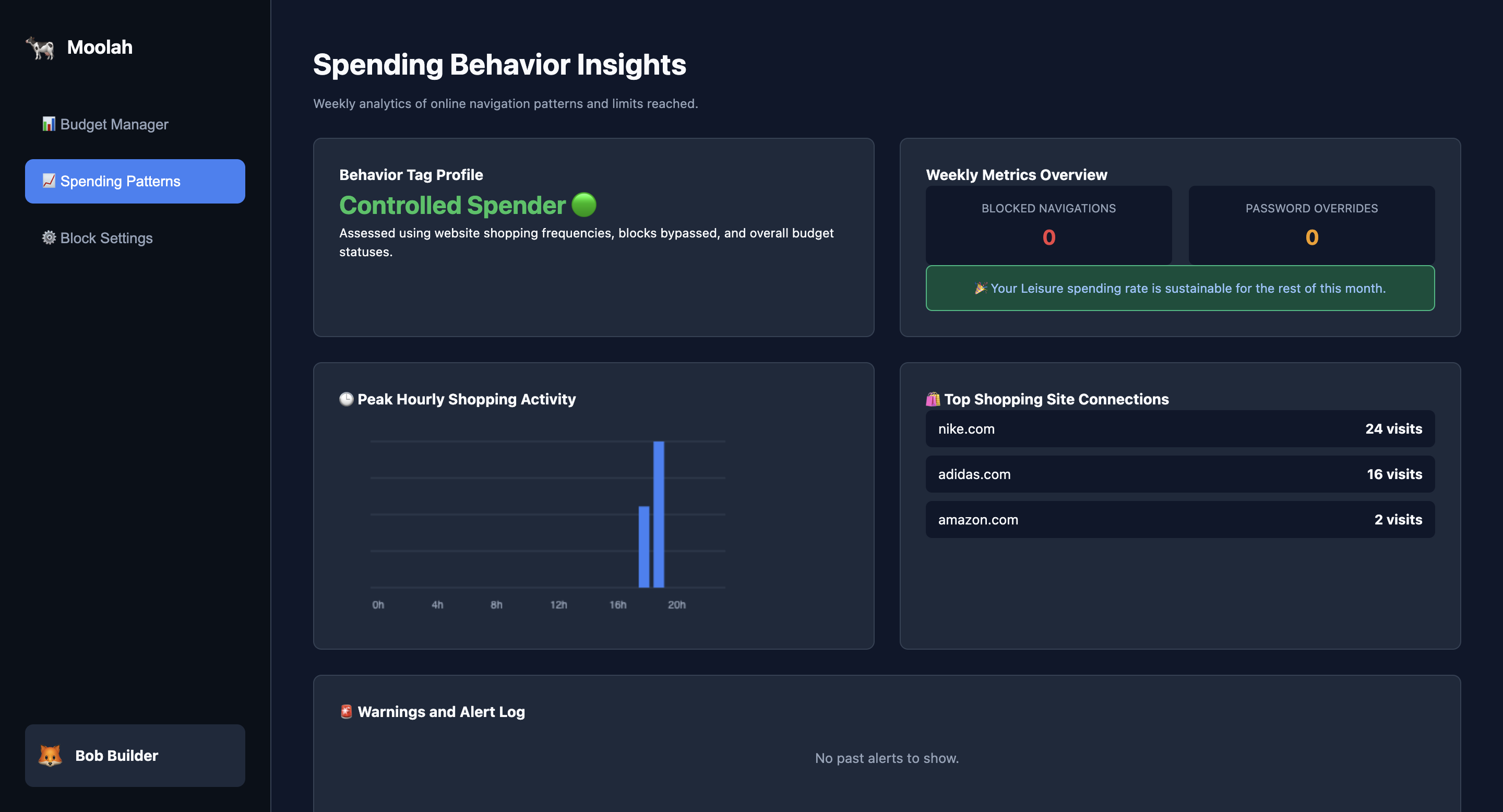
In addition to spending restrictions, Moolah includes automated receipt parsing functionality that detects purchase confirmation pages and extracts pricing information to update budgets dynamically. The system also tracks browsing trends and spending activity to generate interactive analytics and behavioral reports within a full screen dashboard interface. By combining real time financial monitoring, browser based behavioral interventions, automated transaction tracking, and visual analytics into a single platform, BudgetGuard aims to help users develop stronger spending discipline and make more informed financial decisions before unnecessary purchases occur.
How we built it
We used Gemini AI Studio to generate all of the code for the extension, and we used Gemini for creating prompts to feed into AI Studio.
Challenges we ran into
One challenge was running the extension from AI Studio outputs. We had to manually create directories on our laptop and iterate through fixing the bugs to get a working extension.
Accomplishments that we're proud of
We are proud that we successfully built a fully functional Chrome Extension that combines budgeting tools with real time behavioral intervention features. One accomplishment was implementing dynamic website blocking that activates automatically when spending limits are exceeded. We are also proud of the purchase lock system that visually disables checkout related buttons on shopping websites, creating an immediate spending deterrent directly inside the browsing experience. Another accomplishment was developing an interactive dashboard that displays budgeting data, spending analytics, and browsing behavior in a clean and responsive interface. We also successfully integrated automated receipt parsing and transaction logging, allowing the extension to update budgets dynamically without requiring users to manually enter every purchase. Overall, we are proud that the project moved beyond a traditional budgeting tracker and became a proactive financial management tool.
What we learned
We also learned how AI assisted development tools can accelerate the software development process. By using Google AI Studio and the Gemini model during development, we were able to rapidly prototype features, debug implementation issues, brainstorm architectural ideas, and iterate on UI behavior much faster than traditional workflows alone. At the same time, we learned that AI generated code still requires careful review, testing, and adaptation to fit the specific requirements of a project. Working alongside AI tools helped us better understand how to break problems into smaller components, validate generated solutions, and integrate multiple systems together effectively.
What's next for Moolah
In the future, we plan to expand Moolah into a more intelligent and personalized financial assistant rather than just a browser based budgeting tool. One planned improvement is integrating machine learning features that can analyze spending habits and predict when users are likely to overspend before it happens. We also want to introduce smarter transaction categorization so purchases can automatically be sorted with greater accuracy across different merchants and spending types.
Another future goal is to support mobile synchronization through a companion application so users can manage budgets and receive alerts across both desktop and mobile devices. We also plan to add more advanced analytics, including long term spending trends, financial goal tracking, and personalized saving recommendations based on user behavior. Additional customization features such as scheduled spending limits, temporary cooldown timers for shopping websites, and customizable intervention levels could make the system more flexible for different user preferences.
From a technical perspective, we want to improve scalability and data persistence by moving portions of the analytics system to a secure backend service while still maintaining user privacy and transparency. We are also interested in integrating secure bank transaction APIs to reduce the need for manual tracking and improve budgeting accuracy. Ultimately, our goal is for Moolah to evolve into a proactive financial wellness platform that helps users build healthier spending habits through real time behavioral guidance and intelligent budgeting support.
Built With
- aistudio
- gemini
- javascript

Log in or sign up for Devpost to join the conversation.