-
-
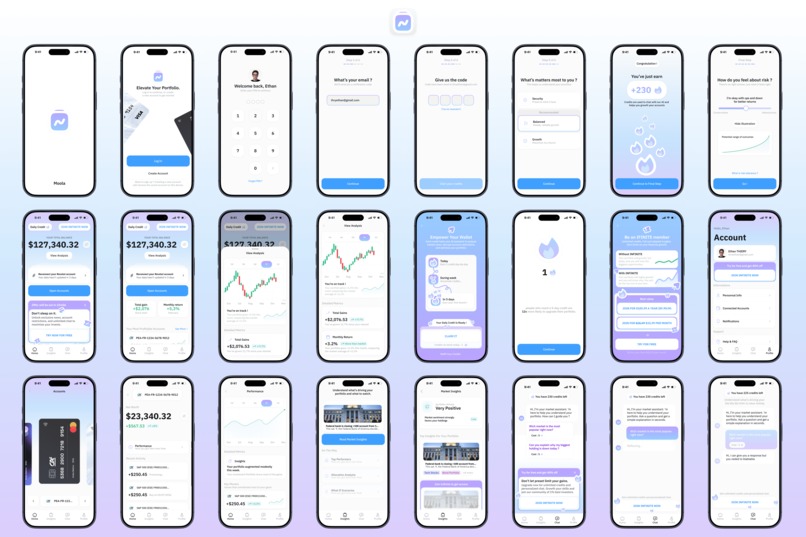
all the designs were hand-crafted :)
-

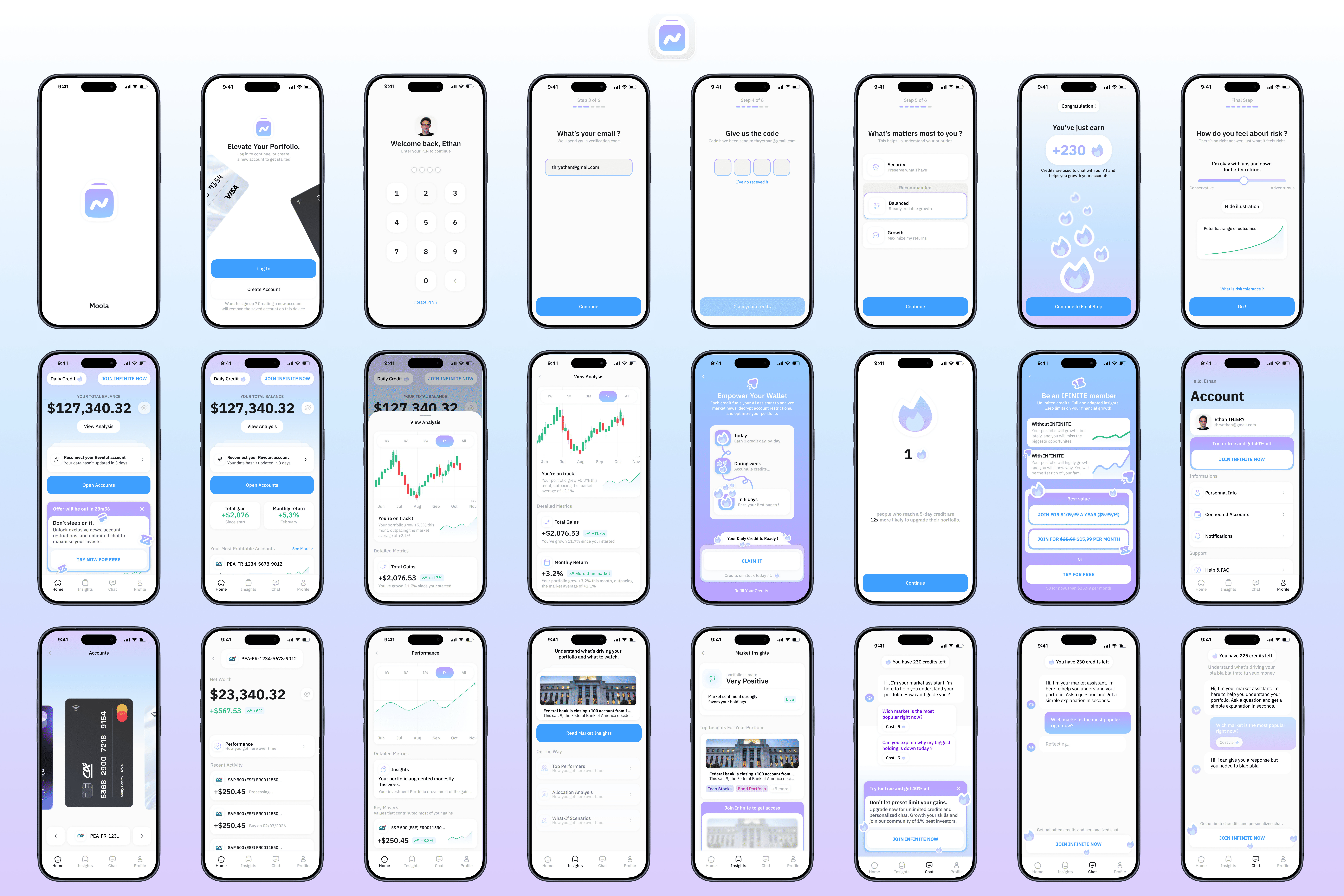
a view of our features

Inspiration
Young investors often feel overwhelmed. The financial market can seem opaque, complex, and reserved for experts. We wanted to transform that anxiety into clarity, confidence, and strategic action by building a product that does not just display numbers but explains them. Moola was born from a simple question. What if your portfolio could talk back to you and teach you how to grow?
What it does
Moola is a financial intelligence app that centralizes assets, connects real time news directly to your holdings, and provides a 24 hour AI mentor. It goes beyond tracking net worth. It contextualizes market events, explains financial mechanisms, and helps users build conviction in their decisions. Instead of passively consuming financial data, users actively understand it.
How we built it
Before writing any code, we structured the entire product in Notion. We defined the vision, mapped the features, and organized them by priority from MVP to future iterations. Each feature included detailed user stories and a clear prompt strategy.
Once that was defined, we created several core reference files to guide Cursor and prevent unintended implementations. For example, we set up an ai.foundations.txt file that defined architectural rules, design constraints, naming conventions, and integration standards. This ensured that when Cursor generated new features, it respected the existing structure instead of introducing inconsistencies.
As Product Designers, we also created a minimal component foundation before implementation. Buttons, inputs, spacing, backgrounds, and layout principles were defined to give Cursor a consistent visual direction. This acted as a lightweight Design System layer.
We connected Cursor to our Figma files via MCP to ensure alignment between design and implementation. For each major feature, we used a dedicated agent to avoid context overload and maintain modular clarity.
After implementation, we iterated extensively. We debugged flows, refined UI details, improved prompts, and validated the overall experience. Vibecoding is powerful, but it still requires strong product thinking and structured decision making.
Challenges we ran into
This was our first vibecoding project, and that came with a learning curve. One of our biggest challenges was scope control. When features can be generated instantly, it is tempting to continuously expand. Seeing ideas materialize in seconds creates momentum, but it can also create distraction.
At one point, we drifted from our original roadmap. We had to pause, revisit the MVP definition, and refocus on delivering core value before adding polish or new concepts.
We also experienced the limitations of context management. When too many instructions were layered in a single thread, coherence decreased. That is when we understood the importance of structured prompting and feature segmentation.
Accomplishments that we're proud of
We are proud of shipping a fully functional app from concept to execution using a vibecoding workflow. More importantly, we are proud that we approached it as Product Designers, not just prompt writers. We defined user value first. We prioritized intentionally. We built with structure and consistency.
For a first vibecoding project, we did not just experiment. We built with intention.
What we learned
Vibecoding is not effortless. A clear product vision, a structured roadmap, and detailed user stories significantly improve the quality of the output. AI amplifies clarity, but it also amplifies confusion if direction is weak.
We also gained a deeper appreciation for the strategic role of Product Management, the importance of precise design specifications, and the complexity of maintaining technical coherence across features.
Good prompts matter, but good product thinking matters more.
What's next for Moola
The next step is making Moola more proactive.
Today, Moola explains what is happening. Tomorrow, it will anticipate what matters.
We plan to develop predictive portfolio alerts based on volatility, exposure, and macro trends. We want to deepen personalization by adapting insights to the user’s risk profile and financial literacy level.
We also aim to evolve the AI mentor into a true strategic copilot capable of scenario simulations and forward looking analysis.
Long term, our vision is to make Moola not just a portfolio companion, but an operating system for financial clarity.
Built With
- chatgpt
- cursor
- figma
- mcp
- notion
- xcode

Log in or sign up for Devpost to join the conversation.