-
-
Cover
-
Intro
-
Intro

Inspiration
The inspiration for the MOOL project arises from the challenges in urban planning, architecture, and community development projects, where diverse stakeholders often struggle to find a common ground on which to negotiate and collaborate. There is a critical need to enhance collaboration and inclusivity in the field of spatial design.
PlayPump, initially celebrated for its innovative approach to water access through children’s playfulness, was eventually abandoned due to a critical oversight: the lack of genuine engagement with its end-users the children, and the communities.
This disconnect highlights the consequences of design decisions made without thorough and empathetic user feedback, leading to wasted resources, time, money, and trust, contributing to the 21st-century transition toward an unsustainable long-term future.
This case exemplifies the pitfalls of designers’ biases overshadowing the needs and perspectives of actual users, especially those with accessibility issues or who are typically marginalized in professional design processes.
MOOL emerges from this context, motivated to rectify such oversights. We aim to build a tool that not only involves but also empowers the voices of all stakeholders, particularly those who lack professional design or development skills and languages. MOOL seeks to bridge these gaps, ensuring a more inclusive, empathetic, and collaborative process, therefore mitigating the risks of costly design failures and fostering social innovation designs that resonate with and serve the needs of communities.
What Mool does
What MOOL Does
MOOL is an innovative, AI-enabled 3D collaborative tool designed to transform how stakeholders in spatial design projects brainstorm, visualize, and reach consensus.
Effortless Visualization and Collaboration:
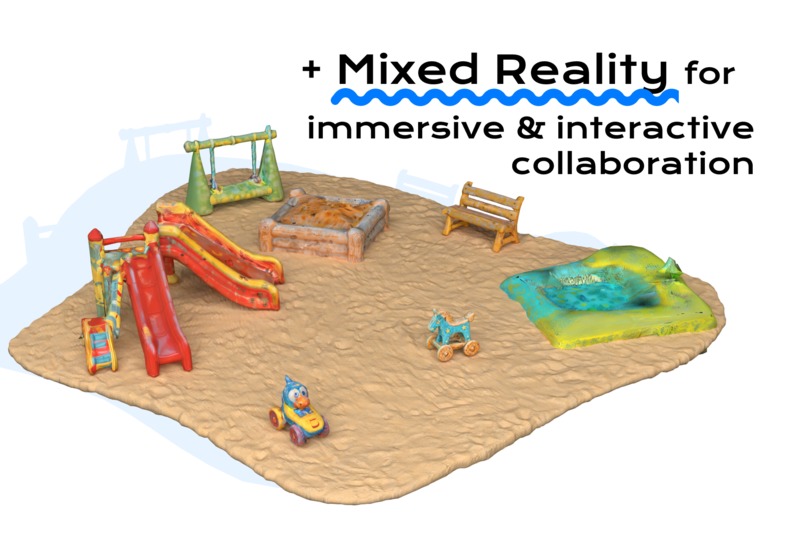
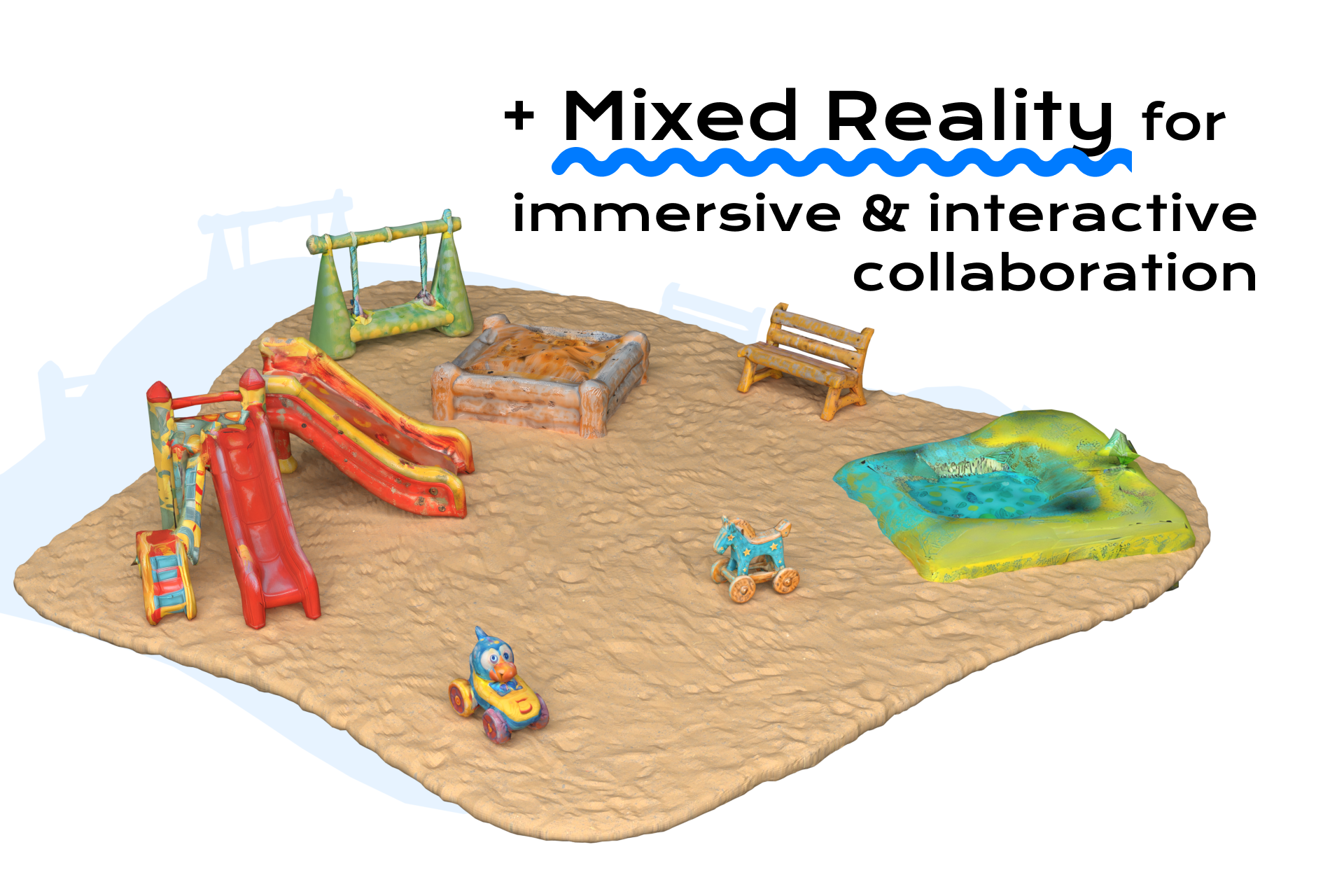
MOOL empowers stakeholders to visualize their ideas in a shared 3D space. This feature demystifies complex design concepts, making them accessible and understandable to all stakeholders, regardless of their professional backgrounds. By allowing stakeholders to visualize and see their thoughts take form in real-time in contextual simulation, MOOL fosters a deeper understanding and appreciation of different perspectives, facilitating more effective and inclusive collaboration.
Rapid Consensus Building:
MOOL accelerates the process of reaching consensuses. It enables stakeholders to quickly iterate on design ideas, integrating feedback synchronously. This dynamic environment encourages open dialogue and rapid adaptation, allowing for the swift convergence of diverse opinions into unified and feasible solutions.
Inclusive Stakeholder Involvement:
Recognizing that every stakeholder has a unique and valuable perspective, MOOL ensures their active involvement in the design process. It breaks down traditional barriers that often sideline non-professionals or those with accessibility challenges. MOOL's intuitive interface and AI-assisted functionalities make it easy for everyone to contribute, ensuring that each voice is heard and considered. This inclusivity is key to creating solutions that are not only innovative but also resonate deeply with the needs and aspirations of all those impacted by the design.
In summary, MOOL revolutionizes the spatial design process by making it more democratic, efficient, and aligned with the collective wisdom of all stakeholders. It's where ideas are nurtured into feasible solutions, and consensus is reached not just as an end goal, but as a dynamic and ongoing journey.
How we built Mool
Building MOOL was a journey that combined cutting-edge virtual reality (VR) technology, real-time networking, and user-centric design. Our primary platform was Unity. We chose Photon, a networking framework, to support multiplayer interactions within our VR space. The integration of Photon was crucial, as it enabled us to create a seamless and synchronized experience for users, regardless of their geographical location or the VR hardware they were using.
To ensure a uniform experience across diverse VR setups, we focused on optimizing the application for a range of VR devices. This involved rigorous testing and tweaking to ensure that the application's performance remained consistent, delivering high-quality visuals and smooth interactivity on all supported devices.
Creating an intuitive and engaging environment was our primary goal. We achieved this by designing user interfaces and interactions that were simple yet effective, catering to stakeholders from various backgrounds. Ensuring that the VR space was not only immersive but also easy to understand for collaborative decision-making was a key goal.
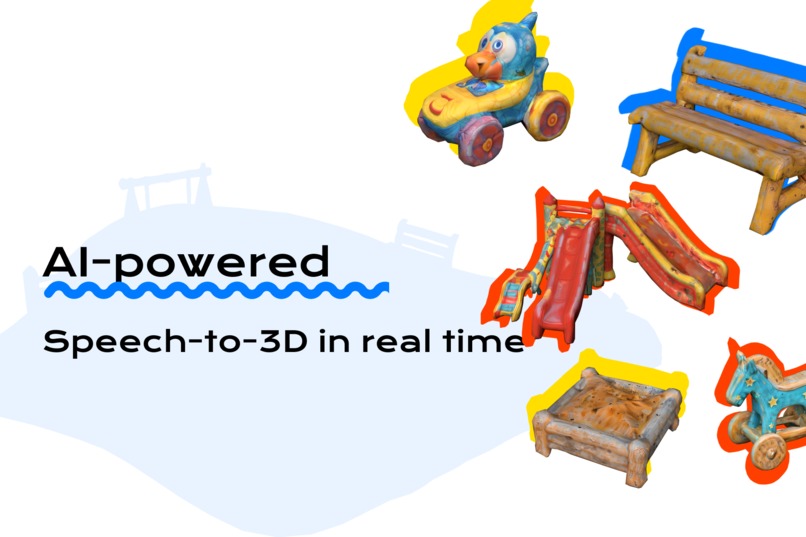
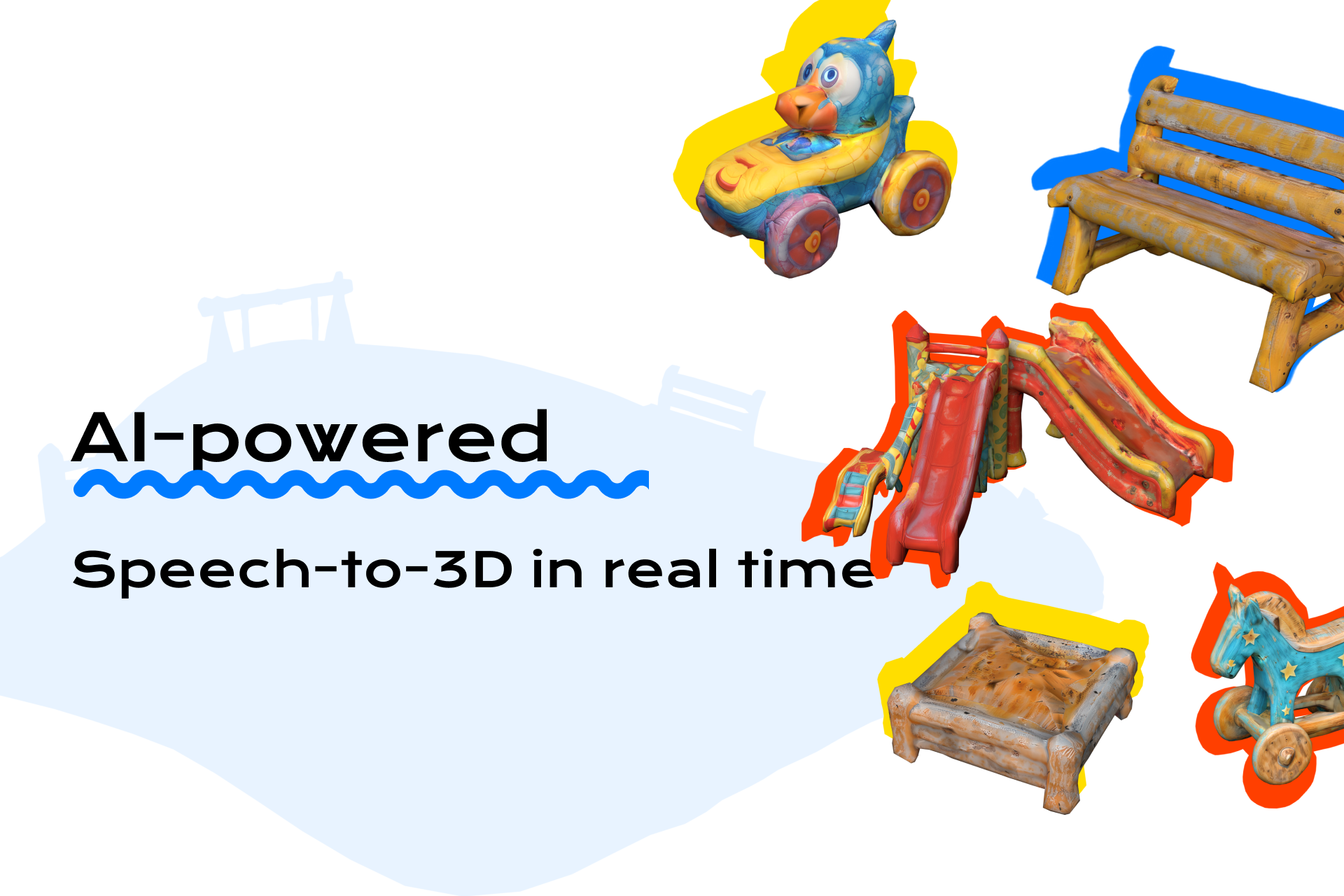
Moreover, we integrated the Meta Voice SDK with Meshy for Unity, a crucial step in enabling real-time speech-to-3D applications. This innovative integration allows designers to use voice commands to create and modify 3D models instantly within the Unity environment. The challenge was to ensure seamless communication between the voice recognition capabilities of the Meta Voice SDK and the 3D modeling functionalities of Meshy. We focused on minimizing latency and enhancing the accuracy of voice command interpretation, which was critical for maintaining a smooth and efficient workflow.
Challenges we ran into
The development of MOOL presented several significant technical challenges. Firstly, ensuring real-time synchronization of users’ actions in the multiplayer VR environment was a complex task. We had to devise a system where data transfer via Photon was efficient enough to support smooth interactions between users in different locations, using different VR hardware.
Another major challenge was balancing the technical complexities of VR and networking with the need for a user-friendly experience. Designing an environment that was both technically robust and easy to use by people with varying levels of technical proficiency required a thoughtful approach to UI/UX design.
Integrating voice control for 3D modeling presented its own set of hurdles. We had to fine-tune the interaction between the Meta Voice SDK and Meshy for Unity to ensure that voice commands were accurately translated into 3D model manipulations. Addressing latency issues and achieving precise voice command interpretation were critical in creating an effective hands-free design tool.
Accomplishments that we're proud of
One of the key accomplishments of the MOOL project is the successful integration of AI technology into the spatial design process. MOOL has demonstrated its ability to streamline collaboration, improve design outcomes, and enhance the inclusivity of the design process. The positive feedback and adoption by designers and stakeholders are sources of pride for the team. Additionally, the project's commitment to ethical AI practices and data privacy has been a significant achievement.
What we learned
Through the development of MOOL, the team gained valuable insights into the potential of AI in spatial design. The importance of involving stakeholders at all levels and the need for effective communication were reinforced. The project also highlighted the significance of ethical considerations in AI-enabled tools. Continuous learning and adaptation were essential in addressing the evolving needs and challenges of spatial design.
What's next for Mool
The future for MOOL holds exciting possibilities. The team envisions expanding the platform's capabilities to support an even wider range of spatial design projects and industries. This includes further enhancements in AI algorithms, user interface design, and data analytics. MOOL aims to become a go-to tool for designers and stakeholders seeking sustainable, inclusive, and efficient design solutions. Additionally, partnerships with industry leaders and organizations are on the horizon to promote the widespread adoption of ethical AI-enabled spatial tools like MOOL in addressing the complex challenges of the 21st century.
Built With
- amazon-web-services
- c#
- generative3d
- meta
- natural-language-processing
- voicesdk
- wit.ai


Log in or sign up for Devpost to join the conversation.