


Inspiration
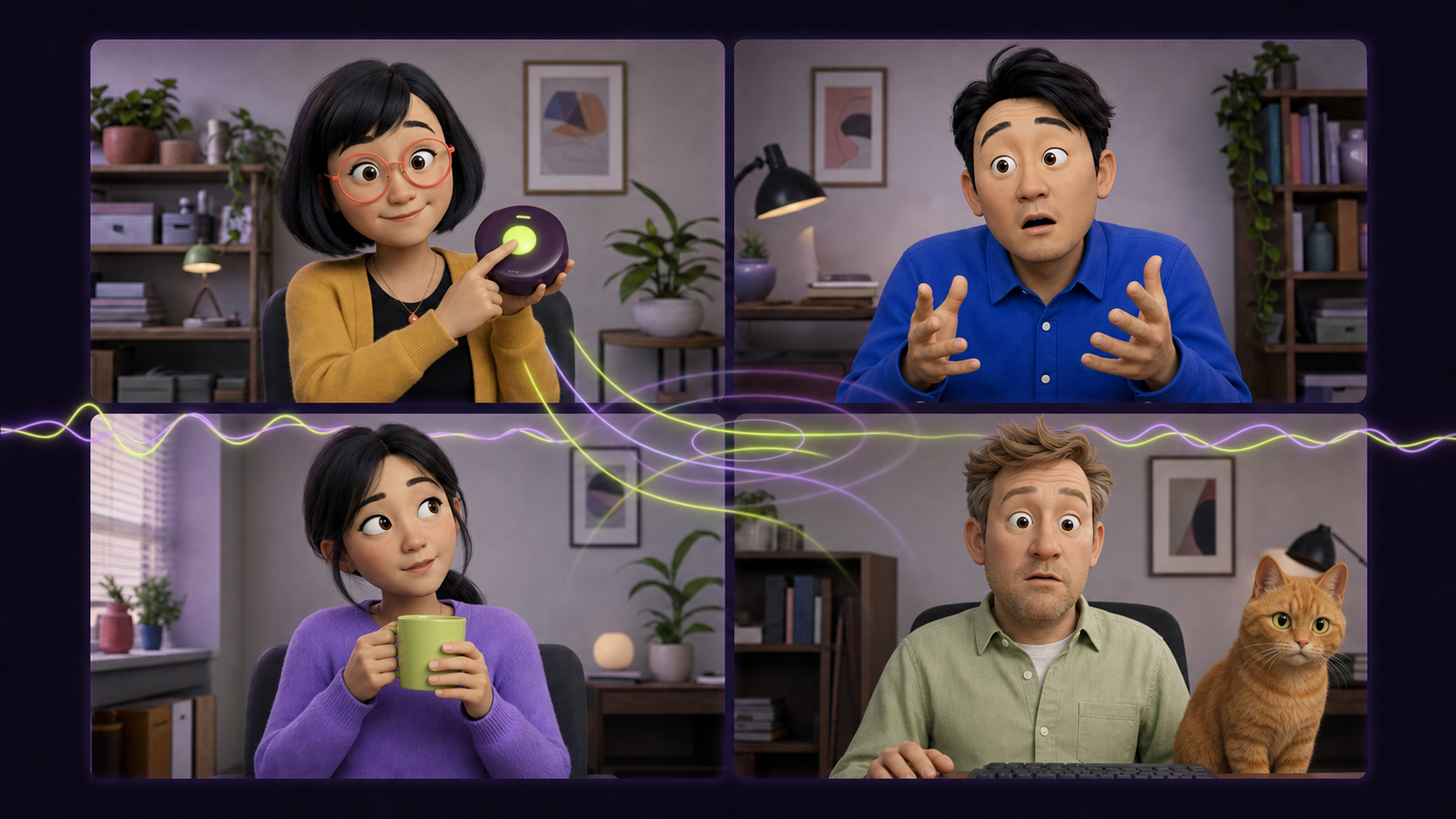
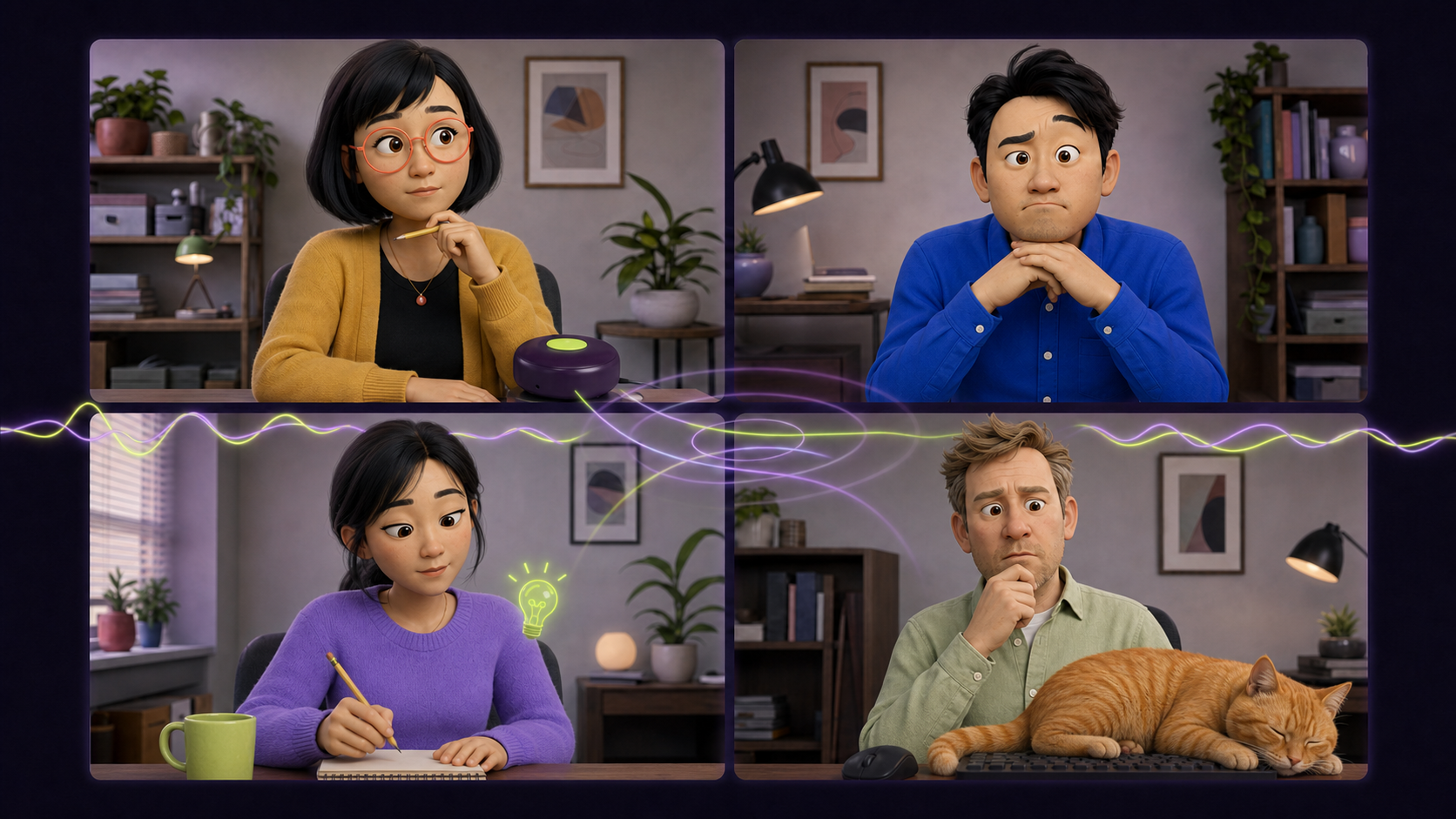
Everytime I try to facilitate an online meeting, and try to get people to engage in discussion, I always face a gaint wall. A wall so great that people do not contribute. Its always the same group of people who speak out, contribute, and actually participate in dicsussion.
I work with some of the greatest minds in Japana, however, each passing minute in an online meeting just wasted away in silence. A simple How should we design the technical roadmap for this product/project is greeted with silence. Silence is not going to create the roadmap itself, and I am definitely not dump enoguh to do everything by myself.
What if.... just what if... everyone contributes and participate.... no matter how small... the value we could produce is unimaginable. Just a sentece or two from them could open so many doors.
So, whats stopping them? A simple answer: the meeting is boring.
If we spice things up a bit for the online meeting, it might prompt them to be more engaged with the discussion; if we create little funnny moments here and there, it might lower the barrier for them to open up; if we just make the meeting more interactive, i.e. clapping sound when something good happens, and a gasping sound when something horrible is bound to happen, then they might find it engaging.
The value we could gain is beyond imagination.
So comes MoodX
What it does
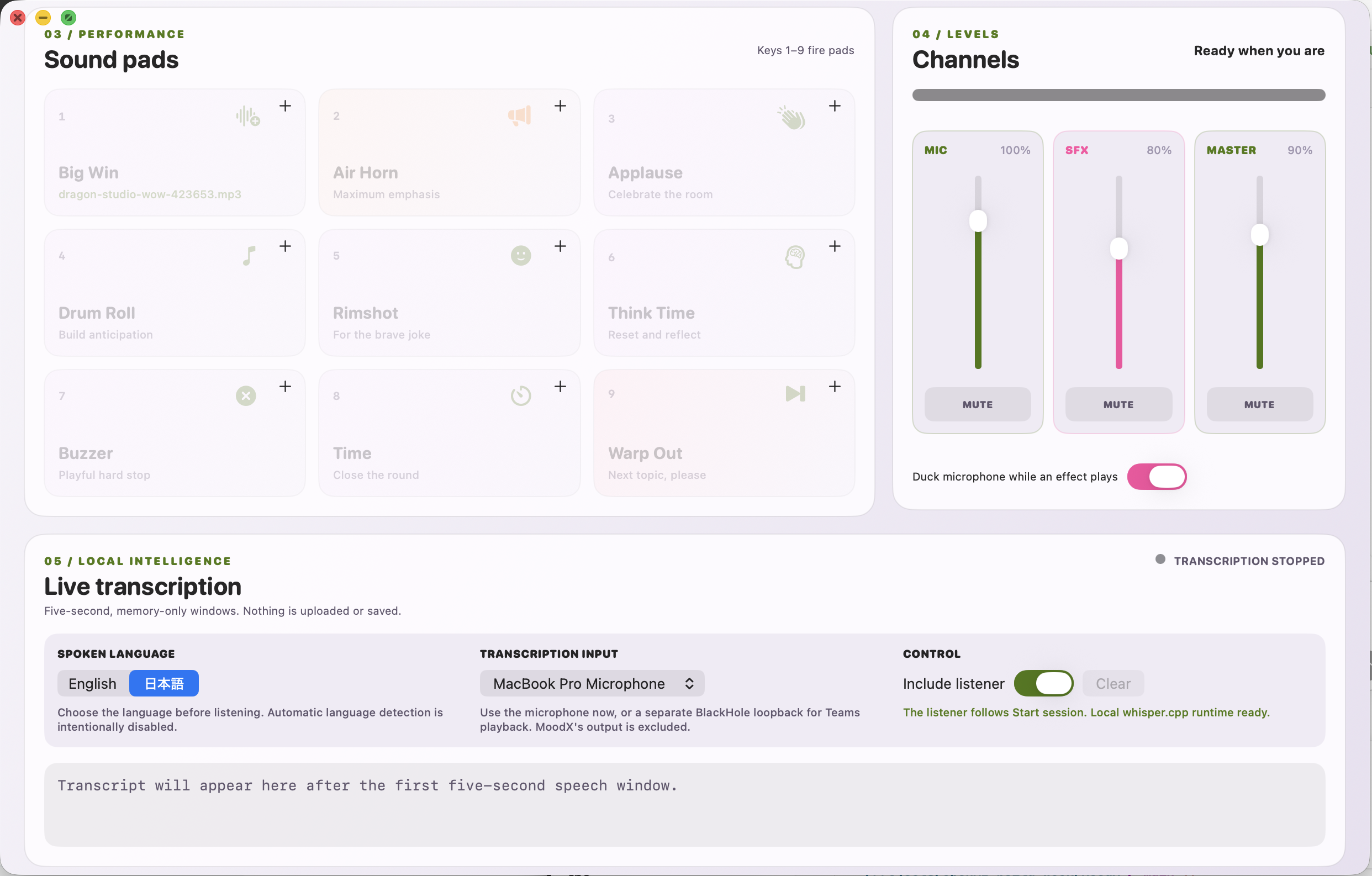
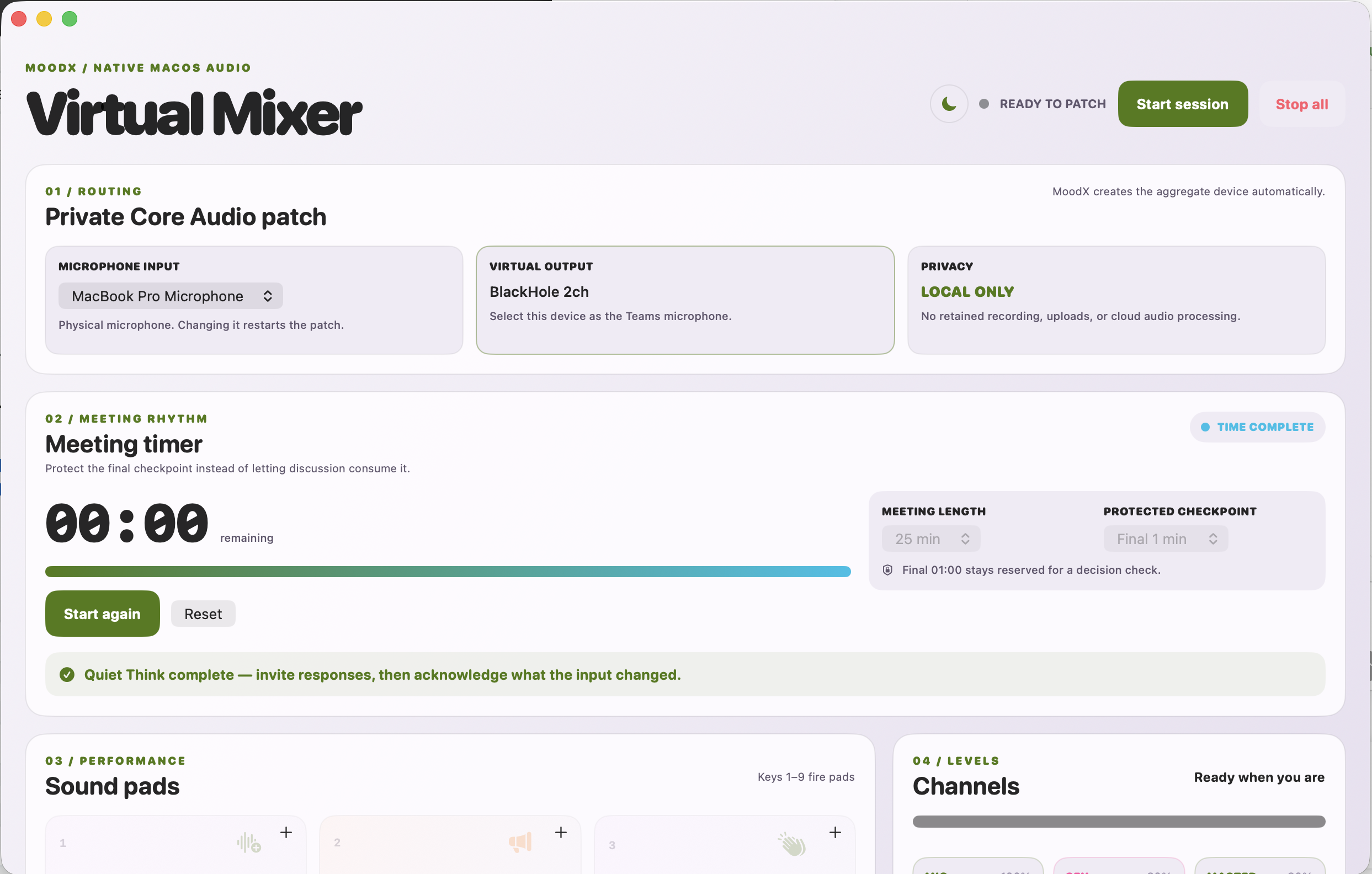
Its a virtual audio mixer that injects sound effects, on demand, into your mic audio input, thus allowing you to control and play different sound effects at different time. The user can load in their own sound files, and play it on demand, all the while keeping the original mic audio input so that the user can talk and play sound at the same time.
MoodX allows the user to control when and what to play, in order to create a more engaging online meeting.
How we built it
I had a problem. Took it to Codex. Codex helped to break it down into small pieces. We then talked through the whole project first, without writing any code. Codex and I just spent time going through whats the targeted audience, the current market, the uiux design etc, while documenting everything.
Once we have a basic agreement on the direction of MoodX, we just went all it into coding, and implementing all the features we need to achieve our goal. Of course, while documenting everything.
Then comes the testing phase, where I actually tested it on an internal meeting with my team to test the reception, while fixing more bugs with codex.
We, codex and I, just talk and test, then test and talk, and back and forth we went, and here we are with MoodX
Challenges we ran into
Trying to nail down the productr-market fit was hard. Teams has similiar features no?, Why not just do in person meetings?, Have you actually talked to the person not willing to participate to get their side of the stories? are some legit but hard questions to answer. However, I just want online meeting to be fun is the utilimate northstar that I have, and with Codex by my side I am unstoppable.
Accomplishments that we're proud of
First of all, I like using this tool for online meetings: its like I am a little DJ for the meetings. Also, with the help for codex, I am able to come this far in just 2 days. 2 DAYS. Boi is this impressive. Watching my idea comes to life in just 2 days, and actually using it in real life is really a dream comes true.
What we learned
We learned that fun is, if not, the best doorway. A well-timed sound, shared laugh, or funny moment can interrupt the usual meeting rhythm open up to participants. The real value comes afterward, when another idea, question, or concern finally enters the discussion.
Most importantly, the facilitator must remain in control. MoodX should support human judgment, and maximize the value from it.
What's next for MoodX
We want to learn which interventions genuinely improve participation and which ones are simply entertaining. We also want to explore dynamic background music. Imagine facilitator-controlled modes such as Focus, Quiet Think, Decision Time, and Celebrate, with music that transitions smoothly and automatically lowers whenever somebody speaks.
This should remain local, optional, and controlled by the facilitator.
The goal is simple: make boring online meetings a little more enjoyable, create more openings for participation, and help teams uncover the value that was already in the room.

Log in or sign up for Devpost to join the conversation.