-
-
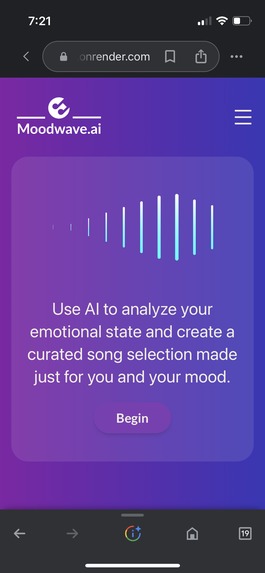
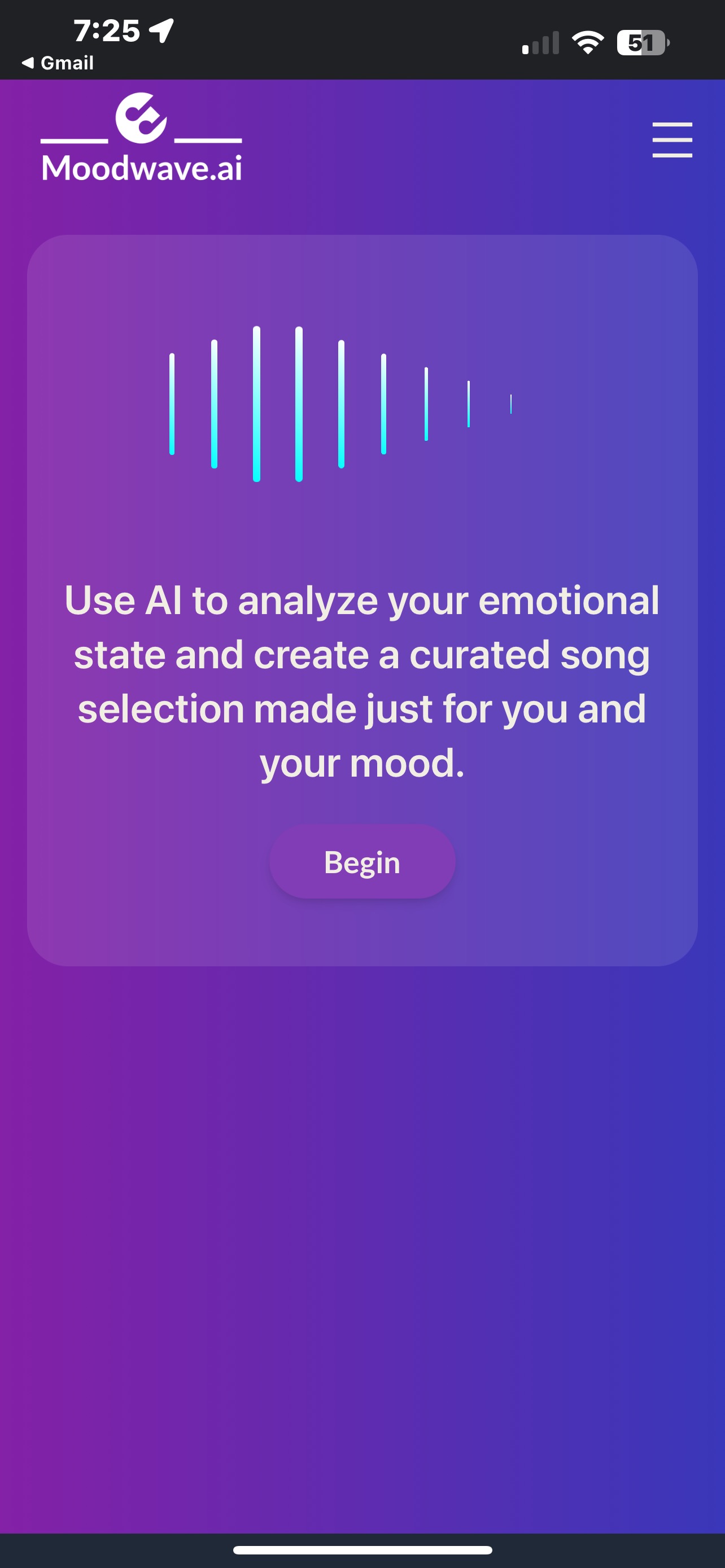
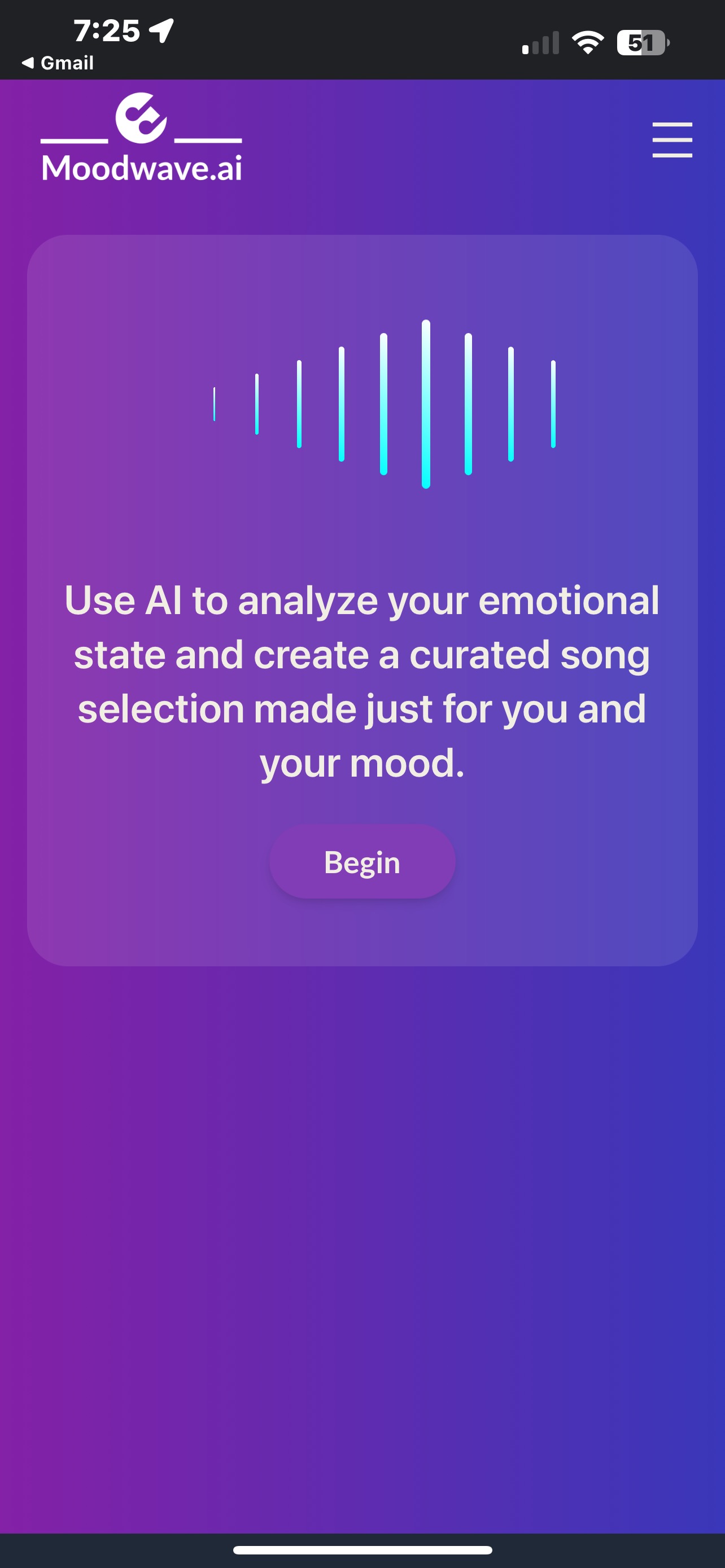
Moodwave landing page
-
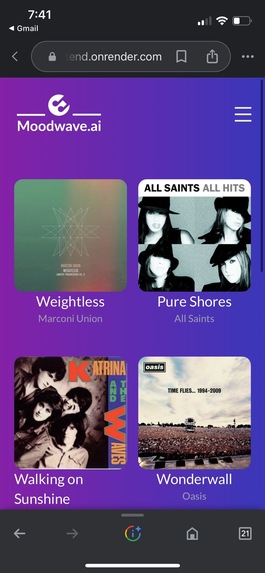
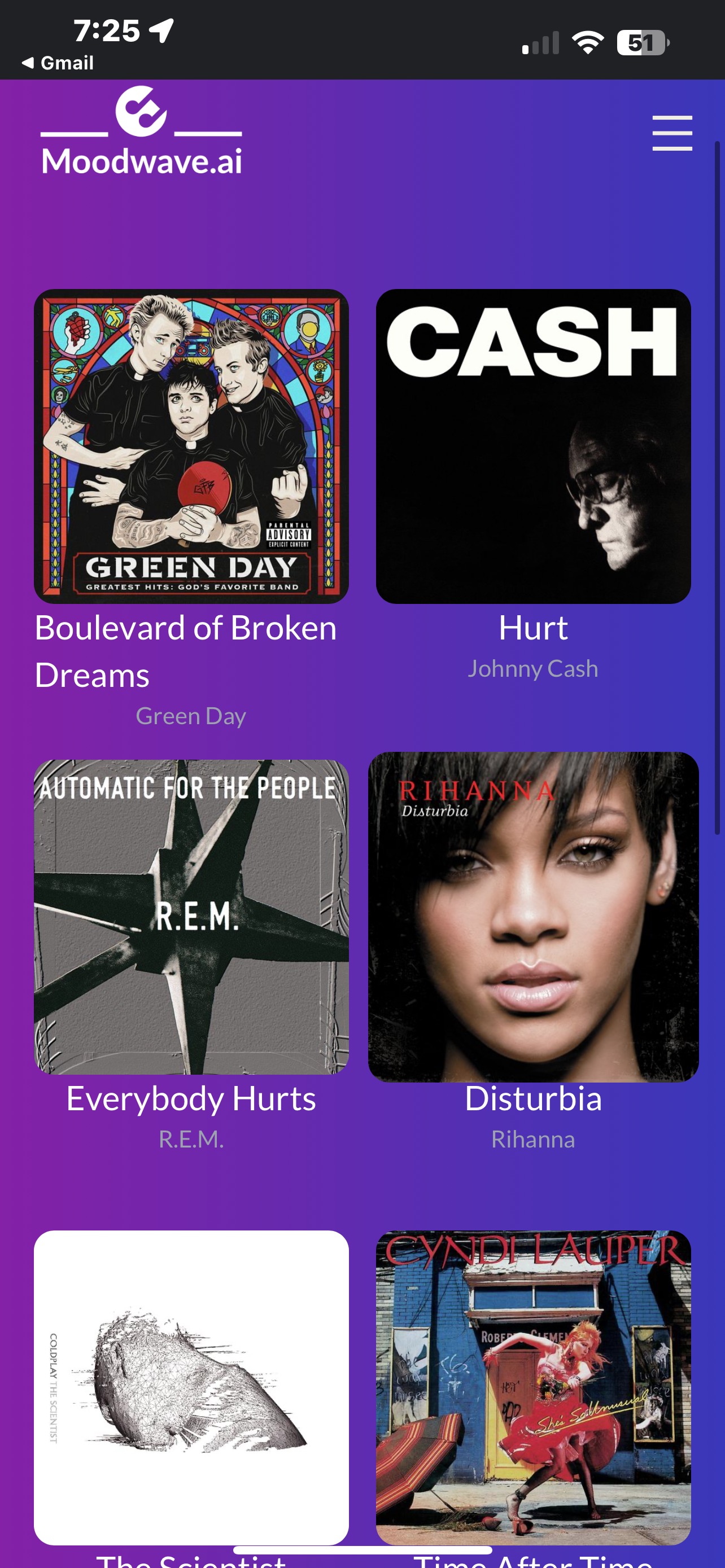
Song List
-
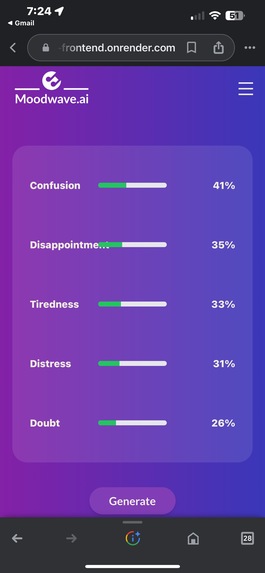
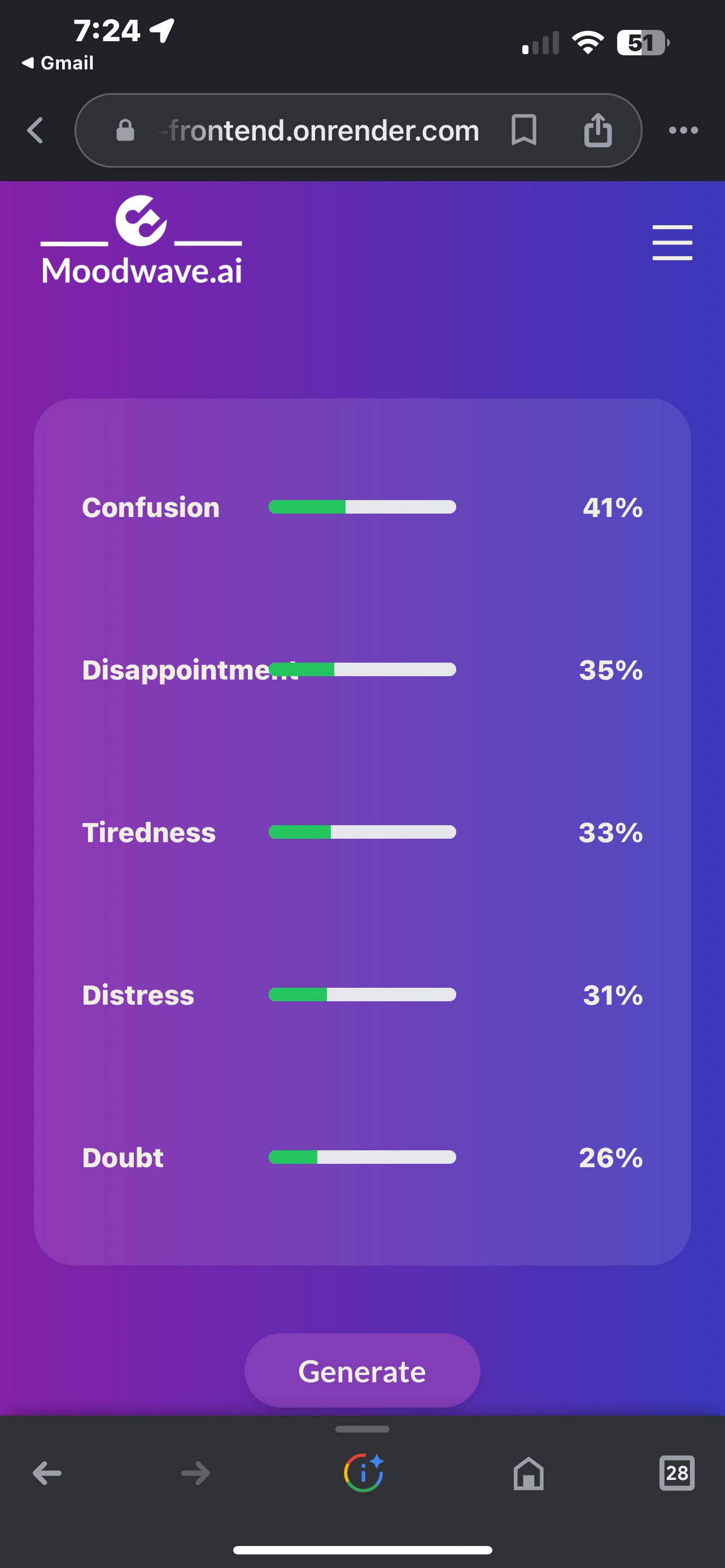
Emotion Data
-
Loading screen
-
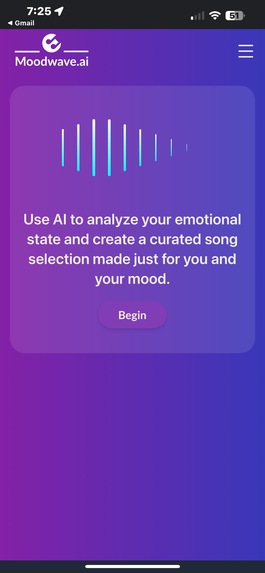
Home Screen
-
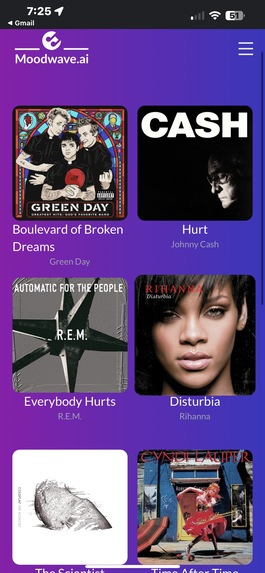
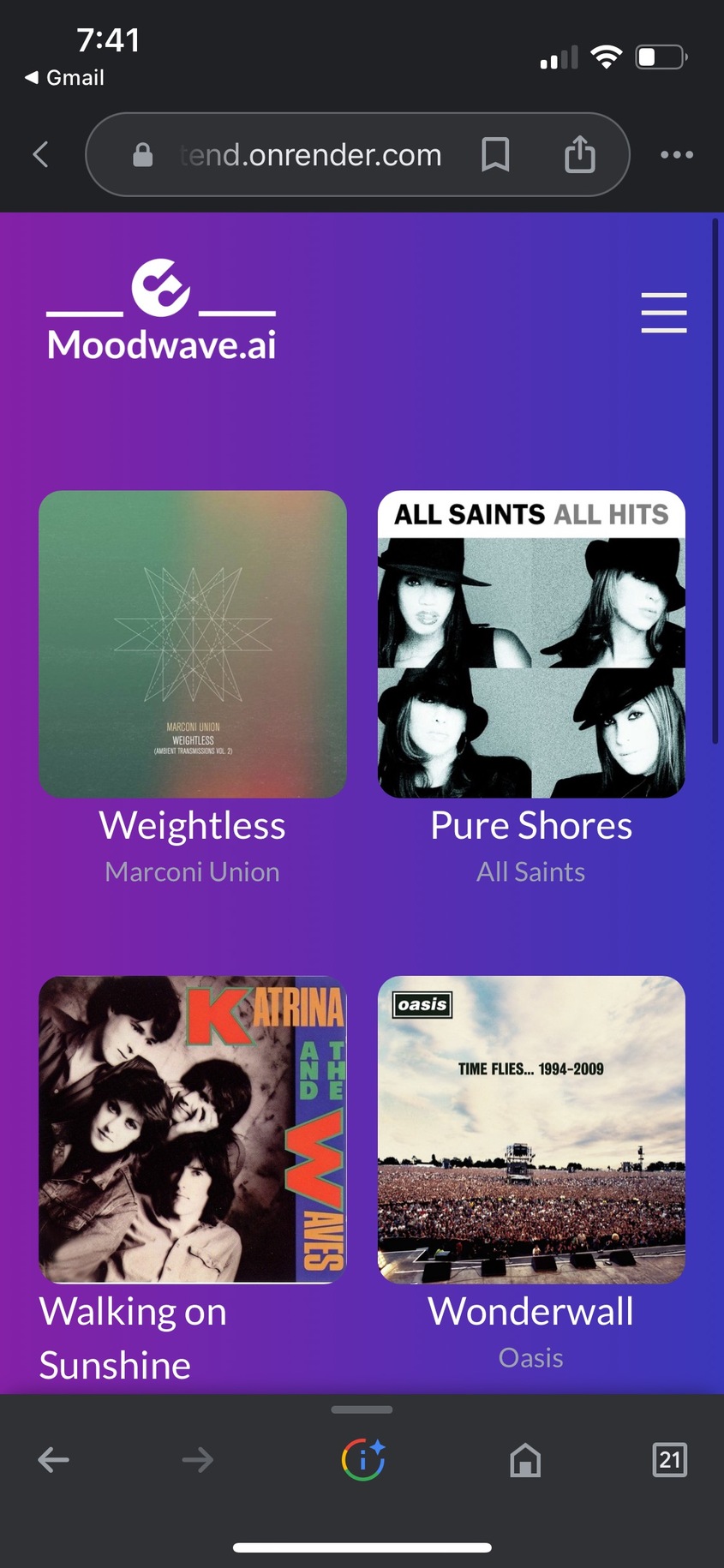
Songs generated
-
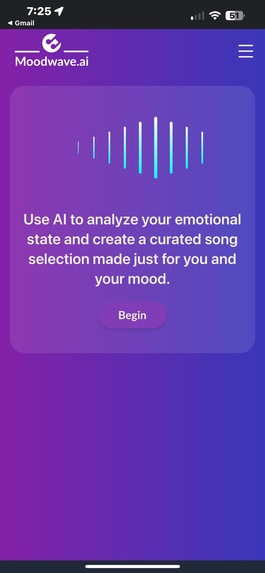
Home Screen
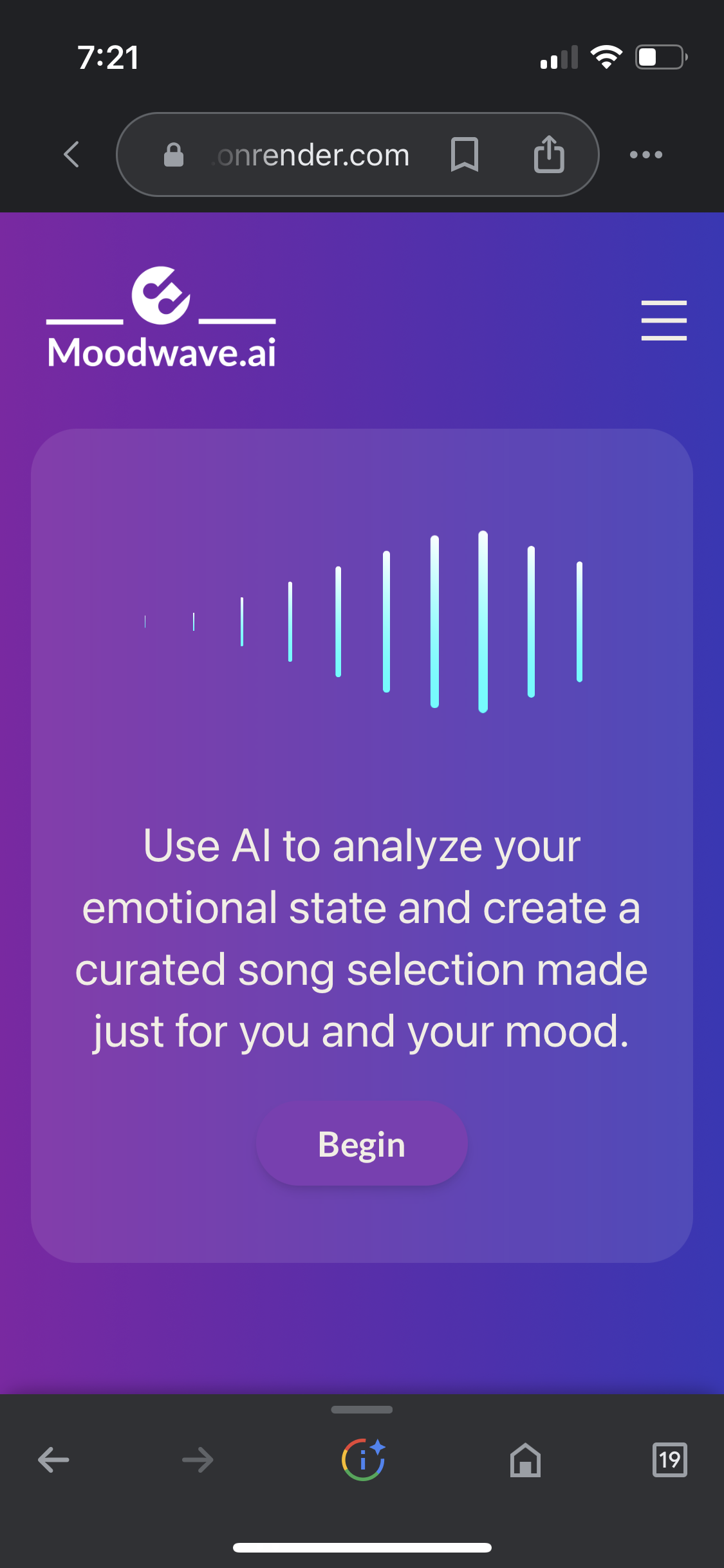
Inspiration
At MoodWave.ai, our inspiration comes from a deep concern for mental well-being. We're passionate about using technology to help people better manage their emotions. We've all been through tough times, and we wanted to create something that could provide comfort and support when words alone can't. Our project aims to blend facial recognition technology, AI, and the power of music to assist individuals in finding emotional balance. We believe that this fusion of tech and empathy can empower individuals to navigate their emotional journeys more effectively, contributing to a world where music becomes a universal language for emotional well-being.
What it does
Facial Emotion Analysis: MoodWave.ai begins by scanning your facial expressions to determine your current emotion.
Clear Status Bar Display: The results are then neatly displayed in an easy-to-read status bar format.
Personalized Music Recommendations: The program's main feature kicks in, generating six song recommendations based on your emotional state.
Comprehensive Details: MoodWave.ai not only provides song titles but also artist names and vibrant album covers to enrich your music discovery experience.
Enjoy Your Curated Playlist: You can now immerse yourself in a playlist perfectly tailored to your mood, thanks to MoodWave.ai's intuitive and personalized approach.
How we built it
MoodWave.ai was constructed with React.js as the fundamental framework to establish the web application's structure and functionality. Tailwind CSS played a pivotal role in fine-tuning the user interface, utilizing its utility classes to ensure precise styling and responsive design. Seamless integration of the React Camera Component enabled real-time image capture via the laptop's camera. Additionally, the Emotion Page underwent meticulous customization and styling with Tailwind CSS to optimize its user-centric appeal. This technical combination effectively harmonized the web application's dynamic functionality with a visually engaging and user-friendly interface. For the back end, 4 api’s were used to analyze and create a curated song list for the User. The process initiated with photo capture, promptly transmitting it to the Cloudinary API for comprehensive image processing. This step streamlined the following emotion recognition through the HUME.ai API. Upon successfully collecting and analyzing emotion data, it was efficiently relayed to the openAI API to curate a selection of songs that matched with the user's mood. These meticulously selected songs seamlessly interfaced with the JioSaavn API, facilitating retrieval of song titles, artist details, and album cover artwork. The elements demonstrated on the front-end website enriched the user experience.
Challenges we ran into
Our biggest challenges involved taking the image in the front-end and sending it to the back-end of our project. The reason this was a challenge was because the API used needs an image at a specific format. Another challenge we faced was obtaining the album covers from our music API. Not all songs that we searched for included an album image. Lastly we ran in to a multitude of CSS problems such as unwanted white space, and formatting.
Accomplishments that we're proud of
We are proud of having our facial recognition feature work as intended during early development. It was fascinating to us that the API was both accurate in detecting our emotion, and fast when returning the results. We are also proud of our design skills for the project as we tried to keep it very simple and intuitive.
What we learned
We learned how to create our own webcam with React.js and gather information based on the photo. We also learned how to implement a modern technology known as the OpenAI API. Finally we learned learned how to deploy our front-end and back-end for users to freely use our project.
What's next for MoodWave.ai
In the future we believe that Moodwave has a place to help control emotional states. After recognizing the emotion in a person, MoodWave will offer personalized recommendations on how to deal with these emotions. For example, if the user was detected to be anxious, Moodwave.ai would offer lessons which could be in the form of a small video or article which shows them how to deal with said emotions. An account system would be created to help track a user's emotion over a long period of time. This information would be used to help create a better and more effective user experience.
CODE BASE
Built With
- axios
- cloudinary
- express.js
- githubpages
- html
- hume.ai
- javascript
- jiosaavn
- json
- node.js
- openai
- react
- render
- restapi
- tailwindcss


Log in or sign up for Devpost to join the conversation.