-
-
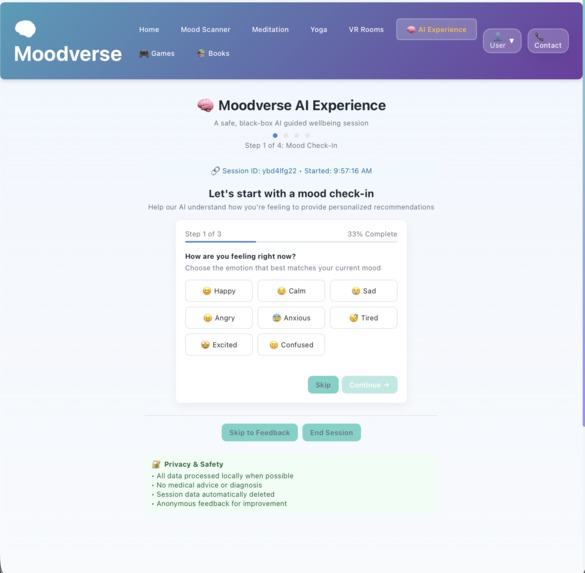
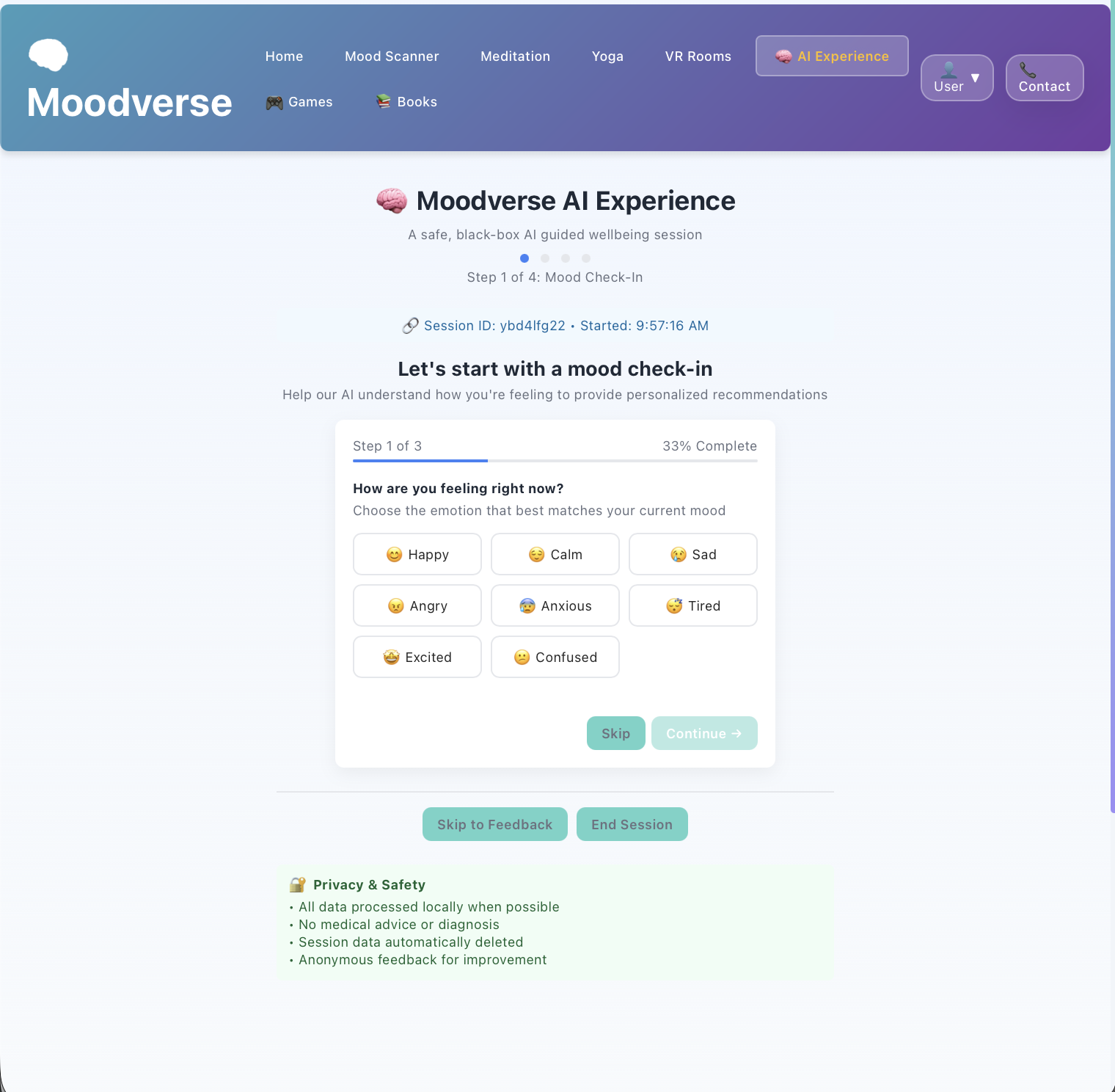
AI Experience section, with customised plan for users
-
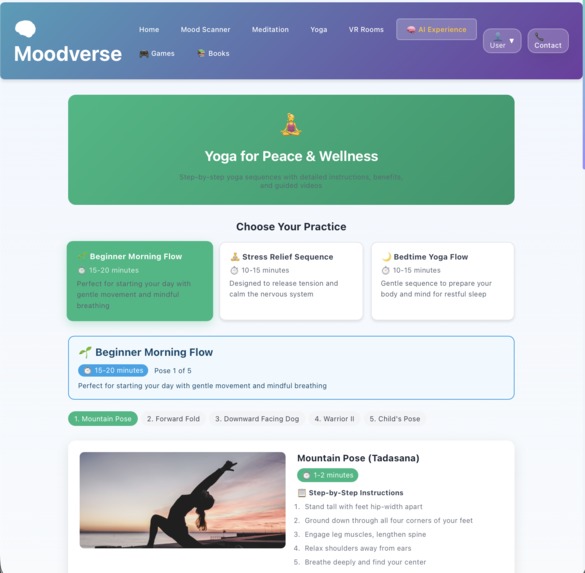
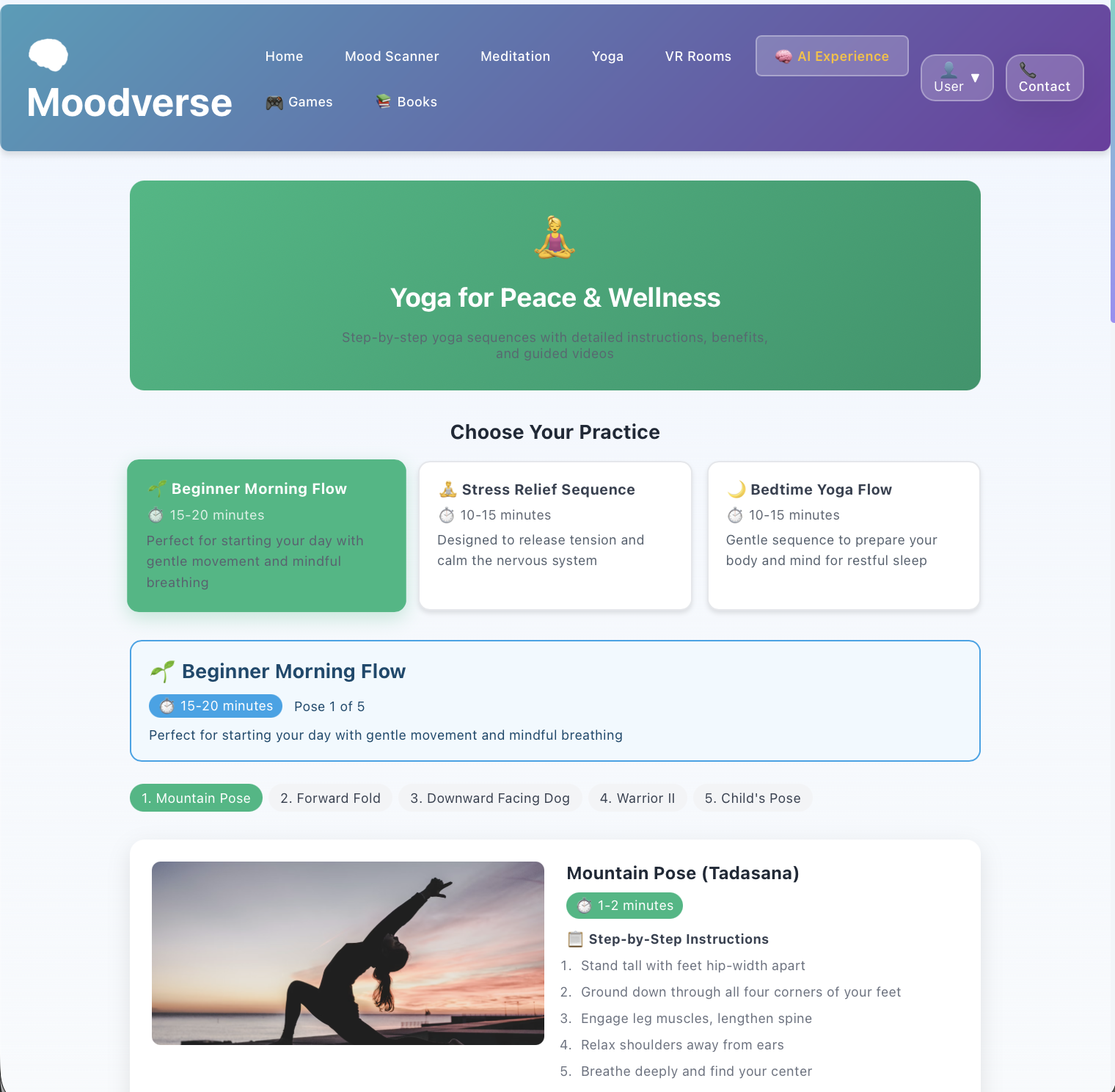
Yoga section
-
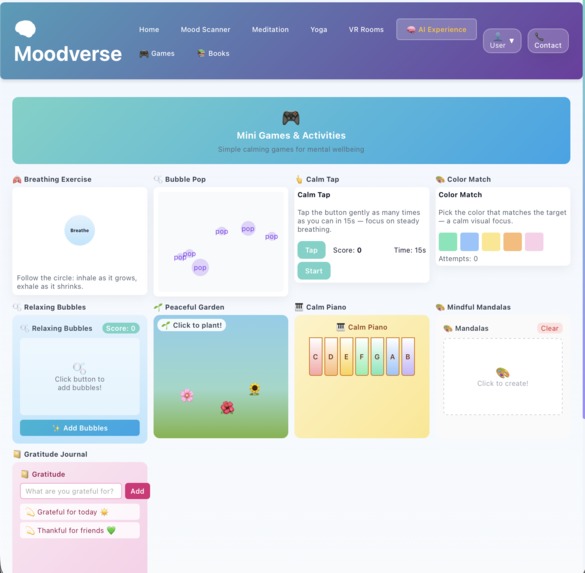
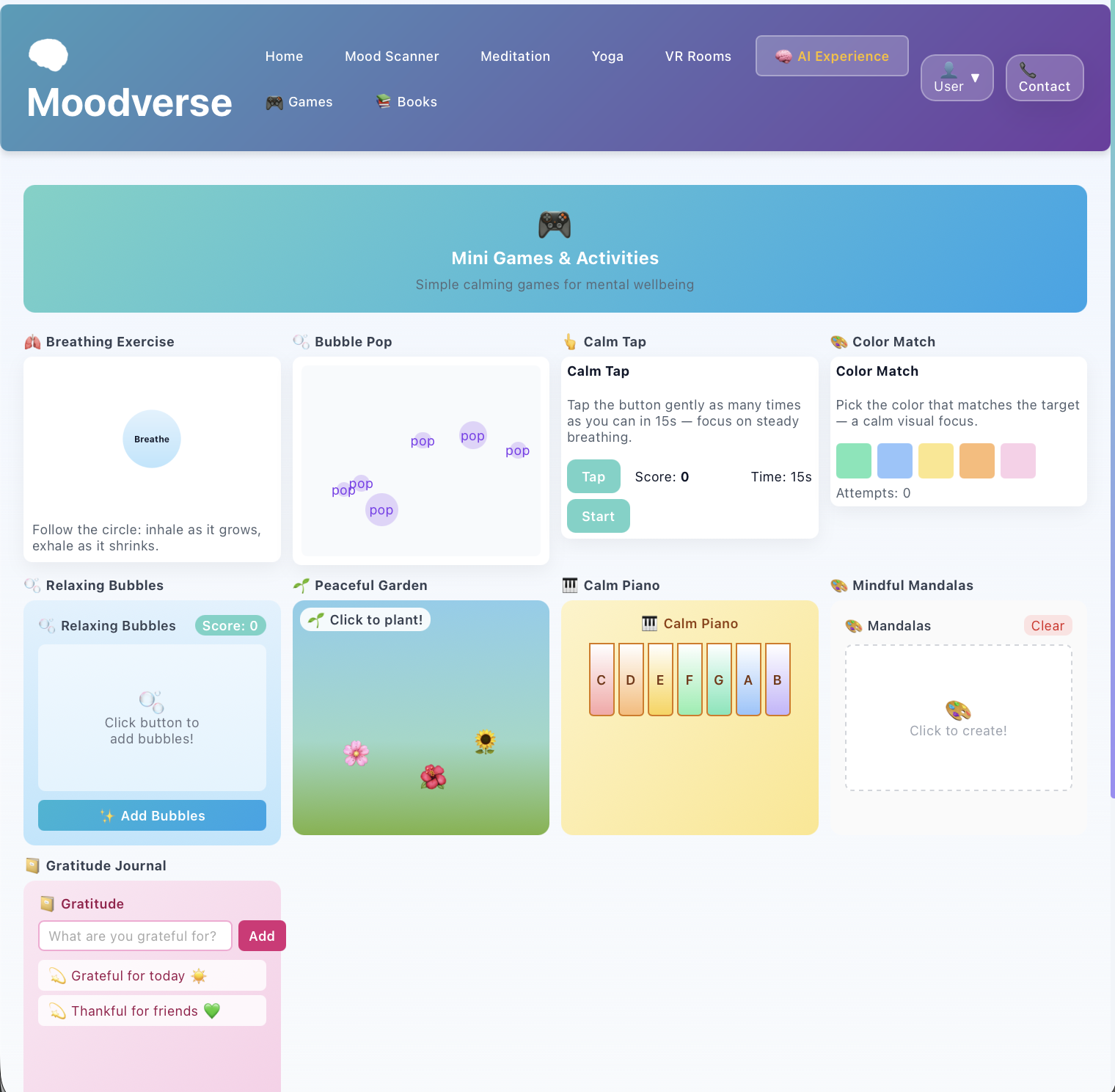
Games section to engage users and make stress relief
-
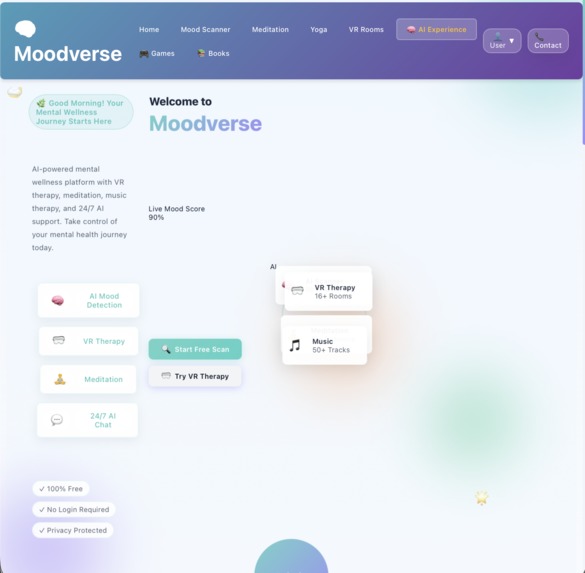
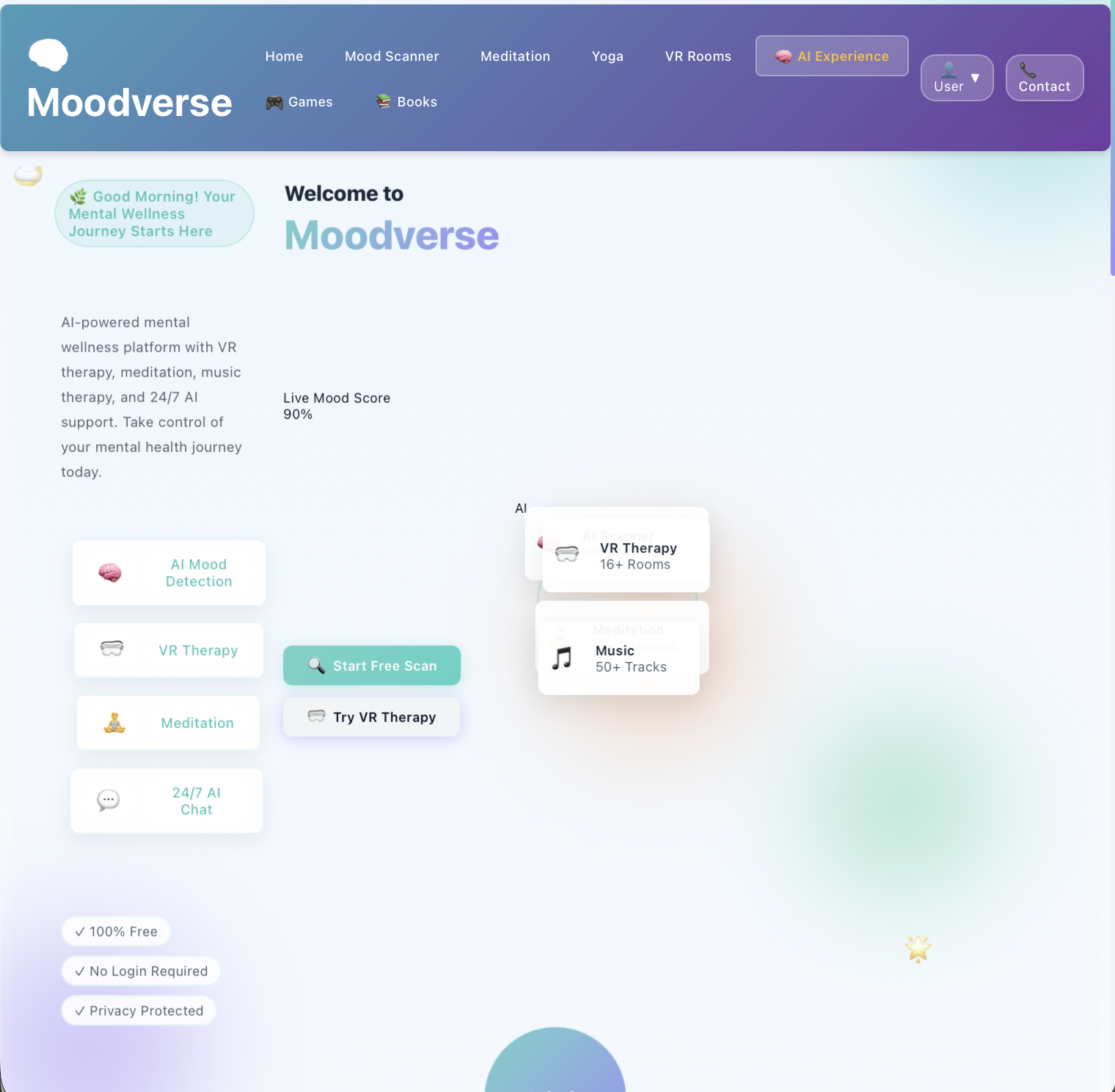
Home page of Moodverse
-
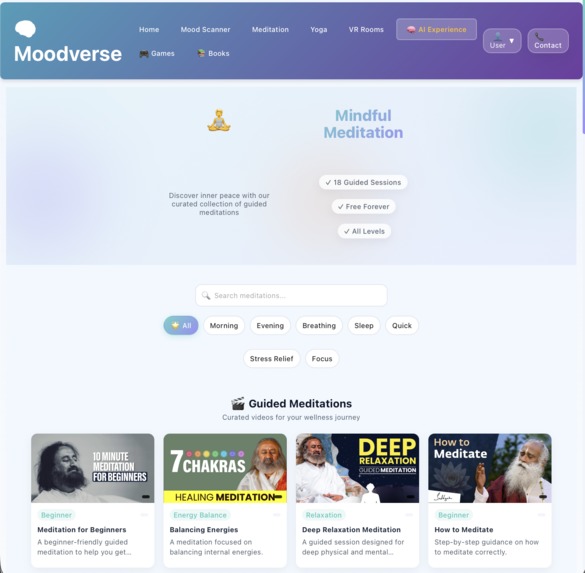
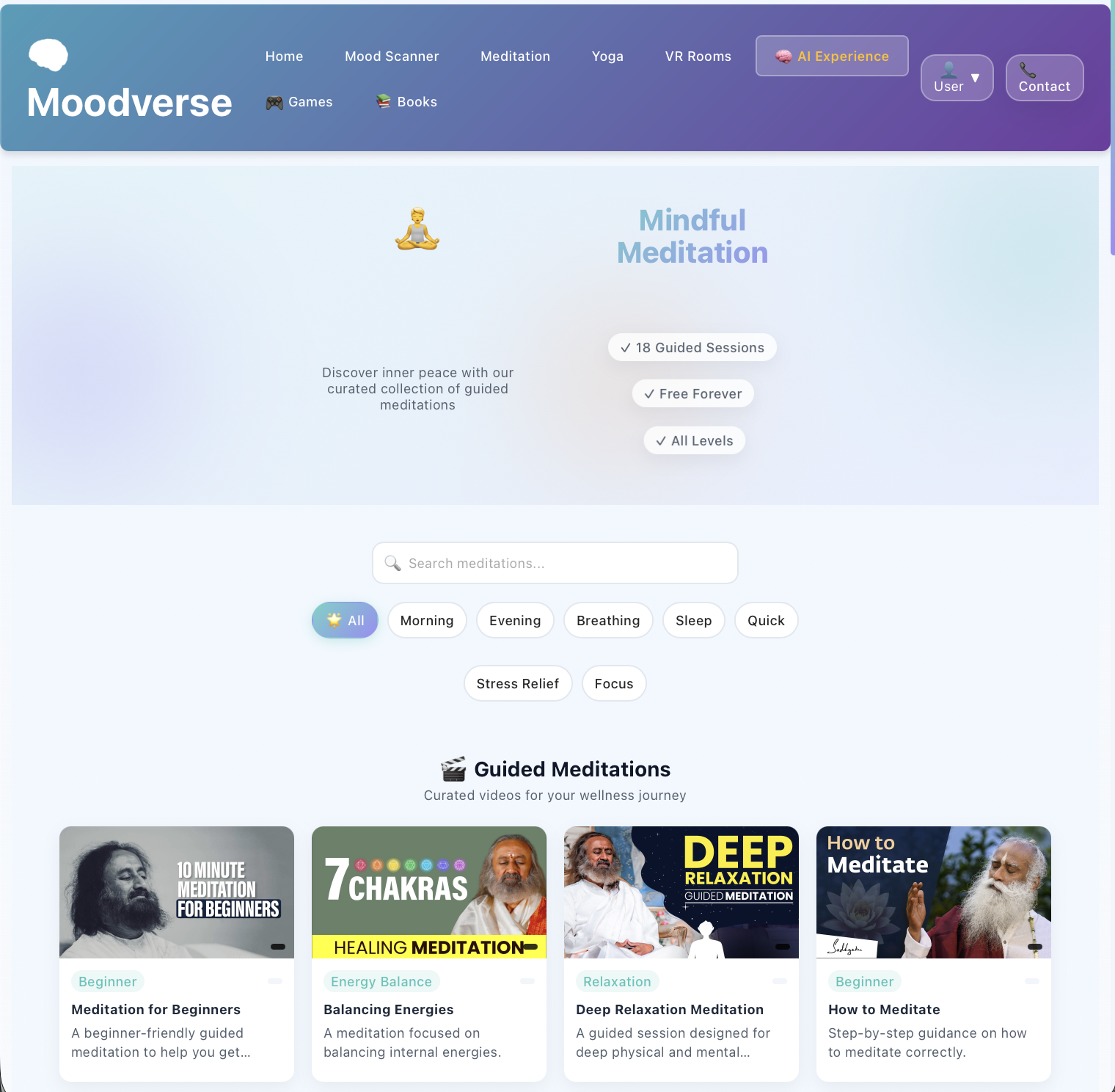
Meditation section
-
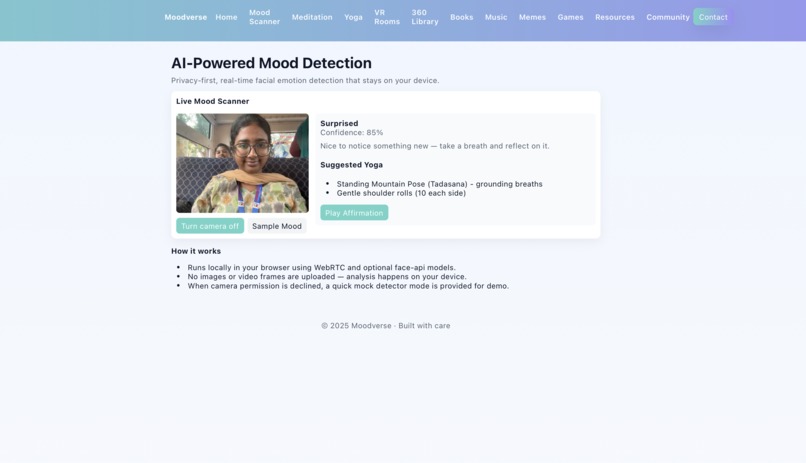
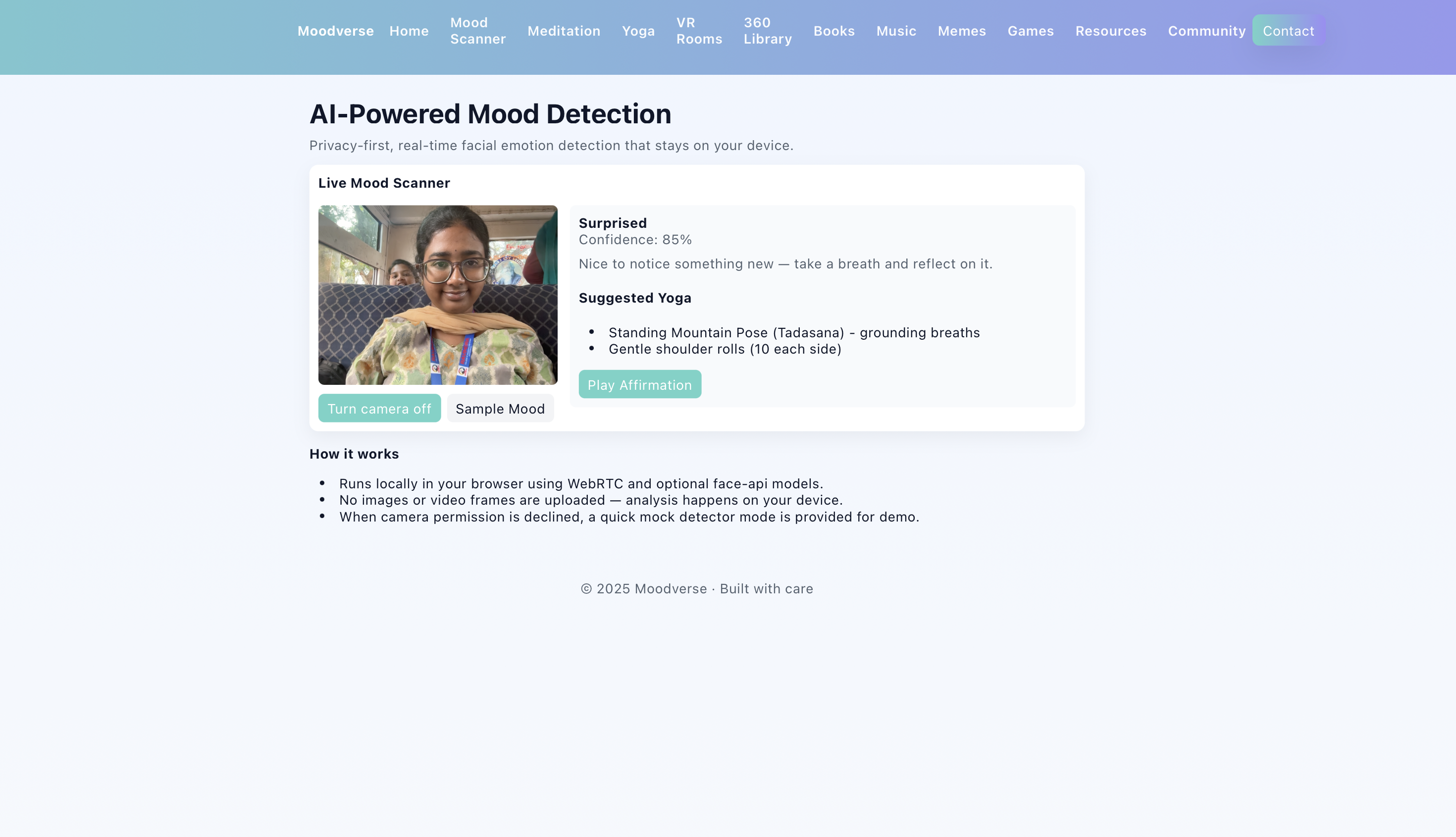
Mood Scanner
Inspiration (Problem Framing & Human Context)
Moodverse was inspired by repeated, real-world exposure to how unmanaged stress quietly deteriorates people’s lives. This included personal experience, observing students struggling to function under constant pressure, and a particularly impactful conversation with an elderly woman who broke down while speaking about her friend’s long-term depression caused by chronic stress.
These moments revealed a consistent gap: while many wellness tools exist, very few provide a low-pressure, judgment-free space for people who are already overwhelmed. Many solutions demand consistency, performance, or self-optimization—precisely when users are least capable of it. Moodverse was conceived to address this gap.
What It Does (Human-Centered Functionality)
Moodverse is a minimal mental wellness web application focused on short, daily emotional check-ins.
Instead of tracking metrics or diagnosing users, Moodverse:
- Allows users to express how they feel using simple, human emotional states
- Responds with short, empathetic reflections designed to validate—not analyze—their experience
- Offers one brief, guided action (breathing or reflection) tailored to emotional arousal
The application intentionally avoids dashboards, streaks, scores, or gamified engagement. Its goal is to reduce cognitive and emotional load, not increase it.
How We Built It (Responsible AI & Design Choices)
Moodverse was built using a mobile-first web architecture with a strong emphasis on simplicity and ethical design.
Key principles included:
- Emotion-based logic rather than numerical or predictive scoring
- Minimal UI to reduce decision fatigue
- Clear boundaries on what the system does and does not infer
Where intelligent logic is used, it is constrained, transparent, and purpose-limited. Moodverse does not attempt to diagnose mental health conditions or make behavioral predictions. The system’s role is to support reflection, not replace professional care.
Challenges We Ran Into (Trade-offs & Constraints)
One major challenge was resisting feature expansion. Many wellness applications rely on analytics, personalization engines, and engagement optimization, but these often conflict with emotional safety and trust.
Another challenge involved language design. Writing responses that felt empathetic without sounding generic, artificial, or clinical required careful iteration and restraint.
Finally, narrowing the scope to a specific user group—stressed students—required letting go of broader ambitions in favor of clarity and usefulness.
Accomplishments We’re Proud Of (Impact & Responsibility)
- Designed a calm, focused alternative to performance-driven wellness apps
- Built a system that prioritizes emotional validation over data extraction
- Established clear ethical boundaries around data use and user trust
- Demonstrated that effective wellness tools do not require intrusive intelligence
Moodverse demonstrates that AI-adjacent systems can be supportive without being invasive.
What We Learned (Alignment with Gemini Principles)
This project reinforced several lessons:
- Responsible AI begins with clearly defined limits
- Simplicity can be more impactful than complex personalization
- Trust is earned through transparency and restraint
- Human language and interaction design matter as much as technical capability
We learned that building in sensitive domains requires intentional humility.
What’s Next for Moodverse (Scalable, Ethical Growth)
The next phase focuses on validation rather than expansion.
Planned next steps include:
- User testing to validate emotional clarity and comfort
- Refinement of language and interaction pacing
- Accessibility improvements
- Strengthening privacy guarantees and ethical documentation
Future development will prioritize responsible scaling over rapid feature growth.
Final Note for Gemini Evaluation
Moodverse is not positioned as a comprehensive mental health solution. It is designed as a small, respectful intervention—a daily pause that helps users feel acknowledged without pressure or judgment.
That restraint is intentional.
Built With
- css3
- html5
- javascript
- react.js
- typescript
- vite


Log in or sign up for Devpost to join the conversation.