-
-
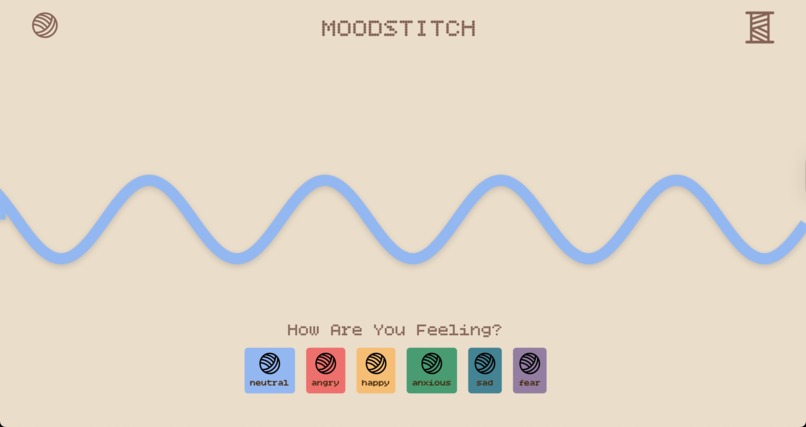
Home Page
-
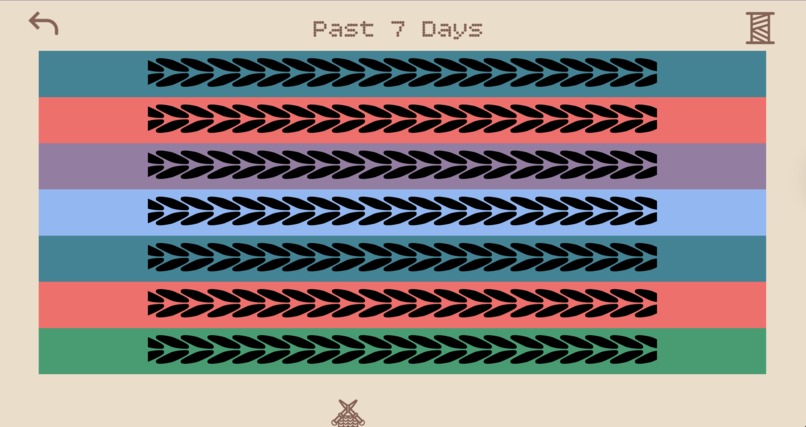
Past 7 Days
-
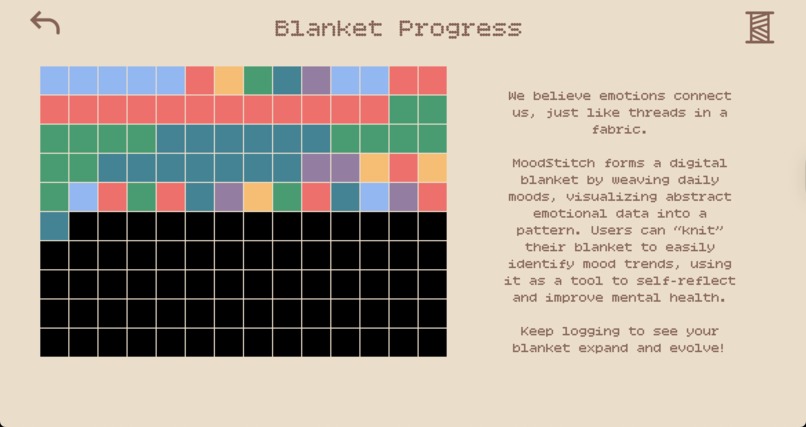
Blanket Progress
-
process
-
process
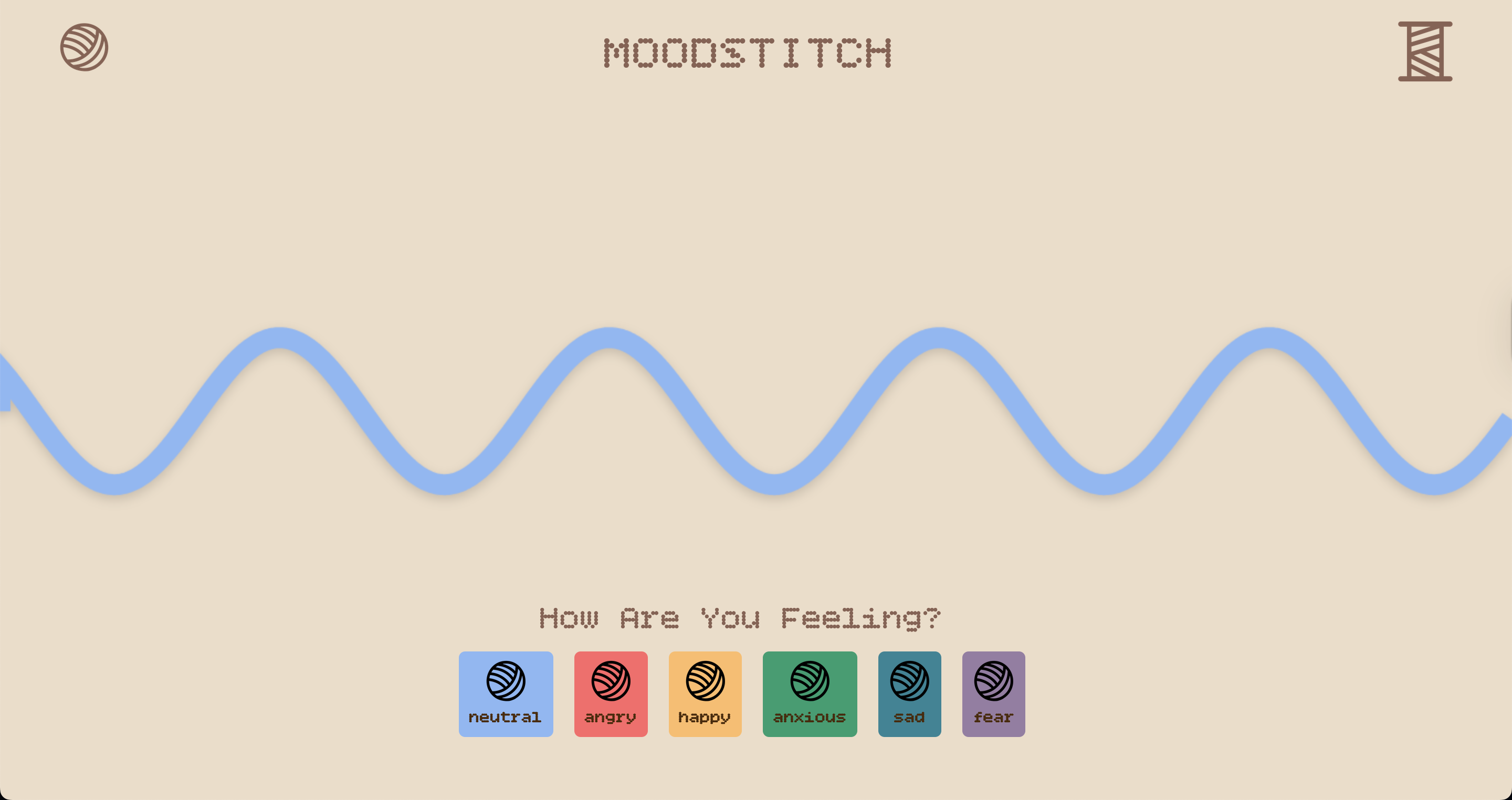
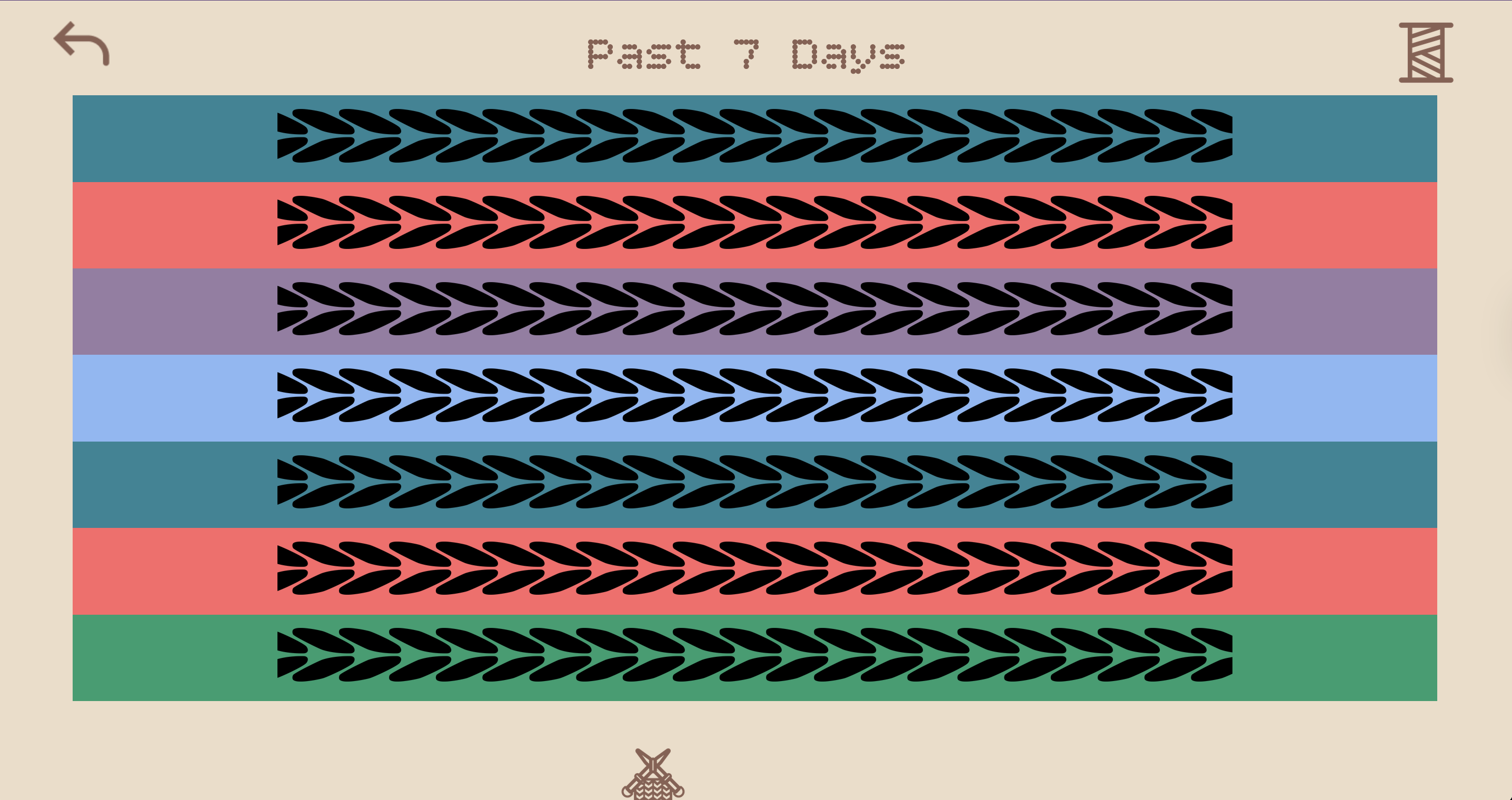
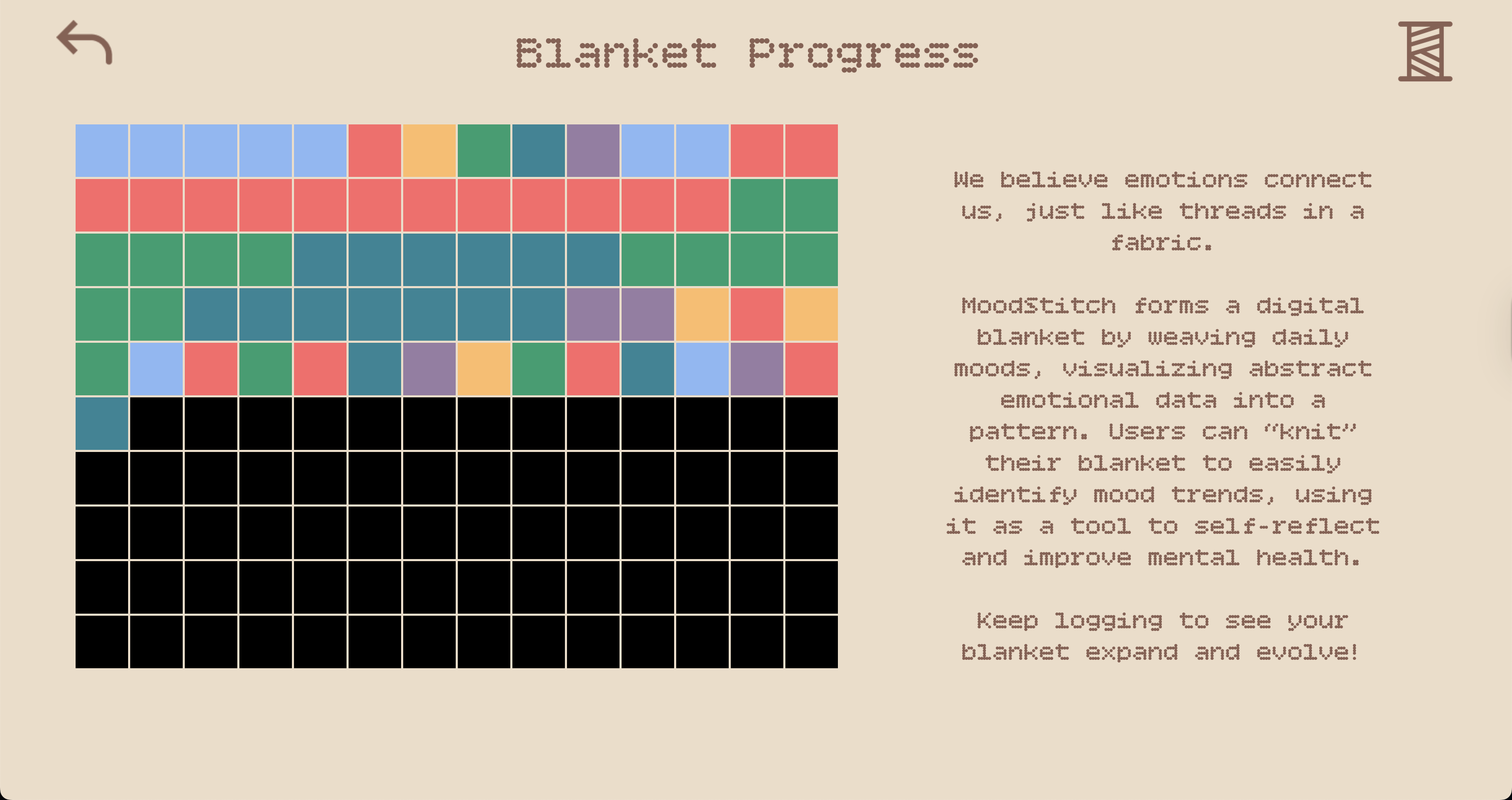
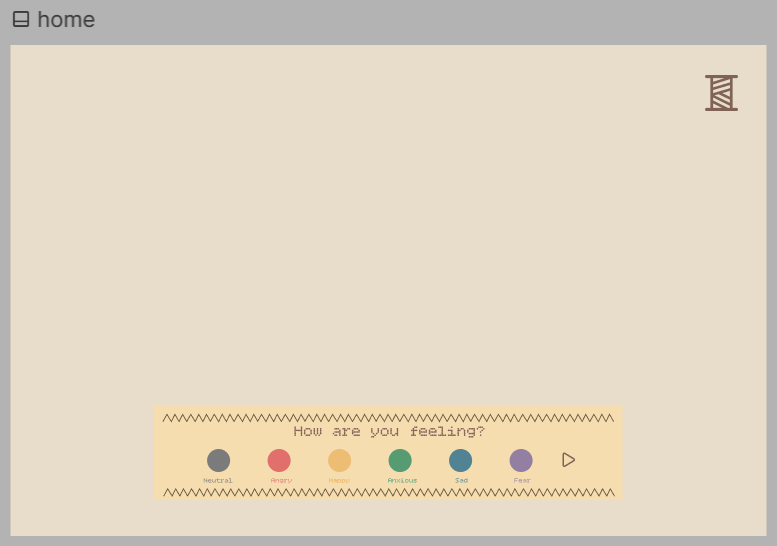
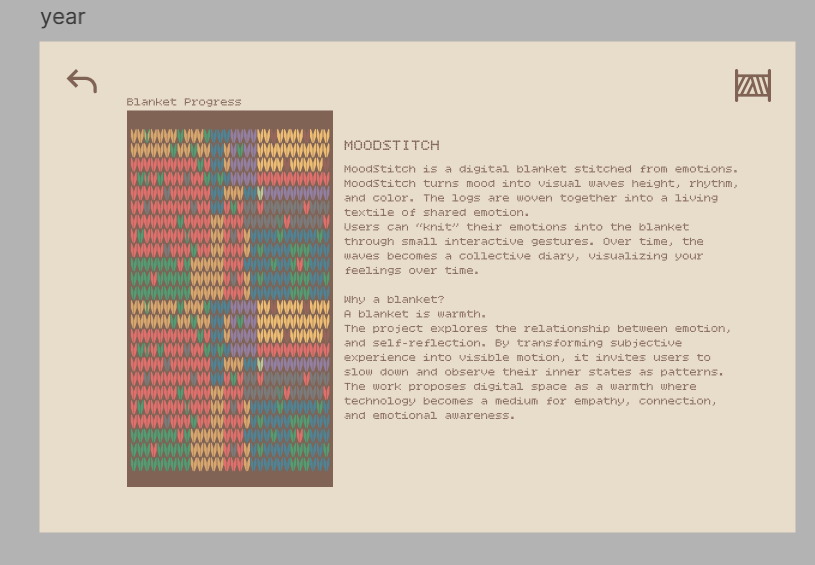
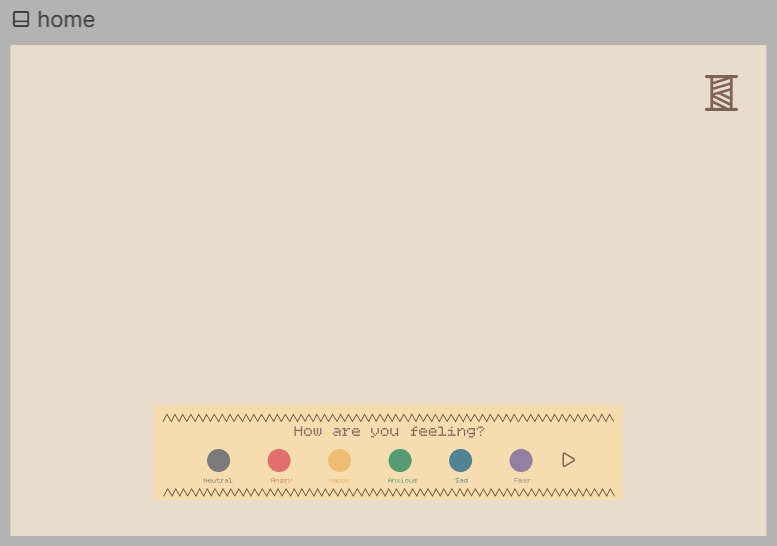
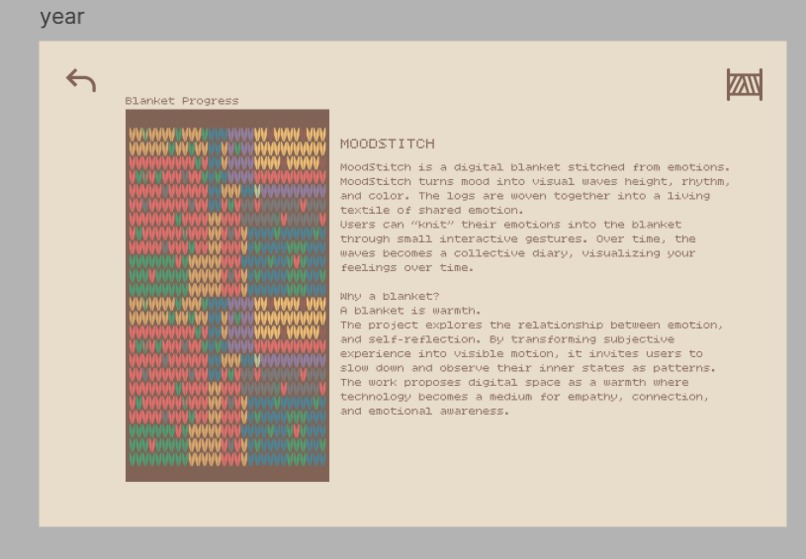
Our team made MoodStitch, which was inspired by mood journals and how it visualizes intangible concepts such as moods or emotions. We created a digital mood journal that takes the visual language of knitting to give users a tool to visually see their mood patterns and self-reflect to improve mental health. With the keywords we were given (oscillate, color, vision), we brainstormed different products we could make. Then we created a sketch on Figma that would provide us with a clear guide for when we make our website. We used HTML, CSS, and JS to build our website, aiming for a simple yet intuitive representation of a mood journal. Storing data/input, then using that data on the next page, was the most challenging part of our process. Unfamiliar with web development and JS, we struggled to find a way to store the user’s input to use in the second and third pages of our site. This was particularly a struggle because everything else was built, but then we found ourselves restarting from almost the beginning. With the help of our mentors, friends, and various AI models, we found a way to store the data locally, which solved our problems. We learned to persevere through hard times and to never give up. We also found value in seeking help from many different people, proving that different insights can give us ideas to solve difficult problems. Our team strives to make mood journaling an accessible activity for all users, allowing them to participate and improve their mental health. We would like to find a solution to save the user’s data in the long term to allow users to continue journaling on MoodStitch, as the prototype is limited to storing the data for a shorter amount of time. Perhaps in the future, we can also incorporate AI and music to elevate the experience of visualizing our moods.
Built With
- css
- figma
- html
- javascript


Log in or sign up for Devpost to join the conversation.