-
-
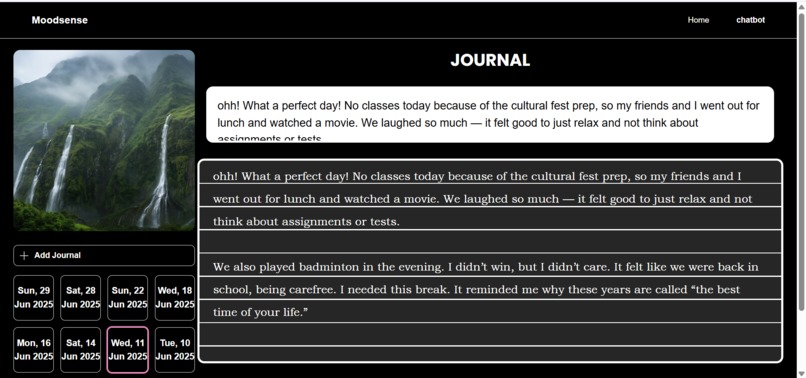
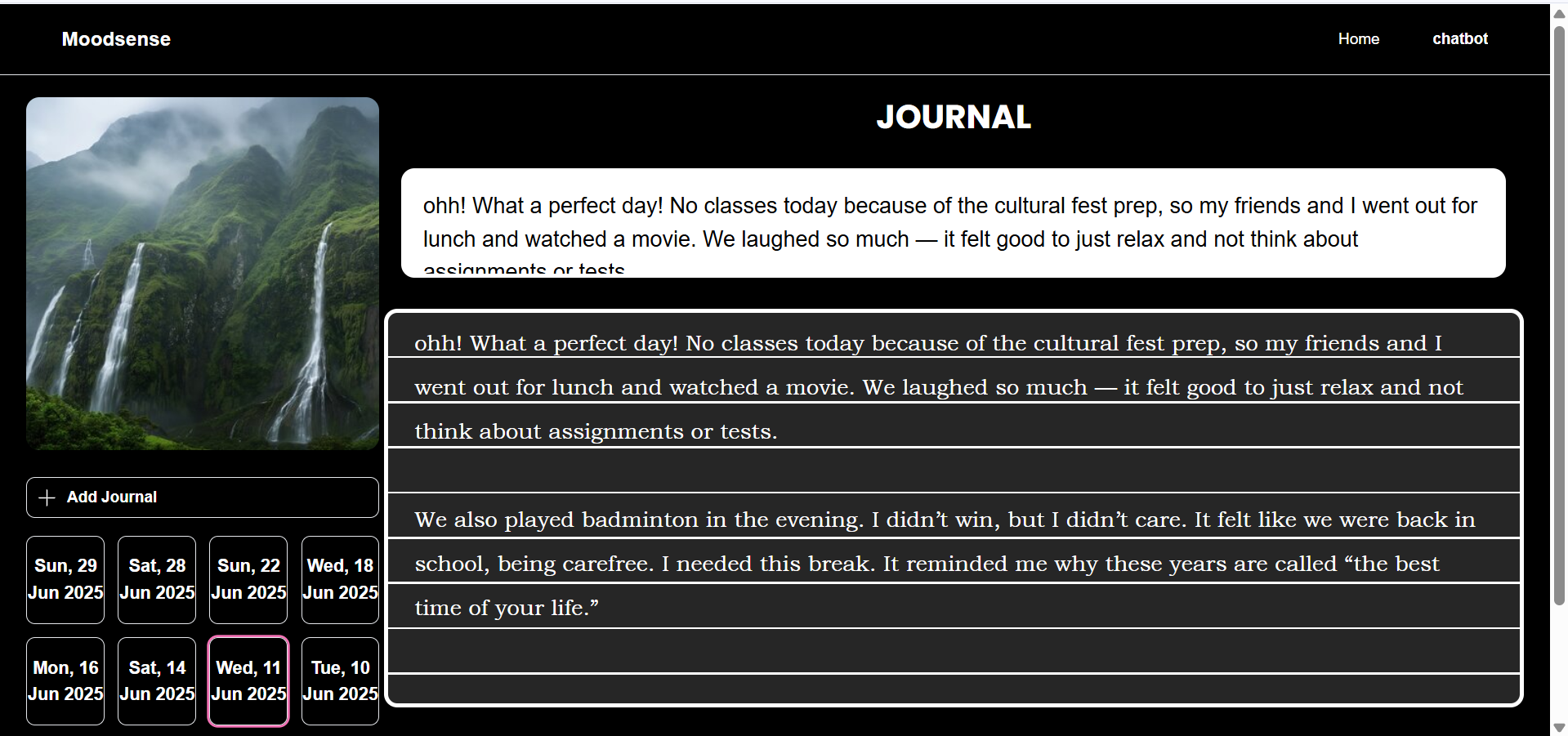
Journal
-
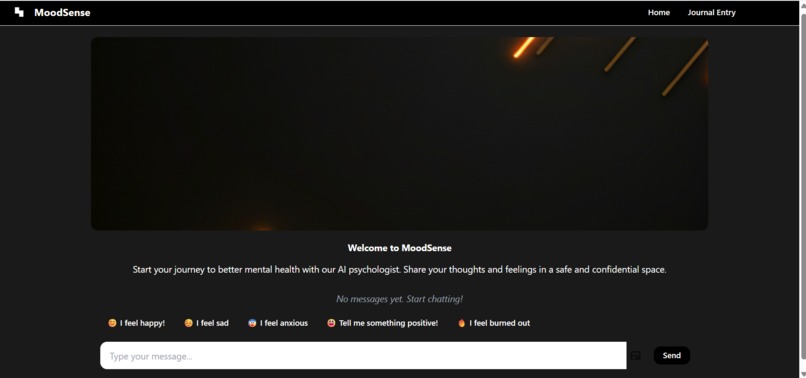
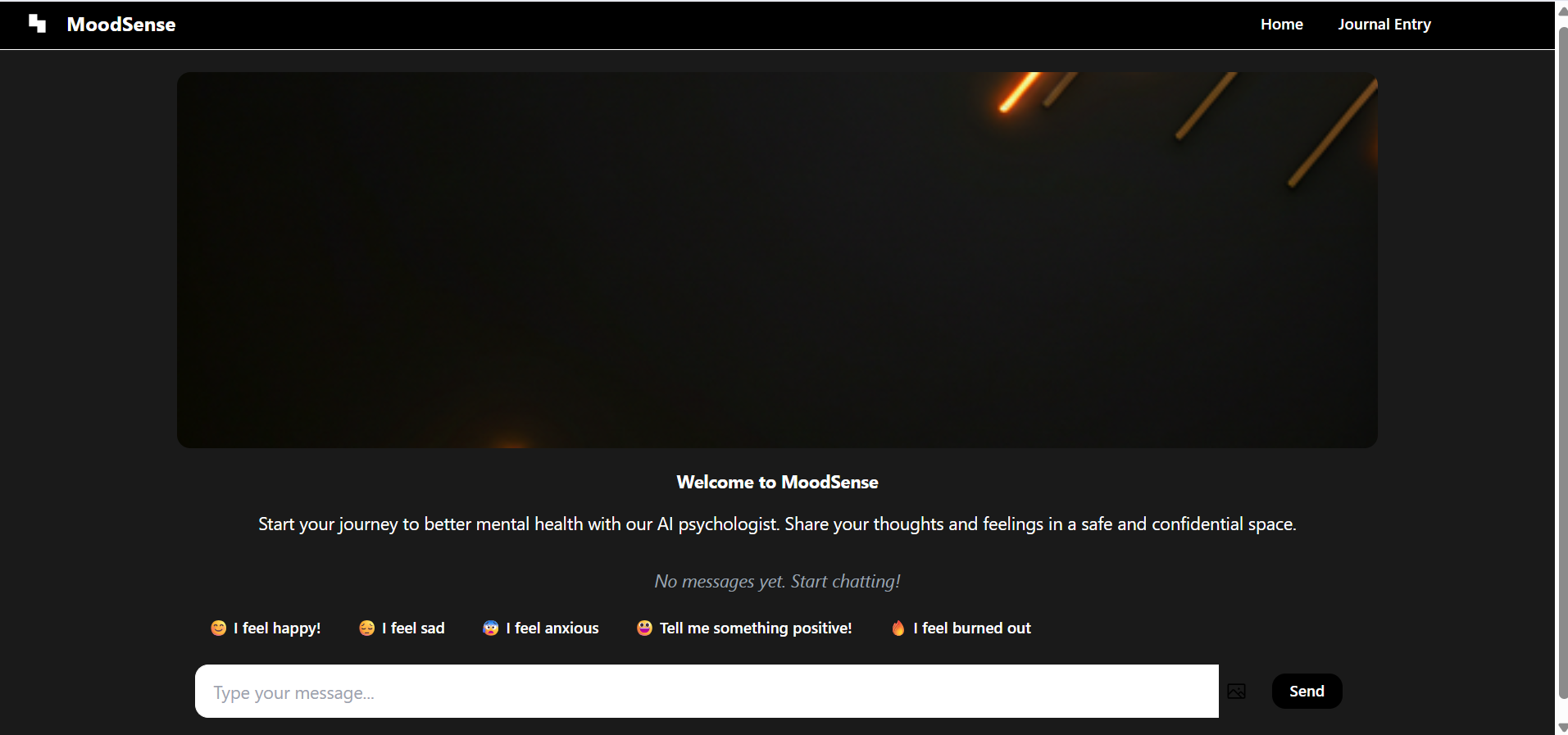
Chatbot
-
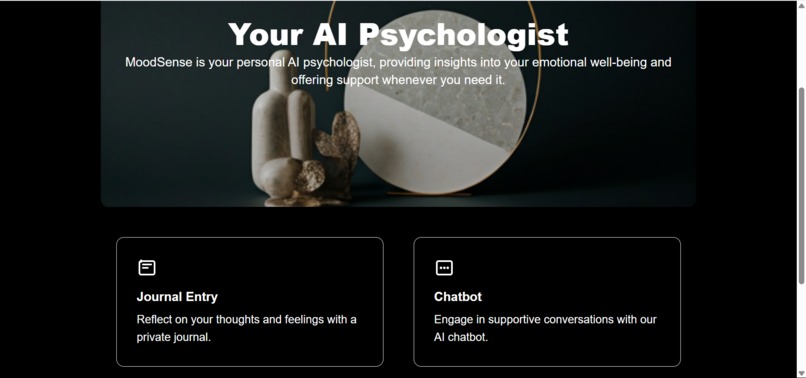
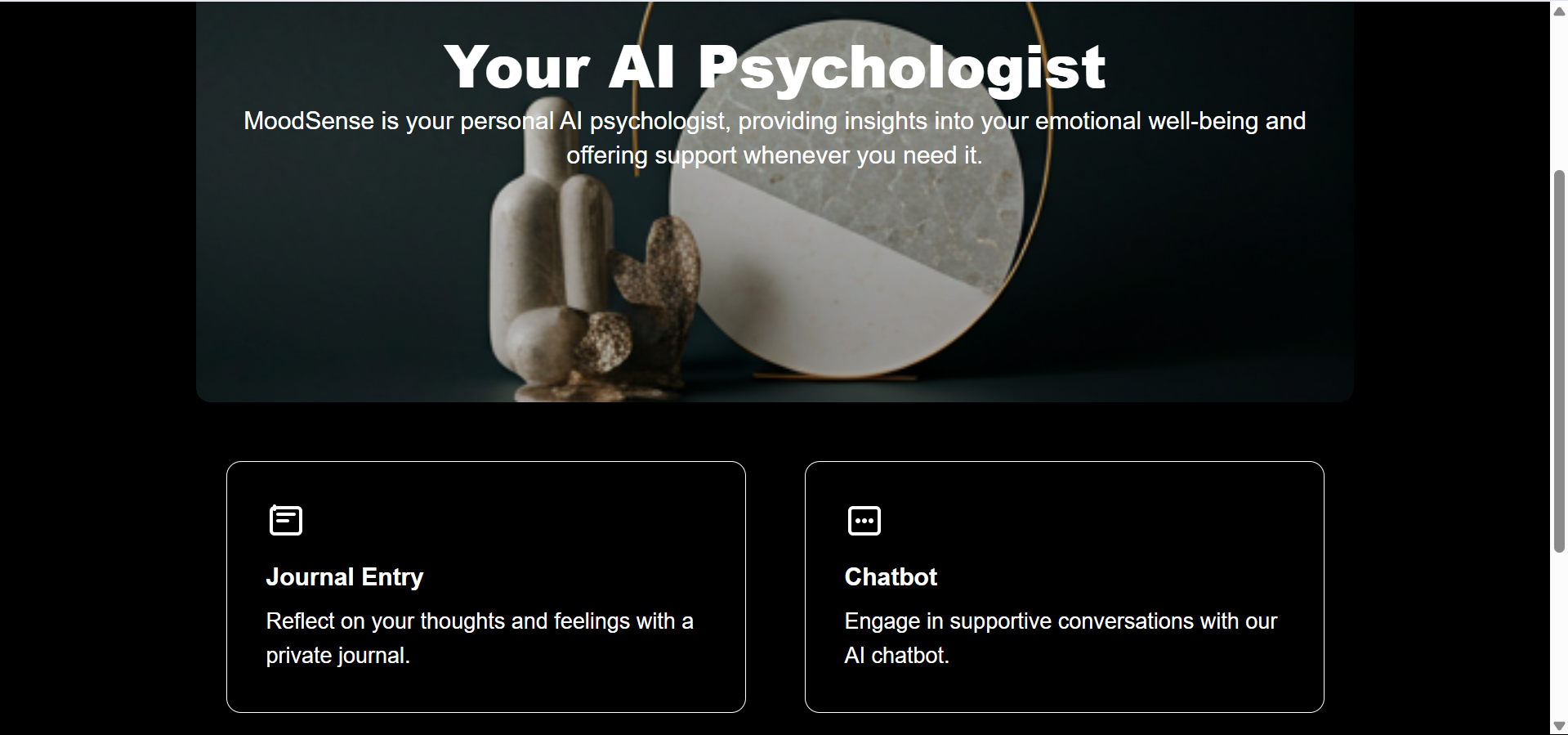
Home page
-
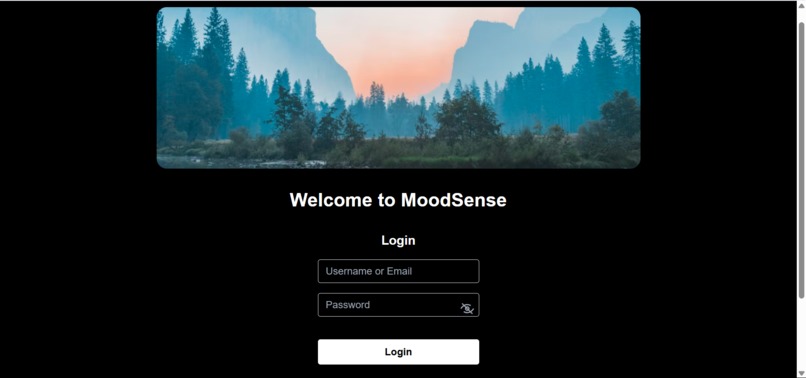
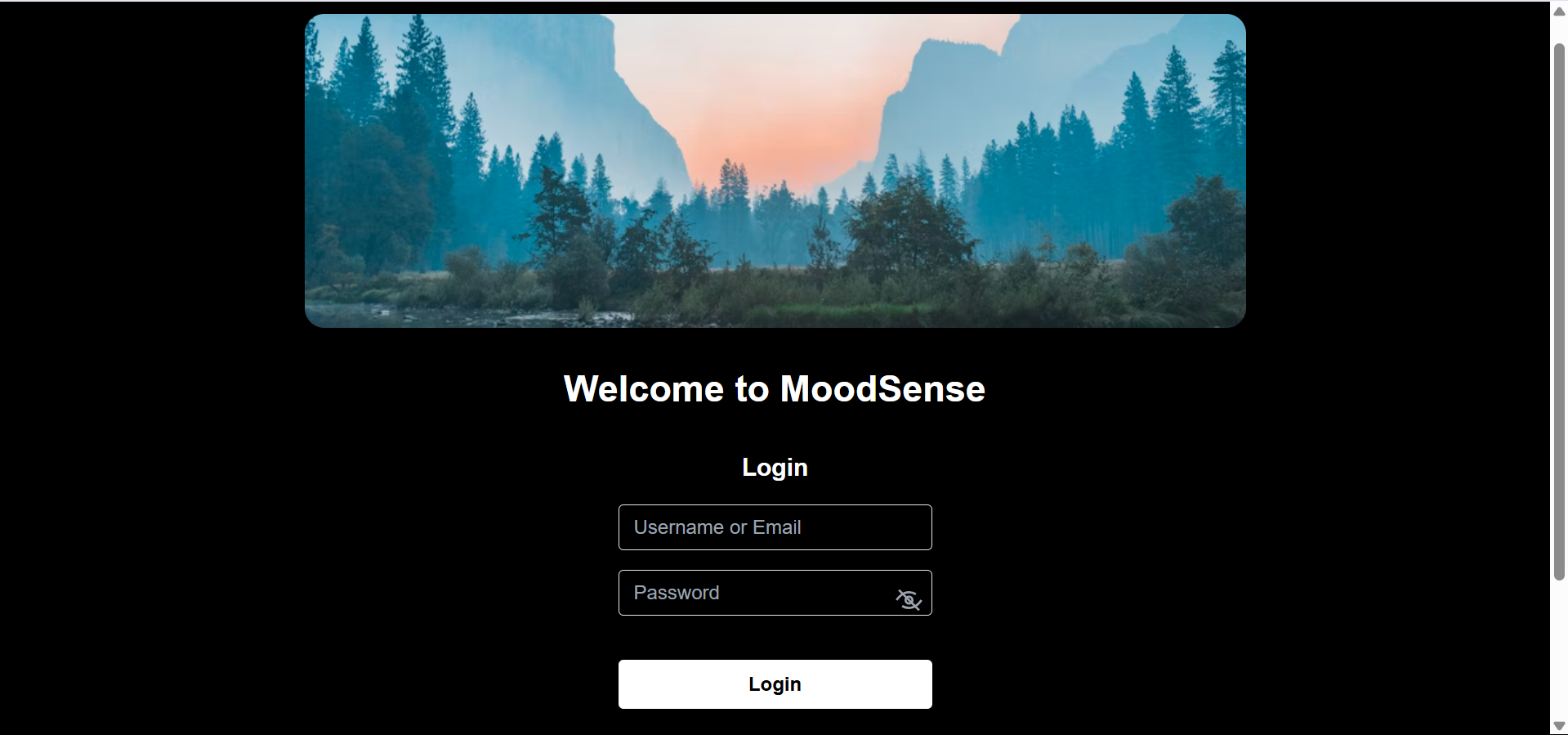
Login page/sign up page
Inspiration Mental health challenges affect millions globally, yet access to professional help remains limited by cost, stigma, and availability. We were inspired by the growing need for accessible, 24/7 mental health support that could provide immediate comfort and guidance to people struggling with anxiety, depression, stress, and other emotional challenges. We wanted to create a compassionate AI companion that could bridge the gap between crisis and professional care. What it does MoodSense is designed to be an intelligent mental health chatbot that provides personalized emotional support and coping strategies. It's intended to recognize over 100 different emotional states and mental health challenges, from anxiety and depression to work stress, relationship issues, imposter syndrome, and even climate anxiety. The bot is meant to offer contextually relevant responses, practical coping strategies, and a judgment-free space for users to process their emotions. How we built it We built MoodSense using Rasa, an open-source machine learning framework for automated text and voice-based conversations. The system architecture includes: Natural Language Understanding (NLU): Custom-trained models with over 100 intents covering various mental health scenarios Conversation Management: Rule-based and machine learning policies for natural dialogue flow Response Generation: Carefully crafted, empathetic responses for each emotional state Docker Containerization: For easy deployment and scalability REST API: Enabling integration with web and mobile applications The training data includes thousands of example conversations covering diverse emotional scenarios. Challenges we ran into The biggest challenge we're currently facing is getting the bot to work properly. Despite having comprehensive training data and well-defined intents, the bot isn't responding correctly to user inputs. We're struggling with the NLU model's accuracy and the conversation flow management. The bot seems to have difficulty understanding user messages and providing appropriate responses, which is a critical issue for a mental health application where accuracy and empathy are essential. Accomplishments that we're proud of We successfully created a comprehensive mental health chatbot framework with over 100 different emotional states and mental health challenges defined. We've built a solid foundation with extensive training data and empathetic response templates. The project is properly containerized and has a deployment-ready structure. We're proud of the thorough coverage of mental health topics and the thoughtful, compassionate response design. What we learned We learned that building a functional mental health chatbot is much more complex than initially anticipated. The gap between having good training data and creating a working bot is significant. We discovered the importance of thorough testing and validation in AI applications, especially for sensitive topics like mental health. We also learned about the challenges of fine-tuning Rasa models and the need for extensive debugging and iteration. What's next for MoodSense Our immediate priority is to fix the bot's functionality issues: Debug NLU Model: Identify and resolve why the bot isn't understanding user inputs correctly Test and Iterate: Extensive testing to ensure the bot responds appropriately to various emotional states Improve Accuracy: Fine-tune the model parameters and training data to improve response accuracy Add Error Handling: Implement better fallback mechanisms for misunderstood inputs User Testing: Conduct real user testing to identify and fix interaction issues Once the basic functionality is working, we plan to enhance it with multilingual support, voice integration, personalization features, and professional integration capabilities.


Log in or sign up for Devpost to join the conversation.