Inspiration
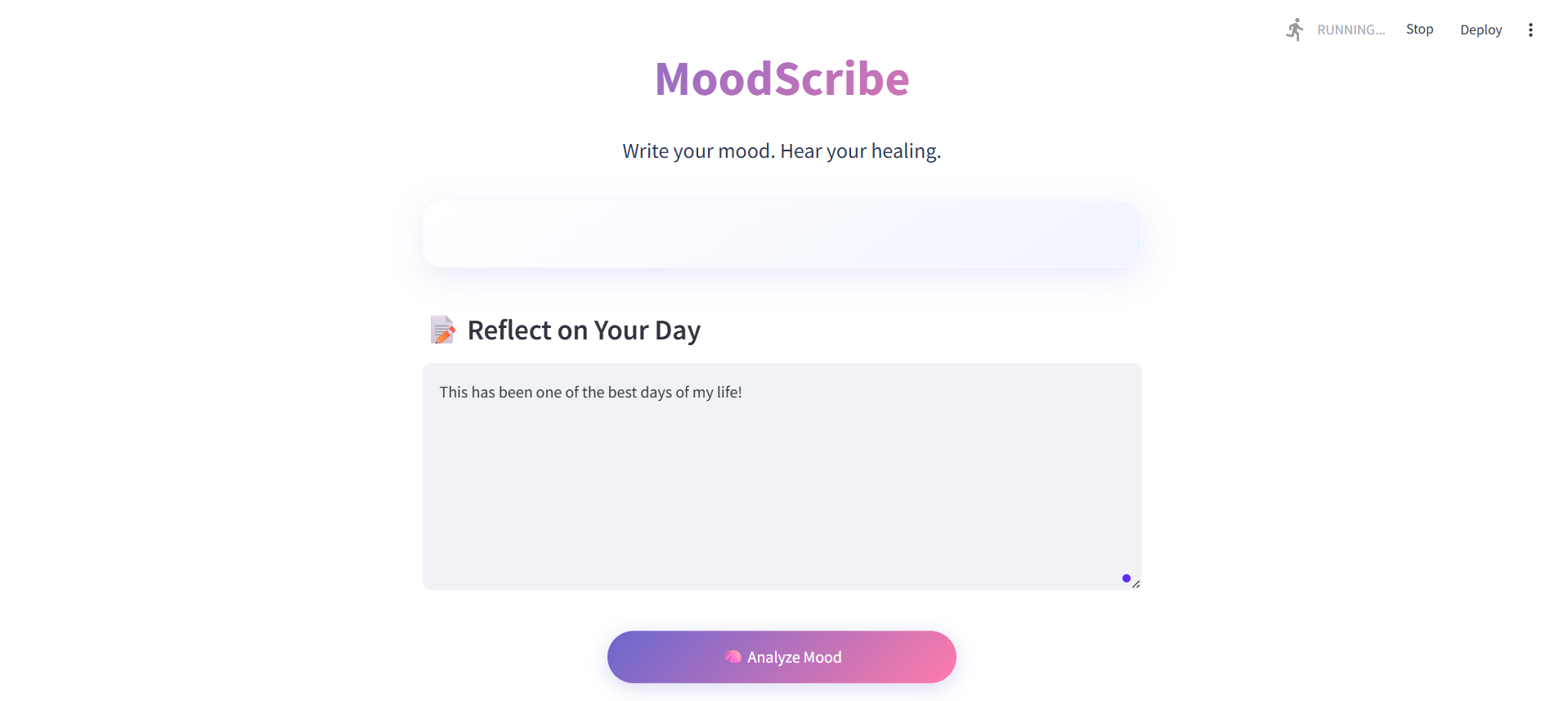
As someone deeply interested in both AI and wellness, I’ve often found that our emotional well-being is neglected in the fast-paced digital world. I wanted to create something that not only helps users understand how they feel but also supports them immediately with music, affirmations, and mental health tools. The idea came from blending journaling therapy with real-time AI insights.
What it does
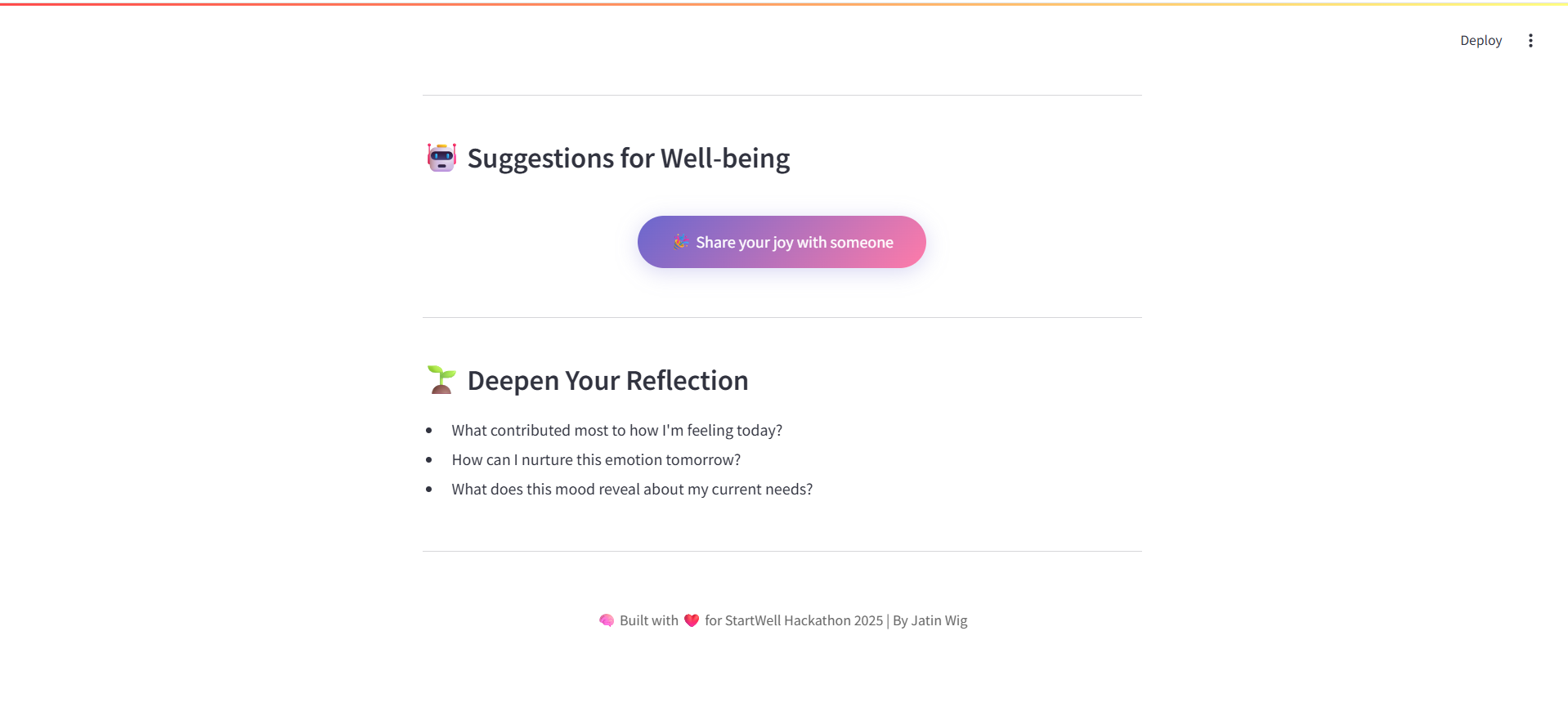
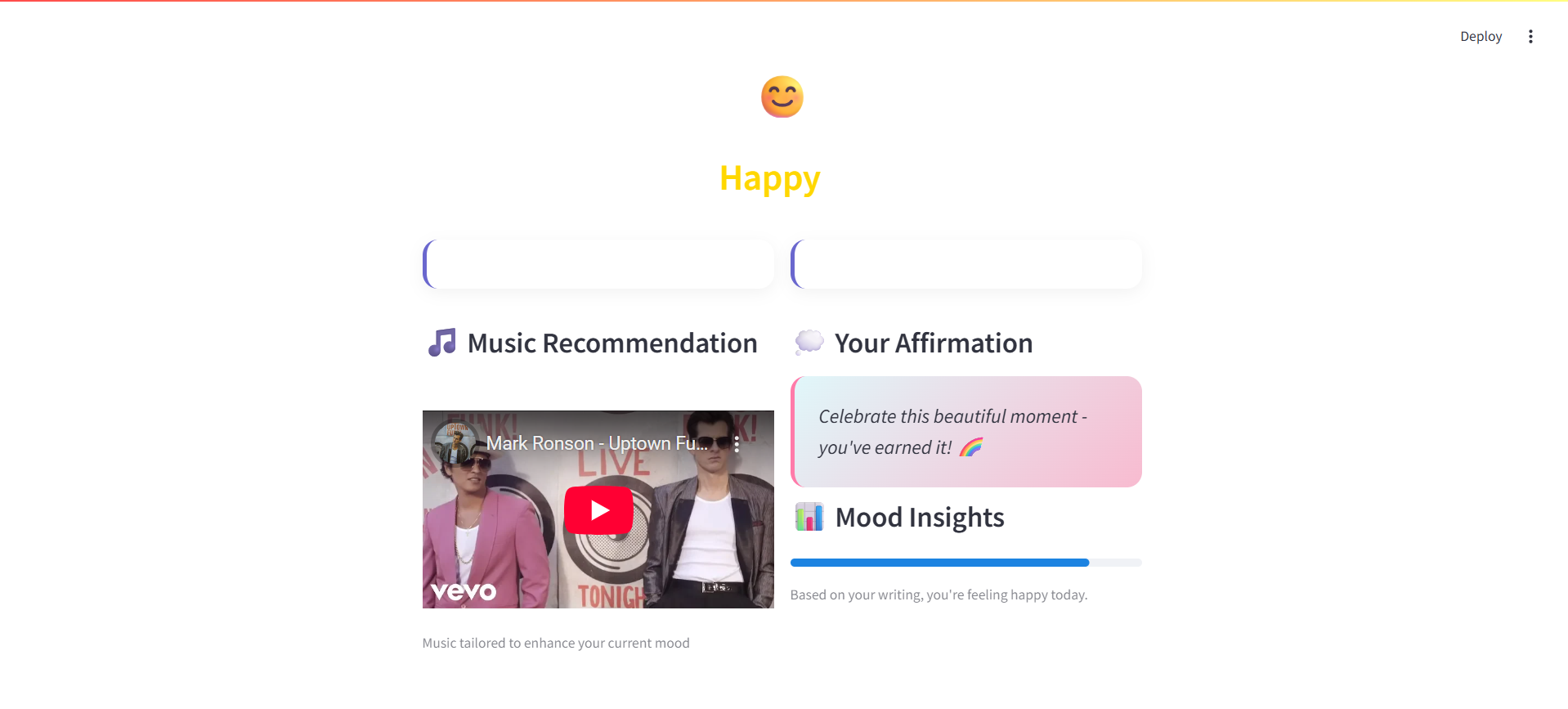
MoodScribe is an AI-powered journaling web app that analyzes your journal entries to detect your mood (Happy, Sad, Calm, or Motivated). Based on the detected emotion, it:
- Recommends mood-enhancing music
- Offers positive affirmations -Suggests actionable wellness tips (like guided meditation, focus sessions, or helpline links) -Logs all entries with mood tags for personal reflection and growth ## How I built it I built the frontend using Streamlit, focusing on an intuitive and soothing journaling interface. The backend leverages HuggingFace Transformers for real-time sentiment and mood analysis using a lightweight DistilBERT-based model. I used Pandas and CSV storage to log all entries for tracking emotional trends over time. I integrated calming YouTube videos and curated affirmations to create a complete mood support experience. Agentic AI suggestions were added to guide users toward mental wellness actions when needed. ## Challenges I ran into -Ensuring mood classification accuracy with limited categories was tricky. -Managing HuggingFace and Transformers compatibility with modern Keras versions required environment-specific workarounds. -Designing a clean, emotionally resonant UI that doesn't feel clinical or overwhelming took several iterations. -Adding useful, non-intrusive mental health actions without overstepping boundaries was a fine balance. ## Accomplishments that I'm proud of -Creating a fully functional, responsive mood journaling app in a short span of time. -Designing an experience that feels both personal and intelligent—without being invasive. -Blending AI, design, and well-being into something genuinely useful and empathetic. -Learning to serve real-time predictions while maintaining a smooth UX. ## What I learned -How to fine-tune prompt design and mood mapping in real-world text classification. -How to work with Transformers and Keras compatibility issues effectively. -The importance of subtle UX decisions when designing for emotional experiences. -How small design cues (affirmations, emojis, mood bars) greatly impact user engagement. ## What's next for Moodscribe -Integrating visual mood graphs and trends for users over time. -Adding voice-to-text journaling and multilingual mood detection. -Deploying a secure backend to enable cross-device mood logs and insights. -Partnering with wellness platforms to offer more mental health resources. -Exploring an anonymized community mood board or journal prompt system.
Built With
- agentic
- ai
- face)
- hugging
- python
- streamlit
- transformers
- ux

Log in or sign up for Devpost to join the conversation.