Inspiration
MoodMirror was inspired by moments when you don’t need advice, productivity hacks, or solutions — you just want to feel heard. During late nights, stressful days, or quiet breaks, emotions often stay unspoken. I wanted to create a small, calm space where someone can simply express how they feel and receive a gentle, thoughtful reflection in return.
This project is about presence, not pressure.
What it does
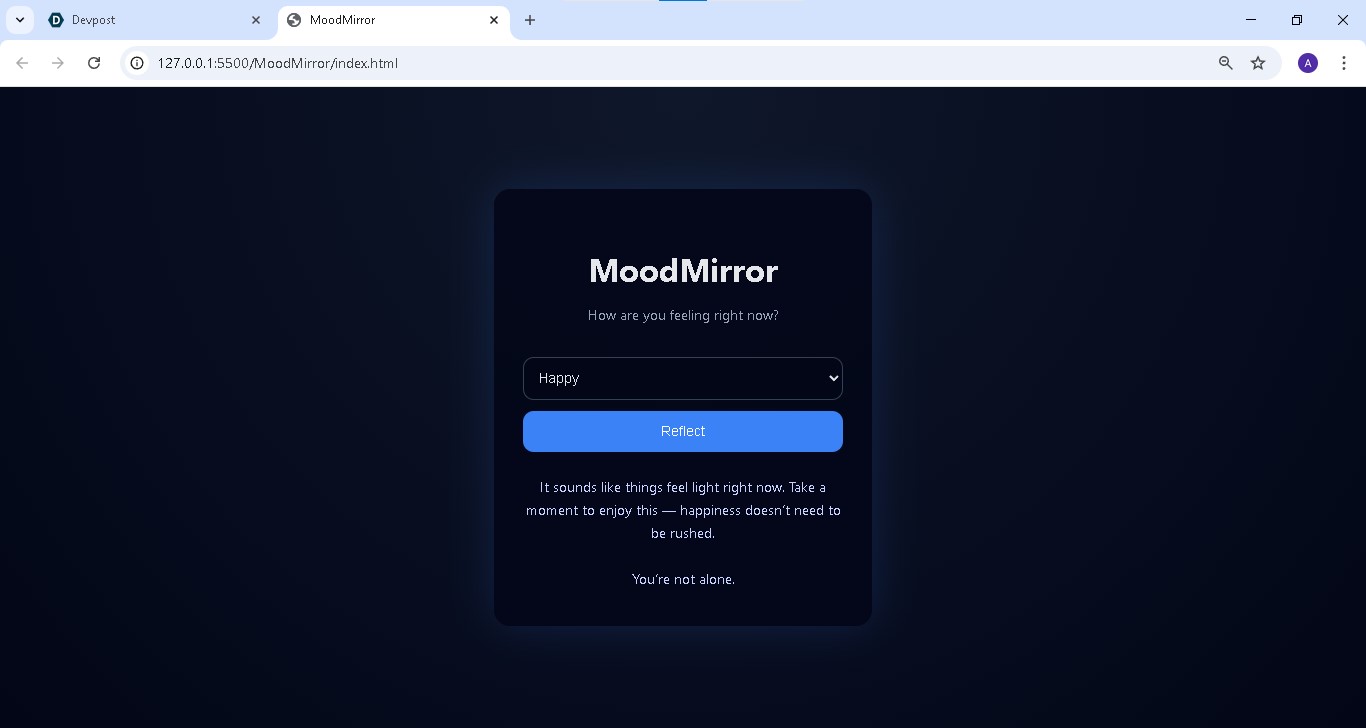
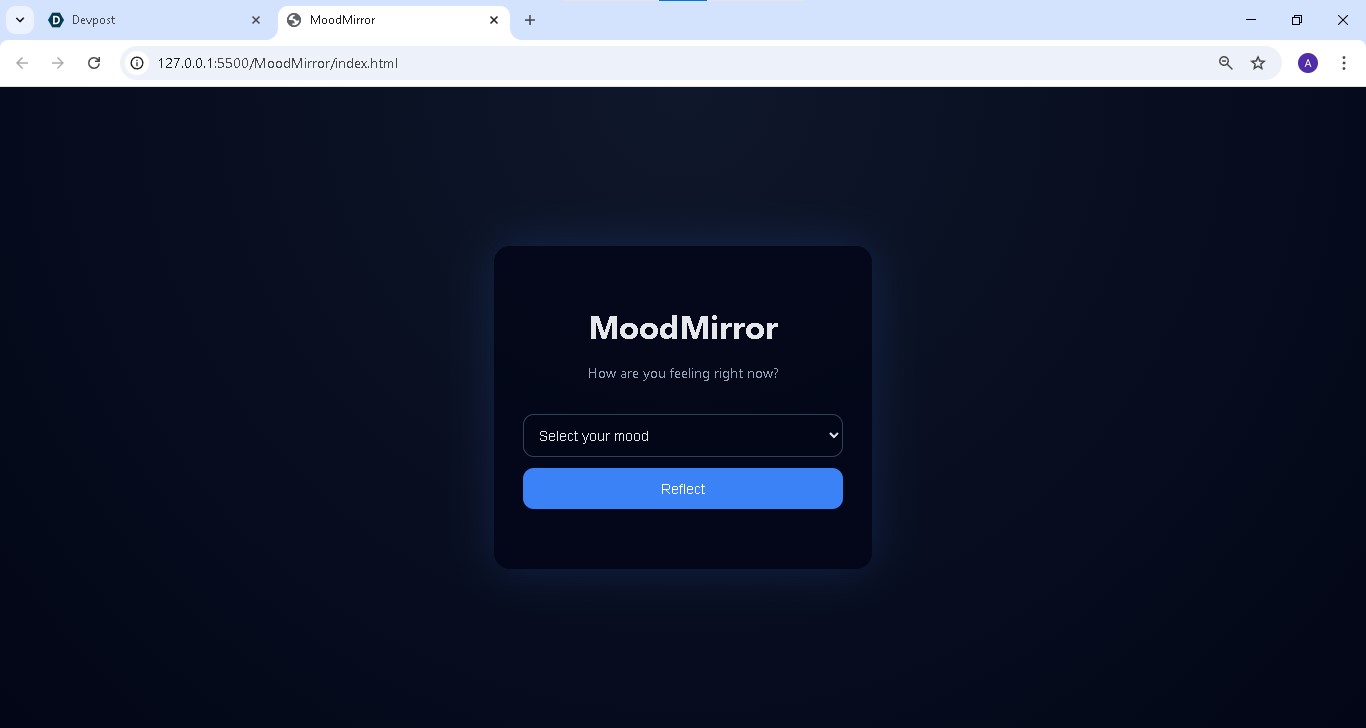
MoodMirror is an AI-powered reflective web experience. You share your current mood — happy, tired, anxious, calm, or anything in between — and MoodMirror responds with a short reflection and a gentle suggestion designed to match your emotional state.
There are no dashboards, no accounts, and no distractions — just a simple interaction focused on feeling understood.
How we built it
MoodMirror was built as a single-page web app with a minimal and calming interface. The frontend is designed to feel quiet and intentional, using soft visuals and simple interactions.
AI is used purposefully and lightly — not to overwhelm the user, but to reflect emotions in a human, empathetic way. The focus was on clarity, experience, and emotional tone rather than technical complexity.
Challenges we ran into
The biggest challenge was restraint. It was tempting to add more features, more logic, or more complexity — but this project taught me that sometimes removing things creates a stronger experience.
Balancing simplicity with meaningful AI responses was also a learning process, especially within a limited hackathon timeframe.
Accomplishments that we're proud of
Built and shipped a complete, working project within a short hackathon window
Created an AI experience that feels calm, intentional, and emotionally aware
Focused on simplicity and restraint instead of overloading features
Designed an interface that prioritizes vibe, clarity, and user feeling
Turned an abstract idea about emotions into something interactive and real
What we learned
I learned that good AI experiences don’t have to be complex — they just need to be intentional. This project helped me focus on user feeling, tone, and vibe rather than just functionality.
MoodMirror is small, imperfect, and alive — exactly the kind of project I wanted to build for this hackathon.
What's next for MoodMirror
Expanding emotional range and personalization of reflections
Adding subtle visual changes based on mood (colors, motion, typography)
Exploring optional journaling or history (while keeping it distraction-free)
Improving AI tone and depth through experimentation with prompts
Opening MoodMirror as a daily reflective tool for quiet moments
Built With
- ai
- css
- frontend-web-technologies
- html
- javascript
- prompt-based

Log in or sign up for Devpost to join the conversation.