-
-
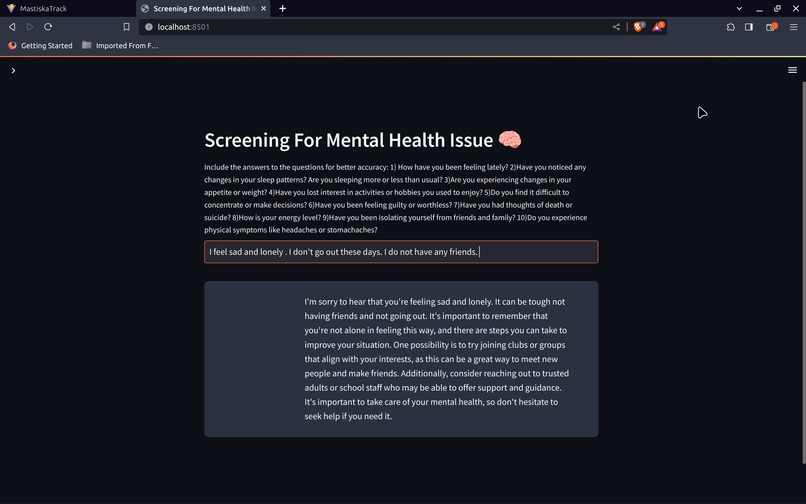
Mental health screening
-
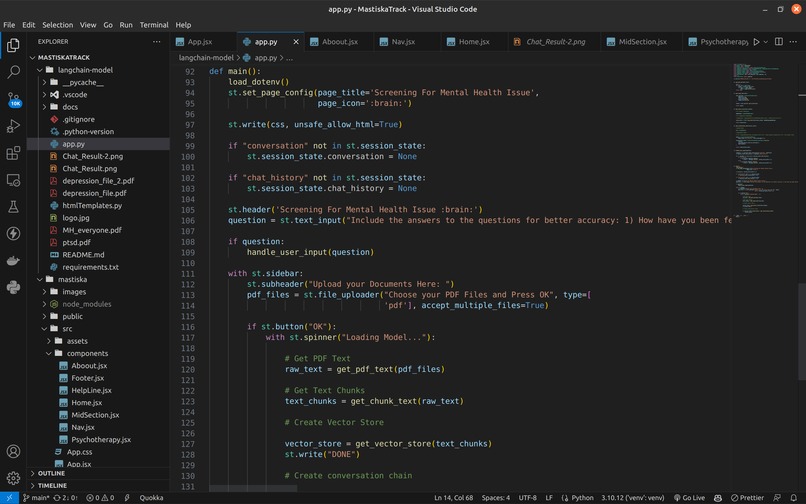
code
-
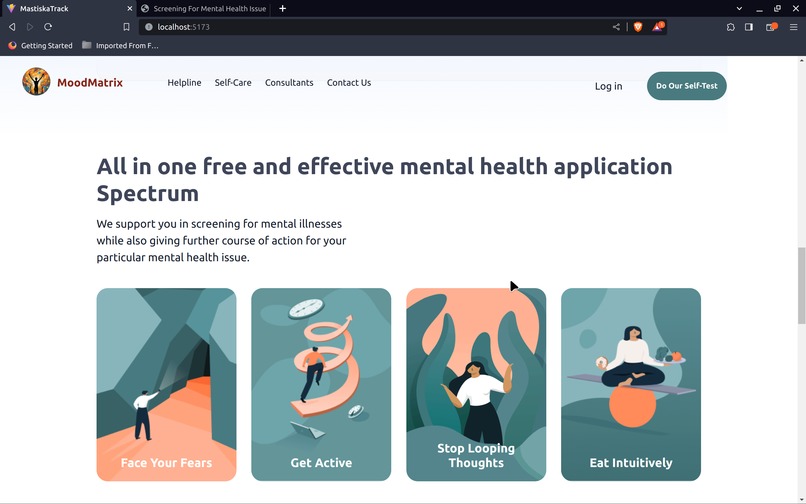
mid section
-
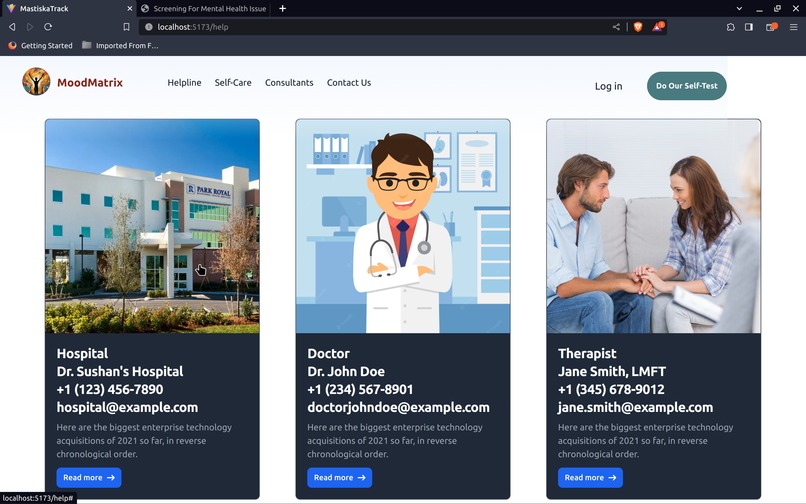
helpline
-
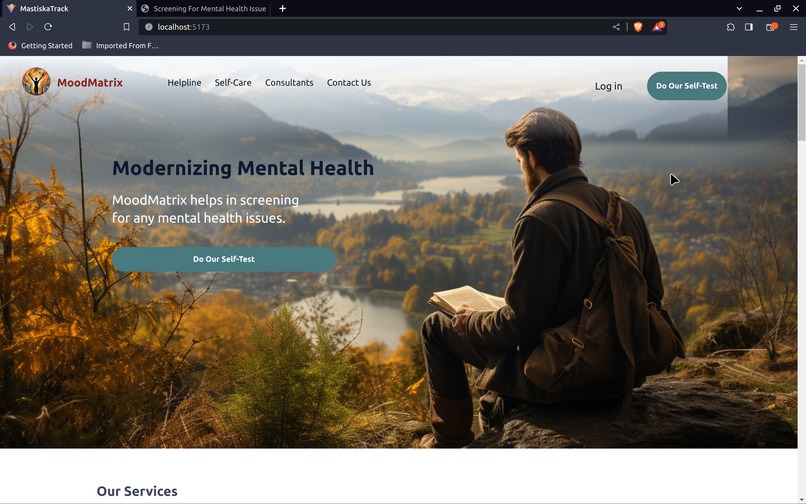
Landing page
MoodMatrix Project Story
Inspiration
The inspiration for MoodMatrix came from a collective desire to make a positive impact on mental health. We recognized the increasing prevalence of mental health issues and wanted to create a tool that could help individuals assess and address their mental well-being in a user-friendly and accessible way. We believed that modern technology, combined with advanced natural language processing, could be a valuable resource for those seeking mental health support.
What it does
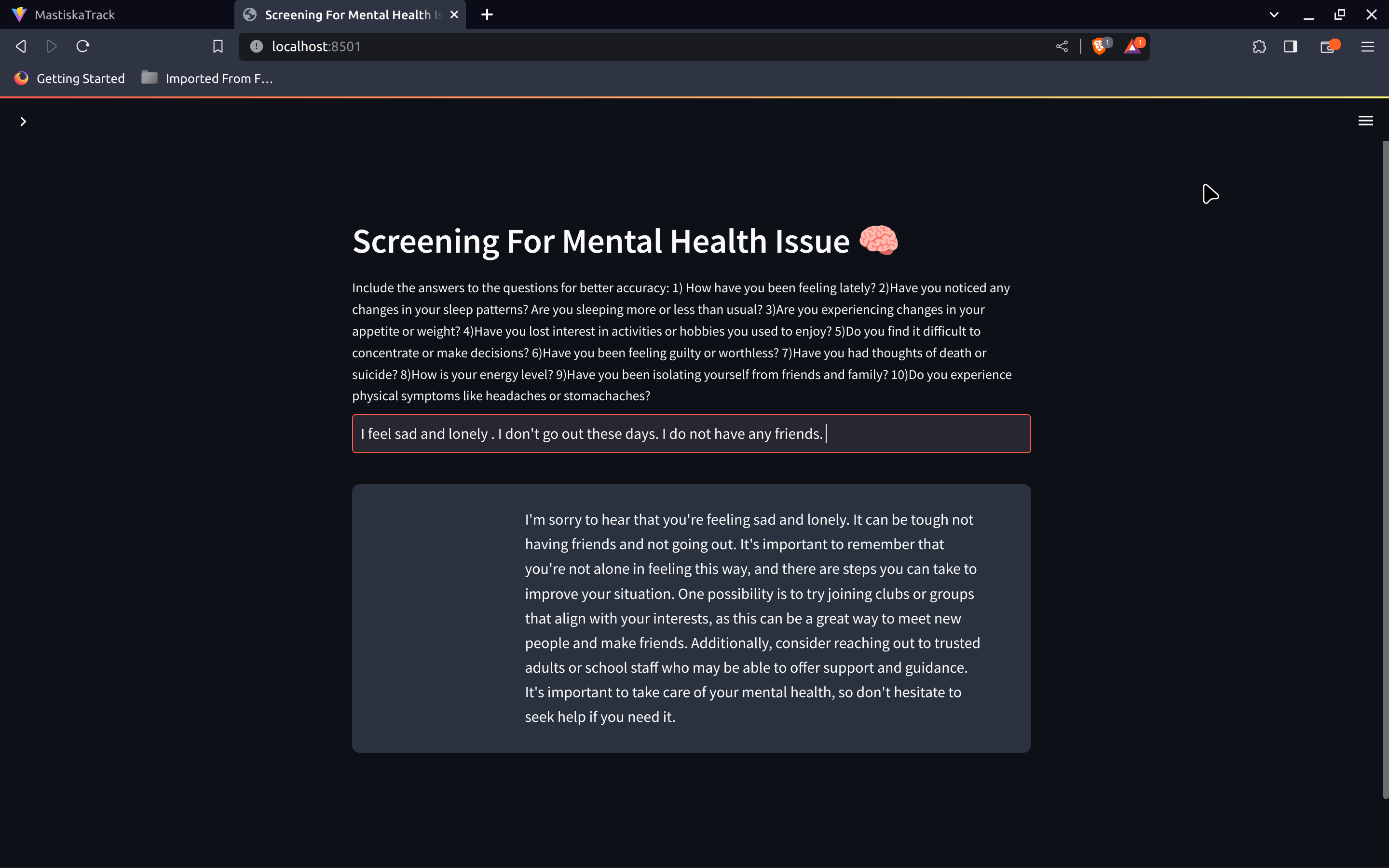
MoodMatrix is a web application designed to evaluate an individual's mental health status. Users are prompted to answer a set of questions related to their emotions, feelings, and mental state. The magic happens behind the scenes, where MoodMatrix employs state-of-the-art sentiment analysis techniques powered by the GPT API to analyze and interpret these responses. The result is a personalized assessment of the user's mental health.
But MoodMatrix doesn't stop there. After the assessment, it provides users with tailored recommendations for actions they can take to improve their mental well-being. This aspect of the project was crucial to us because we wanted to empower users with practical guidance and resources.
How we built it
Building MoodMatrix was a collaborative effort that involved a diverse range of skills and technologies:
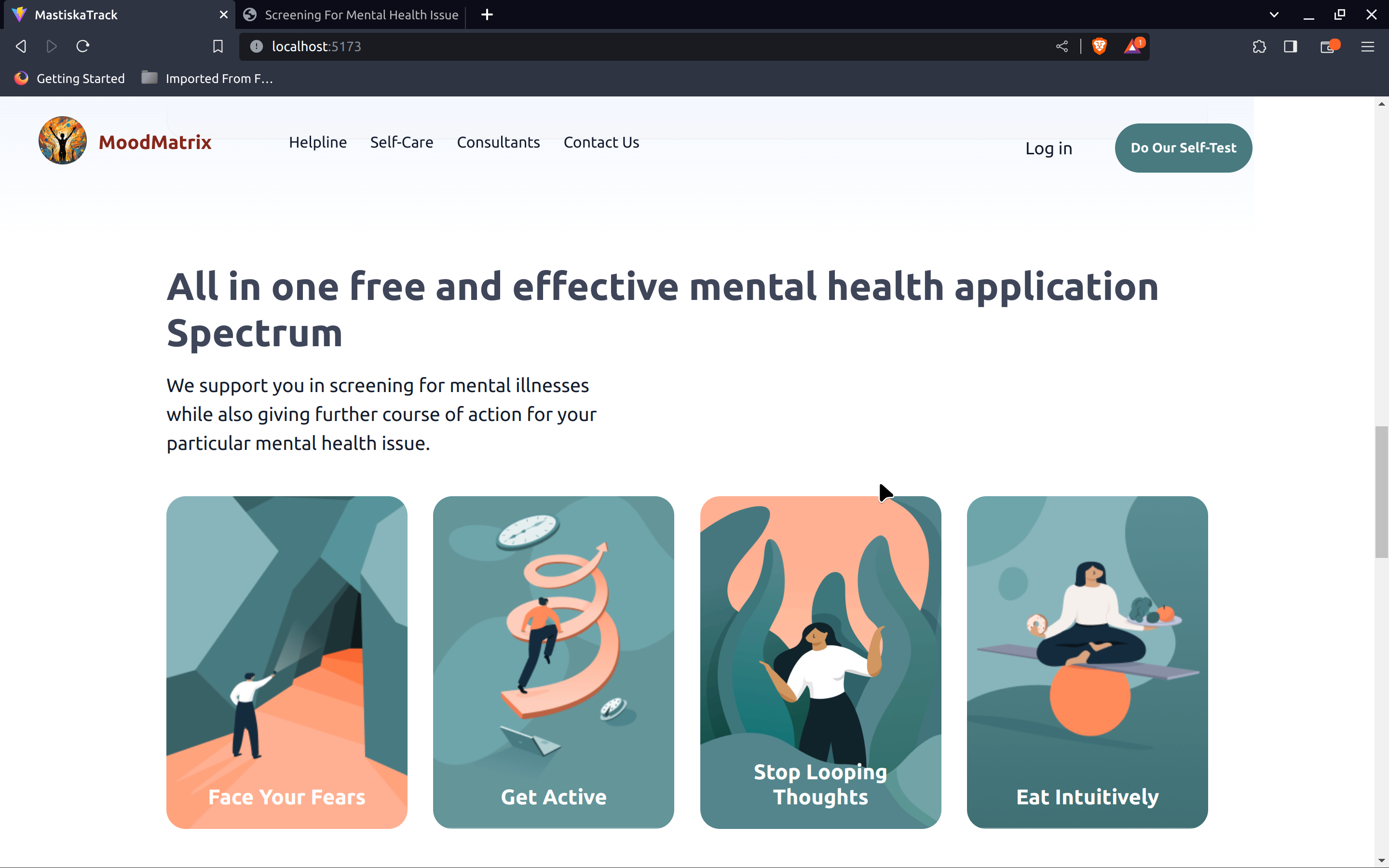
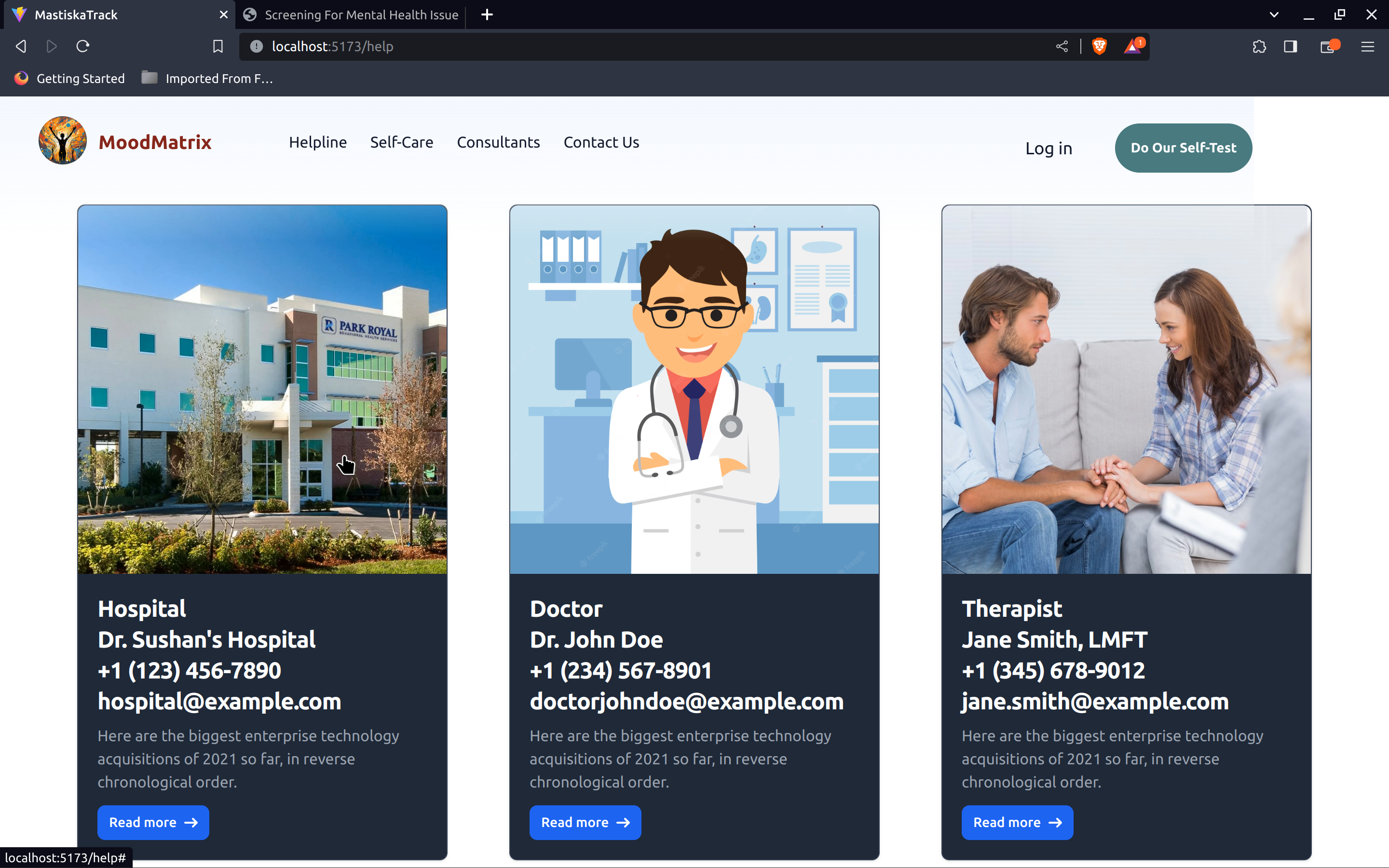
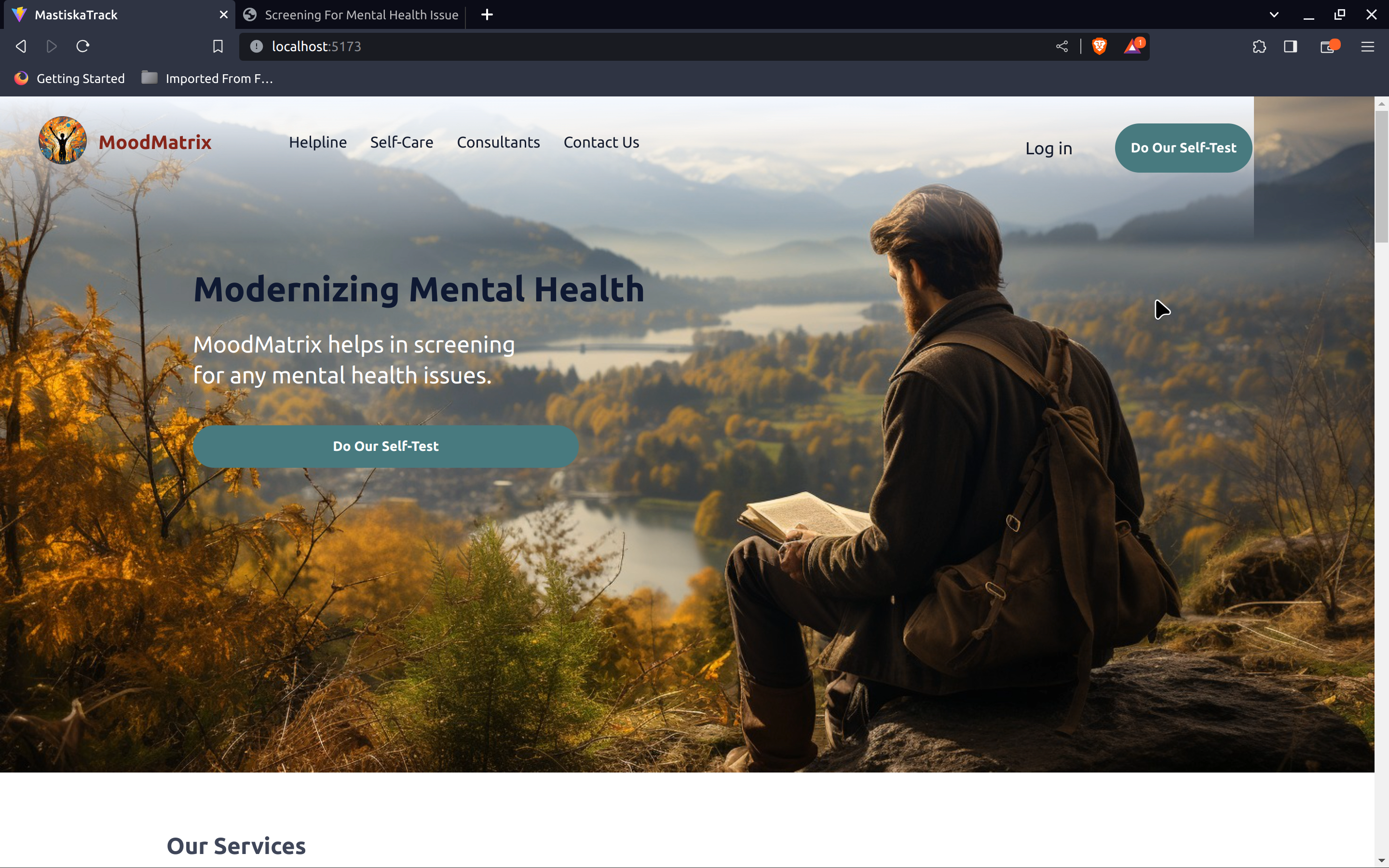
Frontend: We used ReactJS to create a user-friendly and responsive landing page. React's component-based architecture allowed us to build a dynamic and interactive interface that users find intuitive.
Web Application: Streamlit, a Python framework for web applications, served as the backbone of our application. It allowed us to rapidly develop and test our sentiment analysis model while maintaining a clean and minimalistic user interface.
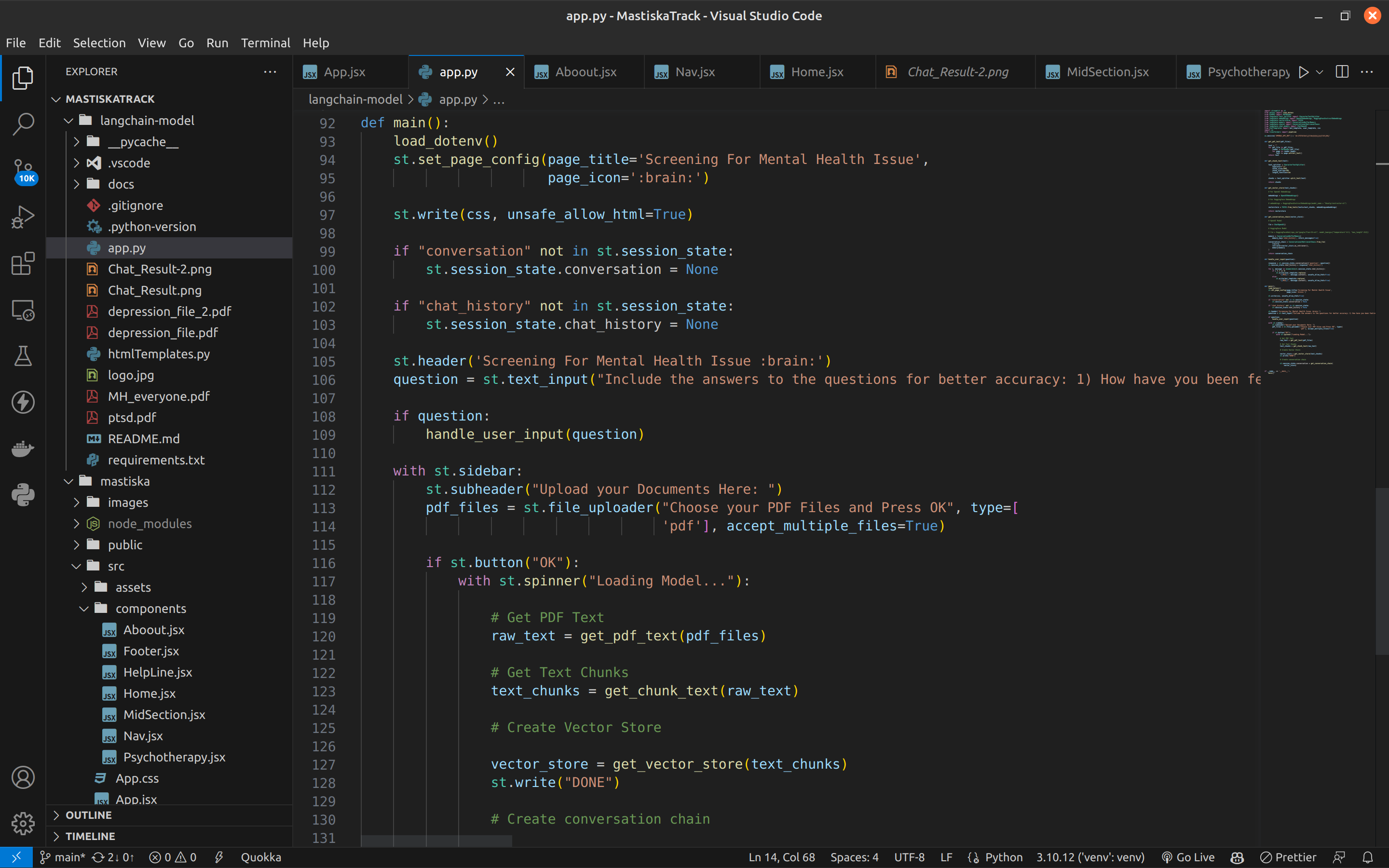
Sentiment Analysis: The core of MoodMatrix is its sentiment analysis model. We harnessed the power of the GPT API, which provided advanced natural language processing capabilities. Our model was trained on a wide range of medical PDFs, journals, articles, and research papers, making it well-equipped to understand and assess mental health-related responses.
Vector Database: To efficiently store and retrieve embeddings, we used a vector database. This enabled us to compare user responses with embeddings of medical literature, ensuring the accuracy of our assessments.
Langchain Framework: We integrated the Langchain Python framework into our model-building process, which streamlined development and ensured that our project was well-structured.
OpenAI API Key: To access the GPT API and embed medical knowledge into our model, we relied on the OpenAI API key, which was an integral part of our project.
Challenges we ran into
Building MoodMatrix presented several challenges along the way:
Data Integration: Incorporating medical literature into our model required extensive data preprocessing and integration. We faced challenges in cleaning and structuring the data for effective training.
Model Tuning: Fine-tuning the sentiment analysis model to accurately assess mental health status was a complex task. We had to iterate multiple times to achieve the desired accuracy.
UI/UX Design: Creating a user-friendly interface that could effectively convey the purpose of the app while maintaining simplicity was a design challenge. We conducted user testing to refine the interface.
Scalability: As the user base grew, we had to ensure that our infrastructure could handle increased demand. This required optimizing our server and database architecture.
Accomplishments that we're proud of
We're immensely proud of what MoodMatrix has become:
Impact: The project has the potential to positively impact the mental health of countless individuals by providing accessible assessments and recommendations.
Technology Integration: Successfully integrating advanced technologies like the GPT API and vector databases into a cohesive application was a significant accomplishment.
User-Centric Design: The user interface was designed with a strong focus on user experience, making MoodMatrix approachable and easy to use.
Team Collaboration: Our diverse team collaborated effectively across different domains to bring MoodMatrix to life.
What we learned
MoodMatrix was a tremendous learning experience:
Natural Language Processing: We deepened our understanding of NLP and sentiment analysis, gaining hands-on experience in working with cutting-edge language models.
Web Development: Developing a web application using ReactJS and Streamlit was a valuable learning opportunity, teaching us best practices in front-end and back-end development.
Data Handling: Dealing with extensive datasets and embeddings enhanced our data handling and preprocessing skills.
Project Management: Managing a complex project with multiple components and dependencies improved our project management and teamwork abilities.
What's next for MoodMatrix
Our journey with MoodMatrix is far from over. We have ambitious plans for its future:
User Feedback Integration: We aim to continually improve MoodMatrix based on user feedback, refining the assessment model and expanding the knowledge base.
Mobile App: We're exploring the development of a mobile app version to increase accessibility and reach a broader audience.
Partnerships: Collaborating with mental health organizations and professionals to enhance the quality of recommendations and support provided by MoodMatrix.
Research: Conducting research to validate the effectiveness of MoodMatrix in improving mental health outcomes and seeking ways to make it even more personalized and accurate.
MoodMatrix is more than just an app; it's a commitment to improving mental health outcomes and leveraging technology for the betterment of individuals' lives.
Built With
- langchain
- machine-learning
- openai
- python
- react
- streamlit


Log in or sign up for Devpost to join the conversation.