Inspiration
We wanted to create a lightweight mental wellness tool that anyone could use instantly, without logins, sign-ups, or app store downloads. Mental health tracking can often feel overwhelming or invasive, so we aimed for something quick, stigma-free, and encouraging.
What It Does
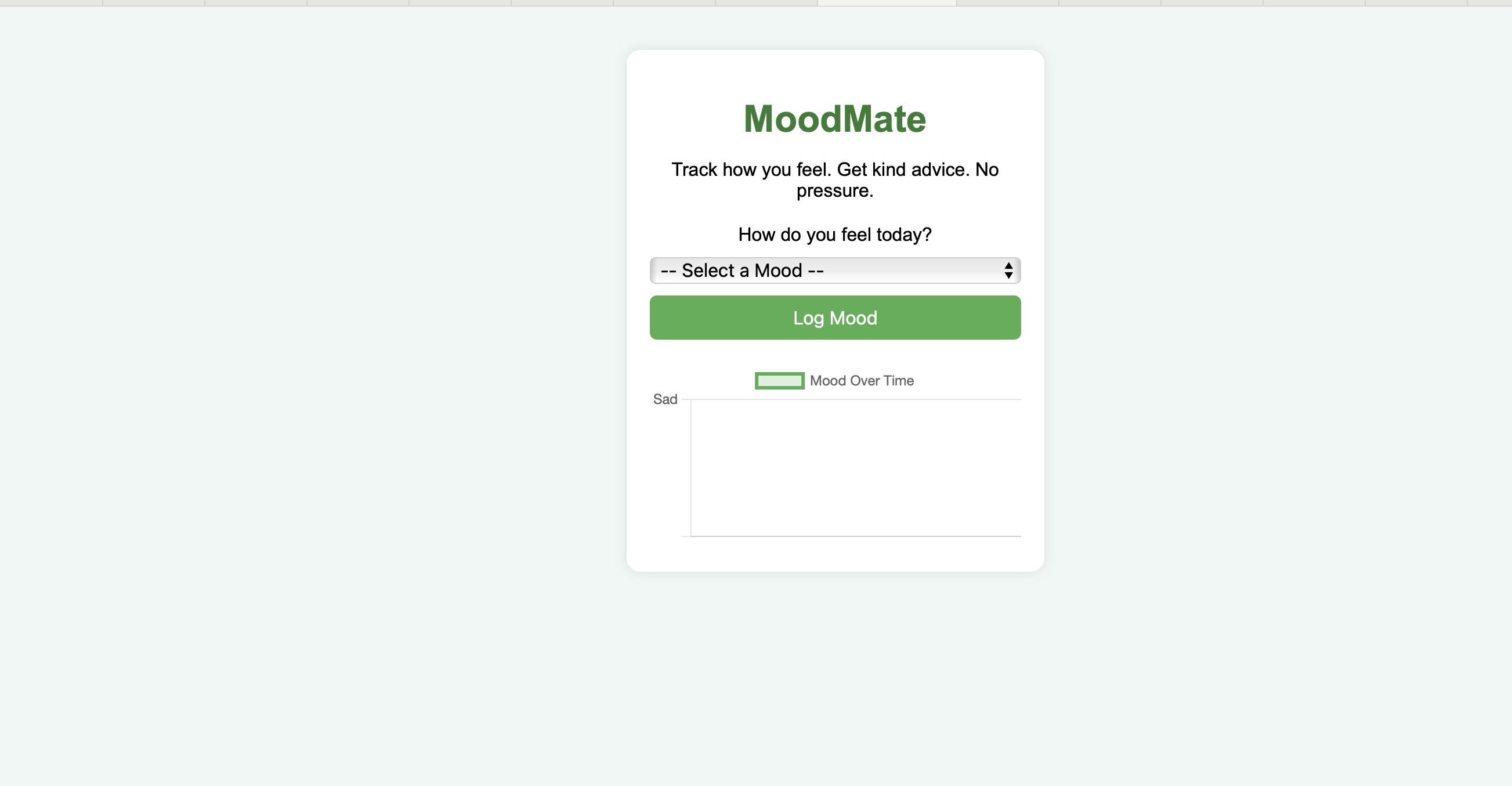
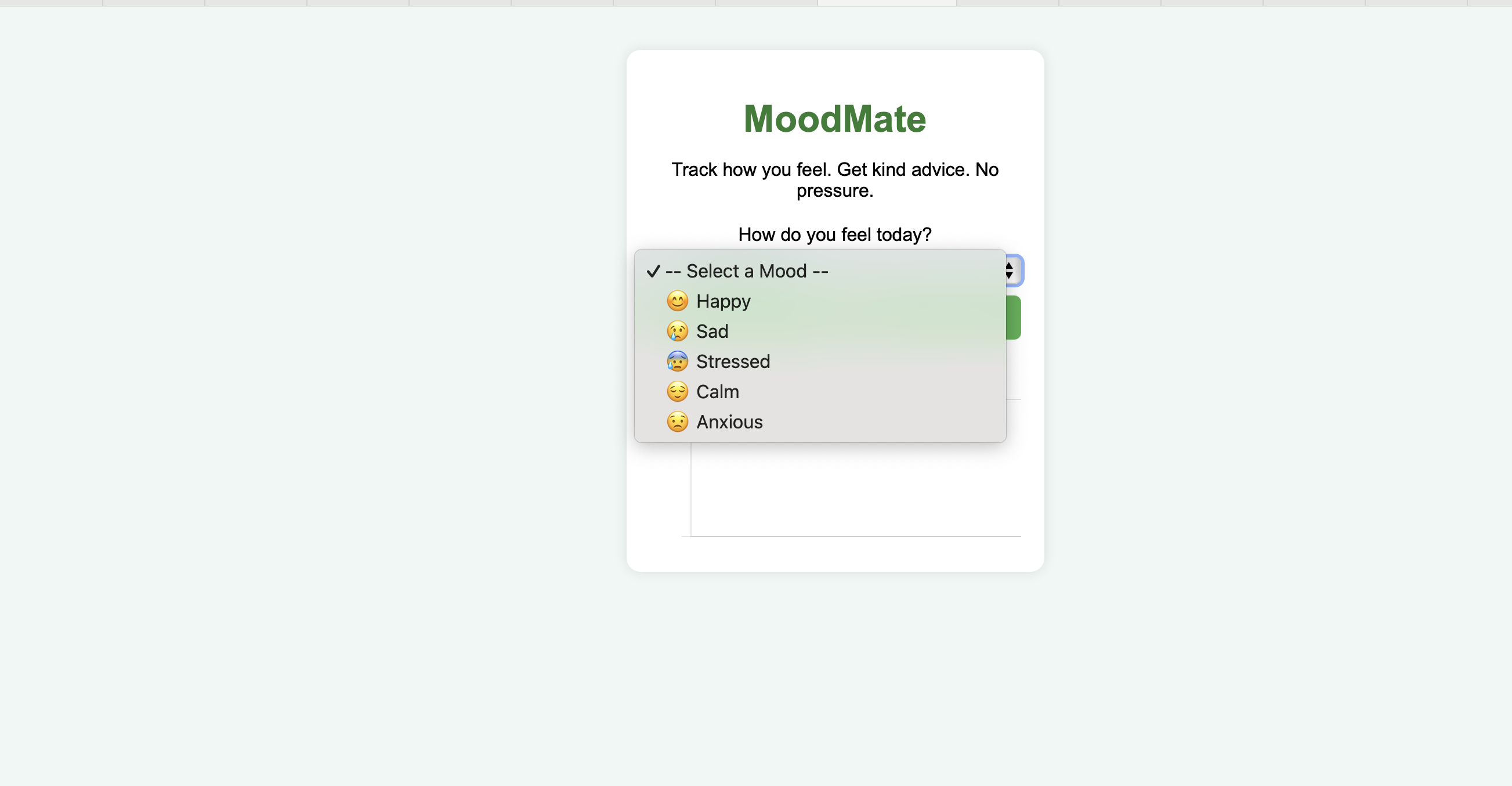
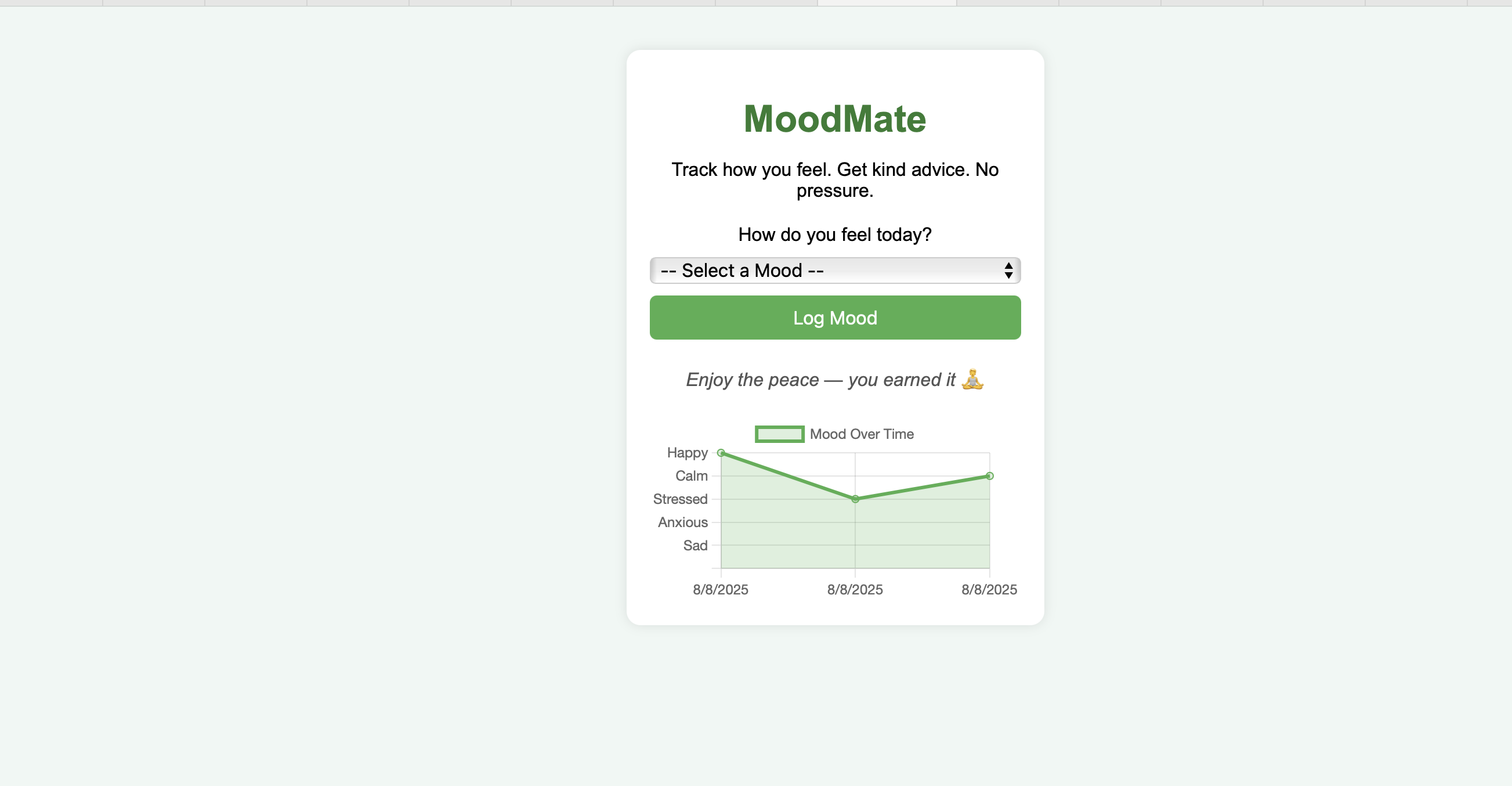
MoodMate is a simple mood-logging and self-care web app. Users select how they feel each day (happy, stressed, anxious, etc.), and the app displays a friendly, mood-based self-care tip. It records each entry and visualizes mood changes over time using a clean line chart.
How We Built It
We built MoodMate using HTML, CSS, and JavaScript for the front-end.
We integrated Chart.js to visualize mood data dynamically.
For hosting, we used GitHub Pages to provide a free, permanent link that works without any sign-in.
Challenges We Ran Into
- As a beginner, figuring out free, reliable hosting without paid domains took time.
- Learning how to integrate Chart.js for the first time and mapping moods to chart values.
- Keeping the design simple and mobile-friendly in a short time frame.
Accomplishments That We’re Proud Of
- Building a functional, clean web app in just a few days.
- Learning new tools while creating something that can genuinely help people.
- Completing a project from concept to deployment as a beginner.
What We Learned
- How to structure a basic website using HTML, CSS, and JavaScript.
- How to implement Chart.js for visual data representation.
- The importance of focusing on minimal, core features to deliver quickly.
What's Next for MoodMate
We plan to:
- Add more mood categories and customizable moods.
- Allow exporting mood history to a file.
- Introduce daily reminders.
- Build a community section for encouragement and shared resources.

Log in or sign up for Devpost to join the conversation.