Inspiration
User-generated text such as reviews, feedback, and support messages contains rich emotional signals, yet most systems reduce this information to simple metrics like ratings or sentiment scores. This often leads to a loss of emotional context and makes it difficult for teams to truly understand how users feel.
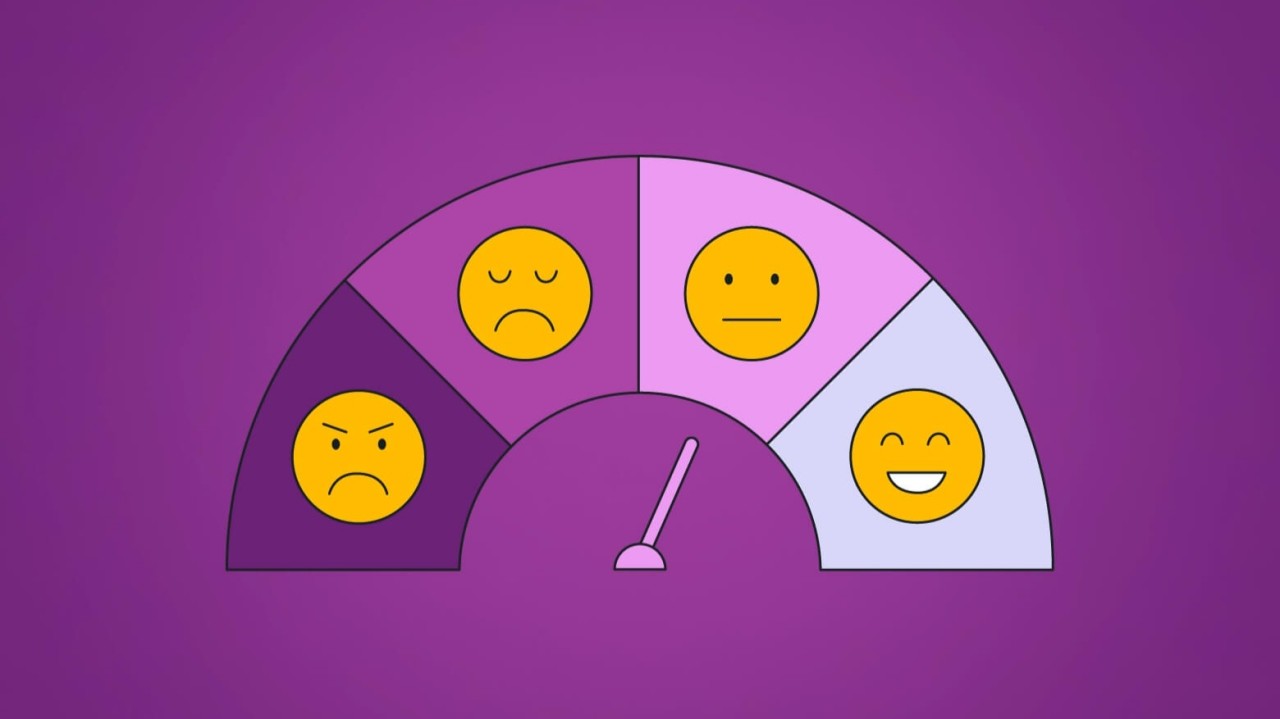
MoodMap was inspired by the idea that emotions should not remain hidden in raw text. We wanted to create a system that could surface emotional patterns visually, allowing teams to understand user sentiment and emotions at a glance rather than through manual inspection.
What it does
MoodMap analyzes textual input to identify both sentiment polarity and underlying emotional states. It then visualizes these emotional insights in a clear and interpretable way.
The system enables users to:
- Detect overall sentiment trends
- Identify dominant emotions within user feedback
- Observe how emotions change over time
By transforming unstructured text into visual emotional summaries, MoodMap makes user sentiment easier to interpret and act upon.
How we built it
MoodMap was built using a modular natural language processing pipeline. Text data is first preprocessed and transformed into numerical representations suitable for machine learning models. These representations are then used to infer sentiment and emotion categories.
At a conceptual level, the inference process can be described as:
$$ \hat{y} = f(x) $$
where (x) represents the input text and (\hat{y}) represents predicted sentiment and emotion labels.
The predicted outputs are aggregated and rendered through visual components designed for clarity and interpretability. Throughout development, we focused on building a system that is efficient, scalable, and easy to extend.
Challenges we ran into
One of the main challenges was dealing with the ambiguity of natural language, including mixed emotions and context-dependent expressions. Another challenge was finding the right balance between providing detailed emotional insights and keeping the visualizations simple and intuitive.
Additionally, building an end-to-end system—from text analysis to visualization—within the time constraints of a hackathon required careful prioritization and rapid iteration.
Accomplishments that we're proud of
We are proud of delivering a complete, working pipeline that transforms raw text into meaningful emotional visualizations. Successfully integrating sentiment analysis, emotion detection, and visualization into a single cohesive system within a limited timeframe was a significant achievement.
We are also proud of designing MoodMap with interpretability in mind, ensuring that the outputs are understandable to both technical and non-technical users.
What we learned
Through this project, we learned that sentiment analysis alone is often insufficient to capture the full emotional context of user feedback. Emotion-aware analysis provides deeper insights and can significantly improve how teams respond to user needs.
We also learned the importance of visualization in applied machine learning projects. Clear visual representations can greatly enhance the usability and impact of analytical systems.
What's next for MoodMap
Future work on MoodMap includes adding real-time emotion tracking, expanding support for multiple languages, and incorporating more granular emotion categories. We also plan to explore API-based integrations to allow MoodMap to be embedded into existing products and workflows.
The long-term goal is to make MoodMap a flexible and scalable platform for emotion-aware user analytics.
Built With
- github
- keras
- machine-learning
- natural-language-processing
- nltk
- numpy
- pandas
- python
- seaborn
- spacy
- tensorflow


Log in or sign up for Devpost to join the conversation.