
Inspiration
We are a team venturing into our inaugural hackathon. Our team is navigating through uncharted territory, Aaron and Alex are exploring code languages like CSS and HTML for the very first time. Moreover, this was the first time Arvind has used React JS. It is our team's first time making a language model. Despite these challenges, we’ve crafted a website where AI meets emotions, where pixels whisper stories of happiness. This project was deeply inspired by recent reports of suicides across high schools nationally, especially an increase in the Bay Area where students in schools within 6 miles of Branham have committed this horrific act of self-harm. (Valley Christian)
What it does
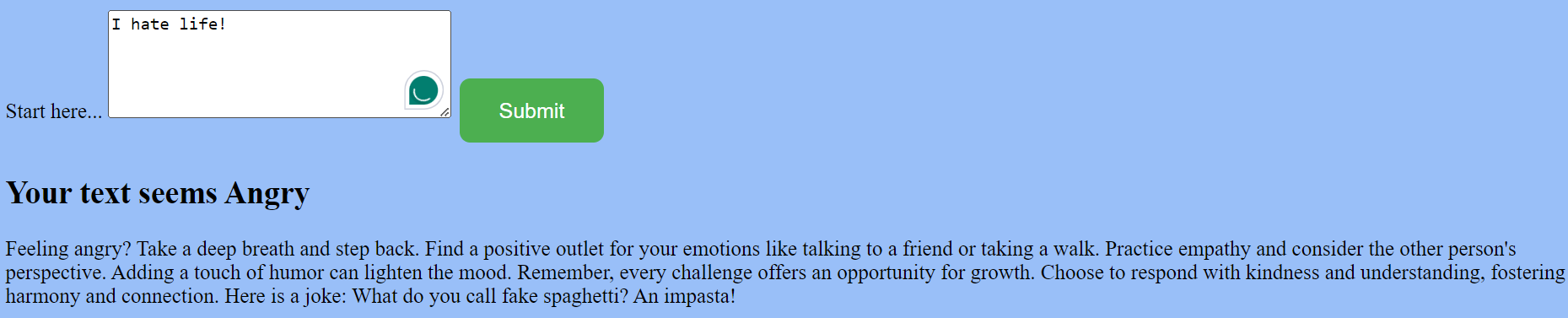
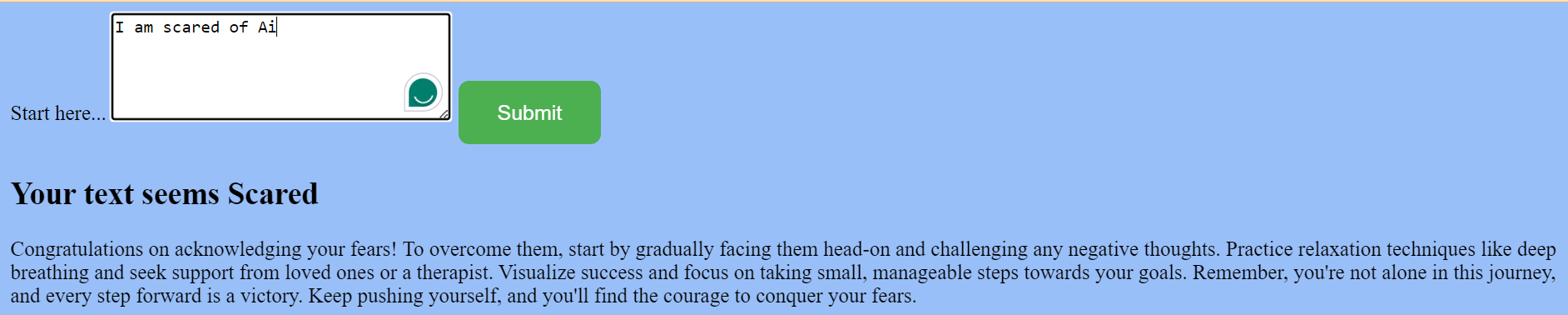
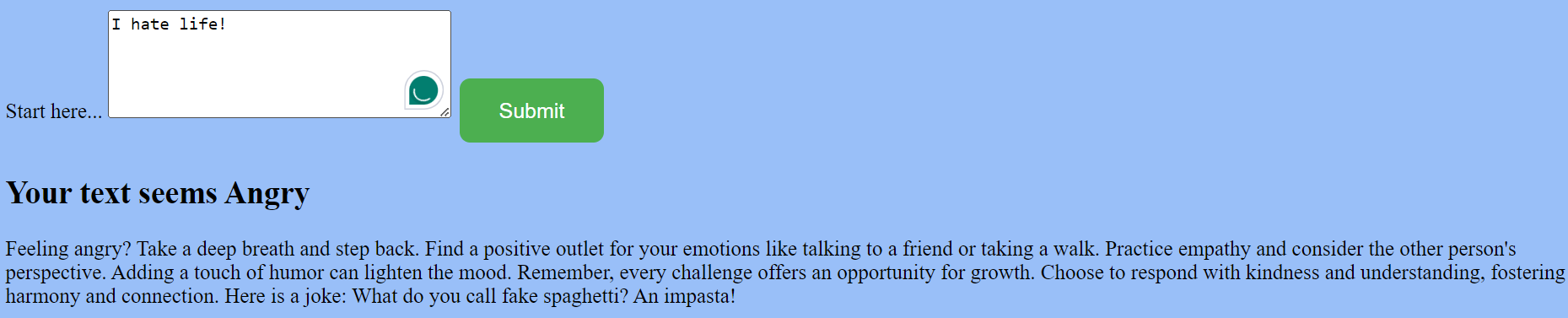
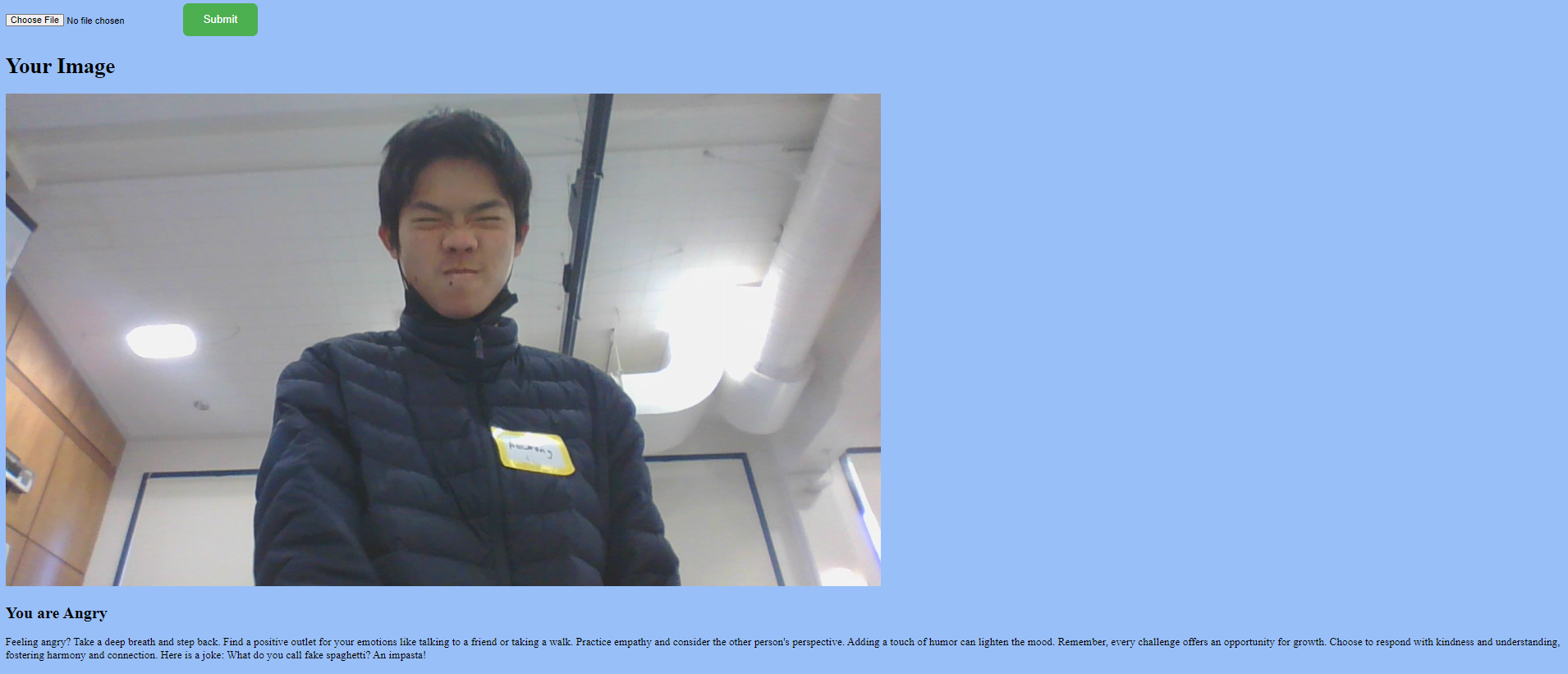
From joy to sorrow, excitement to serenity, our website unlocks the full spectrum of human sentiment, empowering you to understand and embrace the emotions captured in your photos. But our website continues beyond mere, simple analysis. We believe in fostering genuine well-being. That's why, in addition to identifying emotions, our platform offers tailored recommendations to enhance happiness. Whether it's suggesting activities to lift your spirits, providing mindfulness techniques for stress relief, or offering insightful tips for cultivating gratitude, our website is your personalized guide to a happier, more fulfilling life. Utilizing a cutting-edge convolutional neural network, our website ensures precise emotional detection, delivering results you can trust. Moreover, our website enables users to gain a deeper insight into their emotional behaviors and discover actionable steps toward greater happiness. Because we believe that you shouldn’t just observe your emotions, you should understand them.
How we built it
Our development process started from our brainstorming board. After agreeing on our inspiration, we generated countless ideas that targeted the issue. Settling on a final idea, we began by strategically splitting the sections of this project to each other based on their strengths. Aaron and Alex began by experimenting and designing the website utilizing Flask while Kevin developed the language model. Additionally, Arvind was making the self-analysis section of our website using React JS. In the afternoon, our team continued to design their sections while asking the mentors about obstacles that they encountered during this process. Aaron and Alex then assisted Kevin and Arvind while beginning to work on other crucial parts of the overall submission.
Challenges we ran into
Yet, amidst our pursuit of progress, we've encountered formidable challenges along the way. From developing a sophisticated language model capable of discerning nuanced emotions to navigating the complexities of CSS and HTML in website design, each obstacle has tested our resolve and pushed us to new heights of creativity and ingenuity. Moreover, as we strive to enhance the accuracy of our emotion detector, we confront the complexities inherent in deciphering human sentiment. Each data set brings us closer to our goal of delivering precise and reliable results, but the journey is fraught with its own set of setbacks. Despite these challenges, our commitment remains unwavering. With each obstacle surmounted, we emerge stronger and more determined than ever to fulfill our mission of fostering emotional well-being and resilience in our community.
Accomplishments that we're proud of
Fortunately, amidst the challenges, we've celebrated remarkable successes. Our relentless pursuit of accuracy has resulted in a language model that discerns nuanced emotions. Moreover, our dedication to excellence has manifested in a visually captivating website design, providing an effortless and seamless experience for our users. Perhaps most notably, we've achieved a significant milestone in getting the emotional detector to work reliably, a feat that underscores our commitment to innovation and our unwavering belief in the power of technology to effect positive change.
What we learned
I can confidently say that our team has learned a lot today throughout the hackathon. Aaron and Alex explored CSS and HTML during their workshops and now have a basic understanding of how to use it for web design. Kevin utilized both knowledge from his workshop and online to train and design the language model. Arvind used React JS for the first time and is now confident in his ability to craft interactive user interfaces. Furthermore, our team learned the importance of seeking assistance when faced with difficulties. Before this hackathon, we often struggled with asking for help due to the misconception that it makes you appear less intelligent: However, during this hackathon, our team got to experience firsthand the power of asking for assistance from members and online documentation. We are extremely grateful for this newfound knowledge, knowing that it will benefit us in the long run throughout our future education and careers.
What's next for MoodMagicAI
Moving on, our team wants to continue expanding the functionalities of our website while increasing the functionality and accuracy of our already existing components. Additionally, our team would like to expand our website to not only mental health but also physical health. We plan to make a section that enables users to track their physical health through exercises such as jumping jacks to report to them their calories burned and fitness conditions. Lastly, we would love to connect our website to help services such as therapists and hotlines to help users in troubling times feel better.

Log in or sign up for Devpost to join the conversation.