-
-
Web Page
-
Web Page
-
Web Page
Inspiration
The inspiration for MoodLift came from the growing need for accessible mental health tools, especially post-pandemic. As someone who’s seen the impact of mood fluctuations, I wanted to create a solution that combines AI and data scalability to empower users globally. The TiDB AgentX Hackathon 2025’s focus on innovative data solutions with TiDB Serverless sparked the idea to build a personalized companion.
What it does
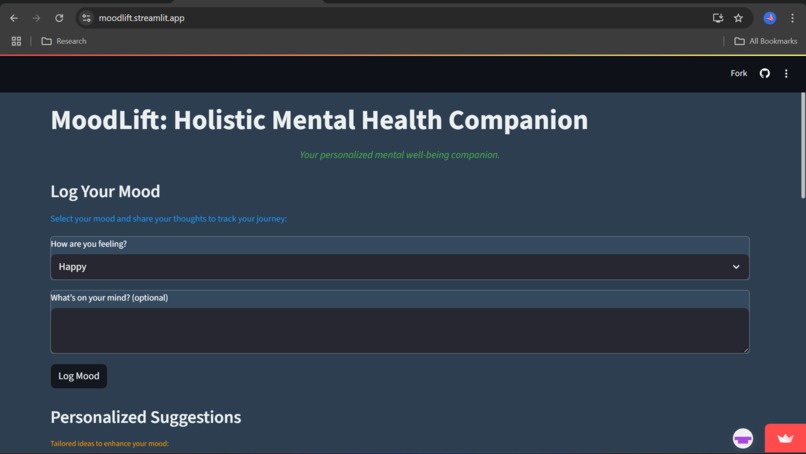
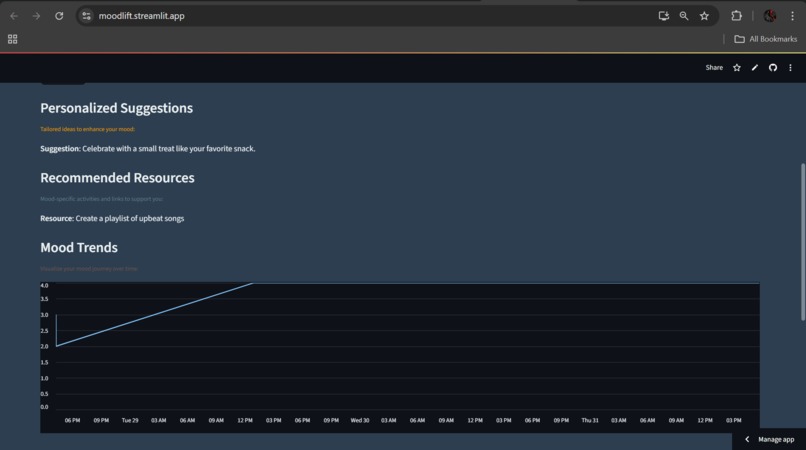
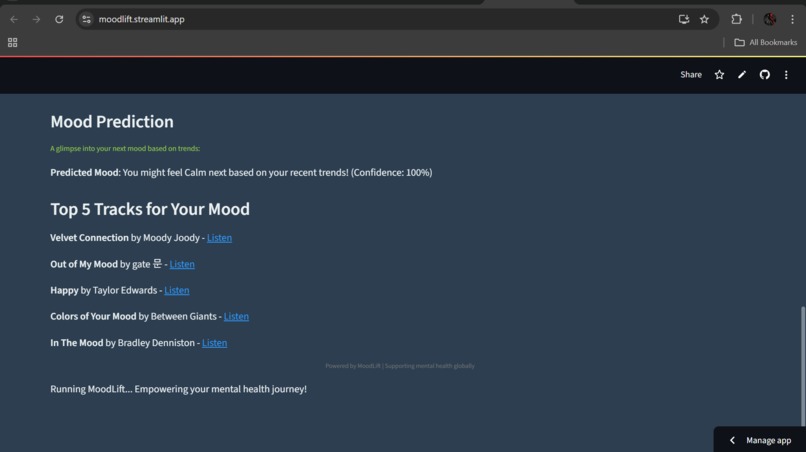
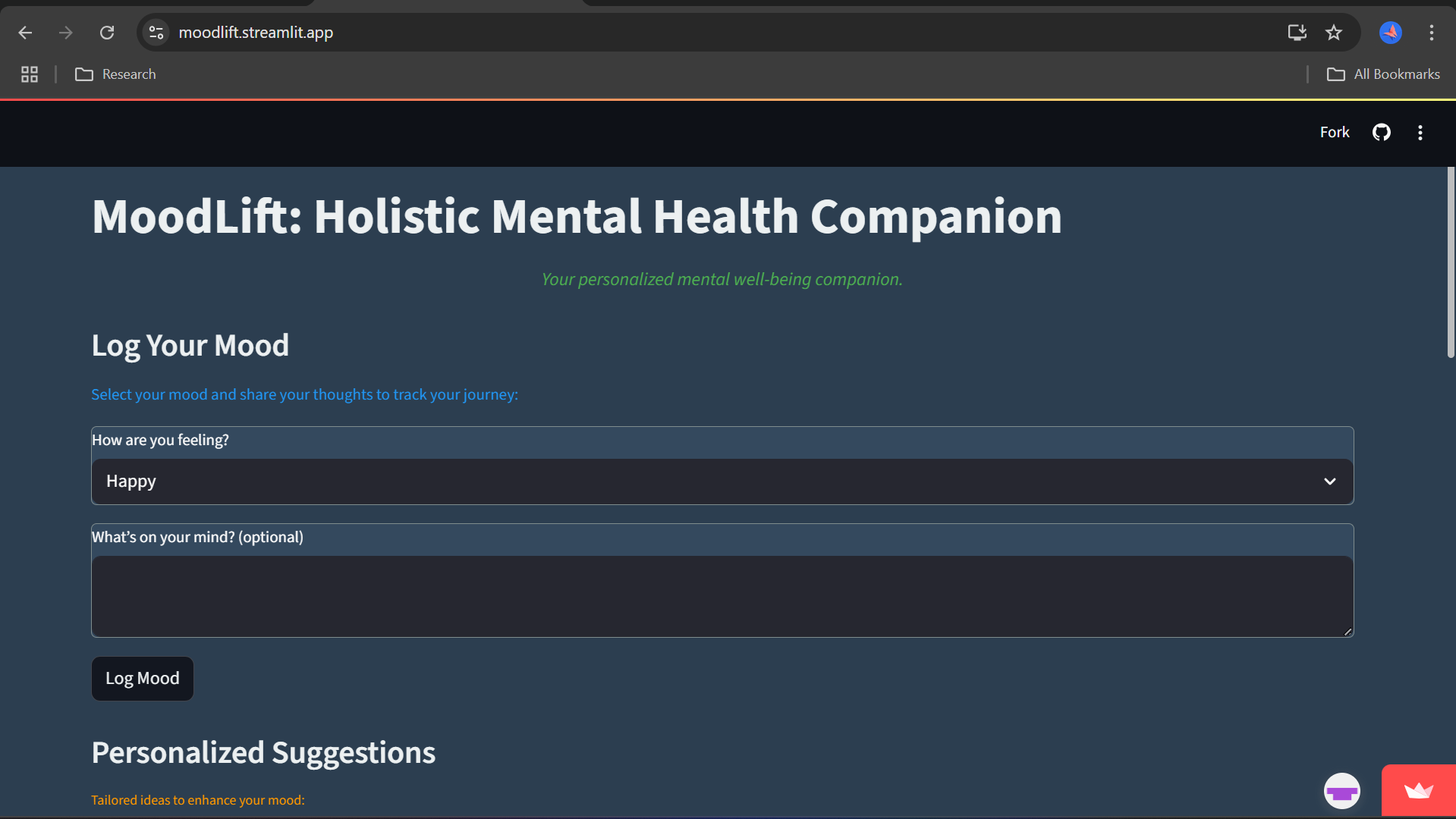
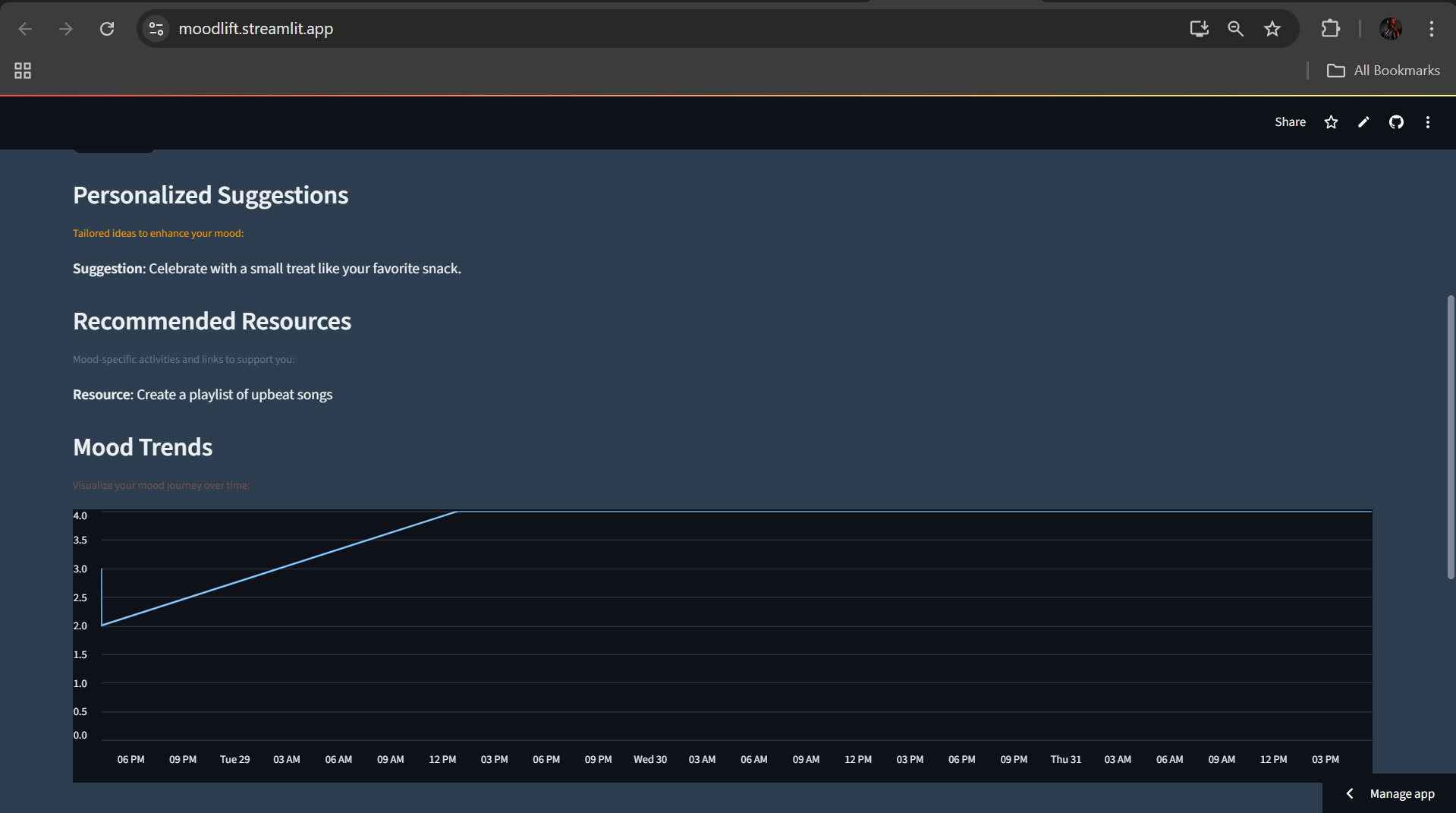
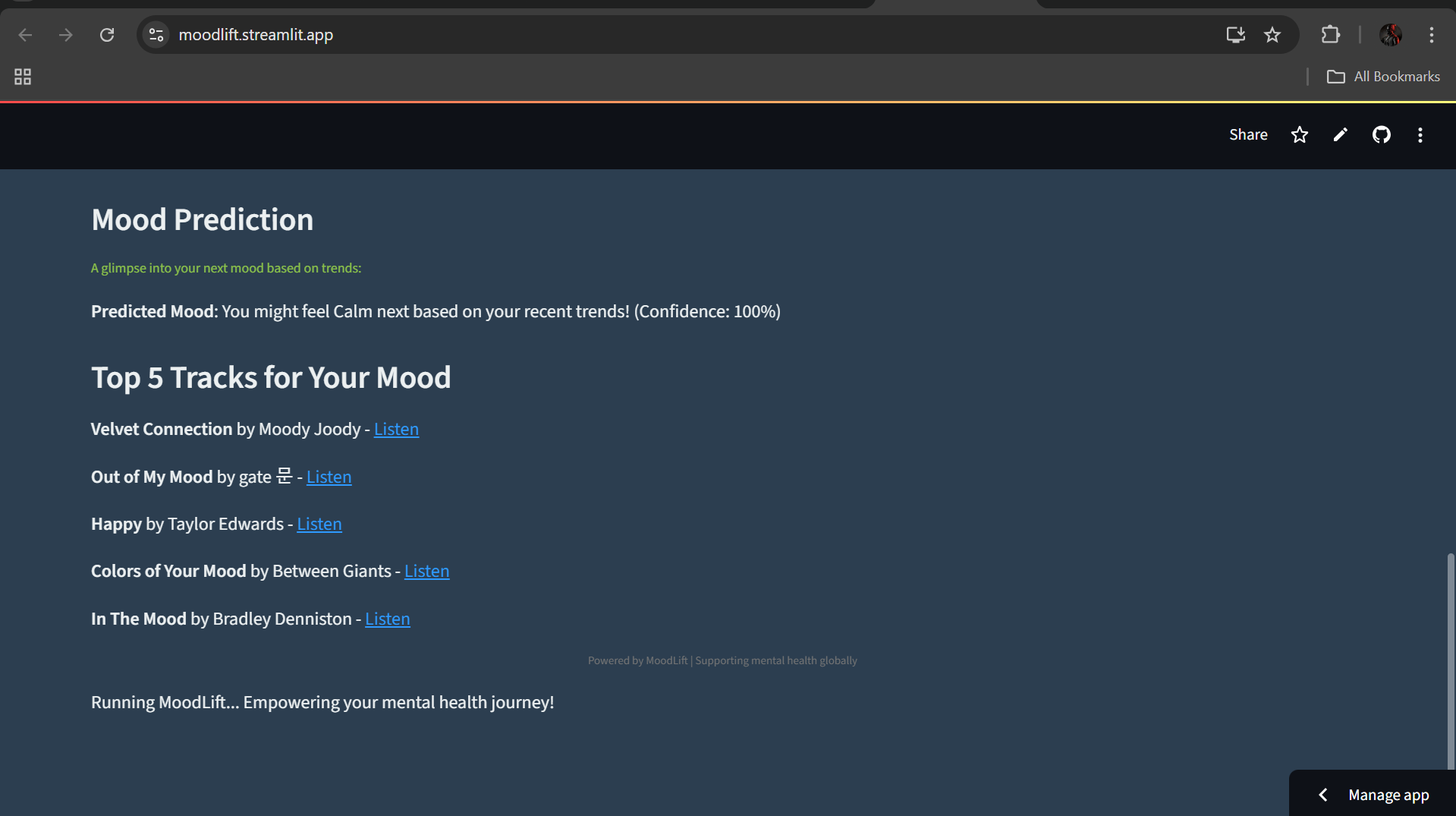
MoodLift is a web-based mental health companion that lets users log their moods (Happy, Sad, Anxious, Calm) with optional journal entries. It uses NLP embeddings and TiDB vector search to provide community insights, personalized suggestions, mood trends, predictions, and Spotify-recommended tracks. It’s a holistic tool for self-awareness and support.
How we built it
I developed MoodLift using Python with Streamlit for the frontend, integrating TiDB Serverless for data storage and vector search. The sentence-transformers/all-MiniLM-L6-v2 model generates embeddings, stored as vectors in TiDB. The Spotify Web API adds music recommendations. The app is deployed on Streamlit Community Cloud, with VS Code for coding and GitHub for version control.
Challenges we ran into
A major challenge was authenticating Spotify playlist creation, requiring OAuth 2.0, which I deferred due to time constraints—temporarily disabling the feature. Optimizing the NLP model load time and ensuring TiDB connectivity in a serverless environment also took effort.
Accomplishments that we're proud of
I’m proud of integrating TiDB Serverless with vector search for scalable mood data analysis, a first for me. The app’s seamless Streamlit deployment and the innovative use of AI for mental health insights are highlights, earning positive feedback during testing.
What we learned
I learned to leverage TiDB’s vector capabilities for AI-driven apps, improved my Streamlit deployment skills, and gained insights into API integration challenges. Balancing functionality with hackathon deadlines taught me efficient prioritization.
What's next for MoodLift
Next, I plan to implement OAuth for Spotify playlist creation, enhance the UI with dark mode options, and add multi-language support. Long-term, I’d explore real-time mood tracking with wearables and expand the community feature with user forums.


Log in or sign up for Devpost to join the conversation.