-
MoodLens: Enhancing Classrooms with Emotional Insights
Inspiration
Students emotional well-being is crucial for their academic and personal growth, but teachers often struggle to gauge their mental states in real-time. This makes it hard to address issues like stress or disengagement. Inspired to close this gap, we created a tool that combines IoT and AR to promote empathy, inclusivity, and better learning outcomes.
What it Does
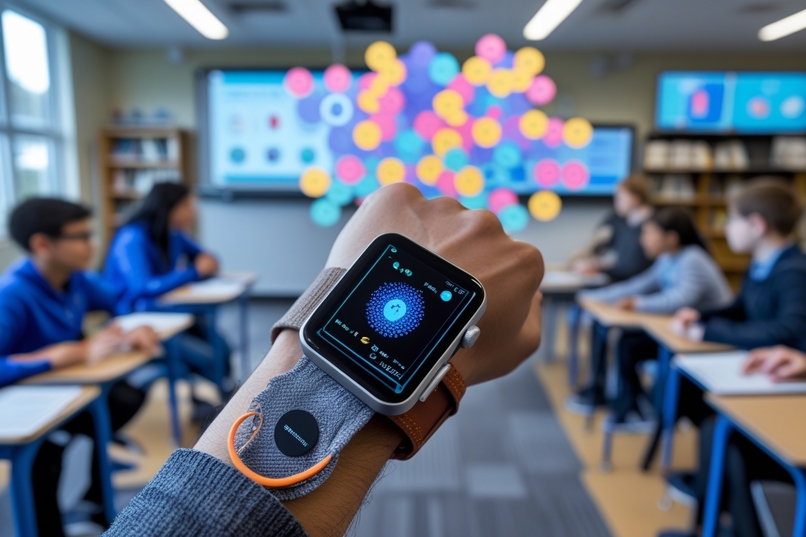
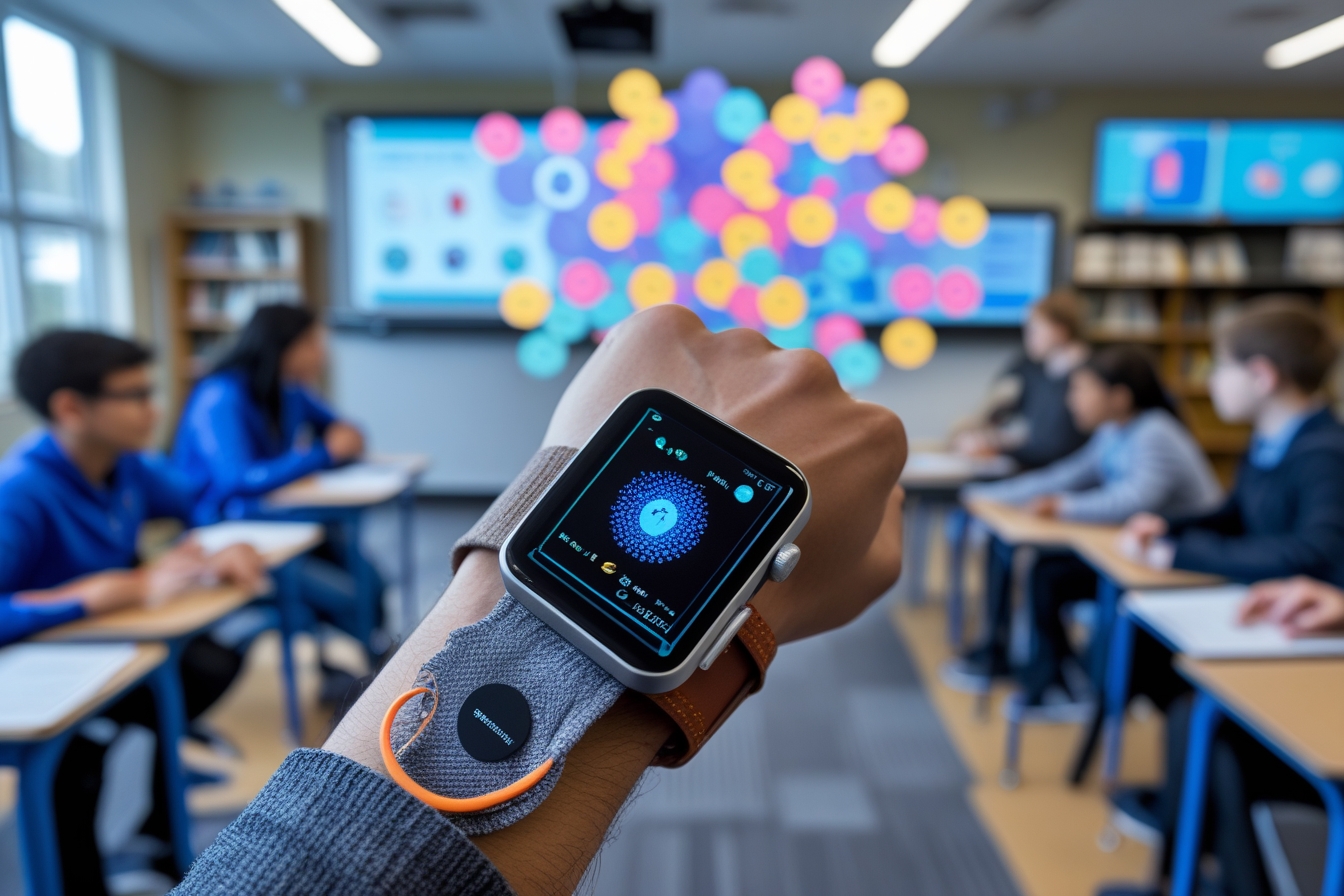
MoodLens uses IoT-powered wristwatches to monitor students heart rates, skin temperature, and movement. This data is anonymized and displayed on an AR-based classroom heatmap, giving teachers real-time insights into their students emotional states. The tool helps identify stress or disengagement, enabling timely interventions to improve student well-being and engagement.
How We Built It
- IoT Devices: Developed wristwatches with sensors to collect physiological data.
- Data Processing: Built real-time pipelines to analyze and process the data.
- AR Visualization: Created a classroom heatmap using ARCore/ARKit to display insights intuitively.
- Backend: Built a secure and scalable cloud system for data storage and analysis.
- Frontend: Designed a user-friendly interface for teachers to interact with the heatmap easily.
Challenges
- Privacy: Ensuring data remains anonymous while being actionable for teachers.
- Sensor Accuracy: Fine-tuning the devices for reliable data in diverse classroom settings.
- Real-Time Performance: Achieving seamless communication between IoT devices, backend, and AR visuals.
- Adoption: Addressing educators skepticism about the tool’s effectiveness.
Accomplishments
- Developed a real-time AR heatmap for visualizing classroom emotions.
- Achieved precise data collection with secure, privacy-compliant IoT devices.
- Built a scalable backend capable of handling large volumes of real-time data.
- Designed an empathetic solution that supports both teachers and students.
What We Learned
- Balancing innovation with ethical and privacy concerns is critical.
- Real-time data can transform classroom management and boost student engagement.
- User-friendly design is key to making technology accessible for educators.
- Integrating IoT and AR requires attention to seamless functionality and impact.
What's Next for MoodLens
- Pilot Testing: Partner with schools to test MoodLens in real-world classrooms.
- Advanced Analytics: Use AI for deeper emotional insights and predictive analysis.
- New Features: Add personalized suggestions for students based on trends.
- Scalability: Adapt the solution for various school sizes, regions, and age groups.
- Cross-Platform Access: Expand to mobile apps and tablets for broader use.
Built With
- amazon-web-services
- api
- datadog
- figma
- git
- github
- iot
- postgresql
- raspberry
- react
- three.js


Log in or sign up for Devpost to join the conversation.