Inspiration
We wanted to build something that actually helps people — not just a cool tech demo. Mental health tracking is something millions of people need, but most apps are either too complex or send your private thoughts to the cloud. We wanted to make journaling feel safe, simple, and smart.
What it does
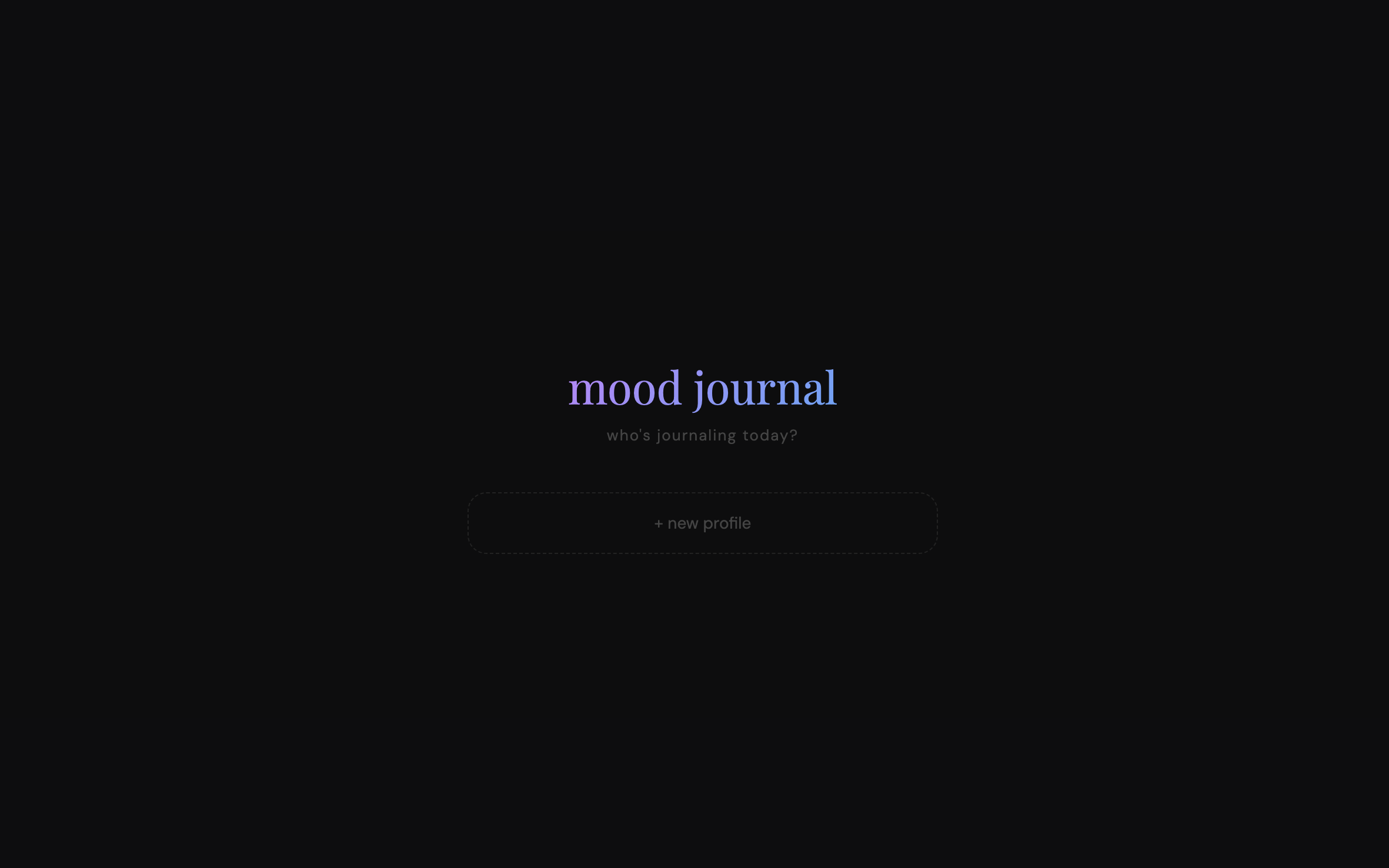
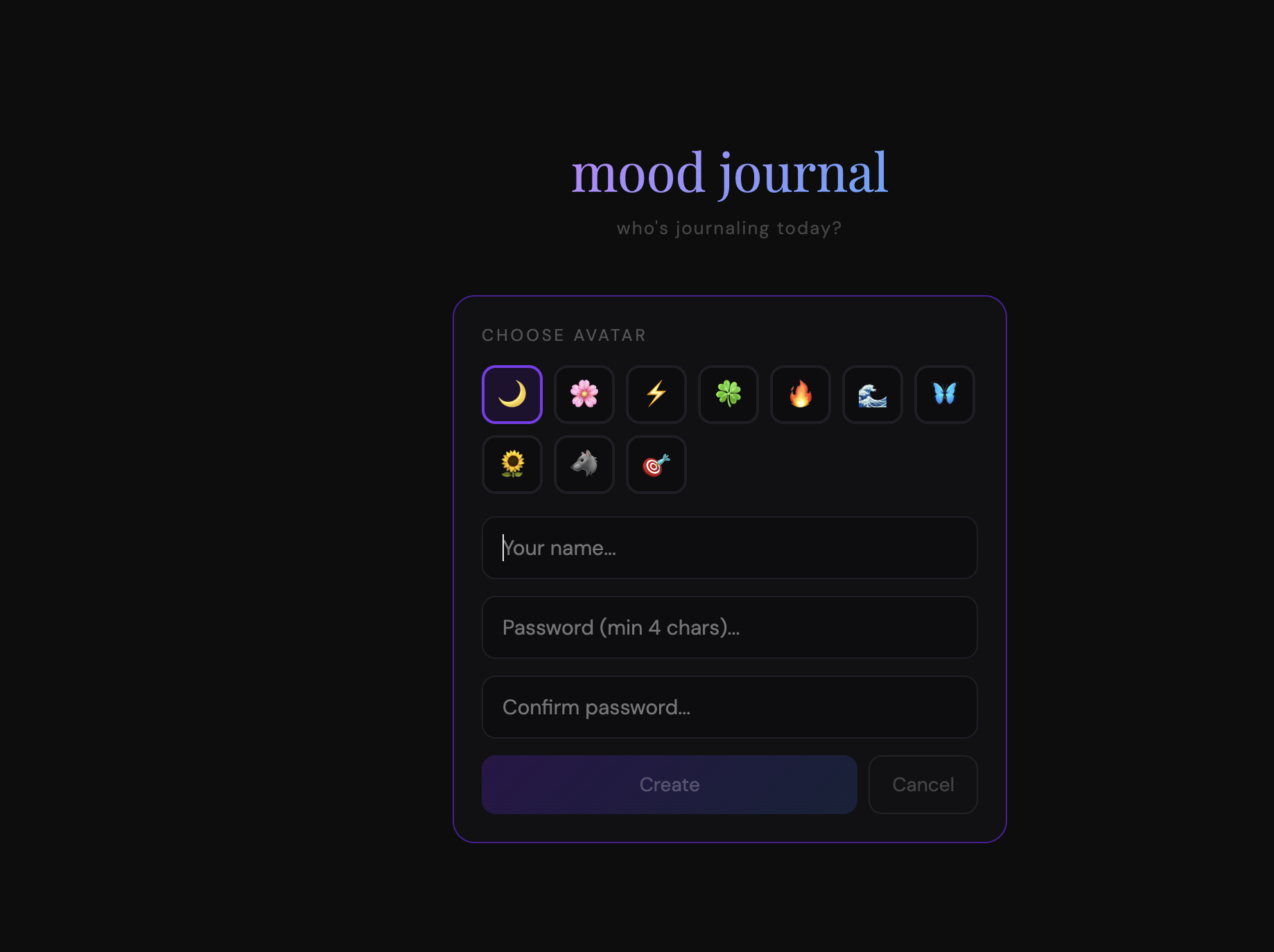
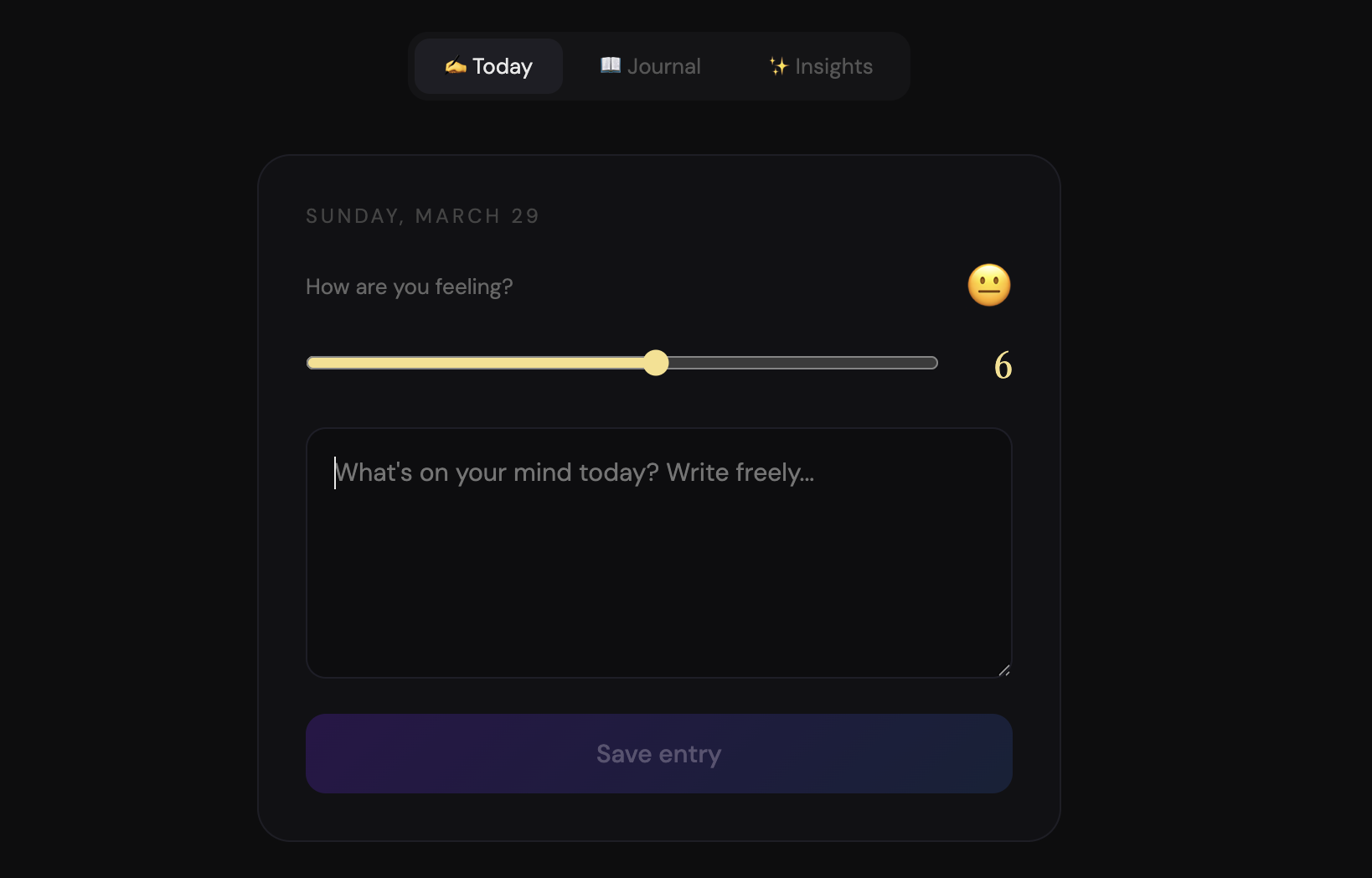
MoodJournal lets you track your emotional state daily through a mood slider (1–10) and free-form journal entries. Multiple users can have their own password-protected profiles on the same device. The app stores everything locally in the browser — your data never leaves your computer. With one click, Google Gemini AI analyzes your mood patterns over any time period and gives you warm, personalized insights and actionable suggestions.
How we built it
- Frontend: React (no build tools — runs directly in the browser via Babel)
- AI: Google Gemini 1.5 Flash API for mood pattern analysis
- Storage: localStorage with SHA-256 password hashing via Web Crypto API
- Visualization: Custom SVG mood chart built from scratch
Challenges we faced
Getting the Gemini API working from a pure browser environment (no backend) was tricky — we had to find the right model name and handle free tier quota limits. We also implemented password hashing without any backend using the native Web Crypto API, which was a fun challenge.
What we learned
You don't need a backend to build something meaningful. Browser APIs like localStorage and Web Crypto are powerful enough for real privacy-preserving apps. We also learned a lot about prompt engineering for getting empathetic, useful responses from AI.
What's next
- Cloud sync with end-to-end encryption
- Mobile app version
- Mood-based music/activity recommendations
- Streak tracking and habit formation features


Log in or sign up for Devpost to join the conversation.