Feeling down like a deflated whoopie cushion? Banish the Grump Gremlins with your Mood's BFF (just way cooler)- Moodjinn, your AI Mood Magician. Now, say Buh-Bye to Bad Vibes!
Inspiration- The inspiration behind Moodjinn comes from one of Maya Angelou's periodicals- "People will forget who you are. They will forget what you did. But people will never forget how you made them feel." We wanted to make people feel good and make them happy and if possible, bring a smile on their face. Moodjinn can also serve as your personal therapy assistant with user interactive text interfaces to take your experience to the next level. With thousands of movie choices, hundereds of music options, accurate journals, accurate past records, quirpy responses, engaging personalized activity recommendation lists, situation-wise crafted thinking and much more, Moodjinn is your therapist, friend, savage mood-enhancer and BFF all combinrd into one at your fingertip.
What it does- Moodjinn is a facial recognition software that scans one's mood and interacts with the user in whichever way the user wants to- it says what you want to hear, can be funny and informational as per situation as well as assist with medication and appointments with doctors (bonus- tonnes of helplines and resources). In addition, the text user interface, integrated with AI, is the complete pacakage for your mental well-being. Crafted to be of theraputic nature, it is effective, efficient, engaging and at your fingertips, for instantaneous help and mood uplifts!
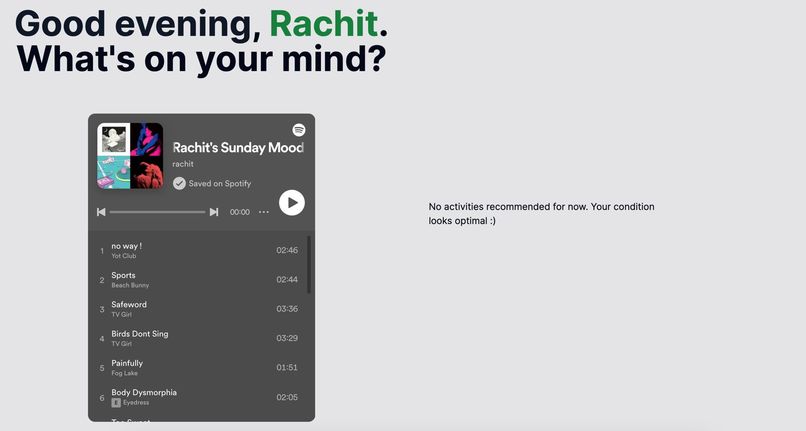
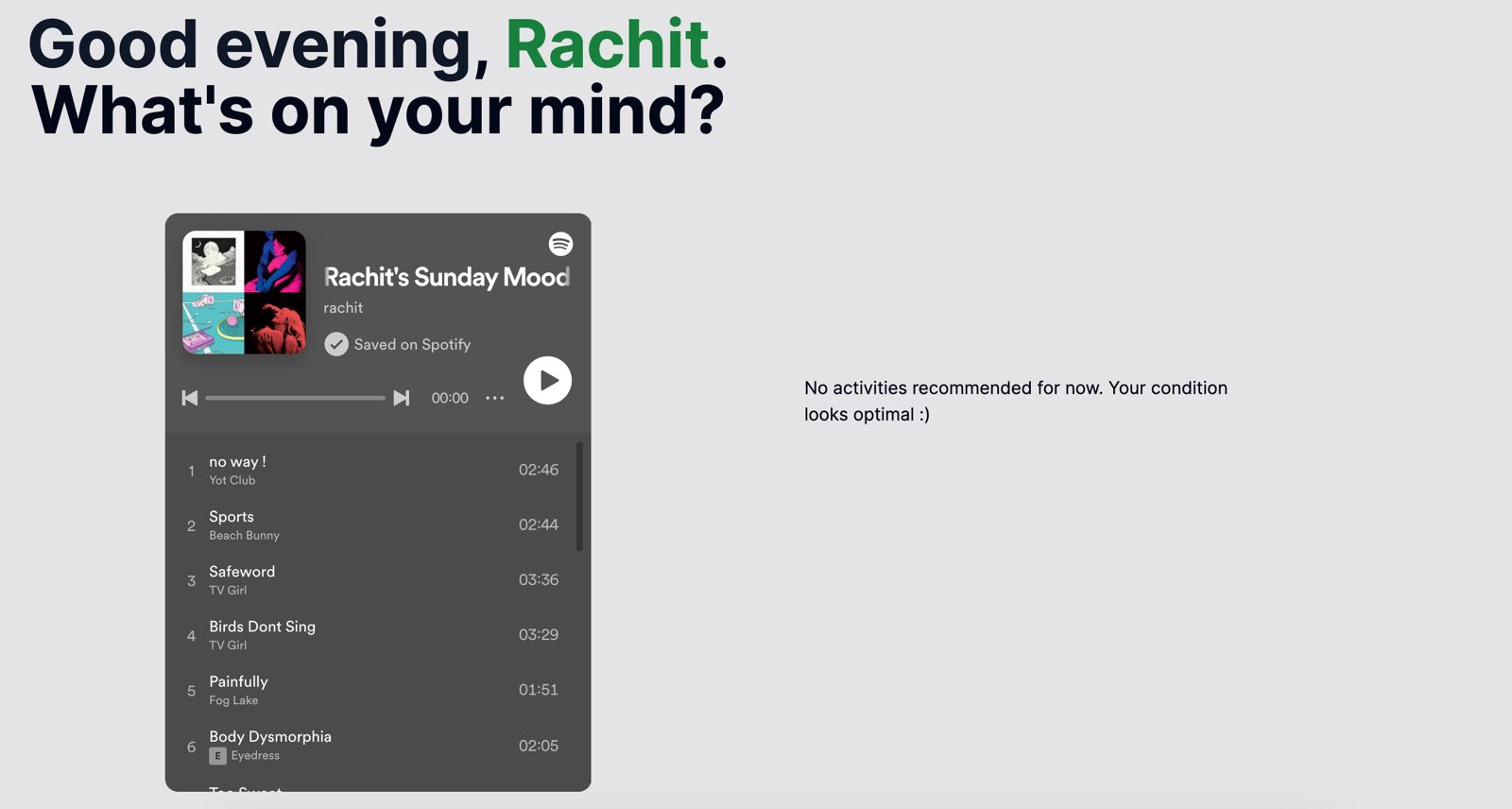
How we built it- We used APIs like Netflix and Spotify for respective recommendations to integrate with facial-recognition libraries in python and databses of personalized activity lists. We also linked Google Gemini to maximize use of AI (and to challenge for the Google company challenge ofcourse :)). Using the django framework, we got the entire set-up together and with a tinch of javascript and nextjs for the frontend, we go the thing running. We also managed to use Colab and Firebase to good extent and maximimize their potential to yield best results.
Challenges we ran into- The biggest challenge we overcame in our quest for Moodjinn has got to be our effort to link all the different APIs to the software- Spotify API and Netflix API- as well as successfully aligning Gemini with the program. On the logistical side, balancing the prowess of AI with simple python code and facial recognition libraries to our well-crafted need was a skillful thing we did.
Accomplishments that we're proud of- Moodjinn ensures user privacy; something we couldn't stress on less during the entire process. We accomplished securely storing data with clear opt-in options and effective use of APIs and databases, thus maintaining utomost levels of data-privacy (or atleast we believe so !)
What we learned- We learned and explored the potential of AI for emotional well-being and how crafting AI according to your requirements can make results so much more effective. We also got a chance to delve into user-interface designs.
What's next for Moodjinn: AI Mood Genie- It is certainly just the beginning- Moodjinn could pave the way for wearable sensors for mroe nuanced mood tracking and maybe go to the step of monitoring heart rates, blood pressure and sleep. The next step could also be to make a stronger model of this one- more enhanced list and wider library of personal activity lists, more efficient way of journaling (emotional wellness kit), trend analysis and maybe book recommendations! Lastly, if used to good effect, supportive online communities could be formed with moodjinn as the point of commonality to help the community of help-seekers.

Log in or sign up for Devpost to join the conversation.