-
-
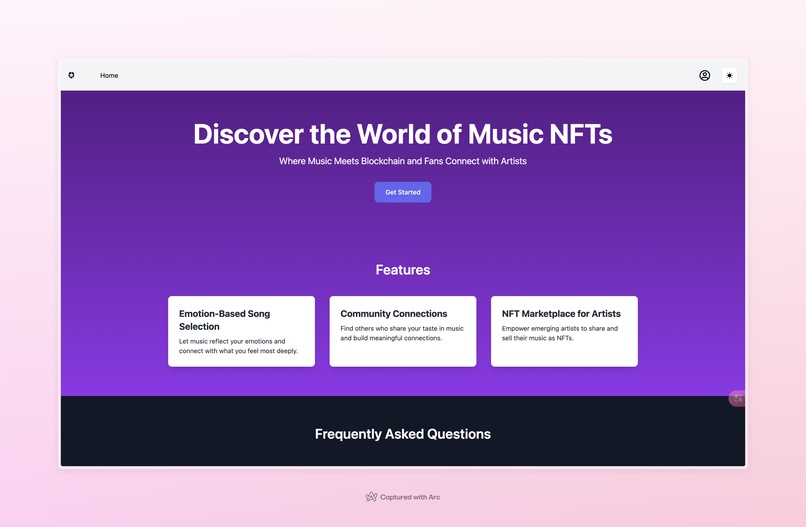
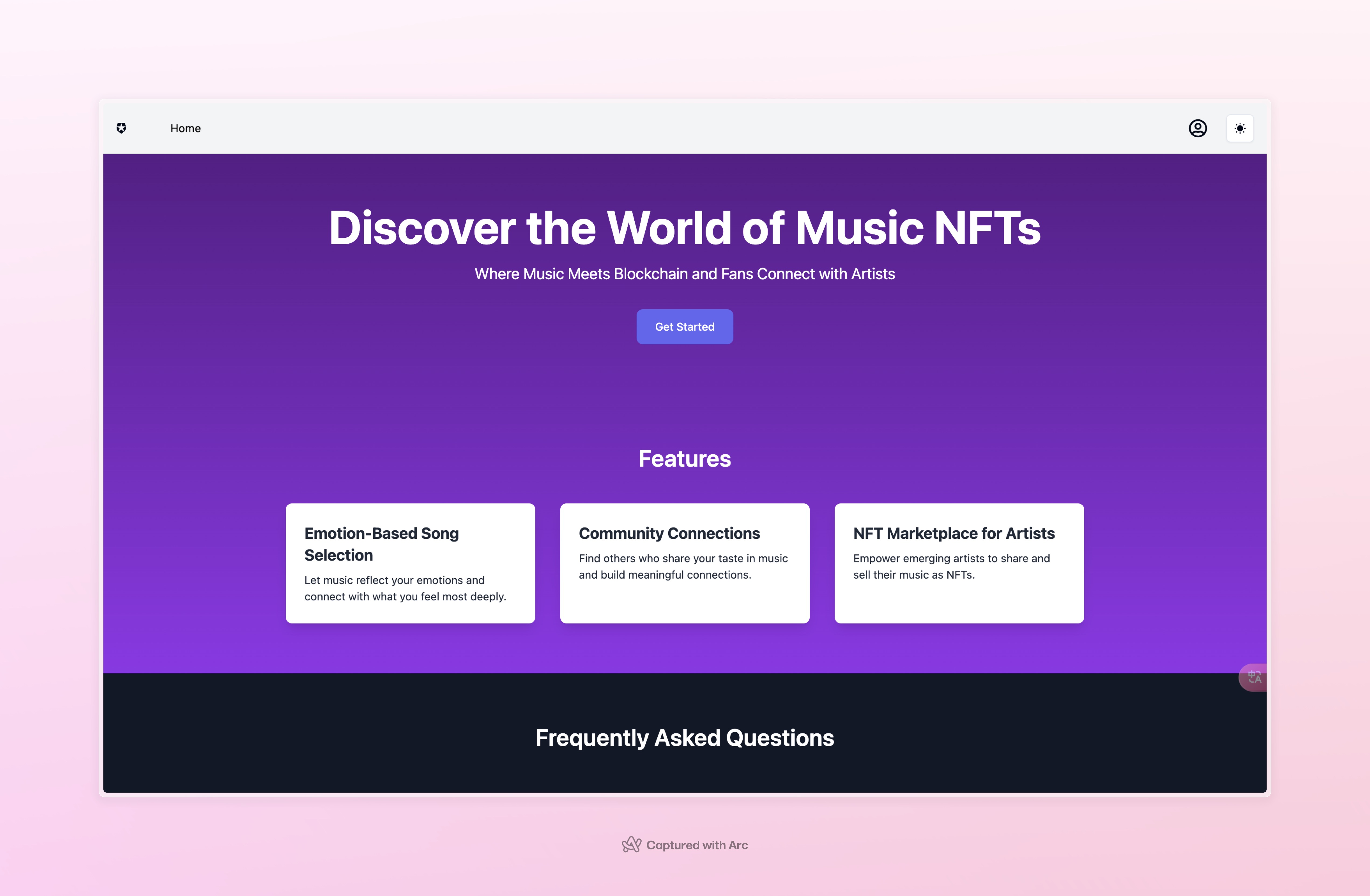
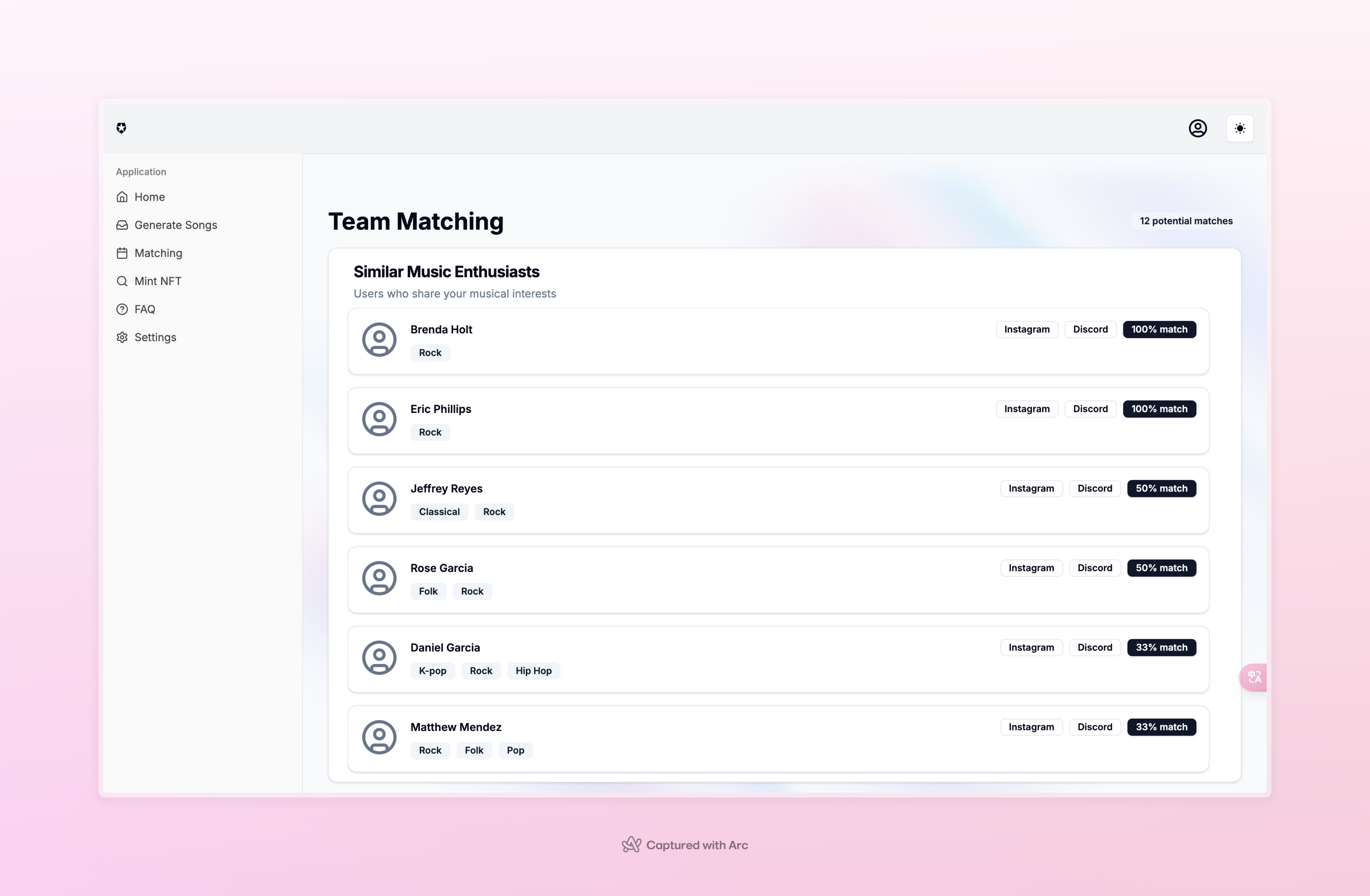
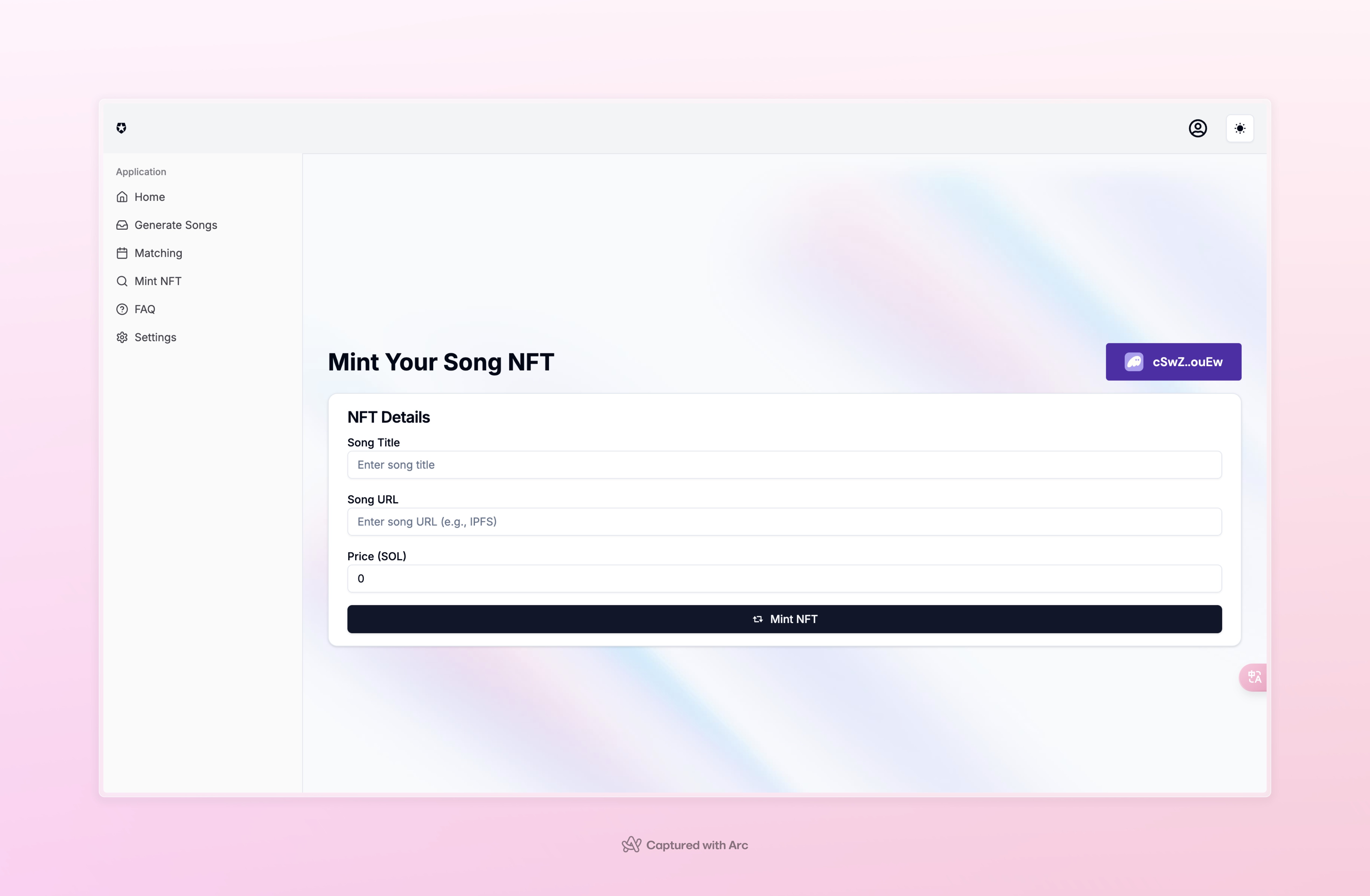
1. We have 3 different features on the Home page - emotion to music, song matching, minting NFTs.
-
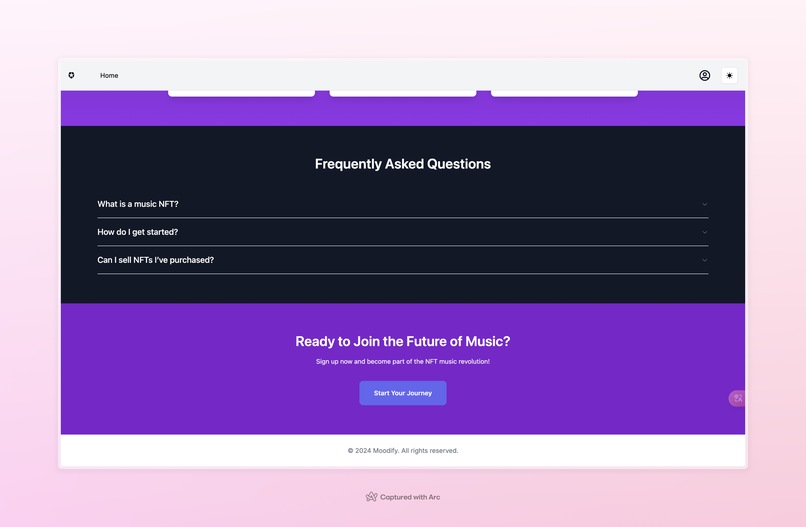
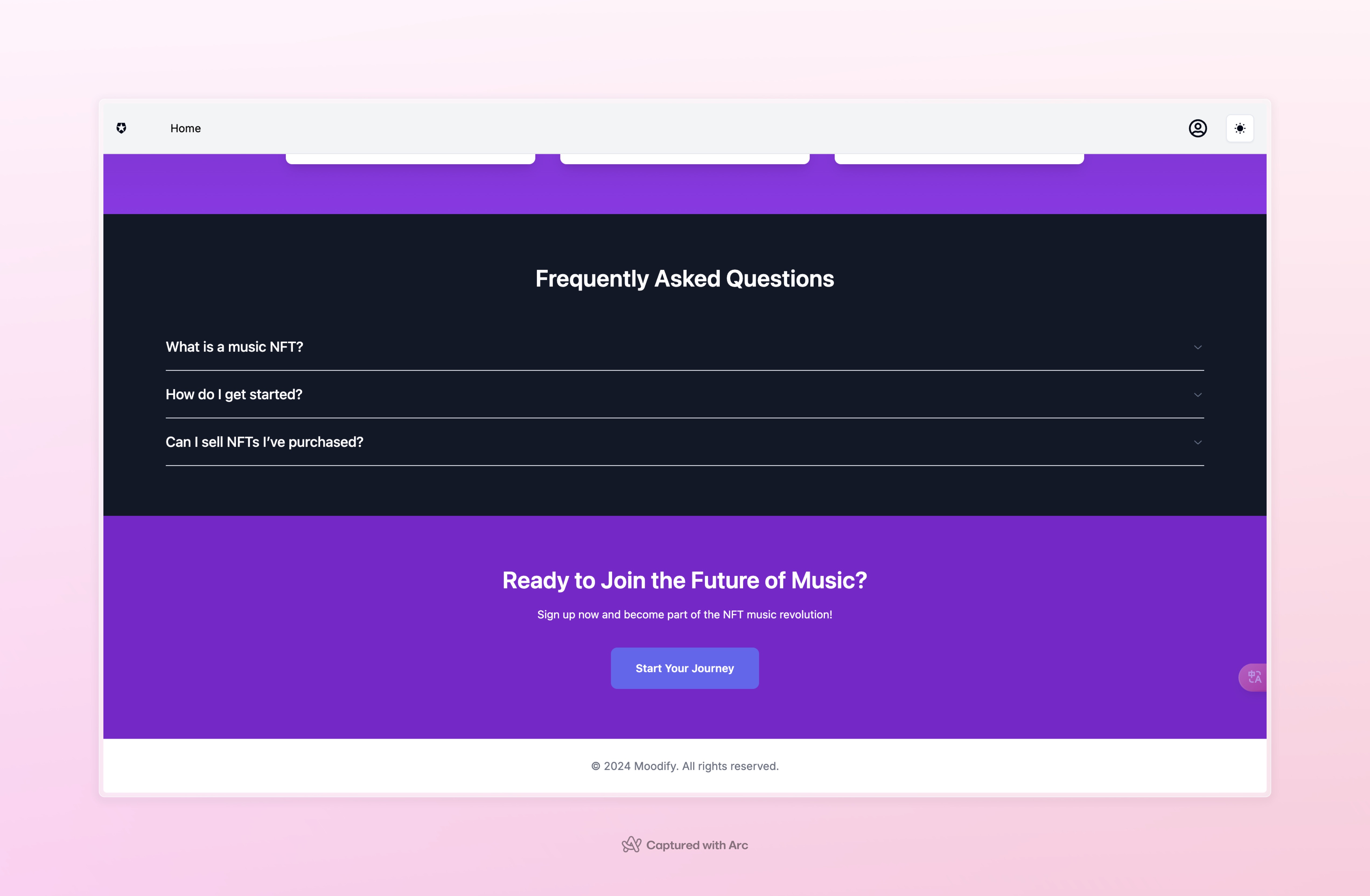
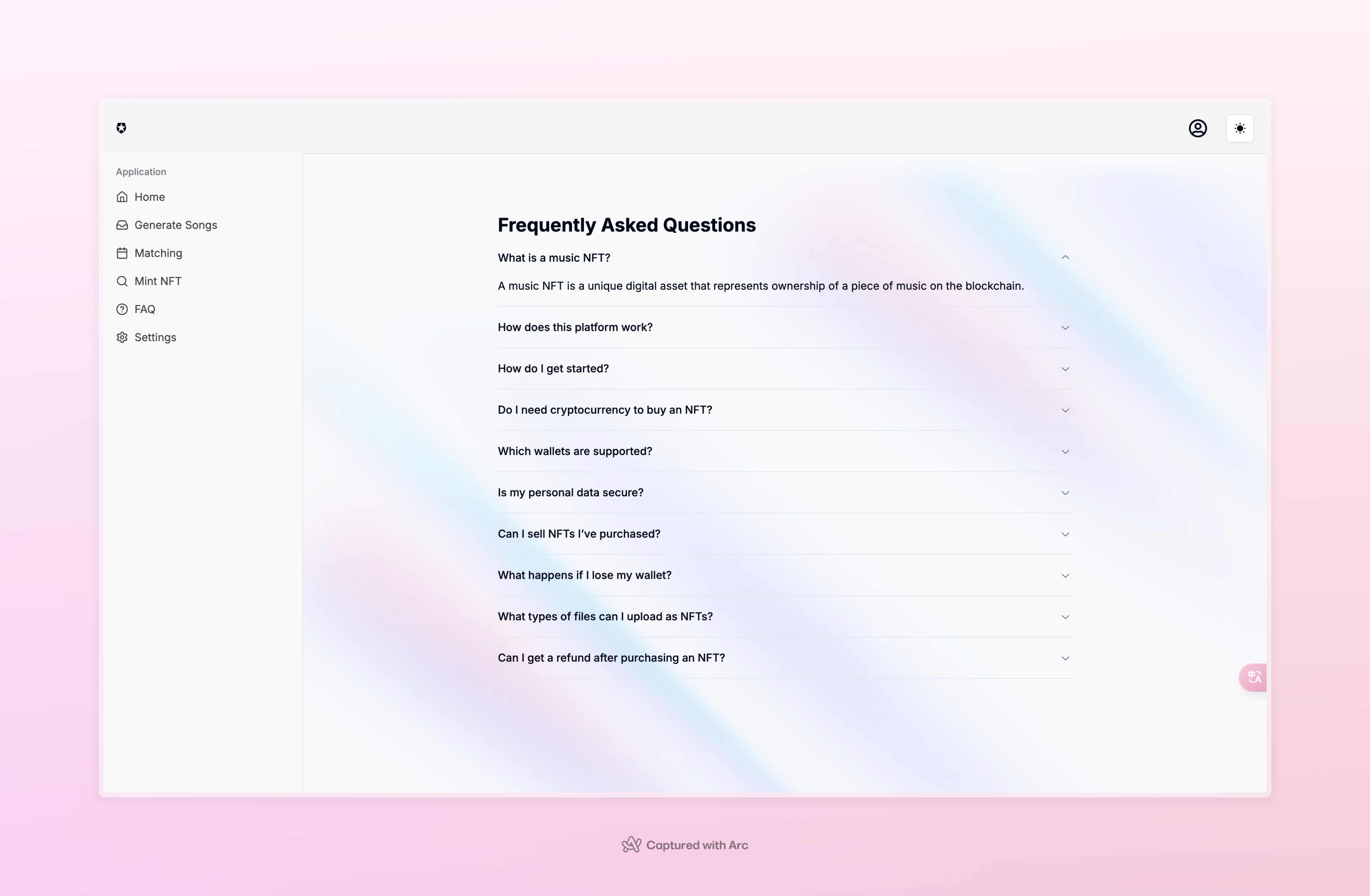
2. Our FAQ section is curated based on the most frequently asked and relevant questions by users.
-
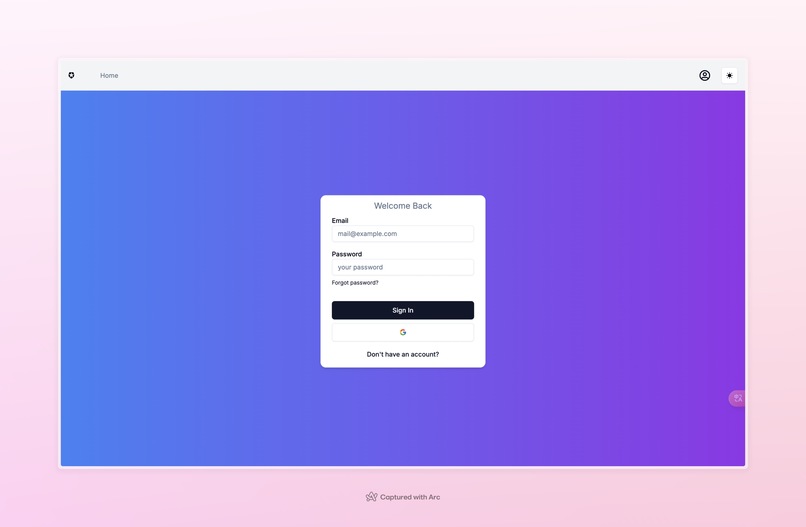
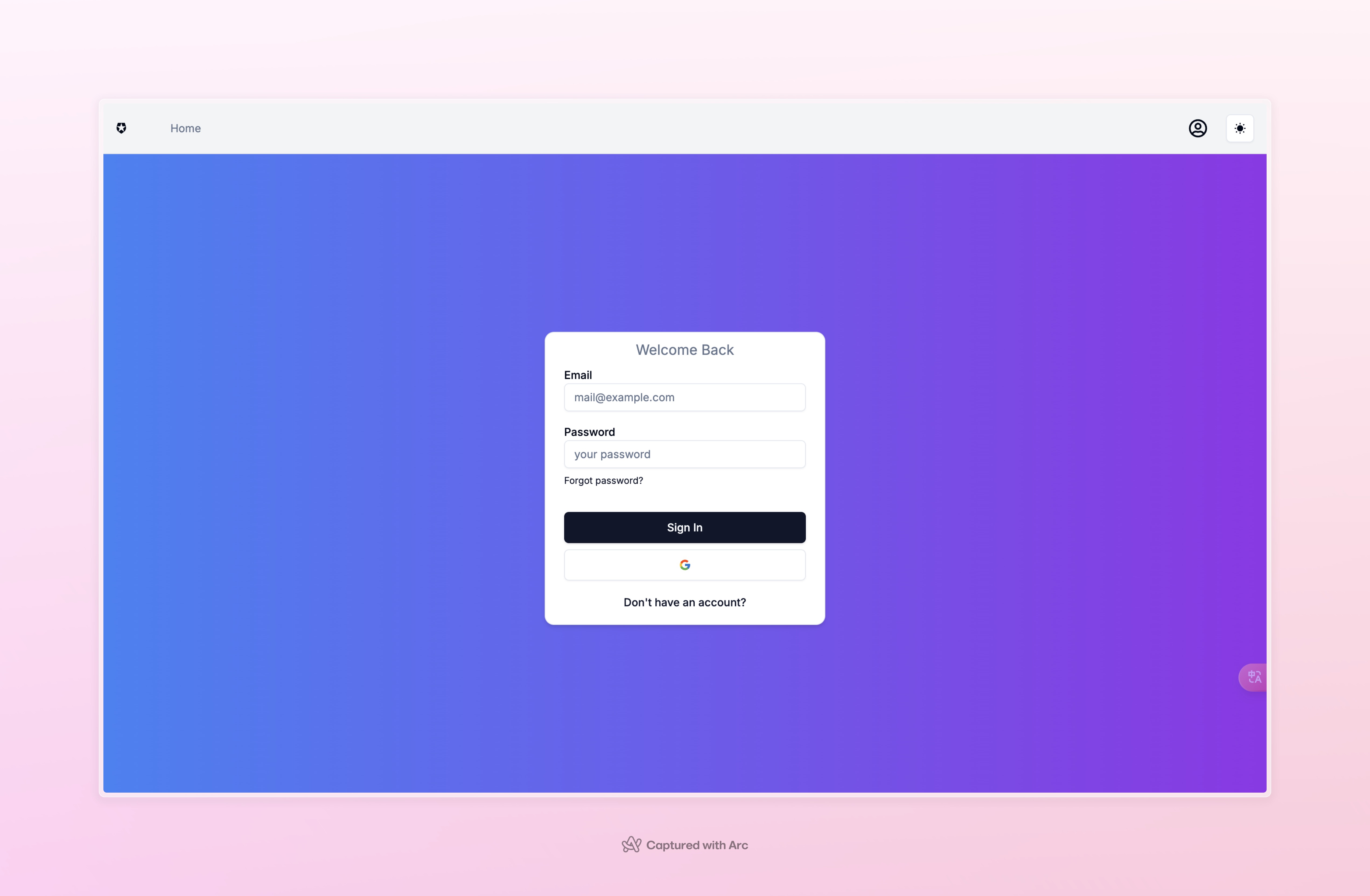
3. Users can sign up, log in, and log in using Google authentication. If a user forgets their password, they can request a password reset.
-
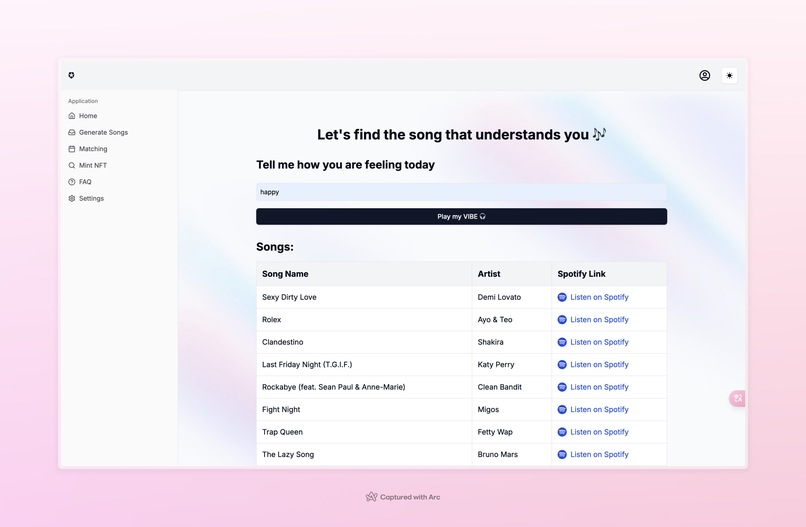
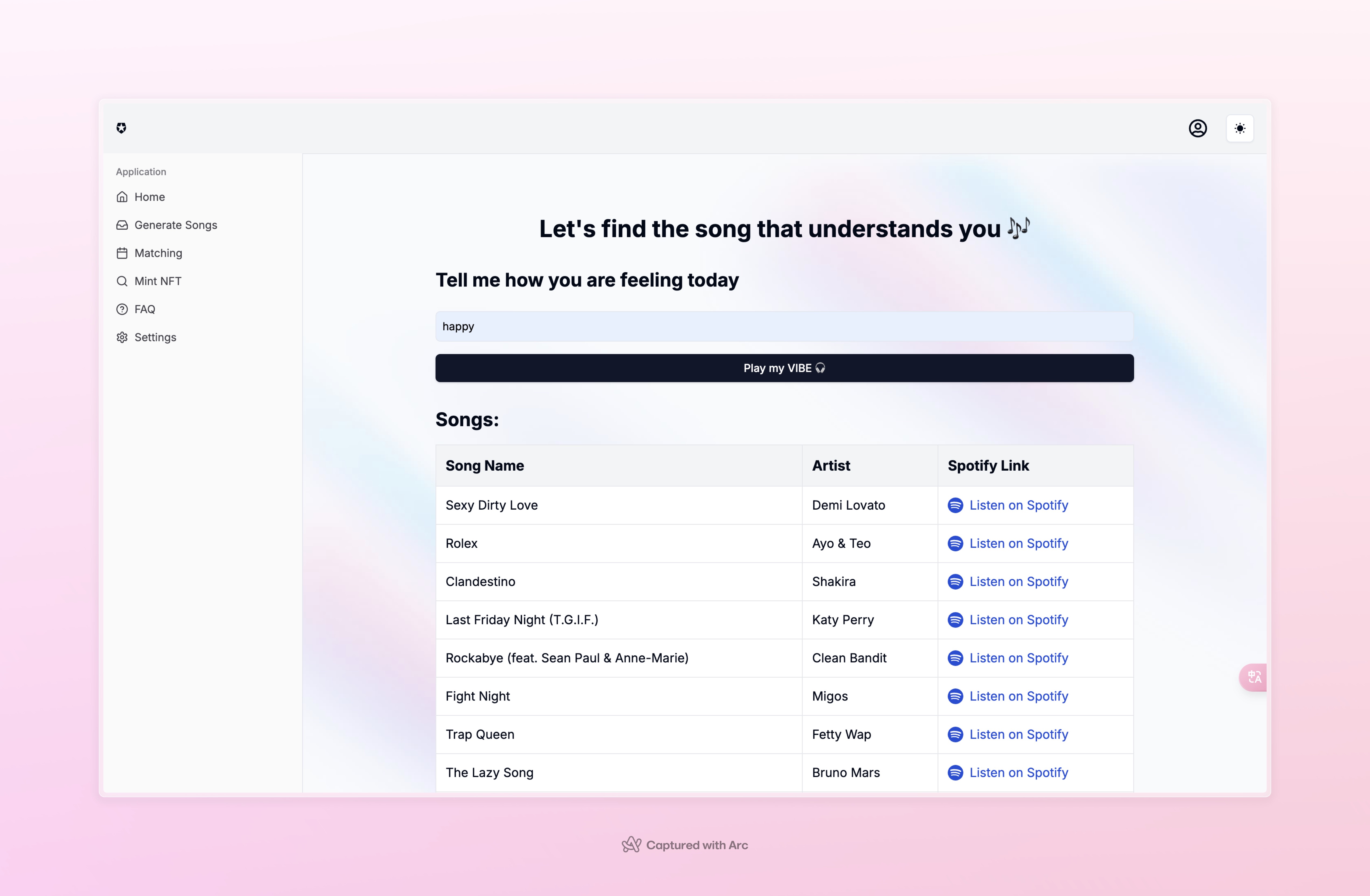
4. Based on the user's emotion, a curated list of songs is provided directly from Spotify.
-
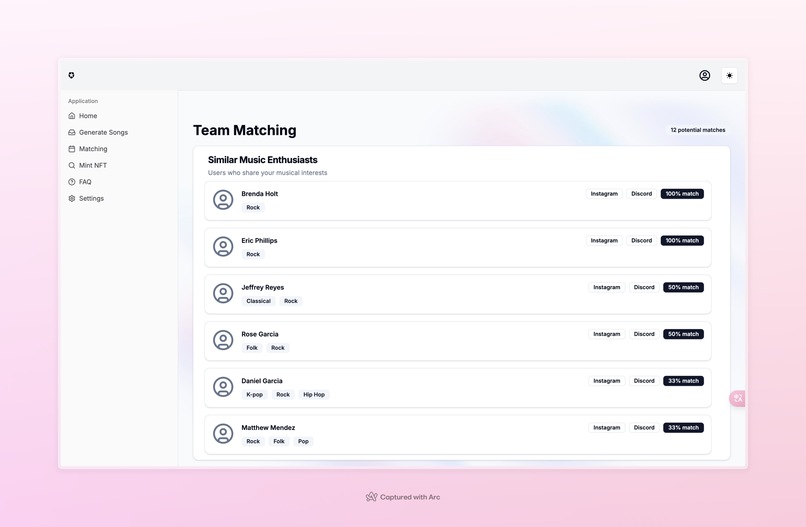
5. Users can connect with others who share the same music genre preferences.
-
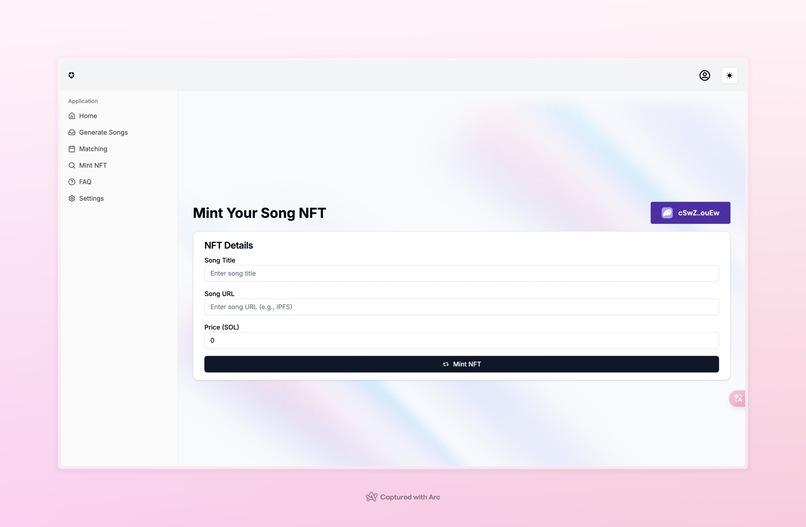
6. Artists can sell their songs and mint NFTs, with a redirect to the Phantom server for transactions.
-
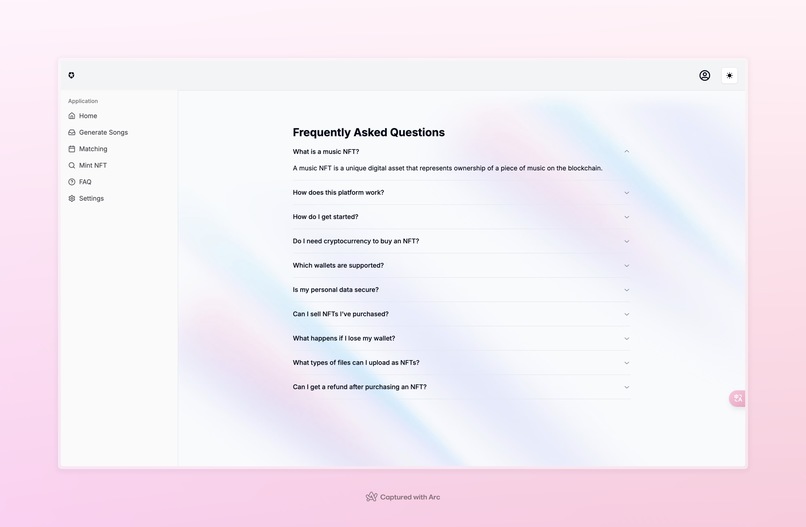
7. Our FAQ section is curated based on the most frequently asked and relevant questions by users.
-
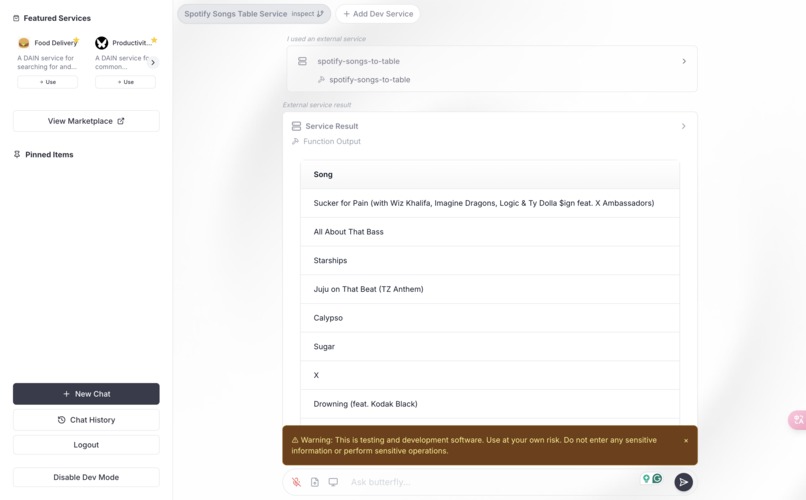
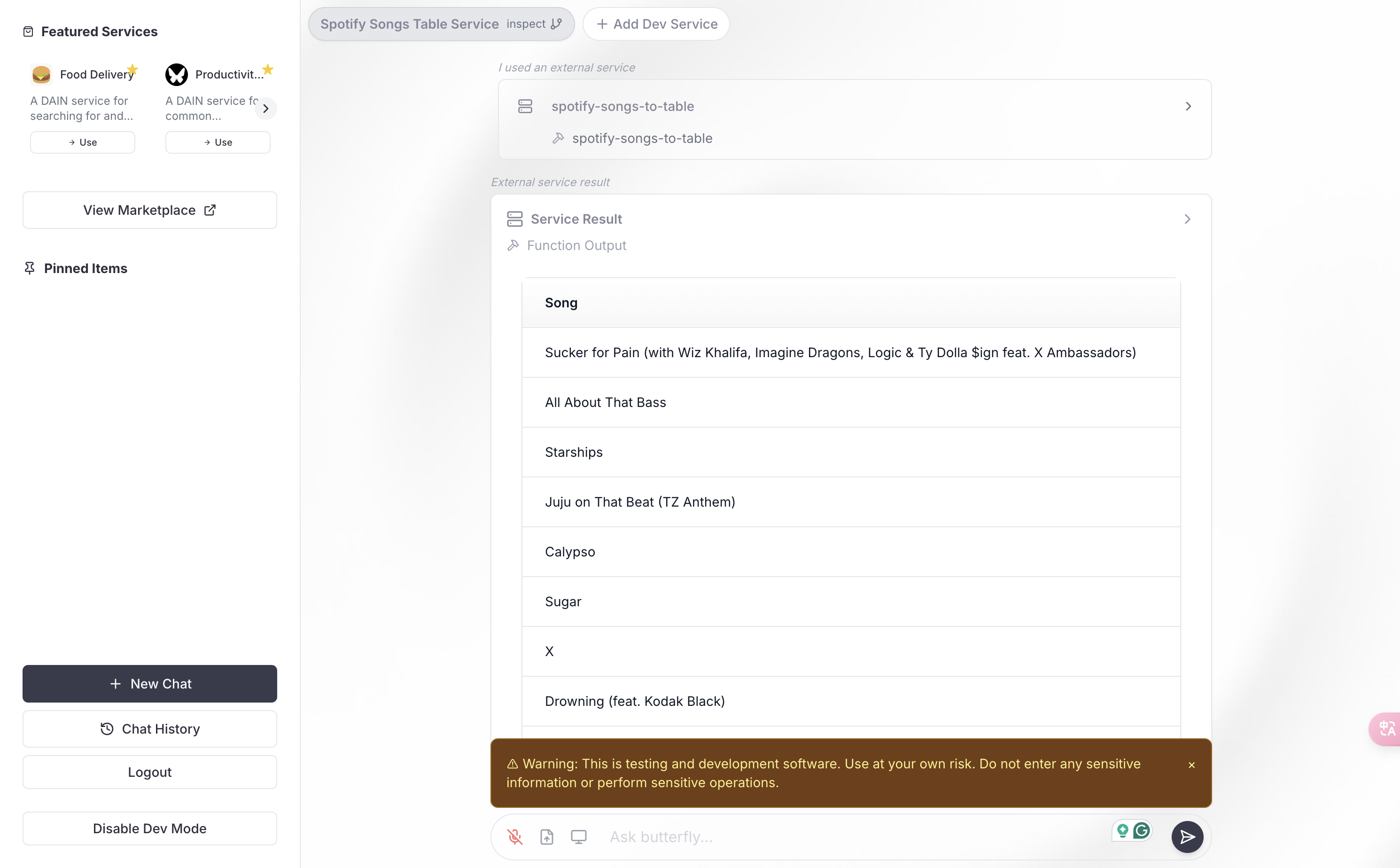
8. We have integrated the Dain Chatbot, which assesses the user's mood and provides a personalized song playlist based on their emotions.
Inspiration
In the United States, approximately 25% of adults experience mental illness. Although music therapy is prevalent in some regions, many people still haven’t discovered its benefits. Our project aims to bridge this gap. Whatever emotions a person may be feeling, there is music to resonate with that experience, helping us accept and process our emotions. This concept shapes the first module of our project, where people can connect with music that reflects their inner world.
Finding others with similar music tastes feels like finding a sense of belonging—a true feeling of home. This idea inspires our second module, fostering connections and friendships through shared musical preferences.
We believe emerging talent deserves a platform. *Thus our third module is dedicated to empowering independent musicians by offering a space to showcase their art free from the pressures of labels. * By selling their music as NFTs, they not only gain financially but also build confidence in their craft.
What it does
Emotion-Based Music Curation This module focuses on using music as a therapeutic tool by connecting users with songs that reflect their emotions. Users can select their current mood, and the system will generate a playlist of songs that resonate with those feelings. The main goal is to help individuals process and accept their emotions, offering a musical mirror to their inner world.
Community Building Through Shared Music Tastes The second module fosters connection by linking users with similar musical preferences. By matching individuals based on their music tastes, we aim to create a community where people can connect, bond, and form friendships over favorite genres. It provides a sense of belonging, like finding a “musical home,” through a platform that celebrates shared tastes.
NFT Platform for Independent Musicians Our third module empowers emerging musicians by allowing them to sell their music as NFTs. This decentralized marketplace enables artists to showcase and monetize their work without relying on record labels or intermediaries. Through NFTs, musicians can gain financial benefits and receive support directly from their fan base, boosting their confidence and providing a path to recognition and growth.
Dain Integration Here the user provides the input as an emotion they are going through, the output is a list of songs and their respective spotify links. In the handler, the Spotify API is called and using the keywords entered, i.e. the emotions, the API returns a list of songs for that emotion. Since we used Dain, the respective functionality was easily integrated in a chatbot.
Additional Features There is a login and register page, which is implemented in two ways - there is a form for manual entry and also the user's google information can be used to login or register. Post signing in, the user can access the various functionalities. Other than that, we have an FAQ section, where the user can look at common issues / concerns.
How we built it
The whole project is built with NodeJS, React, NextJS and MongoDB.For CSS we used shadcn. Further describing the modules and the tools used for them:
Emotion-Based Music Curation Here we integrated the system with Spotify API.
Community Building Through Shared Music Tastes Here we used joins in MongoDB to get the taste matching with respect to the logged in user.
NFT Platform for Independent Musicians Here Solana, Web3, Phantom, Metaplex was used to handle buying and selling of NFT’s.
Dain Integration Here we used Butterfly and Dain to add our code in handler to allow the chatbot integration.
Additional Features For the login and register page, we used the additional Google Authentication along with other features of NextJS.
Challenges we ran into
- Developing an accurate emotion detection system that could reliably interpret users' moods and match them with suitable music genres and tracks.
- Learning about NFT, Solana, Phantom and integrating it with the system.
- Implementing Dain with only the documentation was tough but it was all worth it in the end.
- Building the authentication system with Google Authentication and NextAuth.
Accomplishments that we're proud of
- Right from brainstorming to selecting a vertical to building the whole application from scratch in less than 24 hours.
- Pulling an all nighter and getting the work done.
- Learning about Web3, Solana and blockchain and implementing it in our system.
- Attending all webinars and applying the concepts practically, i.e. using Dain for our system.
- Integration of Google and Spotify API.
- Building the system without any major external help.
What we learned
- First and foremost is the technology used like NodeJS, NextJS, MongoDB and the integration of all the modules.
- Given everyone was from different majors and year, there was a good brainstorming / ideation session.
- Staying up late at night and dividing work accordingly.
What's next for Moodify Market
- Adding stakeholders - namely Budding Musicians, Listeners and Admin.
- Using Computer Vision to generate songs and videos based on the facial expressions.
- Adding languages, to filter songs based on the languages along with the emotion entered.
- Integrating with YouTube API to add videos based on the emotion.
- Adding a chatbot to let the artists brainstorm ideas and build a safe space for ideation.
- Letting people draw their emotions out and use their artistic selves to express themselves.
- Letting listeners exchange NFT's amongst themselves.
- Adding subscription plans and providing advanced features to the subscribers, like monthly Blockchain and cryptocurrency talks.
- Inculcating a feedback system, which lets the listeners give their views for the newly released songs.
- Building charts and reports to summarize the monthly activities of the users in all the modules.
Built With
- axios
- blockchain
- cryptocurrency
- dain
- express.js
- metaplex
- mongodb
- nextauth
- nextjs
- nft
- phantom
- shadcn
- solana
- spotifyapi
- typescript
- web3


Log in or sign up for Devpost to join the conversation.