Inspiration
In today’s fast-paced world, finding the right music that matches our current emotional state can be challenging. We wanted to bridge the gap between our feelings and the music we listen to, creating a more personalized and emotionally resonant experience. Moodify was inspired by the need to make music selection intuitive and responsive to our ever-changing moods, using advanced AI technology to enhance how we interact with music.
What it does
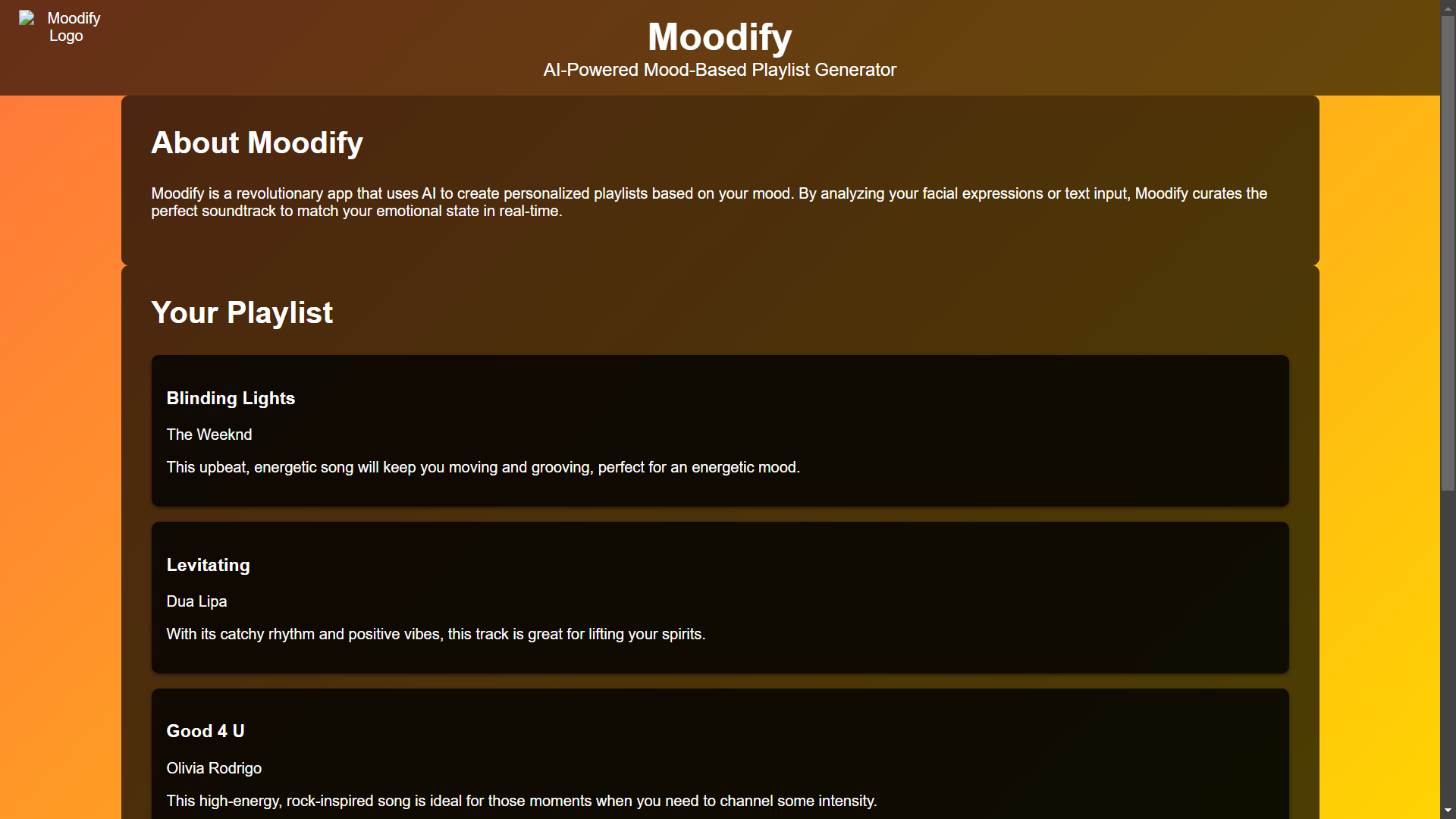
Moodify detects your mood through facial expressions or text input and generates a personalized playlist that matches your emotional state. By leveraging real-time AI, the platform ensures that your music aligns with how you feel at any moment. Whether you're happy, sad, or excited, Moodify curates the perfect soundtrack to enhance your experience.
How we built it
We built Moodify using a combination of modern technologies: Frontend: Developed with React and styled with Tailwind CSS for a clean and responsive design. Mood Detection: Integrated TensorFlow.js for facial expression analysis and Google Cloud’s Natural Language API for text sentiment analysis. Backend: Utilized Convex for real-time data management and user session handling. Music Integration: Connected with the Spotify API to generate and stream playlists based on detected moods.
Challenges we ran into
Real-Time Mood Detection: Ensuring accurate mood detection while maintaining a seamless user experience was a significant challenge. Fine-tuning the facial recognition model and sentiment analysis for real-time performance required substantial effort. API Integration: Integrating with external music APIs and managing real-time playlist updates posed technical challenges, particularly in balancing performance and responsiveness.
Accomplishments that we're proud of
Seamless Integration: Successfully integrated real-time mood detection with music playlist generation, providing users with a unique and personalized music experience. User Experience: Developed an intuitive interface that allows users to easily interact with the mood detection features and enjoy curated playlists instantly. Real-Time Performance: Achieved real-time performance with Convex, ensuring smooth updates and responsiveness.
What we learned
AI Integration: Gained valuable insights into combining AI for facial recognition and sentiment analysis with real-time data handling. User-Centric Design: Learned the importance of creating an intuitive user interface that effectively communicates complex functionalities in a user-friendly manner. API Management: Developed skills in managing third-party APIs and handling real-time data synchronization across different services.
What's next for Moodify - AI-Powered Mood-Based Playlist Generator
Enhanced Mood Detection: Plan to improve the accuracy of mood detection by incorporating additional emotion recognition algorithms and expanding language support for text analysis. Feature Expansion: Explore adding new features such as mood-based recommendations for podcasts and ambient sounds. User Feedback: Collect and analyze user feedback to refine the user experience and introduce new functionalities that cater to user needs.
Built With
- api
- convex?s
- databases:
- google-cloud-(for-sentiment-analysis)-cloud-services:-convex-(real-time-updates)
- languages:-javascript
- music
- python-frameworks:-react
- real-time
- spotify
- streaming)
- tensorflow.js-platforms:-convex-(for-real-time-data-management)

Log in or sign up for Devpost to join the conversation.