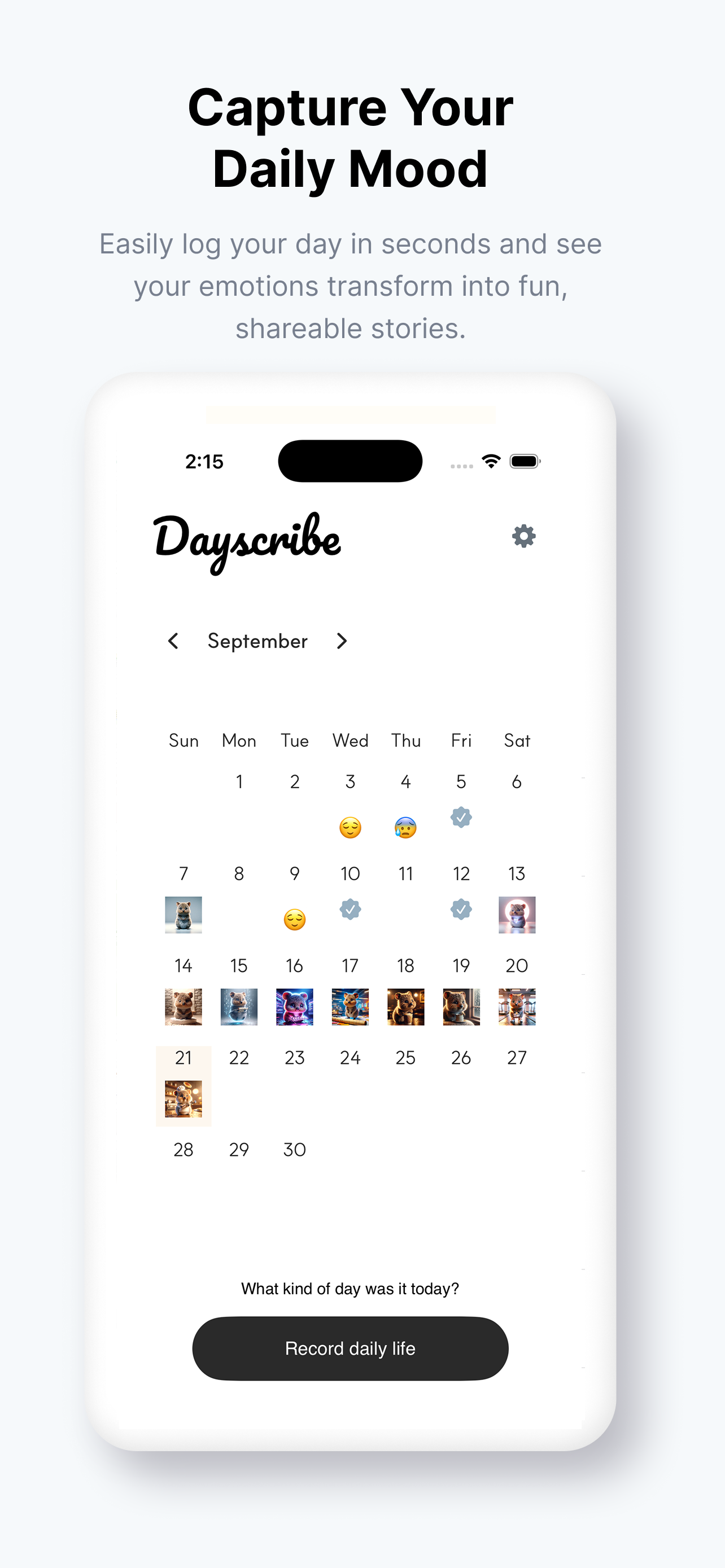
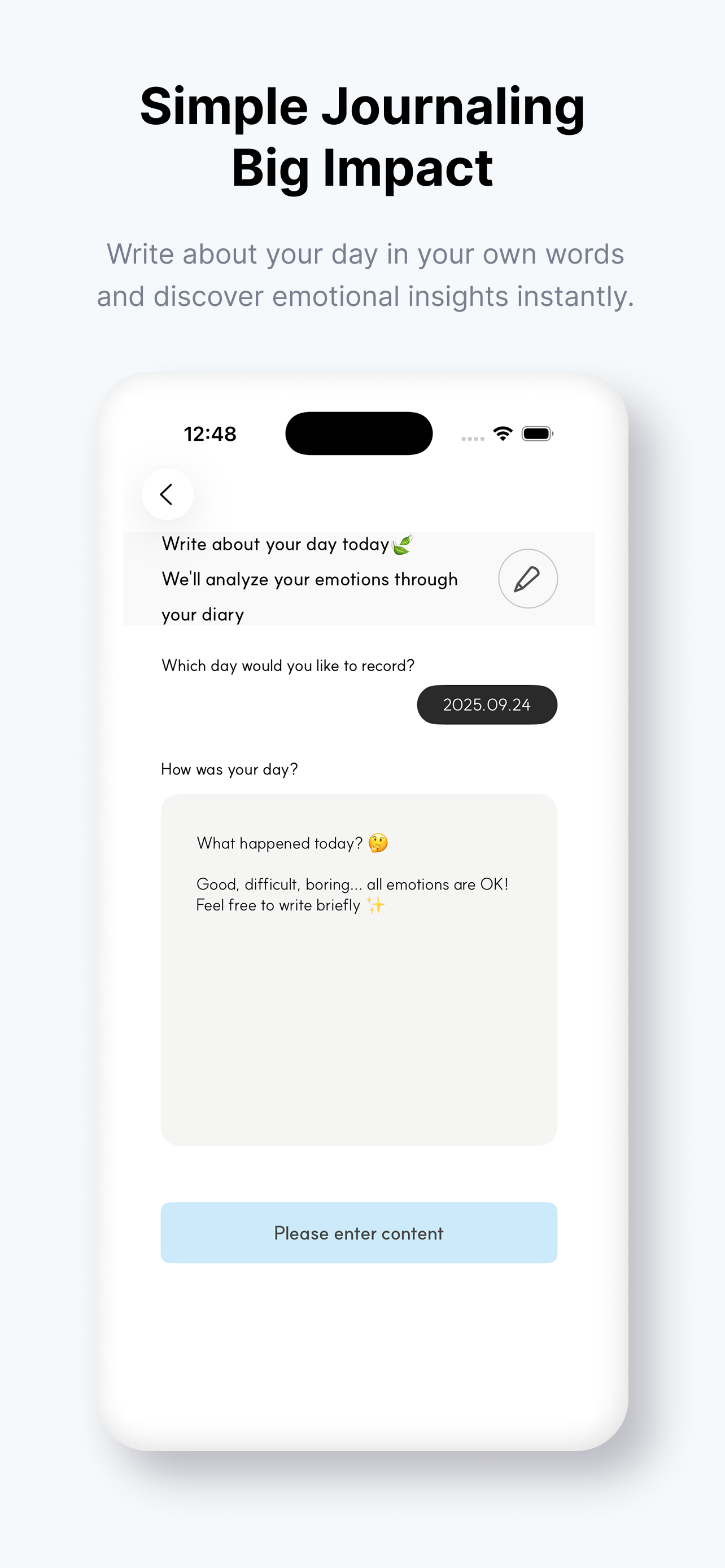
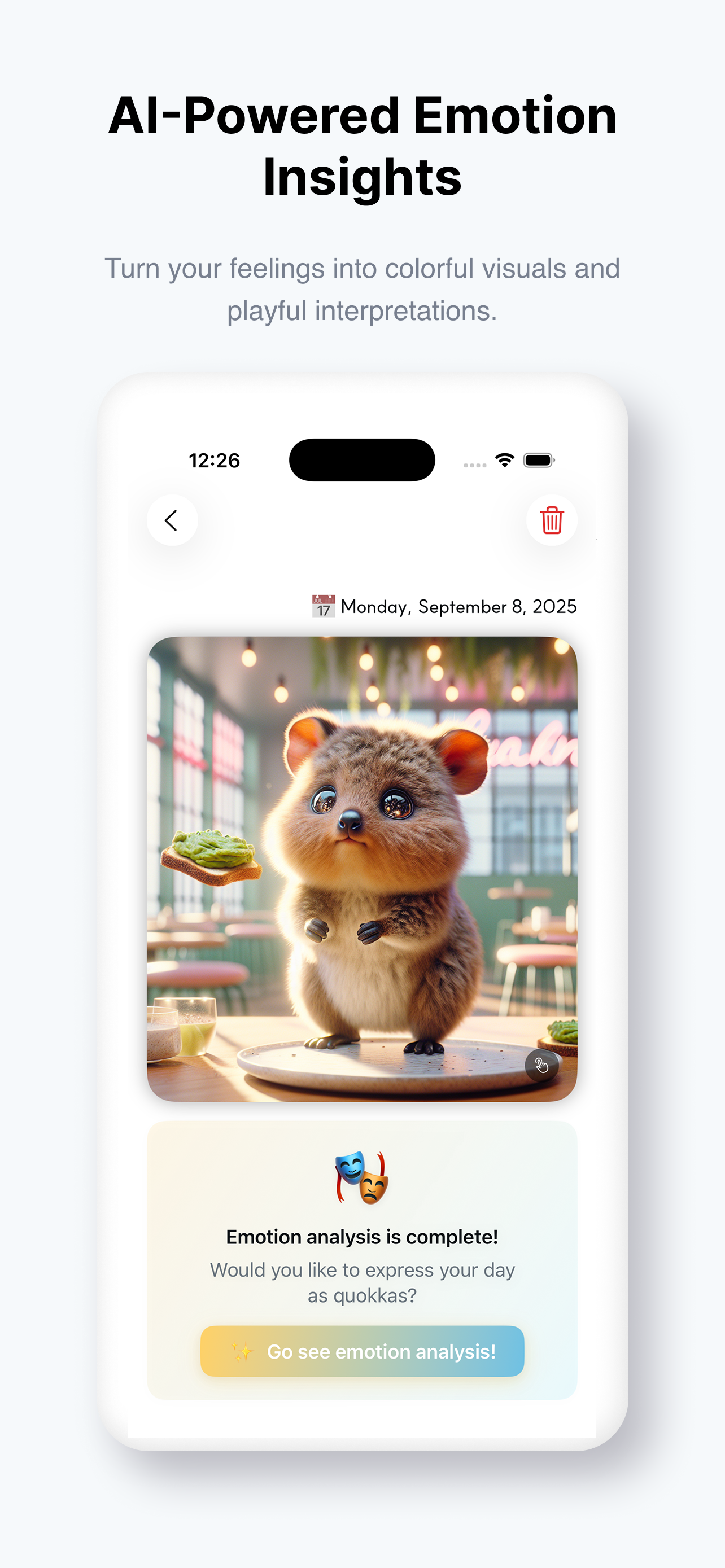
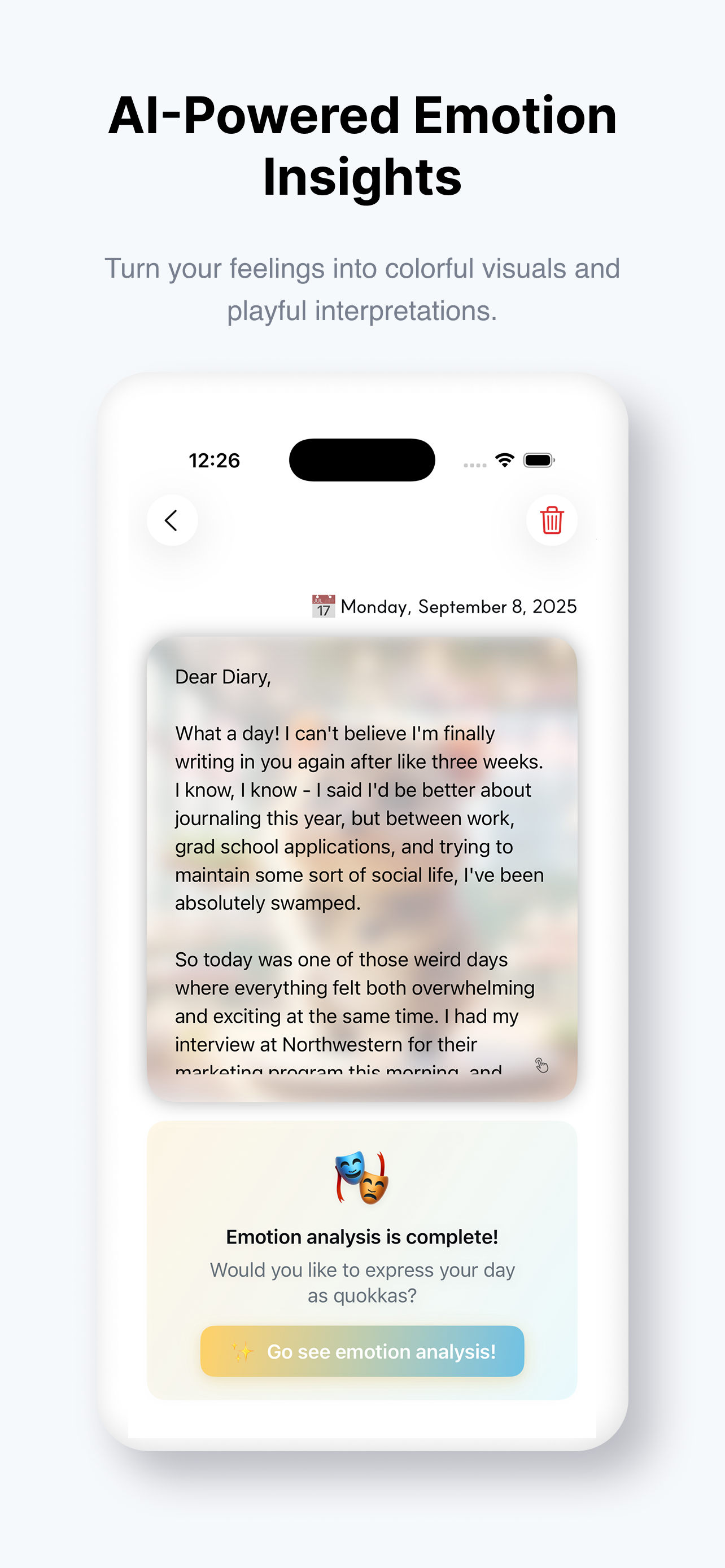
Inspiration Many people struggle to recognize and name their own emotions, even as adults. We were inspired by this universal challenge, as well as by our own experiences of not being able to identify what we were really feeling in important life moments. The idea was to turn journaling into a journey of self-discovery: writing daily reflections, extracting emotions, and watching them transform into patterns and insights.
What We Learned Writing is only the starting point. What resonates with users is the ability to see their feelings reflected back in clear visual feedback. Emotions are rarely singular. Most diary entries carry multiple overlapping emotions, so we designed a system that can handle both core and blended emotional states. Target users are reflective people who value self-knowledge and metacognition and want to understand themselves through behavioral patterns.
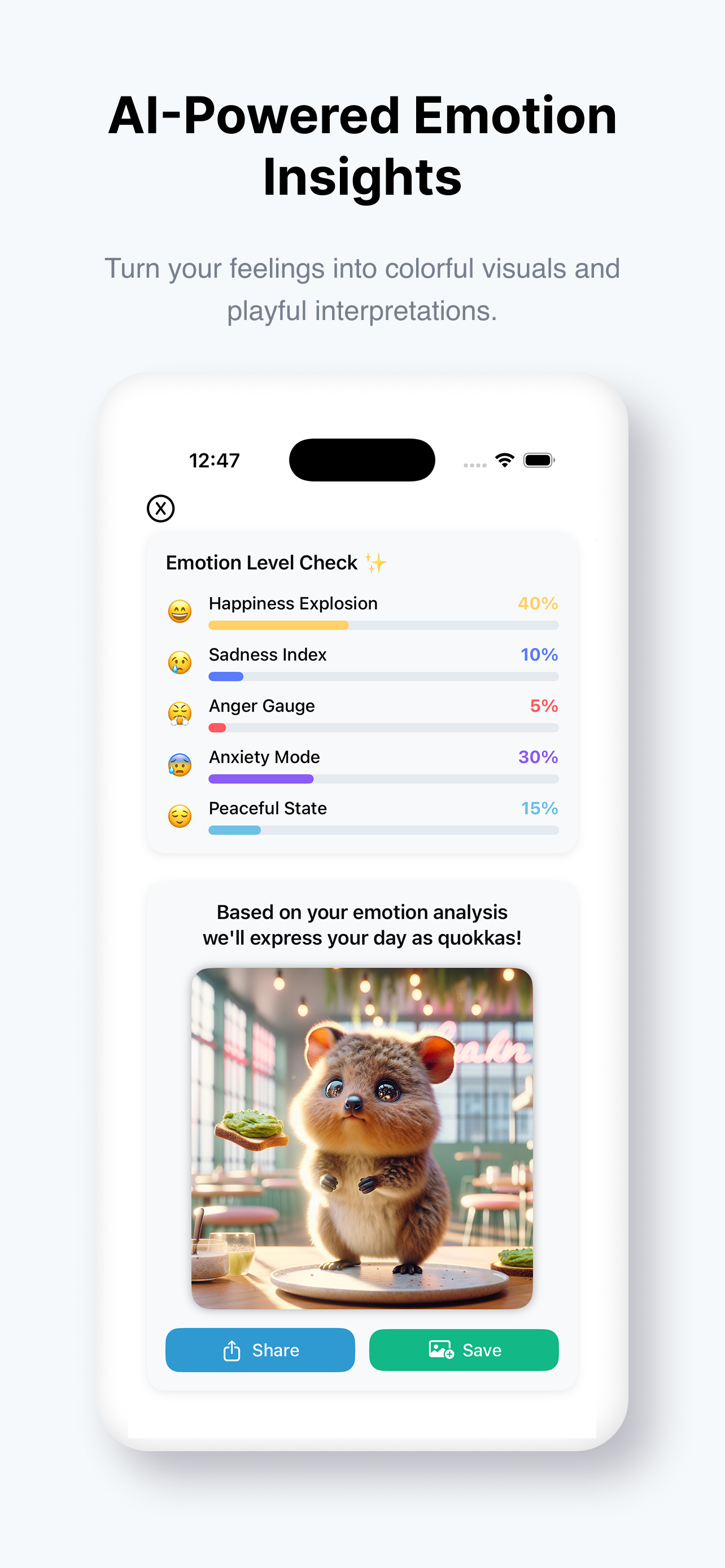
How We Built It Core pipeline: User writes a diary entry, text is analyzed, emotions (7–10 categories) are extracted with confidence Visualization: Results are shown in percentages and simple visuals. Example: Anger 70%, Joy 20%. Weekly insights: Emotions are aggregated over time. Example: This week → Joy 40%, Stress 25%. Growth layer: As entries accumulate, the app generates evolving summaries and one-line reflections.
Challenges Scope management: choosing the right number of emotions without overwhelming users. Design clarity: making emotions intuitive. User retention: offering enough free value before upgrades. Ambiguity: handling vague expressions like “I feel weird” via blended emotions.
Math & Logic We quantify emotions with a simple scoring formula: Emotion% = (keyword weight + context score) / total weights × 100
This produces intuitive values such as: Anger 65% Joy 30%
Over time, these scores form trend lines that map a user’s emotional landscape.
Built With
- chatgpt
- revenuecat
- swift
- swiftui