-
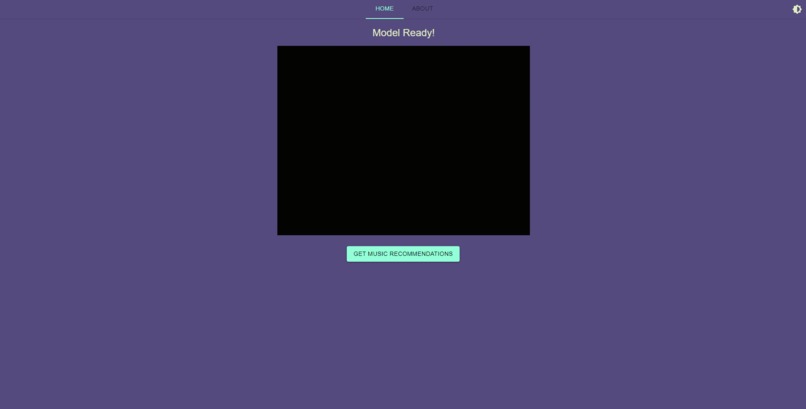
Landing Page (With Webcam)
-
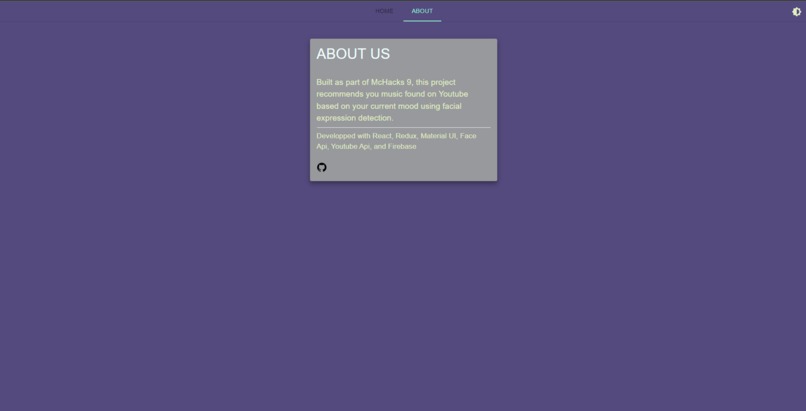
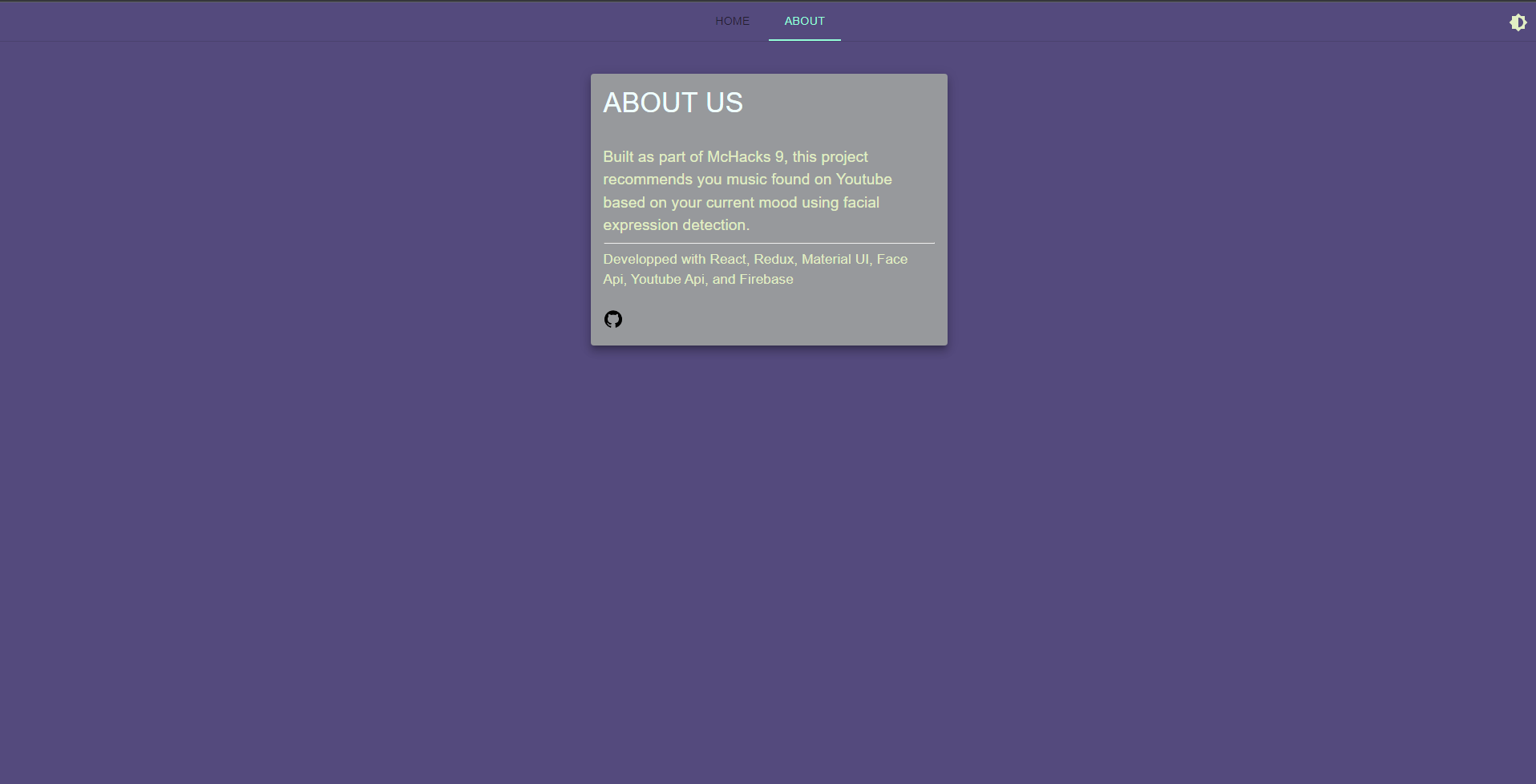
About page
-
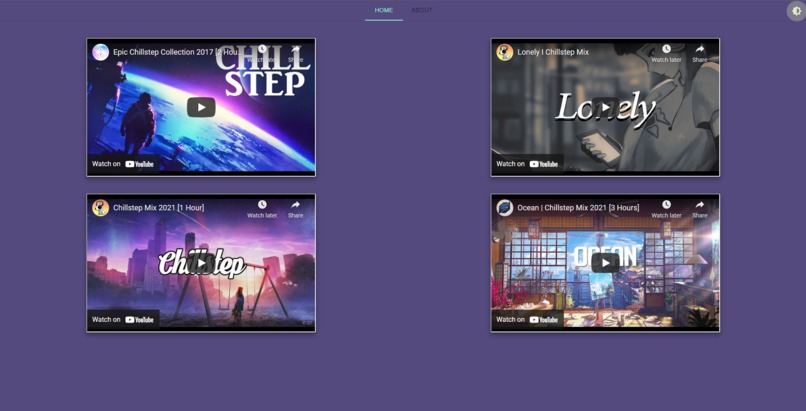
Final Result!
Inspiration
What inspired us to build this application was spreading mental health awareness in relationship with the ongoing COVID-19 pandemic around the world. While it is easy to brush off signs of fatigue and emotional stress as just "being tired", often times, there is a deeper problem at the root of it. We designed this application to be as approachable and user-friendly as possible and allowed it to scale and rapidly change based on user trends.
What it does
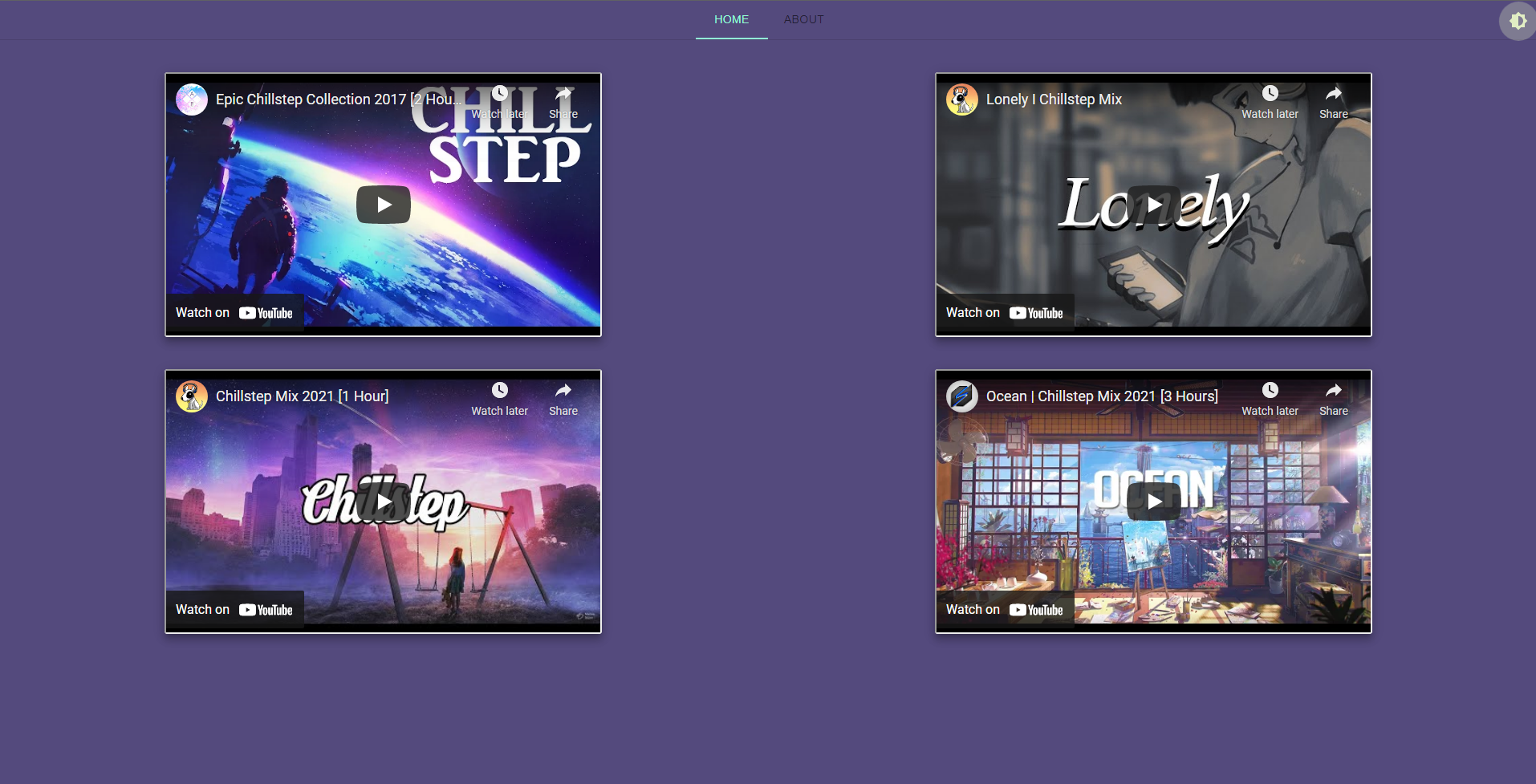
The project takes a scan of a face using a video stream and interprets that data by using machine learning and specially-trained models for emotion recognition. Receiving the facial data, the model is then able to process it and output the probability of a user's current emotion. After clicking the "Recommend Videos" button, the probability data is exported as an array and is processed internally, in order to determine the right query to send to the YouTube API. Once the query is sent and a response is received, the response is validated and the videos are served to the user. This process is scalable and the videos do change as newer ones get released and the YouTube algorithm serves new content. In short, this project is able to identify your emotions using face detection and suggest you videos based on how you feel.
How we built it
The project was built as a react app leveraging face-api.js to detect the emotions and youtube-music-api for the music recommendations. The UI was designed using Material UI.
The project was built using the REACT framework, powered by NodeJS. While it is possible to simply link the package.json file, the core libraries that were used were the following
- Redux
- Face-API
- GoogleAPIs
- MUI
- The rest were sub-dependencies that were installed automagically using npm
Challenges we ran into
We faced many challenges throughout this Hackathon, including both programming and logistical ones, most of them involved dealing with React and its handling of objects and props. Here are some of the most harder challenges that we encountered with React while working on the project:
- Integration of
face-api.js, as initially figuring out how to map the user's face and adding a canvas on top of the video stream proved to be a challenge, given how none of us really worked with that library before. - Integration of
googleapis' YouTube API v3, as the documentation was not very obvious and it was difficult to not only get the API key required to access the API itself, but also finding the correct URL in order to properly formulate our search query. Another challenge with this library is that it does not properly communicate its rate limiting. In this case, we did not know we could only do a maximum of 100 requests per day, and so we quickly reached our API limit and had to get a new key. Beware! - Correctly set the camera refresh interval so that the canvas can update and be displayed to the user. Finding the correct timing and making sure that the camera would be disabled when the recommendations are displayed as well as when switching pages was a big challenge, as there was no real good documentation or solution for what we were trying to do. We ended up implementing it, but the entire process was filled with hurdles and challenges!
- Finding the right theme. It was very important to us from the very start to make it presentable and easy to use to the user. Because of that, we took a lot of time to carefully select a color palette that the users would (hopefully) be pleased by. However, this required many hours of trial-and-error, and so it took us quite some time to figure out what colors to use, all while working on completing the project we had set out to do at the start of the Hackathon.
Accomplishments that we're proud of
While we did face many challenges and setbacks as we've outlined above, the results we something that we can really be proud of. Going into specifics, here are some of our best and satisfying moments throughout the challenge:
- Building a well-functioning app with a nice design. This was the initial goal. We did it. We're super proud of the work that we put in, the amount of hours we've spent debugging and fixing issues and it filled us with confidence knowing that we were able to plan everything out and implement everything that we wanted, given the amount of time that we had. An unforgettable experience to say the least.
- Solving the API integration issues which plagued us since the start. We knew, once we set out to develop this project, that meddling with APIs was never going to be an easy task. We were very unprepared for the amount of pain we were about to go through with the YouTube API. Part of that is mostly because of us: we chose libraries and packages that we were not very familiar with, and so, not only did we have to learn how to use them, but we also had to adapt them to our codebase to integrate them into our product. That was quite a challenge, but finally seeing it work after all the long hours we put in is absolutely worth it, and we're really glad it turned out this way.
What we learned
To keep this section short, here are some of the things we learned throughout the Hackathon:
- How to work with new APIs
- How to debug UI issues use components to build our applications
- Understand and fully utilize React's suite of packages and libraries, as well as other styling tools such as MaterialUI (MUI)
- Rely on each other strengths
- And much, much more, but if we kept talking, the list would go on forever!
What's next for MoodChanger
Well, given how the name is Moodchanger, there is one thing that we all wish we could change next. The world!
PS: Maybe add file support one day? :pensive: PPS: Pst! The project is accessible on GitHub!
Built With
- face-api
- javascript
- material-ui
- react
- redux
- youtube


Log in or sign up for Devpost to join the conversation.