Inspiration
Have you ever wondered why many people face debt? Part of the problem starts with us.
About 50% of consumers worldwide report negative economic attitudes, a sign of poor financial behaviors or spending driven by economic anxiety. That is about 4 Billion people around the world! Overspending and bad budgeting remain key drivers of personal debt, which lead to worst case scenarios such as gambling and depression.
What it does
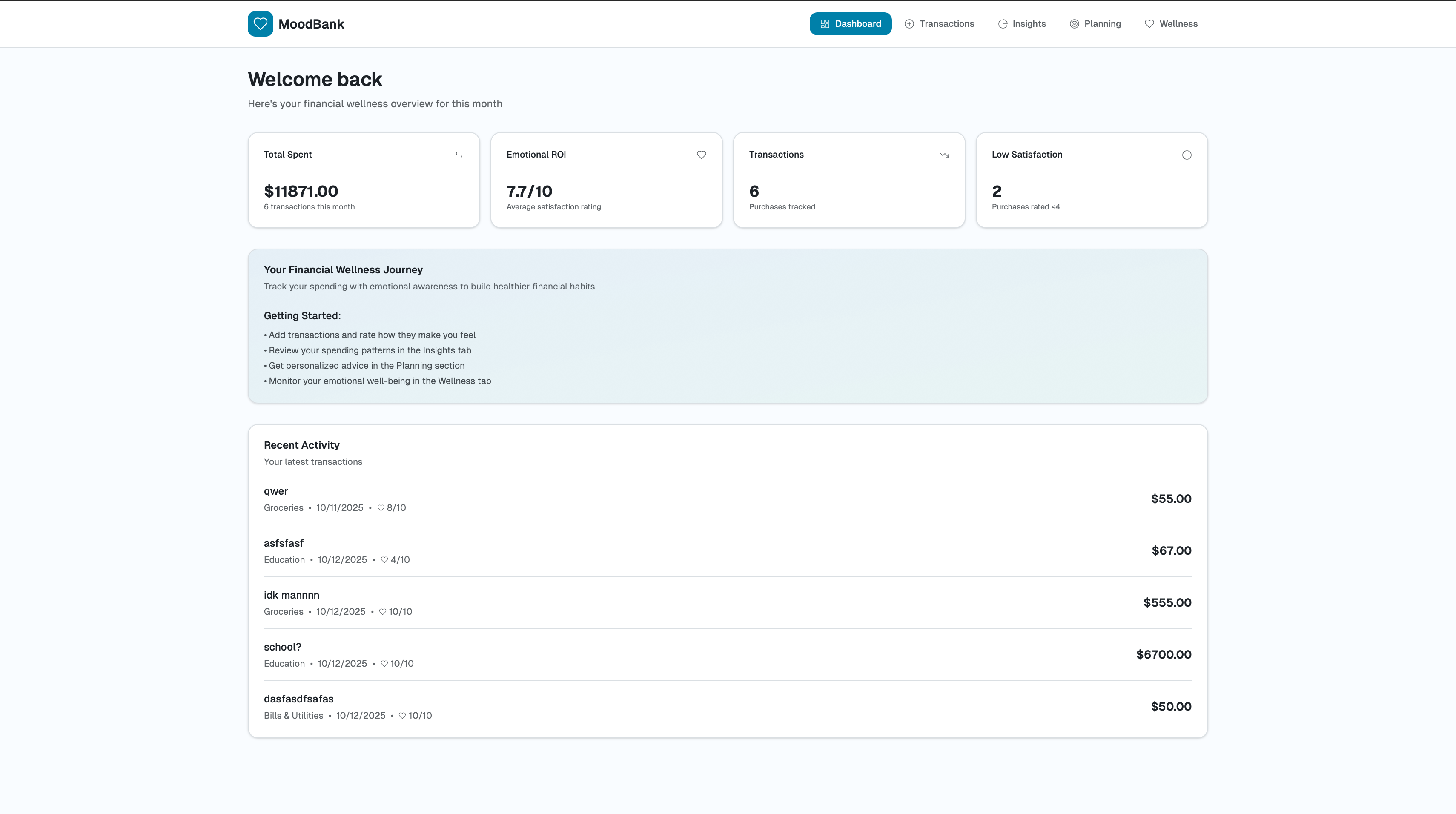
MoodBank has many features to ensure to spend in the most efficient way possible:
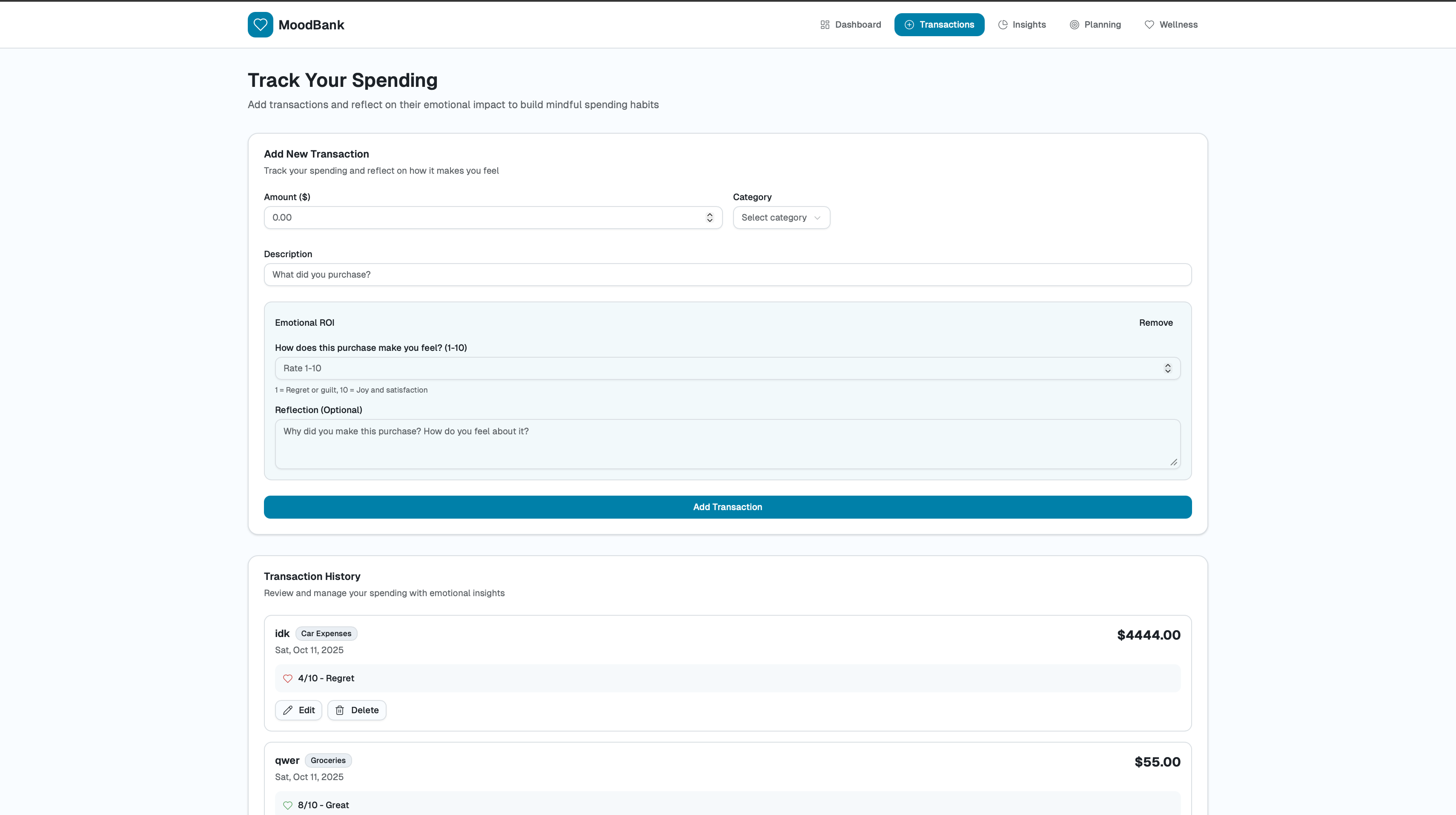
1. Transactions
You can input transactions where they enter a price, category, description, and a sentiment rating on a scale from 1 to 10 that determines how they feel about spending x for y dollars. 1 is being the worst and 10 is being the best.
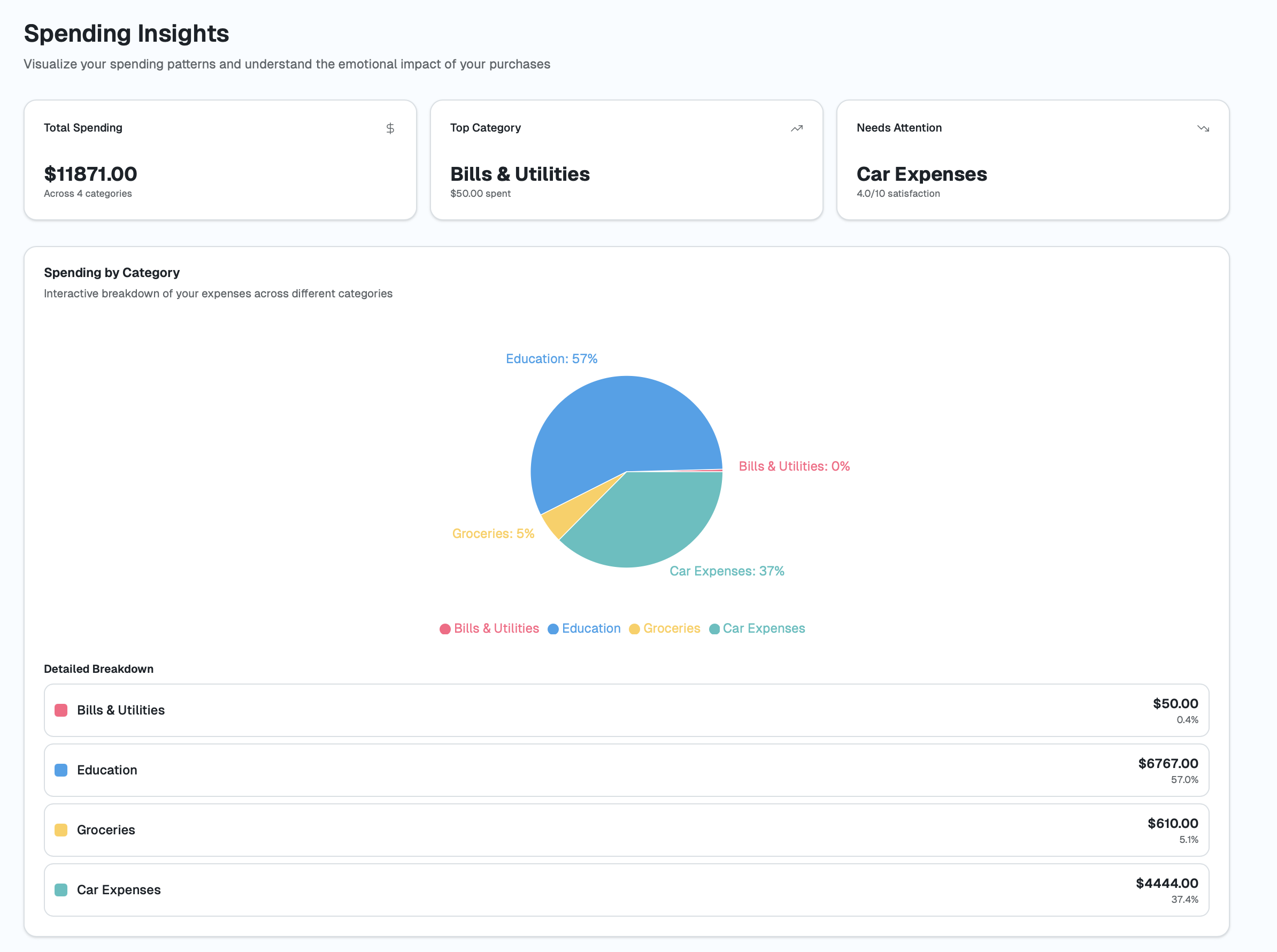
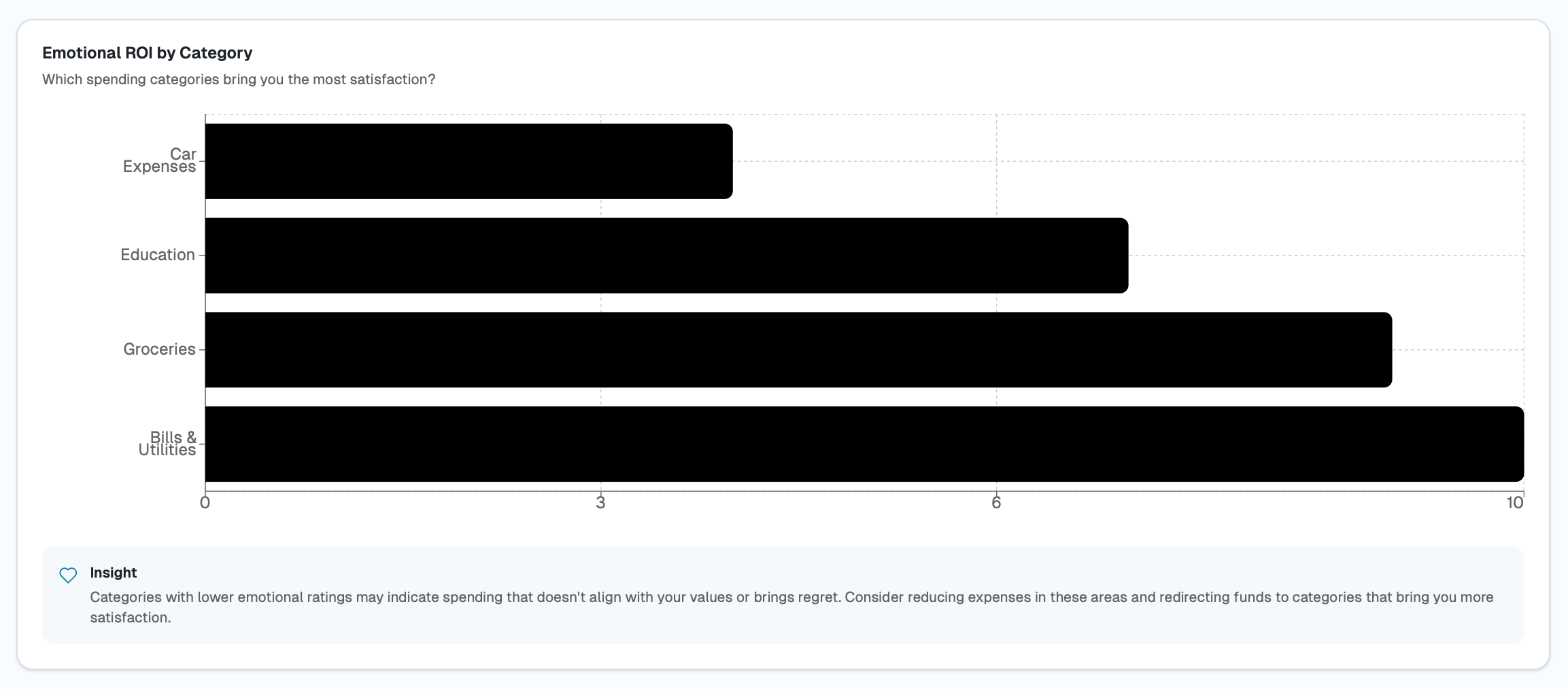
2. Insights
Your transactions are tracked, and they monitor your total spending. Two notable visuals is a pie chart, which determines how much you spend on each category by percentage and a bar chart, which shows an average ROI you expressed for each category .
3. Planning
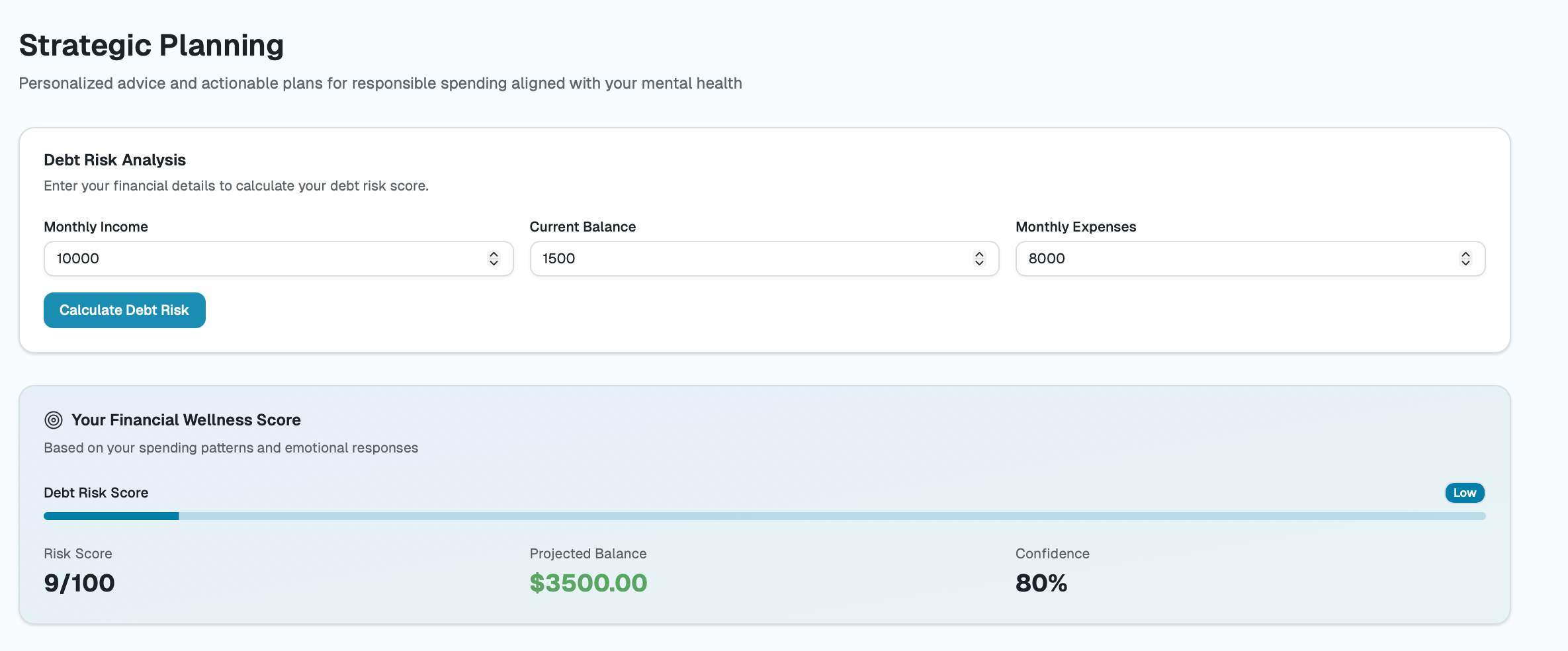
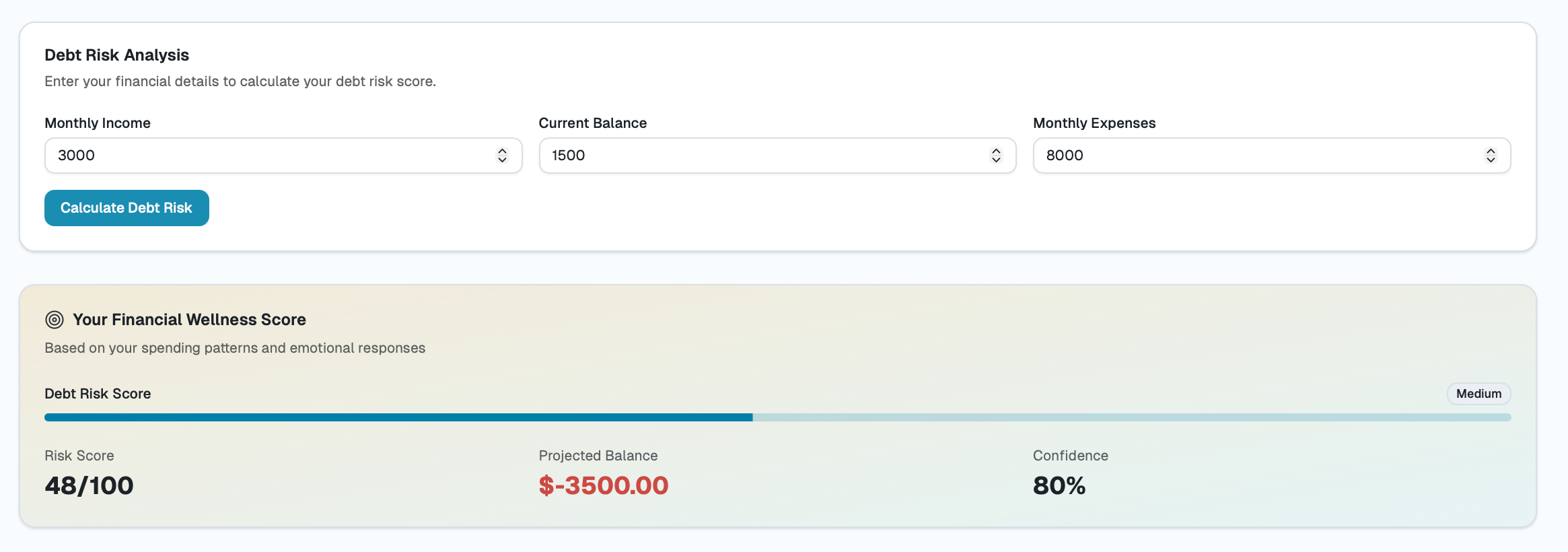
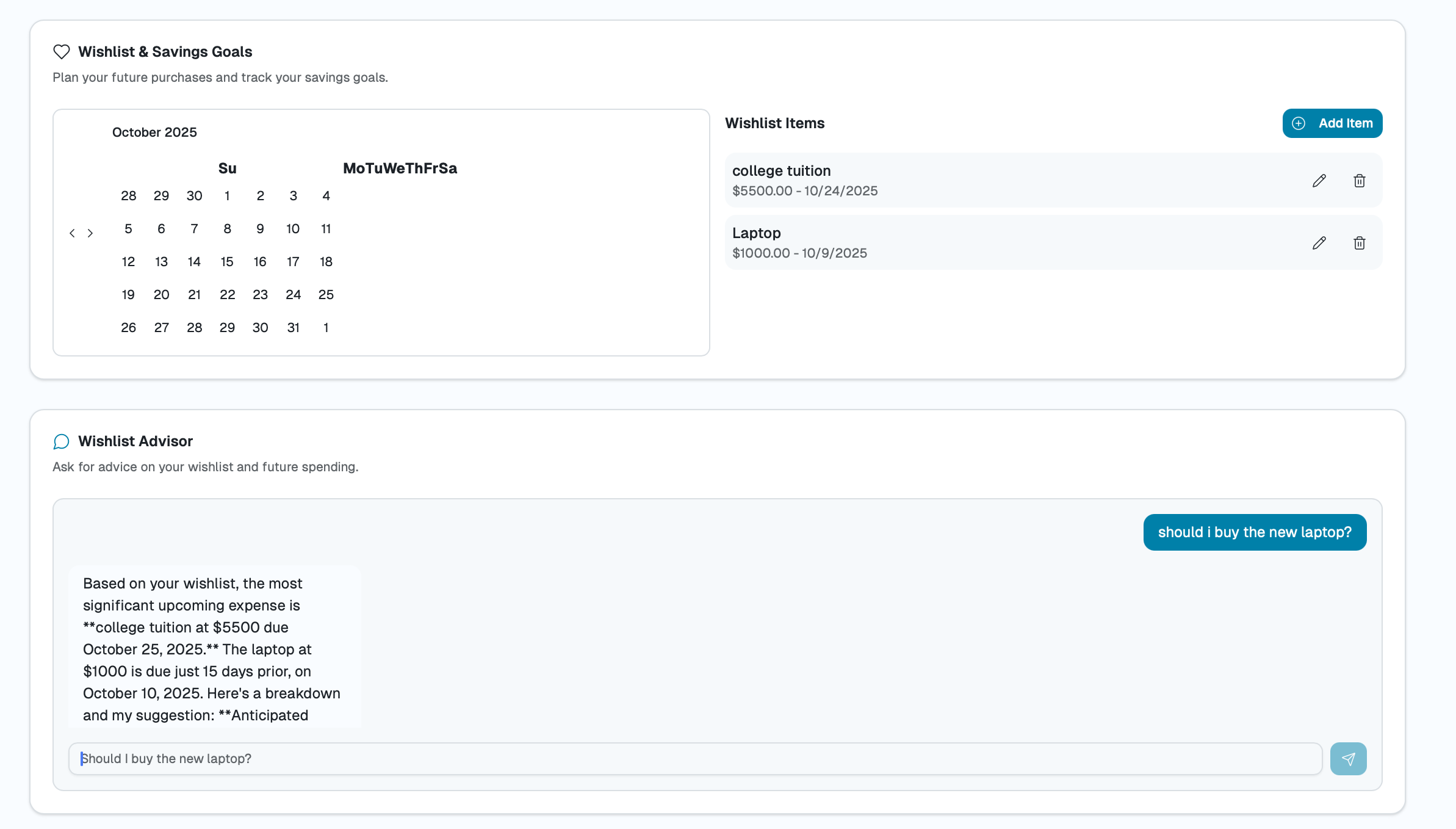
You can determine your debt risk by calculating it based on 3 parameters (monthly income, current balance, and monthly expenses). Also, there is also a calendar feature where you can add wishlist items to anticipate future transactions on a particular date. Additionally users have an AI Agent to interact with to guide users on what wishlist items are worth spending on.
4. Wellness
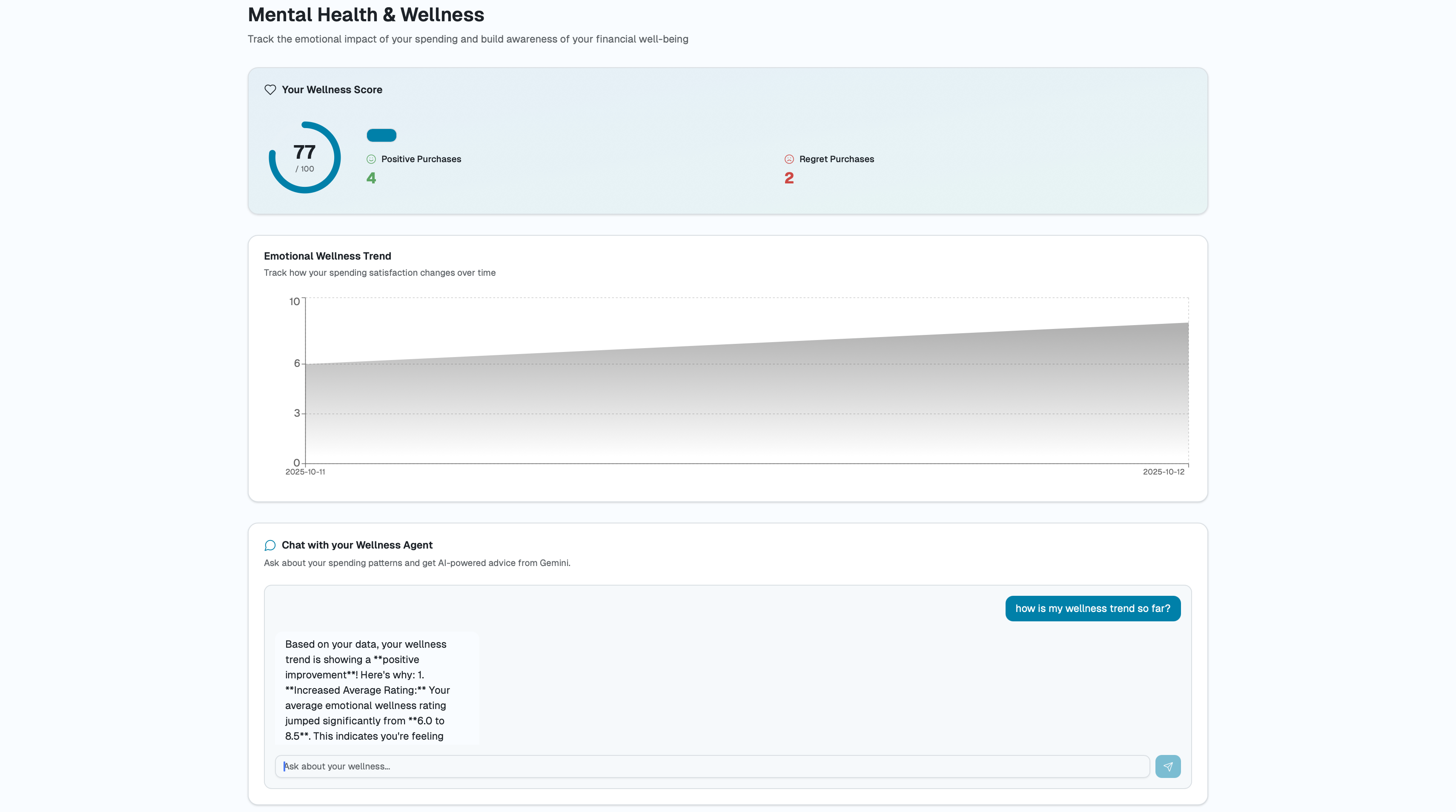
You can receive a wellness score to determine how you usually feel overall, and see how many good vs bad sentiment transaction ratings you have. Also, you can see a graph that shows if your sentiment rating has inclined or declined from how many transactions you spent and the average sentiment rating for each date. We also have an AI Agent that analyzes your sentiment rating graph to establish patterns and trends.
How we built it
We used Next.js and Tailwind for the frontend. As for the backend, we used Flask and SQLite. I also integrated AI Agents with the @google/generative-ai library and use a Gemini API.
Challenges we ran into
A major challenge we faced was connecting the frontend and the backend together. It was difficult rendering information from the database, which was in the backend, into the frontend. However we were able to overcome that challenge and create an MVP on time.
Accomplishments that we're proud of
We were proud of creating a MVP and having the extra time implementing miscellaneous features, thus learning how to manage our time efficiently. We are also proud of creating a workable, fullstack app that can potentially be scaled as well as implementing AI features into our app. Additionally, we are proud of creating a fullstack app in the fintech field, an industry none of us had exposure to before.
What we learned
We learned how to integrate the frontend with the backend, how to extract data and visualize it to derive impactful insights, team collaboration, and real-world problem-solving. We also learned that fintech requires a lot of mathematical calculations.
What's next for MoodBank
- We want to integrate transactions from 3rd party apps such as Stripe, Venmo, American Express, etc. in the future
- Also we would like to handle multiple users next time to make the application more robust and veresatile


Log in or sign up for Devpost to join the conversation.