-
-
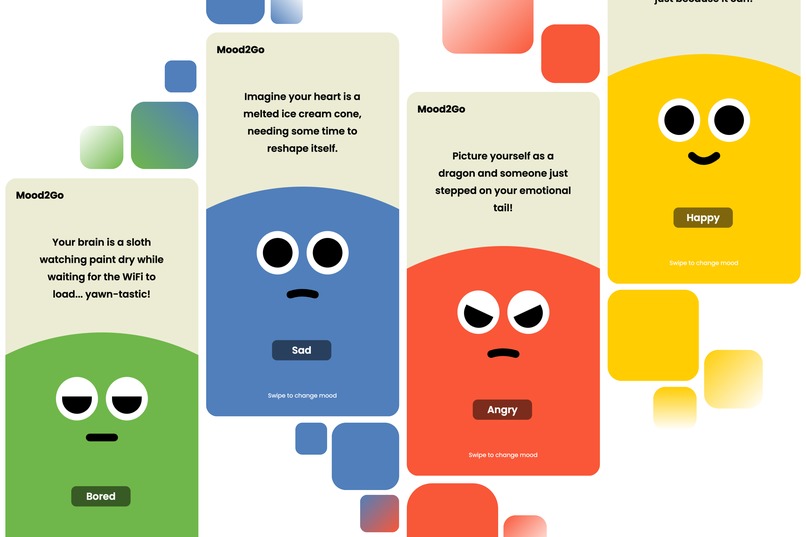
Mood Selection
-
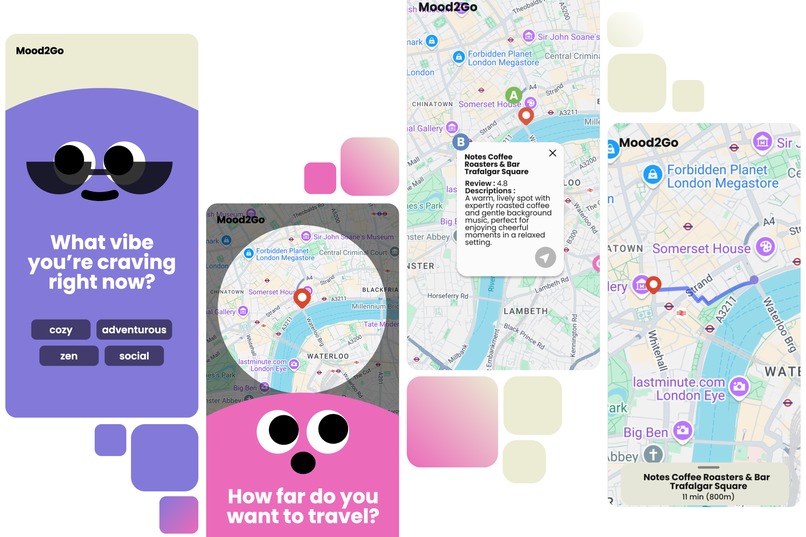
Vibe & Distance Selection, Place Recommendations, and Navigation
Inspiration
We realize that we often struggle with a simple yet frustrating problem, and that is deciding where to go. Whether hanging out with friends or planning a solo outing, we often found ourselves endlessly scrolling and overwhelmed by countless options. The real challenge was to find the right place that matched our current mood. Clicking through each venue, reading reviews, checking photos, trying to see if it fits the vibe we want. This tedious process made us think, what if there was a smarter way?
What it does
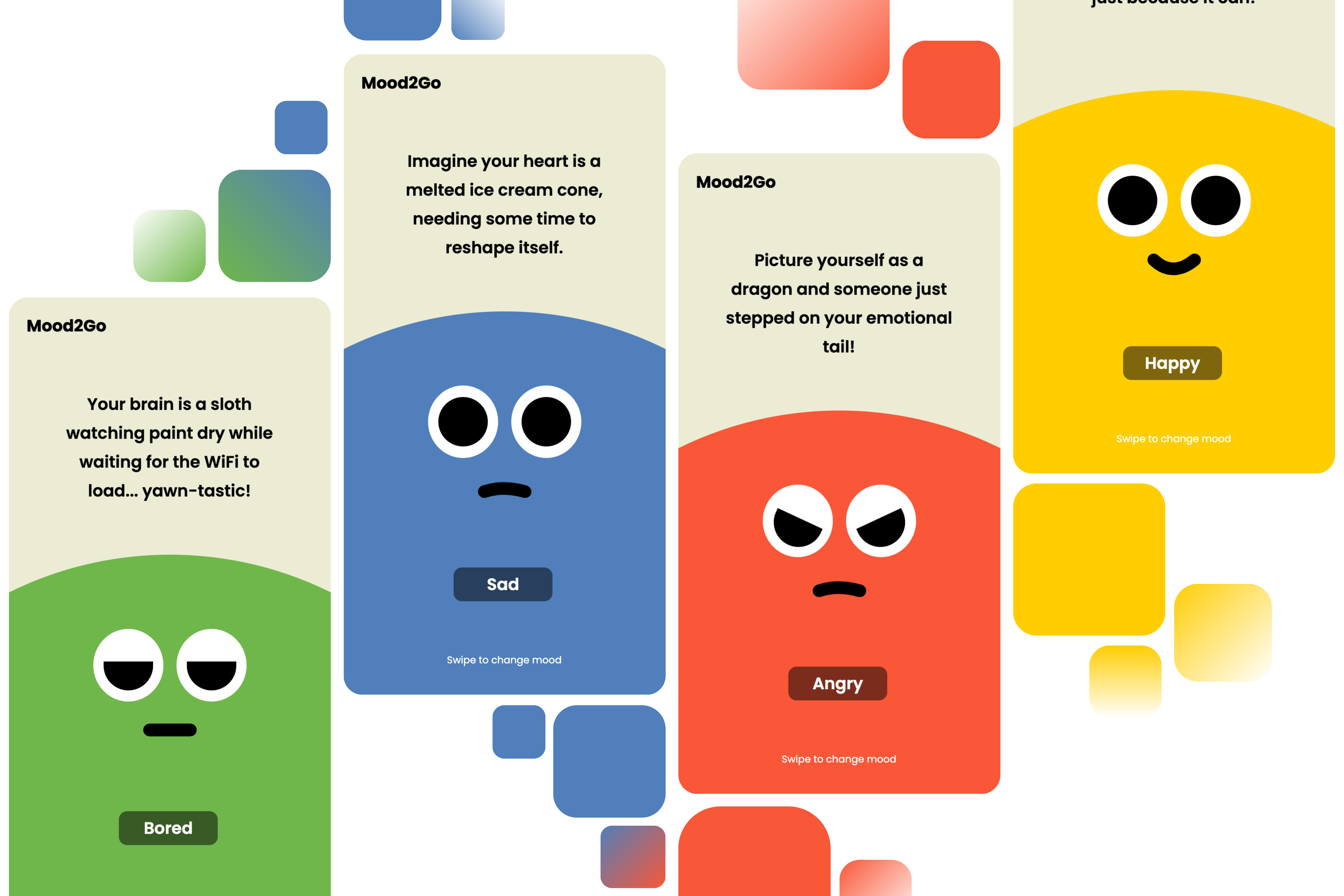
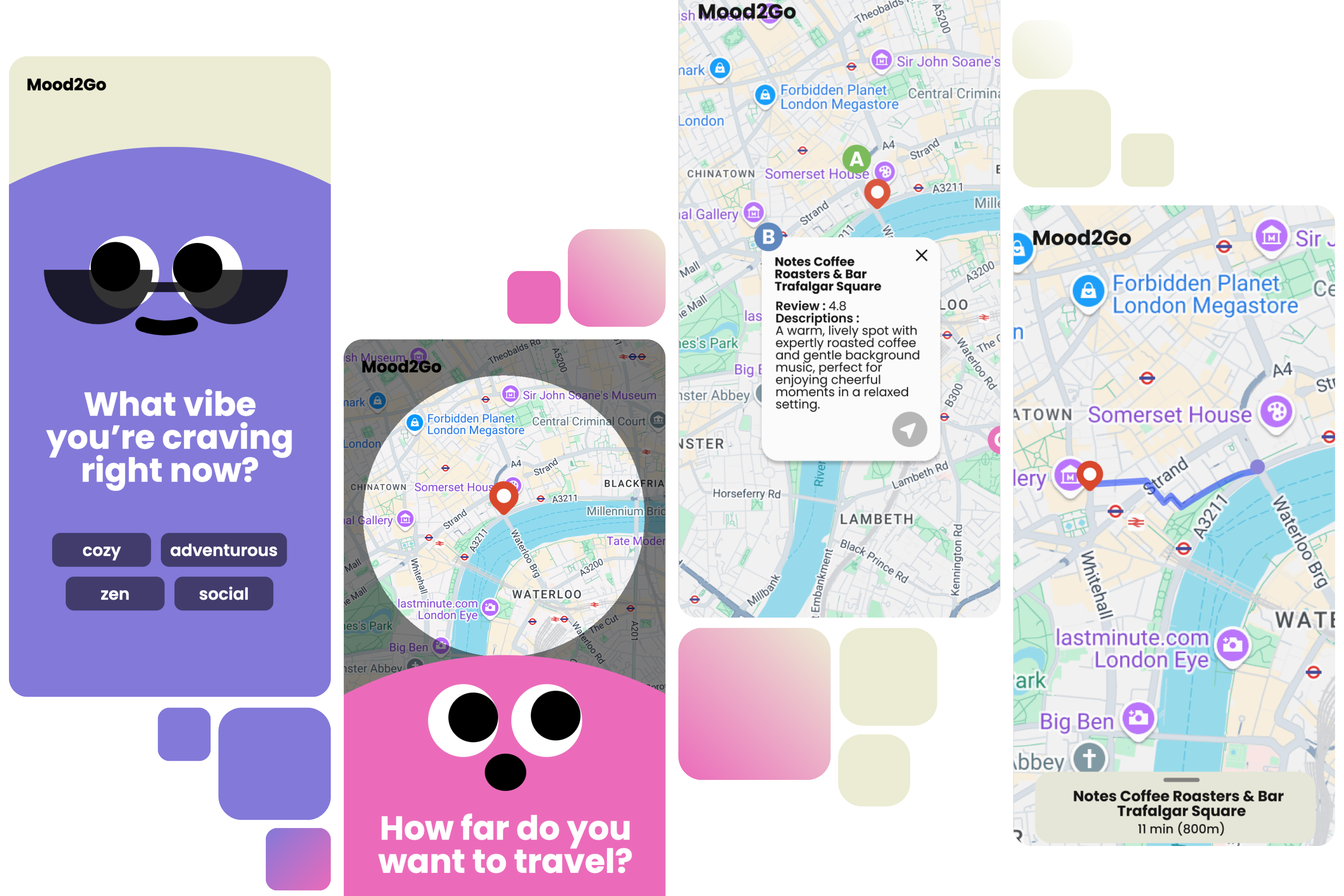
Mood2Go simplifies decision-making by trying to understand what you're looking for. The app presents users with three simple questions: What's your mood today? What vibe are you craving? And how far do you want to travel? Based on these responses, it will analyze nearby locations and deliver the top 3 personalized recommendations. But it doesn't just give user names and addresses, each recommendation comes with compelling, AI-generated reasons explaining why this particular place would be the perfect destination for your current mood.
How we built it
We built Mood2Go by creating a Flask API backend that takes user inputs (mood, vibe, distance), translates them into searchable keywords, and queries the Google Maps API for nearby places based on user location. Our system then filters these locations based on mood preferences and uses Gemini AI to generate personalized, emotional reasons for each recommendation. Then the frontend displays these results in the form of interactive map markers with directions.
Challenges we ran into
Our biggest challenge was connecting the backend and frontend while ensuring smooth page transitions, debugging CORS errors, managing state between components, and handling asynchronous API calls. We also struggled to accurately pull place recommendations from the Google Maps API and match them to user inputs, which required multiple iterations to fine-tune our filtering logic and ensure the mood-based questions actually produced relevant suggestions.
Accomplishments that we're proud of
We're proud that we managed to implement a filtering algorithm that processes user responses from three questions and generates personalized recommendations. We also achieved a user interface that perfectly balances simplicity with entertainment value, making complex functionality feel effortless and enjoyable.
What we learned
As programming beginners, we experience a lot of skills through hands-on experience with Google Maps API, Flask API, and Gemini AI API. We learned how to authenticate, handle requests, parse data, and debug errors.
What's next for Mood2Go
While Mood2Go currently provides mood-based recommendations, we recognize there's significant room for enhancement. That would be by implementing a user feedback system where people can rate their experiences and leave reviews after visiting recommended places. This would create a better understanding of user preferences.


Log in or sign up for Devpost to join the conversation.