Inspiration
Mental health is a serious issue but also one hard to diagnose and address. In these times of our virtual environments and uncertainties, people tend to face more difficulty and strain on their mental health. We aim to help individuals become more aware and hopefully, identify signs of mental health issues.
We realized that not too many people look after their mental health until it's far too late. As such, we decided to implement a solution that motivated people to write down their thoughts so that they could track their mood over time. Other mental health tracking apps exist on the market right now, but none utilize NLP to take advantage of the actual writing part of journalling. That is how our idea of Mood was born!
What it does
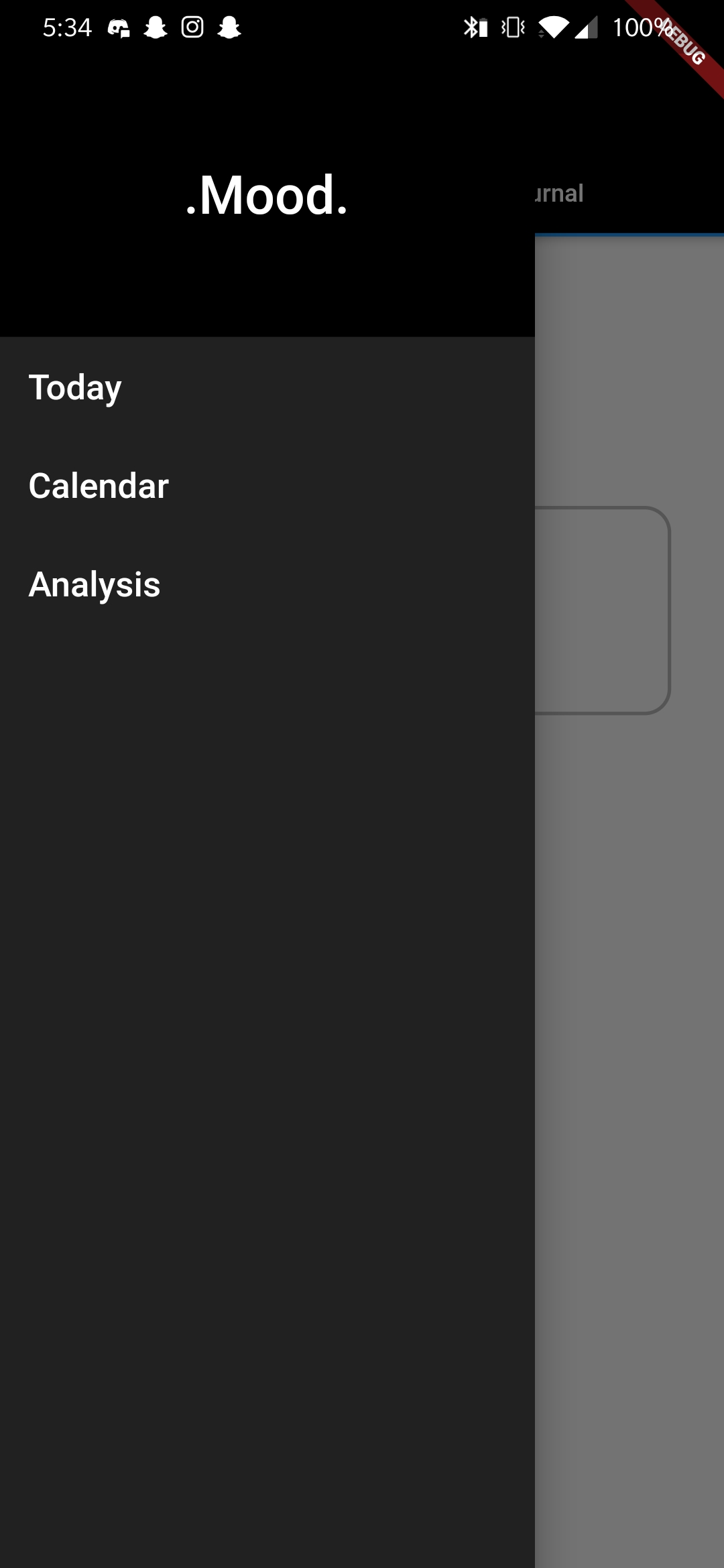
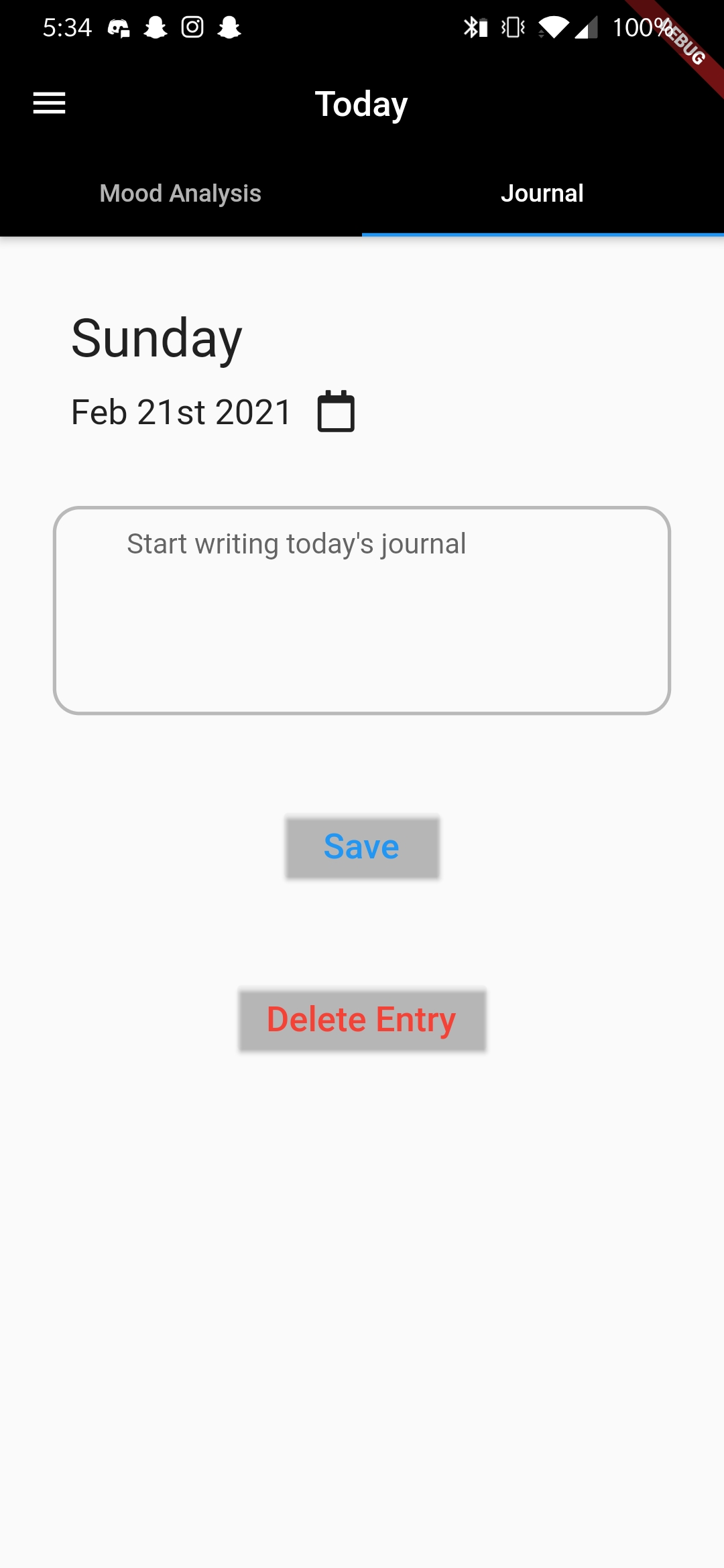
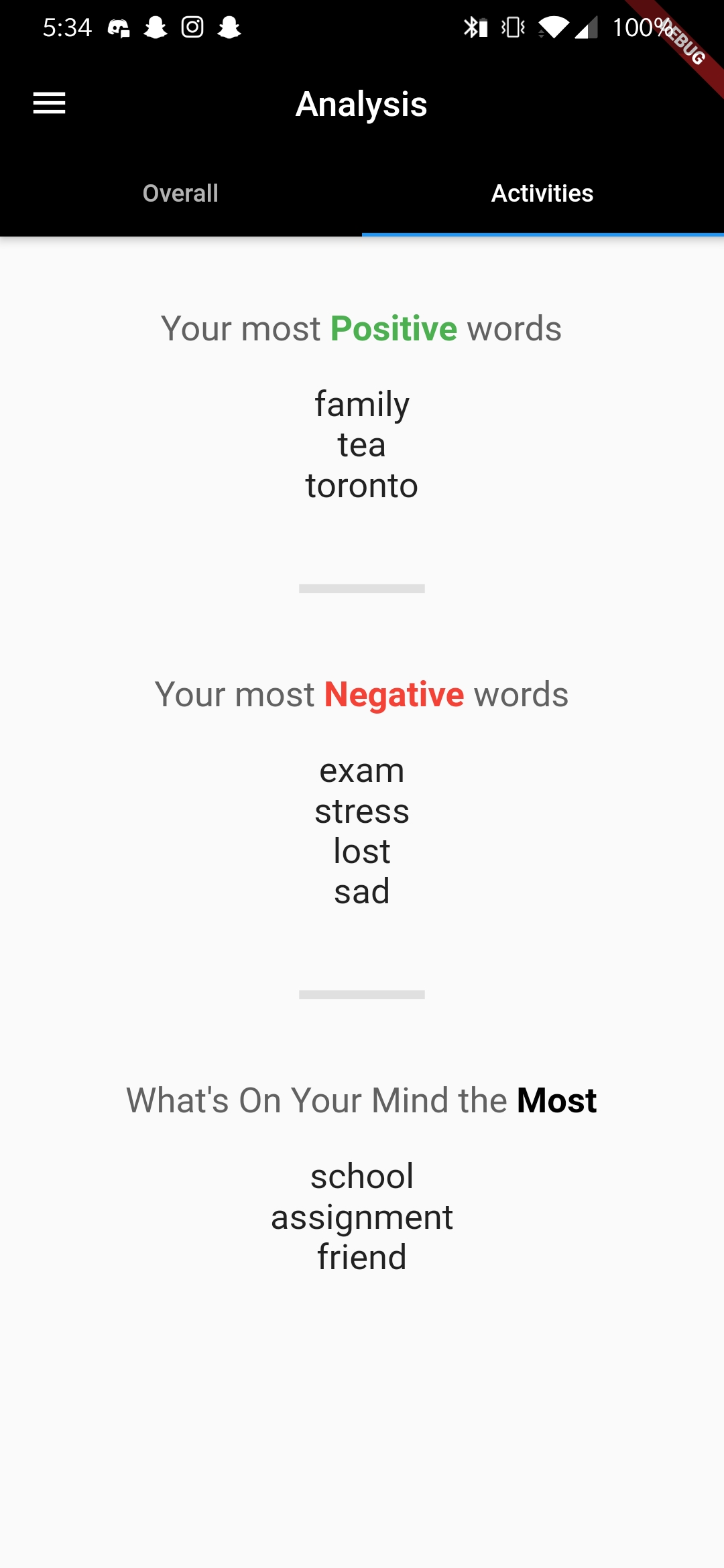
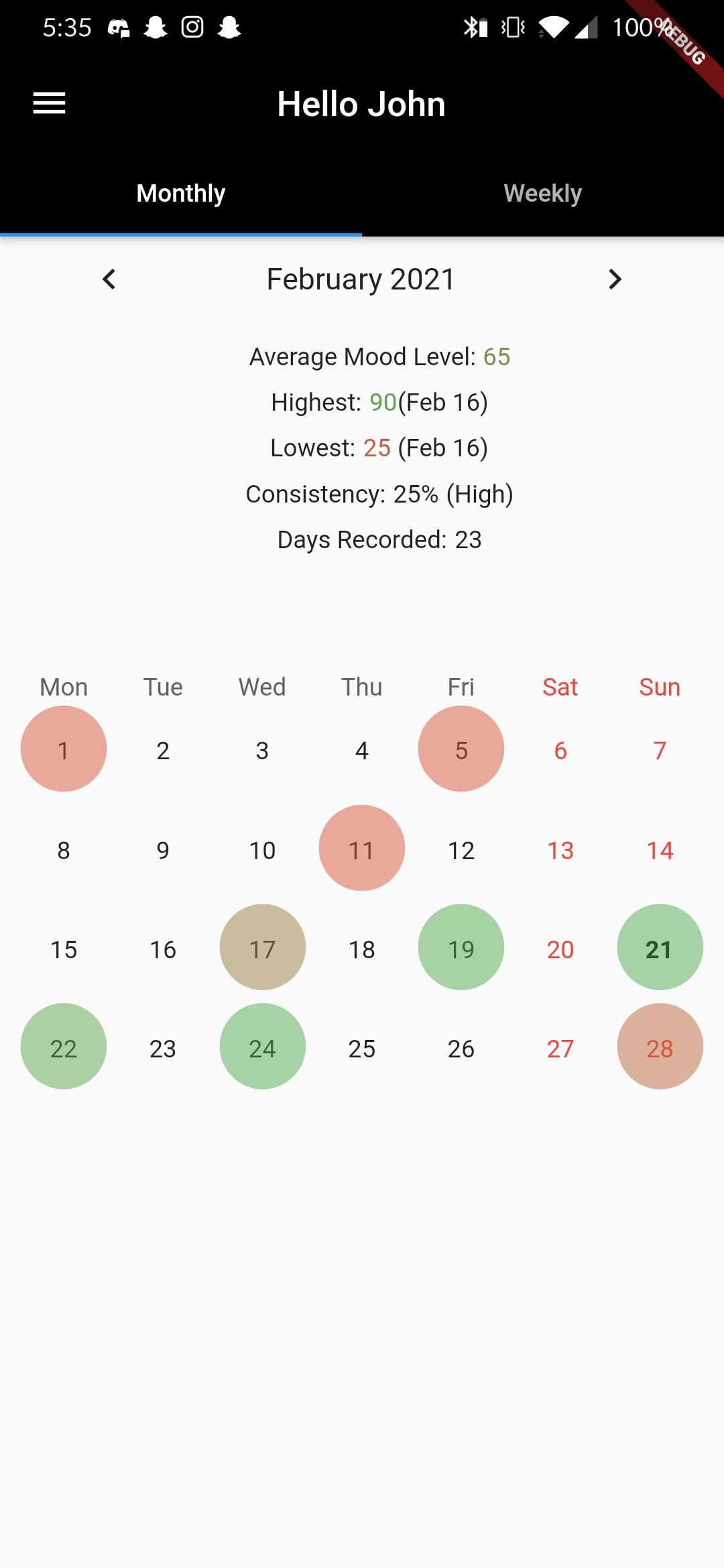
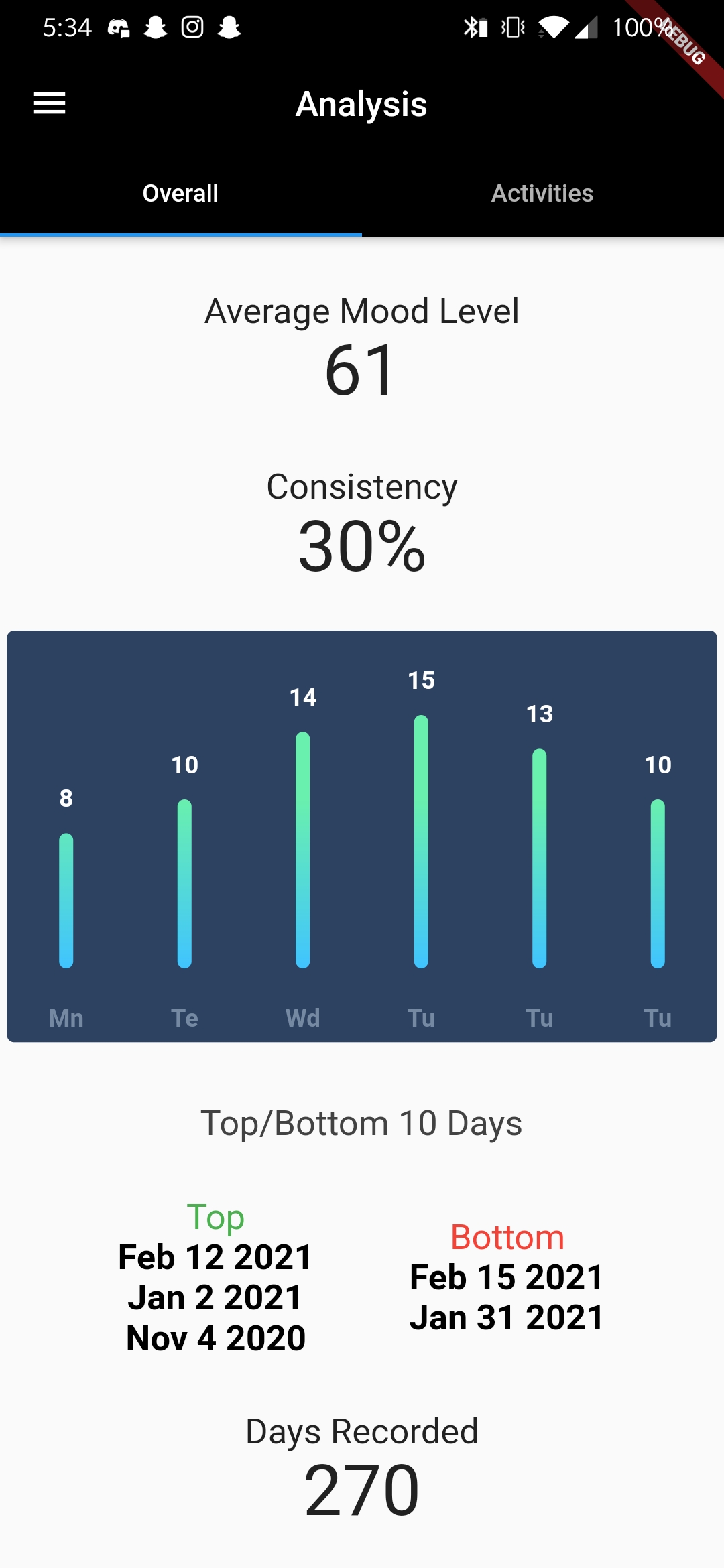
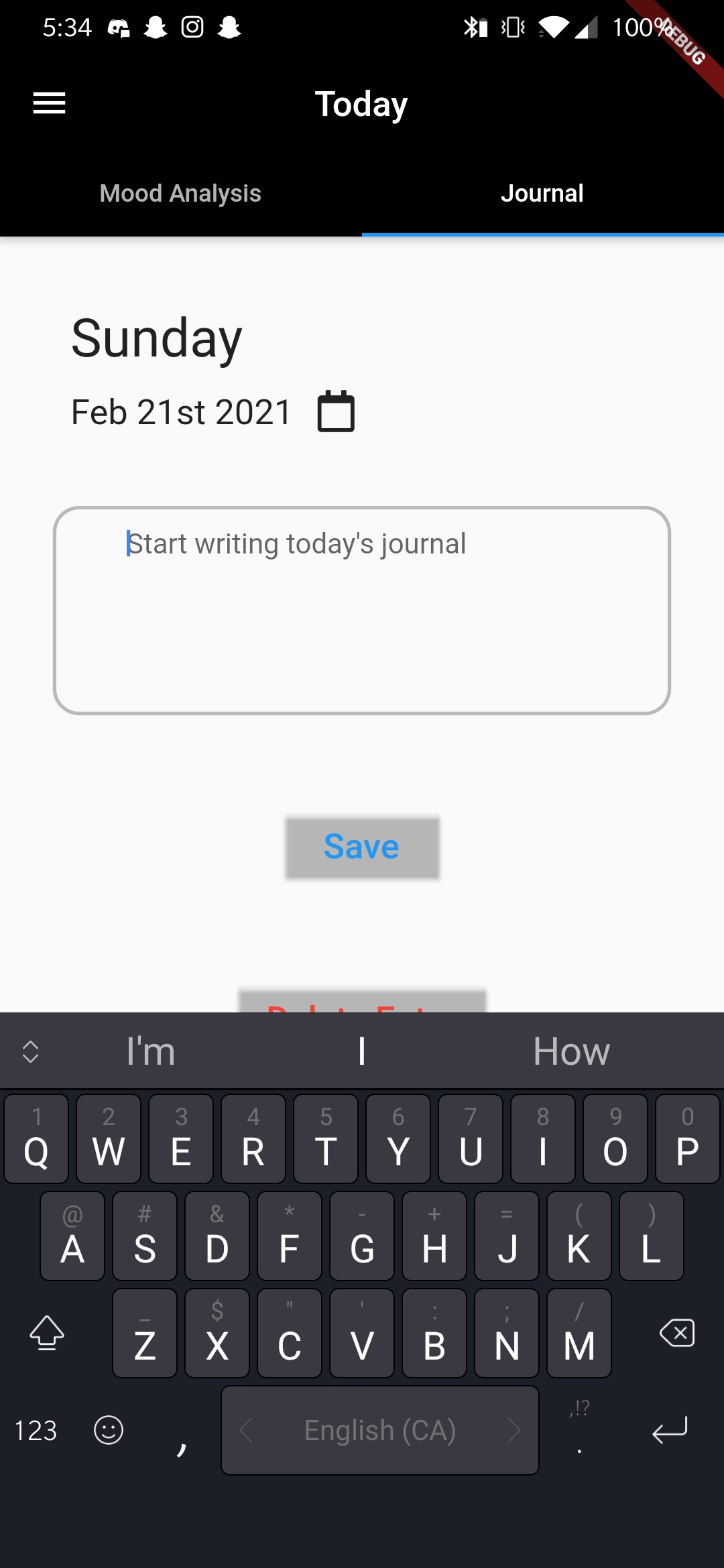
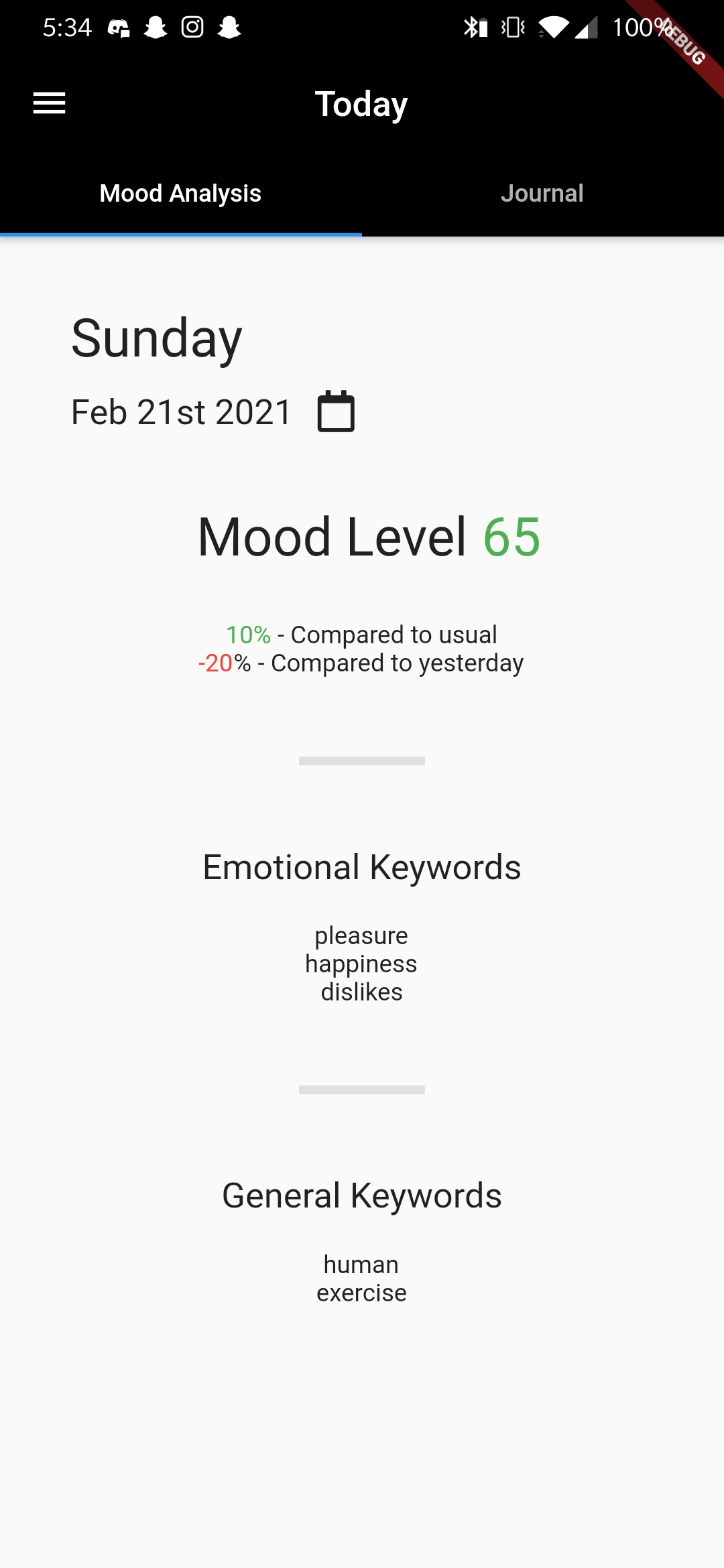
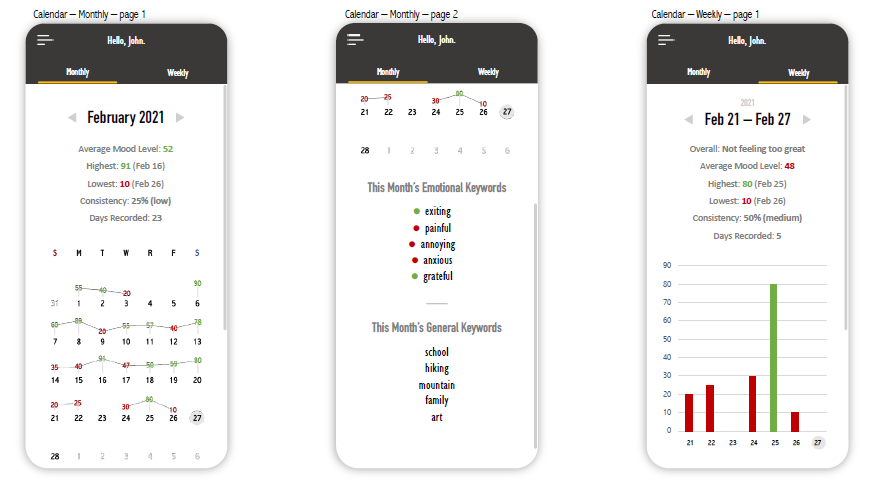
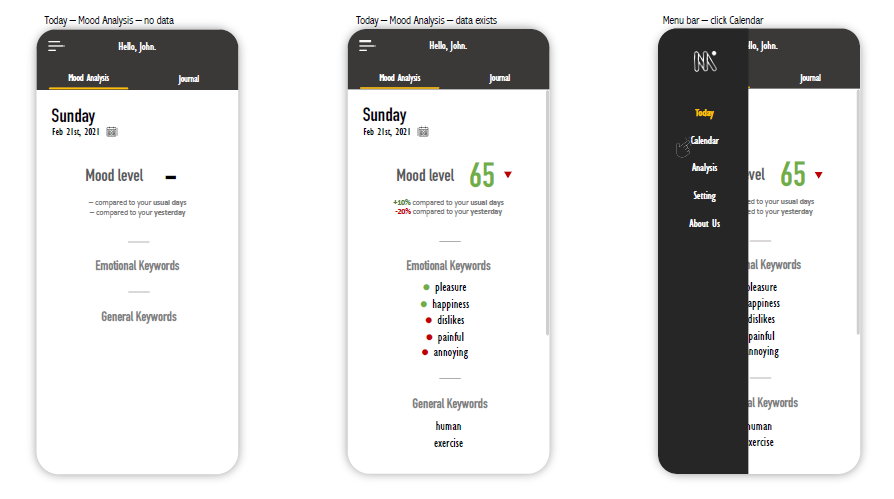
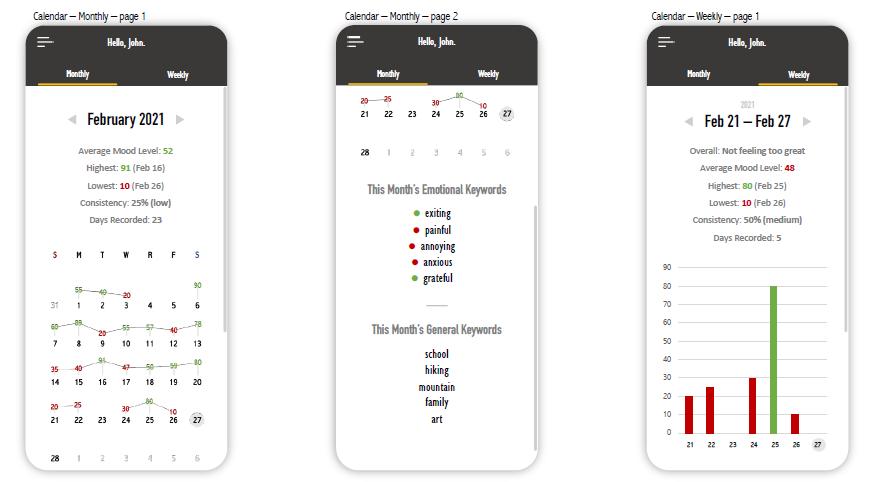
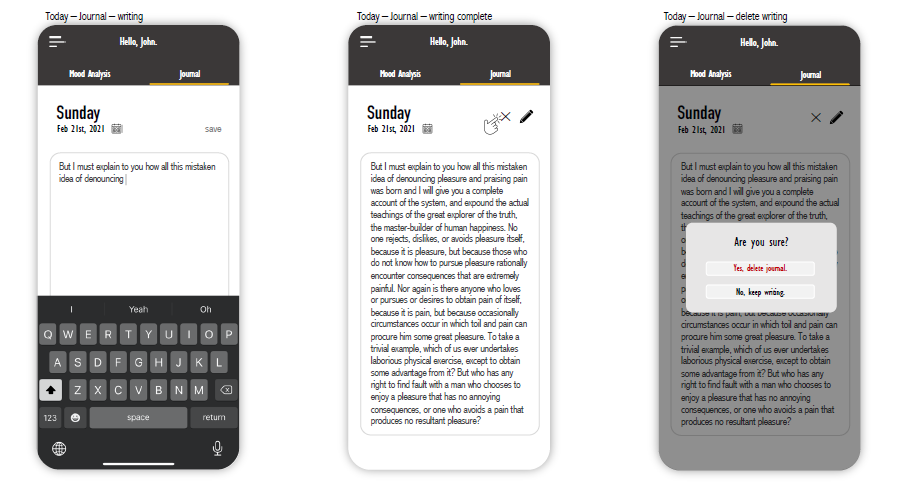
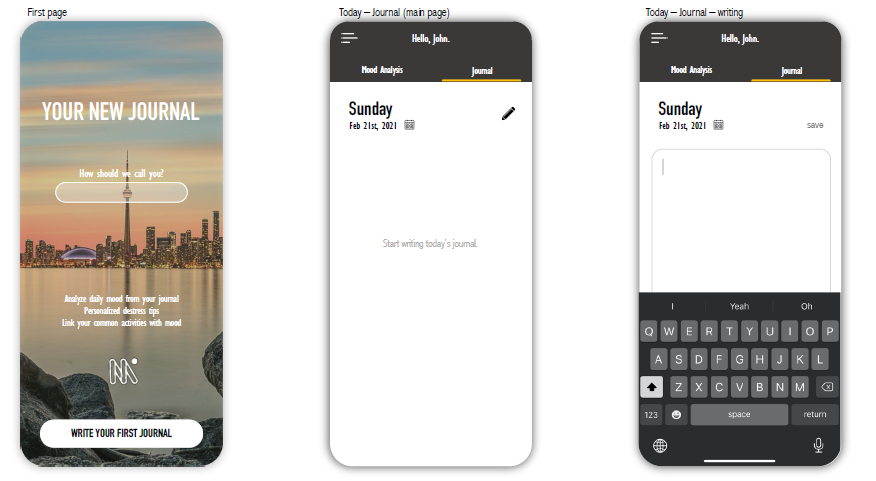
Mood is a journaling app. It allows the user to make quick daily entries about how they feel and what significant events occurred. Using this text entry, the app performs sentiment analysis to rate the current mood of the user and tracks it over time. This enables the app to identify trends in the user's mental health daily, weekly, monthly, and overall. It also calculates the most frequently occurring emotional keywords and general keywords throughout a period, on top of the top positive and negative keywords that make the user smile and cry the most.
How we built it
We built the interface of Mood using Flutter. Our team decided that for a journaling application, it would be more accessible if it was available on mobile. The sentiment analysis is done using Python and its NLP libraries like textblob, spacy, nltk, and transformers. Since the backend is written in Python, we decided to use Flask to manage our back-end server. These are connected with a REST API.
Challenges we ran into
We all had to learn a new technology for this project and was definitely one of the biggest challenges that we faced. Another big challenge that we ran into is creating APIs to connect our front-end to the back-end.
Accomplishments that we're proud of
Our team has a lot to be proud of. We all learned something new and got something to take away from this Hackathon. Even though we stayed up really late, we are happy that we have something to show to the judges.
What we learned
One of the biggest lessons that we learned from this experience is how important the initial development plan is. Running into problems later on caused our team to spend more time to find a workaround to problems that in hindsight could have been better planned for.
What's next for Mood
Mood has lots of room for future improvement. Features such as user authentication and cloud storage would be great additions to improve the security and protect the privacy of our users. Also, notification systems on long-term and short-term abnormal trends (bipolar, depression,...) of mood would be meaningful for users to understand their emotional behaviour. Other improvements would include a more accurate and advanced model of sentimental analysis and improving accessibility of the interface (i.e. voice or image input). An online system that learns the users’ mood patterns and responds better to changes.


Log in or sign up for Devpost to join the conversation.