Inspiration
Mental health is often overlooked in busy daily life. Many people want to build self-awareness by tracking their emotions but don’t want complex apps, logins, or external databases. We wanted to create a lightweight, private, and offline-friendly way to reflect on moods.
What it does
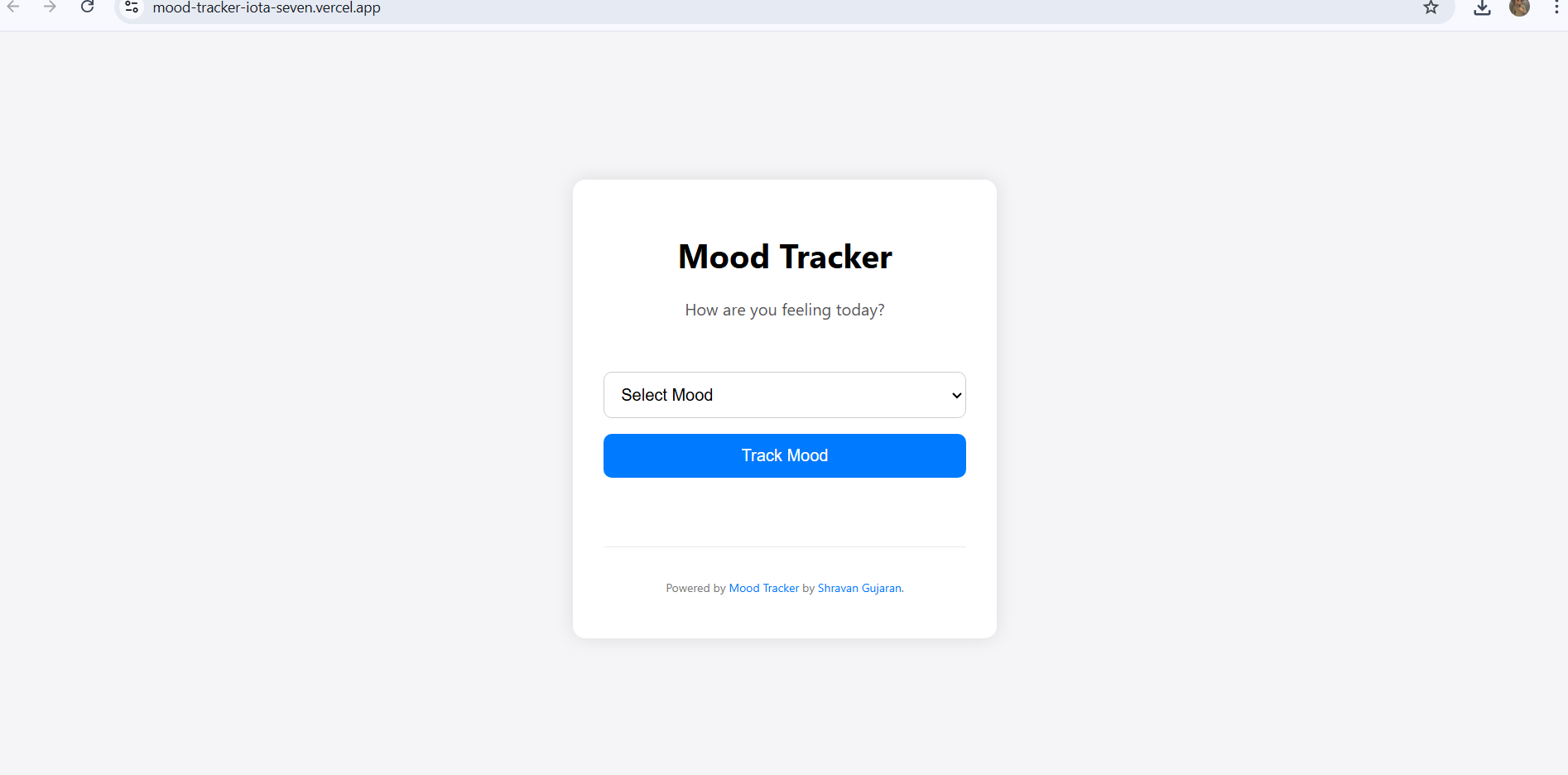
Mood Tracker is a simple web app where users can:
Select and log their daily mood in seconds
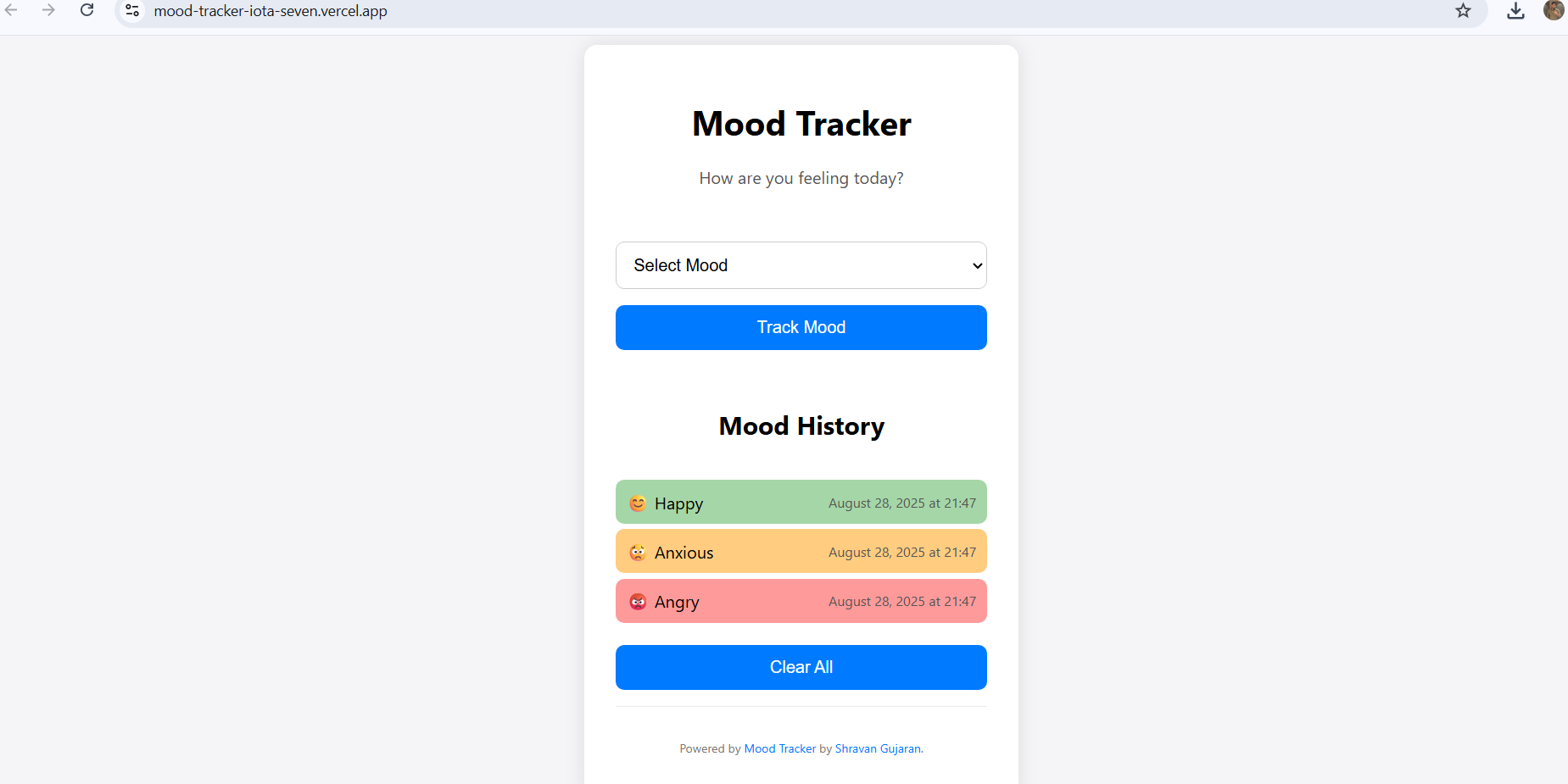
See a history of their emotions with timestamps
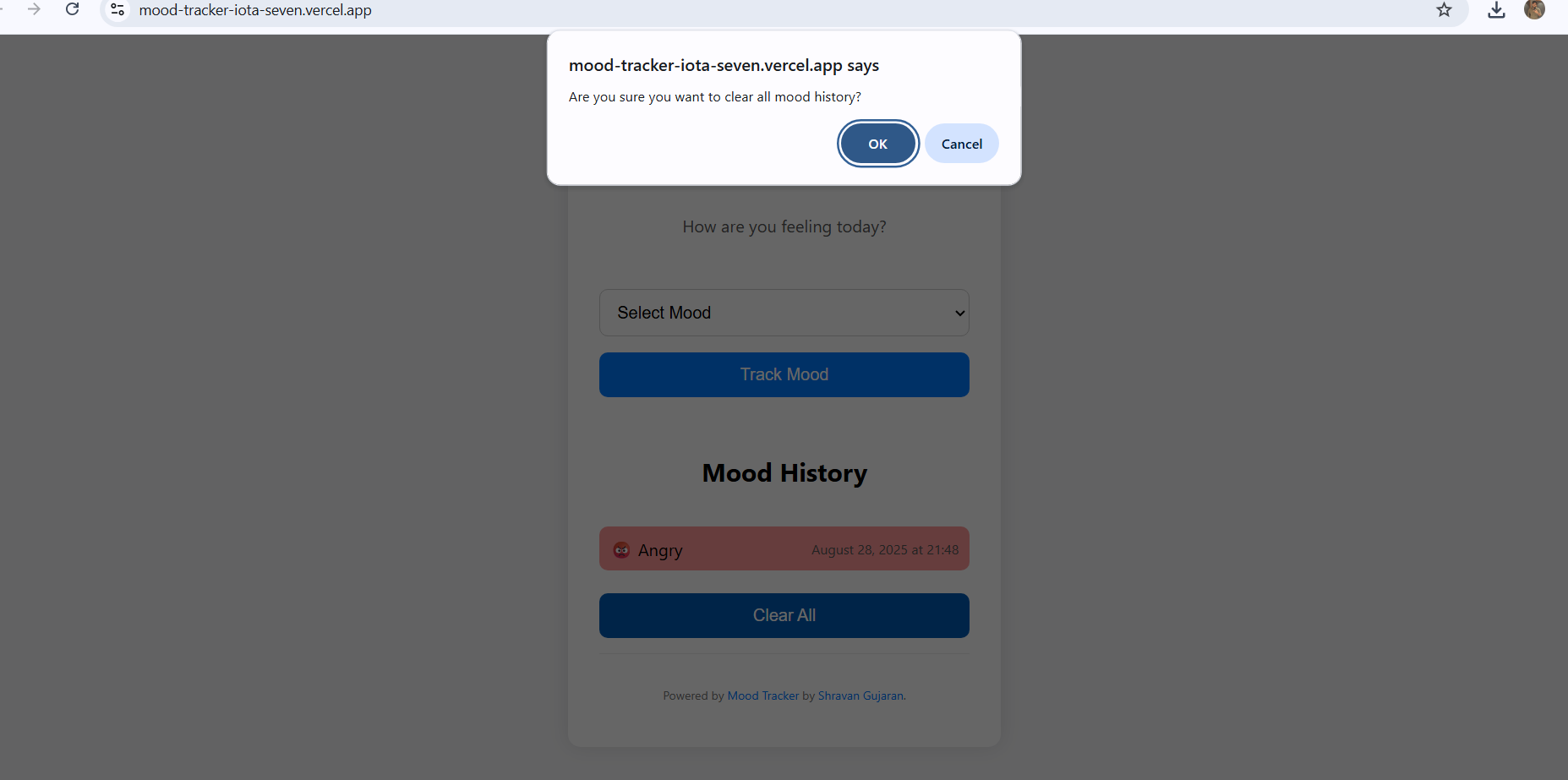
Clear records instantly if they wish
Use it seamlessly on desktop or mobile — all without an internet connection
All data stays in the browser (via localStorage), so it’s private, fast, and requires no sign-up.
How we built it
Frontend: HTML, CSS, and vanilla JavaScript
Storage: Browser’s localStorage (no external database)
Design: Responsive layout for mobile and desktop
Deployment: vercel
Challenges we ran into
Designing a clean, intuitive interface that works across devices
Ensuring moods persisted correctly in localStorage
Handling responsive design so it looks smooth both on mobile and web
Making the app useful while keeping it minimal
Accomplishments that we're proud of
Built a fully working mood tracking app in just a short time
Achieved a zero-database, privacy-first design
Made it responsive and user-friendly
Deployed it live on GitHub Pages for easy access
What we learned
The power of localStorage for simple, no-backend apps
How to build and deploy lightweight Progressive Web Apps
Importance of user experience in mental health-related apps
That sometimes simplicity beats complexity in hackathon projects
What's next for Mood Tracker
Add a calendar view for a visual “mood history”
Export/import moods as JSON or CSV
Add emoji/color-coded moods for better visualization
Dark mode support
PWA enhancements for offline installability


Log in or sign up for Devpost to join the conversation.