Inspiration
The inspiration behind the Mood Tracker feature in MindBoost was to provide users with a tool to enhance their self-awareness and gain insights into their emotional well-being. By tracking their moods over time, users can identify patterns, triggers, and correlations between their emotions and external factors, such as activities, events, or sleep patterns. This information can empower individuals to make informed decisions about their mental health and take proactive steps towards improving it.
What it does
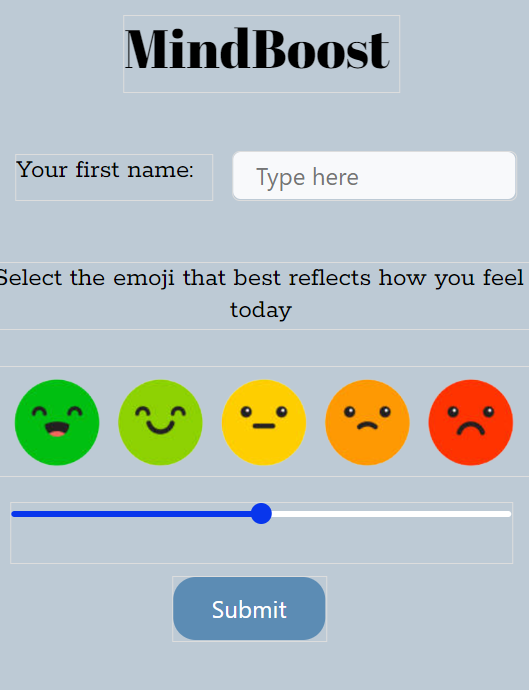
The Mood Tracker feature in MindBoost allows users to record their daily moods and track their emotional patterns over time. Users can log their mood on a scale or choose from a range of predefined emotions.
How we built it
To build the Mood Tracker feature in MindBoost, we used the Thunkable platform, which provides a user-friendly interface for developing mobile applications. Thunkable allows for visual programming, enabling us to create a seamless and intuitive user interface for recording moods.
Challenges we ran into
Designing an intuitive user interface that is easy to navigate and allows users to record their moods effortlessly. Implementing the visualization components to display mood options in a meaningful and visually appealing manner.
Accomplishments that we're proud of
We are proud of successfully implementing the Mood Tracker feature, which enables users to track their moods and visualize emotional patterns over time. The intuitive user interface, combined with visually engaging graphs, allows users to gain valuable insights into their mental well-being. We are proud of creating a feature that can potentially empower users to take control of their mental health and make informed decisions about their well-being.
What we learned
During the development process, we learned the importance of user-centered design when creating mental health applications. We focused on making the Mood Tracker feature as user-friendly and visually appealing as possible to ensure a positive user experience. We also learned about the significance of data visualization in helping users understand complex emotional patterns and triggers.
What's next for Mood Tracker
Integration with wearable devices and health tracking apps to capture additional data points such as sleep quality, physical activity, and heart rate, providing a more comprehensive view of the user's emotional well-being. Machine learning algorithms to analyze mood data and provide personalized insights and recommendations tailored to each user's specific needs. Integration with other features in MindBoost, such as the Guided Meditations or Thought Diary, to create a more holistic approach to mental well-being. Collaboration with mental health professionals to develop evidence-based interventions and resources based on the mood data collected. Enhancements to the visualization capabilities, including additional types of graphs and customizable visualization options, to provide users with a richer understanding of their emotional patterns.
Built With
- thunkable

Log in or sign up for Devpost to join the conversation.