-
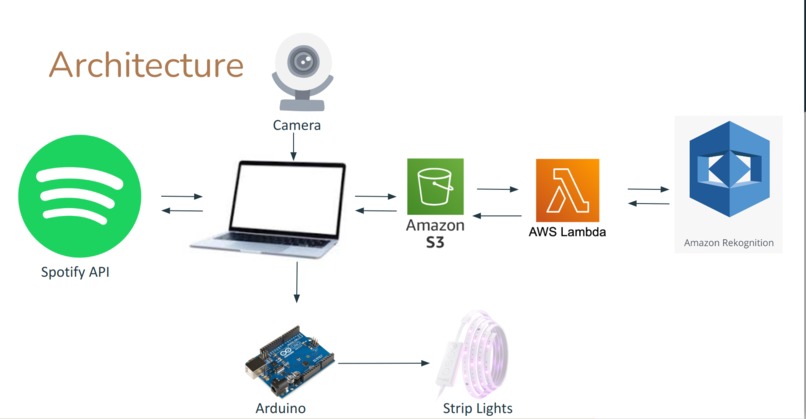
High level look at our architecture
Inspiration
We were inspired by facial recognition technology and wanted to combine it with electronics. We also wanted to create a fun way to light up your surroundings while working in the dark, so we came up with the Mood Mood Light.
What it does
The Mood Mood Light has multiple features to enhance the user experience. The main setting detects the user's emotions and changes the LED color accordingly. There is also a music feature that can be turned on, which plays songs based on the user's emotions. These 2 features can be used in sync to create a more immersive experience and raise the user's mood. The last feature allows users to control the LEDs with sound, based on how loud the sound is.
How we built it
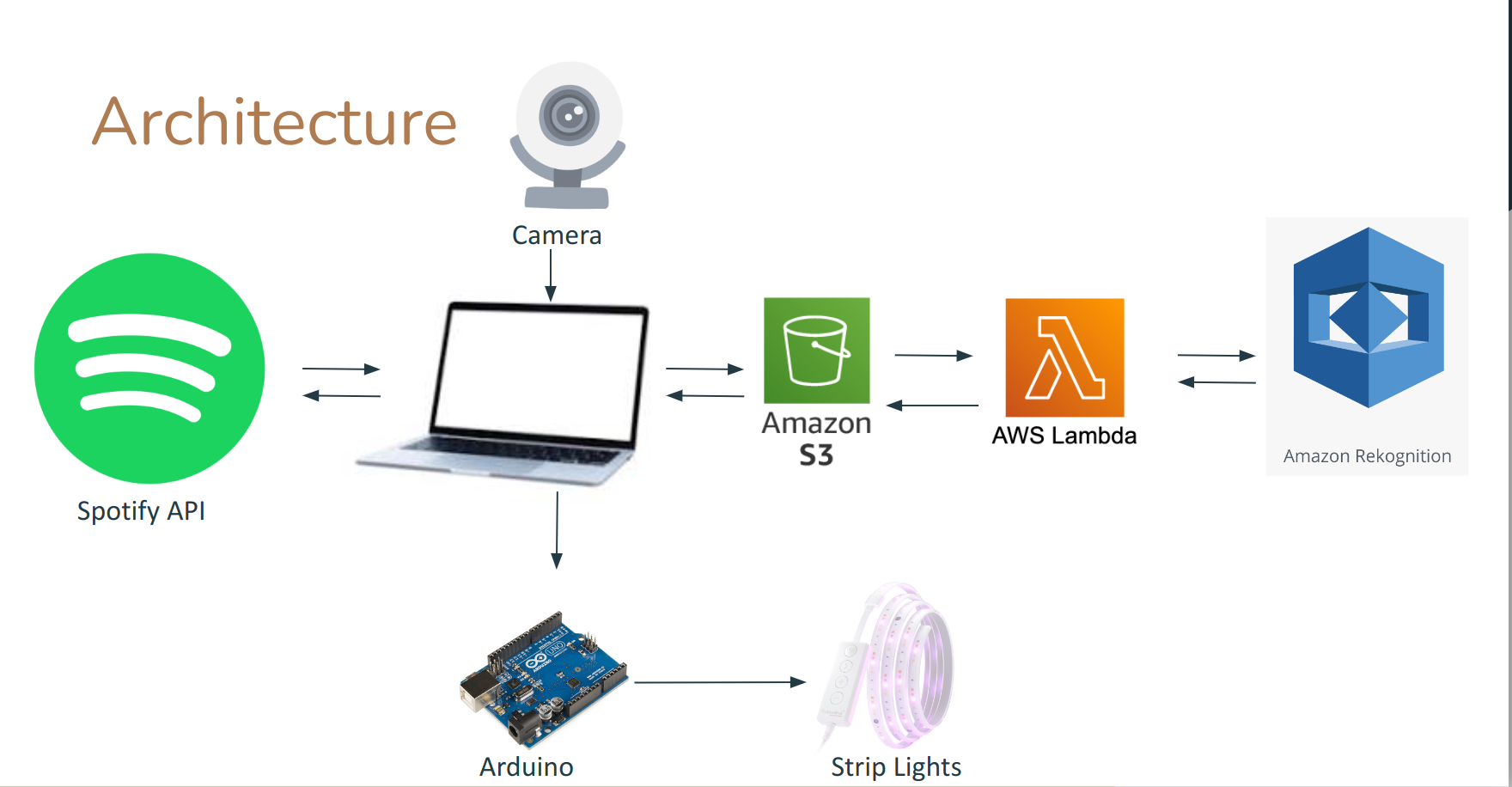
For the electronics, we used an Arduino, a sound sensor module, a WS281B LED Strip, and a 5V Voltage Regulator. The computer sends LED data to the Arduino which processes it and tells the LED strip to turn on specific cells at specific RGB values. On the software side, we used a combination of AWS to get emotion data, TerraForm to build and deploy the project, Spotify API to access different songs, Pyserial to communicate with the Arduino, and FastLEDs to control the LED strip.
Challenges we ran into
Originally we were going to use a Raspberry Pi and Pi camera instead of a computer. However, we ran into multiple issues when trying to use this setup. Initially, we spent over 4 hours trying to get the Raspberry Pi to boot an OS only to find out that our Pi camera was broken. However, we refused to give up and decided to improvise and run the software with a computer + Arduino setup.
Accomplishments that we're proud of
We are proud of not only finishing our project but also overcoming obstacles that we thought were difficult. We successfully managed to communicate with the Arduino in Python and were able to send commands to the LED Strip with no prior knowledge of implementing a feature. We were also able to integrate with AWS, in addition to creating cubic-interpolation custom transitions for the LEDs. We are happy that we learned about Terraform from this hackathon, as it was intuitive and made AWS deployments much easier. We will definitely continue to use Terraform in the future.
What we learned
Something we learned was to triple-check components before deciding how to proceed with the project. If we had tested the Raspberry Pi and Pi Camera, we would have made our lives much easier as we would have been able to pinpoint issues in our hardware before proceeding with design and software.
What's next for Mood Mood Light
As we move forward, we want to add more features to make Mood Mood Light more accessible to people with disabilities. For example, we want to make features that can help colorblind and deaf people allowing them to also enjoy our product.

Log in or sign up for Devpost to join the conversation.