Inspiration
We noticed that people experience many emotions daily but rarely pause to understand them. Most mood tracking tools are either too simple or too complex, so we wanted to build something that makes emotional awareness easy, consistent, and meaningful.
What it does
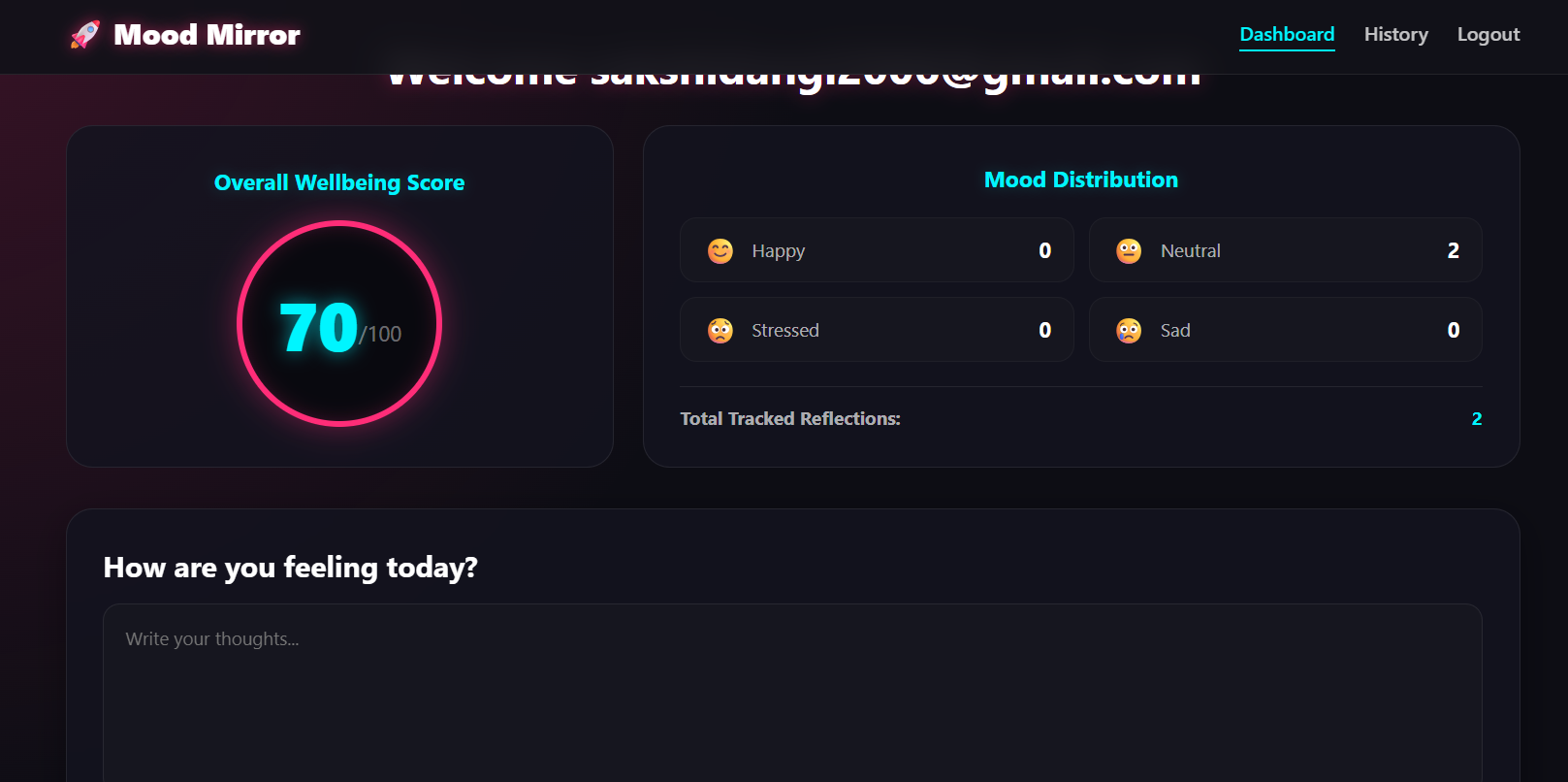
Mood Mirror lets users log their daily moods quickly, track emotional changes over time, and view patterns through timelines and insights. It helps users understand how habits, events, and routines affect their mental state.
How we built it
We designed Mood Mirror as a simple digital app with a focus on fast mood logging and clean data visualization. We structured mood entries, stored them in a database, and used basic analytics logic to generate patterns and insights.
Challenges we ran into
The biggest challenge was making mood tracking feel effortless so users don’t stop using it. Another challenge was ensuring insights are meaningful without overcomplicating the system or misinterpreting emotional data.
Accomplishments that we're proud of
We successfully built a system that turns simple mood inputs into clear emotional patterns. The interface is clean, easy to use, and encourages regular self-reflection without feeling like a burden.
What we learned
We learned how important user consistency is in behavioral apps and how small design choices impact engagement. We also understood that emotional data must be handled carefully to avoid misleading conclusions.
What's next for Mood Mirror
Next, we plan to add smarter insights, better personalization, and possibly AI-based mood predictions. We also aim to include reminders, habit tracking, and deeper emotional analysis to make the app more helpful over time.

Log in or sign up for Devpost to join the conversation.