-
-
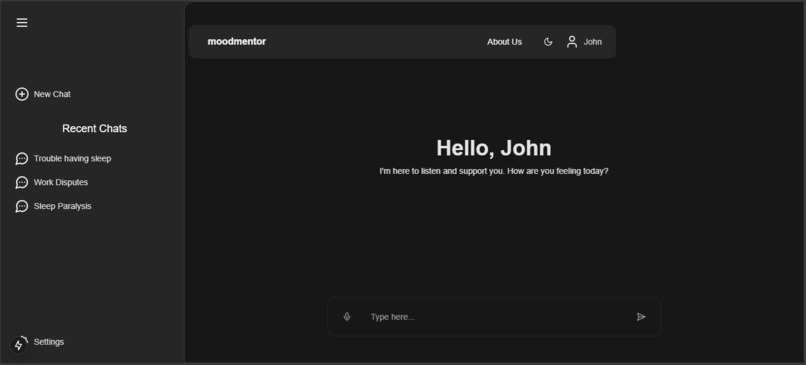
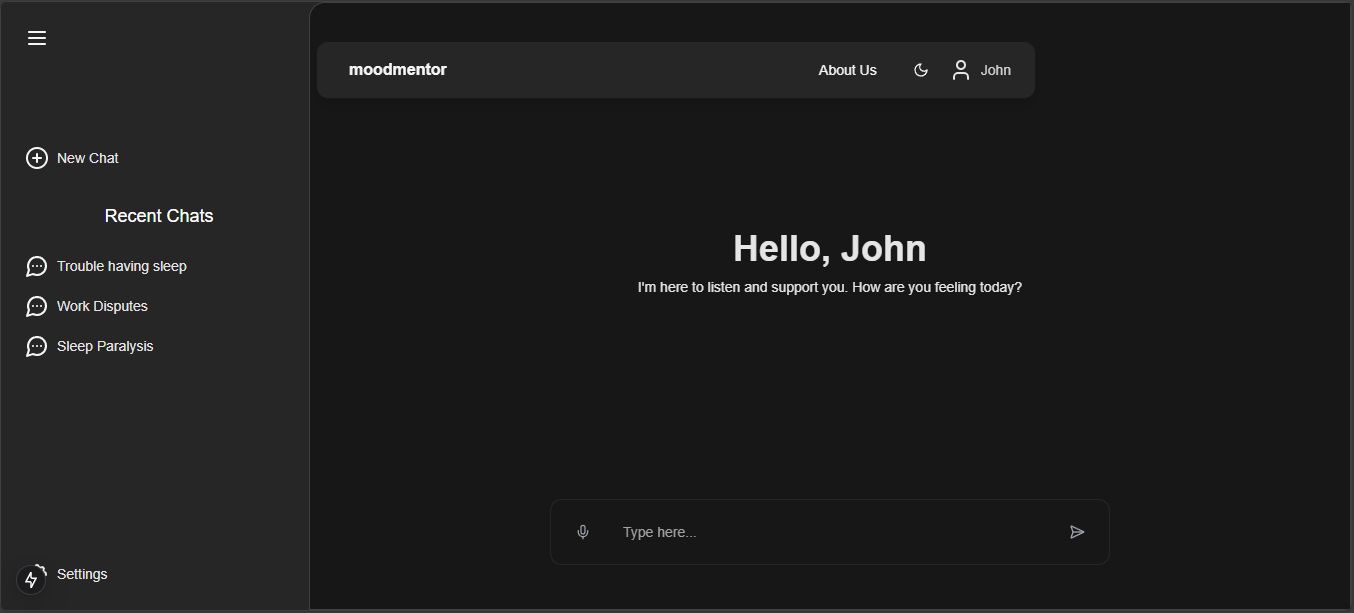
Page with Chat History (Dark Mode)
-
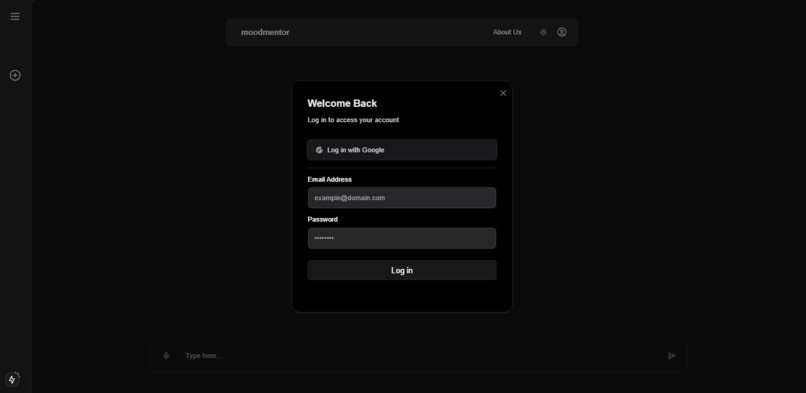
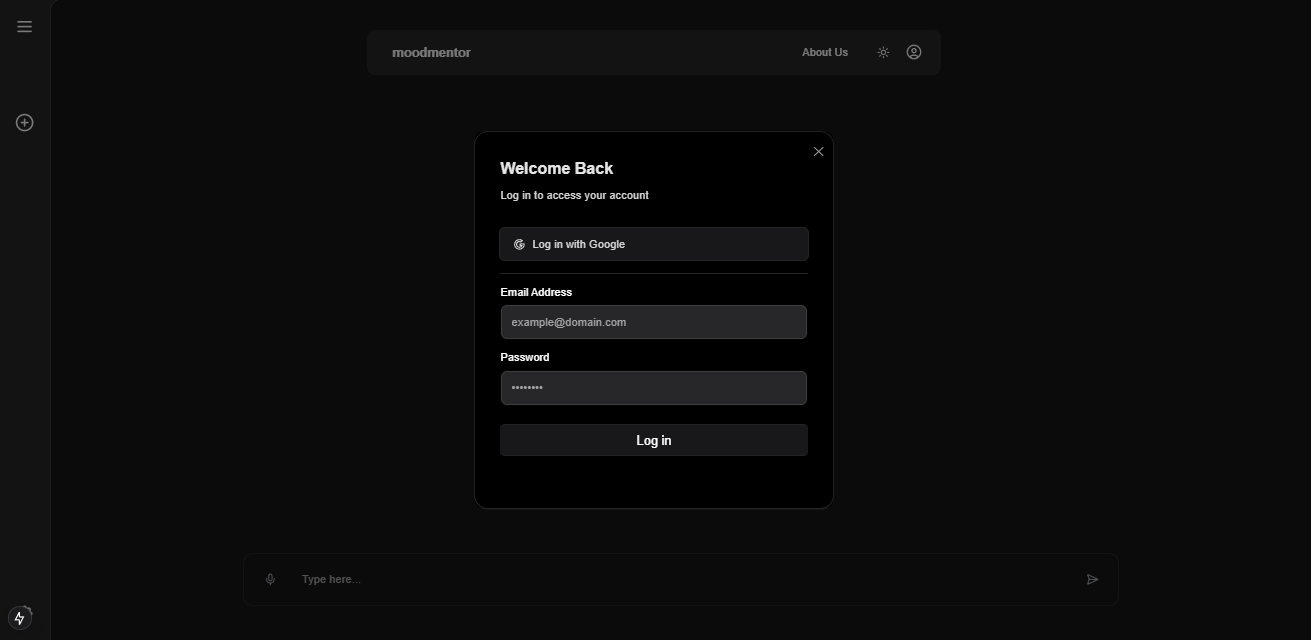
Login Page
-
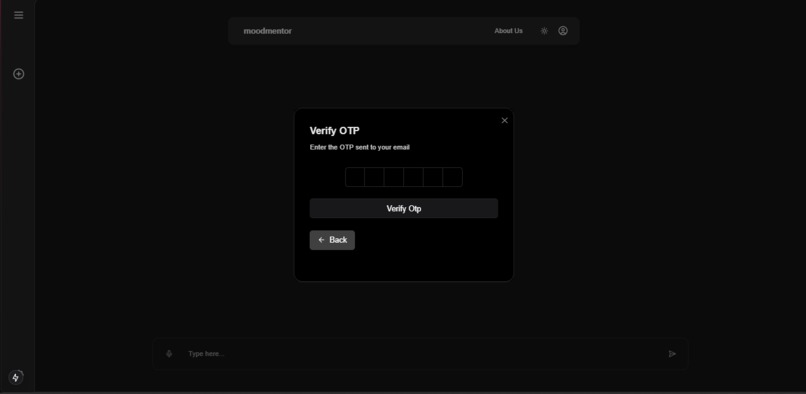
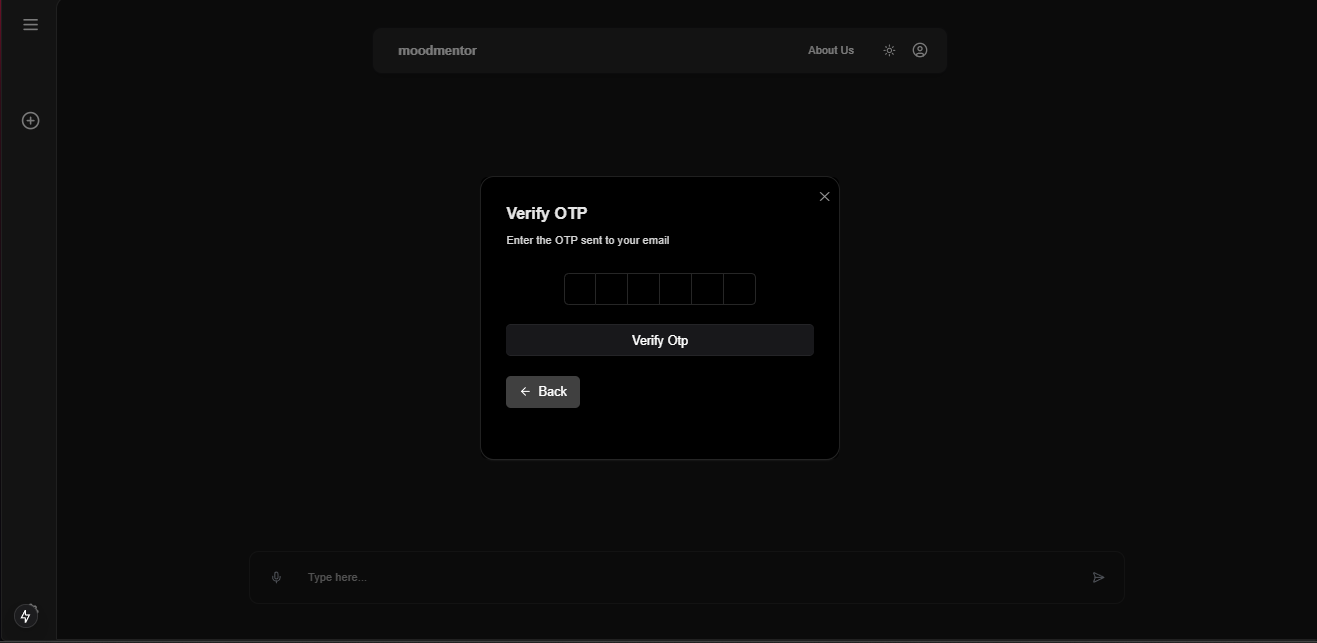
OTP verification page
-
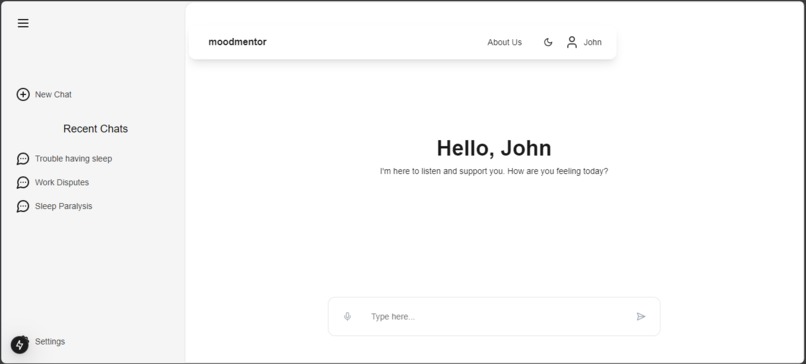
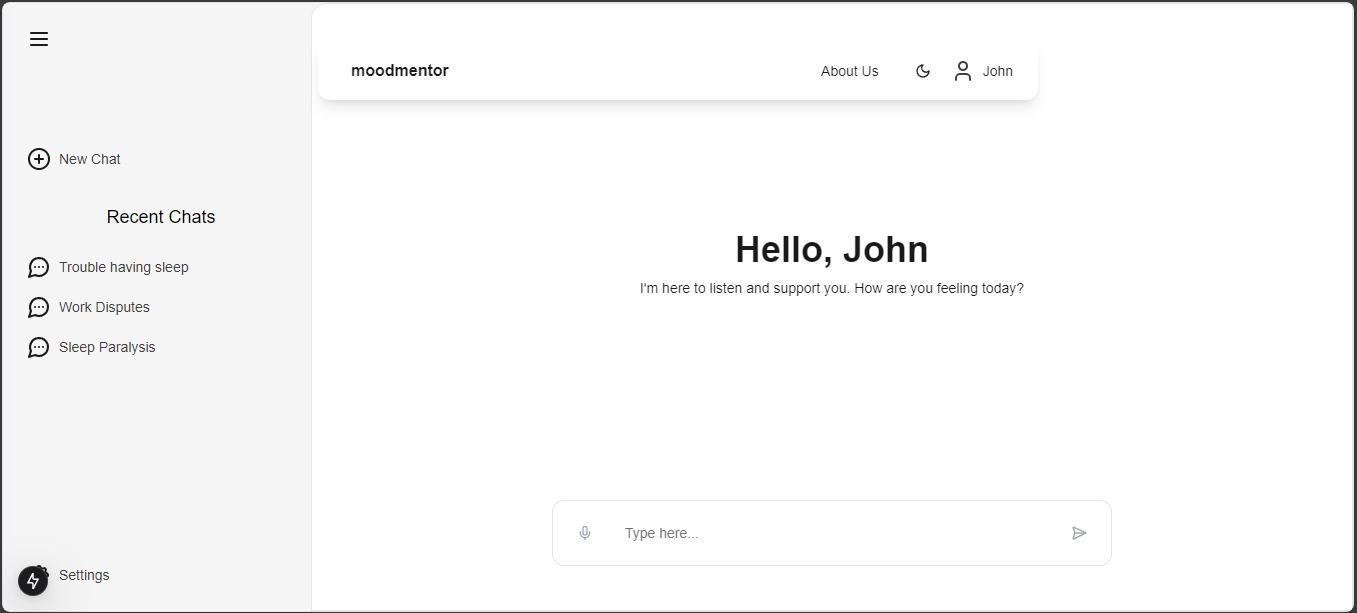
Page with Chat History (White Mode)
Inspiration
We noticed that many individuals feel lonely and isolated without access to supportive conversations. Drawing from personal experiences and mental health statistics, we were inspired to create a resource that listens, understands, and offers gentle guidance—no matter where a person might be or how they’re feeling. What it does
Mood Mentor is an AI-driven platform that provides:
Real-time Conversational Support: An LLM-based chatbot that listens to user concerns and offers empathy.
Sentiment Analysis: Identifies emotional cues to deliver more relevant suggestions.
Severity Rating & Guidance: Assesses how intense a user’s feelings might be and offers suitable advice or resources.
Minimalist UI: A distraction-free design that eases navigation for users already under stress.
Secure Login: OAuth integration to protect user data and maintain privacy.
How we built it
LLM & Sentiment Analysis: Integrated a Large Language Model trained on mental-health-related data sets for empathetic responses.
Backend & API: Used frameworks that manage authentication (OAuth), user sessions, and provide fast, reliable endpoints for the chatbot.
Frontend (UI/UX): Focused on minimal design with clear typography and a calm color scheme to reduce stress and keep the interface user-friendly.
Voice Integration: Implemented a mic feature so users can speak instead of typing, aiming for a more natural conversation experience.
Challenges we ran into
Accuracy & Safety: Balancing the AI’s responses to be supportive yet not overstep professional boundaries.
Privacy Concerns: Ensuring users feel safe sharing sensitive information, requiring robust data security and anonymized storage solutions.
UI Minimization: Striking a balance between having enough features and not overwhelming users with complex designs.
Real-Time Sentiment Analysis: Fine-tuning the LLM to handle varied emotional inputs accurately.
Accomplishments that we're proud of
Reliable Chat Functionality: Achieved a consistently empathetic conversation flow, thanks to refined training models.
Simplified UX: Successfully created a user interface that is both accessible and comforting.
OAuth Integration: Enhanced data security and user trust with a streamlined login system.
Adaptive Severity Rating: Built a dynamic module that helps guide users to different coping strategies or professional advice.
What we learned
Domain-Specific Training: Realized the importance of carefully curating mental health data sets for training our LLM.
Iterative Design: Discovered that frequent user feedback loops are essential for refining both the AI responses and the UI.
Privacy & Ethics: Gained a deeper understanding of the responsibilities and ethical considerations when developing mental health tools.
What’s next for Mood Mentor
Professional Collaboration: Partnering with licensed therapists and psychiatrists for direct consultations.
Improved Privacy Controls: Customizable settings to let users decide how their data is stored and used.
Additional Features: Incorporating stress-relieving games, meditation guides, and short videos to help users decompress.
Scale & Multi-Language Support: Expanding the reach with multiple languages and broader cultural contexts.
Built With
- nextjs
- python
- springboot
- tensorflow


Log in or sign up for Devpost to join the conversation.