Inspiration
As someone navigating the daily stress of work, relationships, and mental health in the US, I noticed how hard it was to spot emotional patterns amid busy life. I wanted a simple tool that didn’t feel like a chore—something that fit into a 2-minute daily routine but still delivered meaningful insights into what truly impacts mood. The goal was to make mental health tracking accessible, not overwhelming.
What it does
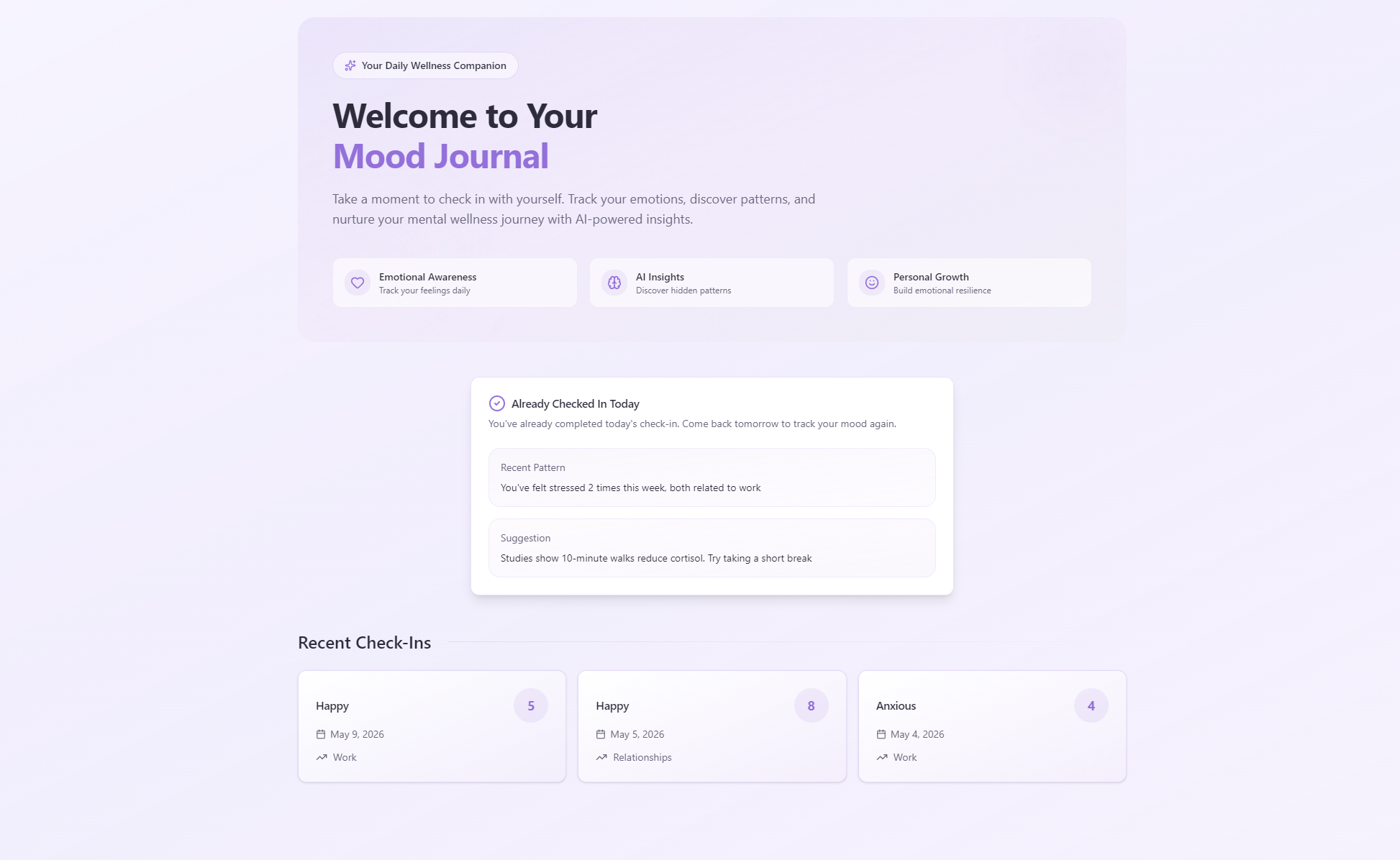
Mood Journal is a daily mood tracker that uses conversational AI for quick check-ins (1-10 rating, descriptive word, category tag). It visualizes mood history via a weekly "weather map," uncovers patterns (e.g., Thursday stress spikes), and offers personalized coping suggestions. Pro users get unlimited history, AI insights, and PDF exports for therapists.
How we built it
We started with core user flows: designing the 2-minute check-in to minimize friction. Frontend built with React for smooth UX; backend uses Python/TensorFlow for AI pattern recognition. PostgreSQL stores mood entries (rating, word, category, timestamp); AWS hosts the app for reliable US/EU access. OpenAI API powers the conversational flow, Stripe handles subscriptions, and Chart.js builds mood correlation visuals.
Challenges we ran into
The biggest hurdle was balancing depth with simplicity—ensuring AI analysis was meaningful but not overwhelming. We also struggled with enforcing the "one check-in per day" rule across devices, and making the weather map visualization intuitive (not just aesthetic). Free/Pro tier access control required precise database query logic to limit free users to 7 days of history.
Accomplishments that we're proud of
We created a tool that’s truly quick (2-minute check-ins) but still delivers actionable insights. The conversational AI feels natural, not robotic, and the mood weather map makes trends instantly understandable. We also built a seamless PDF export tailored for mental health professionals—something users told us they desperately needed.
What we learned
We learned that mental health tools succeed when they prioritize empathy over complexity. Users don’t want to fill out long surveys; they want to track mood without effort. We also gained hands-on experience with AI pattern analysis for emotional data, and how to design tiered access that feels fair (not restrictive) to free users.
What's next for this project
We plan to add gentle reminders for check-ins (timed to users’ most common entry times), refine AI insights to include weekly progress summaries, and test integrations with mild mindfulness exercises tied to identified triggers (e.g., Sunday night anxiety). We’re also exploring ways to make the PDF export more customizable for different therapy approaches.
Built With
- javascript
- python
- react
- tensorflow

Log in or sign up for Devpost to join the conversation.