Inspiration
Mental health and emotional well-being are becoming increasingly important in our fast-paced lives. I wanted to create a lightweight app that helps people reflect on their daily emotions and habits in a gentle, non-judgmental way. Combining a simple journaling interface with the power of AI seemed like a natural way to encourage self-awareness without overwhelming users.
What it does
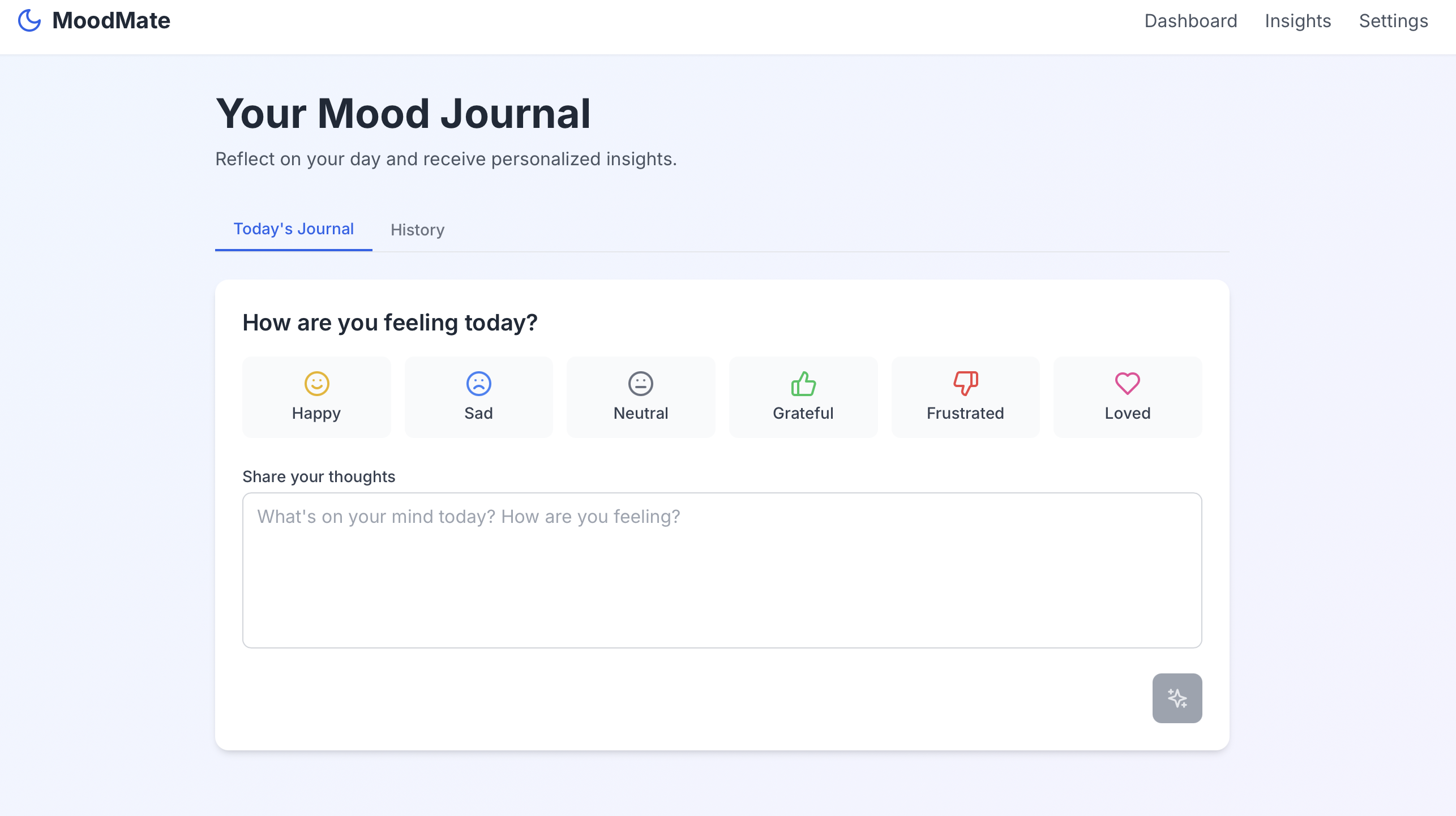
Mood Journal is a minimal daily journaling app that allows users to log how they're feeling in freeform text. Using an AI assistant, the app:
Analyzes journal entries to detect overall sentiment (e.g., happy, anxious, neutral)
Summarizes the key themes or emotions from the entry
Offers a brief reflection or motivational message tailored to the user's mood
Optionally tracks mood trends over time (basic version: mood history log)
How I built it
Frontend: Built using [React / Angular] for a responsive and clean UI
Backend: Node.js / .NET Core minimal API to handle journal submissions
AI Integration:
OpenAI GPT API to analyze and summarize entries
Simple prompt engineering to tune responses and tone
Database: SQLite / MongoDB to store entries and mood history
Deployment: Hosted on Vercel / Azure / Render for a quick and accessible demo
Challenges I ran into
Fine-tuning the AI prompts to give accurate yet empathetic reflections without sounding robotic or repetitive.
Managing API rate limits and response times for a smooth user experience.
Balancing simplicity and usefulness—making sure the UI encourages journaling without feature creep.
Accomplishments that I'm proud of
Built a fully functional app that feels meaningful and personal to use.
Successfully integrated GPT for natural-language analysis in a beginner-friendly stack.
Learned how to think like a product designer and developer, not just a coder—prioritizing user experience.
What I learned
Basics of prompt engineering and how to iterate on AI responses
How to integrate AI APIs into a web app workflow
Importance of emotional intelligence in app design—especially for mental health tools
How to build and deploy a full-stack app quickly using modern frameworks
What's next for Mood Journal
Add a visual mood tracker (calendar or graphs) to show emotional patterns over time
Implement user authentication for privacy and personalization
Let users set daily reminders or receive customized affirmations
Expand AI features to offer guided journaling prompts
Explore using voice input for a more natural logging experience


Log in or sign up for Devpost to join the conversation.