-
-

Cover image
-
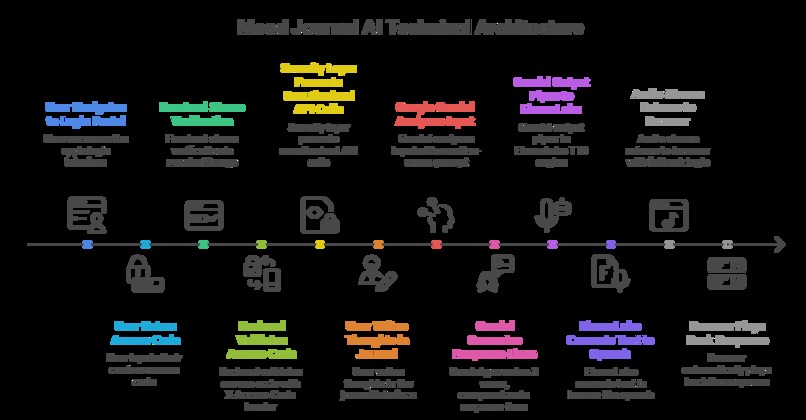
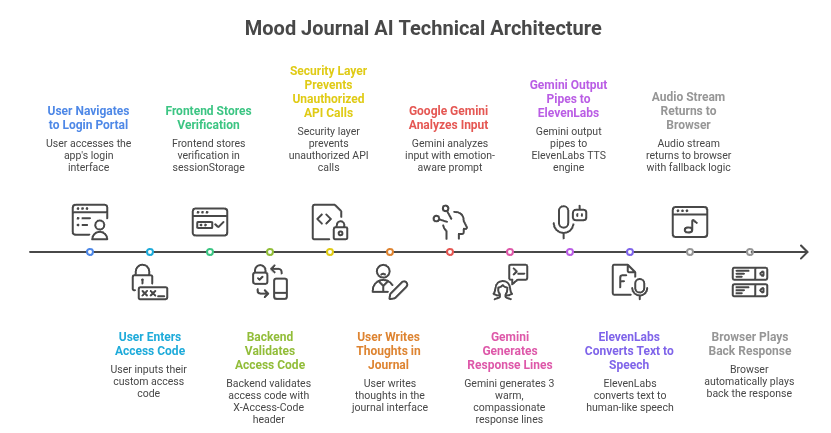
Mood Journal AI Technical Architecture
-
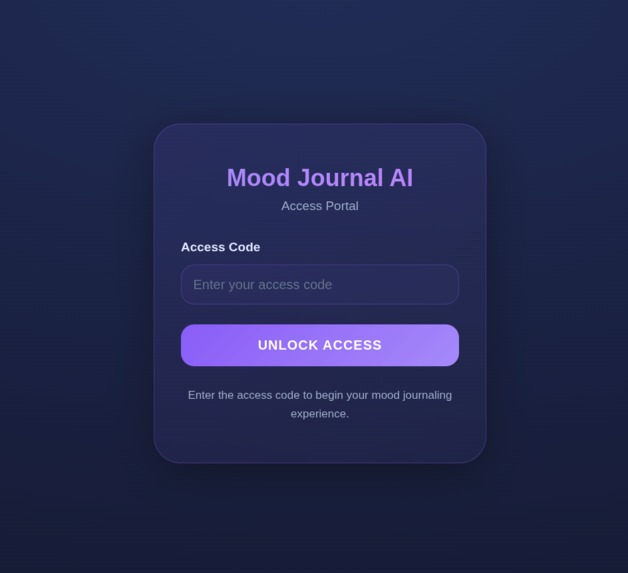
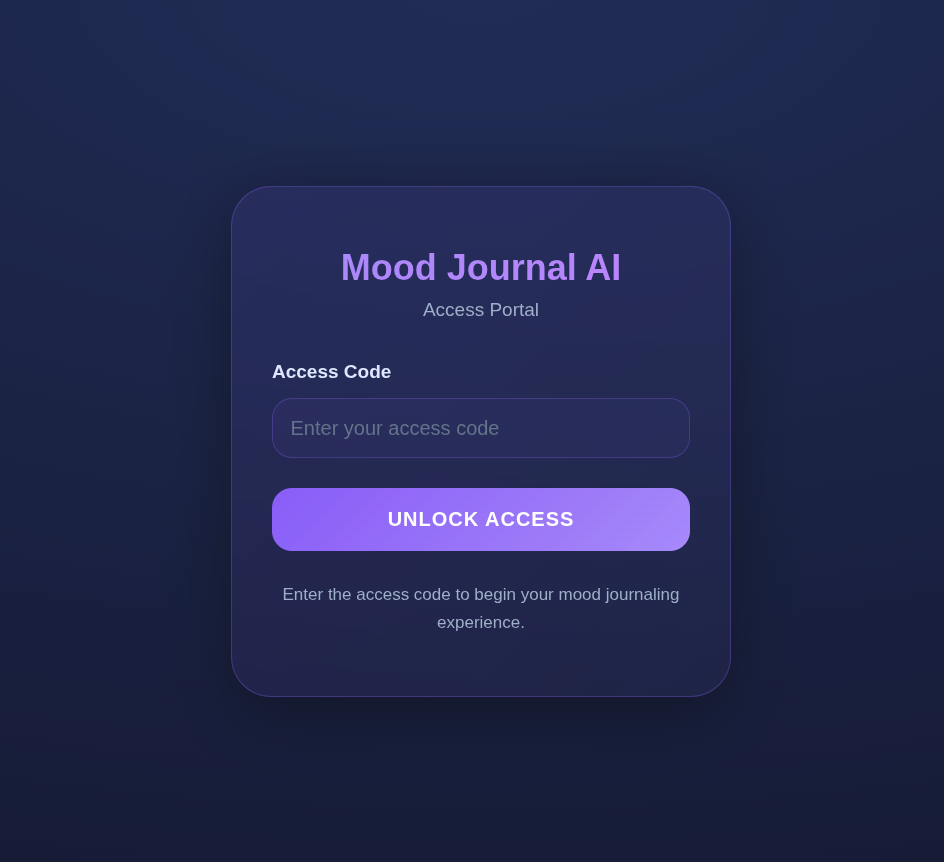
Login page
-
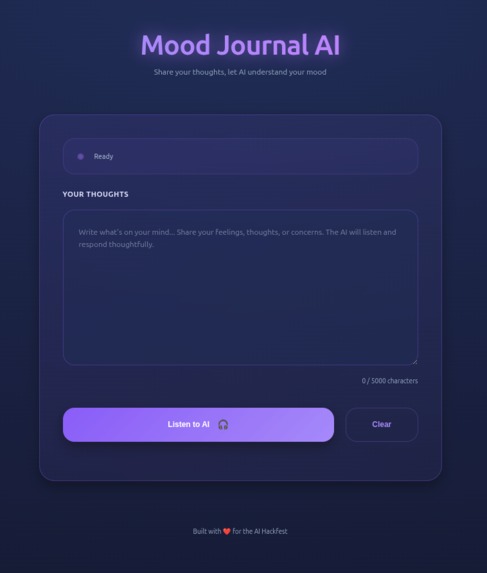
Mood Journal AI

Inspiration
I’ve always felt that journaling is a bit lonely. You pour your heart out onto a screen, but the screen doesn't really care. For my first hackathon, I wanted to build something that felt alive. I wanted to see if I could use AI to give a journal a "soul"—something that doesn't just store your thoughts, but actually listens and talks back with kindness when you've had a long day.
What it does
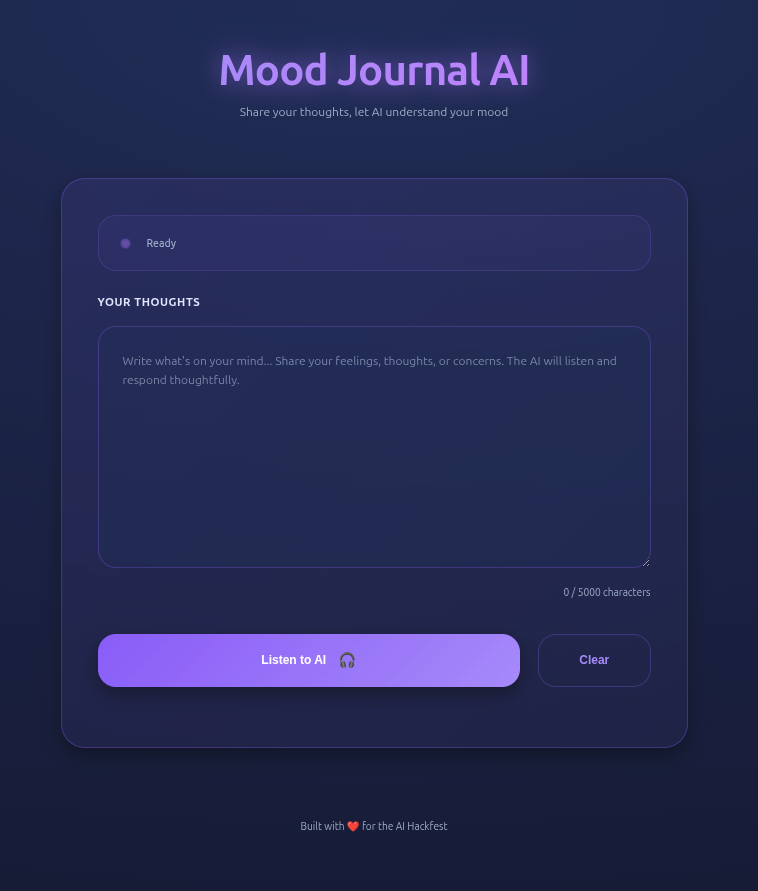
Mood Journal AI is essentially a journal that talks back. You type in how you’re feeling—whether you’re stressed about exams or proud of a win—and the app actually understands the emotion behind your words. It then generates a short, thoughtful response and reads it out to you in a warm, human voice. It’s about making sure nobody has to deal with a blank page alone.
How we built it
I went with a full-stack approach because I wanted to learn how everything connects:
1.) The Brains: I used Google Gemini 1.5 Flash to do the heavy lifting for the sentiment analysis. It’s fast enough to feel like a real conversation. 2.) The Voice: I integrated ElevenLabs to handle the speech. I didn't want a robotic voice; I wanted something that sounded empathetic. 3.) The Glue: The whole thing runs on a Node.js backend that connects the frontend to the AI models. 4.)The Look: I designed a "Glassmorphic" dark-themed UI. It’s clean, modern, and easy on the eyes for late-night journaling.
Challenges we ran into
The biggest headache was "The Pipeline." Trying to get two different AI models to talk to each other and then play audio in the browser—all in under two seconds—was tough. I had to really dig into how the backend handles data flow to make sure there wasn't a huge delay. I also spent a lot of time building a secure "gatekeeper" login to make sure my API keys didn't get leaked or overused.
Accomplishments that we're proud of
Honestly? Just seeing it actually work. This is my first real AI project, and the moment I clicked "Listen" and heard the AI respond to my mood for the first time was incredible. I’m proud that I managed to take an idea from a blank folder to a fully deployed, secure app in such a short time
What we learned
I learned that building an app is 20% writing code and 80% solving puzzles you didn't know existed. I got a lot better at working with APIs, securing a backend with custom headers, and understanding how to make AI feel less like a machine and more like a tool for people.
What's next for Mood Journal AI
I’m just getting started. I want to add a database so it can remember your mood over time and show you patterns. I also want to add voice-to-text so you can just talk to the journal instead of typing. This project taught me that there's so much more I can build.
Built With
- css3
- elevelabs
- gemini
- html5
- javascript
- node.js


Log in or sign up for Devpost to join the conversation.